
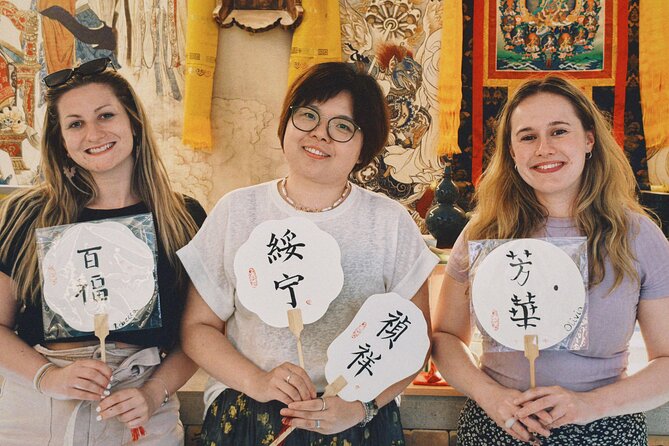
Reviewed · TEA CEREMONY EXPERIENCES
Xi’an Calligraphy & Tea Ceremony – Dive into Ink & Brush Artistry
Make your own souvenir in Xi’an. This three-hour cultural workshop gives you more than a quick look at Chinese tradition. You sit down, pick up the brush, learn how Chinese characters developed, and create several pieces of art to take home. I especially like the small group of no more than six people, which gives the instructor room to help with brush control. The jasmine tea ceremony, incense ritual, and hands-on practice also make this feel more personal than a standard sightseeing stop.
I also like the way the session connects calligraphy with meaning. You do not simply copy random symbols. You work with characters such as 龙 for dragon, 武 for martial, and 爱 for love, while learning how ideas about family, strength, and affection appear in Chinese writing. The main consideration is that three hours of brush practice may feel long if you only want a short cultural demonstration, and the activity requires good weather under its booking terms even though much of it takes place indoors.
In This Review
- Key things to know before booking
- Why this Xi’an workshop feels different
- Tea, incense, and the scholar’s table
- A 3,000-year story told through characters
- One hour of brush control and basic characters
- Painting a fan and making personal bookmarks
- What the $69 price really covers
- The schedule, meeting point, and weather rule
- Who will get the most from this activity
- Should you book the Xi’an calligraphy workshop?
- FAQ
- Where does the Xi’an calligraphy and tea activity begin?
- What time does the activity start?
- Where does the activity end?
- How long does the experience last?
- How many people can join the group?
- What is included in the price?
- Do I receive anything I make during the workshop?
- Can I cancel for a full refund?
Key things to know before booking
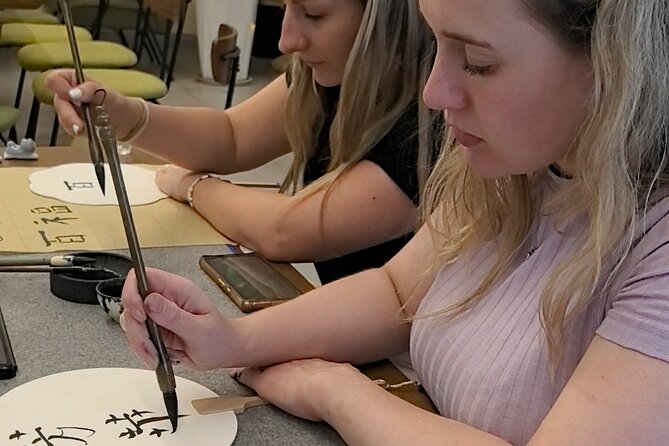
- You create three take-home pieces: a painted folding fan, personalized bookmarks, and a traditional scroll painting.
- The group is capped at six people: this matters when you need help with brush pressure, ink flow, and character shape.
- Yunyun leads the experience: she has more than 20 years of calligraphy practice and speaks English very well.
- The class follows a clear learning path: tea and incense come first, then writing history, basic strokes, character practice, and artwork.
- The character wall reaches back 3,000 years: you see how writing changed from oracle-bone forms to modern script.
- The $69 price includes materials and refreshments: ink, paper, an inkstone, jasmine tea, snacks, and all three finished projects are included.
Why this Xi’an workshop feels different
Xi’an is famous for its archaeology, city walls, pagodas, and imperial stories. Those sights are essential, but they mostly put you in the role of an observer. This activity asks you to do something with your hands.
That change matters. Chinese calligraphy is not just handwriting in a different alphabet. Brush angle, pressure, speed, and spacing all affect the final mark. Even a simple character can look stiff or graceful depending on how you hold the brush. You will not become a master in one afternoon, but you will understand why the art demands patience.
The setting adds another layer. The experience begins with jasmine tea and an incense ritual, recreating the calm atmosphere associated with traditional scholars. You can expect a cultural introduction rather than a rushed craft class. The tea and snacks are included, giving you a gentle start before the more focused practice begins.
Yunyun is the guide to look for at the 15 An Ju Xiang meeting point in Beilin District. Her background is useful because she combines long-term calligraphy practice with experience as a Xi’an travel planner. She has also visited more than 50 countries, which helps her explain Chinese customs to an international audience.
The available feedback gives her high marks for clear explanations, warmth, humor, and flexibility. One especially useful detail is that she can respond to personal requests, so you are not locked into a single design or character choice. She also speaks excellent English, an important point when the subject involves subtle meanings and unfamiliar writing forms.
More Tea Ceremonies in Xian:
- Xi’an Noodle Making and Tea Tasting Experience
★ 5.0 · 6 reviews - Xi’an Chinese Calligraphy Workshop: Ink Art & Tea Tasting
★ 5.0 · 4 reviews - Traditional Chinese Tea Ceremony Experience
★ 4.7 · 74 reviews
Tea, incense, and the scholar’s table
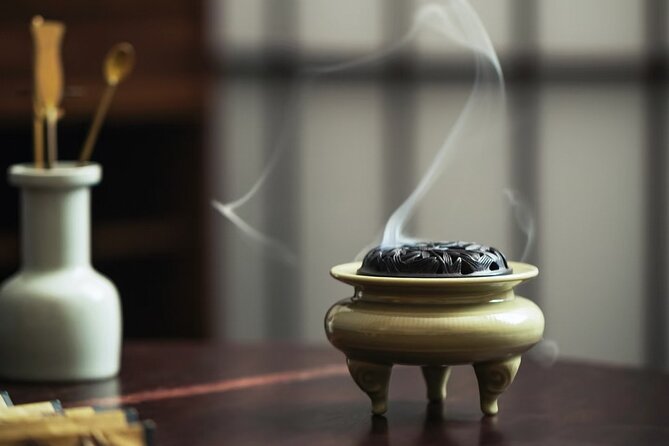
The first section lasts about 20 minutes. You arrive, settle into the studio, and take part in a jasmine tea ceremony with snacks. An incense ritual helps set the tone before the brushwork begins.
This opening is not simply decoration. Traditional calligraphy has long been linked with quiet concentration, study, and self-discipline. Starting with tea gives you time to slow down and get used to the setting. It also keeps the afternoon from feeling like a production line where you rush from one souvenir to the next.
If you have never used an inkstone or traditional brush, this is a good moment to look closely at the materials. The tour supplies the writing tools, so you do not need to bring paper, ink, or a brush. You can focus on learning instead of worrying about buying the correct equipment.
The main limitation is time. Twenty minutes is enough for an introduction, but not enough for a full tea education. If you are hoping for an extended lesson on tea varieties or brewing technique, this experience gives more attention to calligraphy than to tea.
A 3,000-year story told through characters
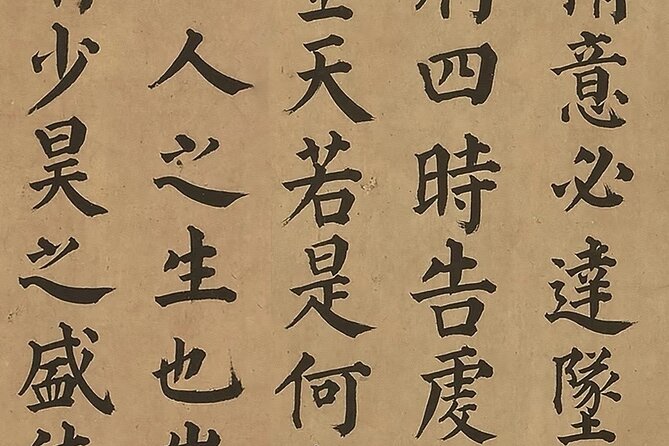
Next comes a 25-minute look at the development of Chinese writing. An interactive character wall shows how symbols changed from oracle-bone forms to later scripts and modern characters.
This is one of the strongest parts of the session because it gives purpose to the writing practice that follows. You are not only learning how to reproduce a character. You are seeing how early images and marks gradually became the forms used today.
The example of 家, meaning home, is particularly useful. Looking at an ancient form beside a modern one helps you see that Chinese characters carry visual clues about older ways of thinking. The guide uses images and maps when explaining cultural subjects, which should make this section accessible even if you know nothing about Chinese writing.
The 3,000-year span could easily become a dry lecture. Here, the display and storytelling keep it connected to the brush in your hand. You learn that characters are not merely abstract shapes, then practice them yourself.
This section is short, so do not expect a full academic history of Chinese script. Its job is to give you a clear foundation and make the next stage more meaningful.
One hour of brush control and basic characters
The longest instructional section takes about 1 hour and 10 minutes. You work at your own practice station and learn the basics of brush handling, including the strokes needed to form simple characters.
The sequence is sensible. You begin with basic marks such as 一, meaning one, and 十, meaning ten. From there, you progress to characters including 大 for big, 小 for small, 米 for rice, and 永 for forever. These examples let you practice different combinations of horizontal, vertical, and more complex strokes.
The goal is not speed. You will be learning how much ink to use, how to angle the brush, and how firmly to press. A brush does not behave like a ballpoint pen. It bends, spreads, and changes thickness as you move it. That can be frustrating for a few minutes, but it is also where the activity becomes real rather than decorative.
I would treat this part as a lesson in patience. Your first attempt may look uneven. That is normal. The benefit of a group limited to six is that Yunyun can watch how you hold the brush and offer individual corrections. A large class would make this kind of instruction much less useful.
The selected characters also carry cultural weight. Dragon, martial strength, and love let you connect the physical act of writing with Chinese ideas and symbolism. You can ask about the meaning behind the character you choose, rather than copying a design simply because it looks attractive.
Allow yourself to enjoy the imperfect marks. The point is not to produce museum-quality work. It is to understand the balance between intention and control, then take that understanding into the final creative session.
More calligraphy workshops in Xian:
- Beijing Calligraphy Class
★ 4.9 · 112 reviews - Chinese Calligraphy Class for Small Group
★ 5.0 · 104 reviews - Beijing Historic City Guided Walking Tour + Calligraphy Creation
★ 5.0 · 59 reviews - Beijing Wangfujing Calligraphy Class by Forbidden City
★ 5.0 · 58 reviews
Painting a fan and making personal bookmarks
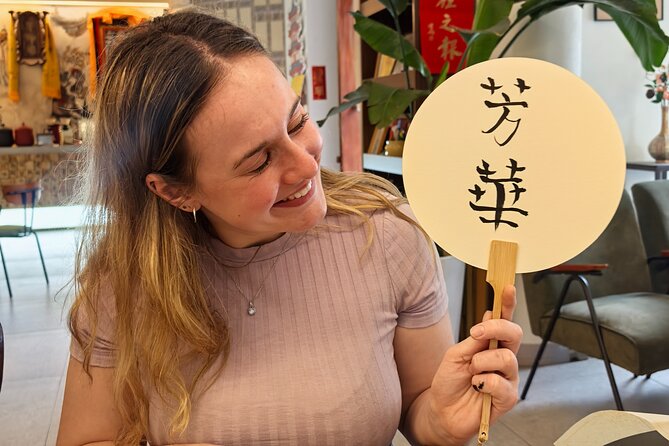
The final creative section lasts about 1 hour and 15 minutes. This is where the practice turns into finished souvenirs.
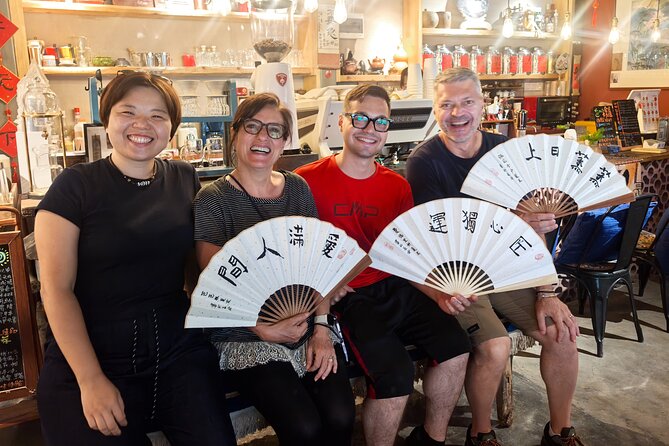
You design and paint your own folding fan with chosen Chinese characters. The fan is a useful keepsake because it is both decorative and connected to the workshop itself. You can select a meaningful character or phrase, then apply what you learned about brush movement and spacing.
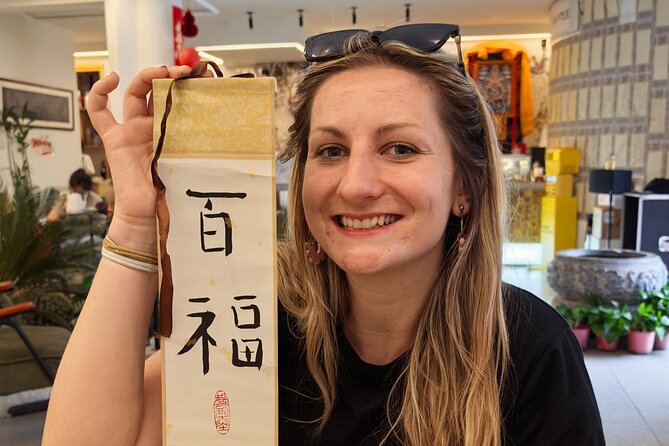
You also create personalized bookmarks using your Chinese name. This makes the souvenir more personal than a factory-made item from a shop. If you do not already have a Chinese name, the available information does not specify exactly how one is chosen, so you should ask Yunyun how she handles that part when you book or arrive.
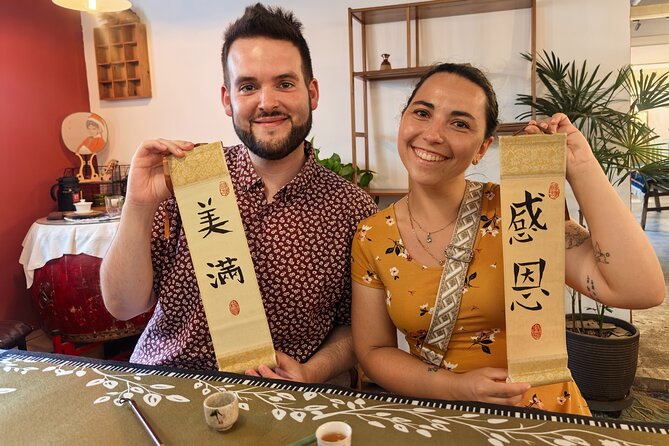
A traditional scroll painting completes the set. The activity includes the fan, bookmarks, and scroll, along with the paper, ink, and inkstone needed to make them. You leave with objects you created during the class, not just a photograph of a demonstration.
The creative session is longer than the tea ceremony and history introduction combined. That tells you what this experience values: participation. You should expect to spend most of the afternoon making, correcting, and finishing your pieces.
The practical drawback is that creative work takes concentration. If you want a polished result with no visible mistakes, you may find the process demanding. If you enjoy learning by doing, the rough edges will become part of the memory.
What the $69 price really covers
At $69 per person, this is not the cheapest way to fill an afternoon in Xi’an. You can see many public sights for less, and calligraphy demonstrations without personal instruction may cost less as well.
The value here comes from what is bundled into the price. You receive roughly three hours to three hours and 20 minutes of guided activity, a small group, a calligraphy instructor, jasmine tea and snacks, all writing materials, and three finished artworks. You are paying for instruction and participation, not only admission.
The group size is especially important. With fewer than six people, the instructor can give attention to each person’s brush handling and character work. If you have ever tried to follow a craft lesson while standing at the back of a crowded room, you know the difference.
The finished fan, bookmarks, and scroll also have practical value. They are light, personal souvenirs that should fit easily into your luggage. They can also remind you of Xi’an in a way that a mass-produced trinket cannot.
I would consider the price fair for visitors who want a guided cultural activity and who value the creative materials. It is less attractive if your main goal is a brief introduction, a formal tea ceremony, or a sightseeing tour with many locations.
The schedule, meeting point, and weather rule
The activity starts at 2:00 pm and ends back at the meeting point. The starting address is 15 An Ju Xiang, Beilin District, Xi’an, Shaanxi, 710001, China. It is near public transportation, which makes the afternoon appointment practical if you plan to visit another Xi’an sight earlier in the day.
The listed duration varies slightly, from three hours to about three hours and 20 minutes. The four timed sections add up to roughly two hours and 50 minutes, so you should allow the full stated window rather than scheduling a tight evening commitment immediately afterward.
The experience accepts a maximum of six people, and most people can participate. The supplied information does not list special accessibility arrangements, so you should contact the provider if you have specific mobility or seating needs.
The cancellation terms are simple but strict near the start time. You can receive a full refund if you cancel at least 24 hours before the local start time. Changes or cancellations inside that window are not accepted for a refund. The activity also requires good weather under its stated terms. If poor weather causes cancellation, you will be offered another date or a full refund.
Who will get the most from this activity
I would recommend this for you if you want a quieter counterpoint to Xi’an’s major sights. After a day of monuments and crowded public spaces, sitting down with tea and a brush can provide a welcome change of pace.
It is a good match for:
- First-time visitors who want a clear introduction to Chinese characters
- Couples or families seeking a shared creative activity
- Adults and older children who can follow basic brush instructions
- People who prefer meaningful souvenirs over purchased decorations
- Visitors who want an indoor option during very hot weather
- Anyone curious about Chinese philosophy, symbolism, and traditional arts
The activity may be less suitable if you dislike careful handwork or want a fast-moving tour. It is also not the right choice if you expect a full historical tour of Xi’an, since the focus is calligraphy, tea, and cultural explanation rather than major landmarks.
One useful point from the feedback is the weather. A participant chose this activity during a period when Xi’an reached about 40 degrees Celsius, finding it easier than staying outside all day. That makes the workshop appealing during extreme heat, although you should still follow the provider’s weather policy.
Should you book the Xi’an calligraphy workshop?
Book it if you want to bring home something you made yourself and are willing to spend several hours learning slowly. The strongest reasons are Yunyun’s clear English explanations, her long practice with calligraphy, the very small group, and the complete set of materials and finished artworks.
I would skip it if your Xi’an schedule is already packed with historical sights and you cannot spare an afternoon. I would also think twice if you want only a short cultural photo stop.
For most people who enjoy hands-on activities, the $69 cost is reasonable because it covers instruction, tea, supplies, and three personal keepsakes. You may not produce perfect calligraphy, but you will understand the craft better and leave with a story attached to every brush mark.
FAQ
Where does the Xi’an calligraphy and tea activity begin?
It begins at 15 An Ju Xiang, Beilin District, Xi’an, Shaanxi, 710001, China.
What time does the activity start?
The scheduled start time is 2:00 pm.
Where does the activity end?
It ends back at the meeting point.
How long does the experience last?
The stated duration is approximately three hours to three hours and 20 minutes.
How many people can join the group?
The maximum group size is six people.
What is included in the price?
The price includes jasmine tea and snacks, a calligraphy instructor, all writing materials, ink, paper, an inkstone, a painted folding fan, personalized bookmarks, and a traditional scroll painting.
Do I receive anything I make during the workshop?
Yes. You create and take home a painted folding fan, personalized bookmarks, and a traditional scroll painting.
Can I cancel for a full refund?
Yes, if you cancel at least 24 hours before the local start time. Cancellations or changes made less than 24 hours before the experience are not accepted for a refund. If the activity is canceled because of poor weather, you will be offered another date or a full refund.
Just added in Xian
- Xi’an: Terracotta Warriors Tickets & Guided Tours★ 4.7 · 11 reviews
- Xi’an: Royal Banquet with Chinese Cultural Performance★ 3.4 · 3 reviews
- Xian: Terracotta Army Admission Ticket★ 4.6 · 5 reviews
- Xi’an Terracotta Warriors and City Wall Private Day Tour★ 5.0 · 4 reviews
- Xi’an Private Terracotta Warriors and Hanyangling Mausoleum★ 4.7 · 3 reviews
- Xian: Morning Food Tour of the Muslim Quarter★ 5.0 · 3 reviews
- Xian: Bus Tour of Terracotta Warriors With Guide & Lunch★ 4.2 · 5 reviews
- Xi’an: Top 3 Highlights All Inclusive Private Day Tour★ 5.0 · 41 reviews
Tea Ceremony Experiences, compared.
Beijing Culture: Tea Ceremony, Heritage Instrument & Calligraphy
Read our review →

Chinese Tea ceremony in Beijing Hutong courtyard
Read our review →
Half-Day Hangzhou Yunxi Bamboo Forest and Tea Plantation Experience
Read our review →
Leshan Buddha + Panda Base or Old Tea House Private Day Tour
Read our review →
Private Beijing Markets Tour with Tea Tasting at Hongqiao Pearl Market
Read our review →Where else this tour turns up