Reviewed · TEA CEREMONY EXPERIENCES
Beijing Culture: Tea Ceremony, Heritage Instrument & Calligraphy
Quiet traditions still live in Beijing. This 2.5-hour workshop trades crowded sights for tea, calligraphy, and the gentle voice of the Guqin, China’s ancient seven-string instrument. I like the small maximum of eight people, and I like that you do more than watch: you brew tea, write characters, and play a melody. The main consideration is the price, $78.60 per person, which is a serious spend for a short activity.
The setting also helps. You meet at 813 Creative Park in Chaoyang and enter an air-conditioned cultural venue closed to the public. I especially like the English guidance from a bilingual guide with an M.A. in History and Sociology, plus the chance to wear traditional clothing for ritual moments and photos. Still, this is not the right pick if you want a fast, casual stop or a large theatrical performance.
In This Review
- Five things to know before booking
- A quiet change of pace in Chaoyang
- Tea ceremony: slowing down with purpose
- The Guqin: from ancient sound to your own melody
- Calligraphy with meaning behind the strokes
- Traditional clothing and the ritual setting
- What the guide adds to the experience
- Is $78.60 a fair price?
- Who will enjoy this most?
- Booking and cancellation details worth knowing
- My verdict: book it for participation, not spectacle
- FAQ
- How long does the Beijing culture experience last?
- Where does the experience start and end?
- What is included in the price?
- Is transportation included?
- How many people can join the activity?
- Can I cancel for a full refund?
Five things to know before booking
- You handle the traditions yourself: Tea brewing, brush writing, and Guqin playing are all hands-on.
- The group is capped at eight: This allows direct help from the instructors and a quieter room.
- Tea comes from a national-level master: You taste the tea you prepare, with traditional tea snacks included.
- The Guqin session goes beyond a performance: You hear a live piece, then learn a complete melody yourself.
- You leave with a personal keepsake: The calligraphy session can include writing your Chinese name on paper to take home.
- Plan around the fixed meeting point: Transportation is not included, and the activity returns to 813 Creative Park.
A quiet change of pace in Chaoyang
Beijing can fill every hour with palaces, plazas, traffic, and long security lines. This experience offers a different rhythm. At 813 Creative Park, you step into a calm, air-conditioned venue set aside for cultural instruction rather than general public visits.
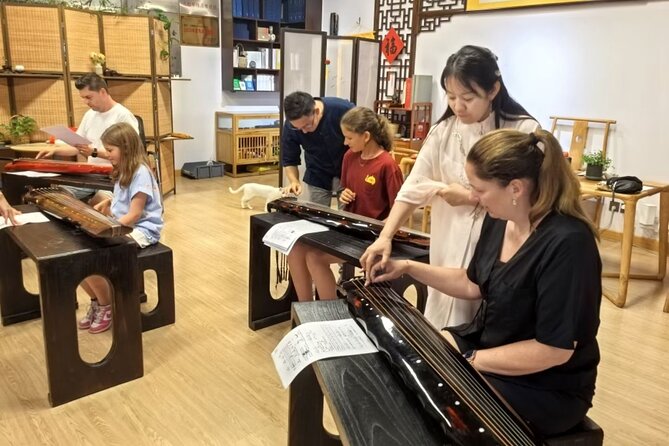
That change matters. The point is not to race through three demonstrations. You have time to sit, listen, try each activity, and ask questions through the bilingual guide. The group limit of eight makes the format feel personal, especially when you need someone to adjust your brush grip or guide your fingers across the Guqin strings.
The venue is near public transportation, but no ride to or from the meeting point is included. Allow time to find 813 Creative Park, listed at VGP3+CCX, Chaoyang, Beijing, 100124. A mobile ticket is provided, and confirmation is sent within 48 hours, subject to availability.
The location is practical rather than famous. You are not being brought to a major palace or historic landmark. That is part of the appeal, but it also means you should treat this as a dedicated appointment, not something to squeeze in while already sightseeing nearby.
More History Tours in Beijing
- Beijing Historical Tour II including Summer Palace, Lama Temple & Panda Garden
★ 4.0 · 187 reviews - Beijing Historical Tour I – Forbidden City, Tiananmen Square & Temple of Heaven
★ 4.0 · 120 reviews - Beijing Historic City Guided Walking Tour + Calligraphy Creation
★ 5.0 · 59 reviews
Tea ceremony: slowing down with purpose
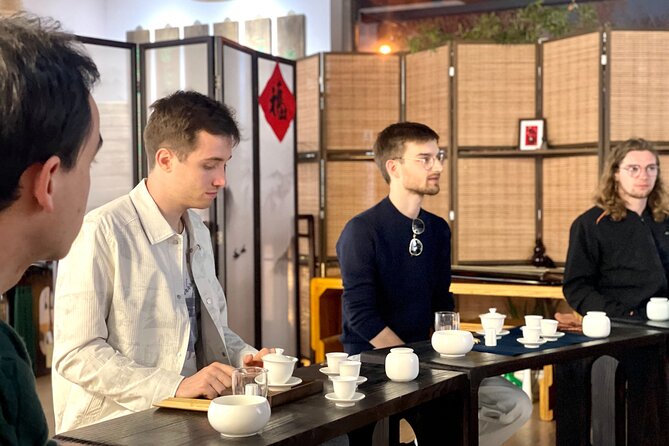
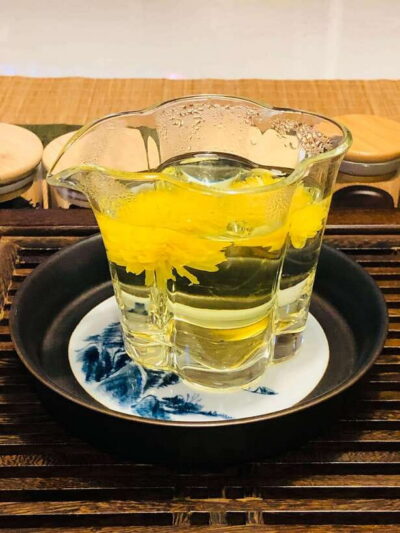
The tea portion begins the experience and sets its tone. A certified tea master guides you through a traditional ceremony and tasting, with tea snacks included. You do not simply receive a cup and listen to a talk. You brew and taste the tea yourself.
For me, this is one of the strongest parts of the program because tea provides an easy entry into Chinese culture. You can understand the ceremony through your senses: the warmth of the cup, the scent of the leaves, the measured movements, and the taste of the finished tea. Even if you know nothing about Chinese tea, the process gives you something concrete to follow.
The guide explains the meaning behind the actions rather than treating them as decoration. That context helps you see why the ceremony is slow and deliberate. It is less about showing off a complicated ritual and more about attention, balance, and respectful preparation.
The tea ceremony is also likely to be the most restful part of the session. The venue is designed as a peaceful cultural space, and the combination of warm tea and live Guqin music creates a welcome break from Beijing’s noise. If you have spent the morning touring the Forbidden City or walking through busy commercial streets, this quieter hour can reset your pace.
Do not expect a meal. Tea snacks are provided, but meals outside the tasting are not included. If you are booking this around lunch or dinner, plan to eat separately.
The Guqin: from ancient sound to your own melody
The Guqin is the emotional center of the experience. This long, understated instrument has seven strings and a place of high esteem in traditional Chinese culture. Its sound is softer and more reflective than the bright, forceful music many people associate with stage performances.
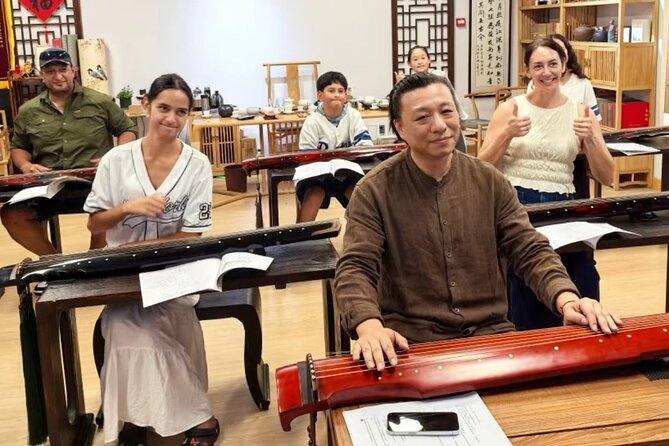
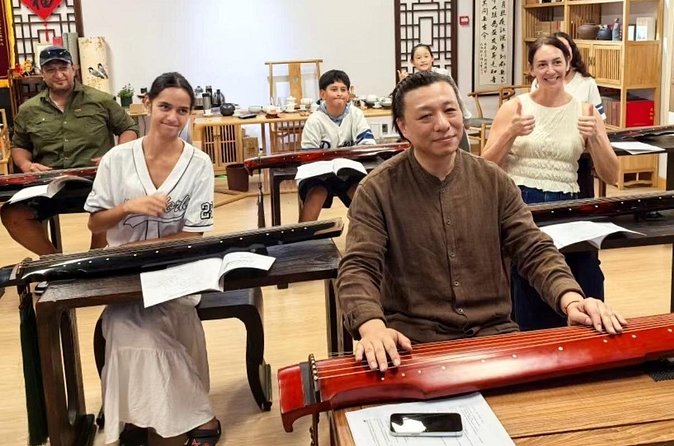
First, a national-level heritage artist gives a live performance. This matters because you hear the instrument properly before trying it yourself. The performance shows the subtle control needed to draw music from the strings, and it gives you a sense of why the Guqin has been linked with scholarship, reflection, and cultivated taste.
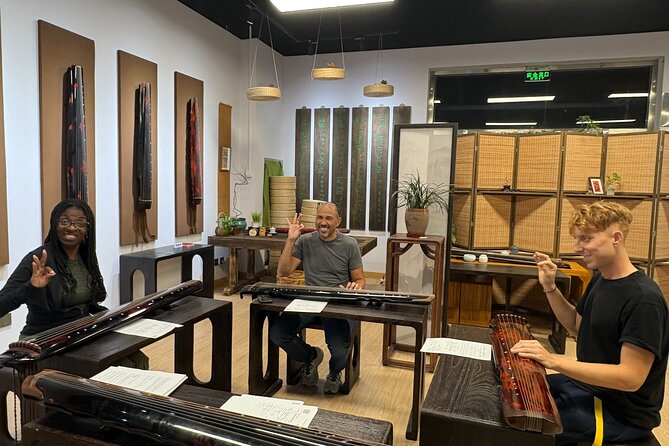
Then the format changes from listening to doing. You receive a hands-on lesson and work toward playing a full melody. The instructor guides your fingers, which makes the session approachable even if you have never played an instrument.
That promise should be understood in the right way. You are not becoming a Guqin musician in one afternoon. You are learning a short, complete piece under close instruction. The value is in feeling how the instrument works and gaining a direct connection with a tradition that can otherwise seem distant behind glass.
This is where the small group matters most. With no more than eight participants, the instructor has a better chance to watch your hand position and help you produce a clear note. One particularly appealing detail is the personal quality of the lesson. The experience is designed to make you feel the strings, not just photograph an antique instrument.
The Guqin section may also be the hardest part for some people. Calligraphy gives you a visible result quickly, while music requires patience and coordination. If your first notes sound uneven, that is normal. The goal is participation, not a polished concert.
Calligraphy with meaning behind the strokes
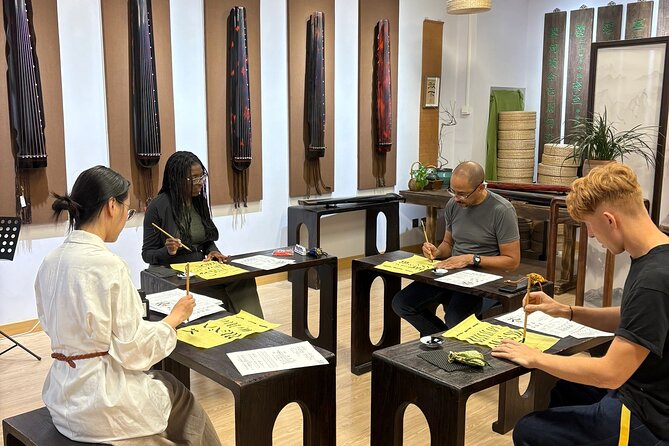
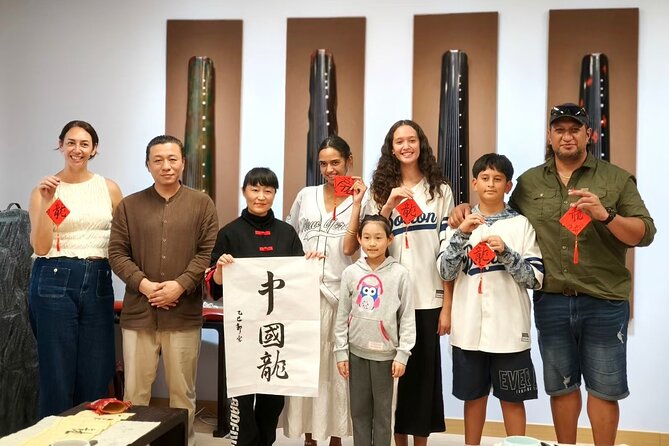
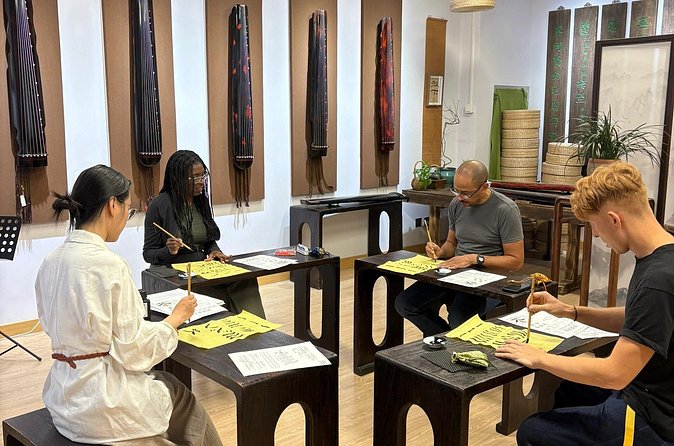
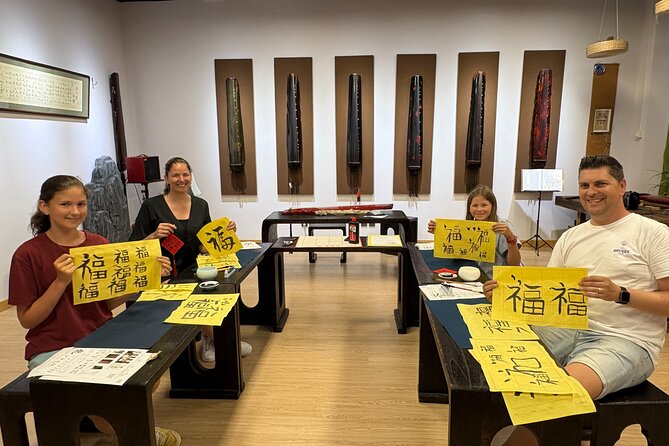
The final pillar is Chinese calligraphy. You use a brush to write real Chinese characters, while an expert explains their ancient roots and traditional forms. The activity turns writing into a way to understand how Chinese language and art connect.
This is more rewarding than copying a decorative symbol without context. The instructor helps you see how a character is built and why the order and shape of its strokes matter. You may also write your Chinese name, creating a paper keepsake you can take home.
That small souvenir has more value than a generic shop purchase. You made it during a lesson, and it records your first attempt at a skill that takes years to master. You might want to protect the paper during the rest of your Beijing stay, especially if you plan to pack it in a crowded suitcase.
Calligraphy can be challenging. The brush behaves differently from a pen, and even a simple character demands control. I like that the session is presented as a guided cultural exercise rather than a test of artistic ability. You do not need prior knowledge to enjoy it, but you should be ready to slow down and accept imperfect lines.
The calm atmosphere helps here. After the concentration of the Guqin session, the brush gives you another quiet way to focus. You are not just collecting a picture of traditional culture. You are making something with your own hands.
More Tea Ceremonies in Beijing
- Traditional Chinese Tea Ceremony Experience
★ 4.7 · 74 reviews - Chinese Tea ceremony in Beijing Hutong courtyard
★ 4.7 · 26 reviews - Private Beijing Markets Tour with Tea Tasting at Hongqiao Pearl Market
★ 5.0 · 18 reviews - Beijing: Mutianyu Great Wall and Tea House Private Tour
★ 5.0 · 11 reviews
Traditional clothing and the ritual setting
Traditional outfit rental is included for ritual moments and photographs. This adds visual interest, but it is most useful when it supports the experience rather than becoming the main event.
The clothing helps you understand the formal character of the tea ceremony and calligraphy. It also gives you a photo that feels connected to the activity instead of a standard pose in front of a landmark. The final group photo provides a shared record of the session.
I would keep expectations sensible. The important part is not a costume makeover or a long photography session. The clothing is an extra layer that helps mark the occasion. If you are uncomfortable dressing up, you can still focus on the tea, instrument, and writing.
The venue itself is described as serene and beautifully decorated, with a private atmosphere away from the city’s crowds. You should expect an elegant indoor setting rather than an outdoor heritage site. That makes the experience dependable for comfort, though the cancellation terms note that the activity requires good weather.
What the guide adds to the experience
The bilingual guide is not only there to translate. The guide has an M.A. in History and Sociology and is trained in Chinese philosophy and history. That background matters because each activity carries ideas that can be lost in a basic demonstration.
You can ask why the tea ritual follows a certain order, what a character originally represented, or why the Guqin occupies such an important place in Chinese culture. English support also makes the workshop suitable for people who cannot read Chinese or follow a Mandarin-only lesson.
The instructors are described as national-level cultural masters and heritage artists rather than hired performers presenting a scripted show. That distinction shapes the whole afternoon. You meet people who practice or teach the traditions, and their role is to help you understand what you are doing.
The experience is still designed for an international audience. You do not need background in Chinese history, music, or calligraphy. The best approach is to arrive curious and willing to try. A university lecturer in East Asian studies would likely find enough cultural substance to stay engaged, while a first-time visitor can follow the basic steps without feeling lost.
Is $78.60 a fair price?
At $78.60 per person, this is not a bargain activity. Beijing has many inexpensive tea shops, public performances, and calligraphy stalls. You can also see traditional instruments in museums without paying this much.
The value comes from the combination and the access. Your fee covers a tea ceremony with a certified master, a live Guqin performance by a national-level heritage artist, a hands-on Guqin lesson, calligraphy instruction, tea snacks, traditional attire rental, and bilingual guidance. You would have difficulty arranging all of that privately in 2.5 hours.
The group size also makes a difference. A maximum of eight people gives the session a more direct teaching format than a crowded cultural show. If you appreciate personal instruction and want to try several traditions in one sitting, the price is easier to justify.
I would book it for the quality of the time, not the quantity of included items. Three activities in 2.5 hours means none can become a full course. You receive a thoughtful introduction and a chance to practice, not advanced training.
The advance booking pattern is another useful clue. It is booked an average of 51 days ahead, so you should not assume you can wait until the last morning in Beijing. The small capacity likely contributes to that demand. Check availability early if this is important to your schedule.
Who will enjoy this most?
I would recommend this experience to you if you:
- Want cultural context instead of another photo stop
- Prefer small groups and direct contact with instructors
- Enjoy hands-on activities, even when the result is imperfect
- Need English guidance
- Want a calm indoor break from a busy Beijing itinerary
- Are interested in tea, traditional music, calligraphy, or Chinese philosophy
- Like bringing home a personal object, such as handwritten calligraphy
It is especially well suited to couples, solo visitors, families with older children, and anyone who prefers quiet cultural activities. Most people can participate, and service animals are allowed.
I would be more cautious if you want a fast-paced tour, a large stage show, or a famous historic building. The venue is private and not presented as a major Beijing attraction. The reward comes from close instruction and atmosphere, not from checking off a landmark.
You should also consider the group’s interests. If one person dislikes sitting quietly, writing, or trying an unfamiliar instrument, the 2.5 hours may feel long. If everyone is happy to take part, the mix of tea, music, and brushwork keeps the session varied.
Booking and cancellation details worth knowing
The activity starts and ends at 813 Creative Park. Transportation is not included, so you need to arrange your own way there and back. Because the meeting point is in Chaoyang and the experience has a fixed start time, Beijing traffic is a reason to leave extra time.
Free cancellation is available up to 24 hours before the start time for a full refund. Changes or cancellations inside that 24-hour window are not accepted for a refund. Cutoff times follow local Beijing time.
The provider may cancel if the minimum number of participants is not reached or if weather conditions make the activity unsuitable. In that case, you are offered another date or experience, or a full refund. Confirmation arrives within 48 hours of booking, subject to availability, so keep an eye on your booking message before setting your day around it.
My verdict: book it for participation, not spectacle
I would book this workshop if I wanted one meaningful cultural afternoon in Beijing. The strongest features are the small group, the direct help from skilled practitioners, and the chance to play, write, and brew instead of simply watching.
The Guqin lesson is likely to be the most memorable part, while the tea ceremony offers the calmest setting and calligraphy gives you the clearest keepsake. Together, they create a well-balanced introduction to living Chinese traditions.
The price is the chief drawback, and the fixed location means you must plan transportation. But for someone who values personal instruction and an unhurried atmosphere, $78.60 is reasonable. Book early, arrive ready to participate, and choose this experience when you want Beijing to slow down for a couple of hours.
FAQ
How long does the Beijing culture experience last?
The experience lasts approximately 2 hours and 30 minutes.
Where does the experience start and end?
It starts at 813 Creative Park, VGP3+CCX, Chaoyang, Beijing, 100124. The activity ends back at the same meeting point.
What is included in the price?
The price includes a traditional tea ceremony and tasting with a certified tea master, a live Guqin performance, a hands-on Guqin lesson, a Chinese calligraphy workshop, traditional outfit rental for rituals and photos, tea snacks, and a bilingual guide.
Is transportation included?
No. Transportation to and from the venue is not included.
How many people can join the activity?
The group has a maximum of eight participants.
Can I cancel for a full refund?
Yes. You can cancel at least 24 hours before the local start time for a full refund. Cancellations or changes made less than 24 hours before the experience are not refunded.
More Calligraphy Workshops in Beijing
- Beijing Calligraphy Class
★ 4.9 · 112 reviews - Chinese Calligraphy Class for Small Group
★ 5.0 · 104 reviews - Beijing Wangfujing Calligraphy Class by Forbidden City
★ 5.0 · 58 reviews - Beijing Wangfujing Calligraphy Class Nearby Forbidden City
★ 5.0 · 56 reviews
Just added in Beijing
- Private Transfer to Mutianyu Great Wall with professional driver★ 5.0 · 19 reviews
- One day tour to downtown Tianjin from Beijing by high speed train★ 5.0 · 3 reviews
- ZANBUS: Trip to the Jinshanling Great Wall Departing at 7:30 AM★ 5.0 · 5 reviews
- camp on the Great Wall overnight with sunrise and sunset on the wall★ 5.0 · 11 reviews
- Yuxiandu Chinese Royal Cuisine Museum with Show and Royal Banquet★ 5.0 · 4 reviews
- Wild Great Wall Hikes★ 5.0 · 10 reviews
- BusDa:Ancient Great Wall &Badaling Great Wall Full-day Bus Tour★ 4.5 · 6 reviews
- Wild Great Wall Huanghuacheng Half Day Tour★ 5.0 · 15 reviews
Tea Ceremony Experiences, compared.
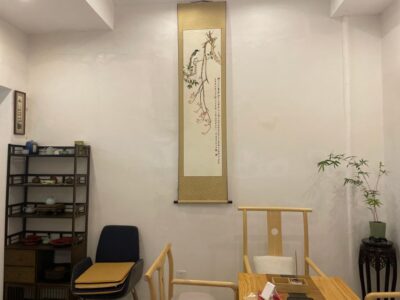
Chinese Tea ceremony in Beijing Hutong courtyard
Read our review →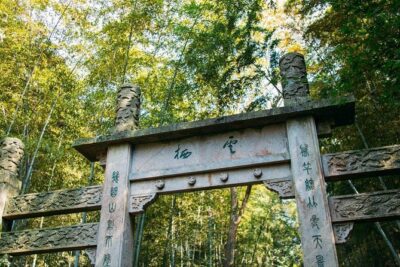
Half-Day Hangzhou Yunxi Bamboo Forest and Tea Plantation Experience
Read our review →
Leshan Buddha + Panda Base or Old Tea House Private Day Tour
Read our review →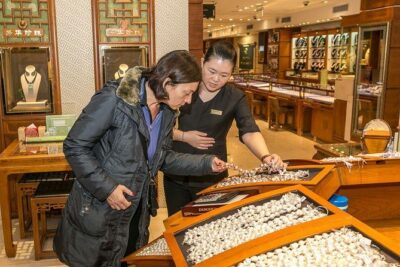
Private Beijing Markets Tour with Tea Tasting at Hongqiao Pearl Market
Read our review →