
Reviewed · TEA CEREMONY EXPERIENCES
Tea Tasting and Pairing Concept Workshop
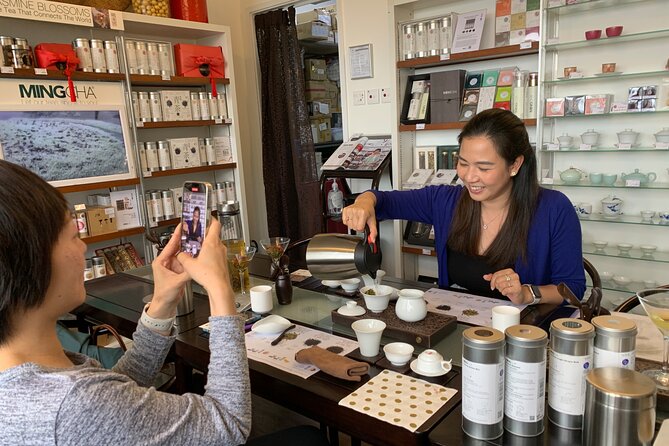
Tea can change with food. This 90-minute workshop at MingCha Tea House makes that idea easy to grasp through four premium Chinese teas, hands-on brewing, and pairings with dried nuts, chocolate, and flower honey toast. I like the small-group format, capped at 20 people, and the chance to learn from Vivian, a warm and lively tea host. The main drawback is the trip to Chai Wan, which takes extra planning if you are staying around central Hong Kong.
You will also see tea in a more traditional setting, using Chinese tea ware and the gongfu way of brewing, rather than simply sipping prepared cups. I especially like the sensory work with dry and wet leaves, plus the striking Jasmine Blossoms presentation. The session is family-friendly, but children who are not interested in tasting or careful pouring may find 90 minutes a little long.
In This Review
- Key points to know before you book
- A tea workshop in Chai Wan, not central Hong Kong
- The first lesson: tea is more than a drink
- Learning the gongfu method with traditional tea ware
- Pairing tea with nuts, chocolate, and flower honey toast
- Jasmine Blossoms and the visual side of tea
- Vivian’s teaching style makes the difference
- What the 90-minute schedule feels like
- Is $65.60 good value?
- Who will enjoy this most?
- Practical details that can save you trouble
- Should you book the MingCha Tea House workshop?
- FAQ
- Where does the tea workshop take place?
- How long does the experience last?
- Which teas will I taste?
- What foods are included for pairing?
- Is the workshop suitable for children?
- How many people can join the workshop?
- Can I cancel for a full refund?
Key points to know before you book
- Four tea styles in one session: Taste green, scented green, red, and oolong teas selected from premium Chinese categories.
- Hands-on gongfu brewing: Learn how to seep, pour, and serve tea with traditional tea ware.
- Food pairings with a purpose: Compare tea with dried nuts, chocolate, and flower honey toast.
- Vivian leads the workshop: Her friendly, funny teaching style is a major part of the experience.
- A family-friendly choice: Children can take part, making this more than an adult tasting.
- Plan for Chai Wan: The workshop starts and ends at MingCha Tea House, with two start times available.
A tea workshop in Chai Wan, not central Hong Kong
The experience begins at MingCha Tea House, located at B2, 15/F, Fortune Factory Building Block B, 40 Lee Chung Street in Chai Wan. That address matters. This is not a quick stop beside the Star Ferry or a tasting room in the middle of Central. You need to allow time to reach the tea house, find the building, and get to the correct floor.
The meeting point is near public transportation, which helps, but the supplied information does not give a precise travel time from other parts of Hong Kong. Check your route before booking and leave a little spare time. The session ends back at the tea house, so you will not need to arrange a separate pickup point.
MingCha Tea House gives the workshop a focused setting. You are there to taste, learn, and handle tea, rather than rush through a larger sightseeing program. The maximum group size is 20 people. That is not an intimate private class, but it is small enough to make hands-on work practical if the group is full.
The workshop is booked about 34 days ahead on average. That does not mean you must reserve a month in advance, but it is a useful signal for planning. If the date or start time matters to you, booking early is sensible.
More Food Tours in Hong Kong
- Hong Kong’s Tin Hau Hidden Eats Food Tour with 7+ Local Tastings
★ 5.0 · 352 reviews - Small-Group Hong Kong Island Food Tour
★ 5.0 · 343 reviews - Hong Kong Food Tour: Central and Sheung Wan Districts
★ 5.0 · 333 reviews
The first lesson: tea is more than a drink
The workshop is built around four tea categories: green, scented green, red, and oolong. That selection gives you useful contrast without trying to cover every tea made in China.
Green tea offers a direct way to notice the character of less heavily processed leaves. Scented green tea adds another layer, allowing you to compare a plain green style with one shaped by fragrance. Red tea brings a different cup, while oolong sits in its own middle ground with a separate processing style and taste.
You are not simply handed four cups and left to guess. The workshop uses all five senses to examine the tea. One especially useful exercise involves looking at the leaves before and after steeping. Dry leaves can look small, twisted, or tightly shaped, then open and change once they meet hot water. That simple comparison helps you see that tea is a prepared leaf, not a mysterious powder in a bag.
The tasting also gives you a chance to compare how tea changes from one category to the next. I find that more useful than hearing a long list of tea terms. You can pay attention to aroma, appearance, texture, and aftertaste at your own speed.
Learning the gongfu method with traditional tea ware
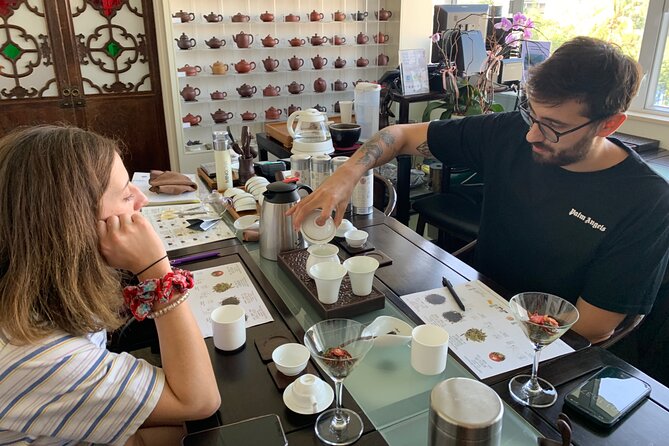
A central part of the workshop is hands-on brewing in the gongfu way. You learn how to seep and pour tea properly, using traditional Chinese tea ware rather than a large Western-style pot.
This format makes brewing feel active. You watch the amount of leaf, the water, the timing, and the way the tea is poured. You also see why small vessels work well for repeated tasting. The point is not to turn you into a tea professional in one afternoon. It is to give you a method you can understand and repeat.
Pouring matters, too. A careful pour helps keep each serving consistent, so you can compare the tea rather than accidentally giving one person a much stronger cup. The class also covers how tea should be served, which is useful if you want to recreate the experience at home.
The practical teaching is one of the strongest reasons to book this workshop. You leave with more than a memory of flavors. You have seen the leaves change, handled the tea ware, and practiced the basic steps of brewing and serving.
Still, this is a short session. At about 90 minutes, the class can introduce the method but cannot cover every regional style, water temperature, brewing variation, or tea tradition. If you already have advanced tea experience, you may want a more specialized class. For most visitors, the pace should provide a good first lesson without becoming a technical seminar.
Pairing tea with nuts, chocolate, and flower honey toast
The food pairing is not just a snack break. You taste tea with dried nuts, chocolate, and flower honey toast to see how food changes your perception of a drink.
Dried nuts give you a relatively restrained pairing. Chocolate brings sweetness and a fuller taste. Flower honey toast adds another sweet note, with a floral quality that connects naturally to scented tea. The value is in the comparison. A tea that seems light on its own can feel different beside chocolate or honey, while a fragrant tea may change when you eat something sweet.
You do not need a trained palate to take part. Start by tasting the tea alone, then try the food, and then return to the tea. Notice what seems stronger, softer, sweeter, or more fragrant. That before-and-after approach is a practical lesson you can use at home with tea and dessert.
The pairings also make the workshop easier for people who are new to tea. If you find a plain tasting too serious, the food gives the session a relaxed, social side. It helps children take part as well, though very young children may need supervision around hot water and breakable tea ware.
The available information does not specify the amount of food served. Treat the pairings as tasting portions, not as a full afternoon tea meal. If you need lunch or dinner, plan that separately.
More Workshops in Hong Kong
- Organic Chinese Dumpling Class with Market Walk
★ 5.0 · 88 reviews - Organic Xiao Long Bao Soup Dumpling Class & Market Walk
★ 5.0 · 62 reviews - Hong Kong Market Walking Tour & Chinese Cooking Class
★ 5.0 · 24 reviews
Jasmine Blossoms and the visual side of tea
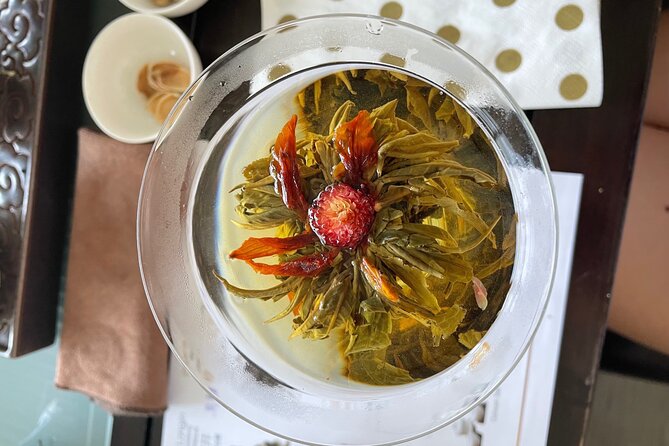
One of the most memorable details is the Jasmine Blossoms presentation. It is described as an especially beautiful tea service, and it adds a visual moment to a workshop otherwise focused on tasting and technique.
This matters because tea culture is not only about flavor. The shape of the leaves, the way they open, the color of the liquor, and the arrangement of the tea ware all affect how you experience the cup. The Jasmine Blossoms presentation gives you a clear example of that visual appeal.
It can also be a nice part of the session for anyone who enjoys photography. The information does not promise a dedicated photo stop or a specific display arrangement, so do not book this as a photo tour. But you may find the presentation more striking than the ordinary cup of tea you started with.
Vivian’s teaching style makes the difference
Vivian is the named tea host, and her approach is a major reason this workshop receives such strong praise. She is described as passionate, friendly, funny, and patient. One particularly thoughtful touch involved helping a participant arrange a taxi back to the hotel and waiting until it arrived.
That example tells you something useful about the tone of the class. The experience is not presented as a distant lecture. Vivian explains the tea, demonstrates preparation, and encourages people to take part. She also appears comfortable working with families, which helps explain why the family-friendly option is worth considering.
A good host matters in a tasting. Tea can become overly formal when every movement is corrected or every flavor needs a precise label. Vivian’s reported style sounds more relaxed. You can ask questions, make comparisons, and learn without feeling tested.
The class also includes recommendations for other teas you might enjoy. That can be helpful if you want to buy tea during your time in Hong Kong, though the supplied information does not state that purchases are included or required. Listen for the reasons behind any recommendation, not only the name of the tea. Your preferred scent, sweetness, strength, and food pairings are more useful guides than a generic best tea.
What the 90-minute schedule feels like
The workshop lasts about one hour and 30 minutes. That is enough time for a clear introduction, four tea tastings, hands-on brewing, and food comparisons, but it is not a full-day tea school.
A typical session flow should feel like this:
- You arrive at MingCha Tea House and meet the host.
- You are introduced to the selected tea categories.
- You examine tea leaves before and after steeping.
- You taste green, scented green, red, and oolong teas.
- You practice gongfu-style preparation with traditional tea ware.
- You compare the teas with dried nuts, chocolate, and flower honey toast.
- You receive suggestions for other teas that may suit your taste.
- You return to the meeting point at the end.
The exact order may vary, and the available information does not give precise serving times. You should arrive ready to participate rather than expecting a formal show with no practical work.
Two start times are offered. Since the actual times are not provided, check the available option carefully before paying. A morning or afternoon choice can make the class easier to fit around Hong Kong sightseeing, but the journey to Chai Wan remains part of the plan.
Is $65.60 good value?
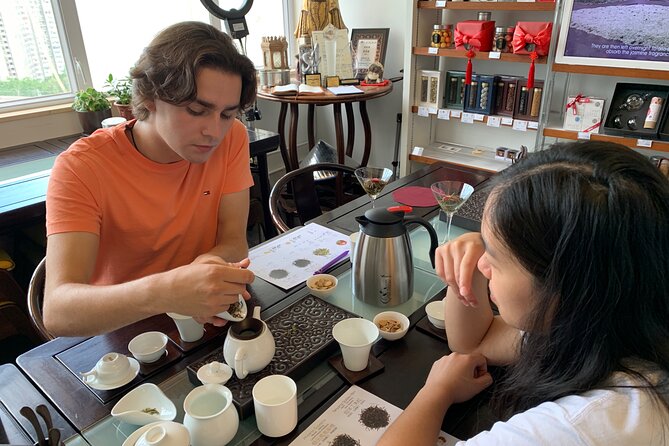
At $65.60 per person, this is not the cheapest way to drink tea in Hong Kong. You could order a pot of tea for much less. That comparison misses the point, though. The price covers instruction, four selected teas, traditional brewing practice, food pairings, and a guided tasting rather than a simple beverage purchase.
I think the value is strongest if you are curious about Chinese tea and want to learn how to prepare it. The hands-on element gives the session a practical purpose. You are paying for access to a teacher, a controlled tasting, tea ware, and a chance to compare categories side by side.
The value is weaker if you only want a quick cup, a large meal, or a general Hong Kong sightseeing activity. The location requires a trip to Chai Wan, and the session focuses tightly on tea. You should not expect a walking tour, a broader food tour, or a full afternoon tea spread.
For families, the price can make sense if both adults and children will participate. The family-friendly choice removes some of the worry about bringing children, but the activity still involves tasting and careful handling of tea ware. Consider your child’s interest and attention span before booking.
Who will enjoy this most?
I would recommend the workshop to several kinds of visitors:
- First-time tea drinkers who want a clear introduction.
- Tea lovers who want to understand the difference between green, scented green, red, and oolong.
- People interested in Chinese customs and serving methods.
- Families looking for a calm indoor activity with a practical element.
- Couples or small groups who enjoy food and drink tastings.
- Visitors who want recommendations for teas to explore after the class.
It is less suitable if you dislike hot drinks, do not want to taste unfamiliar foods, or prefer a fast-moving sightseeing tour. It may also feel basic to someone who already brews gongfu-style tea and knows the main Chinese tea categories.
The group limit of 20 helps keep the activity manageable, but the experience is not advertised as private. If you want one-on-one coaching, ask before booking rather than assuming it.
Practical details that can save you trouble
Your mobile ticket is convenient, and confirmation is sent within 48 hours, subject to availability. I would still check the confirmation carefully for the selected date, start time, and meeting instructions.
Free cancellation is available up to 24 hours before the local start time for a full refund. Cancellations or changes made inside that 24-hour window are not accepted for a refund. The activity also requires good weather, and if poor weather causes cancellation, you will be offered another date or a full refund.
That weather condition is worth noting even though much of the workshop takes place indoors. Follow the provider’s instructions if conditions affect the session, and keep your schedule flexible when possible.
Wear something comfortable for sitting and handling tea ware. No special clothing or prior tea experience is listed as required. Come ready to smell, taste, compare, and practice. The more attention you give to the leaves and pairings, the more you will get from the class.
Should you book the MingCha Tea House workshop?
Book it if you want a friendly, hands-on introduction to Chinese tea and do not mind traveling to Chai Wan. The four tea categories, gongfu preparation, food pairings, and Jasmine Blossoms presentation give the 90-minute session a good mix of taste, technique, and visual appeal.
I would be especially happy to recommend it to families and curious beginners, thanks to Vivian’s warm teaching style and the family-friendly option. Just keep your expectations realistic: this is a focused tea lesson, not a full meal or a general Hong Kong tour. If that sounds like your kind of afternoon, $65.60 buys a useful skill and a memorable taste of local tea culture.
FAQ
Where does the tea workshop take place?
It takes place at MingCha Tea House, B2, 15/F, Fortune Factory Building Block B, 40 Lee Chung Street, Chai Wan, Hong Kong.
How long does the experience last?
The workshop lasts approximately one hour and 30 minutes.
Which teas will I taste?
You will taste four premium teas from the green, scented green, red, and oolong categories.
What foods are included for pairing?
The tea is paired with dried nuts, chocolate, and flower honey toast.
Is the workshop suitable for children?
A family-friendly option is available, so children can take part.
How many people can join the workshop?
The activity has a maximum group size of 20 people.
Can I cancel for a full refund?
Yes. You can cancel at least 24 hours before the local start time for a full refund. Cancellations or changes made less than 24 hours before the start time are not refunded or accepted.
More Tea Ceremonies in Hong Kong
- Traditional Chinese Tea Ceremony Experience
★ 4.7 · 74 reviews - Beijing Culture: Tea Ceremony, Heritage Instrument & Calligraphy
★ 5.0 · 57 reviews - Biking Real Shanghai& Tea Tasting Experience
★ 4.5 · 45 reviews - Chinese Tea ceremony in Beijing Hutong courtyard
★ 4.7 · 26 reviews
Just added in Hong Kong
- Lantau Island: Priority Cable Car, Tai O & Direct Transfer★ 4.0 · 11 reviews
- Hong Kong: Lantau Private Coach, Tai O & Big Buddha Tour★ 4.8 · 8 reviews
- Hong Kong: Ngong Ping Private Cable Car Skip-the-Line Ticket★ 4.6 · 7 reviews
- From Hong Kong: Macau Day Tour with R/T Ferry, Lunch, Pickup★ 4.6 · 39 reviews
- Hong Kong Market Walking Tour & Chinese Cooking Class★ 5.0 · 24 reviews
- 4-Hour Private Hong Kong Layover Tour★ 5.0 · 39 reviews
- 6-Hour Private Hong Kong Layover Tour★ 5.0 · 18 reviews
- Private custom layover tour of Hong Kong – 7 hours★ 5.0 · 17 reviews
Tea Ceremony Experiences, compared.
Beijing Culture: Tea Ceremony, Heritage Instrument & Calligraphy
Read our review →
Chinese Tea ceremony in Beijing Hutong courtyard
Read our review →
Half-Day Hangzhou Yunxi Bamboo Forest and Tea Plantation Experience
Read our review →
Leshan Buddha + Panda Base or Old Tea House Private Day Tour
Read our review →
Private Beijing Markets Tour with Tea Tasting at Hongqiao Pearl Market
Read our review →
3-Hour Shanghai Yu Garden &Old Town Private Tour with Tea Tasting
Read our review →Where else this tour turns up