
Reviewed · FOOD & DRINK
Small-Group Hong Kong Island Food Tour
Come hungry, leave oriented. This four-hour walk through Sheung Wan, Central, and Wan Chai connects old Cantonese food traditions with British-era favorites, and it does so in the kind of local restaurants that can feel intimidating on your own. I especially like the mix of eating and neighborhood history, plus the Ding Ding tram ride that links the two halves of the tour.
The small group, capped at nine people, should make it easier to ask questions and share dishes. Guides such as Ivy, Andy, Sinclair, Mel, and Alex are repeatedly praised for their warmth, clear English, and practical help. The main drawback is that this is not a good fit for vegetarians, anyone avoiding gluten, or people with seafood allergies. You also need to save your appetite for breakfast.
In This Review
- Four details that make this tour worth considering
- Why this food tour works so well
- Sheung Wan starts with dim sum and old tea-house atmosphere
- Dried seafood and Sheung Wan’s traditional food trade
- Kai Fat Tea and the sweeter side of Cantonese food
- Graham Street Market reveals everyday shopping
- Wonton noodles show the value of local guidance
- Milk tea connects Hong Kong to British rule
- Central landmarks add movement between meals
- The Ding Ding tram makes the journey part of the tour
- Wan Chai finishes with roasted meat and egg tarts
- What the $115.52 price really includes
- Guide quality is central to the experience
- Who should book, and who should skip it
- Should you book the Hong Kong Island food tour?
- FAQ
- Where does the Hong Kong Island food tour begin?
- What time does the tour start?
- Where does the tour end?
- What food is included?
- Is the Ding Ding tram ride included?
- Is hotel pickup provided?
- How large is the group?
- Is the tour suitable for dietary restrictions?
- Can young children join the tour?
Four details that make this tour worth considering
- Breakfast begins with trolley-served dim sum: You start at an old tea house in Sheung Wan, where the room and service are part of the experience.
- The food stops are genuinely local: The route includes family-run restaurants, a long-established bakery, tea shops, markets, and specialty stores.
- Hong Kong’s food story comes alive: Cantonese cooking, British rule, postwar changes, Chinese medicine, dried seafood, and preserved sweets all enter the conversation.
- The Ding Ding ride adds real local flavor: You pay the tram fare yourself, then ride one of Hong Kong’s old double-decker electric trams from Central toward Wan Chai.
- The tour ends with classic comfort food: Char siu with rice and a dan tat egg tart provide a filling finish.
- The value is strongest on a first Hong Kong visit: At $115.52 per person, you are paying for several tastings, a guide, neighborhood orientation, and help crossing language barriers.
Why this food tour works so well
Hong Kong food tours can easily turn into a parade of famous dishes with little sense of place. This one has a better idea: use food to explain how Hong Kong became Hong Kong.
The cooking is mainly Cantonese, with roots in Guangzhou, but the city’s past is visible on every plate. Milk tea and custard tarts reflect British influence. Roasted meats, wonton noodles, dim sum, dried seafood, and herbal shops connect the city to older Chinese traditions. The guide helps you see those links instead of treating each bite as an isolated snack.
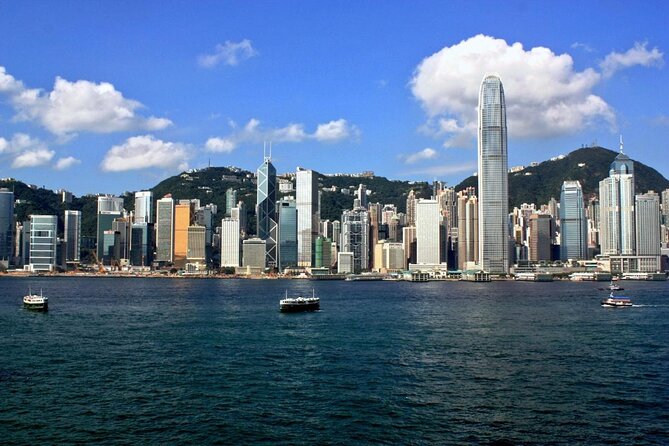
I like that the route moves through working neighborhoods rather than keeping you inside a polished dining district. Sheung Wan brings old Chinese businesses and food shops. Central adds colonial-era streets and the Mid-Levels Escalator. Wan Chai supplies the final meal and the tram connection.
You should expect a substantial morning. The core food includes dim sum, wonton noodle soup, Hong Kong milk tea, char siu or other roasted meat with rice, and an egg tart. Traditional dried-fruit sweets are also included, and the exact amount or order can vary with the group and the guide. Several guides have added small extras or adjusted the route when time and interests allowed, but you should regard those as bonuses rather than guarantees.
More Food Tours in Hong Kong
- Hong Kong’s Tin Hau Hidden Eats Food Tour with 7+ Local Tastings
★ 5.0 · 352 reviews - Hong Kong Food Tour: Central and Sheung Wan Districts
★ 5.0 · 333 reviews - Hong Kong Street Food Tour with Locals – Dim Sum, Wonton & more
★ 5.0 · 226 reviews
Sheung Wan starts with dim sum and old tea-house atmosphere
The meeting point is at 28 Des Voeux Road West in Sheung Wan, with a 9:30 am start. Directions are sent after booking, and the area is near public transportation. Arrive early enough to find the meeting point without rushing. Hong Kong streets can be confusing when you are still learning the city’s layout.
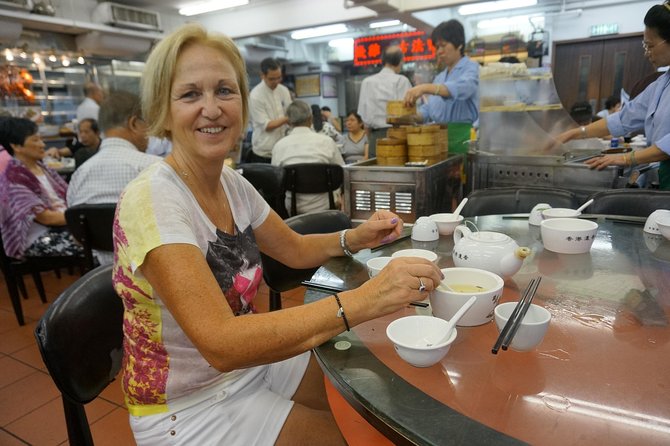
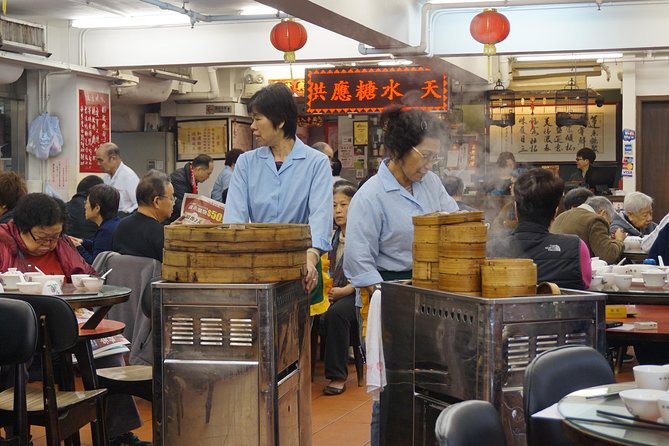
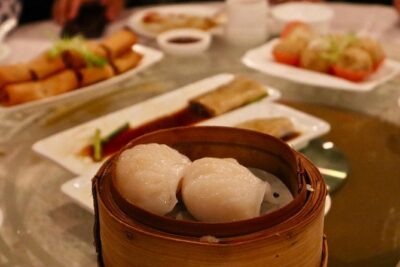
The first food stop is an old tea house with a history of almost a century. Here you have yum cha, or dim sum, served from a trolley. That detail matters. Trolley service is not just a way to deliver food. It gives the meal a sense of movement and choice, with the restaurant’s crowded, lively setting doing much of the teaching.
Your guide helps you identify what is being served and makes sure you get enough to eat. This is particularly useful if you have never ordered dim sum in Cantonese or are unsure how to share dishes in a busy dining room.
This first stop is also why breakfast is a bad idea before the tour. The meal is only the beginning, and the later stops are not token samples. I would plan a light dinner the night before and arrive genuinely hungry.
Dried seafood and Sheung Wan’s traditional food trade
After dim sum, the walk moves through Sheung Wan and along Seafood Street, the section of Des Voeux Road West associated with dried seafood. Dried seafood is used in Chinese cooking and in traditional tonics, so the shops offer a look at food as both cuisine and household medicine.
You may see unfamiliar ingredients and strong aromas here. The guide’s explanation helps turn a row of unusual-looking products into a picture of how Cantonese families shop and cook. This is a short stop, about 20 minutes, but it adds context that a restaurant-only food tour would miss.
The neighborhood itself is one of the best reasons to choose this experience. Sheung Wan combines old Chinese businesses with newer cafés, shops, and fashionable streets. You are not simply being taken from one restaurant to the next. You are walking through a part of Hong Kong where older trades still sit beside newer city life.
Kai Fat Tea and the sweeter side of Cantonese food
Kai Fat Tea is a family-run shop that has sold tea, assorted candies, and preserved fruit sweets for more than 30 years. The stop lasts about 15 minutes and includes traditional dried fruit sweets.
These treats are useful for understanding Hong Kong’s snack culture. They are not presented as luxury desserts. They are the kind of small, preserved foods that fit into daily life and traditional food habits. The guide can also explain how tea and sweets relate to the wider Cantonese meal.
This is one of the tour’s more unusual inclusions. Many food walks focus only on the best-known dishes. A tea shop and preserved sweets give you something different to look for later in your own Hong Kong wandering.
A completely different sort of day out:
- Lantau Island Day Trip – Big Buddha & Tai O
★ 4.5 · 1,328 reviews - Big Bus Hong Kong Open Top Hop-On Hop-Off Sightseeing Tour
★ 4.0 · 1,077 reviews - Hong Kong Day Tour: City Landmarks & Highlights
★ 4.5 · 798 reviews - Hong Kong International Airport Plaza Premium Lounge Access
★ 3.5 · 787 reviews
Graham Street Market reveals everyday shopping
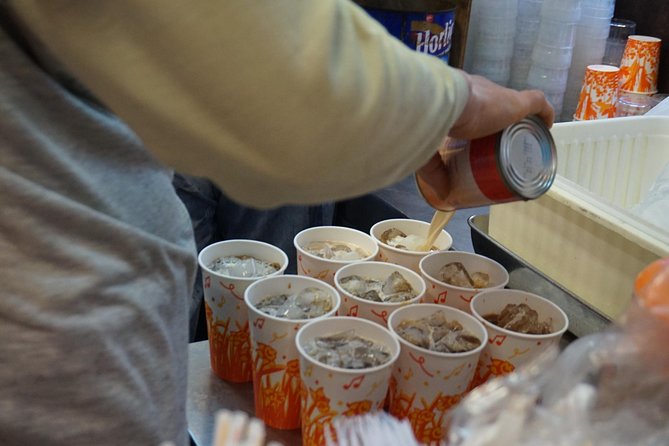
The route continues to Graham Street Market, a local market with more than a century of history. The market is lined with stalls selling produce and live seafood, and the stop is brief, around 10 minutes.
Do not expect a long shopping session here. The point is to see the setting and understand how fresh ingredients fit into Hong Kong’s food culture. The market also breaks up the restaurant visits, giving you a look at the practical side of cooking rather than only the finished plate.
From here, the route may pass through Gough Street and the Central and Western District. Gough Street has colonial-style buildings, small boutiques, and restaurants, while the surrounding streets and alleys show how quickly Hong Kong’s character can change from one block to the next.
Wonton noodles show the value of local guidance
One of the most anticipated stops is a family-run restaurant dating from the 1960s and recommended by the Michelin Guide. The specialty is wonton noodle soup, a dish that looks simple but depends on careful preparation.
This is exactly the sort of meal that benefits from a local introduction. A bowl of noodles may not seem as dramatic as a banquet dish, but its quality depends on the noodles, broth, wontons, and balance of flavors. The guide explains what you are tasting and helps you order and eat comfortably in a small restaurant.
The food is also filling. Several guides are praised for making sure the group receives enough at each stop, so do not assume that the noodles are a tiny sample. If you enjoy straightforward Cantonese cooking, this could be one of the strongest parts of the morning.
The tour also visits a family-run soy sauce producer, a dried seafood shop, a Chinese medicine shop dating from the 1940s, and the city’s oldest wet market. Not every stop is a formal tasting, but each one expands the food story. The guide’s role is important here, since some of these businesses can feel difficult to approach without help.
Milk tea connects Hong Kong to British rule
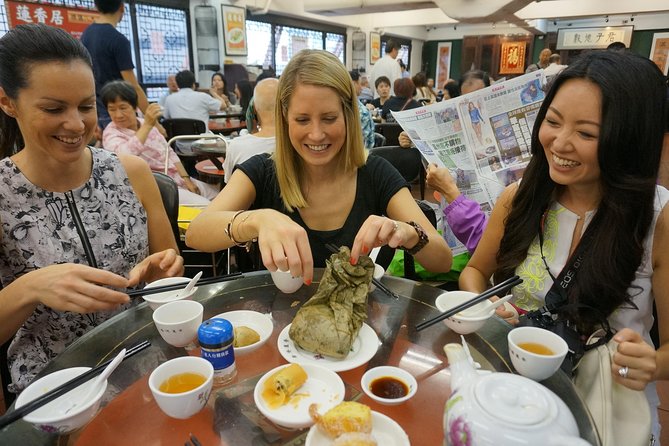
Hong Kong milk tea is one of the clearest examples of the city’s mixed food culture. You receive a cup during the walking route and learn how this drink became part of everyday life during the period of British rule.
This is a small tasting, but it gives the tour a useful historical pause. The point is not to claim that Hong Kong food is simply Chinese food with Western additions. Instead, you see how outside influence was adapted into local habits.
Milk tea also provides a change of pace between heavier dishes. By this stage, you may appreciate a drink more than you expected, especially if the dim sum and noodles have already filled you up.
Central landmarks add movement between meals
The route passes the Mid-Levels Escalator, described as the world’s longest outdoor escalator. It runs about 800 meters and rises 135 meters toward Conduit Road. The stop lasts roughly 15 minutes.
This is not a separate sightseeing tour, but the escalator helps you understand Hong Kong’s steep Central neighborhoods. It also saves some effort on the hills. You pass near Tai Kwun, the restored Central Police Station compound, which now includes heritage, art, performance, and lifestyle spaces.
These short sightseeing moments are a strong part of the tour’s value. You get a useful introduction to Hong Kong Island without losing the main focus on food. If this is your first morning in the city, the route can help you decide which neighborhoods deserve a longer visit later.
The Ding Ding tram makes the journey part of the tour
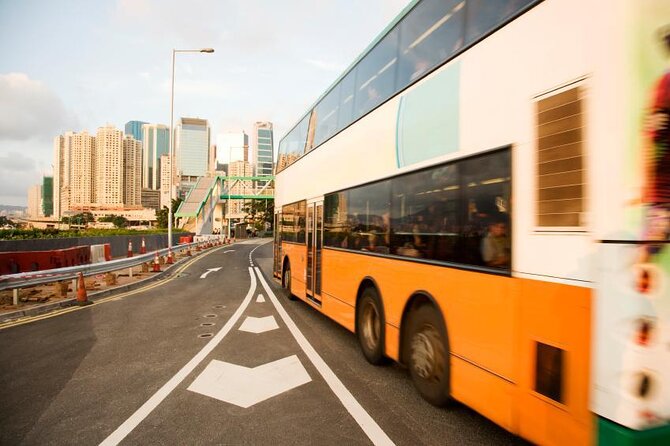
A ride on the Hong Kong Tramways, known locally as the Ding Ding, carries the group toward Wan Chai. The tram system began operating in 1904 under British rule and uses double-decker electric trams.
The tram fare is not included, so bring a little extra for this ride. That small cost is easy to accept because the ride is not just transport. It gives you a classic Hong Kong experience and lets you see the city from street level while moving between food districts.
The tram also helps the tour feel like a city tour rather than a sequence of restaurant reservations. You walk, eat, ride, and observe. That variety keeps the four hours from feeling repetitive.
Wan Chai finishes with roasted meat and egg tarts
In Wan Chai, the tour visits a family-run restaurant with roots reaching back to the Qing dynasty. It is recommended by the Michelin Guide and is known for English char siu, or roasted barbecue pork, served with rice.
You taste a mixture of traditional roasted meats with rice and homemade sauces. The phrase English char siu points to the way older Chinese cooking and British-era Hong Kong identity can overlap. This is hearty food, and it provides the most substantial final savory stop.
The last food stop is a bakery on Hennessy Road with about 60 years of history. It is associated with a former Hong Kong governor and is known for dan tat, the local egg tart. The tart is a Chinese interpretation of the English custard tart, making it a fitting end to the tour’s historical thread.
The route finishes around Wan Chai, near Southorn Playground. You are not returned to Sheung Wan, so plan your next activity from the east side of Hong Kong Island. Wan Chai is also a useful base for continuing your day on foot or by public transport.
What the $115.52 price really includes
At $115.52 per person, this is not a cheap breakfast. It is also more than a simple tasting walk. The fee covers a professional English-speaking guide, dim sum, wonton noodle soup, milk tea, dried fruit sweets, roasted meat with rice, an egg tart, and the guided Ding Ding experience. The tram fare itself is extra, and hotel pickup and drop-off are not provided.
I think the price makes the most sense if you are new to Hong Kong, prefer a small group, or want a local to handle ordering and language questions. It also saves you the trial-and-error of finding several old restaurants and shops in one morning.
The value is less clear if you already know Hong Kong’s food scene or mainly want a large, leisurely meal at one restaurant. This experience is about variety, explanation, and access to places you might otherwise pass by.
Guide quality is central to the experience
The guide can make or break a food tour, and this experience has a strong record in that area. Ivy is praised for her friendly manner, fluent English and Chinese, food explanations, and stories about recent Hong Kong history. Andy is noted for keeping groups well fed, offering practical help, and adding local details. Sinclair is described as engaging, funny, and good at connecting food with folklore and everyday life.
Mel receives particular praise for food knowledge, flexibility, and adding useful stops when the group showed interest. Alex is credited with clear English, careful attention to food restrictions, and patience with questions. Jane is also praised for her understanding of Hong Kong and its dishes.
That range of guide styles is worth noting. Your exact experience will depend on who leads the group, but the repeated strengths are clear: guides explain unfamiliar foods, help with ordering, answer questions, and make solo participants feel welcome.
Who should book, and who should skip it
I would choose this tour for a first or second visit to Hong Kong, especially if you want a fast introduction to Hong Kong Island. It suits curious eaters who want local restaurants, markets, food shops, and history in one morning.
It is also a good choice if you are traveling alone. The group size is limited to nine, and the shared dishes create an easy way to meet people without forcing social interaction.
The tour is not suitable for vegetarians, people following a gluten-free diet, or anyone with seafood allergies. It is also not suitable for children aged five and under. The provider recommends a private food tour for that age group.
You should be comfortable walking through city streets and eating several times in one morning. The route includes the Mid-Levels Escalator and a tram ride, but hotel pickup is not included. Wear practical shoes, bring a camera, and follow the directions sent after booking.
Free cancellation is available if you cancel at least 24 hours before the 9:30 am start. Changes or cancellations inside that window are not refunded, and the experience may be rescheduled or refunded if a minimum group size is not reached.
Should you book the Hong Kong Island food tour?
Book it if you want more than a list of dishes. The real strength here is the connection between food, neighborhoods, transport, and local history. You taste dim sum in Sheung Wan, noodles at an old family restaurant, milk tea, roasted meat in Wan Chai, and an egg tart, while the guide helps you understand why those foods belong to Hong Kong.
Skip it if you need vegetarian, gluten-free, or seafood-free food, or if you prefer a slow meal without walking between stops. For everyone else, the combination of small restaurants, practical guidance, and a classic tram ride makes the $115.52 cost reasonable, especially early in a Hong Kong visit.
FAQ
Where does the Hong Kong Island food tour begin?
The tour begins at 28 Des Voeux Road West in Sheung Wan, Hong Kong. Easy-to-follow directions are sent after booking.
What time does the tour start?
The tour starts at 9:30 am and lasts approximately four hours.
Where does the tour end?
The tour ends in Wan Chai, Hong Kong, rather than returning to the Sheung Wan meeting point.
What food is included?
The included food includes dim sum or yum cha, wonton noodle soup, Hong Kong milk tea, char siu or other traditional roasted meat with rice, an egg tart, and traditional dried fruit sweets.
Is the Ding Ding tram ride included?
The guided tram experience is included, but the tram fare is at your own expense.
Is hotel pickup provided?
No. Hotel pickup and drop-off are not included.
How large is the group?
The tour has a maximum of nine people per booking and a maximum of nine participants.
Is the tour suitable for dietary restrictions?
The tour is not suitable for vegetarians, people following a gluten-free diet, or people with seafood allergies.
Can young children join the tour?
The tour is not suitable for children aged five and under. A private food tour is recommended for that age group.
Just added in Hong Kong
- Lantau Island: Priority Cable Car, Tai O & Direct Transfer★ 4.0 · 11 reviews
- Hong Kong: Lantau Private Coach, Tai O & Big Buddha Tour★ 4.8 · 8 reviews
- Hong Kong: Ngong Ping Private Cable Car Skip-the-Line Ticket★ 4.6 · 7 reviews
- From Hong Kong: Macau Day Tour with R/T Ferry, Lunch, Pickup★ 4.6 · 39 reviews
- Hong Kong Market Walking Tour & Chinese Cooking Class★ 5.0 · 24 reviews
- 6-Hour Private Hong Kong Layover Tour★ 5.0 · 18 reviews
- Private custom layover tour of Hong Kong – 7 hours★ 5.0 · 17 reviews
- A Perfect Hong Kong Layover – 5h private tour★ 5.0 · 10 reviews
Food & Drink, compared.
Authentic Local Food Tour in Central Shanghai
Read our review →
Beijing Hutong Walking Food and Beer Tour at Hidden Restaurants
Read our review →
Hong Kong’s Tin Hau Hidden Eats Food Tour with 7+ Local Tastings
Read our review →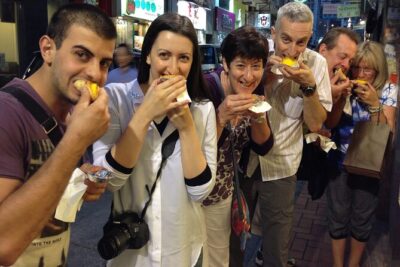
Hong Kong Food Tour: Central and Sheung Wan Districts
Read our review →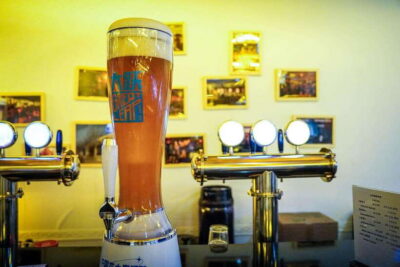
Hidden Gems Guided Food Tour with Beer and Tastings
Read our review →Where else this tour turns up