
Reviewed · TEA CEREMONY EXPERIENCES
Xi’an Chinese Calligraphy Workshop: Ink Art & Tea Tasting
Brushes turn simple lines into meaning. This three-hour Xi’an workshop pairs hands-on calligraphy with tea, snacks, and stories about Chinese characters, making it more than a quick craft class. I like the patient English instruction from Yunyun and the chance to take home a fan or scroll written with your chosen words. The main drawback is simple: children under 12 cannot join.
You’ll work with real ink, paper, and an inkstone, then practice characters such as one, ten, love, dragon, and forever. I also like that you learn to write your own name in Chinese. The $55 price is fair for a small group of no more than eight, though anyone expecting a sightseeing tour of Xi’an should know that the activity stays in one tea-room setting.
In This Review
- Key points to know before booking
- Why Chinese calligraphy makes a good Xi’an activity
- A calm introduction to the tools and strokes
- Three thousand years of characters in one sitting
- Tea, snacks, and the scholar-style setting
- From practice paper to your own fan or scroll
- Group size, pace, and who will enjoy it
- What the $55 price includes
- Finding the meeting point in Beilin District
- My take on YunyunTours and the teaching
- Should you book this Xi’an calligraphy workshop?
- FAQ
- How long does the Xi’an Chinese calligraphy workshop last?
- How much does the activity cost?
- Is the instruction offered in English?
- Who leads the calligraphy workshop?
- Is the workshop suitable for complete beginners?
- What materials are included?
- Do I receive a souvenir?
- Is tea included?
- Where is the meeting point?
- Can children join the workshop?
- Is the workshop wheelchair accessible?
- How large is the group?
- Can I cancel for a refund?
- Can I reserve without paying immediately?
Key points to know before booking
- Yunyun teaches in English, with clear explanations and a calm, patient manner that suits complete beginners.
- The three-hour format allows real practice, not just a quick demonstration and a souvenir photo.
- You learn why characters look the way they do, tracing their development across roughly 3,000 years.
- Tea and local snacks break up the writing, adding a traditional scholar-style atmosphere.
- You take home a personal artwork, choosing either a painted folding fan or a traditional scroll, plus personalized bookmarks.
- The meeting point is a specific residential-style address, so save both the English and Chinese versions before setting out.
Why Chinese calligraphy makes a good Xi’an activity
Xi’an is famous for major sights such as the ancient city walls, the Muslim Quarter, and the Terracotta Warriors. Those places show you the public face of the city. This workshop offers something quieter: a look at how Chinese language, art, and cultural ideas meet on a sheet of paper.
Chinese calligraphy is not simply handwriting with a brush. The order, angle, pressure, and speed of each stroke matter. Even a basic character can feel different when you change the balance of ink or the movement of your wrist. You will not become a master in three hours, but you can learn enough to understand why the art demands patience.
The class begins with basic strokes and simple characters. You may practice 一, meaning one, 十, meaning ten, and 大 and 小, meaning big and small. These forms help you see how a few controlled lines can create a complete idea.
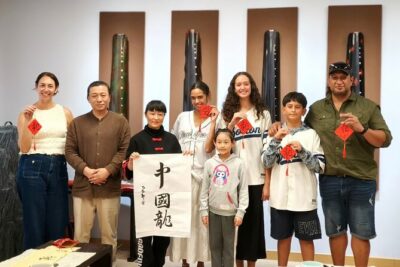
The class also brings in characters with stronger cultural associations. 米 means rice, 永 means forever, 龙 means dragon, 武 relates to martial spirit, and 爱 means love. These are not random vocabulary words. They give you a small window into the way language, symbols, and cultural values overlap.
I especially like the decision to include both very simple forms and more expressive characters. Beginners need the easy strokes first, but characters such as dragon and love give the practice a personal feel. You can also learn your name in Chinese characters, which may become the most useful part of the session if you want a keepsake with a direct connection to you.
More Food Tours in Xi'an
- Xi’an: Gourmet & Street Food Tour
★ 4.8 · 22 reviews - Authentic Old Xi’an Back Alley Food Tour
★ 5.0 · 18 reviews - Xi’an: City Wall & Old Town Walking Tour w/ 10+ Food Tasting
★ 4.9 · 9 reviews
A calm introduction to the tools and strokes
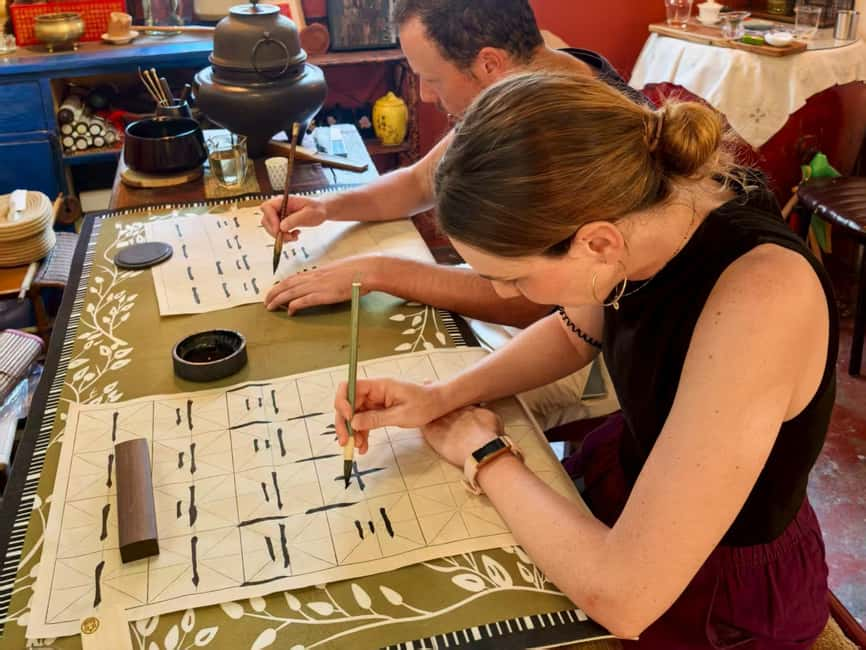
The experience includes all the basic materials: ink, paper, and an inkstone. You do not need to arrive with any artistic equipment. That matters because authentic calligraphy tools can look unfamiliar, and a beginner may not know what to buy or how to prepare the ink.
Your instructor explains how to hold and move the brush. The early exercises focus on control rather than speed. Expect to repeat lines and shapes before moving toward full characters. This may sound modest, but repetition is where the activity earns its three-hour length.
I like this approach because it keeps the class from becoming a simple brush-painting souvenir session. You get a chance to understand the mechanics. At the same time, do not expect technical training at an art-school level. The class is designed for beginners and curious culture lovers, not for people preparing for a professional calligraphy exam.
Yunyun’s teaching style receives the strongest praise in the available feedback. Lorenzo described her explanations as clear and patient, especially for people approaching Chinese language and culture from an Italian background. Anze, who had already met her on a walking tour earlier that day, also valued the way she explained each step to complete beginners.
That repeated focus on patience is important. Calligraphy can become frustrating when your first strokes look uneven. An instructor who keeps the mood relaxed can make the difference between a pleasant cultural lesson and three hours of worrying about crooked lines.
Three thousand years of characters in one sitting
The history portion gives the brushwork a reason. Chinese characters have changed over roughly 3,000 years, and the class uses that long development to explain how written forms carry meaning.
You will not receive a full academic course in Chinese writing. Instead, you get stories and cultural context while practicing. That balance works well for a short activity. You learn enough to look at a character with more curiosity, rather than treating it as a decorative shape.
The characters selected for practice help make this history easier to grasp. One and ten are simple enough to show how strokes can mirror an idea. Big and small introduce contrast. Rice connects writing with a daily staple and a familiar cultural word. Forever, dragon, martial spirit, and love let you see how written symbols can carry emotional or symbolic weight.
I would pay attention during this section, even if you came mainly for the craft. It helps you understand why calligraphy is treated as an art form and not just a method of communication. The lesson also gives you useful context for signs, artworks, temple inscriptions, and museum displays you may encounter elsewhere in China.
Tea, snacks, and the scholar-style setting
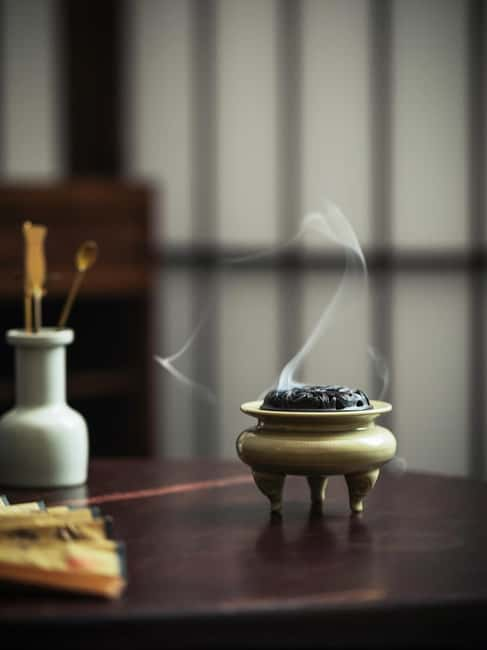
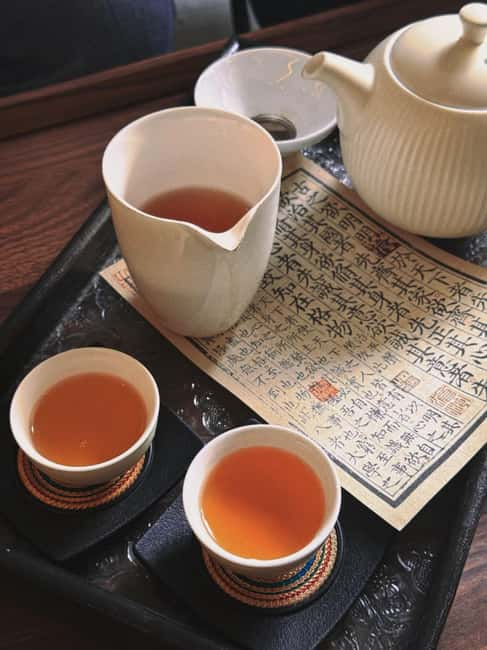
Tea is woven through the workshop rather than added as an afterthought. You receive traditional Chinese tea and local snacks while learning about calligraphy and tea culture from Yunyun.
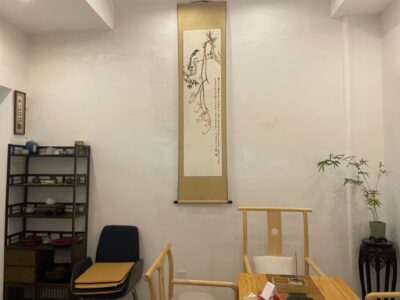
The setting is described as a charming tea room with an authentic Chinese scholar atmosphere. That setting matters. Calligraphy is easier to appreciate when you are not rushing between major sights or sitting in a crowded classroom. A tea table, ink, paper, and brush create the right pace for an art built around control and attention.
Daniel specifically praised the friendly instruction and the chance to learn about both tea and calligraphy. Barbara enjoyed the pattern of writing, decorating a fan, and tasting tea between activities. That combination gives the session variety, especially for anyone who might find three hours of repeated brush practice too long.
Still, the tea portion is not presented as a formal tea ceremony. If you are searching for a specialist tasting with an extensive explanation of regional varieties, this may not be the right choice. Here, tea supports the cultural setting and provides a pleasant pause during the writing lesson.
The local snacks are included, but no detailed menu is provided. If you have dietary restrictions, the available information does not explain whether alternatives are offered, so ask the provider before booking.
More Tea Ceremonies in Xi An:
- Traditional Chinese Tea Ceremony Experience
★ 4.7 · 74 reviews - Tea Tasting and Pairing Concept Workshop
★ 5.0 · 57 reviews - Beijing Culture: Tea Ceremony, Heritage Instrument & Calligraphy
★ 5.0 · 57 reviews - Biking Real Shanghai& Tea Tasting Experience
★ 4.5 · 45 reviews
From practice paper to your own fan or scroll
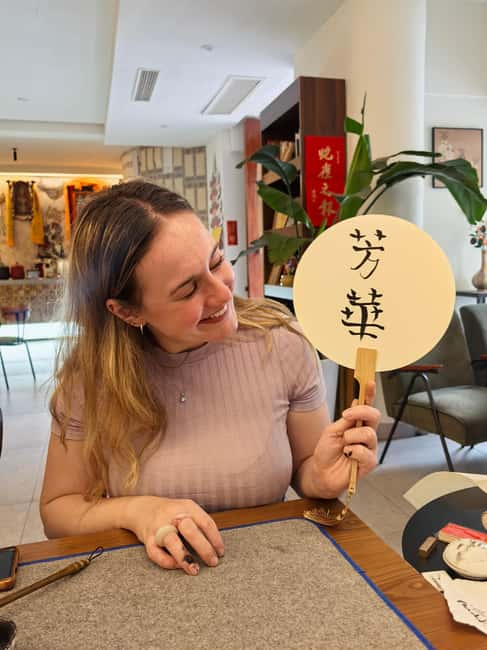
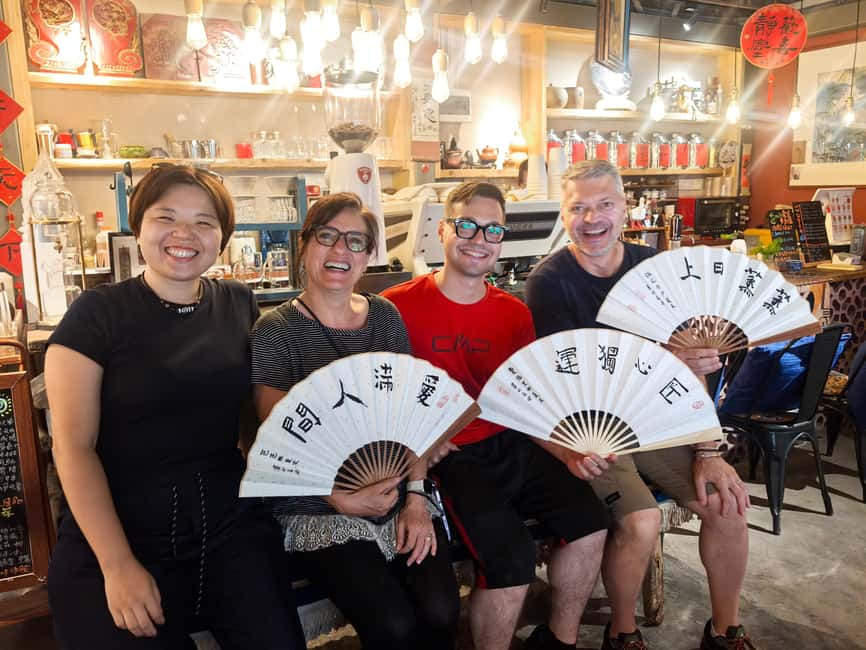
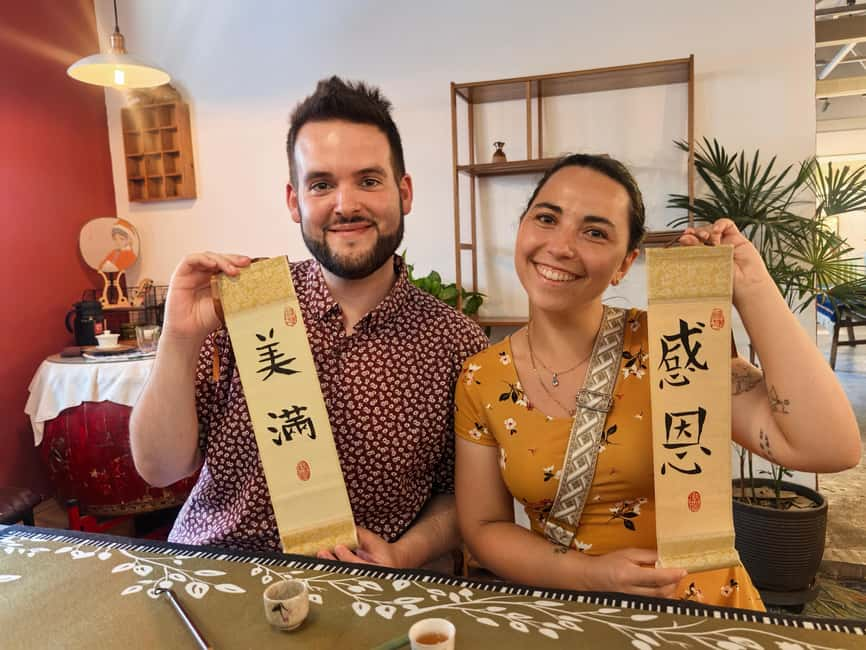
The class moves from practice into a personal art project. You choose favorite words or sentences, and the instructor writes them on a folding fan or scroll. You can choose between those two formats.
The folding fan is the more practical option if you want something light and easy to pack. It also gives you a surface that can be decorated, as Barbara noted after her session. A scroll may appeal more if you want a traditional wall piece with a stronger connection to Chinese art.
The information does not say how much text can fit on each item, so keep your chosen phrase reasonably short unless Yunyun advises otherwise. A single character, name, greeting, or brief sentence is likely to work better than a long passage. The key benefit is personal choice. You are not simply handed an identical souvenir at the end.
Personalized bookmarks are also included. These are smaller and easier to use after you return home. Together, the bookmarks and the larger fan or scroll give you several physical reminders of the class without requiring you to buy extra materials.
I like the balance here. You practice enough to understand the technique, then receive a finished piece that looks more polished than a beginner’s first sheet of paper. The completed work is guided by a professional instructor, so it functions as both a souvenir and a record of the words you selected.
Group size, pace, and who will enjoy it
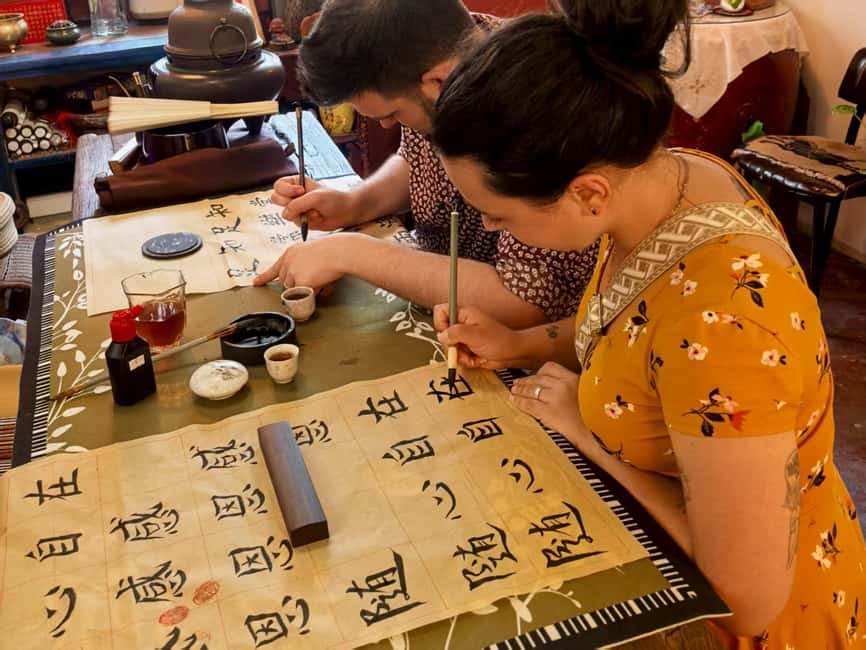
The group is limited to eight people. That is a useful size for calligraphy because each person needs help with brush angle, ink, and stroke order. In a large class, you might spend too much time waiting for a correction. A small group also makes it easier to ask about your name, a favorite character, or the meaning of a phrase.
The instructor teaches in English. This makes the activity suitable for English-speaking visitors who have no background in Mandarin or Chinese writing. Lorenzo’s experience is especially relevant if you are approaching the language from another European language. The lesson is presented as accessible rather than intimidating.
You should book this if you enjoy:
- Hands-on cultural activities instead of another sightseeing stop
- Learning basic skills from a local instructor
- Quiet, seated experiences with time for conversation
- Personalized souvenirs
- Tea, traditional arts, and language history
- Small-group activities for families with children aged 12 and older
You may want to skip it if you prefer fast-paced sightseeing, dislike seated craft activities, or want advanced calligraphy instruction. The session is also not suitable for children under 12.
Families and small groups of friends are a good match, provided everyone can stay engaged with careful practice. Solo participants can also fit comfortably into a group of eight, though the available information does not state whether private bookings are offered.
What the $55 price includes
At $55 per person, this is not the cheapest short activity in Xi’an. Its value comes from what is bundled into the three hours: professional instruction, tea, local snacks, all writing materials, a folding fan or scroll, and personalized bookmarks.
If you only want to try a brush for ten minutes, the price may feel high. You are paying for a full lesson with cultural context and a finished artwork, not just a demonstration. The small group also matters because personal correction is central to the experience.
The strongest value is for someone who would otherwise buy a generic souvenir. Here, your keepsake connects to your name or chosen words, and you understand more about the characters before taking it home. That gives the purchase a story, not just a decorative surface.
The reserve-now-and-pay-later option can help if your Xi’an schedule is still changing. Free cancellation is available up to 24 hours before the activity for a full refund. Check the available start times when booking because the duration is fixed at three hours, but a specific daily schedule is not provided.
Finding the meeting point in Beilin District
The meeting point is Room 0102, Unit 1, Building 7, No. 6 Xiamaling, Beilin District, Xi’an City, Shaanxi Province.
The Chinese address is:
西安市碑林区下马陵6号第7幢1单元0102室垣里私厨
Save the Chinese address on your phone. This is practical advice for any activity in China, but it matters even more when the meeting point is given as a room within a building rather than as a major public landmark. The supplied information does not include transportation instructions, so you should allow time to locate the building and room.
The activity is wheelchair accessible. No age exception is listed, so children under 12 should not be booked for this experience.
My take on YunyunTours and the teaching
Yunyun is the clear strength of this workshop. The feedback repeatedly points to warmth, patience, and clear explanations. Those qualities matter more here than flashy presentation because calligraphy requires close guidance.
Anze’s experience is unusual in a good way: the same instructor had led a walking tour earlier that day. That familiarity made the whole day feel connected, but you do not need to book another tour to benefit from this class. Yunyun’s value here is her ability to make an unfamiliar subject feel manageable.
Lorenzo also highlighted how she helped make a difficult topic interesting and relaxed. Daniel described her as friendly and approachable. Barbara’s account confirms that the class includes writing, fan decoration, and tea tasting in a friendly rhythm.
The sample is small, so I would not treat it as proof that every session will be identical. But the praise is consistent across different nationalities and languages. If you are nervous about making mistakes, the instructor’s calm manner is a strong reason to consider booking.
Should you book this Xi’an calligraphy workshop?
Book it if you want a quiet, personal cultural activity that gives you something to take home. The best reasons are the English-speaking instruction, the small group of up to eight, the tea-room setting, and the chance to choose your own fan or scroll design.
I would especially recommend it during a busy Xi’an itinerary. After major sights and crowded streets, three hours with tea, ink, and careful brushwork can offer a useful change of pace. It also gives you cultural context that a standard sightseeing visit may not provide.
Skip it if your main goal is seeing monuments or if you want advanced artistic training. For everyone else, $55 is a reasonable price for guided practice, refreshments, materials, and a personalized keepsake. Save the Chinese meeting address, choose a short phrase before class, and arrive ready to make a few imperfect strokes. That is part of the fun.
FAQ
How long does the Xi’an Chinese calligraphy workshop last?
The workshop lasts three hours.
How much does the activity cost?
The price is $55 per person.
Is the instruction offered in English?
Yes. The instructor teaches in English.
Who leads the calligraphy workshop?
The experience is provided by YunyunTours, and the instructor is Yunyun.
Is the workshop suitable for complete beginners?
Yes. The class is designed for beginners and teaches basic brush strokes, meaningful Chinese characters, and how to write your name in Chinese characters.
What materials are included?
Ink, paper, and an inkstone are included, along with professional calligraphy instruction.
Do I receive a souvenir?
Yes. You can choose either a painted folding fan or a traditional scroll painting. Personalized bookmarks are also included.
Is tea included?
Yes. The activity includes traditional Chinese tea and local snacks.
Where is the meeting point?
The meeting point is Room 0102, Unit 1, Building 7, No. 6 Xiamaling, Beilin District, Xi’an City, Shaanxi Province, China. The Chinese address is 西安市碑林区下马陵6号第7幢1单元0102室垣里私厨.
Can children join the workshop?
Children under 12 cannot join. The activity is suitable for children aged 12 and older.
Is the workshop wheelchair accessible?
Yes, the activity is wheelchair accessible.
How large is the group?
The workshop is a small-group activity limited to eight participants.
Can I cancel for a refund?
Yes. You can cancel up to 24 hours in advance for a full refund.
Can I reserve without paying immediately?
Yes. The reserve-now-and-pay-later option lets you book your place without paying today.
More Food Tours in Xi An
- Xi’an: Full-Day Terracotta Warriors & Local Food Tour
★ 4.8 · 4 reviews - Xian: Morning Food Tour of the Muslim Quarter
★ 5.0 · 3 reviews - Xi’an Highlights: Terracotta Warriors, City Wall & Food Tour
★ 5.0 · 3 reviews - Authentic Local Food Tour in Central Shanghai
★ 5.0 · 1,382 reviews
More Calligraphy Workshops in Xi An
- Beijing Calligraphy Class
★ 4.9 · 112 reviews - Chinese Calligraphy Class for Small Group
★ 5.0 · 104 reviews - Beijing Historic City Guided Walking Tour + Calligraphy Creation
★ 5.0 · 59 reviews - Beijing Wangfujing Calligraphy Class by Forbidden City
★ 5.0 · 58 reviews
Just added in Xi An
- Xi’an: Terracotta Warriors Tickets & Guided Tours★ 4.7 · 11 reviews
- Xi’an: Royal Banquet with Chinese Cultural Performance★ 3.4 · 3 reviews
- Xian: Terracotta Army Admission Ticket★ 4.6 · 5 reviews
- Xi’an Terracotta Warriors and City Wall Private Day Tour★ 5.0 · 4 reviews
- Xi’an Private Terracotta Warriors and Hanyangling Mausoleum★ 4.7 · 3 reviews
- Xian: Morning Food Tour of the Muslim Quarter★ 5.0 · 3 reviews
- Xian: Bus Tour of Terracotta Warriors With Guide & Lunch★ 4.2 · 5 reviews
- Xi’an: Top 3 Highlights All Inclusive Private Day Tour★ 5.0 · 41 reviews
Tea Ceremony Experiences, compared.
Beijing Culture: Tea Ceremony, Heritage Instrument & Calligraphy
Read our review →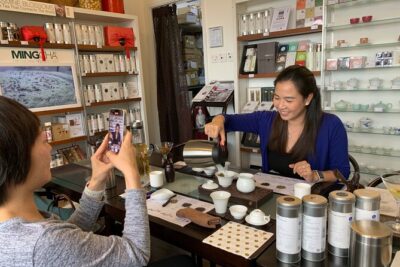

Chinese Tea ceremony in Beijing Hutong courtyard
Read our review →
Half-Day Hangzhou Yunxi Bamboo Forest and Tea Plantation Experience
Read our review →
Leshan Buddha + Panda Base or Old Tea House Private Day Tour
Read our review →
Private Beijing Markets Tour with Tea Tasting at Hongqiao Pearl Market
Read our review →Where else this tour turns up