
Reviewed · CALLIGRAPHY WORKSHOPS
Brush calligraphy class / Chinese ink painting class
Let ink, paper, and patience do the talking. This Hong Kong workshop offers a calm way to try Chinese brush calligraphy or ink painting, with a professional teacher, all materials, and Chinese tea included. I like the small maximum of eight people, and I also like that a solo participant can book without waiting for a larger group.
The class lasts about 90 minutes and costs $65.31 per person. That is fair if you want personal guidance and a finished piece to take home, though the non-refundable booking policy calls for care. You must also state your preferred activity in the booking remarks, or the teacher decides between calligraphy and painting.
In This Review
- Key points to know before booking
- What this Hong Kong art class is really like
- Entering the studio at Sing Win Factory Building
- The first lesson: holding the brush and controlling ink
- Choosing calligraphy, couplets, or a personal name
- The ink painting option and its different pace
- A small group makes the $65.31 price easier to understand
- Tea, materials, and the cultural side of the lesson
- What the teacher contributes
- Who will enjoy this and who may not
- Practical booking advice for a smoother visit
- Should you book the Kwun Tong calligraphy class?
- FAQ
- Where does the class take place?
- How long does the experience last?
- Can I choose between calligraphy and ink painting?
- Is the class suitable for one person?
- Are materials included?
- What happens if bad weather cancels the activity?
Key points to know before booking
- Choose your art form in advance: Request Chinese calligraphy or Chinese ink painting in the remarks when you book.
- Small groups keep the lesson personal: The maximum is eight people, and one person is welcome to attend.
- You leave with your own artwork: Beginners can complete calligraphy, couplets, Spring Festival couplets, or an ink painting.
- Tea and materials are included: You do not need to bring brushes, ink, paper, or other class supplies.
- The class takes place in Kwun Tong: Meet at Sing Win Factory Building on Shing Yip Street.
- Confirm the appointment carefully: One reported booking ended with the studio closed, so check the arrangements before making an expensive taxi trip.
What this Hong Kong art class is really like
This is not a large cultural show or a quick demonstration. It is a hands-on lesson designed to give you a first feel for Chinese brushwork.
The setting is Art Connect and Communication, an institution focused on art creation and cultural teaching. Its program includes several traditional Chinese arts, such as guzheng, Chinese chess, calligraphy, and Chinese painting. For this class, the focus stays on the brush, the movement of ink, and the meaning carried by each stroke.
You can choose between two related but different activities. Calligraphy is about forming Chinese characters with control and rhythm. Ink painting uses the brush in a looser way, with attention to shape, tone, spacing, and the way a few marks can suggest a larger image.
The class is especially suitable if you want an activity that feels connected to local culture without taking up half a day. At around 90 minutes, it fits neatly into a Hong Kong itinerary. You can visit Kwun Tong, attend the lesson, and still have much of the day left.
More Workshops in Hong Kong
- Organic Chinese Dumpling Class with Market Walk
★ 5.0 · 88 reviews - Organic Xiao Long Bao Soup Dumpling Class & Market Walk
★ 5.0 · 62 reviews - Tea Tasting and Pairing Concept Workshop
★ 5.0 · 57 reviews
Entering the studio at Sing Win Factory Building
The meeting point is Sing Win Factory Building, 15-17 Shing Yip Street, Kwun Tong, Hong Kong. The class begins and ends at this same location.
The address matters because this is not a major sightseeing stop with a grand entrance or a clearly marked tourist attraction. Give yourself time to find the building and the studio. The experience information says it is near public transportation, but it does not provide a specific route or station, so check your map and appointment details before setting out.
A previous booking went badly when the participant reached the studio, only to receive a message saying it was closed. That person lost time and taxi fare before arranging a refund through the booking company. I would treat this as a warning to confirm the class is operating before leaving your hotel, especially if you plan to take a taxi across Hong Kong.
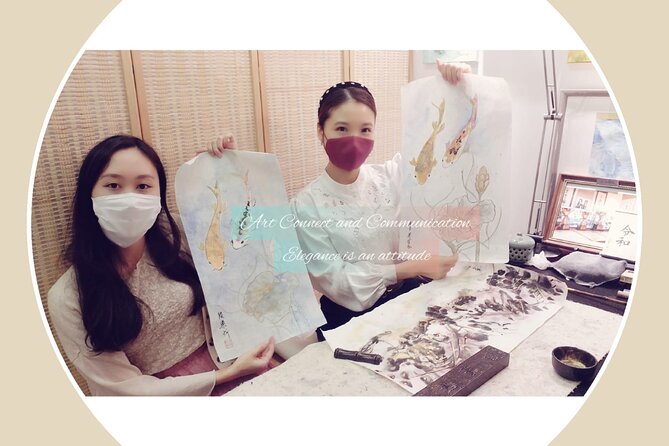
Once inside, you might find a compact room rather than a large teaching hall. One session was described as a cosy, well-decorated space used by only two or three people. That small scale is part of the appeal. You are less likely to feel lost in a crowd, and the teacher can watch how you hold the brush.
The first lesson: holding the brush and controlling ink
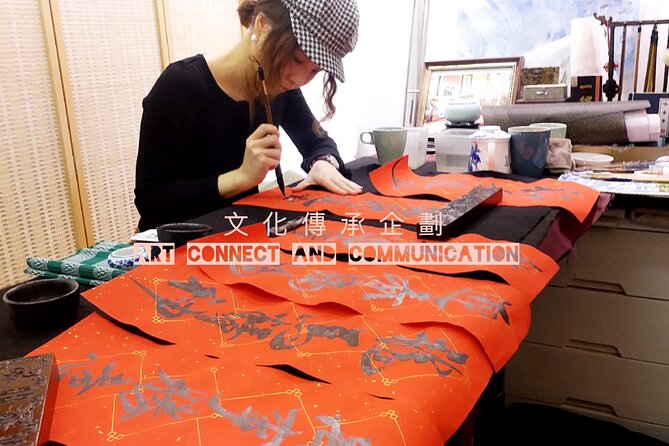
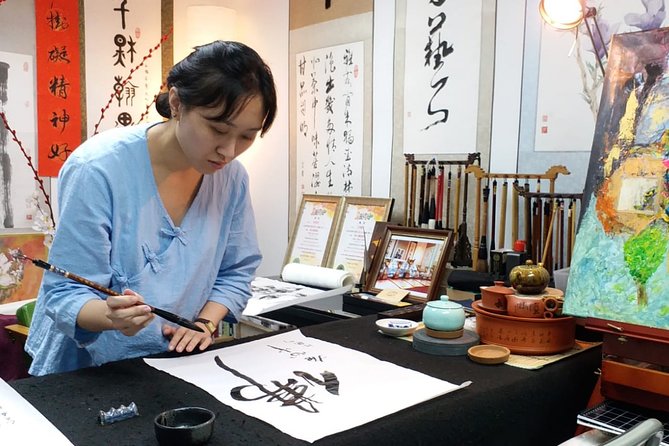
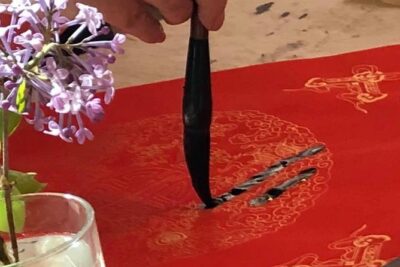
The class begins with basic techniques. For calligraphy, that means learning how to handle the brush, apply pressure, and guide the ink across rice paper or red paper.
Chinese calligraphy is not simply handwriting with a different alphabet. The brush changes character depending on its angle, speed, and pressure. A stroke can look firm, light, rounded, or dry. Even a simple character asks you to slow down and pay attention.
The teacher introduces different calligraphy styles and shows examples of ancient and modern works. This gives you useful context before you begin copying or creating your own piece. You can see that Chinese writing has more than one visual language, from formal and carefully balanced characters to styles with freer, more flowing lines.
I like this part because it prevents the activity from becoming a basic craft session. You are not only making marks on paper. You are getting a short explanation of why those marks look the way they do.
The professional calligrapher also helps you correct your technique. You may start with a stiff wrist or too much pressure. The point is not to produce museum-quality work in one lesson. The point is to understand the basic movements well enough to create something recognizable and personal.
Choosing calligraphy, couplets, or a personal name
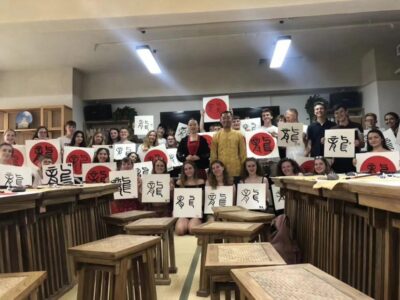
If you select calligraphy, you can work on traditional characters and produce a finished piece on rice paper or red paper. Beginners can also complete couplets or Spring Festival couplets, depending on the season and the teacher’s plan.
A particularly nice option is creating the Chinese characters for your name. Past participants have left with a calligraphy piece featuring their names, which makes the result more personal than a generic souvenir.
From January to February, depending on the Lunar New Year date, the workshop may include Hui Chun and Dou Fang. Hui Chun refers to handwritten New Year blessings, while Dou Fang is a square-format piece of calligraphy or painting. These seasonal formats connect the lesson to an active Chinese tradition rather than treating it as a decorative exercise.
The red paper is important here. Red is strongly associated with celebration and good wishes during the Lunar New Year period, so a handwritten blessing can make a thoughtful gift or a meaningful keepsake. If your visit falls outside that period, you can still expect the basic calligraphy experience, but the exact seasonal activity may not be available.
More calligraphy workshops in Hong Kong:
- Beijing Calligraphy Class
★ 4.9 · 112 reviews - Chinese Calligraphy Class for Small Group
★ 5.0 · 104 reviews - Beijing Historic City Guided Walking Tour + Calligraphy Creation
★ 5.0 · 59 reviews - Beijing Wangfujing Calligraphy Class by Forbidden City
★ 5.0 · 58 reviews
The ink painting option and its different pace
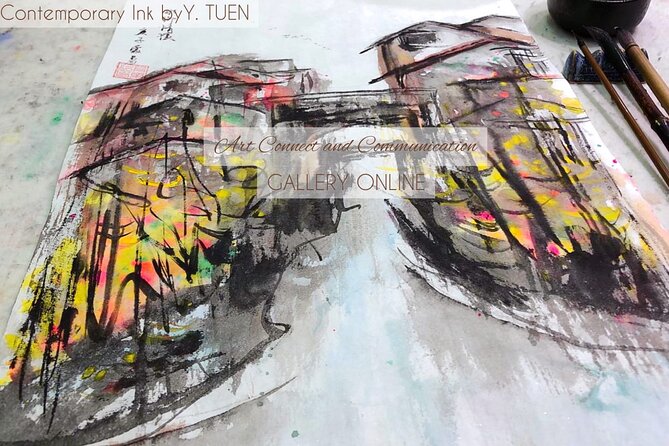
Ink painting follows the same basic introduction to brush and ink, but the goal is different. Instead of forming characters, you learn the foundations of Chinese ink painting and hear about different schools and approaches.
The class allows each person to complete a painting in a personal style. That wording matters. You are not expected to reproduce a perfect professional work. The teacher helps you understand how to use the brush and ink, then gives you room to make your own choices.
Ink painting often depends on restraint. A few lines and changes in ink density can do a lot of work. Too much detail can make the image heavy, while a lighter touch leaves room for suggestion. In a short class, you will only cover the basics, but that is enough to see why the art can feel both simple and difficult.
If you prefer visual composition to written characters, painting may suit you better. If you like precise forms, repeated strokes, and the meaning of written words, calligraphy is the stronger choice. The two activities share tools and materials, but they produce very different results.
Make your choice clear when booking. The instructions ask you to write whether you want Chinese calligraphy or ink painting in the remarks. If you leave that blank, the teacher decides for you.
A small group makes the $65.31 price easier to understand
At $65.31 per person, this is not the cheapest short activity in Hong Kong. You are paying for a private class format, professional instruction, materials, and a finished piece, not simply admission to a room where someone demonstrates brushwork.
The value improves if your booking has only two or three people. A small class gives you more opportunity to ask questions and receive corrections. It also makes the session feel less formal and more like a private cultural lesson.
The maximum group size is eight, and one person is welcome. The activity is described as private, meaning only your group participates. If you are booking with family or friends, ask about group discounts, since discounts are listed as a feature.
The price makes the most sense for someone who wants to learn by doing. If you only want to watch a calligrapher work, you may find the cost high. If you value a personal souvenir and a short lesson in traditional technique, the package is more reasonable.
A useful comparison is the price of buying a mass-produced souvenir. Here, the keepsake carries your own brush marks, along with the memory of making it. It will not be flawless, and that is part of its charm.
Tea, materials, and the cultural side of the lesson
All required materials are included. You do not need to purchase brushes, ink, rice paper, or red paper before arriving.
Chinese tea is also served during the workshop. This is a small detail, but it helps set the pace. The class is not meant to be rushed from one exercise to the next. Tea gives the session a quiet pause and adds another everyday element of Chinese culture.
Art Connect and Communication presents its work as a way to connect art with daily life. That idea comes through most clearly in the combination of tea, writing, painting, and conversation. The lesson is not a substitute for a full study of Chinese art, but it gives you a direct starting point.
The teacher also discusses ancient and modern calligraphy works and different calligraphy styles. That historical range adds useful perspective. You begin to see that the characters on your paper belong to a long artistic tradition, even when your own first strokes are uneven.
What the teacher contributes
The teacher is central to the experience. Several sessions have been praised for an informative, talented, and passionate instructor. One participant attending for a birthday especially enjoyed the teacher’s enthusiasm and the sense of learning something completely new.
That praise matches what a beginner needs. You do not need prior knowledge of Chinese writing or painting. You need someone willing to explain basic movements, demonstrate patiently, and help you adjust your work without making the lesson intimidating.
The professional calligrapher also helps you appreciate the difference between styles. This is more useful than being handed a brush and told to copy a character. You gain a little vocabulary for what you are seeing, and you understand that different choices in line and form are deliberate.
The available information does not name the instructor, so do not plan around a particular teacher. The quality of the lesson will depend heavily on the person leading your session, but the strongest reports describe the teacher as encouraging and committed to the subject.
Who will enjoy this and who may not
I would recommend this class to first-time visitors who want a cultural activity with real participation. It works well for couples, families, solo visitors, and small groups looking for something quieter than a major attraction.
It is also a good birthday activity. The finished artwork gives the occasion a lasting result, and the 90-minute length keeps the event manageable.
Children and adults may both take part because most participants can join, but the information does not specify a minimum age or a child program. If you are booking for young children, confirm the arrangements first.
This is less suitable if you want a long, advanced art course. In 90 minutes, you will learn foundations and complete a simple work. You will not receive an extensive study of calligraphy history, brush theory, or advanced painting technique.
It may also disappoint you if you expect a large, polished studio or a tightly scheduled sightseeing tour. The charm comes from the small room and direct instruction. Some people will find that intimate. Others may prefer a bigger cultural venue.
Practical booking advice for a smoother visit
Write your preferred activity clearly in the remarks: Chinese calligraphy or Chinese ink painting. Do not assume the teacher will know your choice unless you provide it.
Because the experience is non-refundable and cannot be changed after booking, check your schedule before paying. A poor-weather cancellation is handled differently: you may be offered another date or a full refund.
The activity requires good weather. The information does not explain exactly how weather affects this indoor class, so keep an eye on messages from the provider if Hong Kong conditions become poor.
Confirmation is issued at booking. Still, because one appointment reportedly found the studio closed, I would verify the meeting time and operating status before making the journey to Kwun Tong. Save the provider’s contact details and avoid committing to a costly taxi until the appointment is clear.
Service animals are allowed, and the activity is near public transportation. Most people can participate. Since the class ends back at the meeting point, you do not need to arrange a separate pickup.
Should you book the Kwun Tong calligraphy class?
Book it if you want a small, hands-on introduction to Chinese culture and like the idea of taking home something you made yourself. The strongest reasons are the personal instruction, included materials, tea, and choice between calligraphy and ink painting.
I would be more cautious if your schedule is uncertain or if you cannot tolerate booking risk. The strict cancellation terms matter, and the report of a closed studio is a real reason to confirm the appointment before setting out.
For most beginners, the class offers good value at $65.31, especially with two or three people sharing the experience. Just state your preferred art form, allow time to find Sing Win Factory Building, and confirm that the teacher will be ready for you.
FAQ
Where does the class take place?
The class starts and ends at Sing Win Factory Building, 15-17 Shing Yip Street, Kwun Tong, Hong Kong.
How long does the experience last?
The workshop lasts approximately 1 hour and 30 minutes.
Can I choose between calligraphy and ink painting?
Yes. You should state in the booking remarks that you want Chinese calligraphy or Chinese ink painting. If you do not specify, the teacher decides.
Is the class suitable for one person?
Yes. The maximum group size is eight people, and a single participant is welcome to attend.
Are materials included?
Yes. All required workshop materials are included, and Chinese tea is served during the class.
What happens if bad weather cancels the activity?
If the experience is canceled because of poor weather, you will be offered a different date or a full refund.
Just added in Hong Kong
- Walking Tour in Hong Kong – Local Experience (New & Best)★ 4.5 · 33 reviews
- Full Day Private Trip in Hong Kong( impeccable local )walk tour★ 5.0 · 11 reviews
- Hong Kong Guided Dinner + Laser Show Lounge Entry (2023) | 200+ booked★ 3.5 · 7 reviews
- TurboJet Ferry E-Ticket from Hong Kong to Macau★ 4.5 · 10 reviews
- VIP Private Hong Kong City Sightseeing Tour★ 5.0 · 2 reviews
- Victoria Peak Tram and Sky Terrace 428 Admission Hong Kong★ 4.5 · 33 reviews
- Group Vegetarian Food & Cultural Tour★ 5.0 · 16 reviews
- Hong Kong Victoria Harbour Sightseeing Cruise Tickets★ 4.5 · 8 reviews
Calligraphy Workshops, compared.
Beijing Historic City Guided Walking Tour + Calligraphy Creation
Read our review →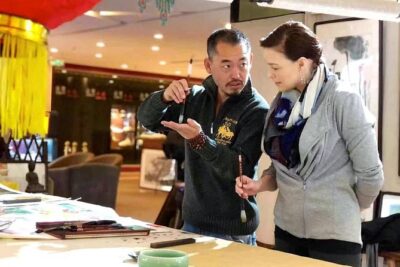
Beijing Wangfujing Calligraphy Class by Forbidden City
Read our review →
Beijing Culture: Tea Ceremony, Heritage Instrument & Calligraphy
Read our review →
Beijing Wangfujing Calligraphy Class Nearby Forbidden City
Read our review →
2-Hour Chinese Calligraphy with an Artist in Shanghai, China
Read our review →Where else this tour turns up