
Reviewed · CALLIGRAPHY WORKSHOPS
Noon Calligraphy Class
Slow down and let the brush lead.
This one-hour Chinese calligraphy class offers a calm change of pace from Beijing’s crowded sights. I like the chance to work with real brushes, rice paper, ink, and ink stones, and I like that an art teacher explains both technique and cultural meaning. The central Wangfujing location also makes this easy to fit into a day of sightseeing.
The main consideration is the short class length. Beginners can learn the basics and create a final piece, but you should not expect to master Chinese calligraphy in one sitting. Also check your selected duration carefully, since 30-minute, one-hour, and 1.5-hour options are offered.
In This Review
- Key points to know before booking
- Why calligraphy makes a good Beijing break
- Arriving at No. 8 Wangfujing Dongjie
- What happens during the one-hour lesson
- The tools: brush, ink, paper, and ink stone
- A calm class with cultural meaning
- What the reviews reveal about the teaching
- Is one hour long enough?
- The $20 price and what you receive
- Who should book this class?
- Useful booking and timing advice
- Final verdict: a worthwhile hour in Beijing
- FAQ
- Where does the calligraphy class meet?
- How long does the class last?
- What is included in the price?
- Do I need to bring calligraphy supplies?
- Can children join the class?
- How many people can join?
- Can I cancel for a full refund?
Key points to know before booking
- Practice comes before the final piece: You get time to repeat strokes before creating work to take home.
- Richard and Li are named instructors: The teaching is described as clear, patient, and encouraging, though the teacher may depend on the class time.
- Traditional materials are supplied: Brushes, ink, rice paper, and ink stones are part of the lesson.
- The class is in central Wangfujing: The meeting point is at Hilton Beijing Wangfujing, at No. 8 Wangfujing Dongjie.
- It suits adults and children: Children must be accompanied by an adult, and the group can include up to 15 people.
- The activity is unusually calming: Several class descriptions focus on the slow movement of the brush and the almost meditative feel of the lesson.
Why calligraphy makes a good Beijing break
Beijing sightseeing can be demanding. The Forbidden City, Temple of Heaven, and hutongs all ask you to walk, look, and keep moving. A calligraphy lesson gives you a quiet hour in which the goal is not to cover more ground, but to pay attention to one stroke at a time.
Chinese calligraphy is more than handwriting. It is the artistic form of written language, with the brush movement, pressure, rhythm, and empty space all carrying importance. You are not simply copying a symbol. You are learning how a physical gesture becomes a character on paper.
That cultural context gives the class more weight than a quick craft activity. You learn about seal carvings, brushes, rice paper, ink, and ink stones while practicing. The result may not look like the work of a trained calligrapher, but it can help you see Chinese characters with fresh eyes.
I especially like this for visitors who want a hands-on activity connected to China. You leave with something you made, not just another photograph on your phone.
More Workshops in Beijing
- Beijing Calligraphy Class
★ 4.9 · 112 reviews - Chinese Calligraphy Class for Small Group
★ 5.0 · 104 reviews - Beijing: Dumpling Making Workshop with Meal and Tea
★ 4.7 · 69 reviews
Arriving at No. 8 Wangfujing Dongjie
The class meets at Hilton Beijing Wangfujing, No. 8 Wangfujing Dongjie, in Beijing’s Dongcheng District. The address is also given in Chinese as 北京东城区王府井东街8号. It is near public transportation, which makes the meeting point practical for a short activity.
The central setting is useful if you are already visiting Wangfujing. You can place the class between other city sights without committing to a full-day excursion. Since the activity ends back at the meeting point, you do not need to arrange a separate return transfer.
The supplied meeting information names the hotel rather than a distant studio or suburban venue. Still, you should allow enough time to locate the exact class area inside or at the meeting point. A mobile ticket is available, and confirmation arrives when you book.
There are several class times each day. That flexibility matters in Beijing, where traffic, weather, and long museum visits can quickly change your plans. I would choose a time that leaves a little breathing room rather than scheduling it immediately after a major attraction.
What happens during the one-hour lesson
The advertised standard experience lasts about one hour, although you can select a 30-minute or 1.5-hour version when booking. Supplies are provided, so you do not need to arrive with a brush or buy special paper beforehand.
The lesson begins with instruction in the tools and basic brush handling. You learn about the materials used in Chinese calligraphy and get a sense of how each one affects the final mark. Rice paper is not ordinary writing paper, and a brush does not behave like a pen. Small changes in pressure and speed can alter the shape of a stroke.
You then practice. This is an important part of the class, especially for beginners. The goal is not to produce a perfect character immediately. Repeating the strokes lets you become familiar with the brush and gives the teacher a chance to correct your hand position or movement.
The teaching style appears to be a major strength. Richard is described as kind, clear, and informative, while Li is praised for practiced instruction that helps students accomplish a lot in a short time. Because both names appear in the class feedback, the instructor may vary by session.
After practice, you work toward a final piece. That finished work can be taken home, giving the hour a clear ending and a personal souvenir. It is a better keepsake than a standard shop purchase because you remember the effort behind it.
The tools: brush, ink, paper, and ink stone
The equipment is not just decoration. Each item helps explain how Chinese calligraphy developed as an art form.
The brush gives you a different kind of control from a modern pen. You must guide it through the stroke while managing pressure and direction. The ink creates the visible mark, and the absorbent rice paper rewards a steady hand but can expose hesitation.
The ink stone is another part of the traditional setup. Learning what it is and how it fits into the process gives you a useful connection to Chinese artistic practice. Seal carvings add another layer, showing how written characters can also function as formal marks and personal symbols.
For you, the practical lesson is simple: do not judge your first attempts too harshly. The class feedback repeatedly points to the difficulty of calligraphy, and that is part of its value. You quickly learn that a character that looks simple may require careful timing and balance.
More calligraphy workshops in Beijing:
- Beijing Historic City Guided Walking Tour + Calligraphy Creation
★ 5.0 · 59 reviews - Beijing Wangfujing Calligraphy Class by Forbidden City
★ 5.0 · 58 reviews - Beijing Culture: Tea Ceremony, Heritage Instrument & Calligraphy
★ 5.0 · 57 reviews - Beijing Wangfujing Calligraphy Class Nearby Forbidden City
★ 5.0 · 56 reviews
A calm class with cultural meaning
The strongest feature here is the mood. The lesson is described as lighthearted at first, then calmer as the group settles into the work. Several comments emphasize relaxation, with one person comparing the activity to a morning meditation.
That does not mean the session is silent or solemn. You can ask questions, and the teacher explains the forms and meaning behind the words you write. The atmosphere seems friendly rather than formal, which is useful if you are nervous about trying an unfamiliar art.
I would recommend this especially on a rainy day or after several busy sightseeing days. It is indoors, requires no special physical ability, and gives you a chance to focus on something small and precise. It can also be a pleasant shared activity for couples or friends.
Children can participate, but they must be accompanied by an adult. The class is suitable for most people, and the maximum group size is 15. That is small enough to keep the activity personal in principle, though the amount of individual attention may depend on the number of people present.
What the reviews reveal about the teaching
The comments are unusually consistent about the instructors. Richard is praised for kindness, clear explanations, and a passion for calligraphy. Li is described as practiced and efficient, helping students learn a surprising amount within a short session.
That consistency matters because a craft class can easily become a demonstration where you watch but do little yourself. Here, the emphasis appears to be on practice, questions, and making your own final work.
The cultural explanation also receives strong praise. The teacher does not only show you how to form characters. You learn more about the meaning behind the words and the place of calligraphy in Chinese culture. That makes the class useful for anyone interested in language, not just art.
One comment points out that the activity can help you stay engaged while learning Mandarin. You should not book it as a language course, since it is primarily a calligraphy class, but writing characters can give you a physical connection to the forms you see and hear elsewhere in China.
Is one hour long enough?
For a first introduction, one hour should be enough to understand the basics, practice several strokes, and complete a take-home piece. It is a compact format, which makes it easy to add to a busy Beijing schedule.
The limitation is depth. Calligraphy takes years to refine, and the class cannot provide advanced training in 60 minutes. If you want more time with the teacher or prefer a slower pace, select the 1.5-hour option. If you only want a quick taste, the 30-minute version may work, but it will leave less room for repetition and questions.
Pay attention to the duration you choose during booking. The experience is promoted in several lengths, while the general description often refers to one hour. That small detail can affect your plans and your sense of value.
The $20 price and what you receive
At $20 per person, the class is reasonably priced for a guided cultural activity in central Beijing. You are paying for instruction, supplies, cultural explanation, and a finished piece to take home. The practical value is strongest if you want participation rather than another guided walk past famous buildings.
The price also makes this a manageable choice for couples, families, or small groups. Group discounts are available, so larger parties should check the final booking price. The class accepts mobile tickets, which keeps the arrival process simple.
I would not compare the cost to buying calligraphy materials at a market. That misses the point. The useful part is having an instructor explain the tools and guide your first attempts. If you only want a souvenir, a shop will be faster. If you want to understand how the souvenir is made, this class offers better value.
The 1.5-hour option may provide the best value for serious beginners because extra practice time matters here. The one-hour class is likely the best compromise for most sightseeing schedules.
Who should book this class?
You should consider it if you want:
- A cultural activity that takes about an hour
- A break from outdoor sightseeing
- A hands-on introduction to Chinese characters
- A family-friendly experience with an accompanying adult
- A small souvenir made during your visit
- An activity near Wangfujing and public transportation
- A calm lesson led by an art teacher
It is also a good choice for couples. The class gives you something to do together, and the final pieces can become a shared reminder of Beijing.
You may want to skip it if you dislike careful, repetitive practice or want a major historical tour. This is not a substitute for the Forbidden City, a hutong walk, or a museum visit. It is a focused cultural workshop, and its pleasure comes from slowing down.
Useful booking and timing advice
The experience is booked, on average, nine days ahead. That is not a formal requirement, but it suggests that booking before your Beijing visit is sensible, especially if you need a particular class time or are traveling with a group.
Free cancellation is available if you cancel at least 24 hours before the local start time. Cancellations made less than 24 hours ahead are not refunded, and late changes are not accepted.
The activity can accommodate a maximum of 15 people. Children need an adult with them, and most people can participate. Since the class takes place at a central meeting point and ends there, it is easy to pair with nearby plans.
Final verdict: a worthwhile hour in Beijing
I would book the Noon Calligraphy Class if you want a personal, low-pressure way to connect with Chinese culture. The best parts are the hands-on practice, the traditional materials, the teacher’s guidance, and the chance to carry home a piece you made yourself.
Choose the one-hour option for a balanced introduction. Pick 1.5 hours if you want more correction and practice, and choose 30 minutes only if your schedule is tight. At $20, the activity offers solid value, particularly for visitors who want more than photographs and shopping.
This is not a masterclass. It is something better suited to a first encounter: clear instruction, a little cultural context, and an hour that may leave you calmer than when you arrived.
FAQ
Where does the calligraphy class meet?
It meets at Hilton Beijing Wangfujing, No. 8 Wangfujing Dongjie, Dongcheng District, Beijing. The Chinese address is 北京东城区王府井东街8号.
How long does the class last?
You can choose a 30-minute, one-hour, or 1.5-hour class when booking. The standard experience is described as approximately one hour.
What is included in the price?
The class includes an art teacher and calligraphy supplies for use during the lesson. The listed price is $20 per person.
Do I need to bring calligraphy supplies?
No. Brushes, rice paper, ink, ink stones, and other calligraphy supplies are provided for use during the class.
Can children join the class?
Yes. Children can participate, but they must be accompanied by an adult.
How many people can join?
The activity has a maximum group size of 15 people. Group discounts are available.
Can I cancel for a full refund?
Yes, if you cancel at least 24 hours before the experience start time. Cancellations or changes made less than 24 hours before the start time are not refunded or accepted.
Just added in Beijing
- Private Transfer to Mutianyu Great Wall with professional driver★ 5.0 · 19 reviews
- One day tour to downtown Tianjin from Beijing by high speed train★ 5.0 · 3 reviews
- ZANBUS: Trip to the Jinshanling Great Wall Departing at 7:30 AM★ 5.0 · 5 reviews
- camp on the Great Wall overnight with sunrise and sunset on the wall★ 5.0 · 11 reviews
- Yuxiandu Chinese Royal Cuisine Museum with Show and Royal Banquet★ 5.0 · 4 reviews
- Wild Great Wall Hikes★ 5.0 · 10 reviews
- BusDa:Ancient Great Wall &Badaling Great Wall Full-day Bus Tour★ 4.5 · 6 reviews
- Wild Great Wall Huanghuacheng Half Day Tour★ 5.0 · 15 reviews
Calligraphy Workshops, compared.
Beijing Historic City Guided Walking Tour + Calligraphy Creation
Read our review →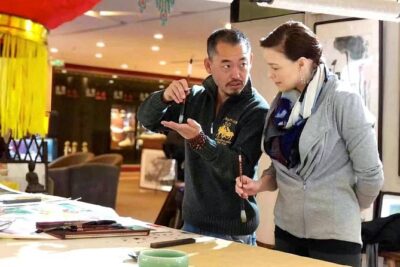
Beijing Wangfujing Calligraphy Class by Forbidden City
Read our review →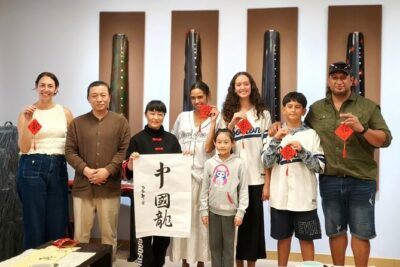
Beijing Culture: Tea Ceremony, Heritage Instrument & Calligraphy
Read our review →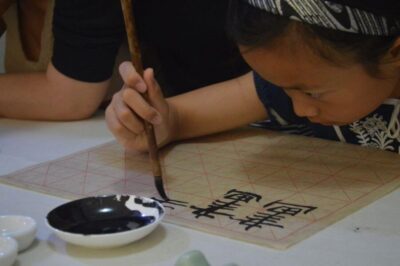
Beijing Wangfujing Calligraphy Class Nearby Forbidden City
Read our review →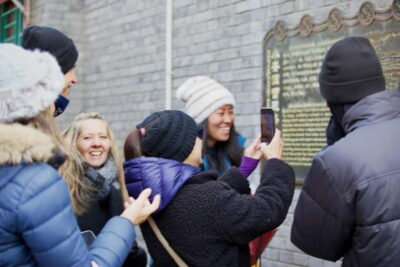
Discover Old Beijing: Hutong Walking Tour & Calligraphy
Read our review →
Zhujiajiao Water Town with Calligraphy Experience
Read our review →Where else this tour turns up