
Reviewed · TEA CEREMONY EXPERIENCES
Beijing Tai Chi and Tea Ceremony Experience
Start your Beijing morning slowly. This three-hour experience pairs an English-led Tai Chi lesson with a Chinese tea tasting, giving you a calm, hands-on look at Taoist ideas and everyday Chinese culture. I especially like the personal instruction from Tai Chi master Eric and the chance to taste four or five teas with tea master Alice. The main consideration is that the tour is more about learning and reflection than sightseeing, so it may feel too quiet if you want a fast-moving Beijing excursion.
The meeting point is Jixiaolan Former Residence in the Qianmen area, and the activity begins at 9:00 a.m. You spend about one hour on Tai Chi, followed by tea and snacks in a tea house. Since this is a private activity for your group, the pace can suit beginners, though the $95 price is easier to justify if you value personal guidance and cultural context.
In This Review
- Key points to know before booking
- A quiet start near Qianmen
- Learning Tai Chi with Eric
- What the Taoist explanation adds
- Moving from the exercise room to Alice’s tea house
- Four or five teas, and what you can learn
- How the private format changes the experience
- Is $95 a fair price?
- Who will enjoy this Beijing experience?
- Cancellation and planning tips
- Should you book the Tai Chi and tea experience?
- FAQ
- Where does the Tai Chi and tea experience begin?
- What time does the activity start?
- How long does the experience last?
- Is the activity private?
- Who teaches the Tai Chi lesson?
- What happens during the Tai Chi portion?
- How many teas and snacks are included?
- Is transportation or a full meal included?
- Can I cancel for a full refund?
Key points to know before booking
- Eric teaches Tai Chi for beginners: He checks your experience level and adjusts the lesson, with basic forms, typical movements, relaxation work, and self-massage.
- Alice leads the tea session: You taste four or five Chinese teas, sample three to five snacks, and learn the basics of tea quality and Kungfu tea service.
- The Taoist connection matters: Tai Chi is presented as more than exercise, with attention to breathing, relaxation, awareness, and the flow of Qi.
- It is a private three-hour activity: Only your group participates, which makes questions and individual instruction easier.
- The early start shapes the day: You meet at 9:00 a.m. near public transportation, then return to the same meeting point.
- The experience is best for curious beginners: Comfortable walking shoes are advised, and the activity includes no private transportation or meal.
A quiet start near Qianmen
You begin at Jixiaolan Former Residence, in Beijing’s Qianmen area, at 9:00 a.m. The location is near public transportation, but you should allow time to find the exact entrance and arrive ready to start. Comfortable walking shoes are recommended, which is sensible for any morning in central Beijing.
The setting gives the experience a useful sense of place before the formal lesson begins. You are not simply watching a staged performance. You are meeting an instructor, learning a few movements, and then sitting down to discuss tea culture. That combination gives the morning a clear rhythm: movement first, stillness afterward.
The tour lasts about three hours, so it takes a meaningful slice of your morning without consuming the entire day. Some people have found it a good way to begin a visit to the Temple of Heaven, though you should check your own route and transport plans rather than assume the activity ends nearby.
Because the activity is private, you do not have to match the pace of a large group. That matters during Tai Chi, where an instructor may need to correct your posture or repeat a movement. It also helps during the tea session, where you may want to ask simple questions about taste, preparation, and quality.
More Tea Ceremonies in Beijing
- Traditional Chinese Tea Ceremony Experience
★ 4.7 · 74 reviews - Beijing Culture: Tea Ceremony, Heritage Instrument & Calligraphy
★ 5.0 · 57 reviews - Chinese Tea ceremony in Beijing Hutong courtyard
★ 4.7 · 26 reviews
Learning Tai Chi with Eric
The Tai Chi portion lasts about one hour. Eric, the English-speaking instructor, begins with Taoist ideas behind the practice, then moves into basic relaxation forms, recognizable Tai Chi movements, and self-massage methods.
That order is useful. You are not asked to copy a long sequence immediately. Instead, you first get a sense of why the movements are slow and controlled. Tai Chi is explained as a way to support the body’s Qi, encourage relaxation, and create a better balance between physical health and mental focus.
The language around Qi can sound abstract if you are new to Chinese philosophy. Here, the practical value is in connecting the concept to what you are doing: relaxing the body, paying attention to movement, and avoiding unnecessary tension. You do not need prior experience or a strong interest in Taoism to take part.
Eric’s teaching style is one of the strongest reasons to book. He checks your experience level and adapts the lesson, which is important because a complete beginner needs a different introduction from someone who already practices Tai Chi. His patience also helps remove the awkwardness that can come with trying unfamiliar movements in front of an instructor.
You learn typical Tai Chi movements rather than simply receiving a lecture. The lesson also includes self-massage, adding a practical element you can remember after the activity. You will not become a Tai Chi master in an hour, but you can gain a basic understanding of posture, relaxation, and deliberate movement.
The session has a reflective side as well. One useful theme is the connection between the mind, eyes, and body. That idea gives you something concrete to focus on while moving, and it helps explain why Tai Chi can feel calming even when the physical activity is gentle.
Do not expect an intense workout. The pace is slow, and the purpose is awareness and control rather than speed or athletic performance. If you want a demanding exercise class, this may feel modest. If you want an approachable cultural activity that gets you moving, the format works well.
What the Taoist explanation adds
Tai Chi is often presented to visitors as a graceful form of exercise. This experience goes further by explaining its connection with Taoism, a Chinese tradition centered on balance, harmony, and the relationship between people and nature.
The tour’s description places importance on the flow of Qi and on reaching a calmer, more balanced state. You should treat this as a traditional philosophical and wellness framework, not as a medical promise. The session can help you understand why Tai Chi is practiced around the world, but it does not replace medical care or provide guaranteed health results.
That distinction is worth keeping in mind. The value here is cultural and personal: you learn how movement, attention, relaxation, and Taoist ideas fit together. You also get an introduction from a practitioner who can explain the practice in accessible English.
I like this approach because it avoids reducing Tai Chi to a photo opportunity. You are asked to slow down and pay attention. In a city as large and busy as Beijing, that change of pace may be the most memorable part of the morning.
Moving from the exercise room to Alice’s tea house
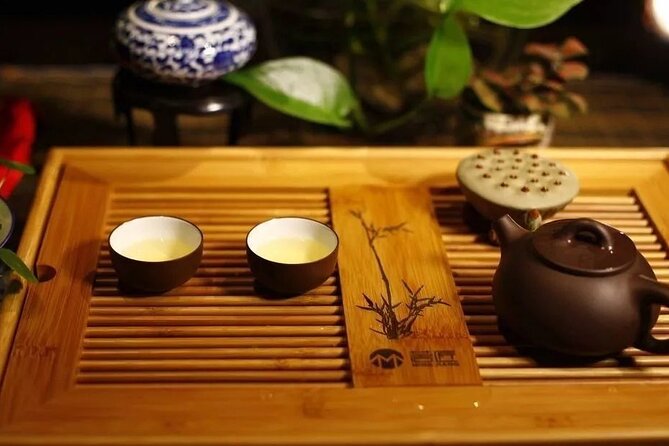
After Tai Chi, the experience shifts from movement to tea. Alice leads the tea portion, introducing the history and culture of Chinese tea, along with the way tea can support relaxation, self-reflection, and steady concentration.
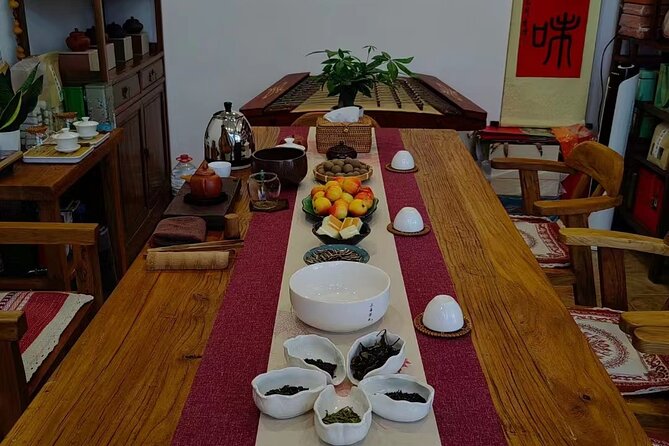
You taste four or five different Chinese teas. The exact varieties are not specified, so you should expect a selection rather than a fixed menu. The tasting gives you a chance to compare flavors and qualities instead of treating Chinese tea as one single drink.
The session also includes three to five snacks. Food is not the main purpose of the activity, and the tour does not include a meal, but the snacks make the tasting more comfortable and give you something to enjoy between cups.
Alice explains how to distinguish tea quality for yourself. This is one of the more useful parts of the experience because it turns tea from a passive tasting into a skill-building exercise. You are not merely told which tea is good. You get a framework for noticing differences as you drink.
The Kungfu tea ceremony adds a formal visual element. Tea is prepared and served with careful movements, giving you a look at a traditional style of tea service. The ceremony is not just decoration. It shows how preparation, timing, utensils, and attention can turn an ordinary drink into a calm social ritual.
Alice has been praised for her warm, gentle manner and for explaining tea history, culture, and science clearly. That mix is helpful. Cultural background gives the tea meaning, while practical guidance helps you understand what is in your cup.
A completely different sort of day out:
- From Beijing: Mutianyu Great Wall Tours with Options
★ 4.9 · 9,216 reviews - Beijing: Forbidden City Tour(Group/Private)-Tickets Included
★ 4.8 · 7,974 reviews - Beijing: T-Square & Forbidden City Group or Private Tour
★ 4.8 · 4,446 reviews - All-Inclusive Tour: Tiananmen Square, Forbidden City, Great Wall
★ 5.0 · 2,873 reviews
Four or five teas, and what you can learn
The tasting is designed to help you notice quality and character. You might compare differences in aroma, strength, texture, or finish, though the exact teaching points can depend on the teas served that day.
Do not expect a large meal. The included snacks are best viewed as small accompaniments to the tea. If you need a substantial breakfast, eat beforehand or plan food afterward, since the activity specifically includes tea and snacks rather than a full meal.
The tea session also reflects the role of tea in daily Chinese life. The presentation connects tea with calm, moral conduct, stable temperament, and internal cultivation. Those ideas come from the Taoist context of the experience, but you can appreciate the session without accepting every traditional health claim literally.
This is where the pairing with Tai Chi makes sense. Both activities ask you to slow down, notice small details, and develop a steadier state of mind. One uses the body; the other uses taste, smell, and ritual.
For many people, the tea house portion will be the easier half of the morning. You can sit, ask questions, and take in the ceremony at your own speed. If you are shy about physical activity, the private format should make the Tai Chi lesson less intimidating, while the tea session gives you a relaxed way to continue the conversation.
How the private format changes the experience
Only your group participates, which gives this activity a more personal feel than a standard group excursion. You can ask Eric to repeat a movement, request more explanation about Taoism, or ask Alice about tea quality without worrying about holding up a busload of people.
The private format also means your experience may depend heavily on your group’s interests. A group that enjoys questions and discussion can get more from the instructors. A group that prefers quiet observation can keep the morning gentle and simple.
There is no private transportation included. You make your own way to Jixiaolan Former Residence, and the activity ends back at the meeting point. Since the site is near public transportation, this is manageable for people comfortable navigating Beijing, but you should not expect door-to-door pickup.
The mobile ticket is convenient, and confirmation is provided at booking. The 9:00 a.m. start is early enough to shape your plans, so check your hotel location and morning transport before reserving. The experience is not designed as a hop-on, hop-off activity that you can join late.
Is $95 a fair price?
At $95 per person, this is not the cheapest way to spend a morning in Beijing. You are paying for a private activity, English-language instruction, two specialized hosts, a Tai Chi lesson, a guided tea tasting, tea ceremony service, snacks, and included fees.
The value is strongest if you would otherwise pay for separate cultural activities or if you want instruction rather than observation. A casual tea stop and a public Tai Chi practice would cost less, but neither would necessarily give you the same explanations or the chance to ask questions privately.
The price may feel high for a short introductory lesson. You receive only about one hour of Tai Chi, and the tea tasting is not a full meal. The experience also does not include transportation, so you handle the cost and effort of reaching the meeting point yourself.
Group discounts may improve the value if you are traveling with family or friends. The private structure is particularly useful for a small group with mixed experience levels, since Eric can adjust the lesson rather than teach everyone as if they were at the same level.
I would view the fee as payment for access and context, not for a long list of attractions. You are buying a guided introduction to two connected parts of Chinese culture. If that sounds worthwhile, the price is defensible. If your priority is seeing more monuments in three hours, spend the money elsewhere.
Who will enjoy this Beijing experience?
This activity suits first-time Tai Chi students, couples, small groups, and anyone who wants a cultural morning that feels different from a standard city tour. You do not need to arrive with technical knowledge, and Eric’s lesson is adjusted to your experience level.
It is also a good fit for people interested in Taoism, Chinese wellness traditions, tea preparation, or mindful movement. The experience gives you enough background to understand the ideas without requiring a prior study of Chinese philosophy.
You may want to skip it if you dislike slow activities, formal demonstrations, or guided cultural explanations. The tour does not promise a major sightseeing stop, a filling meal, or transportation between attractions.
Wear comfortable walking shoes and clothing that lets you move easily. The instructions specifically recommend comfortable footwear, and that advice is worth following even though the Tai Chi itself is gentle.
The experience can work for a mixed-age group, but the supplied information does not give a specific accessibility rating or physical requirements beyond the advice about comfortable shoes. If you have mobility concerns, ask the provider before booking.
Cancellation and planning tips
Free cancellation is available if you cancel at least 24 hours before the 9:00 a.m. start time. Changes or cancellations made less than 24 hours before the experience are not accepted for a refund, and the cut-off follows Beijing local time.
This activity is often booked about 22 days ahead. That does not guarantee that every date sells out, but it suggests you should reserve early if your Beijing schedule is fixed, especially if you want a particular morning.
Plan your day around the meeting point rather than assuming the tour will take you onward. Since it ends where it begins, you can continue sightseeing afterward, but you will need to arrange your own transport.
Should you book the Tai Chi and tea experience?
Book it if you want personal instruction, cultural context, and a peaceful start to your Beijing day. Eric’s patient Tai Chi teaching and Alice’s tea ceremony give the experience two strong personalities, while the private format makes it easier to learn at your own pace.
Think twice if you want a bargain, a full breakfast, or a sightseeing-heavy morning. At $95, the experience earns its price through the instructors and the depth of the introduction, not through the number of attractions visited.
For a beginner who wants to understand why Tai Chi and tea remain important in Chinese life, I would consider it a worthwhile choice. You leave with more than a few copied movements and a cup of tea. You get a practical introduction to slowing down, paying attention, and seeing the cultural ideas behind both activities.
FAQ
Where does the Tai Chi and tea experience begin?
It begins at Jixiaolan Former Residence, Ji Xiao Lan Gu Ju, in the Qianmen area of Xicheng District, Beijing, postal code 100052.
What time does the activity start?
The scheduled start time is 9:00 a.m.
How long does the experience last?
The activity lasts approximately three hours.
Is the activity private?
Yes. Only your group participates in the activity.
Who teaches the Tai Chi lesson?
The Tai Chi lesson is taught by Eric, an English-speaking master.
What happens during the Tai Chi portion?
The one-hour lesson covers Taoist ideas related to Tai Chi, basic relaxation forms, typical Tai Chi movements, and self-massage methods.
How many teas and snacks are included?
You can taste four or five different Chinese teas and enjoy three to five snacks.
Is transportation or a full meal included?
Private transportation and food are not included. Coffee and tea, along with all fees and taxes, are included.
Can I cancel for a full refund?
Yes. You can cancel at least 24 hours before the experience start time for a full refund. Cancellations or changes made less than 24 hours before the start are not refunded.
Just added in Beijing
- Private Transfer to Mutianyu Great Wall with professional driver★ 5.0 · 19 reviews
- One day tour to downtown Tianjin from Beijing by high speed train★ 5.0 · 3 reviews
- ZANBUS: Trip to the Jinshanling Great Wall Departing at 7:30 AM★ 5.0 · 5 reviews
- camp on the Great Wall overnight with sunrise and sunset on the wall★ 5.0 · 11 reviews
- Yuxiandu Chinese Royal Cuisine Museum with Show and Royal Banquet★ 5.0 · 4 reviews
- Wild Great Wall Hikes★ 5.0 · 10 reviews
- BusDa:Ancient Great Wall &Badaling Great Wall Full-day Bus Tour★ 4.5 · 6 reviews
- Private Wild Great Wall Hiking tour at Simatai (Challenging)★ 5.0 · 16 reviews
Tea Ceremony Experiences, compared.
Beijing Culture: Tea Ceremony, Heritage Instrument & Calligraphy
Read our review →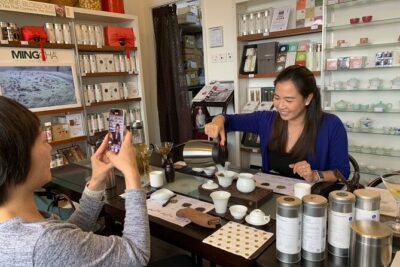

Chinese Tea ceremony in Beijing Hutong courtyard
Read our review →
Half-Day Hangzhou Yunxi Bamboo Forest and Tea Plantation Experience
Read our review →
Leshan Buddha + Panda Base or Old Tea House Private Day Tour
Read our review →
Private Beijing Markets Tour with Tea Tasting at Hongqiao Pearl Market
Read our review →Where else this tour turns up