
Reviewed · FOOD & DRINK
Unlock Chinese Tea: Culture, Science, Tasting & Hands-on Brewing
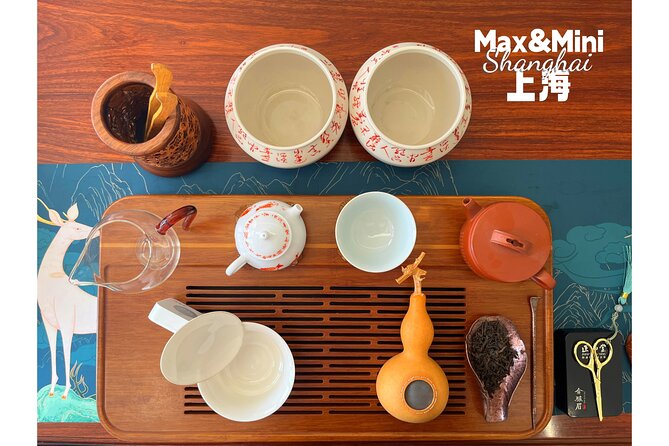
Tea tells China’s story one cup at a time. This Shanghai workshop turns tea from a souvenir to a skill, with Max guiding you through Chinese tea culture, tea science, tasting, and hands-on brewing. I especially like the small group limit of seven and the chance to handle several kinds of tea ware instead of simply watching a demonstration.
I also like that Max brings both teaching experience and personal enthusiasm to the session. You will taste different teas, learn how China’s six main tea categories are made, and try brewing with a gaiwan and clay pots. The main consideration is the meeting point: you must make your own way to Ninghai Guesthouse in Shanghai’s Huangpu District, and the full address is worth saving before you set out.
In This Review
- Key points to know before booking
- What this Shanghai tea workshop actually offers
- Meeting Max at the Old Town starting point
- A private tea room with room to practice
- Tasting five or six different Chinese teas
- Tea stories, dynasties, and visual teaching aids
- Brewing with a gaiwan and clay pot
- Tea snacks that explain how tea is enjoyed
- Is $72 a fair price in Shanghai?
- Who will enjoy this activity most?
- Booking, cancellation, and practical planning
- Should you book the Chinese tea workshop?
- FAQ
- How long does the tea workshop last?
- How much does the experience cost?
- Where does the activity begin?
- Where does the activity end?
- Who leads the workshop?
- How many people can join?
- What kinds of tea will be included?
- What is included in the price?
- Can I cancel for a full refund?
Key points to know before booking
- Max leads every session: He is a certified English guide, former PayPal ESG lead and senior trainer, and a dedicated tea and Chinese culture specialist.
- Six tea categories come into focus: You learn how green, black, oolong, and other categories differ, with processing linked to taste.
- You do the brewing yourself: The workshop uses gaiwans, clay pots, and other tea ware, so you leave with practical skills.
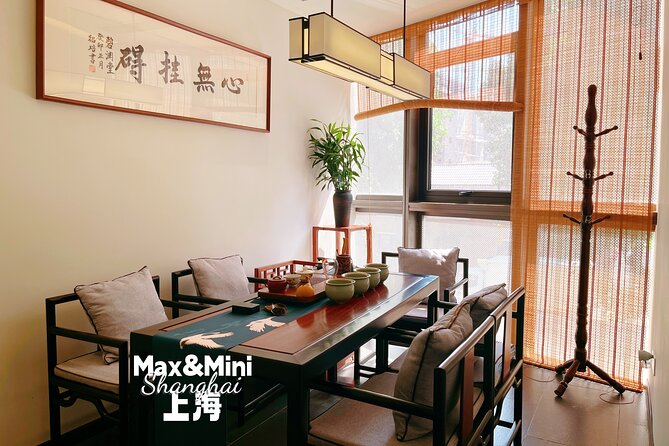
- A private room keeps the lesson personal: The cozy tea room has air conditioning and equipment for practice.
- Tea comes with traditional snacks: Expect snacks such as seasonal fruit, including pomelo, alongside the tasting.
- The value is strongest for curious beginners: At $72 for about two and a half hours, this is more than a casual cup of tea, but less useful if you only want a quick tasting.
What this Shanghai tea workshop actually offers
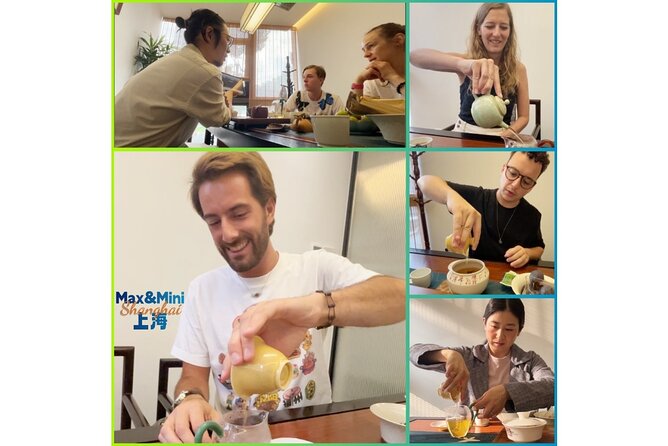
This is a sit-down cultural lesson built around drinking tea. You are not simply handed a cup and told its name. Max explains where tea began, how its role changed over Chinese dynasties, how processing creates different flavors, and how to brew each style with more care.
The tone is practical. You listen, look at visual material, taste several teas, and then practice. That mix matters because tea can become abstract very quickly. Names, dynasties, temperatures, leaves, pots, and etiquette can blur together. Here, each point is tied to a real cup or brewing action.
The workshop suits a first-time tea drinker, but it is not limited to beginners. The format also works for someone who already knows a little about Chinese tea and wants a clearer system for comparing styles. One session even became a one-to-one class when Max accepted a booking at short notice, though you should not assume every date will be private.
The listed rating is 4.9 from 12 ratings, with 100 percent recommending it. That is a small sample, so I would treat it as encouraging rather than final proof. Still, the same strengths appear again and again: Max’s clear teaching, his friendly manner, the range of tea, and the balance between explanation and practice.
More Food Tours in Shanghai
- Authentic Local Food Tour in Central Shanghai
★ 5.0 · 1,382 reviews - Eat Like A Local: Shanghai Night Food Tour
★ 5.0 · 616 reviews - Half-Day Bike Tour of Shanghai Old Town with Food Tasting
★ 5.0 · 306 reviews
Meeting Max at the Old Town starting point
The activity begins at Ninghai Guesthouse, at 149 Nong, 100 Nanchezhan Road, Huangpu District, Shanghai, postal code 200011. The itinerary identifies the starting area as Old Town, and the activity ends back at the same meeting point.
That return to the start keeps the plan simple. You do not need to arrange a second pickup or find your way to a different neighborhood after the tea session. The location is near public transportation, but the address uses Chinese characters as well as English, so I recommend keeping the Chinese address available on your phone.
This is not a sightseeing walk through Shanghai’s streets. Old Town is the starting setting, not a long list of historic stops. The core of the experience takes place in the private tea room. If you are hoping for a tour of gardens, markets, or famous buildings, this will feel too focused. If you want a calm indoor activity that gives structure to your Shanghai visit, the fixed meeting point works well.
The mobile ticket is useful for a short city activity, and confirmation is provided when you book. You should still allow enough time to reach the address, since the workshop lasts around two hours and thirty minutes and late arrival could cut into the teaching.
A private tea room with room to practice
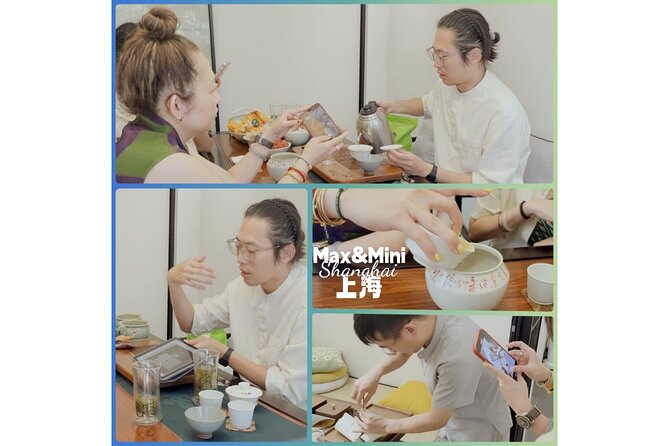
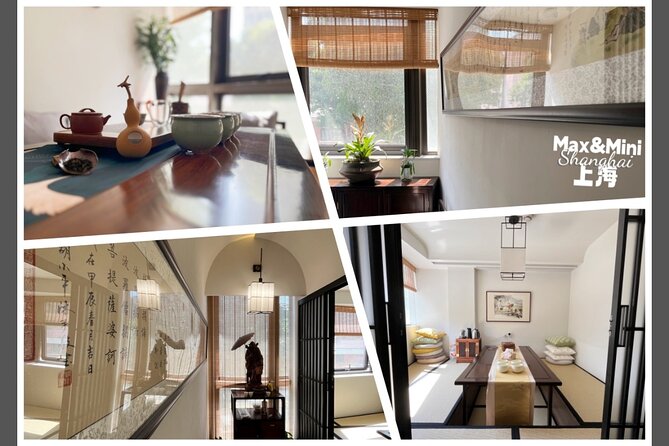
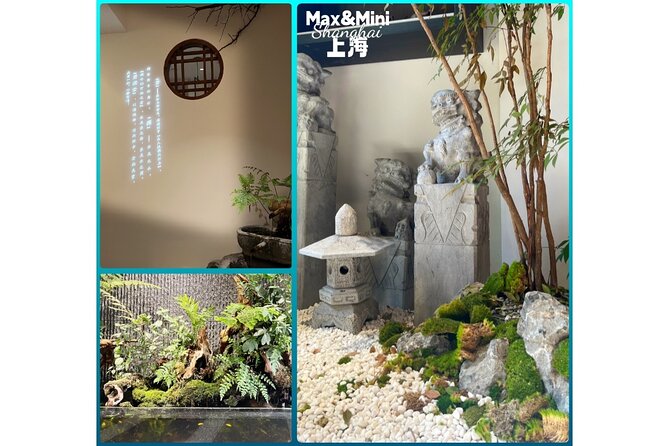
The workshop takes place in a private, cozy tea house room with air conditioning and practice tea ware. That setup shapes the whole session. You have a place to concentrate, handle the equipment, and compare cups without the noise or constant movement of a large public tour.
The room also makes the experience suitable for questions. Max is the only guide, and the group limit is seven people. That is small enough for the session to feel personal, though the exact amount of individual attention will depend on the number of people booked that day.
The air conditioning is a useful detail in Shanghai, particularly if you arrive after walking around the city. Tea tasting requires some patience, and a comfortable room makes it easier to focus on aroma, color, texture, and aftertaste rather than on the weather outside.
The tea house is not presented as a luxury venue. Its value comes from the equipment and the way the room supports the lesson. One useful detail from the experience is that the location has also been listed among Shanghai’s top tea houses on Dianping, often described as the Chinese equivalent of Yelp. That adds interest, but the workshop should be chosen for the teaching rather than for grand surroundings.
Tasting five or six different Chinese teas
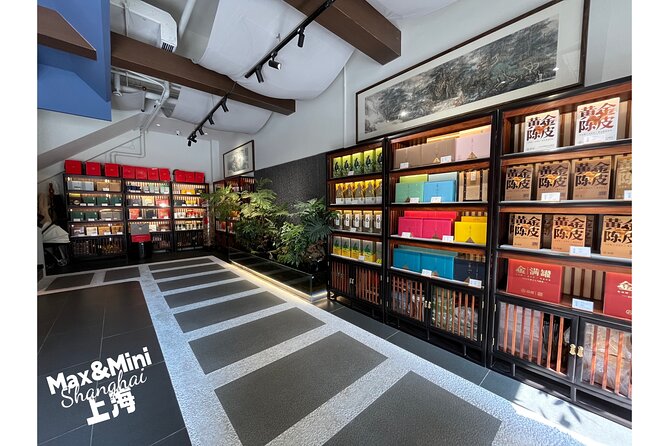
The tasting is the heart of the session. You sample a range of Chinese teas and learn to compare their features. The material refers to five different teas in one description and six major tea categories in another, so the exact number of individual samples may vary. You should expect a broad tasting rather than a single style.
The six main categories introduced are green, black, oolong, white, yellow, and dark tea. The important lesson is not simply memorizing those names. You learn that processing changes the leaf, and that those changes affect the flavor in your cup.
Max helps you build basic tasting skills. You may pay attention to appearance, aroma, flavor, strength, and the way the taste develops. Even a beginner can use this approach when buying tea later. Instead of saying that one tea is simply good and another is bad, you begin to ask what was done to the leaf and why the result tastes different.
The tasting also gives the history some purpose. Tea began as an herb before becoming a daily drink, and its use changed across Chinese dynasties. That broad story helps explain why tea in China is not just a beverage. It is also tied to daily habits, social customs, hospitality, and regional practice.
I appreciate that the session links culture with science. You are not asked to accept vague claims about tea. The focus is on how tea is made and how that process shapes what you smell and taste. The result is a clearer way to talk about tea without turning the class into a technical lecture.
More Workshops in Shanghai
- Private Cooking Class: Make Your Own Dim Sum In Shanghai
★ 5.0 · 27 reviews - 2-Hour Private Chinese Ink and Brush Painting Workshop in Shanghai
★ 5.0 · 15 reviews - Private Home Cooking Class with Shanghai Mama
★ 5.0 · 14 reviews - 2.5hrs Chinese Kitchen Cooking Class: Xiaolongbao Soup Dumplings
★ 5.0 · 12 reviews
Tea stories, dynasties, and visual teaching aids
The historical portion covers tea’s movement from medicinal herb to everyday drink. It also follows developments across Chinese dynasties. You will not get a full university course in Chinese history during two and a half hours, but you will gain a useful framework for understanding why Chinese tea culture has so many forms.
Visual material supports the explanation of tea types and tea crafting. This is helpful because the six categories can sound alike when explained only through speech. Seeing the broad differences in processing gives you a better basis for understanding why two cups made from the same plant can taste so unlike each other.
Max’s background as a former PayPal ESG lead and senior trainer is relevant here. It suggests that he is comfortable organizing information and teaching an audience, not only serving tea. The strongest praise for the session centers on his ability to explain difficult material in an approachable way and answer questions without making the class feel stiff.
His role also affects the pace. The session is designed around interaction, so you are encouraged to ask, taste, and practice. That makes it a better choice than a passive lecture if you want to remember what you learned after leaving Shanghai.
Brewing with a gaiwan and clay pot
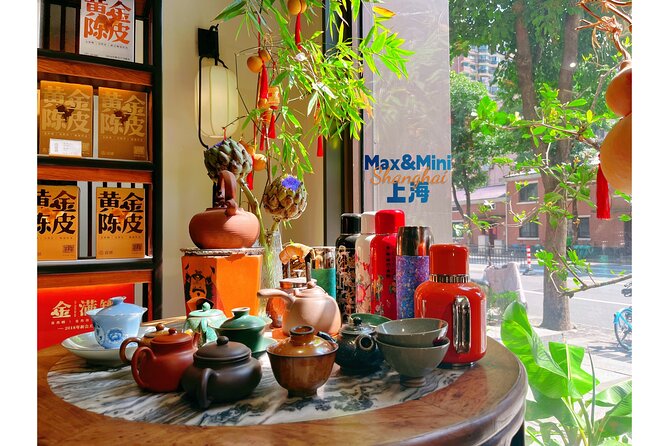
The hands-on part is what gives this workshop lasting value. You practice traditional brewing with different tea ware, including a gaiwan and clay pots. You also learn elements of etiquette rather than treating the process as a simple method for getting hot water onto leaves.
A gaiwan is especially useful for learning because it lets you control the leaves, water, and pour in a direct way. Clay pots introduce another traditional style of brewing. The point is not to turn you into a tea master in one afternoon. It is to give you enough confidence to repeat the process at home.
That practical focus is a real strength. Many cultural activities give you an interesting story and a pleasant memory, but no clear way to continue. Here, you practice the central action yourself. You can leave with a better sense of how to handle Chinese tea ware, compare different teas, and avoid treating every tea in the same way.
Etiquette is another useful layer. Chinese tea service has its own rhythms and manners, and learning them helps you understand the social side of tea. Max’s explanations connect the physical gestures to Chinese culture, rather than presenting them as rules to memorize without context.
There is no promise that you will receive a tea-making kit or take home tea. The benefit is the instruction and practice. If you want souvenirs, you will need to make separate arrangements.
Tea snacks that explain how tea is enjoyed
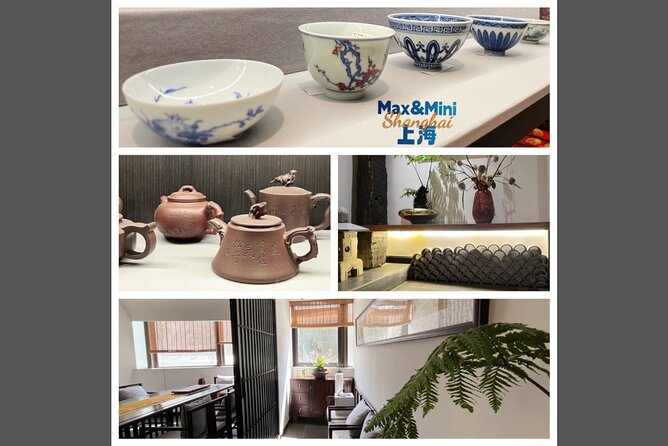
Tea is served with snacks, including seasonal fruit such as pomelo. The food is not the main attraction, but it adds a useful cultural detail. Tea is often enjoyed alongside something small to eat, and tasting a snack during the session gives you another way to think about flavor and balance.
The provision of snacks also makes the two-and-a-half-hour format more comfortable. You are not sitting through a long presentation with tea as the only refreshment. At the same time, this is not a food tour. Do not book it expecting a full meal or an extensive menu.
Pomelo is a particularly fitting example of the sort of seasonal detail that can make the session feel connected to everyday life. The snack selection may change, so I would regard this as a pleasant inclusion rather than a guaranteed menu.
Is $72 a fair price in Shanghai?
The price is $72 per person. That is not the cheapest way to drink Chinese tea in Shanghai, but the comparison is not really with ordering a pot in a café. You are paying for about two and a half hours of guided instruction, several tea samples, snacks, a private room, equipment, and hands-on practice.
For someone who already wants to understand tea, the value is easy to see. You get a structured lesson from one dedicated guide rather than trying to piece together information from a shop visit. The small maximum group of seven also matters. It gives you a better chance to ask questions and practice directly.
The value is less clear if you are short on time or only want to sample one famous tea. A tea shop visit will likely be simpler and less expensive. This workshop earns its price through the teaching, not through a large number of tastings or a grand venue.
Group discounts are available, which may make the cost more attractive for friends or families booking together. Since the session is limited to seven people, groups should check the available arrangement before assuming they will have the room to themselves.
Who will enjoy this activity most?
I would recommend it most strongly to:
- First-time visitors who want a cultural activity with real participation
- Tea drinkers who want to understand Chinese categories and processing
- Couples, friends, or small groups looking for a quiet indoor activity
- People who enjoy asking questions and learning by doing
- Visitors who want practical brewing skills they can use at home
It is also a good fit for someone who has already studied tea. One session involved a participant with substantial experience in Chinese tea brewing and tasting, and the class became an exchange of ideas as well as an introduction.
I would be more cautious if you dislike seated instruction, have no interest in tea, or want a fast, highly visual sightseeing stop. The workshop asks you to listen carefully and taste with attention. That is its strength, but it will not suit every style of sightseeing.
Service animals are allowed, and the activity is near public transportation. The room is air-conditioned. These details may help with planning, but the provided information does not describe full accessibility for every mobility need, so you should ask Max&Mini Shanghai before booking if you need specific accommodations.
Booking, cancellation, and practical planning
Confirmation arrives at the time of booking, and a mobile ticket is provided. The activity begins and ends at Ninghai Guesthouse, so save the complete address and allow time to locate the entrance.
Free cancellation is available if you cancel at least 24 hours before the local start time. Cancel within 24 hours, or request changes during that period, and you will not receive a refund. Tips for Max are not included, though you may choose to recognize his work if you found the session helpful.
The host is Max, and the provider is Max&Mini Shanghai. Because he leads every session, the experience has a clear personal character. It also means the class is not a large operation with several guides, which helps explain the small-group format.
Should you book the Chinese tea workshop?
I would book this if you want more than a cup of tea and less than a formal academic course. The strongest reasons are Max’s clear, friendly teaching, the chance to taste several tea styles, and the practical brewing session with a gaiwan and clay pot.
I would skip it if your Shanghai schedule is packed or you are looking for a walking tour with many city sights. The meeting point is only the beginning and end. The real reward comes from sitting down, paying attention, and learning how Chinese tea is made, tasted, and shared.
At $72, it is a considered purchase, but the small group, private room, snacks, cultural context, and hands-on instruction give it solid value for tea lovers and curious first-time learners. If that sounds like your kind of afternoon, this is a thoughtful way to spend two and a half hours in Shanghai.
FAQ
How long does the tea workshop last?
The activity lasts approximately two hours and thirty minutes.
How much does the experience cost?
The listed price is $72 per person.
Where does the activity begin?
It begins at Ninghai Guesthouse, at 149 Nong, 100 Nanchezhan Road, Huangpu District, Shanghai, postal code 200011.
Where does the activity end?
The activity ends back at the same meeting point.
Who leads the workshop?
Max leads the workshop. He is described as a certified English guide, a former PayPal ESG lead and senior trainer, and a tea and Chinese culture specialist.
How many people can join?
The maximum group size is seven people.
What kinds of tea will be included?
You will taste several Chinese teas and learn about the six major categories: green, black, oolong, white, yellow, and dark tea. The exact number of individual tea samples may vary.
What is included in the price?
Tea, coffee, snacks, and use of a private cozy tea house room with practice tea ware and air conditioning are included.
Can I cancel for a full refund?
Yes. You must cancel at least 24 hours before the experience start time for a full refund. Cancellations or changes made within 24 hours are not accepted for a refund.
Just added in Shanghai
- Zhujiajiao Water Village: Private Tour from Shanghai★ 4.9 · 43 reviews
- Zhujiajiao with Private Customized Shanghai City Highlights★ 5.0 · 14 reviews
- Zhujiajiao & Shanghai:Private Day Tour Water Town to Skyline★ 5.0 · 12 reviews
- Zhujiajiao Water Town Private Tour with Night River Cruise★ 5.0 · 9 reviews
- Zhujiajiao & Shanghai:Small Group Tour Water Town to Skyline★ 5.0 · 4 reviews
- Yu Garden Shanghai Entry Tickets Booking And Trip★ 3.6 · 9 reviews
- Water Town Zhujiajiao Shanghai: Boat Ride,Sights,Bites&Sips★ 5.0 · 7 reviews
- shanghai Disney tour★ 5.0 · 12 reviews
Food & Drink, compared.
Authentic Local Food Tour in Central Shanghai
Read our review →
Beijing Hutong Walking Food and Beer Tour at Hidden Restaurants
Read our review →
Hong Kong’s Tin Hau Hidden Eats Food Tour with 7+ Local Tastings
Read our review →
Hong Kong Food Tour: Central and Sheung Wan Districts
Read our review →Where else this tour turns up