
Reviewed · FOOD & DRINK
Kowloon & HK Island Food & Walking Tour (option: Private)
Hong Kong makes one city feel like several. I like that this 5 to 6-hour tour crosses both Kowloon and Hong Kong Island, and I like the way it mixes ordinary neighborhoods with grand city views, local food, history, and public transport. The route begins with a traditional breakfast in Sham Shui Po, then moves through Mong Kok, Central, SoHo, and Sheung Wan. The main trade-off is pace: with ten stops, a bus ride, ferry crossing, tram ride, and plenty of walking, you will need comfortable shoes and steady energy.
The small group, limited to eight people, should make the day more personal than a large coach outing. Guide Andy has earned especially warm praise for tailoring food walks, meeting people at the metro, and pointing out markets and less obvious places along the way. Still, the $128.59 price needs a close look because the tour description does not clearly state which food purchases are included.
In This Review
- Key things to know before booking
- Why crossing Kowloon and the island matters
- Sham Shui Po breakfast and close-packed Kowloon
- Mong Kok shopping streets and young Hong Kong
- Tsim Sha Tsui Promenade and the Hong Kong skyline
- The Star Ferry across Victoria Harbour
- Central’s towers and elevated walkways
- The Ding Ding tram ride
- Mid-Levels Escalator and SoHo
- Hollywood Road, Ladder Street, and old collections
- Man Mo Temple on Hollywood Road
- Cat Street Market and Sheung Wan food culture
- What the $128.59 price gets you
- Who will get the most from this tour
- Should you book the Kowloon and Hong Kong Island route?
- FAQ
- Where does the tour start?
- Where does the tour end?
- How long does the experience last?
- How many people can join the tour?
- Are the Star Ferry and Ding Ding tram included?
- Can I cancel for a full refund?
Key things to know before booking
- Two sides of Hong Kong in one day: You begin in working-class Kowloon and finish in historic Sheung Wan on Hong Kong Island.
- Breakfast starts the food experience: Sham Shui Po introduces you to a traditional Hong Kong morning meal and closely packed local streets.
- Three classic ways to move: The route uses a bus, the Star Ferry, and the historic Ding Ding tram, not just private transport.
- The group stays small: A maximum of eight people allows more room for questions and personal food requests.
- The route ends in Sheung Wan: You finish near Sheung Wan MTR Exit D, rather than returning to the starting point.
- The $128.59 cost deserves checking: Confirm what food and transport expenses are covered before paying.
Why crossing Kowloon and the island matters
Hong Kong is easier to understand when you see its contrasts side by side. This route opens in Sham Shui Po, a dense Kowloon district known for local life and compact buildings, then moves toward Mong Kok’s shopping streets and Tsim Sha Tsui’s harborfront.
After the Star Ferry, the mood changes again. Central brings office towers, elevated walkways, and some of the city’s highest land prices. Later, SoHo, Hollywood Road, Man Mo Temple, Cat Street, and Sheung Wan show older streets, religious traditions, antiques, and Chinese food culture.
That range is the strongest idea behind the tour. You are not simply checking off famous sights. You are watching the city shift from neighborhood markets to international business district, then back toward older streets where history is still part of daily life.
The experience begins at 10:30 a.m. at Sham Shui Po Station Exit D2 on Fuk Wing Street. It ends at Sheung Wan MTR Exit D near Shun Tak Centre, so plan your day around a one-way route. The start and finish are in different districts, but both are close to public transport.
More Food Tours in Hong Kong
- Hong Kong’s Tin Hau Hidden Eats Food Tour with 7+ Local Tastings
★ 5.0 · 352 reviews - Small-Group Hong Kong Island Food Tour
★ 5.0 · 343 reviews - Hong Kong Food Tour: Central and Sheung Wan Districts
★ 5.0 · 333 reviews
Sham Shui Po breakfast and close-packed Kowloon
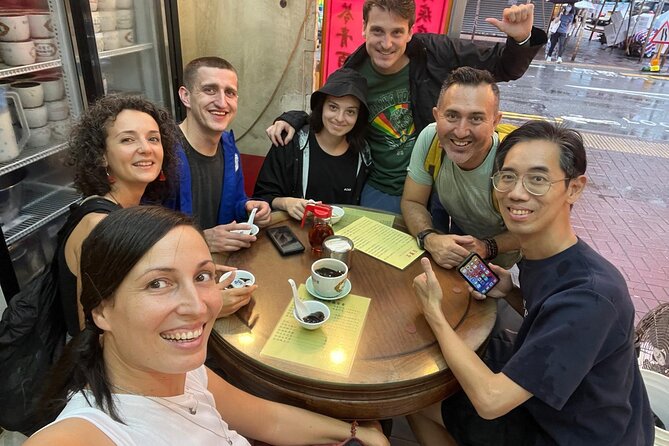
The first hour gives you the clearest look at everyday Hong Kong. Sham Shui Po is described as a district filled with local residents, closely built towers, and small apartment complexes. You will also pass local markets, where the street scene matters as much as the meal.
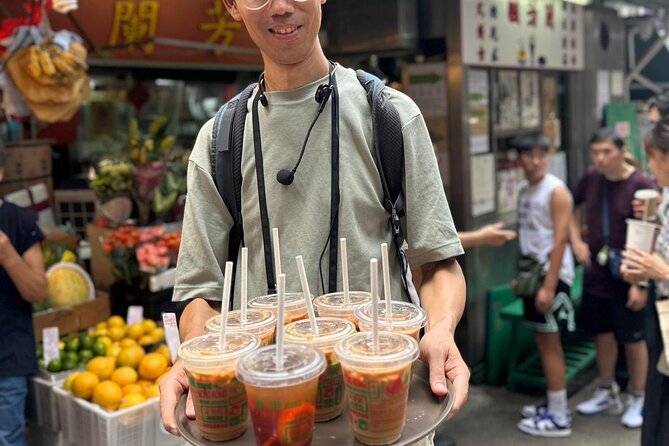
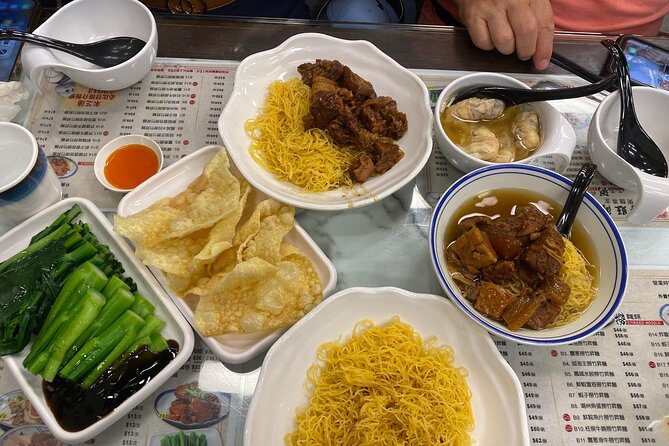
Breakfast is the food anchor here. The exact dishes are not specified, so you should ask Andy or Sunny Travel what is planned and how much of the meal is included. That small check matters, especially because the advertised price is per person and food arrangements can differ from one tour to another.
I like starting here instead of at a famous viewpoint. You get a sense of how limited space shapes the city, from narrow streets to compact homes and busy market areas. It is also a useful setting for hearing about Hong Kong’s growth and the way ordinary neighborhoods fit beside major commercial districts.
Give yourself time to look up. The built-up surroundings are part of the lesson, not just scenery between food stops. If you prefer polished streets and grand architecture from the beginning, this first hour may feel less immediately attractive. If you want local context, it is one of the most useful parts of the day.
Mong Kok shopping streets and young Hong Kong
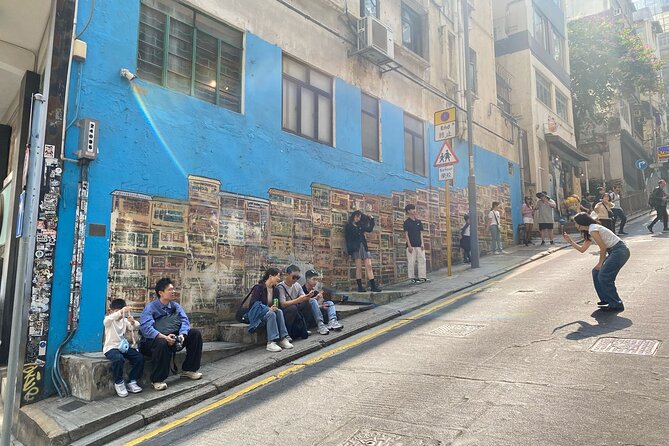
The tour then moves to Mong Kok, described as the center of Kowloon for young adults, office workers, and teenagers. This is the more commercial and youthful portion of the Kowloon leg, with trendy shopping areas that include sneaker and fashion stores.
The stop lasts about an hour. That gives you enough time to see the area and hear how it functions, but not enough for a long shopping session. Treat Mong Kok as a walking and food stop rather than a dedicated retail excursion.
This part works well after Sham Shui Po because the contrast is immediate. The first neighborhood focuses on local homes and markets. Mong Kok shifts toward youth culture, shopping, and social life. You get a better picture of Kowloon by seeing both.
The route uses a bus from Mong Kok to Tsim Sha Tsui. Since this is a city walking tour, using regular transport adds useful context, but it also means the schedule can be affected by normal street conditions. Keep your ticket details and meeting information easy to reach, and wear shoes that can handle pavement for several hours.
Tsim Sha Tsui Promenade and the Hong Kong skyline
The Tsim Sha Tsui Promenade stop lasts about 45 minutes and is the tour’s main skyline pause. From the waterfront, you will look across Victoria Harbour toward Hong Kong Island, with the tall buildings gathered across the water.
This is a good place to slow down. The earlier districts show the city at street level, while the promenade gives you the broad view. It helps explain why Hong Kong feels so dense: the towers rise sharply from a narrow strip of land and water.
The view is free, but it is not a quiet, private lookout. The promenade is one of Hong Kong’s best-known public viewpoints, so you should expect a popular waterfront setting. The value here comes from having a guide explain what you are seeing and connect the skyline to the city’s history, rather than simply taking a photograph and moving on.
More Walking Tours in Hong Kong
- Dark Side of Hong Kong – Kowloon Caged Homes Walking Tour
★ 5.0 · 418 reviews - Introduction to Hong Kong: Central Tip Based Walking Tour
★ 5.0 · 202 reviews - Full-Day Private Customized Walking Tour of Hong Kong
★ 5.0 · 106 reviews - Hong Kong: Kowloon Street Market & Food Culture Walking Tour
★ 5.0 · 105 reviews
The Star Ferry across Victoria Harbour
The 20-minute Star Ferry ride is included and gives the tour its most memorable transport segment. This historic service is also notably affordable as a normal city ride, yet it provides wide views of both Kowloon and Hong Kong Island.
The ferry is short, but it changes your sense of scale. From the deck, you can see the harbor as a working part of the city, not merely a backdrop for skyscrapers. After spending the morning among tight streets and buildings, the open water offers a welcome pause.
This is one of the tour’s best-value inclusions because it combines transport, scenery, and a piece of Hong Kong tradition in one brief ride. The downside is that 20 minutes passes quickly, so do not expect a long harbor cruise. Have your camera ready before boarding.
Central’s towers and elevated walkways
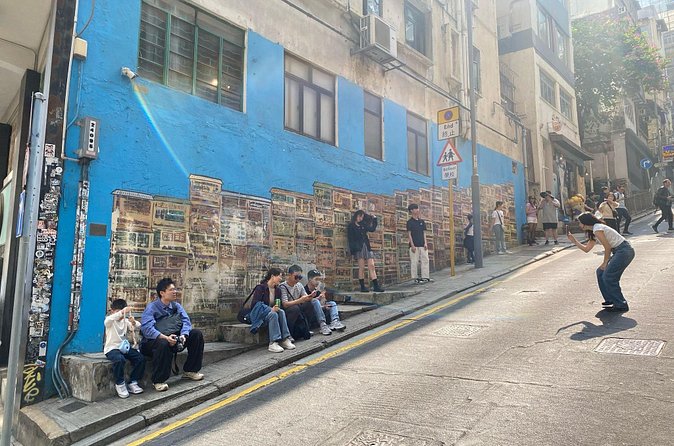
Once you reach Hong Kong Island, the tour enters Central for about 45 minutes. This is one of the world’s most expensive districts, filled with skyscrapers and pedestrian bridges that connect buildings and streets above ground level.
Central can feel overwhelming if you explore it without context. The guide’s explanation of Hong Kong’s development is useful here, particularly the story of how the city became an international center under British governance and how it coexists with China.
The raised walkways are more than a way to avoid traffic. They show how Hong Kong builds upward and uses every available level. At street level you see shops and roads. Above you, people move through a network designed for office workers and dense city life.
Central is also where the tour’s balance becomes clear. This is the polished, expensive side of the city, but it follows a morning spent in neighborhoods with a more local feel. I would not choose this tour only for Central, yet it is important to see this side after Sham Shui Po and Mong Kok.
The Ding Ding tram ride
The Hong Kong Tramways ride lasts about 15 minutes and is included. Locals call the double-decker tram the Ding Ding because of its bell, and the ride adds another traditional form of city transport to the day.
Fifteen minutes is enough to enjoy the novelty and see the streets from a higher seat, but it is not a full tram tour. Think of it as a short link between walking sections. The value comes from using a familiar public service rather than moving through the city in a sealed vehicle.
The route description does not specify which tram stop you will use or where you will sit. If the upper deck matters to you, ask the guide on the day. Even a short ride can be worthwhile after the ferry because it keeps the tour connected to normal city movement.
Mid-Levels Escalator and SoHo
The Mid-Levels Escalator stop lasts about 20 minutes. This covered outdoor escalator system is famous for giving you a moving view of Hong Kong life, with streets and businesses arranged along the route.
It is not a sightseeing ride in the usual sense. You are sharing a transport system used by people who live and work nearby. That makes it a practical window into the city, especially when paired with the guide’s local explanations.
Next comes SoHo for about 40 minutes. The name means South of Hollywood Road, and the district blends older streets with international restaurants and cafes. The food focus becomes more noticeable here, though the precise tasting plan is not provided.
SoHo may appeal most if you enjoy comparing food styles and seeing how an older district changes over time. It can feel more polished and expat-oriented than Sham Shui Po. That contrast is intentional, and it supports the larger story of Hong Kong as a meeting point between Chinese traditions and international business.
Hollywood Road, Ladder Street, and old collections
From SoHo, you walk along Hollywood Road toward Ladder Street. This section is not given a separate numbered stop or fixed duration, so expect the timing to depend on the group and the guide’s interests.
The route passes antique and collectible shops and an area associated with expatriate residents. You might find the shop windows more interesting than the idea of buying anything. The route is best for browsing and context, not for guaranteed purchases.
Because the walk connects several major stops, it also gives the day a more natural rhythm. You move through the district instead of jumping from one attraction to another. Ask about the objects you see, but do not assume every item is old or authentic simply because it is sold in an antique area.
Man Mo Temple on Hollywood Road
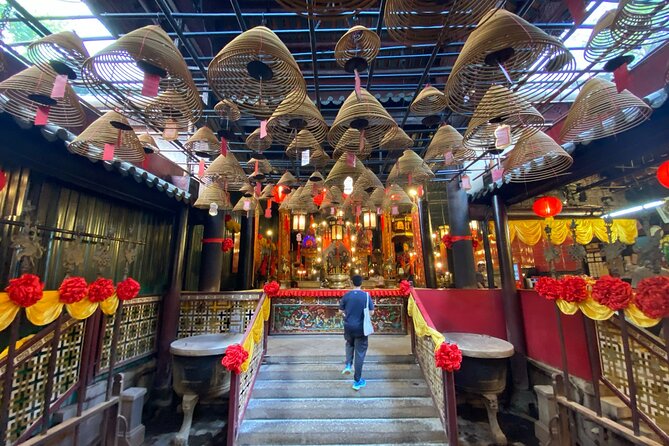
Man Mo Temple is a 20-minute stop and one of the clearest historical sites on the route. It was built in 1847 and preserves older Chinese religious architecture in the middle of a changing urban district.
The temple gives the walking tour a welcome pause from shops and office towers. You can see how local culture remains present even in an area shaped by finance, restaurants, and international residents.
Twenty minutes should be enough for a respectful visit and a short explanation, but not an extended religious or architectural study. Follow the guide’s instructions inside and keep the visit calm. This stop is more about seeing a living local tradition than collecting another photograph.
Cat Street Market and Sheung Wan food culture
Cat Street Market takes about ten minutes. The stalls are known for replica antiques, old collectible-style items, and zodiac accessories connected with good fortune.
This is a quick browsing stop, so do not plan on a long shopping session. It can be fun for small souvenirs, but the description makes clear that many objects are replicas. Ask questions before buying, especially if an item is presented as an antique.
The final district is Sheung Wan, with about 25 minutes of touring. It is described as Hong Kong’s oldest district and a food center for Chinese communities around the world. The stop brings the day back to food and migration, linking local streets with the wider Chinese diaspora.
Ending here makes sense. You finish with a district that carries older customs, markets, and food traditions, rather than ending at a modern shopping center. The tour concludes at Sheung Wan MTR Exit D near Shun Tak Centre, a practical point for continuing your own exploration.
What the $128.59 price gets you
At $128.59 per person, this is not a cheap orientation walk. The price is easier to justify if you value a small group, a guide who can adjust the food experience, and the chance to cover Kowloon and Hong Kong Island in one day.
The included Star Ferry and Ding Ding tram rides add character, though neither is costly as regular public transport. Much of the route uses free public spaces, including markets, promenades, neighborhoods, temple surroundings, and streets.
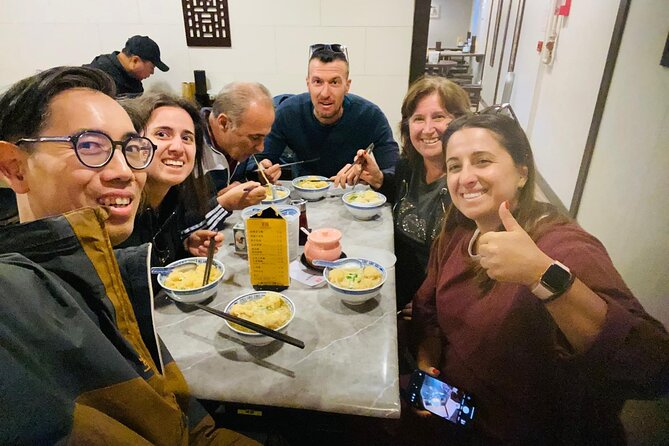
The key question is food. The tour includes a traditional breakfast experience and is presented as a food and walking tour, but the available details do not clearly list the number of tastings or meals covered. Before booking, ask exactly what is included, what you pay separately, and whether dietary needs can be handled.
Group discounts may improve the value for people booking together. A private option can also make sense for families or friends who want more control over the pace. The maximum group size of eight is already fairly small, so compare the private price with the standard option before deciding.
Who will get the most from this tour
I would choose this experience if you have one full day for orientation and want a broad introduction rather than a single neighborhood food crawl. It suits first-time visitors who want local streets, skyline views, history, and classic transport in one route.
It is also a good fit for people who enjoy asking questions. Andy has been praised for building bespoke food walks, meeting someone at a metro station, and showing markets and less obvious places along the way. Those details suggest that the guide may be a major part of the value.
I would think twice if you want a slow meal-focused tour with lots of time at each table. The route covers a great deal, and some stops last only 10 to 20 minutes. You should also reconsider if long walks, stairs, public transport, or a one-way route across the city will be tiring.
Booking 70 days ahead is the average pattern provided for this experience, which suggests planning early is sensible if your Hong Kong dates are fixed. Confirmation arrives at booking, and free cancellation is available up to 24 hours before the start time. Poor weather or failure to meet the minimum group size can lead to a new date, another experience, or a full refund.
Should you book the Kowloon and Hong Kong Island route?
Book it if you want to understand how Hong Kong fits together, from Sham Shui Po apartments and Mong Kok shopping streets to Central towers, the harbor, old temples, and Sheung Wan food culture. The two-island route, small group, Andy’s personal approach, and included ferry and tram rides give it real appeal.
Skip it if your priority is a relaxed, tightly focused food tour or if you want guaranteed details about every dish before paying. Ask about food inclusions first. For an active visitor who wants a broad first look at Hong Kong and does not mind a busy schedule, this is a useful and unusually wide-ranging day.
FAQ
Where does the tour start?
It starts at 10:30 a.m. at Sham Shui Po Station Exit D2, Fuk Wing Street, Un Chau, Hong Kong.
Where does the tour end?
The tour ends at Sheung Wan MTR Exit D, near Shun Tak Centre at 168-200 Connaught Road Central, Sheung Wan.
How long does the experience last?
The tour lasts approximately 5 to 6 hours.
How many people can join the tour?
The activity has a maximum of eight travelers.
Are the Star Ferry and Ding Ding tram included?
Admission for the Star Ferry and Hong Kong Tramways is included. The other listed stops have no admission charge.
Can I cancel for a full refund?
Yes. You can cancel at least 24 hours before the local start time for a full refund. Changes or cancellations made less than 24 hours before the start are not accepted for a refund.
Just added in Hong Kong
- Walking Tour in Hong Kong – Local Experience (New & Best)★ 4.5 · 33 reviews
- Full Day Private Trip in Hong Kong( impeccable local )walk tour★ 5.0 · 11 reviews
- Hong Kong Guided Dinner + Laser Show Lounge Entry (2023) | 200+ booked★ 3.5 · 7 reviews
- TurboJet Ferry E-Ticket from Hong Kong to Macau★ 4.5 · 10 reviews
- VIP Private Hong Kong City Sightseeing Tour★ 5.0 · 2 reviews
- Victoria Peak Tram and Sky Terrace 428 Admission Hong Kong★ 4.5 · 33 reviews
- Group Vegetarian Food & Cultural Tour★ 5.0 · 16 reviews
- Hong Kong Victoria Harbour Sightseeing Cruise Tickets★ 4.5 · 8 reviews
Food & Drink, compared.
Authentic Local Food Tour in Central Shanghai
Read our review →
Beijing Hutong Walking Food and Beer Tour at Hidden Restaurants
Read our review →
Hong Kong’s Tin Hau Hidden Eats Food Tour with 7+ Local Tastings
Read our review →
Hong Kong Food Tour: Central and Sheung Wan Districts
Read our review →Where else this tour turns up