
Reviewed · WALKING TOURS
Introduction to Hong Kong: Central Tip Based Walking Tour
Hong Kong tells its story in plain sight. This two-hour walk connects the city’s courts, banks, temples, food streets, and hillside escalators, showing you how colonial rule, Chinese sovereignty, money, faith, and cramped urban living shape Central today. I like the way the tour links grand landmarks to everyday life, and I especially like the local guides’ personal stories about growing up through Hong Kong’s political and social changes.
The $2.63 starting price makes this an unusually affordable way to get your bearings, while the route covers a lot without turning into a history lecture. The main consideration is that this is tip-based, so the listed price is not the whole picture if you want to recognize your guide’s work. The group can also reach 30 people, which may feel less personal than a private walk.
The guides named in the feedback include Andy and Stephen. Andy was praised for being helpful and patient, while Stephen brought a Hongkonger’s view of major events and kept the pace comfortable. That local viewpoint is the main reason to choose this walk over simply photographing Central’s famous buildings.
In This Review
- Key points to know before you book
- Starting at Central MTR Station at 11 a.m.
- Court of Final Appeal: law at the heart of Hong Kong
- Statue Square: two towers and two ideas of power
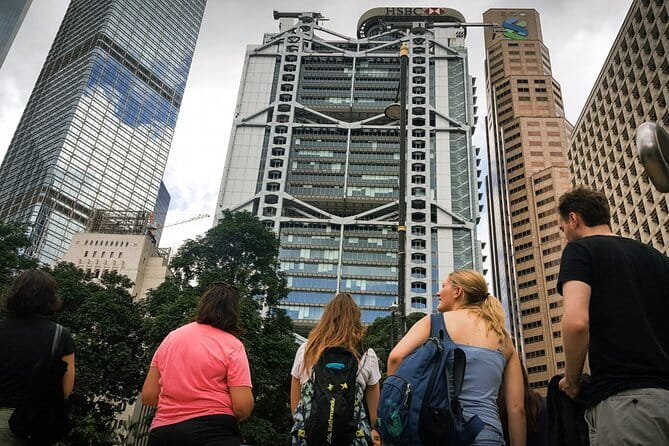
- HSBC Main Building and the story of money
- St. John’s Cathedral and Hong Kong’s changing identity
- Queen’s Road Central and the cost of living upward
- The Mid-Levels Escalators and practical city engineering
- Wellington Street: Hong Kong through food
- Man Mo Temple: incense, bells, and local practice
- What the $2.63 price really offers
- Who should choose this Central walking tour?
- Should you book it?
- FAQ
- How long is the Introduction to Hong Kong walking tour?
- What time does the tour start?
- Where does the walking tour meet?
- Where does the tour finish?
- Is food included?
- How many people can join the tour?
- Can I cancel for a full refund?
Key points to know before you book
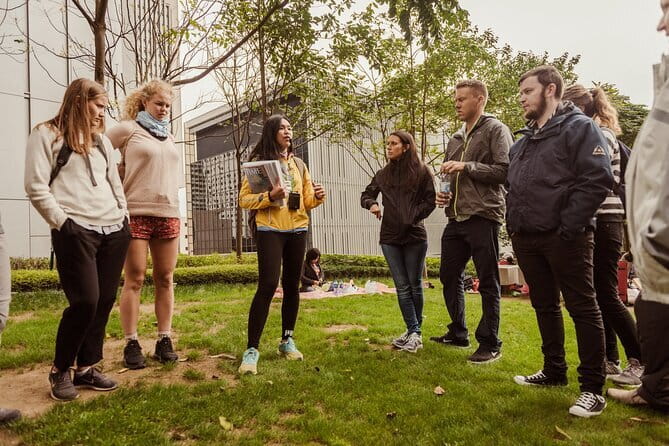
- A two-hour route with real variety: You move from the Court of Final Appeal and Statue Square to the Mid-Levels Escalators and Man Mo Temple.
- Politics explained through buildings: British Common Law, Chinese sovereignty, the 1997 handover, and Hong Kong’s current identity all appear along the route.
- No food is included: Wellington Street introduces local dishes, but tastings and drinks are not part of the experience.
- The Central-Mid-Levels Escalators are part of the transport story: You see how the city adapted to steep hills and crowded neighborhoods.
- Man Mo Temple offers hands-on customs: The guide explains incense offerings, the bell, and the drum.
- Good value, with a tip expected: The low advance price helps you try the tour, but remember to budget for a tip if the walk serves you well.
Starting at Central MTR Station at 11 a.m.
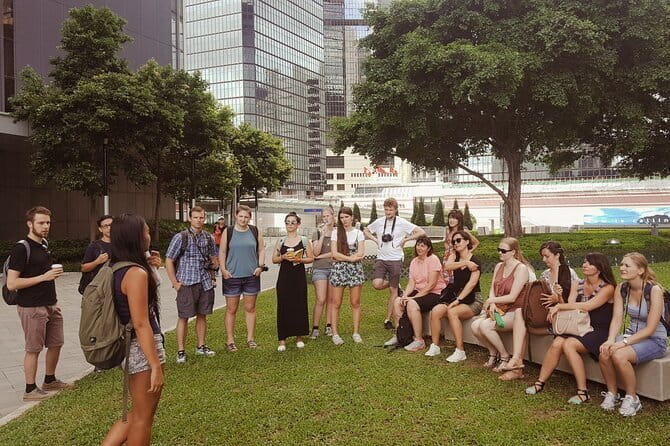
The meeting point is Central MTR Station, Exit K, on Kunnamed Road in Central. The tour begins at 11 a.m., a useful time for anyone who wants a relaxed morning before heading into the business district. You receive a mobile ticket, and confirmation arrives when you book.
Central is one of Hong Kong’s easiest places to reach by public transport, so you do not need to arrange a special transfer. Still, give yourself time to find Exit K. Hong Kong’s MTR stations can have several exits close together, and the wrong one can put you on a different street canyon.
The route is a walking tour, not a museum visit or a food tour. Admission is free at each listed stop, and the value comes from the guide’s explanations, links between places, and local perspective. You should expect to walk and stand for much of the two hours, with the route finishing at Man Mo Temple in Sheung Wan.
More Walking Tours in Hong Kong
- Dark Side of Hong Kong – Kowloon Caged Homes Walking Tour
★ 5.0 · 418 reviews - Full-Day Private Customized Walking Tour of Hong Kong
★ 5.0 · 106 reviews - Hong Kong: Kowloon Street Market & Food Culture Walking Tour
★ 5.0 · 105 reviews
Court of Final Appeal: law at the heart of Hong Kong
The first stop sets the tone. At the Court of Final Appeal, the guide explains Hong Kong’s One Country, Two Systems arrangement through the city’s legal traditions.
The useful point here is that Hong Kong did not simply replace one legal system with another after 1997. British Common Law remains part of daily legal life, while the city operates within the sovereignty of the People’s Republic of China. That makes the courthouse more than a handsome old building. It becomes a practical starting point for understanding why Hong Kong often feels both familiar to a British colonial city and unmistakably Chinese.
You spend about 10 minutes here, so do not expect a law-school lesson. The strength of the stop is the clear framework it gives you for the rest of the walk. As you see banks, roads, public buildings, and temples, you can place them within the larger story of a city adapting to political change.
Statue Square: two towers and two ideas of power
Statue Square provides one of the clearest visual lessons on the route. The HSBC Main Building and the Bank of China are close enough for you to compare them directly, yet they express very different ideas of authority.
The guide explains the old colonial connection represented by HSBC and the Chinese sovereignty associated with the Bank of China. The talk also includes the Feng Shui contest between the buildings, a subject that adds a local cultural layer to what could otherwise be a dry discussion of finance and architecture.
This is a good place to pause and look upward. Central’s towers can seem like a wall of glass and steel, but the guide helps you read the symbolism behind the skyline. You are not just seeing office buildings. You are seeing the old British commercial order, China’s growing influence, and Hong Kong’s constant effort to balance both.
The stop lasts about 10 minutes and has no admission charge. Bring your own questions. This is one of the places where a good guide can make the difference between a quick photograph and a useful lesson.
HSBC Main Building and the story of money
At the HSBC Main Building, the focus shifts from political power to monetary stability. The building’s guardian lions provide a memorable visual detail, but the explanation goes beyond architectural decoration.
You hear how Hong Kong’s currency system and the Hong Kong dollar’s peg have helped support the city’s role as a financial center. The guide also links the bank to the dramatic reshaping of Central’s waterfront through land reclamation since 1842.
That connection matters. The Central you see today is not simply an old district that grew naturally around a harbor. The shoreline itself has changed, allowing the financial district to expand and giving the city more room for roads, towers, and public buildings.
I like this stop because it shows how economics becomes physical. Monetary policy can feel abstract, but here it is tied to a bank building, a pair of lions, and streets built on land that did not exist in the same form generations ago.
A completely different sort of day out:
- Lantau Island Day Trip – Big Buddha & Tai O
★ 4.5 · 1,328 reviews - Big Bus Hong Kong Open Top Hop-On Hop-Off Sightseeing Tour
★ 4.0 · 1,077 reviews - Hong Kong Day Tour: City Landmarks & Highlights
★ 4.5 · 798 reviews - Hong Kong International Airport Plaza Premium Lounge Access
★ 3.5 · 787 reviews
St. John’s Cathedral and Hong Kong’s changing identity
St. John’s Cathedral brings the colonial story into sharper focus. The guide covers British possession beginning in 1842 and the handover to China in 1997, but the stop is also personal.
The tour’s description emphasizes guides sharing their own Hong Kong stories. That detail matters. Political change can sound remote when reduced to dates, treaties, and official speeches. A local guide who grew up amid those changes can explain how the city’s identity feels at street level.
You spend roughly 10 minutes at the cathedral. The short visit is enough to place the building in its historical setting, though it is not designed as an extended architectural tour. If your main interest is church interiors, this stop may feel brief. If you want a human explanation of Hong Kong’s transition from British rule to Chinese administration, it earns its place.
Queen’s Road Central and the cost of living upward
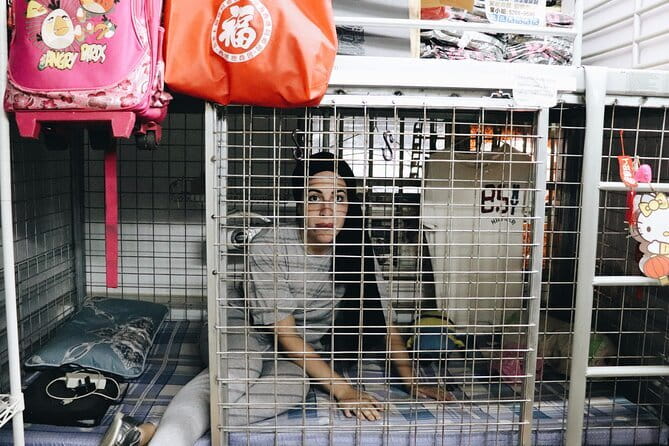
Queen’s Road Central shifts the discussion to a problem you can understand without a lecture: space costs a lot in Hong Kong.
The guide explains how the city’s extreme rental economy has shaped the urban form, including the reality of subdivided living units. This is a useful counterweight to the shiny financial district. Central may look prosperous, but high property costs affect how people live, how much room they have, and where homes fit into the city.
This part of the walk helps you look beyond office towers. Hong Kong’s famous density is not just a visual feature. It comes from practical pressure: limited land, steep hills, strong demand, and very high rents. The subject can be sobering, but it is one of the most valuable parts of the tour because it connects the city’s global success to the daily compromises faced by residents.
The Mid-Levels Escalators and practical city engineering

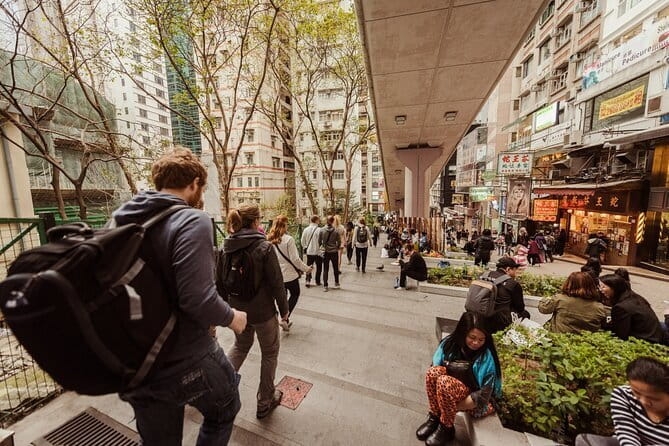
The Central-Mid-Levels Escalators are one of the route’s most enjoyable stops because you experience the solution as you learn about the problem.
The system was created as a government response to steep hills and crowded neighborhoods. The guide covers the engineering challenges involved in linking Central with the Mid-Levels, where the slope makes ordinary street travel harder.
This is not a ride designed for sightseeing alone. It is part of Hong Kong’s daily transport system and an example of the city making limited space work harder. You get a better sense of urban life when you use infrastructure that residents depend on, rather than only viewing monuments.
The route describes the escalators as the world’s longest outdoor escalator system. The walk gives you about 10 minutes of explanation, but the escalators themselves help the idea stick. You can see how the city changes as you move away from the office towers and into older streets and hillside neighborhoods.
One practical point: the escalators may be busy, and you will be moving through a public transport route rather than a closed attraction. Stay close to the guide and pay attention when the group changes direction.
Wellington Street: Hong Kong through food

Wellington Street is where the tour turns to food, but you should not arrive expecting a tasting. Food and drinks are not included.
Instead, the guide introduces Hong Kong’s culinary identity through familiar dishes such as wonton noodles and egg tarts. The value lies in the stories and recommendations. You learn what these foods say about local culture, daily routines, and the city’s mix of Chinese traditions and outside influences.
A useful feature is the local food list provided by the guide. You can keep it for later and decide what to try after the walk. Since the tour finishes near Man Mo Temple, you are well placed to continue exploring Old Town Central and Sheung Wan on your own.
This stop is best for people who enjoy context more than sampling. If you booked hoping to eat your way through Central during the two-hour walk, you may be disappointed. If you want ideas for a later meal and an explanation of why certain foods matter, it fits the tour well.
Man Mo Temple: incense, bells, and local practice
The final stop is Man Mo Temple at 124 to 130 Hollywood Road. Its smoky interior and long-burning incense coils offer a strong change of mood after the banks and court buildings.
The guide introduces the temple as a popular neighborhood place for good luck and social life. You are shown how to offer incense, ring the bell, and strike the drum. This hands-on element gives the walk a clear ending. You are not only hearing about local customs. You are being shown how people take part in them.
The temple also brings together many of the tour’s main themes. Hong Kong is modern and financial, but old practices remain part of ordinary life. The city changes quickly, yet a temple with centuries of custom can still function as a lived neighborhood institution.
You spend about 15 minutes here, the longest listed stop. That extra time makes sense. A brief look through the doorway would not give you enough space to understand the rituals or the temple’s place in the community.
Remember that this is an active religious site. Listen to the guide’s instructions and behave respectfully around worshippers. The tour ends here, so you can stay in Sheung Wan afterward rather than having to return to Central.
What the $2.63 price really offers
At $2.63 per person, this is excellent value for a two-hour introduction to Central, especially because a local guide leads the walk and brings personal stories. The price gives you a low-risk way to understand the city before spending money on separate attractions, transport, or meals.
The tour is tip-based, so think of the listed amount as an entry price rather than the final cost of the experience. No fixed gratuity is provided in the details, and food, drinks, and anything else not listed are excluded.
The value is strongest if you are visiting Hong Kong for the first time, enjoy asking questions, or want political and social context alongside landmark photos. It is less useful if you prefer to explore alone, dislike group walks, or want a dedicated food crawl.
With a maximum of 30 people, the group is not guaranteed to be tiny. Guides such as Andy and Stephen have been praised for being patient, helpful, and clear, but a larger group can still make quiet conversations harder. The pace has been described as comfortable, which is encouraging for a route that covers several distinct districts in two hours.
Who should choose this Central walking tour?
I would recommend it for first-time visitors who want a quick map of Hong Kong’s story. It also suits repeat visitors who have seen the skyline but want help understanding the city’s legal system, housing pressure, religious customs, and political transition.
Families and mixed-interest groups may find the variety helpful. One person can focus on architecture, another on food, another on politics, and everyone gets a moving overview without paying for several separate activities.
The tour also works well early in a Hong Kong stay. Afterward, you can return to the food suggestions on Wellington Street, spend more time around Hollywood Road, or explore Man Mo Temple at your own pace.
You should think twice if you need guaranteed shade, a private guide, or a slow photography walk. The route includes public streets, escalators, and several standing stops. Weather also matters. If poor weather forces cancellation, you are offered another date or a full refund. A minimum group size is required as well, and if it is not reached, you are offered a different date or experience or a full refund.
Free cancellation is available up to 24 hours before the 11 a.m. start time. Changes or cancellations inside that window are not accepted for a refund.
Should you book it?
Book this walk if you want a smart, low-cost introduction to Hong Kong that explains how the city works, not just where to take photographs. The route is compact but thoughtful, moving from law and finance to housing, transport, food, and worship.
I would book it near the start of a visit, arrive early at Central MTR Station Exit K, and keep the rest of the day open for exploring Sheung Wan. Bring questions, wear comfortable shoes, and remember that the food stop provides ideas rather than samples.
Skip it only if you strongly prefer independent sightseeing or need a private, highly tailored experience. For most people looking for an affordable first look at Central, the combination of local stories, clear pacing, and hands-on temple customs makes the tour a very good buy.
FAQ
How long is the Introduction to Hong Kong walking tour?
The tour lasts approximately two hours.
What time does the tour start?
The start time is 11 a.m.
Where does the walking tour meet?
The meeting point is Central MTR Station at Exit K on Kunnamed Road in Central, Hong Kong.
Where does the tour finish?
The tour ends at Man Mo Temple, located at 124 to 130 Hollywood Road in Sheung Wan.
Is food included?
No. Food and beverages are not included, though the guide discusses local dishes and provides food suggestions for the area.
How many people can join the tour?
The activity has a maximum group size of 30 people.
Can I cancel for a full refund?
Yes. You can cancel at least 24 hours before the experience start time for a full refund. Cancellations or changes made less than 24 hours before the start time are not accepted for a refund.
Just added in Hong Kong
- Lantau Island: Priority Cable Car, Tai O & Direct Transfer★ 4.0 · 11 reviews
- Hong Kong: Lantau Private Coach, Tai O & Big Buddha Tour★ 4.8 · 8 reviews
- Hong Kong: Ngong Ping Private Cable Car Skip-the-Line Ticket★ 4.6 · 7 reviews
- From Hong Kong: Macau Day Tour with R/T Ferry, Lunch, Pickup★ 4.6 · 39 reviews
- Hong Kong Market Walking Tour & Chinese Cooking Class★ 5.0 · 24 reviews
- A Perfect Hong Kong Layover – 5h private tour★ 5.0 · 10 reviews
- 4-Hour Private Hong Kong Layover Tour★ 5.0 · 39 reviews
- 6-Hour Private Hong Kong Layover Tour★ 5.0 · 18 reviews
Walking Tours, compared.
Beijing Hutong Walking Food and Beer Tour at Hidden Restaurants
Read our review →
Private Beijing Walking Tour of the Forbidden City with 7 Options
Read our review →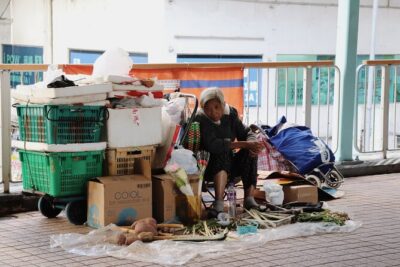
Dark Side of Hong Kong – Kowloon Caged Homes Walking Tour
Read our review →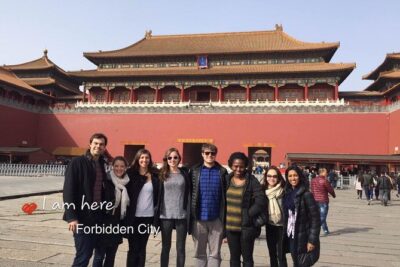
Forbidden City Private Walking Tour with Optional Sights
Read our review →
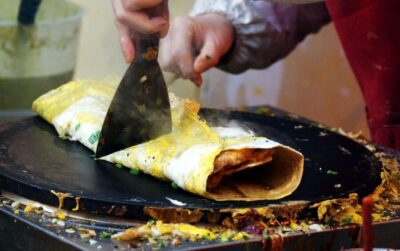
Shanghai Highlights Walking Tour With A Real Local
Read our review →
Beijing City Walk: Explore Hutongs Life and Old Beijing
Read our review →Where else this tour turns up