
Reviewed · HUTONG TOURS
Beijing City Walk: Explore Hutongs Life and Old Beijing
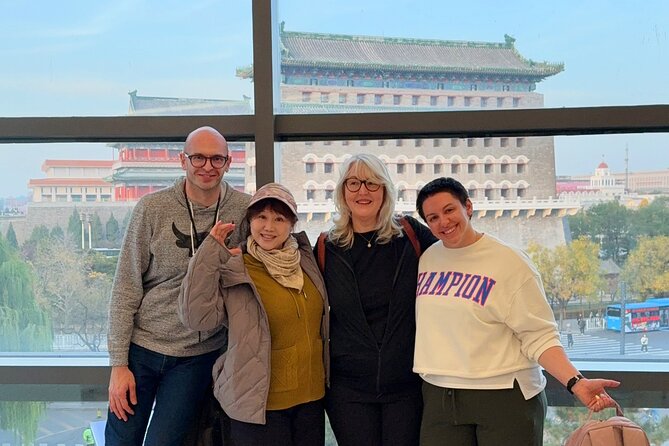
Beijing reveals itself on foot. This 2.5-hour walk links Qianmen, Dashilan, traditional hutongs, the Bell and Drum Towers, and the canalside Houhai area, giving you both famous sights and everyday neighborhood life. I like the way the route moves from grand city landmarks into quieter lanes, and I like that guides such as Yang, Kevin, Summer Wang, and Eevee add local stories, food tips, and hands-on moments such as calligraphy.
The $15 price is another strong point. You get an English-speaking guide, and a headset is supplied for groups of more than 10 people. The main drawback is that the walk covers a lot of ground in a short time, and winter can be cold in the open streets and hutongs.
In This Review
- Key points to know before you book
- Why this short walk works in Beijing
- Starting at Qianmen and Dashilan
- Leaving the shops for Sanlihe Hutong
- Nanluoguxiang and the old northern lanes
- The Bell and Drum Towers at the end
- Houhai, canals, and the night route
- Guides who shape the experience
- Is $15 good value?
- Who should choose this walk?
- Should you book the Beijing City Walk?
- FAQ
- How long does the Beijing City Walk last?
- What places can the walk visit?
- Can I choose a morning or night tour?
- Is an English-speaking guide included?
- Are headsets provided?
- Is admission to the Bell and Drum Towers included?
- What is the maximum group size?
- Can I cancel for a full refund?
Key points to know before you book
- Qianmen and Dashilan provide a lively opening: Start among historic shops, food stalls, pastries, drinks, and souvenir kiosks before moving toward quieter residential lanes.
- Sanlihe Hutong offers a calmer side of Beijing: The contrast between commercial streets and old neighborhood alleys is one of the walk’s best features.
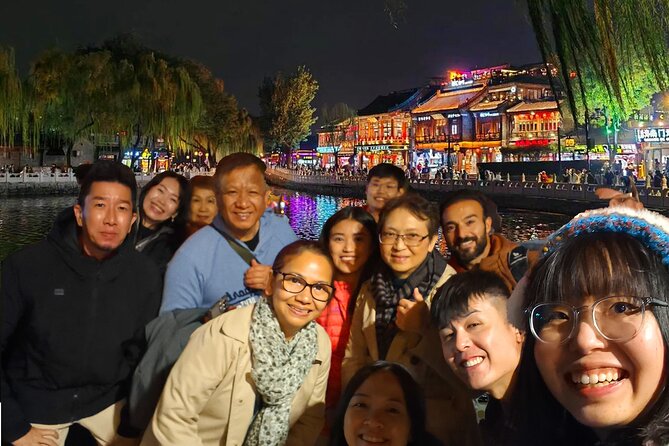
- The night option follows Beijing’s old timekeepers: The route can include the Drum Tower, hutongs, Houhai canals, and the illuminated Bell and Drum Towers.
- Local guides add more than dates and names: Yang has included calligraphy, local snacks, Peking Opera clothing, shops, and a shoe museum, while Kevin is praised for food advice and clear historical explanations.
- This is a small-group walk: The maximum group size is 15, with headsets for groups larger than 10.
- Weather and timing matter: Free cancellation is available up to 24 hours before the start, but poor weather can also lead to a new date or full refund.
Why this short walk works in Beijing
Beijing can feel enormous. Wide avenues, palace compounds, shopping streets, and hutongs all compete for your attention. A guided walk gives you a useful frame for the city, especially if you are visiting for the first time and want more than a quick photo stop.
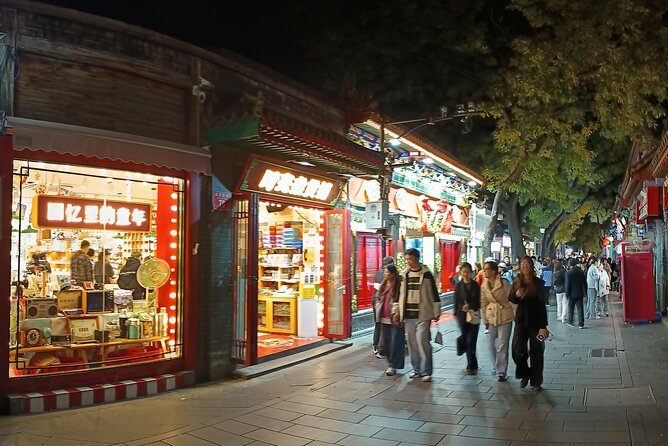
This tour focuses on the old quarters around central Beijing. You see commercial streets shaped by imperial-era trade, narrow lanes where traditional homes once stood, and the towers that helped regulate daily life in the old city. The walk does not try to replace the Forbidden City or the Temple of Heaven. Instead, it fills in the human side of Beijing, the side found in shops, snacks, courtyards, canals, and local streets.
I especially like the way the route combines major sights with ordinary details. A large monument can tell you where Beijing’s power once sat, but a small pastry shop or a quiet hutong can show you how people lived around it.
The tour is listed at about two and a half hours, though the overview allows for a two to three hour outing. That is enough time for a useful introduction without taking an entire day from your schedule. You can choose a morning, afternoon, or night departure, giving you some control over the mood of the walk.
More Walking Tours in Beijing
- Beijing Hutong Walking Food and Beer Tour at Hidden Restaurants
★ 5.0 · 1,132 reviews - Private Beijing Walking Tour of the Forbidden City with 7 Options
★ 5.0 · 675 reviews - Forbidden City Private Walking Tour with Optional Sights
★ 5.0 · 400 reviews
Starting at Qianmen and Dashilan
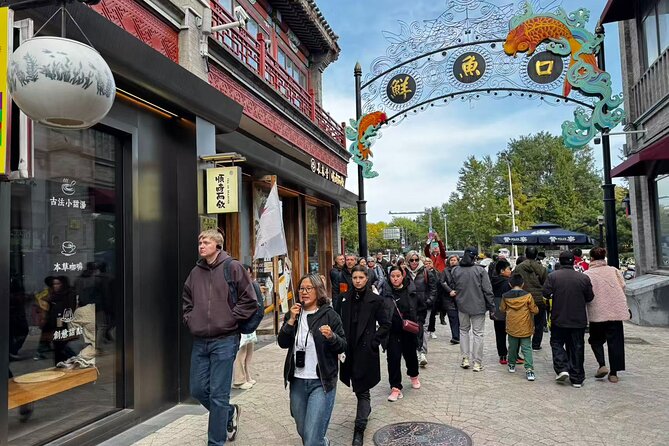
Qianmen is a sensible starting point because it immediately places you in one of Beijing’s best-known historic districts. The area has a strong sense of ceremony and commerce, with a broad pedestrian street leading toward Dashilan, an old shopping quarter.
The first hour begins among this mix of landmarks, storefronts, food, and movement. You can expect an English-speaking guide to explain how the area developed and point out details that are easy to miss when you walk alone. The guide’s role matters here because Qianmen can otherwise feel like a string of attractive buildings without much context.
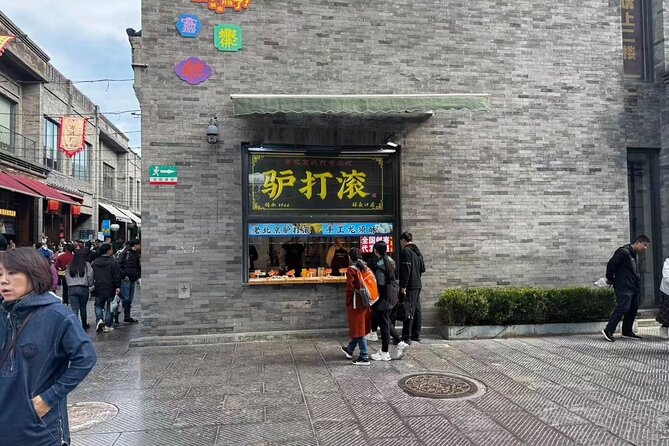
Dashilan is especially good for anyone interested in old Beijing’s commercial life. The district is known for traditional shops and small businesses, and the walk may bring you near kiosks selling Chinese pastries, local foods, drinks, and souvenirs. These stops help make the area feel connected to daily life instead of frozen as a museum display.
The commercial setting is also the first possible compromise. Qianmen and Dashilan are popular, so this section may feel busier and more polished than the residential lanes later in the walk. If you want only quiet streets and untouched old architecture, the opening section may not be your favorite. I think the contrast is useful, though. Beijing’s old quarters were not only places to live. They were also places to trade, eat, work, and gather.
Leaving the shops for Sanlihe Hutong
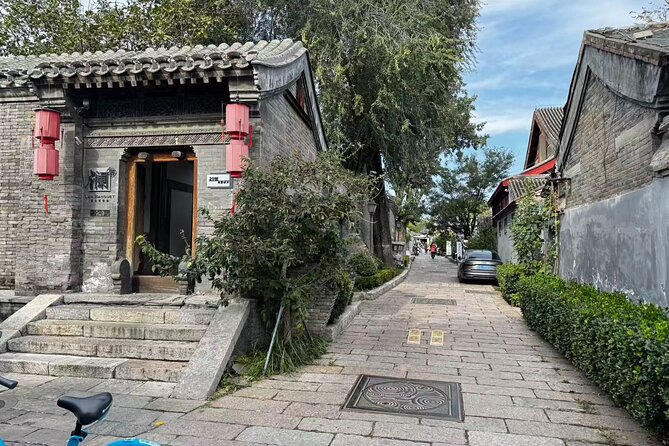
The move toward Sanlihe Hutong changes the pace. After the shops and pedestrian traffic of Qianmen and Dashilan, the hutong section offers a quieter look at Beijing’s older residential pattern.
A hutong is more than a narrow lane. It is a way of organizing neighborhood life around courtyards, entrances, shared space, and short connections between streets. A guide can explain what you are seeing without asking you to study architectural details on your own.
This is where a local guide earns the fee. Kevin, one of the guides praised for this walk, has been noted for explaining the area’s past and for helping people find their way through the hutongs. That matters because the lanes can look simple at first. Without context, you may notice doors and walls but miss the larger story of how these neighborhoods functioned.
The route also seems to leave room for personal interaction. Yang’s tours have included a chance to try calligraphy, sample local snacks, put on Peking Opera outfits, visit local shops, and see a shoe museum. These activities are not guaranteed at every departure, so you should treat them as possible additions rather than fixed promises. Still, they show the kind of approach the guides can bring: less lecture, more contact with local culture.
Sanlihe is likely to appeal most to you if you care about neighborhood life rather than simply checking off monuments. It is also a good section for photography, though you should remember that hutongs are living communities. Keep your voice low, avoid blocking doorways, and follow the guide’s lead around homes and shops.
Nanluoguxiang and the old northern lanes
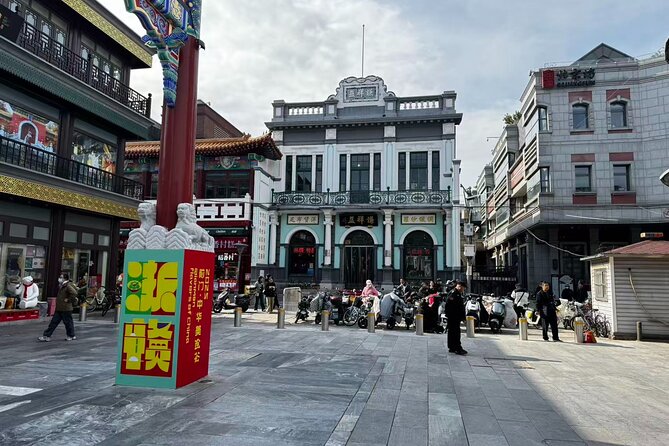
Another section of the experience focuses on Nanluoguxiang, one of Beijing’s best-known hutong areas. The route described for the night walk follows a historic line from the Drum Tower through old lanes toward Houhai.
Nanluoguxiang gives you a different feel from Sanlihe. It is closely associated with restaurants, small shops, snacks, and evening activity, so it can feel more social and commercial. That makes it a useful place to learn about Beijing through food and street life, but it may not feel as quiet or residential as a less visited hutong.
I like this part for the practical advice. Kevin has been praised for suggesting good local foods and snacks, and that is exactly the sort of help that improves a city walk. A guide can steer you toward something worth trying and explain what you are eating, rather than leaving you to guess from a sign.
The night setting adds another layer. Shops and food stalls take on a different character after dark, and the old lanes lead naturally toward the lit towers and Houhai waterfront. If you choose an evening departure, bring a phone light for uneven stretches and dress for the season. The supplied information confirms that winter can be cold, so warm clothing is not optional in that period.
There is one practical issue here: the tour description presents both a Qianmen route and a Nanluoguxiang night route. You should check the specific departure you select so you know which part of Beijing you will visit. The morning, afternoon, and night choices may offer different versions of the walk.
More Hutong Walks in Beijing:
- Temple Heaven, Summer Palace, Lama Temple, Hutong Bus Tour
★ 4.7 · 319 reviews - Temple of Heaven, Summer Palace, Lama Temple, Hutong Tours
★ 5.0 · 311 reviews - Beijing Private Hutong Food Walking Tour
★ 5.0 · 299 reviews - The Hutong Experience by Bike
★ 5.0 · 163 reviews
The Bell and Drum Towers at the end
The Bell and Drum Towers are the most dramatic architectural stop on the route. The walk pauses in the square so you can see the buildings, including their evening illumination on the night option, and hear how they once helped govern time in the old city.
The towers are not simply attractive old structures. Before modern clocks and electronic signals, their sounds helped organize the rhythm of Beijing. The guide’s explanation gives the square a purpose and makes the buildings easier to understand.
The stop lasts about 30 minutes. Admission to the towers themselves is not included, so you should not assume that the walking tour includes entry inside. The supplied details describe a pause in the square, which means the value here comes mainly from the view, the setting, and the explanation.
This is a good ending because it gathers several themes from the walk: imperial order, public life, old neighborhoods, and the changing face of modern Beijing. The towers also make a strong final photo point, especially at night.
Houhai, canals, and the night route
The night walk continues toward the Houhai area, where canalside scenery replaces the tighter lanes of the hutongs. This gives the experience a pleasant change of setting without requiring another major attraction ticket.
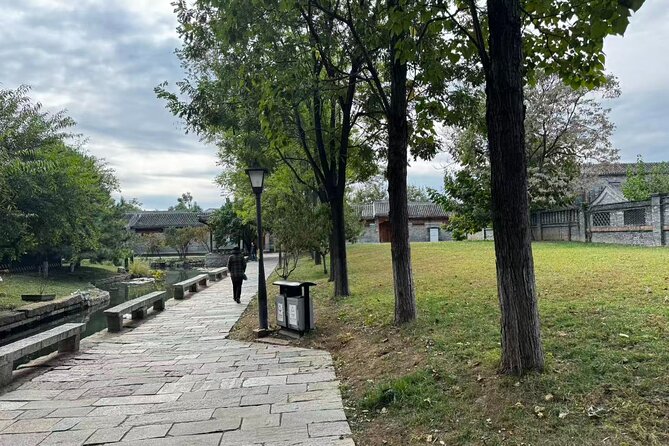
Houhai is part of the old northern city route and provides a more open finish. You can expect a walk shaped by water, evening lights, nearby streets, and the movement between historic buildings and current city life.
I would choose this version if you want to see Beijing after dark and enjoy food suggestions along the way. The evening route also makes sense for people who spend the day at a palace or museum and want a guided activity later.
The tradeoff is timing. A night walk is less useful for examining architectural details than a daytime departure. If your priority is seeing hutong entrances, shop fronts, and building details clearly, morning or afternoon may suit you better. If you care more about atmosphere, street food, and illuminated landmarks, night has the edge.
Guides who shape the experience
The guide is the most important variable in a walk like this. The route itself is worthwhile, but the quality of the explanations and the willingness to answer questions will determine how much you take away.
Yang receives particular praise for balancing facts with fun. The activities associated with Yang’s tour include history, calligraphy, snacks, Peking Opera clothing, local shops, and a shoe museum. That combination is appealing because it avoids turning the walk into a long classroom session.
Kevin is repeatedly associated with clear explanations, hutong history, and local food suggestions. He has also helped people who had tried to explore the lanes alone but found a guide made the area much easier to understand.
Summer Wang is praised for bringing Beijing’s history and culture to life through a carefully planned route that combines well-known places with less obvious stops. Eevee is described as friendly and helpful, including assistance with finding a taxi after the walk and giving each person a small gift at the end.
Guide assignments can change, so you should not book on the assumption that one particular person will lead your departure. Still, these examples show the standard of service you can reasonably hope for: clear explanations, a friendly manner, and practical help beyond simply walking from one stop to the next.
Is $15 good value?
At $15 per person, this is an inexpensive way to get a guided introduction to several old Beijing districts. You receive an English-speaking guide, and the group is capped at 15 people. That ceiling is important because hutongs are narrow, and a giant group would make it harder to hear and harder to move comfortably.
The headset is supplied for groups of more than 10. That will not make the tour private, but it should help you catch the guide’s comments when the street gets noisy.
The price does not include tips, and admission to the Bell and Drum Towers is not included. You should also budget separately for any food or drinks you choose to buy. Even with those extra costs, the basic tour remains good value if you want history, orientation, and local recommendations in one compact outing.
The strongest value comes from the guide’s local interpretation. You can walk through Qianmen, Nanluoguxiang, or the hutongs without paying for a tour, but you may not understand what you are seeing. At this price, the tour makes sense as a first look at old Beijing.
Who should choose this walk?
I would recommend it to first-time visitors who want a manageable introduction to old Beijing. It suits people who enjoy walking, small shops, food stops, and stories about how neighborhoods worked.
It is also a good choice for you if you have already seen the major imperial attractions and want a more local side of the city. The hutongs, snack kiosks, calligraphy, clothing, and shop visits can add texture to a museum-heavy schedule.
Families and mixed-age groups may appreciate the variety. A child who loses interest during long historical explanations might respond better to snacks, clothing, calligraphy, and street scenes. Most people can participate, according to the supplied details, but you should be comfortable walking for roughly two and a half hours.
I would be more cautious if you dislike walking in busy areas, need a very slow pace, or want a fully private tour. The group can reach 15 people, the route covers several districts, and Qianmen or Nanluoguxiang may feel crowded.
The tour requires good weather. You can cancel for a full refund up to 24 hours before the start time. Inside the final 24 hours, changes and cancellations are not accepted for a refund, unless poor weather causes the operator to cancel and offer a new date or full refund.
Should you book the Beijing City Walk?
Book it if you want a low-cost, guide-led introduction to hutongs and old Beijing. The best reasons are the mix of Qianmen commerce, quieter residential lanes, local food advice, and the Bell and Drum Towers. Strong guides can add calligraphy, snacks, Peking Opera clothing, and small cultural stops that make the walk more memorable.
Choose the departure time carefully. Pick morning or afternoon for clearer views of lanes and buildings. Pick night for illuminated towers, Houhai, and a stronger food-and-street atmosphere. Bring warm clothes in winter, allow extra money for snacks and tips, and confirm which route applies to your chosen departure.
I would skip it only if you want a private, slow architectural tour or have limited tolerance for walking and city noise. For most visitors, the $15 fee is a sensible investment in understanding the parts of Beijing that are easiest to pass by without a guide.
FAQ
How long does the Beijing City Walk last?
The walk lasts approximately 2 hours and 30 minutes. The overview allows for a total duration of about two to three hours.
What places can the walk visit?
The described routes include Qianmen Walking Street, Dashilan commercial street, Sanlihe Hutong, Nanluoguxiang, the Bell and Drum Towers, and the Houhai area.
Can I choose a morning or night tour?
Yes. The experience offers morning, afternoon, and night options. The route and atmosphere may differ according to the departure you choose.
Is an English-speaking guide included?
Yes. An English-speaking tour guide is included in the price.
Are headsets provided?
A guided tour headset is provided for groups of more than 10 people.
Is admission to the Bell and Drum Towers included?
No. Admission to the Bell and Drum Towers is not included. The tour includes a 30-minute stop in the square.
What is the maximum group size?
The activity accepts a maximum of 15 participants.
Can I cancel for a full refund?
You can cancel at least 24 hours before the experience start time for a full refund. Cancellations or changes made within 24 hours are not refunded. If poor weather causes the operator to cancel, you will be offered another date or a full refund.
Just added in Beijing
- Private Transfer to Mutianyu Great Wall with professional driver★ 5.0 · 19 reviews
- One day tour to downtown Tianjin from Beijing by high speed train★ 5.0 · 3 reviews
- ZANBUS: Trip to the Jinshanling Great Wall Departing at 7:30 AM★ 5.0 · 5 reviews
- camp on the Great Wall overnight with sunrise and sunset on the wall★ 5.0 · 11 reviews
- Yuxiandu Chinese Royal Cuisine Museum with Show and Royal Banquet★ 5.0 · 4 reviews
- Wild Great Wall Hikes★ 5.0 · 10 reviews
- BusDa:Ancient Great Wall &Badaling Great Wall Full-day Bus Tour★ 4.5 · 6 reviews
- Wild Great Wall Huanghuacheng Half Day Tour★ 5.0 · 15 reviews
Hutong Tours, compared.
Beijing Hutong Walking Food and Beer Tour at Hidden Restaurants
Read our review →
Temple Heaven, Summer Palace, Lama Temple, Hutong Bus Tour
Read our review →
Temple of Heaven, Summer Palace, Lama Temple, Hutong Tours
Read our review →



Where else this tour turns up