
Reviewed · WALKING TOURS
Dark Side of Hong Kong – Kowloon Caged Homes Walking Tour
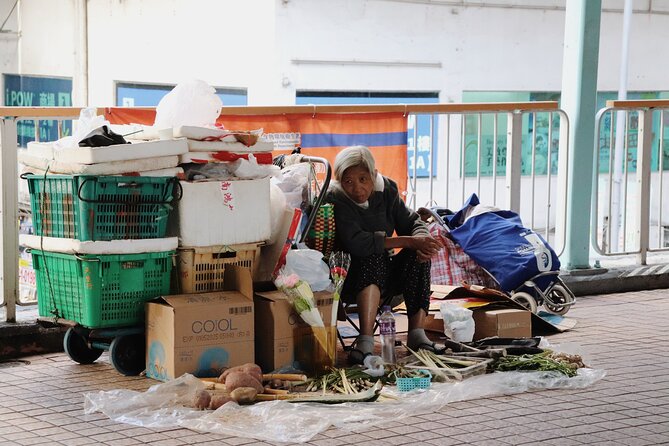
Hong Kong’s postcard image tells only half the story. This two-hour walk through Kowloon examines the housing crisis from street level, with visits to traditional markets, lower-income districts, rooftop settlements, and a staged subdivided flat. I like the tour’s clear focus on how scarce land, post-war growth, and economic policy shaped daily life, and I like that it connects housing pressure to real streets rather than treating the subject as an abstract lecture. The main drawback is that you do not enter an occupied cage home or a real family’s subdivided apartment.
This is a serious tour, not a cheerful sightseeing stroll. You will hear about families living in tiny units, see sharp contrasts between expensive new apartments and cramped housing, and discuss possible solutions with a local charity. Guides such as Alice, Isaac, Grace, Summer, Wind, and Michael have been praised for answering questions well, but the experience depends heavily on who leads your group and how willing you are to listen.
In This Review
- Key points before you book
- Why this Kowloon walk matters
- Starting near Prince Edward and Nathan Road
- Cedar Street and the 500-square-foot question
- Ki Lung Street and the causes of the crisis
- Inside the 100-square-foot display unit
- Lui Seng Chun and a personal housing story
- Yee Kuk Street and the uncomfortable backstreets
- Hai Tan Street and the sharpest contrast
- Pei Ho Street and the rooftop view
- SoCo and a discussion about solutions
- What the guides do best
- Price, length, and practical value
- Who should book this experience
- Should you book the Kowloon Caged Homes Walking Tour?
- FAQ
- How long is the Dark Side of Hong Kong tour?
- What time does the tour start?
- Where does the tour begin?
- Where does the tour finish?
- How much does the tour cost?
- Is hotel pickup included?
- Will I enter a real occupied cage home?
- Is the tour suitable for people with limited mobility?
- Can I cancel for a full refund?
Key points before you book
- A street-level look at housing pressure: The route moves through Sham Shui Po and nearby Kowloon streets where the city’s wealth gap is hard to miss.
- A staged 100-square-foot flat: You can see how a small apartment may hold a bed, kitchen, and living area, but the display is not an occupied home.
- Strong guides make the difference: Alice, Isaac, Grace, Summer, Wind, and others have been praised for factual explanations, thoughtful answers, and an engaging style.
- Markets and backstreets add context: Ki Lung Street, Yee Kuk Street, Hai Tan Street, and Pei Ho Street show working-class Hong Kong beyond the main tourist routes.
- A rooftop view of hidden housing: The Pei Ho Street stop offers a look across central Sham Shui Po and its less-publicized living conditions.
- A serious, sometimes painful subject: This tour suits people who want social and economic context, not visitors seeking attractions, shopping, or light entertainment.
Why this Kowloon walk matters
Hong Kong is famous for polished towers, luxury shopping, and remarkable public transport. Yet the city is also known for having the world’s least affordable housing market. This walk puts that fact into human scale.
A 500-square-foot apartment might be divided into five 100-square-foot units. That figure is easy to read and quickly forget. Seeing the size of a display unit, then walking past buildings where similar arrangements exist, makes the issue more real.
The tour also explains why the shortage developed. Post-war population growth increased demand. Land is limited. Hong Kong’s low-tax, capitalist system helped create enormous wealth, but it also contributed to a property market that many working families cannot afford. The point is not to reduce the city to a single political argument. It is to help you understand why modern Hong Kong can have luxury apartments beside severe overcrowding.
I appreciate that the route treats housing as an urban planning and social issue rather than a spectacle. The operator itself makes clear that this is not meant to be poverty tourism. You will not be taken inside someone’s occupied home or encouraged to photograph people in distress. Instead, the focus is on buildings, public spaces, history, and explanation.
More Walking Tours in Hong Kong
- Introduction to Hong Kong: Central Tip Based Walking Tour
★ 5.0 · 202 reviews - Full-Day Private Customized Walking Tour of Hong Kong
★ 5.0 · 106 reviews - Hong Kong: Kowloon Street Market & Food Culture Walking Tour
★ 5.0 · 105 reviews
Starting near Prince Edward and Nathan Road
The tour begins at 11:00 am near Nathan Road in the Prince Edward area of Kowloon. The meeting information identifies the start as Nathan Rd, Prince Edward, Hong Kong, and the route finishes in Sham Shui Po near Sham Shui Po MTR Station.
Because the supplied meeting information also refers to Prince Edward Station Exit D, check your confirmation carefully before setting out. That small bit of preparation matters in Kowloon, where major roads, station exits, and dense side streets can make a short distance feel confusing.
The area near Prince Edward gives the tour a useful opening. You are not starting at a museum or a viewpoint. You begin in a working part of Kowloon, where shopfronts, apartment blocks, transport links, and crowded streets establish the setting before the explanations begin.
The group can reach up to 30 people. That is not a tiny private walk, so you should expect to stand close to the guide and keep pace through busy streets. The route requires a moderate level of fitness. Wear comfortable shoes, especially since the walk includes streets, stairways, and a rooftop stop.
Cedar Street and the 500-square-foot question
The first stop on Cedar Street introduces the basic housing problem. Here, the guide explains why Hong Kong is ranked as the world’s least affordable city and shows how a typical 500-square-foot apartment can be cut into five units of roughly 100 square feet each.
The useful part is the scale. A 100-square-foot room is not merely small by normal apartment standards. It may need to contain sleeping space, storage, cooking equipment, and the daily life of one person or a family. The tour asks you to think about what disappears when every spare corner has a price.
This opening stop also gives the rest of the route a clear frame. You are not simply walking through an older neighborhood. You are looking at the physical result of high rents, limited space, and a large population competing for homes.
Ki Lung Street and the causes of the crisis
At Ki Lung Street, the guide goes further back and explains how several forces came together. Post-war population growth increased pressure on housing. Scarce land kept supply tight. Hong Kong’s economic model produced great prosperity, but housing costs became a heavy burden for people on low wages.
This is one of the tour’s strongest sections for anyone interested in economics, government, or urban planning. Isaac, one of the guides praised for his clear explanations, was especially appreciated for presenting factual information and responding to questions. Alice and Grace were also singled out for thoughtful, well-paced commentary.
You will get the most from this stop if you ask questions. The guides are expected to discuss more than the size of apartments. They can help connect the built environment to income disparity, immigration, minimum-wage work, and the choices available to families with very little spare money.
A completely different sort of day out:
- Lantau Island Day Trip – Big Buddha & Tai O
★ 4.5 · 1,328 reviews - Big Bus Hong Kong Open Top Hop-On Hop-Off Sightseeing Tour
★ 4.0 · 1,077 reviews - Hong Kong Day Tour: City Landmarks & Highlights
★ 4.5 · 798 reviews - Hong Kong International Airport Plaza Premium Lounge Access
★ 3.5 · 787 reviews
Inside the 100-square-foot display unit
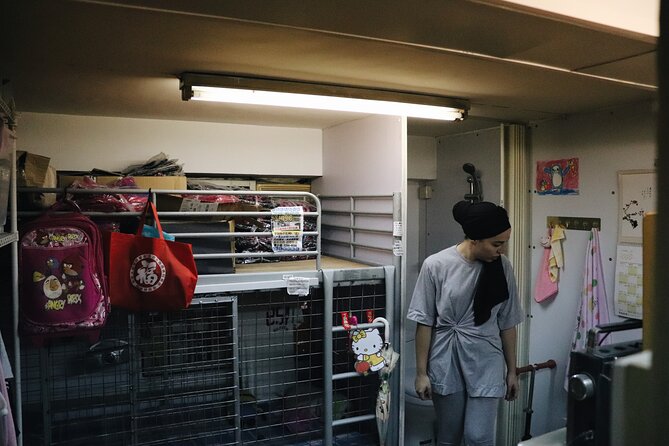
The next Cedar Street stop is the most direct visual aid on the route. You step inside a 100-square-foot subdivided flat arranged to show how a minimum-wage family might fit a kitchen, bed, and living space into one tiny area. You also see a model of a caged home designed for a single resident.
There is an important limitation here. The unit is a staged display, not an occupied apartment. One visitor felt this left the tour short on physical content, and that criticism is fair if you expect to enter a real cage home.
Still, the display serves a purpose. It lets the guide discuss dimensions without intruding into a resident’s private life. You can see the compromises directly: a lack of room, overlapping functions, and the absence of a normal boundary between cooking, sleeping, and relaxing.
The word caged can sound sensational, but the tour explains the term in relation to partitioned sleeping spaces. The point is not to shock you with a strange attraction. It is to show the housing choices available to people who cannot afford standard apartments.
Lui Seng Chun and a personal housing story
At Lui Seng Chun, the guide shares a firsthand account of navigating Hong Kong’s property market. This adds a personal note to what could otherwise become a string of statistics.
The story helps show that housing pressure is not only an issue for people at the very bottom of the income scale. The city’s property costs affect ordinary working residents and families in many different ways. A guide who can explain the subject from lived experience may make the numbers easier to understand.
The exact delivery will depend on your guide. Alice, Summer, Wind, Grace, and Isaac have all been praised for warmth, clarity, and a willingness to answer questions. A good guide is especially important on a subject this serious, since the difference between a useful explanation and a rushed speech is considerable.
Yee Kuk Street and the uncomfortable backstreets
Yee Kuk Street brings the tour into the less polished side of Sham Shui Po. The guide discusses the area’s illicit connections to the drug and sex trades, giving you a broader view of the pressures that can gather in districts marked by poverty and overcrowding.
This is not presented as a crime tour. The stop is brief, around 10 minutes, and its purpose is to show another layer of the neighborhood’s social problems. You might find the subject uncomfortable, particularly if you are traveling with younger children.
The route also passes traditional markets and ordinary local streets. That helps keep the experience grounded. Sham Shui Po is not only a symbol of hardship. It is a lived-in district with shops, food, work, families, and long-established community life.
Hai Tan Street and the sharpest contrast
Hai Tan Street offers one of the clearest visual comparisons on the route. New apartments priced at about US$1.5 million sit beside a dense cluster of subdivided units and cage homes.
You do not need a long speech to understand the contrast. The buildings themselves show how close extreme wealth and severe housing pressure can be in Hong Kong. This is one of the best stops for making the income gap visible without relying only on charts or political claims.
It also explains why a simple solution is hard. The issue is not only that some homes are old or small. Land values, redevelopment, income, and access to housing all overlap. The guide uses the street to discuss those connections in plain terms.
Pei Ho Street and the rooftop view
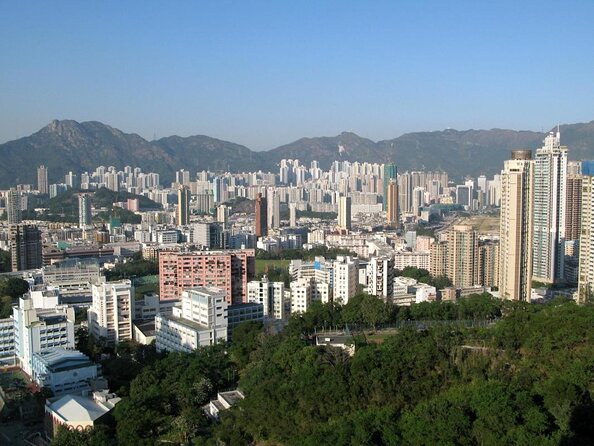
At Pei Ho Street, the group climbs to a rooftop in central Sham Shui Po. From there, you can look across the district and see the less polished side of Hong Kong that rarely appears on postcards.
The rooftop stop is likely to be one of the most memorable parts of the walk. It changes your view from a single building or doorway to the wider pattern of dense construction and hidden living spaces. It also gives street photographers plenty to notice, from roof structures to the close spacing of buildings.
This stop requires care. The walk includes an ascent, and hot or wet weather can make it more tiring. The tour requires moderate physical fitness, so you should plan accordingly. One positive practical point is that several stops take place indoors or in air-conditioned spaces, which can help on a very hot day.
SoCo and a discussion about solutions
The final stop is at SoCo on Kweilin Street, a charity with 50 years of work advocating for marginalized people. Here, the discussion turns from problems to possible answers for Hong Kong’s future.
That change matters. A tour about overcrowding can leave you feeling helpless if it only shows hardship. Ending with an organization involved in advocacy gives the subject a civic dimension and invites you to think about policy, housing access, and the role of community groups.
The stop also makes the tour feel more responsible. You are not simply shown difficult conditions and then sent back to the tourist district. You hear about people and organizations trying to improve the situation.
What the guides do best
The most praised part of this experience is the guide’s ability to explain a difficult subject without turning it into a lecture. Alice is described as genuine and informed. Isaac is praised for his facts, pacing, and answers. Grace is noted for her care, detail, and ability to point out small street features with larger stories behind them.
Summer is described as friendly, passionate, and engaging. Wind is praised for making the experience feel real without becoming preachy. Michael and other guides have also led the walk.
Of course, guide quality can vary. The route has a set structure, but the conversation will depend on the person leading your group and the questions you ask. If you enjoy economics, politics, architecture, or social issues, you will probably find the discussion especially rewarding.
Price, length, and practical value
The price is $32.82 per person for about two hours. That is more than you would pay to walk the same streets alone, but you would lose the history, explanations, housing context, and introductions to the display unit and SoCo.
I consider the price reasonable if you want interpretation rather than a major attraction. You are paying for a local guide’s time and for a carefully organized route through places most visitors would pass without understanding.
The value is weaker if you expect many formal entrances or dramatic sights. One critical assessment found the content lighter than expected, with walking and a tea stop feeling like filler. That is a useful warning. The experience is primarily a guided social and urban study, not a tour packed with attractions.
Free cancellation is available when you cancel at least 24 hours before the start time. Changes or cancellations made later are not accepted for a refund. Poor weather or failure to reach the minimum group size can result in another date or a full refund.
Who should book this experience
You should book this walk if you want to understand Hong Kong beyond the skyline. It suits curious adults, students, photographers, and families with older teenagers who can handle a serious subject. One family found it worthwhile with a 16-year-old, though the material can be upsetting.
You should skip it if you want shopping, temples, food tasting, or a relaxed stroll. The tour is factual and sometimes bleak. It asks you to pay attention to housing, poverty, migration, and inequality.
You should also adjust your expectations about cage homes. You will see a designed example and learn about the conditions, but you will not visit an occupied home. That boundary protects residents’ privacy, even if it makes the experience less visually dramatic.
Should you book the Kowloon Caged Homes Walking Tour?
Book it if your idea of a good Hong Kong tour includes learning how the city works. The route through Cedar Street, Ki Lung Street, Hai Tan Street, Pei Ho Street, and SoCo offers a useful look at the people and pressures behind the skyscrapers.
Do not book it expecting a spectacle. The tour’s best moments come from explanation, comparison, and conversation. At $32.82, it is good value for a serious two-hour lesson led by a strong guide, but less satisfying for anyone who wants a packed sightseeing schedule.
FAQ
How long is the Dark Side of Hong Kong tour?
The tour lasts approximately two hours.
What time does the tour start?
The scheduled start time is 11:00 am.
Where does the tour begin?
The tour begins near Nathan Road in the Prince Edward area of Hong Kong. The meeting details also identify Prince Edward Station Exit D, so check your booking confirmation for the exact meeting point.
Where does the tour finish?
The tour finishes in Sham Shui Po, near Sham Shui Po MTR Station.
How much does the tour cost?
The listed price is $32.82 per person.
Is hotel pickup included?
No. Hotel pickup and drop-off are not included.
Will I enter a real occupied cage home?
No. The tour includes a staged 100-square-foot subdivided flat and a designed cage-home example. It does not include entry into an occupied home.
Is the tour suitable for people with limited mobility?
The tour requires a moderate level of physical fitness and includes walking and an ascent to a rooftop. Service animals are allowed, and the route is near public transportation.
Can I cancel for a full refund?
Yes, if you cancel at least 24 hours before the scheduled start time. Cancellations or changes made less than 24 hours before the start are not refunded. If poor weather or an insufficient group size causes the operator to cancel, you will be offered another date or a full refund.
Just added in Hong Kong
- Lantau Island: Priority Cable Car, Tai O & Direct Transfer★ 4.0 · 11 reviews
- Hong Kong: Lantau Private Coach, Tai O & Big Buddha Tour★ 4.8 · 8 reviews
- Hong Kong: Ngong Ping Private Cable Car Skip-the-Line Ticket★ 4.6 · 7 reviews
- From Hong Kong: Macau Day Tour with R/T Ferry, Lunch, Pickup★ 4.6 · 39 reviews
- Hong Kong Market Walking Tour & Chinese Cooking Class★ 5.0 · 24 reviews
- 4-Hour Private Hong Kong Layover Tour★ 5.0 · 39 reviews
- 6-Hour Private Hong Kong Layover Tour★ 5.0 · 18 reviews
- Private custom layover tour of Hong Kong – 7 hours★ 5.0 · 17 reviews
Walking Tours, compared.
Beijing Hutong Walking Food and Beer Tour at Hidden Restaurants
Read our review →
Private Beijing Walking Tour of the Forbidden City with 7 Options
Read our review →
Forbidden City Private Walking Tour with Optional Sights
Read our review →
Introduction to Hong Kong: Central Tip Based Walking Tour
Read our review →
Shanghai Highlights Walking Tour With A Real Local
Read our review →
Beijing City Walk: Explore Hutongs Life and Old Beijing
Read our review →Where else this tour turns up