
Reviewed · HUTONG TOURS
Immerse Yourself:Chinese Calligraphy Experience in Beijing Hutong
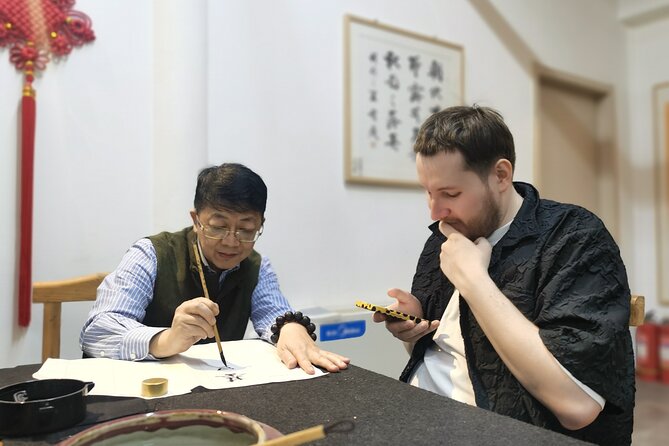
Brushes turn language into art. This one-hour class gives you a hands-on way to meet Chinese culture beyond the usual palace gates and photo stops. I like the small maximum group of 10, which should allow more personal help, and I like that Master Guo Baoqing teaches in a supportive, hands-on style. You also leave with practical brushwork and at least 10 Chinese characters, not just a souvenir trinket.
The main drawback is the short schedule. One hour is enough for an introduction, but not enough to master calligraphy or explore the full range of Chinese writing styles. You also need to arrange your own taxi or subway ride to 71-3 Ci Qi Kou Da Jie in Dong Cheng Qu, and the activity can be affected by bad weather or low enrollment.
In This Review
- Key points to know before booking
- Why this one-hour class adds something different to Beijing
- Meeting Master Guo Baoqing and getting started
- Learning the brush, ink, and basic strokes
- Learning 10 Chinese characters in a short session
- The cultural value beyond a standard sightseeing stop
- Is $55 a fair price for one hour?
- Timing, group size, and practical planning
- Who will get the most from this experience?
- Should you book the Beijing hutong calligraphy class?
- FAQ
- How long does the calligraphy experience last?
- Where does the activity start?
- Does the activity include transportation?
- Are calligraphy supplies included?
- How many people can join the class?
- Can I cancel for a full refund?
Key points to know before booking
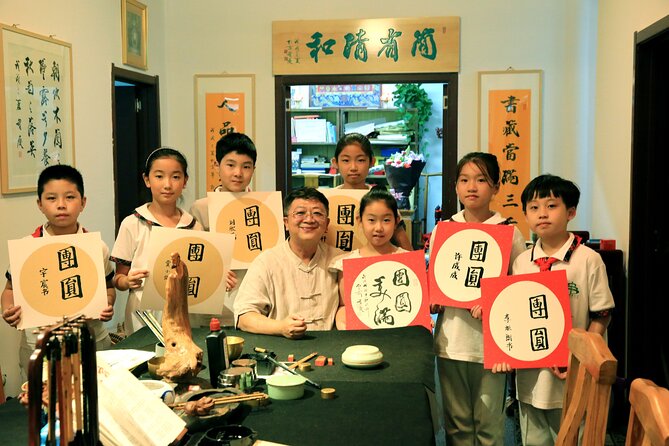
- Master Guo Baoqing leads the class: His supportive, hands-on teaching style is a major strength for first-time students.
- You learn at least 10 Hanzi: The lesson links brush movements with basic Chinese characters, making the writing system feel less intimidating.
- The group is capped at 10 people: This is a useful size for a short class, especially when you need help with brush pressure and stroke order.
- All calligraphy supplies are included: You can focus on learning instead of bringing brushes, ink, paper, or other equipment.
- The meeting point is in Beijing’s Dongcheng District: You finish at the same address, but transportation to and from the class is not included.
- The price is $55 per person: That is fair if you value instruction and a cultural activity, but less attractive if you want a long workshop.
Why this one-hour class adds something different to Beijing
Beijing can fill your day with famous sights: imperial courtyards, grand gates, temples, and old lanes. Those places tell you plenty about China, but they usually keep you on the outside looking in. A calligraphy class lets you use one of the country’s oldest art forms with your own hands.
That change matters. You are not simply looking at characters carved into stone or painted on a sign. You are learning how a brush moves, how pressure changes a line, and how a single character depends on order and balance.
The session is designed for beginners. You do not need to arrive speaking Mandarin or already knowing how to write Chinese. The stated goal is at least 10 Chinese characters, or Hanzi, by the end. For a one-hour introduction, that is a useful and memorable result.
I especially like the way the class connects language with movement. Mandarin can appear difficult when you first see a page covered in unfamiliar symbols. Writing several characters yourself gives you a more friendly starting point. You begin to see that each character is built from strokes, and those strokes follow rules.
Children can get a lot from this format. The activity is active rather than lecture-based, and the visible result arrives quickly. A child who writes a recognizable character by the end has something concrete to remember from Beijing.
More Hutong Walks in Beijing:
- Beijing Hutong Walking Food and Beer Tour at Hidden Restaurants
★ 5.0 · 1,132 reviews - Temple Heaven, Summer Palace, Lama Temple, Hutong Bus Tour
★ 4.7 · 319 reviews - Temple of Heaven, Summer Palace, Lama Temple, Hutong Tours
★ 5.0 · 311 reviews
Meeting Master Guo Baoqing and getting started
The class begins at 71-3 Ci Qi Kou Da Jie, Dong Cheng Qu, Beijing, postal code 100051. The exact nature of the surrounding street experience is not specified, so you should allow time to find the address rather than arriving at the last moment. The location is near public transportation, and the activity returns you to the same meeting point.
Once the lesson begins, the focus is on the basics of traditional Chinese calligraphy. Master Guo Baoqing introduces the art, its tools, and its working methods. His teaching style is described as supportive and hands-on, which is precisely what a beginner needs when the brush feels unfamiliar.
Calligraphy is not like writing with a ballpoint pen. The brush responds to pressure, angle, speed, and direction. A light touch can create a thin line. More pressure produces a heavier mark. Your hand must also follow the correct stroke order, because the character’s shape depends on how those marks fit together.
A good teacher can make this process less frustrating. Master Guo’s approach appears to focus on helping you connect with the process right away, rather than expecting perfect results. That is important in a short class. You need clear instruction and quick corrections, not a long speech about theory.
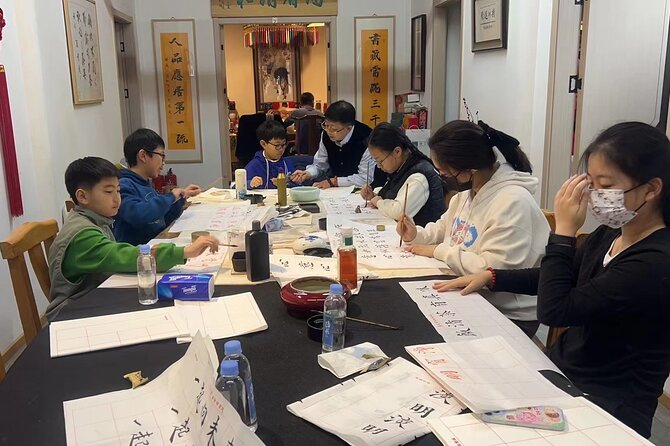
The group limit of 10 people helps here. It is not a private lesson, but it is small enough that the instructor can likely watch several attempts and offer useful guidance. If the class fills, you should still expect a shared activity rather than one-to-one teaching throughout the hour.
Learning the brush, ink, and basic strokes
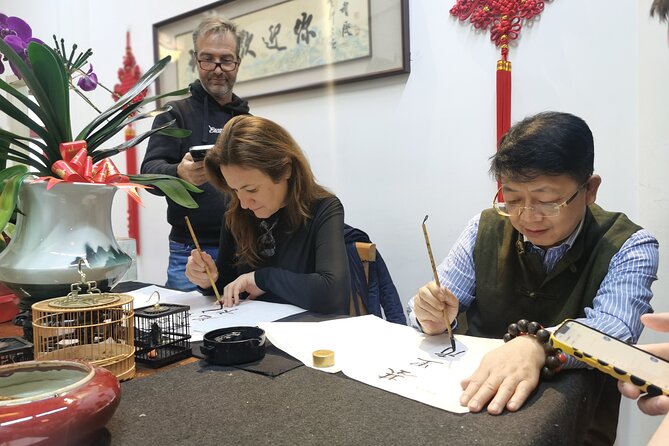
The necessary supplies are included. That covers the practical side of the lesson and means you do not need to buy a brush set before arriving. Calligraphy materials can feel mysterious to a newcomer, so having everything ready keeps the hour focused.
The tools matter because each one changes the writing experience. The brush is flexible, unlike a pencil or pen. The ink makes every pause and change in pressure visible. The paper records the full movement, including the moments when your hand hesitates.
You learn the main brush techniques and basic strokes before moving into characters. This order makes sense. If you start by copying complete characters without understanding the parts, the exercise can feel like drawing symbols from memory. If you learn the strokes first, each character becomes a small construction project.
You should expect some imperfect lines. That is part of the point. Traditional calligraphy values control and balance, but a beginner needs room to make mistakes. The session is better viewed as an introduction to the discipline than as a test of artistic talent.
The class also presents calligraphy as a meditative activity. That does not mean you need to sit silently or have any previous art experience. It means the process asks you to slow down and pay attention to one movement at a time. After the noise and quick pace of sightseeing, that can be a welcome change.
Learning 10 Chinese characters in a short session
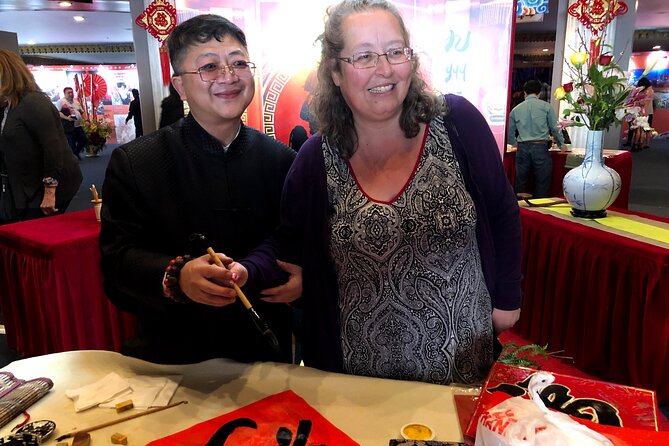
The promise of at least 10 Hanzi gives the lesson a clear target. You are not simply practicing random brush marks. You are building a small vocabulary while learning how written Chinese works.
The exact 10 characters are not specified, so you should not book this expecting particular words. The useful point is the method: by writing several characters, you begin to understand that Mandarin is not an impossible wall of symbols. Each character has structure, and the same basic ideas about strokes and order continue into future study.
This is also a good activity for someone who has just started learning Chinese. You might already recognize a few sounds or phrases, but written Chinese can still look distant. Calligraphy brings the written form closer. Even if you forget some of the vocabulary later, you will remember the physical act of forming the characters.
I would not treat this as a full Mandarin lesson. One hour cannot cover pronunciation, grammar, conversation, and writing in any serious depth. Think of the language element as a helpful introduction attached to the art class.
For families, that balance is a strength. Children can learn a few characters without sitting through a long classroom session. Adults can enjoy the cultural context while still taking home a result they made themselves.
More calligraphy workshops in Beijing:
- Beijing Calligraphy Class
★ 4.9 · 112 reviews - Chinese Calligraphy Class for Small Group
★ 5.0 · 104 reviews - Beijing Historic City Guided Walking Tour + Calligraphy Creation
★ 5.0 · 59 reviews - Beijing Wangfujing Calligraphy Class by Forbidden City
★ 5.0 · 58 reviews
The cultural value beyond a standard sightseeing stop
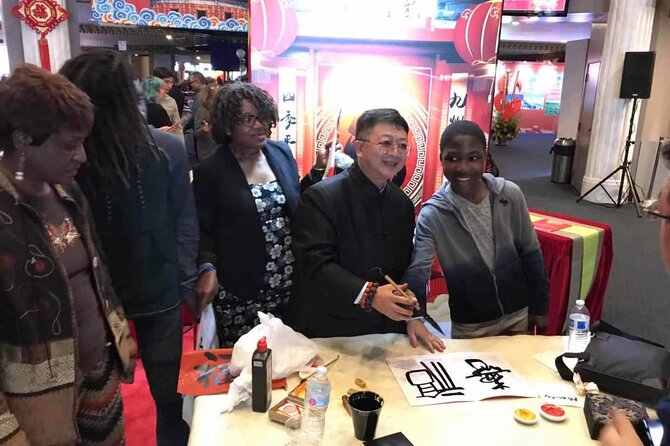
Chinese calligraphy is both writing and visual art. The shape of a character matters, but so do proportion, spacing, rhythm, and balance. A well-formed character can be read, but it can also be appreciated as an arrangement of lines.
The activity introduces these aesthetic ideas in a practical way. You see how technique affects appearance, then test the idea with your own brush. That connection between explanation and action makes the lesson more useful than a quick demonstration that you only watch.
It also gives you a better way to look at calligraphy during the rest of your time in Beijing. You may notice characters on shop signs, public buildings, artworks, and historic sites. After the class, those marks are less likely to blur into decoration. You have some sense of the effort behind them.
The experience does not replace a visit to Beijing’s major sights. It works best beside them. Schedule it when you want a quieter cultural hour between larger attractions, or when you want an activity that asks you to participate rather than simply follow a guide.
The setting in a hutong area adds a useful sense of place, even though the supplied details do not describe a separate walking tour of the neighborhood. Do not assume you will receive a long hutong exploration. The listed activity is the calligraphy session, and it begins and ends at the stated meeting point.
Is $55 a fair price for one hour?
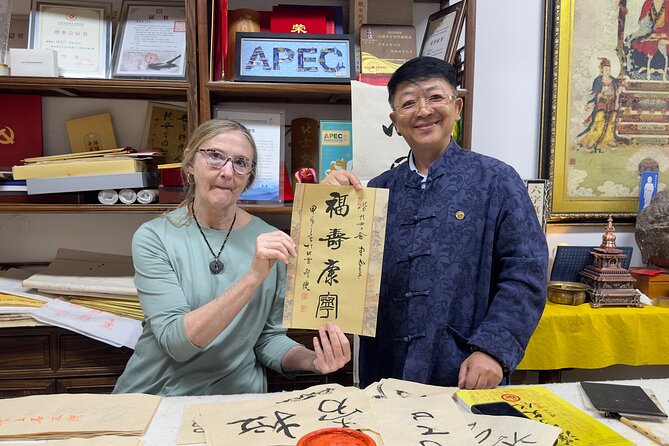
At $55 per person, this is not a bargain-bin activity. The price makes more sense when you count the instruction, supplies, small group setting, and finished calligraphy work as one package.
You are paying for access to a teacher, not just materials. Buying inexpensive paper and a brush would not give you the same help with stroke order, pressure, or character form. The value is strongest if you want an introduction that feels personal and structured.
The price is harder to justify if you want a long workshop or a polished piece of professional calligraphy. The session lasts about one hour, and the main benefit is learning and participation. You should expect beginner-level results, not museum-quality artwork.
I would compare it with the cost of other short cultural activities in Beijing, but the most important question is how you like to spend your sightseeing budget. If you remember experiences more clearly when you make something yourself, $55 can be reasonable. If you prefer to spend that amount on a longer attraction or meal, this may feel brief.
The included supplies remove one small source of extra cost. Transportation does not. You must pay for your own taxi or subway ride, so add that to your budget.
Timing, group size, and practical planning
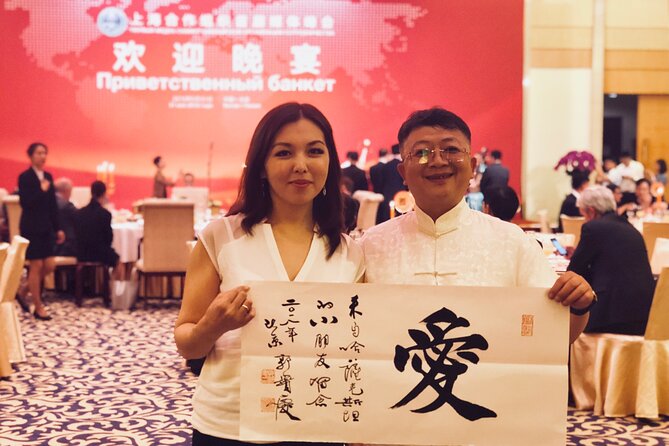
The activity lasts approximately one hour. That makes it easy to fit into a busy Beijing itinerary, but you should allow extra time around the class for transportation and finding the meeting point.
The maximum group size is 10 people. That is a sensible limit for a brush-based lesson. With too many participants, the teacher would have little chance to correct technique. With this cap, you have a fair chance of receiving useful guidance, though the experience is still shared.
The activity is near public transportation. The provider does not include transportation, so check your route before leaving. The start and end point are the same, which is convenient if you plan another Dongcheng District stop afterward.
Confirmation is provided when you book, and the ticket is mobile. You should keep the booking details easy to access on your phone. The activity is open to most people, and no special skill level is required.
The weather requirement deserves attention. If poor weather forces a cancellation, you can receive another date or a full refund. The same applies if the minimum number of participants is not reached. You can cancel for a full refund if you do so at least 24 hours before the local start time. Changes or cancellations inside that 24-hour window are not accepted for a refund.
Who will get the most from this experience?
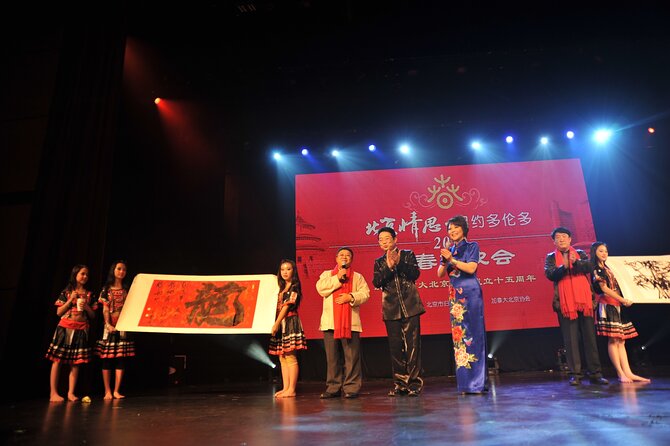
I would recommend this class to first-time visitors who want a cultural activity with real participation. It is also a good fit for anyone beginning Chinese, families with children, and adults who enjoy crafts, art, or quiet skill-based activities.
It suits people who want to take home a personal piece of Beijing rather than another standard souvenir. Your calligraphy may not be flawless, but it will carry the memory of learning the strokes yourself.
The class is less suitable if you want a full day of sightseeing, an advanced art workshop, or a detailed language course. You should also think twice if your schedule is so tight that a one-hour activity plus transportation feels inconvenient.
Because the session is short, expectations matter. Arrive ready to learn the basics, make a few mistakes, and enjoy the process. If you expect to leave writing like a master, the class will disappoint you. If you want a friendly first step, it should do its job well.
Should you book the Beijing hutong calligraphy class?
Book it if you want a small, practical cultural experience that gives you something to do with your hands. Master Guo Baoqing’s supportive teaching style, included supplies, and clear goal of learning at least 10 characters make this more substantial than a quick photo stop.
The strongest reason to choose it is the personal connection. You will not simply see Chinese calligraphy in a museum or on a historic building. You will feel how the brush moves and understand why the writing demands patience.
Skip it if $55 feels high for a one-hour introduction, or if you need a longer class with advanced instruction. For most beginners, though, this is a worthwhile addition to a Beijing itinerary, especially when you want a calm hour that balances the city’s larger sights.
FAQ
How long does the calligraphy experience last?
The activity lasts approximately one hour.
Where does the activity start?
It starts at 71-3 Ci Qi Kou Da Jie, Dong Cheng Qu, Beijing, China, 100051.
Does the activity include transportation?
No. Taxi or subway transportation is not included. The meeting point is near public transportation.
Are calligraphy supplies included?
Yes. Calligraphy supplies are provided for use during the activity.
How many people can join the class?
The activity has a maximum of 10 participants.
Can I cancel for a full refund?
Yes. You can cancel at least 24 hours before the local start time for a full refund. Cancellations or changes made less than 24 hours before the start time are not refunded or accepted.
Just added in Beijing
- Private Transfer to Mutianyu Great Wall with professional driver★ 5.0 · 19 reviews
- One day tour to downtown Tianjin from Beijing by high speed train★ 5.0 · 3 reviews
- ZANBUS: Trip to the Jinshanling Great Wall Departing at 7:30 AM★ 5.0 · 5 reviews
- camp on the Great Wall overnight with sunrise and sunset on the wall★ 5.0 · 11 reviews
- Yuxiandu Chinese Royal Cuisine Museum with Show and Royal Banquet★ 5.0 · 4 reviews
- Wild Great Wall Hikes★ 5.0 · 10 reviews
- BusDa:Ancient Great Wall &Badaling Great Wall Full-day Bus Tour★ 4.5 · 6 reviews
- Wild Great Wall Huanghuacheng Half Day Tour★ 5.0 · 15 reviews
Hutong Tours, compared.
Beijing Hutong Walking Food and Beer Tour at Hidden Restaurants
Read our review →
Temple Heaven, Summer Palace, Lama Temple, Hutong Bus Tour
Read our review →
Temple of Heaven, Summer Palace, Lama Temple, Hutong Tours
Read our review →


Beijing City Walk: Explore Hutongs Life and Old Beijing
Read our review →Where else this tour turns up