
Reviewed · TEA CEREMONY EXPERIENCES
Half-day Tour: Largest Tea Plantation & Amazing Xianggong Hill
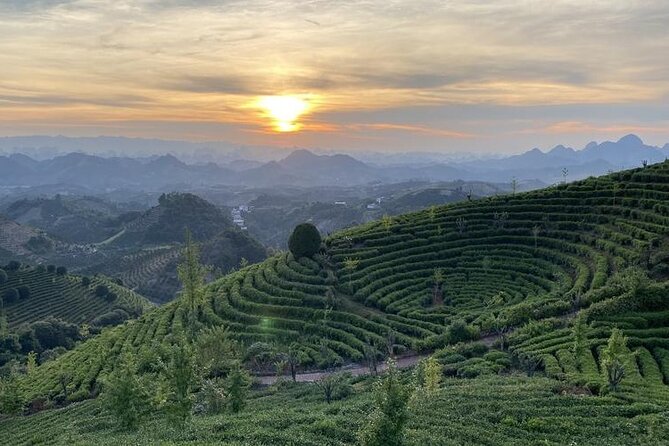
Tea, peaks, and a Li River panorama. This six-hour Yangshuo outing pairs a hands-on visit to Seven Fairies Peak Tea Plantation with the famous viewpoint at Xianggong Hill. I like the mix: you are not simply driven from one lookout to another, and you are not left to figure out the countryside on your own. You pick tea, watch it being made, taste it, then walk up to one of the area’s best viewpoints.
I also like the two daily departure choices, which make the tour useful when your Yangshuo schedule is tight, and the small-group format, capped at 15 people. The main thing to consider is that Xianggong Hill requires an uphill walk, while the tea-picking portion is seasonal in parts. Kumquat picking, for example, is offered only during harvest time.
In This Review
- Five things to know before you go
- From Yangshuo streets to Seven Fairies Peak
- Picking tea in a reed hat and bamboo basket
- Kumquat picking depends on the season
- Tea making, tasting, and local customs
- The scenic road to Xianggong Hill
- Walking up Xianggong Hill for the Li River view
- What the $107 price really covers
- Morning or afternoon: which departure suits you?
- What the guides add to the day
- Practical limits and things to prepare
- Who will get the most from this tour?
- Should you book the tea plantation and Xianggong Hill tour?
- FAQ
- How long does the tour last?
- Are there morning and afternoon departures?
- What is included in the price?
- Is hotel pickup available?
- Is lunch included?
- What happens if I need to cancel?
Five things to know before you go
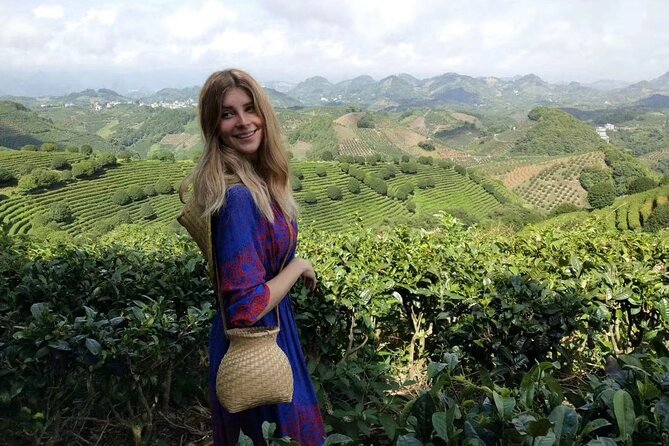
- Pick and carry tea yourself: A reed hat and bamboo basket are provided, so the plantation visit feels hands-on rather than purely observational.
- Seven Fairies Peak is high above Yangshuo: The drive brings you into the hills before the tea-making session and tasting.
- Xianggong Hill delivers the big view: From the top, you look across the Li River valley, villages, orchards, and pointed peaks.
- Morning or afternoon departures: Check the exact departure time carefully when you reserve.
- Small-group transport is included: Pickup, private transportation, entrance fees, an English-speaking guide, tea activities, and the tea ceremony are covered.
- The $107 price favors convenience: It is most useful for first-time visitors who want transport and guiding arranged in one half-day.
From Yangshuo streets to Seven Fairies Peak
The day begins with pickup from your hotel in downtown Yangshuo, with the listed meeting point at No. 108 West Street if that is where you need to meet the vehicle. A private car or bus takes you out of town and up toward Seven Fairies Peak Tea Plantation.
That change of setting is part of the appeal. You start near Yangshuo’s busy central streets, then move through quiet villages, orchards, and hill roads. The plantation is described as the highest place in Yangshuo, so this is not a flat roadside tea stop. The uphill drive gives the first part of the outing a rural feel before the main activities begin.
Your guide is important here. Guides such as Anna, David, and Daniel have been praised for being helpful, punctual, friendly, and good at explaining local customs. One useful detail: David once waited for a visitor after a pickup mistake, which suggests that clear communication with the guide matters if your hotel or meeting arrangement is not straightforward.
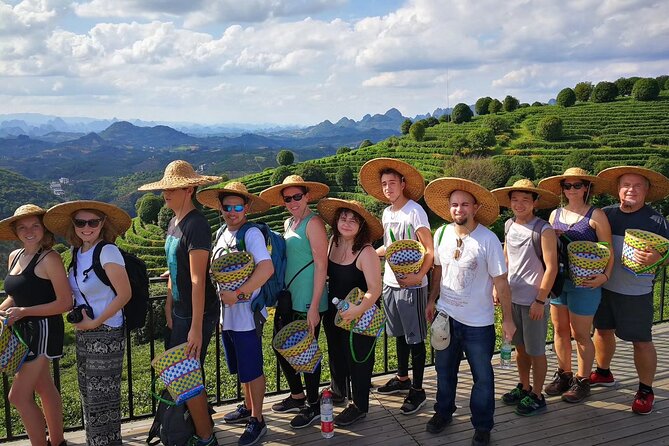
The tour is limited to 15 people, though the word small-group can mean different things depending on the day. If you want the most personal experience, ask how many people are booked when possible. The private vehicle is still a practical benefit, especially when you are combining two out-of-town sights in only six hours.
More Yangshuo trips:
- Highlights from Guilin to Yangshuo Full Day Private Tour
★ 4.6 · 261 reviews - 1 Day Li River Cruise from Guilin to Yangshuo with Private Guide & Driver
★ 5.0 · 148 reviews - Guilin: Li River Cruise with Transfer to Yangshuo
★ 4.2 · 89 reviews
Picking tea in a reed hat and bamboo basket
At the plantation, you can put on a traditional-style Chinese reed hat and carry a small bamboo basket. Then you walk among the rows of tea plants and pick tea leaves yourself.
This simple activity gives the plantation visit some purpose. You are not only looking at fields from a path or taking photographs. You get a basic feel for the work behind the cup of tea served later. The basket and hat also make this a more memorable stop for families and first-time visitors who want an activity rather than a long spoken explanation.
The experience is not designed as a full agricultural workshop. The available details do not promise a long lesson about individual tea varieties, farming methods, or the commercial tea trade. Think of it as a short introduction with a practical activity attached. Your guide can add context about tea culture, and the setting gives you a clear connection between the plant, the picking, and the finished drink.
Wear shoes you can walk in comfortably. The advice against high heels is sensible, and the plantation is also a place where sun protection helps. Bring sunscreen, sunglasses, a hat if you prefer your own, and clothing suited to the forecast. The official guidance specifically recommends checking the weather before departure.
Kumquat picking depends on the season
The schedule allows about 20 minutes to pick local kumquats, but this happens only during harvest season. Outside that period, the stop is skipped.
That seasonal note matters. Do not book this outing expecting a guaranteed fruit-picking activity. When available, it adds another hands-on moment and introduces a local specialty. When it is not available, the core experience remains the tea plantation, tea preparation, and Xianggong Hill.
The changing schedule is one reason the tour can be adjusted on the way. Traffic, weather, landslides, vehicle trouble, and other uncontrollable problems can affect timing or the order of the stops. The operator says the main attractions should remain part of the plan when possible, but a delayed or missed stop may lead to ticket refunds rather than compensation for other costs.
Tea making, tasting, and local customs
After picking, you return to the lodge for traditional tea preparation and a tea service. This is the cultural center of the tour.
You can see how freshly picked leaves are handled and learn about the customs connected with serving tea. The activity gives the earlier plantation walk a finish: you pick the leaves, then sit down to see the next stage and taste the result. The tea is included, as are the tea-making activity and ceremony.
I like this sequence because it gives you something to do with your hands and something to learn without requiring a full day. Several guides have been praised for explaining tea and the surrounding area clearly. Daniel, in particular, has been credited with sharing useful information during the drive and plantation visit. The quality of this section will naturally depend on your guide’s English and the pace of the group, but the tour is built around more than a quick sample.
Do not expect lunch here. Food is not included, and the tour lasts about six hours, so it is wise to plan around the morning or afternoon departure. Personal expenses and tips for the guide and driver are also separate.
More Tea Ceremonies in Yangshuo:
- Traditional Chinese Tea Ceremony Experience
★ 4.7 · 74 reviews - Tea Tasting and Pairing Concept Workshop
★ 5.0 · 57 reviews - Beijing Culture: Tea Ceremony, Heritage Instrument & Calligraphy
★ 5.0 · 57 reviews - Biking Real Shanghai& Tea Tasting Experience
★ 4.5 · 45 reviews
The scenic road to Xianggong Hill
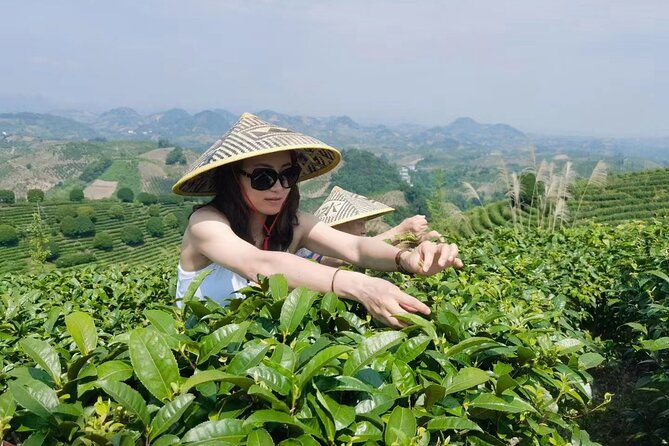
The drive from the tea plantation to Xianggong Hill is part of the sightseeing. You pass quiet villages, different kinds of orchards, and the pointed peaks around the Li River valley.
This is not just dead time between stops. The road offers a look at rural Yangshuo beyond the central town, though the amount you see will depend on traffic, weather, and where the vehicle can stop. The guide can help explain what you are passing, and a good guide makes this transition more meaningful.
The tour’s order may vary. The listed schedule describes the tea plantation first and Xianggong Hill afterward, while the basic stop information highlights Xianggong Mountain. Do not worry if the guide reverses the order. The operator allows itinerary adjustments as long as the planned attractions and overall criteria are maintained.
Walking up Xianggong Hill for the Li River view
Xianggong Hill is the visual payoff. You walk uphill to reach the viewpoint, where the Li River valley opens out below you with villages, orchards, and dramatic peaks.
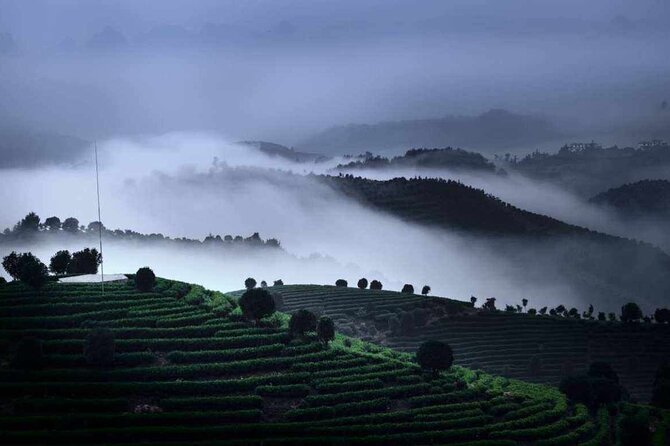
The view changes with the conditions. Sunlight and shadow can move across the peaks, clouds may gather below or around the hills, and rosy evening light is possible on an afternoon departure. A rainbow is possible when weather lines up, but it is not something to count on. The same applies to a cloud sea. Treat these as bonuses, not promises.
The walk is short enough to fit a half-day tour, but it is still a climb. Comfortable shoes are essential. Anyone with mobility concerns should think carefully about this part and consider discussing the route with the operator before departure. The supplied information asks visitors to consider the health of older people and notes that the tour provider can help if an accident occurs, but does not accept responsibility for health or safety problems caused during the trip.
This stop works best when you have realistic expectations. Xianggong Hill is about a broad view, not a long hike or a quiet wilderness outing. There may be other people at a popular viewpoint, and the time available will be shaped by the group schedule. Still, for a first visit to Yangshuo, the panorama gives you the classic pointed-karst setting in one concentrated stop.
What the $107 price really covers
At $107 per person, this is not the cheapest way to see a tea plantation or a hill viewpoint. The value comes from combining the transport, guide, entrance ticket, and activities into one short outing.
The price includes:
- Hotel pickup in downtown Yangshuo
- Private transportation
- An English-speaking guide
- Entrance fees
- Reed hat and bamboo basket
- Tea-picking activity
- Tea making and tea ceremony
- Tea service
You still pay for personal expenses, lunch, and tips. Since lunch is not part of the program, the tour is easier to fit around a meal in Yangshuo than a full-day excursion with a fixed restaurant stop.
I see the price as reasonable for a visitor who values time and does not want to arrange separate transport to two rural attractions. It is less compelling if you already have a private vehicle, speak Chinese comfortably, or prefer to spend a whole day slowly exploring one place. The tour’s main saving is not simply admission. It is the coordination of a high plantation, a tea activity, and Xianggong Hill within six hours.
Group discounts are offered, though the exact discount is not specified. The maximum group size is 15, and private transportation is included in the package description. Tips are not included, so budget for them if your guide and driver provide good service.
Morning or afternoon: which departure suits you?
There are two departures each day, one in the morning and one in the afternoon. The exact times are important, so check them carefully before confirming.
A morning outing can leave the rest of your day open for West Street, cycling, the Yulong River area, or another Yangshuo activity. It may also suit you if you want to avoid the strongest afternoon sun. An afternoon departure can give you a chance of warmer light and rosy clouds at Xianggong Hill, but the actual view depends on weather and timing.
The tour ends back at the meeting point or your downtown Yangshuo pickup location. That return makes it easy to plan a meal afterward, but do not schedule something immediately at a precise time. Traffic, weather, hill roads, and itinerary changes can all affect the return.
What the guides add to the day
The guides are one of the strongest parts of this experience. Anna has been described as warm, caring, respectful, fun, and good at English. David has been praised for being helpful with pickup problems and for explaining tea and the local area. Daniel has been singled out for his service, scenic knowledge, and ability to organize transport for a small international group.
That pattern matters because this tour depends on interpretation. Picking leaves is pleasant on its own, but the guide connects the activity to Chinese tea customs. The drive through villages and orchards is also more useful when someone explains what you are seeing.
You should still ask questions. Tell the guide if you are especially interested in tea production, village life, photography, or the scenery. A short tour can feel rushed if everyone expects something different, so stating your priorities early may help.
Practical limits and things to prepare
The tour is easy to plan, but a few conditions deserve attention.
- Check the departure time: Morning and afternoon schedules are different, and the exact time is specified when booking.
- Wear walking shoes: Xianggong Hill involves an uphill walk, and the plantation is not a place for dress shoes.
- Protect yourself from the sun: Sunscreen, sunglasses, light clothing, and a hat are useful.
- Watch the forecast: Clouds and rain affect the hill view, roads, and outdoor activities.
- Bring valuables with you: The operator does not accept responsibility for lost property.
- Do not expect lunch: Meals are not included.
- Expect possible itinerary changes: The order can change because of traffic, weather, landslides, or vehicle problems.
- Understand the refund limits: Personal decisions during the trip do not create refunds, and cancellation for a full refund must be made at least 24 hours before the start time.
The package does not offer discounts for student cards, senior cards, officer cards, or similar documents. That is worth knowing if you are comparing the price with independently arranged tickets.
Who will get the most from this tour?
I would recommend it most strongly to first-time Yangshuo visitors with only a few days in town. You get a taste of rural scenery, a cultural activity, and a famous viewpoint without committing an entire day.
It also suits couples, families, and small groups who want a guide and vehicle rather than a complicated independent plan. The tea-picking activity gives children something concrete to do, though adults should supervise them around the plants and on the hill walk.
Photography-minded visitors should consider an afternoon departure if the light appeals to them, but no departure guarantees clouds, sunset color, or a rainbow. People who dislike uphill walks, fixed timing, or organized group transport may prefer to visit fewer places at a slower pace.
The experience is less suited to someone seeking a serious tea course. You learn about tea culture and take part in tea making, but the information provided does not promise professional tasting instruction or an extended farming lesson.
Should you book the tea plantation and Xianggong Hill tour?
Book it if you want a well-organized half-day that covers two very different sides of Yangshuo. The strongest reasons are the hands-on tea picking, the tea ceremony, the reliable hotel pickup, and the wide Li River view from Xianggong Hill. The friendly service associated with guides including Anna, David, and Daniel adds real value.
Skip it if $107 feels high for six hours, if you have your own transport, or if you want a slow, independent visit with plenty of time at one location. Also think twice if an uphill walk is difficult for you.
For most first-time visitors on a short Yangshuo stay, I consider this a practical pairing. You get tea in your basket, a cup in your hand, and the karst peaks spread out below you. That is a useful amount of Yangshuo in half a day.
FAQ
How long does the tour last?
The tour lasts approximately six hours and ends back at the meeting point in Yangshuo.
Are there morning and afternoon departures?
Yes. There are two daily departures, one in the morning and one in the afternoon. Check the exact departure time when booking.
What is included in the price?
The price includes private transportation, all fees and taxes, an English-speaking guide, entrance tickets, a reed hat, a bamboo basket, tea picking, tea making, and a tea ceremony with tea service.
Is hotel pickup available?
Yes. Pickup is offered from hotels in downtown Yangshuo. The listed meeting point is No. 108 West Street in Yangshuo.
Is lunch included?
No. Lunch and personal expenses are not included. Tips for the guide and driver are also separate.
What happens if I need to cancel?
You can cancel for a full refund if you cancel at least 24 hours before the experience start time. Cancellations or changes made less than 24 hours before the start time are not accepted for a refund.
Just added in Yangshuo
- Yangshuo/Guilin: Full- or Half-Day Xianggong Hill Sunrise★ 4.8 · 33 reviews
- Yangshuo: Impression Liusanjie Show Ticket★ 4.4 · 47 reviews
- Yangshuo: Yulong River Bamboo Rafting Experience★ 4.2 · 3 reviews
- Yangshuo: Highlights Karst landscapes & Village Cycling★ 5.0 · 4 reviews
- Yangshuo Ruyi peak & round way cable car ticket★ 5.0 · 18 reviews
- Yangshuo Impression Liusanjie Show Ticket★ 4.0 · 2 reviews
- Full-day Tour: Longji Rice Terraces & Minority Villages★ 4.5 · 5 reviews
- Full-day Tour: Cycling, Rafting & SanjieLiu Outdoor Water Theatre★ 5.0 · 3 reviews
Tea Ceremony Experiences, compared.
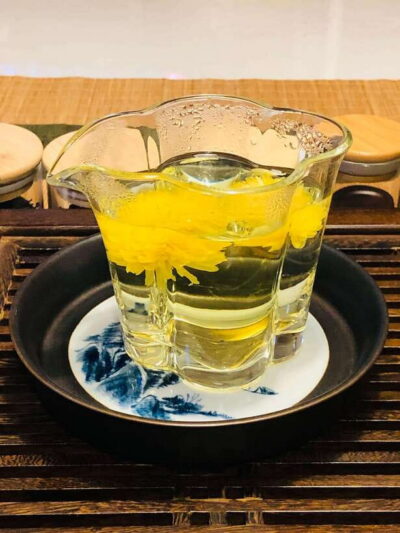
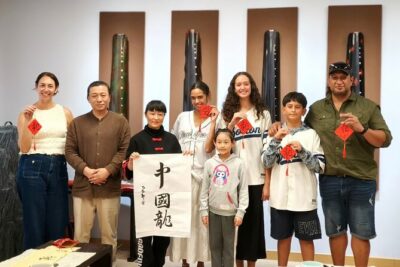
Beijing Culture: Tea Ceremony, Heritage Instrument & Calligraphy
Read our review →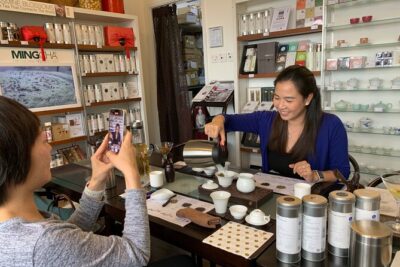
Chinese Tea ceremony in Beijing Hutong courtyard
Read our review →
Half-Day Hangzhou Yunxi Bamboo Forest and Tea Plantation Experience
Read our review →
Leshan Buddha + Panda Base or Old Tea House Private Day Tour
Read our review →
Private Beijing Markets Tour with Tea Tasting at Hongqiao Pearl Market
Read our review →Where else this tour turns up