
Reviewed · FOOD & DRINK
China’s Favourite Street Food Cooking Workshop
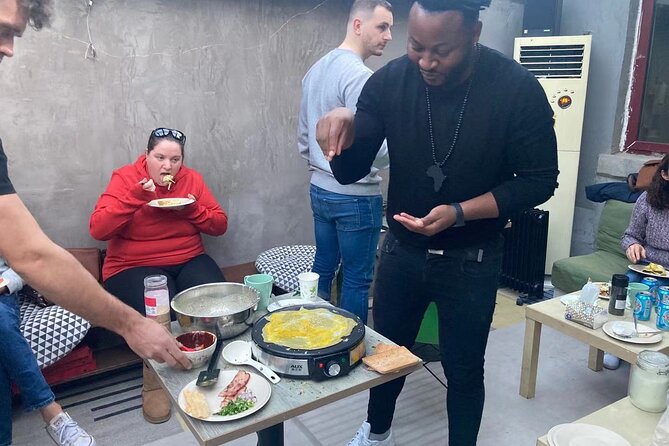
Come hungry, leave with a new skill. This private Beijing workshop teaches you to make jian bing, the city’s famous savory street-food crepe, from batter to finished dish. I like the hands-on format, and I like that you can choose fillings ranging from traditional savory ingredients to chocolate and banana. The main consideration is the price: at $80, it offers better value for a private group than for a solo participant.
The workshop is held at 10 Shi Que Hu Tong in Dongcheng, and the 90-minute session combines food, local context, and plenty of practice. Dom, the instructor, explains where jian bing comes from before helping you work the batter and cook it on the pan. Families, friends, Beijing residents, and curious first-time visitors can all get something from it.
In This Review
- Key points to know before booking
- Why Jian Bing Makes a Good Beijing Food Lesson
- Starting at 10 Shi Que Hu Tong
- Dom’s Short Introduction to Jian Bing
- Making the Batter and Handling the Pan
- Traditional Savory Fillings and Sweet Experiments
- A Private 90-Minute Experience
- Why Families and Groups May Like It
- What You May Take Home
- Price, Timing, and Practical Details
- The Main Strengths and Limits
- Should You Book This Jian Bing Workshop?
- FAQ
- How long does the jian bing workshop last?
- Where does the workshop begin?
- Where does the experience end?
- Is this a private experience?
- What will I learn to make?
- Can I choose different fillings?
- Is the activity suitable for children?
- Is the meeting point near public transportation?
- What is the cancellation policy?
Key points to know before booking
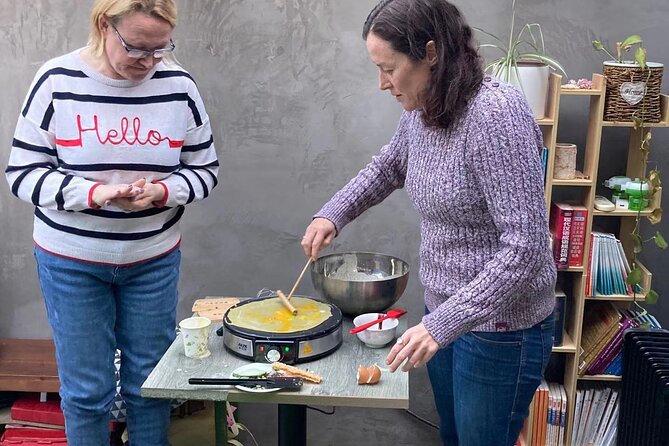
- You make the jian bing yourself: The session covers the batter, cooking technique, fillings, and final assembly.
- Dom brings the food to life: His entertaining explanation of jian bing’s background adds more than a standard cooking demonstration.
- Private groups get personal help: Only you and your party participate, so you can ask questions and repeat the technique without keeping up with strangers.
- Fillings are not limited to the traditional: You can try savory combinations, then experiment with sweet options such as chocolate and banana.
- It works well for families: Children and middle-school-aged groups have taken part, with enough activity to keep the session lively.
- The meeting point is in a Beijing hutong: The class begins and ends at 10 Shi Que Hu Tong, near public transportation.
Why Jian Bing Makes a Good Beijing Food Lesson
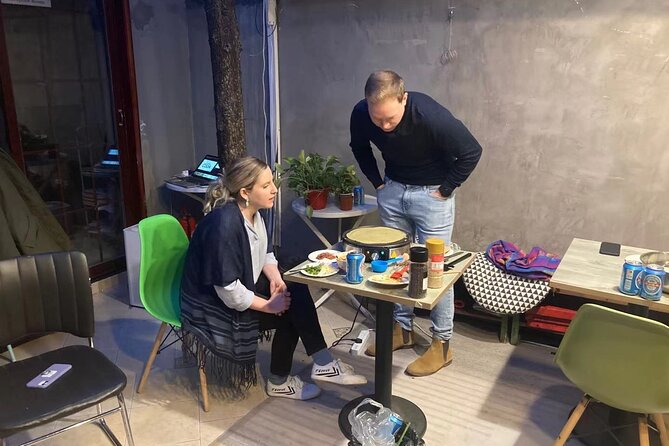
Jian bing is not merely a crepe with a Chinese name. It is one of Beijing’s best-known street foods, usually made quickly on a hot round pan and folded around a selection of fillings. The appeal is partly in the taste, but also in the speed and skill of the preparation.
That makes it a smart choice for a short cooking class. You are not spending half a day preparing a complicated banquet. Instead, you learn a food that is closely tied to everyday life in Beijing and that you can recognize afterward at street stalls and local food counters.
The workshop gives you a chance to understand the basic process rather than simply eating the finished product. You work with the batter, spread it over the pan, add fillings, and fold the result into something you can eat. The technique takes practice, which is part of the fun. One early attempt may be uneven. The next one should be better.
I especially like that the class does not treat jian bing as a fixed recipe. You can try different flavors and fillings, so the finished food can stay traditional, become more personal, or take a playful turn. The inclusion of chocolate and banana gives the session a lighter, more experimental side.
More Food Tours in Beijing
- Beijing Hutong Walking Food and Beer Tour at Hidden Restaurants
★ 5.0 · 1,132 reviews - Beijing: Hidden Gems Guided Food Tour with Beer and Tastings
★ 4.9 · 306 reviews - Beijing Private Hutong Food Walking Tour
★ 5.0 · 299 reviews
Starting at 10 Shi Que Hu Tong
The workshop begins at 10 Shi Que Hu Tong in Beijing’s Dongcheng District. The activity also ends there, which keeps the logistics simple and avoids the confusion of being dropped at a second location you may not recognize.
A hutong setting suits this kind of food lesson. Jian bing is associated with ordinary city life, quick breakfasts, and street-side cooking rather than formal restaurant dining. Holding the class in a hutong places the activity closer to the older residential character of Beijing.
The exact meeting instructions should be checked carefully before you set out. Confirmation is sent within 48 hours of booking, subject to availability. Since the experience is near public transportation, you should be able to reach the area without arranging a private transfer, though the supplied information does not specify which station or route is closest.
Plan to arrive with a little time to spare. This is a small practical tip, but it matters in Beijing, where a short distance on a map can take longer than expected once you account for station exits, traffic, and hutong lanes.
Dom’s Short Introduction to Jian Bing
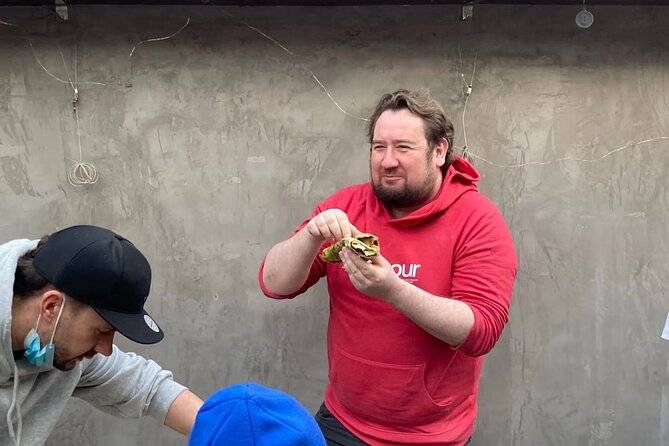
The first part of the session explains where Beijing’s favorite street food comes from. Dom has been praised for presenting this background as an entertaining story rather than a dry lecture.
That balance is important. You get enough context to understand why the dish matters, but the class does not appear to spend the whole 90 minutes talking. The stated plan is to learn the background and then move on to making your own food.
This introduction is particularly useful if you have never tried jian bing before. You learn what the dish is, how it fits into Beijing’s food culture, and why the cooking method is so recognizable. If you already know the dish, the explanation gives you a better sense of what you are eating.
The class also works well for Beijing residents. People who have lived in the city for years have taken part as a way to do something different with a familiar local food. That is a good sign for anyone who wants an activity that is not aimed only at first-time visitors.
Making the Batter and Handling the Pan
The practical heart of the class is making the jian bing itself. You get to work with the dough or batter and cook it on the pan, with Dom there to help when needed.
This is where the private format earns its keep. Spreading batter evenly and judging when it is ready takes a little coordination. If your first attempt needs help, you can ask for it directly instead of waiting for a large group to move along.
The technique is simple enough to learn in a short session, but not so automatic that it becomes boring. One participant needed a few tries to get the method right, which is exactly what you should expect from a hands-on workshop. The point is not to produce a perfect jian bing on the first attempt. The point is to understand the motion and gain enough confidence to try again.
You should also expect a little mess or unevenness. This is cooking, not a staged demonstration where every result looks identical. If you enjoy practical activities, that trial-and-error element is a strength. If you prefer to watch a professional prepare food while you eat, this may feel more demanding.
The information provided does not specify the exact cooking equipment, batter recipe, or printed instructions. You should therefore book this for the experience of learning and eating, not on the assumption that you will receive a full professional recipe manual.
More Workshops in Beijing
- Beijing Calligraphy Class
★ 4.9 · 112 reviews - Chinese Calligraphy Class for Small Group
★ 5.0 · 104 reviews - Beijing: Dumpling Making Workshop with Meal and Tea
★ 4.7 · 69 reviews - Online Cooking Class Beijing Dumplings and Cuisine by Sunflowerli Renowned Chef
★ 5.0 · 65 reviews
Traditional Savory Fillings and Sweet Experiments
The filling selection is one of the most appealing parts of the workshop. You can choose from traditional savory options, then try less expected combinations such as chocolate and banana.
That range gives the class a broad appeal. Adults who want a more familiar Beijing flavor can stay with savory ingredients. Children and adventurous eaters can test sweeter versions. A group with different tastes does not have to agree on one recipe.
The opportunity to make as many jian bings as you want was highlighted in one account of the experience. The exact number may depend on time, group size, and available ingredients, but the format clearly encourages practice rather than a single carefully controlled attempt.
There is also a social advantage. Friends can compare their creations, and parents can help children choose fillings and fold the finished food. The activity creates conversation without requiring anyone to be an expert cook.
I would treat the sweet fillings as a fun extra rather than the main reason to book. Jian bing’s traditional appeal is savory, and the class is most useful when you first learn the basic method. Once you understand that, adding chocolate or banana lets you play with the idea.
A Private 90-Minute Experience
The class lasts about one hour and 30 minutes. That is long enough to include an introduction, hands-on instruction, several attempts, and time to eat what you make, while still leaving most of your day free for Beijing sightseeing.
The private arrangement is especially helpful for families and small groups. You do not need to worry about slowing down a larger class, and Dom can give attention where it is needed. Children can take part with their parents, and friends can turn the session into a shared activity.
A private class also lets you set the tone. You can focus on technique, ask about the food’s background, or spend more time trying different fillings. The experience is described as relaxed and centered on having a good time, rather than passing a formal cooking test.
The tradeoff is that the $80 price may feel high if only one person attends. For a group, the cost can make more sense because it buys a private session and personalized help. The supplied details do not clearly state whether the $80 is charged per person or per booking, so confirm that point before paying. It is the most important price question.
Why Families and Groups May Like It
This workshop has a strong family appeal. Children have taken part with parents, and a group of middle-school-aged friends joined a session during the Chinese New Year holiday.
The activity gives children a clear job. They can help with the batter, choose fillings, and watch their own food cook. That is more engaging than a passive food tasting, though younger children will need adult supervision around the hot pan.
It also provides a useful mid-day break. After 90 minutes of cooking and eating, you should be ready for the next part of your day. The activity can work well during a school holiday, a family vacation, or a day when everyone needs something slower than monument-hopping.
Friends can enjoy it for much the same reason. You get a shared task, a little friendly competition, and food at the end. The private setup means the group does not have to adapt to strangers’ schedules or cooking preferences.
Solo visitors can still enjoy the class, especially if learning a local dish is a high priority. But the value is strongest when the $80 cost is shared by several people and everyone wants to participate.
What You May Take Home
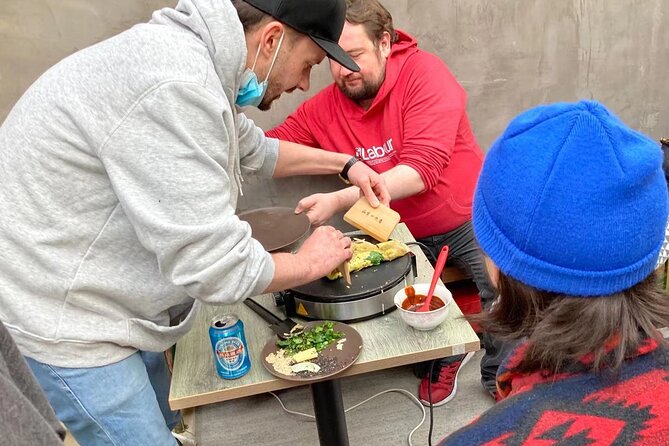
One account of the class included ingredients to take home. That can be useful because the lesson does not have to end when you leave the hutong. You may be able to try the dish again for family or friends.
Do not assume that a complete take-home kit is guaranteed, since the supplied details do not define exactly what is provided. The dependable part of the experience is the instruction, cooking practice, and food prepared during the class.
Even without take-home ingredients, the method is the lasting souvenir. You will have seen how the batter behaves, practiced spreading it, and tested fillings. Those details are more useful than a quick photograph of a street-food stall.
If you hope to recreate the dish at home, pay close attention to Dom’s explanation of the batter and cooking process. Ask questions during the session, while the pan is in front of you and the technique is fresh.
Price, Timing, and Practical Details
The advertised price is $80 for an experience lasting about 90 minutes. That places it in the category of a special activity rather than a cheap meal, so the value depends on how many people join and how much you want personal instruction.
I would consider it good value for a private family or friend group that wants a local food activity. You are paying for the setting, the instructor’s guidance, the ingredients used during the class, and the chance to repeat the technique. For one person, the price deserves closer thought.
A mobile ticket makes the booking convenient. Confirmation is sent within 48 hours, subject to availability, so do not leave the reservation until the last minute if your Beijing schedule is tight.
Service animals are allowed, and the meeting point is near public transportation. The information provided does not list the class as wheelchair accessible, nor does it specify dietary substitutions, child age limits, or a full ingredient list. If any of those details matter to you, ask before booking.
Free cancellation is available if you cancel at least 24 hours before the start time. Cancellations or changes made less than 24 hours before the experience are not accepted for a refund, and the cut-off follows Beijing local time.
The Main Strengths and Limits
The strongest feature is the chance to make a familiar Beijing food with direct help. Dom’s entertaining introduction, the repeated practice, and the broad choice of fillings give the session more character than a quick demonstration.
The second strength is its flexibility. You can keep the flavors traditional, try a sweet version, or make several variations. Families, friends, and long-term Beijing residents can all approach the activity in their own way.
The main limit is the short format. Ninety minutes is enough for jian bing, but not for a wide tour of Chinese cooking. If you want a full meal with several dishes, this is not the right choice.
The other concern is price clarity. At $80, the class can be sensible for a private party, but you should confirm how the rate is calculated. You should also understand that the exact ingredients and take-home items are not fully detailed.
Should You Book This Jian Bing Workshop?
Book it if you want a practical Beijing food experience, especially with children, friends, or a small private group. It is a good fit if you enjoy learning by doing and want to understand a street food you may otherwise only eat from a stall.
I would also recommend it to people who have already lived in Beijing and want a fresh way to connect with a familiar dish. The session is short, relaxed, and focused on one useful skill.
Think twice if you are looking for a formal cooking school, a long multi-course lesson, or the lowest-cost way to eat jian bing. For everyone else, this is a tasty, personal activity with a clear local connection. Confirm the $80 pricing structure, arrive at the Dongcheng meeting point on time, and be ready to make a few imperfect crepes before the legendary ones appear.
FAQ
How long does the jian bing workshop last?
The experience lasts approximately one hour and 30 minutes.
Where does the workshop begin?
It begins at 10 Shi Que Hu Tong, Dong Cheng Qu, Beijing, China, 100010.
Where does the experience end?
The activity ends back at the meeting point.
Is this a private experience?
Yes. Only you and your party participate in the activity.
What will I learn to make?
You will learn how to make jian bing, a popular Beijing street food, with instruction covering the preparation and cooking process.
Can I choose different fillings?
Yes. The workshop offers different flavors and fillings, including traditional savory options and sweet combinations such as chocolate and banana.
Is the activity suitable for children?
Yes. Children and middle-school-aged groups have taken part, and the experience has been described as family-friendly. Adult supervision may be needed around the cooking pan.
Is the meeting point near public transportation?
Yes. The meeting point is described as being near public transportation.
What is the cancellation policy?
You can cancel for a full refund up to 24 hours before the experience start time. Cancellations or changes made less than 24 hours before the start time are not accepted for a refund.
Just added in Beijing
- Private Transfer to Mutianyu Great Wall with professional driver★ 5.0 · 19 reviews
- One day tour to downtown Tianjin from Beijing by high speed train★ 5.0 · 3 reviews
- ZANBUS: Trip to the Jinshanling Great Wall Departing at 7:30 AM★ 5.0 · 5 reviews
- camp on the Great Wall overnight with sunrise and sunset on the wall★ 5.0 · 11 reviews
- Yuxiandu Chinese Royal Cuisine Museum with Show and Royal Banquet★ 5.0 · 4 reviews
- Wild Great Wall Hikes★ 5.0 · 10 reviews
- BusDa:Ancient Great Wall &Badaling Great Wall Full-day Bus Tour★ 4.5 · 6 reviews
- Wild Great Wall Huanghuacheng Half Day Tour★ 5.0 · 15 reviews
Food & Drink, compared.
Authentic Local Food Tour in Central Shanghai
Read our review →
Beijing Hutong Walking Food and Beer Tour at Hidden Restaurants
Read our review →
Hong Kong’s Tin Hau Hidden Eats Food Tour with 7+ Local Tastings
Read our review →
Hong Kong Food Tour: Central and Sheung Wan Districts
Read our review →Where else this tour turns up