
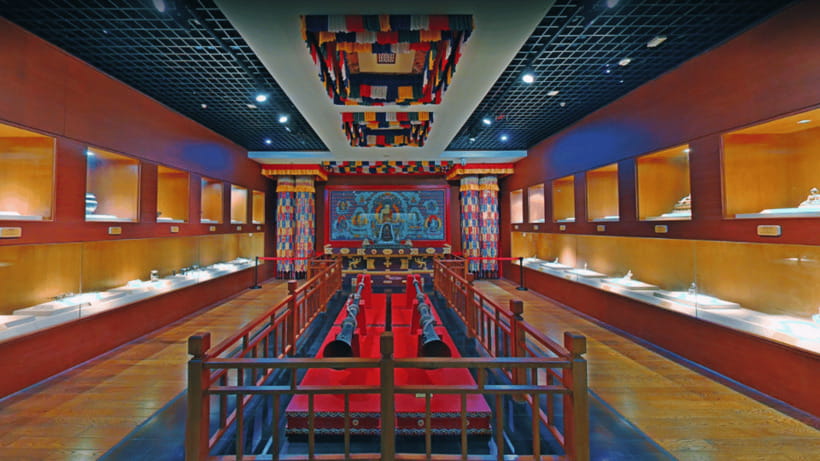
Reviewed · HISTORICAL TOURS
Chengdu: Sichuan Museum – Cultural and Historical Heritage
Ancient Sichuan speaks through bronze. The Sichuan Museum gives you a broad, well-organized look at Chinese art and culture, from early bronze objects and Han dynasty stone carvings to ceramics, calligraphy, Tibetan Thangka paintings, and work by Zhang Daqian. I especially like the chance to see so many different sides of Sichuan in one place, and the free permanent exhibitions make the museum excellent value. The main consideration is that you must reserve an entry period and provide your passport details in advance.
The museum is spacious, with plenty to see beyond a quick photo stop. I also like that the museum offers free guided tours, a souvenir shop, and a tearoom, useful touches after several hours with ancient objects. The booking process needs care, however, since the supplied GetYourGuide QR code is not valid for entry and your full passport name and passport number must be sent in time.
In This Review
- Key points to know before you go
- Why the Sichuan Museum belongs on your Chengdu plan
- Bronze, ceramics, and the early story of Sichuan
- Han dynasty stone carvings and the human side of the past
- Calligraphy and Zhang Daqian’s artistic legacy
- Tibetan Thangka paintings and religious art
- How to use your one-day entry period
- Free guided tours and how much help you need
- What the $5 price really means
- The reservation detail you must not miss
- Tea, souvenirs, and the useful finish to the visit
- Who should book the Sichuan Museum?
- FAQ
- How much does the Sichuan Museum experience cost?
- Do I need to reserve an entry time?
- Is the GetYourGuide QR code valid for entry?
- What passport details are required?
- Are special exhibitions included?
- Can I cancel the booking?
- Should you book it?
Key points to know before you go
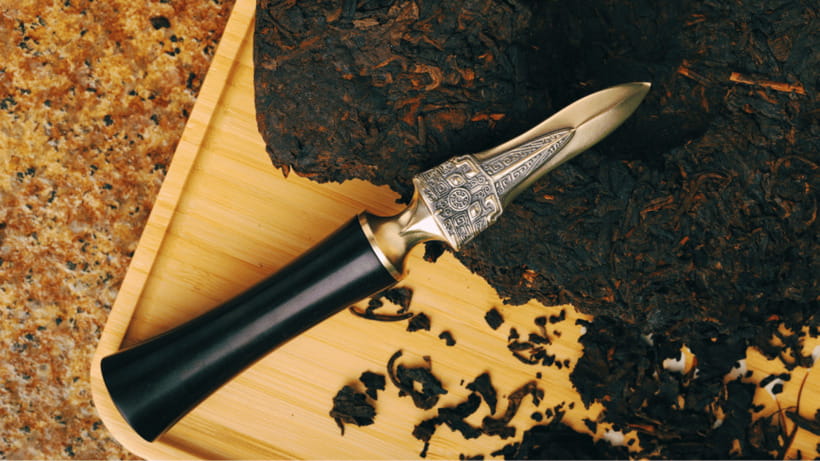
- Sanxingdui connections: Look for artifacts linked to one of China’s most fascinating ancient archaeological sites.
- More than one collection: Bronze pieces, ceramics, calligraphy, Han stone carvings, and Tibetan Thangka paintings give the visit plenty of variety.
- Free museum admission: The permanent exhibitions and museum guided tours are included, while some special exhibitions may charge separately.
- Reserve a time period: Choose either 09:00 to 12:00 or 12:01 to 16:00, rather than arriving at any time of day.
- A spacious cultural stop: The building gives you room to look carefully, with a tearoom and souvenir shop for a pause afterward.
- Passport details matter: Send your full name exactly as it appears on your passport, along with your passport number, to complete the reservation.
Why the Sichuan Museum belongs on your Chengdu plan
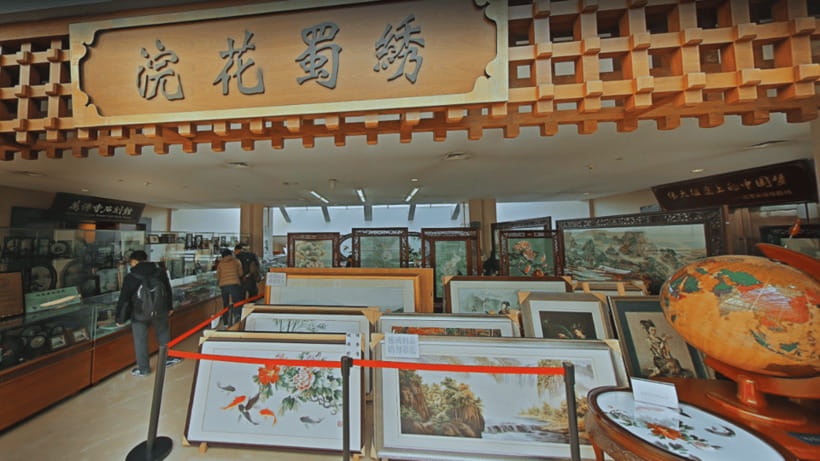
Chengdu is famous for pandas, spicy food, and teahouse culture. The Sichuan Museum adds a quieter, more thoughtful side to the city. Founded in 1941, it is one of the major cultural institutions in southwestern China, with more than 300,000 artifacts in its collection.
That number is too large to take in during one visit, and you should not try. The value here is the range. Instead of seeing one narrow subject, you can move through different periods, materials, and artistic traditions connected with Sichuan and China.
I would give the museum at least half a day if you want to read the explanations and take your time with the best displays. The activity is valid for one day, but that does not mean you need to rush through every gallery. A shorter visit can work if you focus on the sections that interest you most.
The perfect rating from the three listed reviews fits the museum’s strongest qualities: it is spacious, packed with objects, and supported by useful explanations. One French visitor praised the large collection of ancient art and the instructive information. Another visitor particularly liked the museum’s open layout, shop, and tearoom. Those details matter because a museum visit can become tiring when there is nowhere to pause.
More Museums in Chengdu:
- Private Chengdu Day Tour: Giant Pandas and Jinsha Site Museum
★ 5.0 · 142 reviews - Sanxingdui Museum+Chengdu Panda Base or Jinsha Site Tour
★ 5.0 · 10 reviews - Sanxingdui Museum Small Group Tour with Optional Panda Base
★ 5.0 · 3 reviews
Bronze, ceramics, and the early story of Sichuan
Begin with the bronze objects. Bronze pieces are among the most useful ways to understand early Chinese culture because they are not simply decorative. They can point to ritual life, political power, craftsmanship, and the importance of ceremonial objects in ancient society.
The Sichuan Museum’s displays include material connected with the Sanxingdui site, one of the most exciting archaeological discoveries associated with the region. Sanxingdui is known for its unusual bronze forms and striking artistic style. Even if you already know the famous masks and figures from photographs, seeing related objects in a museum setting gives them more weight and context.
I like this part of the museum because it helps you think beyond the usual picture of China’s past. Sichuan was not a distant side note to Chinese civilization. It had its own traditions and artistic identity, and the objects here help make that clear.
Ceramics provide a different experience. Their appeal is often quieter than bronze, but look closely at the shapes, surfaces, and decoration. The collection gives you a chance to compare practical vessels with objects made for ceremony or display. You might find yourself noticing how much information can be carried by a small change in form or pattern.
The museum’s explanations are important here. You do not need to arrive with a background in Chinese archaeology. Read the labels that interest you, then let the objects do some of the work. A museum with hundreds of thousands of artifacts can feel overwhelming, so a few clear themes are more useful than trying to remember every date.
Han dynasty stone carvings and the human side of the past
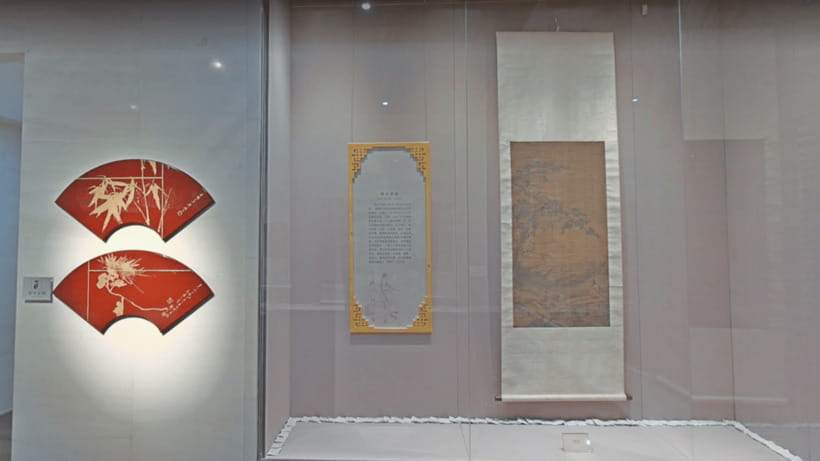
The Han dynasty stone carvings add another layer to the visit. Stone is less delicate than ceramics or painted works, and the carved scenes can give you a strong sense of how people wanted to record daily life, status, beliefs, and public achievements.
These pieces are worth slowing down for. At first, a carved surface may seem less immediately dramatic than a large bronze object. Give it a little time, and details begin to matter: figures, animals, patterns, and the way the image is arranged across the stone.
I find displays like this valuable because they connect large historical periods with human choices. People in the Han dynasty were not only building institutions and trading goods. They were also making pictures, honoring ancestors, and recording the world around them.
The exact arrangement of the galleries may change, but the museum’s broader aim is clear: to explain Sichuan as part of China’s story while showing what makes the province distinct. That balance is one of the best reasons to visit instead of relying only on a general national museum.
Calligraphy and Zhang Daqian’s artistic legacy
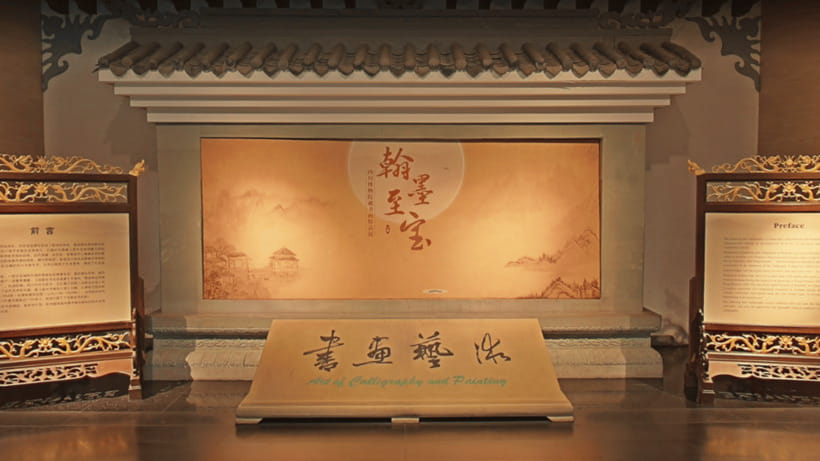
Calligraphy deserves a slower pace. In Chinese art, writing is not merely a way to pass along information. The brushwork, spacing, movement, and balance of the characters are part of the artwork itself.
If you are new to Chinese calligraphy, you may not recognize the quality of every piece right away. That is normal. Focus on the rhythm of the strokes and the relationship between empty space and ink. The museum’s explanations can help you understand what you are seeing without turning the gallery into a classroom.
The museum also includes artwork by Zhang Daqian, one of Sichuan’s best-known artists. His work gives the visit a more recent artistic dimension after the ancient displays. That change of period is useful, since it shows that Sichuan’s art did not stop with archaeological relics.
I would plan to see the Zhang Daqian works after the older collections, not because one is more important than the other, but because the contrast helps. You move from objects made for ritual, burial, daily use, or religious practice to an artist’s individual interpretation.
This section may appeal most to people who enjoy painting and brushwork, but you do not need to be an art specialist. Take a few minutes to look at the composition and color, then compare it with the more formal calligraphy nearby.
More History Tours in Chengdu:
- Between Capitalism & Communism: Hong Kong History Tip Based Tour
★ 5.0 · 234 reviews - Beijing Historical Tour II including Summer Palace, Lama Temple & Panda Garden
★ 4.0 · 187 reviews - Beijing Historical Tour I – Forbidden City, Tiananmen Square & Temple of Heaven
★ 4.0 · 120 reviews - Tour of Jewish Shanghai led by a Jewish History Expert
★ 5.0 · 106 reviews
Tibetan Thangka paintings and religious art
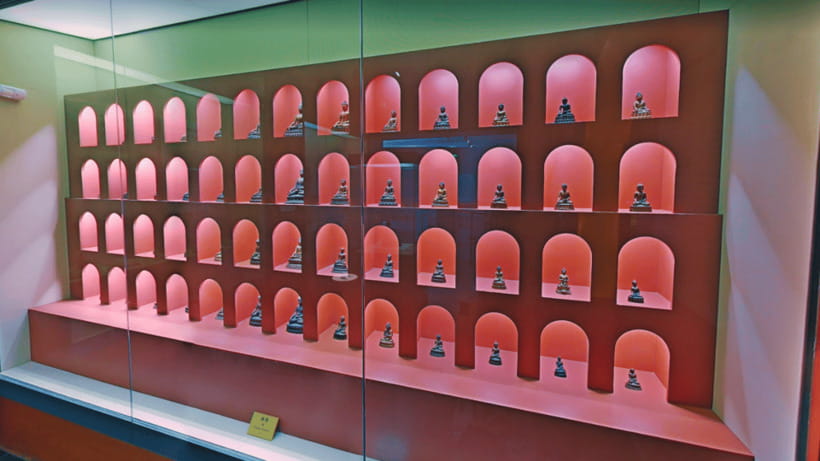
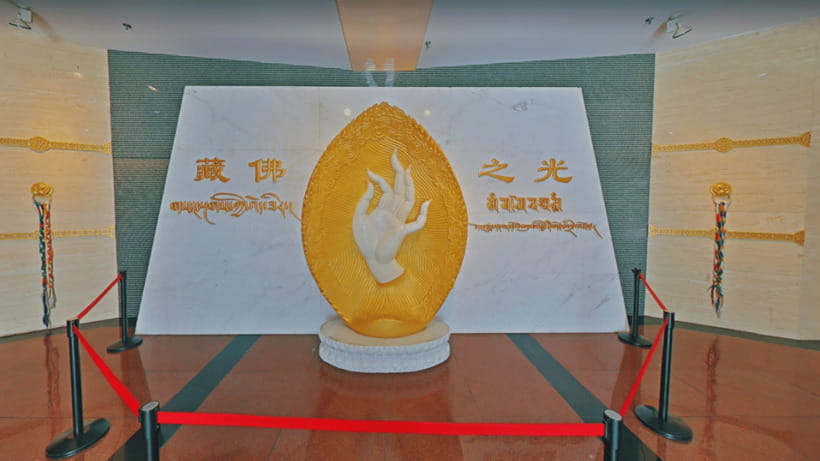
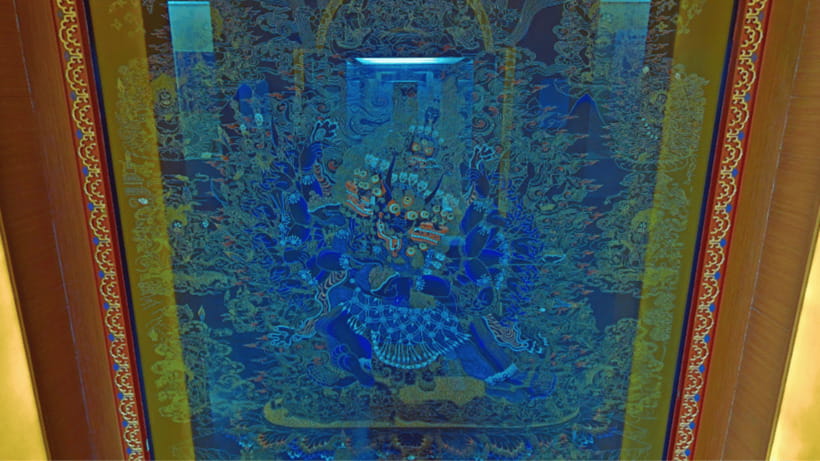
The Tibetan Thangka paintings add color and spiritual meaning to the museum’s collection. A Thangka is a religious painting traditionally used in Tibetan Buddhist practice, and these works deserve respectful attention rather than a quick photograph.
Look at the detail and the structure of the images. Religious paintings often contain many figures and symbols, and each part may carry a specific meaning. If an explanation is available, read it before moving on. It can change the way you see the entire painting.
This section also broadens your understanding of Sichuan. The province has long been connected with different cultural and religious traditions. The presence of Tibetan art shows that the museum is not presenting Sichuan as a single, simple identity.
I like the Thangka displays for another reason: they provide a visual break from bronze, stone, and ceramics. After several rooms of earthy materials and carved surfaces, the painted works bring a different mood. They also remind you that a museum visit is about ideas and beliefs as much as objects.
How to use your one-day entry period
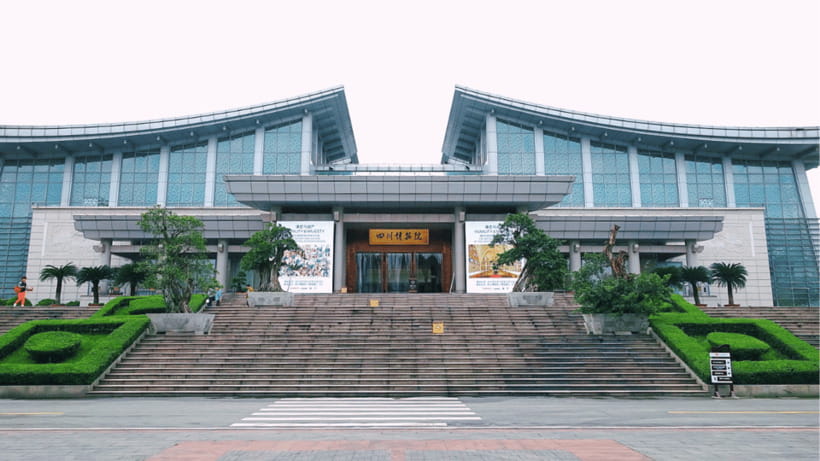
Your reservation is valid for one day, but you need to select one of two entry periods: 09:00 to 12:00 or 12:01 to 16:00. Think of these as arrival windows rather than a promise that you must leave at noon or at four.
The morning period is the better choice if you want a longer, calmer visit. It gives you more freedom to spend time with the permanent exhibitions and join a free guided tour if the timing works.
The afternoon period suits a visitor who has other morning plans in Chengdu. It is also enough for a focused museum visit, especially if you choose two or three areas rather than attempting the entire collection.
Because weekends and holidays can be busy, book in advance. The reservation is designed to reserve your place, and the skip-the-ticket-line feature can save some waiting. It does not remove the need to follow the museum’s entry rules.
Wear comfortable shoes. The museum is spacious, and the quantity of material means you will do plenty of walking and standing. Bring your passport and camera, but remember that pets are not allowed.
Free guided tours and how much help you need
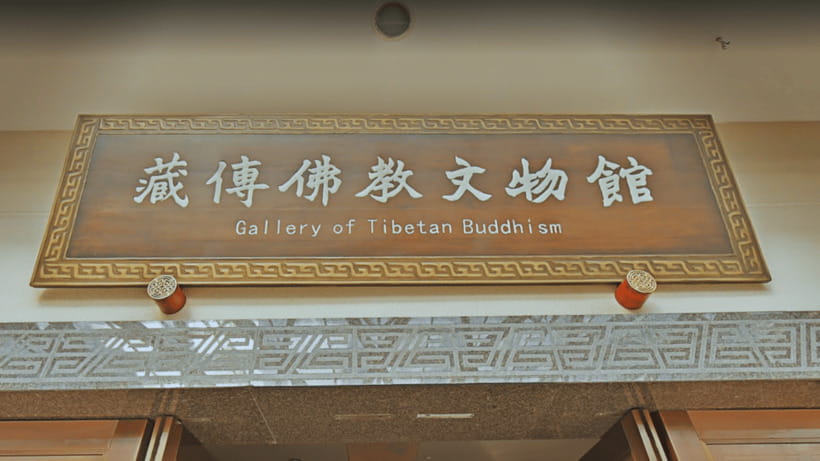
Museum-provided guided tours are free and can make the visit easier, especially if this is your first time looking at Chinese historical art. A guide can help connect an object with its period and purpose, something that a short label may not fully explain.
I would ask about the tour when you arrive. The available timing and language information is not specified, so you should not assume a particular language or start time. If you prefer to explore alone, the permanent displays and written explanations still give you a solid visit.
The best approach may be a mixture: join a tour for an overview, then return to the sections that caught your attention. That way you get the museum’s main story without giving up the freedom to look at details.
The museum is suitable for history enthusiasts, families, scholars, and anyone curious about Chinese culture. Families may want to keep the visit focused, since 300,000 artifacts can be too much for younger children in one stretch. Art lovers should allow extra time for calligraphy, Zhang Daqian’s work, and the Thangka paintings.
What the $5 price really means
At about $5 per person, this experience offers strong value. The permanent exhibitions themselves are free, as are the museum’s guided tours. In practical terms, the price appears to function as a reservation service rather than an admission charge for the main collection.
That distinction is worth understanding before you book. You are paying for the arrangement and reserved entry, not for access to an expensive private tour. If you are comfortable handling museum reservations yourself, check the museum’s own arrangements separately. If you want someone to organize the entry, the small fee can be reasonable.
Special exhibitions may require a separate ticket. Do not assume that every temporary display is included simply because the permanent exhibitions are free.
The flexible booking terms also add value. You can reserve now and pay later, and cancellation is allowed up to 24 hours in advance for a full refund. The flexibility is useful when your Chengdu schedule includes weather-sensitive plans or changing arrival times.
The reservation detail you must not miss
This is the most important practical warning. The GetYourGuide QR code is not valid for entry, so do not treat it as your museum ticket.
To complete the reservation, send your full name exactly as it appears on your passport and your passport number. If the information is not received in time, the booking may be canceled and a cancellation fee may apply.
I would handle this immediately after booking rather than waiting for a reminder. Keep the booking email and any communication with the local contact available on your phone. The booking process itself has worked well when the visitor communicates with the contact on site, but the passport requirement means this is not a reservation you should leave until the last minute.
Bring the same passport to the museum. The supplied information specifically lists a passport as something to bring, and the details are required for verification.
Tea, souvenirs, and the useful finish to the visit
The souvenir shop and tearoom are small details, but they improve the day. After a few hours of galleries, a tearoom gives you a place to sit and think about what you have seen rather than stumbling straight back into Chengdu’s streets.
The shop can also be useful if you want a museum-related keepsake. I would look there after the exhibitions, not before, so you do not spend your first minutes browsing when the galleries are still fresh.
These amenities do not turn the museum into a full-day entertainment complex, and that is fine. The main attraction is the collection. They simply make the visit more comfortable and give you a natural ending.
Who should book the Sichuan Museum?
I would recommend this experience to you if you want more than Chengdu’s most famous modern attractions. It is particularly suited to people interested in archaeology, Chinese art, calligraphy, religious painting, and the cultural connections between Sichuan and the rest of China.
It is also a good choice for a flexible half-day plan. You can spend hours with the displays, take a free guided tour, and pause in the tearoom without needing an expensive private guide.
I would hesitate only if you dislike museums with large collections or if you want a tightly scripted tour with guaranteed guide details. The museum covers a lot of ground, and the exact guided-tour arrangements are not specified. You will get more from it if you choose your priorities before entering.
FAQ
How much does the Sichuan Museum experience cost?
The listed price is $5 per person. Admission to the permanent exhibitions and access to museum-provided free guided tours are included.
Do I need to reserve an entry time?
Yes. You must reserve one of two entry periods, either 09:00 to 12:00 or 12:01 to 16:00. Booking ahead is recommended for weekends and holidays.
Is the GetYourGuide QR code valid for entry?
No. The supplied GetYourGuide QR code is not valid for museum entry. Follow the booking instructions and bring your passport for verification.
What passport details are required?
You must send your full name exactly as it appears on your passport and your passport number to complete the reservation. Bring your passport with you.
Are special exhibitions included?
The permanent exhibitions are included. Certain special exhibitions may require a separate ticket.
Can I cancel the booking?
Yes. You can cancel up to 24 hours in advance for a full refund. The reserve-now-and-pay-later option also lets you keep your plans flexible.
Should you book it?
Yes, if you want a serious look at Sichuan’s art and past at a low price. The combination of Sanxingdui-related artifacts, Han stone carvings, ceramics, calligraphy, Zhang Daqian’s work, and Tibetan Thangka paintings gives you far more variety than a quick museum stop.
Book it if you are willing to send the passport information promptly and choose an entry period in advance. Skip it only if your Chengdu schedule is too tight for a museum visit or you prefer a guide-led experience with a fixed itinerary. For most culture-minded visitors, the Sichuan Museum is one of the city’s best-value indoor attractions.
Just added in Chengdu
- Classsic sichuan Opera at sichuan Provincial Theater★ 5.0 · 4 reviews
- Visiting Chengdu Panda Base in a Half Day★ 5.0 · 4 reviews
- Tea Village in lost Town and Buddha 1 day tour★ 5.0 · 32 reviews
- Panda, Leshan, and Emei Mountain 2-day tour★ 5.0 · 4 reviews
- Sichuan Opera with face-changing at Sichuan opera theater★ 4.5 · 6 reviews
- Sichuan Opera Show with Hotel Pickup★ 5.0 · 3 reviews
- Mini Group: Half-Day Chengdu Pandas Guided Tour★ 5.0 · 3 reviews
- Sanxingdui Ruins and Giant Pandas Private Day Tour from Chengdu★ 5.0 · 5 reviews
Historical Tours, compared.
Between Capitalism & Communism: Hong Kong History Tip Based Tour
Read our review →
Beijing Historical Tour II including Summer Palace, Lama Temple & Panda Garden
Read our review →
Beijing Historical Tour I – Forbidden City, Tiananmen Square & Temple of Heaven
Read our review →
Tour of Jewish Shanghai led by a Jewish History Expert
Read our review →
Beijing Historic City Guided Walking Tour + Calligraphy Creation
Read our review →
Beijing Culture: Tea Ceremony, Heritage Instrument & Calligraphy
Read our review →
2-Hour Beijing Private Forbidden City Tour: History & Highlights
Read our review →
Private Historical Tour: Guangzhou City Sightseeing Including Lunch
Read our review →Where else this tour turns up