
Reviewed · HISTORICAL TOURS
UNESCO Watchtowers World Heritage Ancient Villages Private Tour
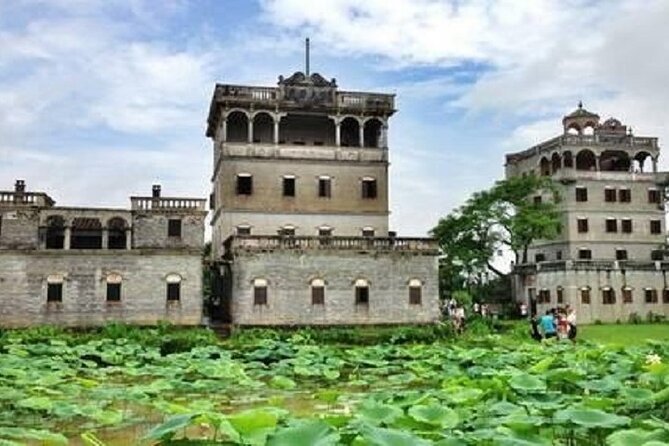
Fortress homes rise from quiet farmland. This private Kaiping trip takes you about two hours from Guangzhou to see Diaolou watchtowers, old villages, Li Garden, and Chikan Old Town. I like the mix of grand architecture and ordinary countryside, with fishponds, livestock sheds, farmland, water buffaloes, and geese along the way. I also like having a private car and English-speaking guide for a day that can be shaped around your interests.
The main drawback is the long road day and the extra cost of admission and lunch. At $255 per person, this makes the most sense for a small group that values private transport and personal guidance rather than a low-cost shared excursion.
In This Review
- The essential details at a glance
- Why Kaiping makes a worthwhile day from Guangzhou
- Zili Village and its three watchtower communities
- Jinjiangli, where towers meet farmland and water
- Li Garden, a different side of overseas Chinese wealth
- Majianglong and the five-village cluster
- Chikan Old Town and its Cantonese arcades
- What the private car and guide really add
- Is $255 per person good value?
- Who will enjoy this Kaiping excursion most?
- Practical advice before you book
- Should you book the UNESCO watchtower tour?
- FAQ
- How far is Kaiping from Guangzhou?
- How long does the tour last?
- Is hotel pickup included?
- Is the tour private?
- Is an English-speaking guide included?
- Is transportation included?
- Are admission tickets included?
- Is lunch included?
- Can the tour help me find an ancestor’s house?
The essential details at a glance
- Kaiping is about two hours from Guangzhou, so you can see a very different part of Guangdong without changing hotels.
- Diaolou watchtowers combine defense, family pride, and overseas Chinese success, creating architecture unlike ordinary village homes.
- Zili, Jinjiangli, and Majianglong villages offer different views of watchtowers, farmland, waterways, and rural life.
- Li Garden adds a polished garden setting, with Chinese design influenced by overseas Chinese wealth and travel.
- Chikan Old Town brings a town feel, with Cantonese arcade buildings and Western architectural touches.
- The private format suits families, couples, and small groups, especially anyone interested in family roots in Kaiping or Taishan.
Why Kaiping makes a worthwhile day from Guangzhou
Guangzhou gives you a fast-moving city experience. Kaiping gives you open farmland, old village lanes, ponds, and tall fortified homes built in the early 1900s by overseas Chinese migrants. The contrast is the point. You are not simply visiting another historic building complex. You are seeing how migration shaped a whole rural region.
The Diaolou were built by Chinese families with connections abroad. Their money, building ideas, and concern for family security produced houses that can look part residence, part lookout post, and part small fortress. Many combine Chinese elements with Western details, a reminder that these villages were connected to the wider world long before modern tourism.
I find the private format especially useful here. The sites are spread across the Kaiping area, and the day involves several stops rather than one compact attraction. An air-conditioned private car keeps the transfers simple, while the local English-speaking guide can explain what you are seeing and help adjust the day after booking.
The total duration is listed as roughly five to 11 hours. One completed outing took about eight hours, so I would plan for most of a day rather than treating this as a quick half-day trip. Weekdays can feel especially quiet, according to the available trip details.
More History Tours in Guangzhou
- Private Historical Tour: Guangzhou City Sightseeing Including Lunch
★ 4.5 · 24 reviews - Guangzhou: Cantonese Heritage Tour with Key Cultural Stops
★ 5.0 · 13 reviews - All Inclusive Kaiping Diaolou Heritage Private Day Trip from Guangzhou
★ 5.0 · 5 reviews
Zili Village and its three watchtower communities
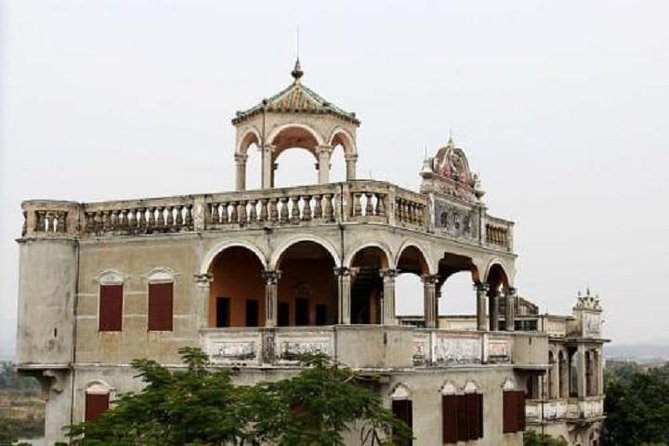
Zili Village is one of the main reasons to book this excursion. The watchtower group here grew from three small communities called Anheli, He’anli, and Yong’anli. All three were associated with the Fang family, and the village was founded in 1837 during the Qing dynasty.
That family connection matters. You are not looking at isolated towers placed randomly across fields. The buildings belong to a network of family villages, farmland, and shared local life. The setting helps you understand why the towers were built where they were and how they related to the surrounding communities.
Allow about an hour and a half at the Zili watchtower group. That is enough time to walk through the village area, study the different buildings, and listen to the guide’s explanation. Bring comfortable shoes, since this is a rural stop with paths rather than a polished city attraction.
The visual pleasure comes from the contrast between the solid towers and the soft countryside around them. Tall masonry buildings rise beside fields and waterways, making the architecture feel both practical and theatrical. If you enjoy photography, this is likely one of the strongest parts of the day.
Admission is not included, so keep ticket money separate from the tour price. The exact entrance cost is not provided here, and the guide can help with the local arrangements.
Jinjiangli, where towers meet farmland and water
Jinjiangli Village is a shorter stop, planned for about 30 minutes. It sits among mountains, farmland, paths, and a river, with water buffaloes and geese forming part of the everyday rural scene.
Do not expect a long museum visit here. The value is the setting. Jinjiangli gives you a quick look at how the watchtowers relate to village agriculture and waterways. The buildings are not separated from local life by a large urban buffer. You see them in the same broad countryside that helped sustain the community.
Because the stop is brief, your guide’s timing matters. I would use this part of the visit to get a general feel for the village and take in the setting rather than trying to inspect every structure. If rural scenery matters more to you than a long architectural explanation, this short stop may be one of the day’s pleasant surprises.
Li Garden, a different side of overseas Chinese wealth
Li Garden, also called Kaiping Garden in the trip details, offers a change of pace after the village clusters. It was built in the early 20th century by Xie Weili, a Chinese man based in the United States. The garden draws on the Grand View Garden described in Dream of the Red Chamber and combines classical Chinese garden ideas with influences from abroad.
This is not simply another watchtower stop. Li Garden shows how overseas Chinese families used wealth and international experience to create elaborate homes and garden spaces in their ancestral region. The design connects literature, family status, Chinese tradition, and foreign influence.
Plan for about an hour. That gives you time to walk through the grounds and compare the garden’s formal design with the more practical village surroundings seen earlier. I like this contrast because it broadens the day. You are not seeing one repeated type of building from morning to afternoon.
The possible weakness is that the visit can feel more arranged and decorative than the village stops. If your main interest is ordinary rural life, you may prefer Zili or Majianglong. If you enjoy gardens, family residences, and the story of overseas Chinese success, Li Garden earns its place.
A completely different sort of day out:
- Guided Cycle Tour of Guangzhou
★ 5.0 · 164 reviews - Customised Private Guangzhou City Tour with Flexible Itinerary
★ 5.0 · 107 reviews - Gulong Gorge Skywalk Glass Bridge and Waterfall View Private Tour
★ 5.0 · 103 reviews - Private Guangzhou Full Day City Tour with Old and New Highlights
★ 5.0 · 62 reviews
Majianglong and the five-village cluster
The Majianglong village group, also called Ma-Xianglong in the tour description, sits on flat land near the Tanjiang River. It includes five villages: Yong’an and Nan’an, associated with the Huang family, along with three other nearby communities.
Allow about an hour here. The setting near the river and open farmland helps you see another version of the Diaolou tradition. Rather than focusing on one famous building, the visit presents a wider village cluster and its relationship with the surrounding countryside.
This is where the private vehicle saves time. The sites are not all in one compact center, and moving between them by public transport would be less straightforward. You can use the drive to rest between walks, especially during the warmer part of the day.
Your guide’s explanation should help you notice the relationship between the homes, towers, paths, fields, and water. Without that context, a series of old buildings can blur together. With it, the day becomes a study of family settlements and overseas Chinese influence across the Kaiping area.
Chikan Old Town and its Cantonese arcades
Chikan Old Town changes the mood again. Established in the early Qing dynasty beside the Tan River, it developed as a transport and commercial center for nearby rural villages. The town is known for Cantonese-style Qilou buildings, which use covered arcades along the street, along with Western architectural details.
Plan for about two hours here, making it one of the longer stops. After the open countryside and scattered village towers, Chikan feels more urban and connected. The arcade buildings create a continuous street edge, offering shade and a different kind of visual rhythm.
This stop is useful for placing the villages in a wider regional setting. The watchtowers show family protection and status in rural communities. Chikan shows commerce, transport, and town life. Together, they give you a fuller picture of the area than either setting could provide on its own.
The available details do not promise specific film sets, restored interiors, or particular shops, so keep your expectations focused on the old town streets and architecture. The two-hour visit should give you time to walk at a comfortable pace, but the exact balance between sightseeing and lunch depends on the day’s arrangement.
What the private car and guide really add
The package includes an English-speaking local guide for the full outing, an air-conditioned private car, a professional driver, and hotel pickup and drop-off in downtown Guangzhou. For a spread-out rural day, those services are more than small conveniences.
The drive from Guangzhou takes around two hours each way. A private car means you do not need to work out separate transport between Zili, Jinjiangli, Li Garden, Majianglong, and Chikan. It also gives your group a place to cool down and rest between walks.
The private setup means only your group participates. That is useful if you want to ask many questions, move at a slower pace, or discuss an ancestral home. The provider can also help arrange a search for family houses in Kaiping or Taishan if you are returning to the area because of family connections.
The tour contact is identified as Damon from Guangzhou Local Tours. If ancestor research is important to you, share that interest after booking so the route can be discussed in advance. The description says the itinerary is followed up and finalized after booking, which suggests some flexibility, but you should confirm exactly what can be changed before you travel.
Is $255 per person good value?
At $255 per person, this is not a budget day trip. The price covers the private vehicle, driver, hotel pickup and drop-off in downtown Guangzhou, and a full English-speaking guide. It does not cover entrance fees or lunch for you or the guide.
The value improves with more people in your private group because the transport and guide costs are shared across the party. For a couple, the price is easier to justify if convenience and a tailored day matter a great deal. For a larger family or group of friends, the private arrangement can compare more favorably with arranging several separate transfers.
The tour also avoids the time cost of planning a rural route yourself. You receive a full day of connected stops rather than spending part of the day finding the next village. That said, you should add admissions, lunch, and any personal spending to the advertised price before deciding.
A published rating of 5 out of 5 from 17 ratings, with 100 percent recommending the experience, points to strong satisfaction with the service. One especially useful detail is that an eight-hour outing was possible, and weekdays were described as quiet. I would choose a weekday if your schedule allows.
Who will enjoy this Kaiping excursion most?
I would recommend this day to you if you like architecture, family stories, rural settings, or the history of overseas Chinese communities. It also suits anyone who wants to see more than Guangzhou but prefers returning to the same hotel at night.
Families may appreciate the private car and the freedom to pause between stops. Couples and small groups can set a comfortable pace. The tour is also a practical choice for people tracing ancestors in Kaiping or Taishan, since the provider says it can assist with locating family homes.
You should think twice if you want a short, cheap outing with one main attraction. The driving takes a large part of the day, and the admission fees are extra. The route also includes several historic areas, so you need to be comfortable with walking around villages and old-town streets.
Most people can participate, according to the supplied tour information. Still, the exact walking conditions and pace are not described in detail, so ask the provider if you have specific mobility concerns.
Practical advice before you book
Plan for eight hours at minimum unless the provider confirms a shorter route. The advertised range reaches 11 hours, and traffic, stop length, and your chosen sites can affect the total.
Wear shoes suited to village paths and old-town streets. Carry water and keep some flexibility in your schedule. The air-conditioned car will help during transfers, but the outdoor stops may be warm.
Ask about the admission fees before departure, since none are included. Also clarify the lunch plan. You pay for your own meal and the guide’s lunch, and the supplied information does not name a particular restaurant or menu.
If your priority is ancestral research, mention the family surname, village, or known address as early as possible. Kaiping and Taishan are specifically identified as hometown areas for many overseas Chinese, and the provider says it can help arrange a family-house search.
The booking confirmation is sent within 48 hours, subject to availability. The cancellation policy is strict: the experience is non-refundable and cannot be changed for any reason, so book only when your date is firm.
Should you book the UNESCO watchtower tour?
Book it if you want a private, full-day look at Kaiping’s Diaolou, old villages, gardens, and town streets without arranging rural transport yourself. The strongest reasons are the quiet countryside, the unusual fortress-like homes, and the chance to connect the architecture with overseas Chinese family stories.
Skip it if your budget is tight, you dislike long road days, or you want all admissions and meals included. For the right small group, though, the $255 price buys useful convenience and a more personal visit than a large coach outing. I would choose a weekday, tell the provider about any ancestor-search goals, and confirm the final route and extra costs before paying.
FAQ
How far is Kaiping from Guangzhou?
Kaiping is around two hours by car from Guangzhou.
How long does the tour last?
The experience lasts approximately five to 11 hours. One completed trip took about eight hours.
Is hotel pickup included?
Yes. Pickup and drop-off are included for hotels in downtown Guangzhou.
Is the tour private?
Yes. Only your group participates in this private activity.
Is an English-speaking guide included?
Yes. A local English-speaking guide accompanies your group for the full tour.
Is transportation included?
Yes. The package includes a private air-conditioned car and a professional driver.
Are admission tickets included?
No. Admission fees for the attractions are not included in the tour price.
Is lunch included?
No. You pay for lunch for yourself and the guide.
Can the tour help me find an ancestor’s house?
The provider says it can assist with arranging a search for ancestor homes in Kaiping or Taishan. You should discuss this request after booking so the route can be arranged.
Just added in Guangzhou
- Big Buddha Mountain Martial Art Culture Countryside Private Tour★ 5.0 · 31 reviews
- Guangzhou travel shopping business customized tour★ 5.0 · 2 reviews
- Hong Kong One Day Private Tour from Guangzhou by Bullet Train★ 5.0 · 3 reviews
- Seven Star Crag and Dinghu Mountain private day tour from Guangzhou★ 5.0 · 5 reviews
- Seven Star Crags Karst Cave Mirror Lake Bird Islands Private Tour★ 5.0 · 30 reviews
- Private Tour to Gulong Canyon with Glass Bridge and Water Falls from Guangzhou★ 5.0 · 20 reviews
- Private Tour: Guangzhou City Sightseeing Including Yuexiu Park★ 3.5 · 3 reviews
- Guangzhou Self-Guided Tour with Private Car and Driver Service★ 5.0 · 2 reviews
Historical Tours, compared.
Between Capitalism & Communism: Hong Kong History Tip Based Tour
Read our review →
Beijing Historical Tour II including Summer Palace, Lama Temple & Panda Garden
Read our review →
Beijing Historical Tour I – Forbidden City, Tiananmen Square & Temple of Heaven
Read our review →
Tour of Jewish Shanghai led by a Jewish History Expert
Read our review →
Beijing Historic City Guided Walking Tour + Calligraphy Creation
Read our review →
Beijing Culture: Tea Ceremony, Heritage Instrument & Calligraphy
Read our review →
2-Hour Beijing Private Forbidden City Tour: History & Highlights
Read our review →
Private Historical Tour: Guangzhou City Sightseeing Including Lunch
Read our review →Where else this tour turns up