
Reviewed · MARKETS
Three-Hour Private Chengdu Tea Wholesale Market Tour
Tea shopping gets much more interesting in bulk. This private Chengdu tour takes you into one of China’s largest tea wholesale markets, where you can see tea leaves in many shapes, learn how they are processed, and taste before buying. I especially like the chance to compare green, black, white, oolong, and Pu-er tea in one place, and the private format means your group can set the pace.
I also like that an English-speaking leader helps explain the tea rather than leaving you to guess your way through a giant market. The main consideration is that this is a commercial wholesale market, not a polished tea museum. It may feel crowded and practical, and you may find the range of shops a little overwhelming if you are not planning to buy anything.
In This Review
- Key points at a glance
- Entering Chengdu’s wholesale tea world
- Meeting near Wenshu Yuan Monastery
- Seeing how tea is dried, processed, and packaged
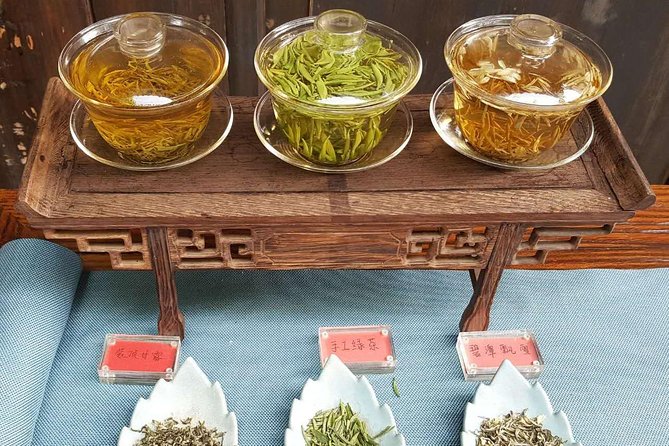
- Comparing green, black, white, oolong, and Pu-er tea
- Sitting down for a tea tasting before buying
- Finding tea sets and accessories at lower prices
- What the $46.16 price includes in practical terms
- Who will get the most from this market tour
- Timing, comfort, and simple planning tips
- Should you book the Chengdu tea market tour?
- FAQ
- How long does the Chengdu tea wholesale market tour last?
- What types of tea will I learn about?
- Can I taste tea before buying it?
- Is this a private tour?
- Is an English-speaking guide included?
- Where does the tour start and finish?
- Is hotel pickup available?
- Can I buy tea sets and accessories?
Key points at a glance
- One of China’s largest tea wholesale markets: A huge collection of tea shops gives you a look at Chengdu’s working tea trade.
- Taste before you buy: You can sit down, sample tea, and make a more informed choice before spending money.
- Learn five major tea types: The tour covers green, black, white, oolong, and Pu-er tea.
- Tea processing made visible: You can learn how shops dry, process, and package leaves.
- Tea sets at practical prices: The market also sells teapots, cups, and other tea accessories.
- Private, English-speaking guidance: Only your group takes part, with pickup offered and an advertised price of $46.16 per person.
Entering Chengdu’s wholesale tea world
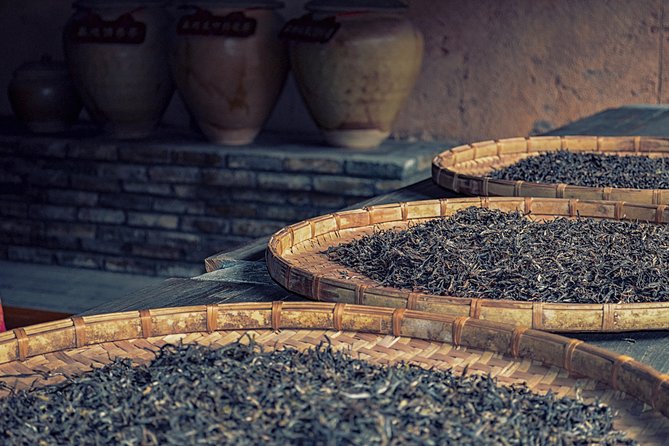
The appeal of this experience is simple: it takes you somewhere built for the local tea trade rather than for sightseeing alone. The market contains thousands of wholesale tea stores, according to the tour description, so you are not walking into one boutique with a small display. You are entering a large working marketplace where tea is sold in many grades, formats, and quantities.
That difference matters. A standard tea tasting can give you a pleasant introduction, but a wholesale market shows you how tea is packaged and sold on a much larger scale. You can look at leaves before they are prepared, see different grades side by side, and ask why one tea costs more than another.
The tour lasts about two to three hours, with roughly two hours listed for the market visit itself. That is enough time to get a useful introduction without giving up an entire day in Chengdu. Still, the market is large, so you will not see every shop. The experience works best if you arrive with a simple goal, such as learning the basic tea families, finding a gift, or buying a small tea set.
More Market Tours in Chengdu
- Half-Day Chengdu Cooking Class with a Local Market Visit
★ 5.0 · 465 reviews - Chengdu: Cooking Class with Fresh Market Half Day Experience
★ 5.0 · 42 reviews - Half-Day steamed Buns Cooking Class with a Local Market Visit
★ 5.0 · 26 reviews
Meeting near Wenshu Yuan Monastery
The listed meeting point is Wenshu Yuan Monastery at 66 Wen Shu Yuan Jie in Qingyang District. The activity ends back at the meeting point, which keeps the outing easy to fit into a Chengdu sightseeing day.
Pickup is also offered, and the tour information describes an English-speaking leader meeting you at a centrally located hotel. Because the specific arrangements include both hotel pickup and the monastery meeting point, I would confirm the exact meeting instructions when booking. This is especially useful if you are staying outside the central area.
The meeting area is near public transportation, another practical advantage. You do not need to build a complicated private transfer into your day if you can reach the starting point on your own. Confirmation is provided at booking, and the experience is listed as suitable for most people.
The private setup is worth noting. Your group is the only group taking part, so you are not tied to strangers’ shopping plans or a fixed group conversation. If you want to ask repeated questions about tea grades, or if one person in your party wants to buy accessories while another prefers to watch the processing, a private guide can make the time more useful.
Seeing how tea is dried, processed, and packaged
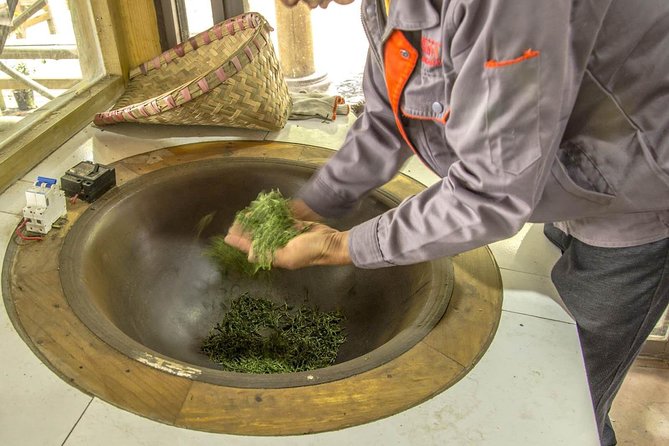
The most useful part of the visit is the chance to connect the finished drink with the work behind it. In the market, you can learn how tea leaves are dried, processed, and packaged. That may sound basic, but it gives you a better way to judge what you are buying.
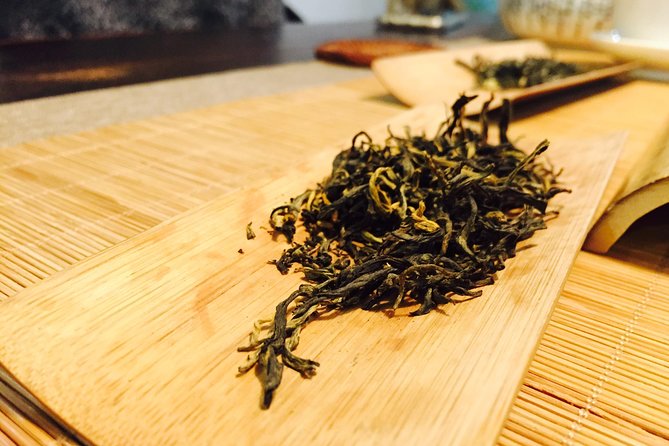
Tea often looks mysterious when it is presented in a packet. At the market, you can see leaves in many shapes and sizes before they become a cup of tea. You can ask how the leaves were treated and how the shop sorts or packages them. The tour does not promise a formal hands-on class, so think of this as guided explanation and observation rather than a full tea-making workshop.
I like this approach because it keeps the experience connected to real buying decisions. If you learn what a particular leaf should look like, how it is stored, and how it is prepared, you are less likely to choose tea based only on a colorful package.
The market setting also gives you a useful lesson in scale. A single shop may carry several types and grades, while nearby stores offer similar products at different prices. Your guide can help you compare instead of making a rushed choice at the first counter.
Comparing green, black, white, oolong, and Pu-er tea
The tour introduces five broad tea categories: green, black, white, oolong, and Pu-er. For someone who knows only a few familiar tea names, this is a sensible starting point.
You can ask how the teas differ in appearance, processing, and flavor. The guide also explains the commonly discussed benefits and functions associated with drinking different kinds of tea. Keep in mind that these explanations are part of tea culture and shopping guidance, not medical advice. If you have health concerns, use your own judgment rather than treating a market explanation as a diagnosis.
The value here is comparison. Instead of tasting one tea in isolation, you can build a basic frame of reference:
- Green tea is presented as one of the main categories to identify and compare.
- Black tea gives you another clear style, with different processing and character.
- White tea offers a chance to look at a lighter and less familiar category.
- Oolong sits between broad tea styles and is useful for learning how processing changes the leaf.
- Pu-er introduces a well-known tea category that many first-time buyers may not know how to assess.
The exact teas available can vary by shop and season, so you should not expect every possible variety. The useful promise is that you will receive an introduction to the categories and have a chance to ask questions while looking at actual products.
More Shopping Tours in Chengdu
- Half-Day Professional Mapo Tofu Cooking with a Local Market Visit
★ 5.0 · 19 reviews - Half-day Dandan Noodles Cooking Class with a Local Market Visit
★ 5.0 · 8 reviews - 3-Hour Herbal Wholesale TCM Market and a Local Wet Market Tour
★ 5.0 · 4 reviews - Half-Day Private Hot-Pot Cooking Class with a Local Market Visit
★ 5.0 · 3 reviews
Sitting down for a tea tasting before buying
You do not have to buy the first tea placed in front of you. If you want to purchase, you can sit down and taste what you are considering before making a deal.
That tasting option is one of the strongest reasons to book the tour rather than visit the market alone. Tea can change greatly when brewed, and dry leaves do not always tell you what you will enjoy in the cup. A sample lets you check the flavor before committing to a larger purchase.
The tour is aimed at wholesale shops, so quantities and pricing may not always feel designed for a casual souvenir hunter. Ask about the size of the package and make sure you understand the price before agreeing to buy. If you only want a small amount, say so clearly and ask what smaller option is available.
Your English-speaking leader can also help you communicate during the tasting and purchase. That matters when you want to ask about quality, preparation, storage, or the difference between two similar teas. A guide cannot guarantee a particular price or product, but the support can make the buying process less confusing.
The tour’s strongest review praised Jerry specifically, calling him a fantastic guide and crediting him with making the market visit both enjoyable and informative. The operator’s response also encouraged participants to share tea haul videos and highlighted learning about tea grading. Those details suggest that the guide’s explanations, especially around grading and shopping, are central to the experience.
Finding tea sets and accessories at lower prices
The market is not only about loose tea. It is also described as a good place to buy tea sets and accessories, often at lower prices than you might find in a more tourist-focused shop.
This can be useful if you want a practical souvenir. A small tea set may be easier to enjoy at home than a large quantity of tea, and cups or brewing tools can give your purchase a lasting purpose. You can also compare styles and prices across many shops rather than accepting the first offer.
The drawback is choice. A large wholesale market may offer too many options, especially if you do not already know what you need. Before you go, think about whether you want a teapot, cups, a serving tray, storage containers, or just tea. A short list helps you avoid buying more than you can carry or use.
The guide can help you understand what an accessory is for, but the information provided does not promise a specific brand, style, or item. If a particular type of teapot or cup matters to you, treat the market as a place to look and compare rather than a guaranteed source.
What the $46.16 price includes in practical terms
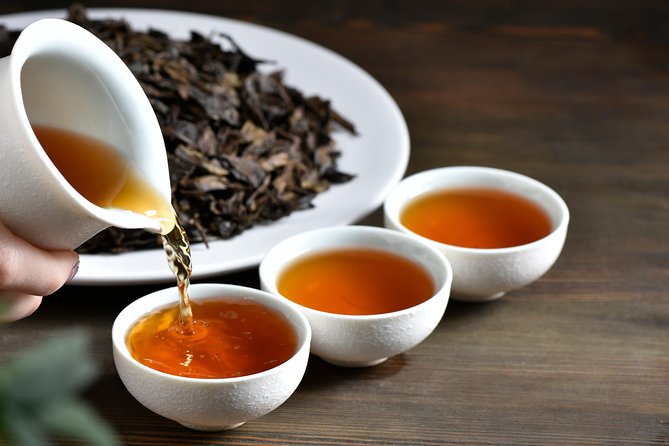
The advertised price is $46.16 per person. The value depends on how you use the guide’s time.
If you only want to wander through tea shops, you might find the price hard to justify. The market is accessible by public transportation, and the admission ticket is free. On the other hand, the experience includes a private English-speaking leader, market orientation, explanations of tea categories and processing, help with tasting, and the convenience of pickup being offered.
That makes the tour more worthwhile for anyone who wants to buy tea with some confidence. The guide can save you time by helping you focus on suitable shops and by explaining what you are seeing. A private tour also avoids the stop-and-go rhythm of a large group.
Group discounts are available, which can improve the value for a family or small party. Since the fee is per person, check the final price for your group before booking. Tea and tea accessories are not stated as included, so plan to pay separately for anything you purchase.
The admission ticket itself is free. You are paying mainly for the private guidance, organization, and language support, not for entry into a paid attraction.
Who will get the most from this market tour
I would recommend this experience most strongly to you if you meet one or more of these conditions:
- You want to buy Chinese tea but do not know how to compare types or grades.
- You enjoy food and drink experiences tied to everyday local commerce.
- You want an English-speaking guide to help with questions and purchases.
- You prefer a private outing that can focus on your group’s interests.
- You are looking for tea sets or accessories as well as tea leaves.
- You have two or three hours available near central Chengdu.
It is also a good fit for someone who likes seeing how products are handled before they reach a restaurant or shop. The market is more practical than scenic, so you should choose it for its subject, not for ornate architecture or a relaxed café atmosphere.
I would be more cautious if you dislike shopping environments or have no interest in tea. The huge number of tea shops could feel repetitive, and the wholesale setting may be less comfortable than a small tasting room. You may also find the experience less useful if you are looking only for one very specific tea and do not want to compare alternatives.
Timing, comfort, and simple planning tips
Allow two to three hours for the full experience. The market portion is listed at about two hours, and additional time may depend on pickup, transport, tasting, and shopping.
Wear comfortable shoes. The market is described as huge, with a large collection of stores, so you should expect to walk and stand. Bring enough room in your bag for purchases, but do not assume that buying large quantities is necessary.
Before meeting your guide, decide whether your priority is tasting, learning, buying tea, or finding accessories. Tell the leader early. A private tour gives you a better chance to shape the visit around that goal.
If you plan to buy, ask about package size, price, preparation, and storage. Taste first when possible. This is a simple way to avoid choosing a tea only because its dry leaves or packaging look appealing.
The activity is near public transportation, and most people can participate. Free cancellation is available if you cancel at least 24 hours before the start time. Cancellations made less than 24 hours in advance are not refunded, and late changes are not accepted.
Should you book the Chengdu tea market tour?
Book it if you want a guided introduction to Chinese tea buying, especially if you value tasting before purchasing. The combination of a private English-speaking leader, a large wholesale market, tea grading guidance, and access to inexpensive tea sets gives the outing a clear purpose.
I would also choose it if you want something more connected to ordinary commerce than a standard sightseeing stop. Jerry’s highly praised guidance suggests that the human side of the experience can make a major difference, particularly when the market feels large or confusing.
Skip it if you are not interested in tea or shopping. The market is free to enter, and the main value comes from the explanations, tasting help, and purchasing support. For the right person, $46.16 buys useful context and a more confident way to explore Chengdu’s tea trade. For everyone else, two hours among wholesale tea stalls may be more effort than pleasure.
FAQ
How long does the Chengdu tea wholesale market tour last?
The experience lasts approximately two to three hours. The market visit itself is listed as taking about two hours.
What types of tea will I learn about?
The tour covers green, black, white, oolong, and Pu-er tea. You can learn how to tell these categories apart and hear about their commonly discussed effects and functions.
Can I taste tea before buying it?
Yes. If you want to purchase tea, you can sit down and taste the tea you are considering before making a deal.
Is this a private tour?
Yes. Only your group participates in the activity.
Is an English-speaking guide included?
Yes. An English-speaking leader accompanies the experience and provides explanations in the market.
Where does the tour start and finish?
The listed meeting point is Wenshu Yuan Monastery at 66 Wen Shu Yuan Jie in Chengdu. The activity ends back at the meeting point.
Is hotel pickup available?
Pickup is offered, and the tour information describes meeting at a centrally located Chengdu hotel. Because the listed meeting point is also Wenshu Yuan Monastery, confirm the exact pickup arrangement when booking.
Can I buy tea sets and accessories?
Yes. The market is described as a good and inexpensive place to shop for tea sets and tea accessories, as well as tea leaves.
Just added in Chengdu
- Classsic sichuan Opera at sichuan Provincial Theater★ 5.0 · 4 reviews
- Visiting Chengdu Panda Base in a Half Day★ 5.0 · 4 reviews
- Tea Village in lost Town and Buddha 1 day tour★ 5.0 · 32 reviews
- Panda, Leshan, and Emei Mountain 2-day tour★ 5.0 · 4 reviews
- Sichuan Opera with face-changing at Sichuan opera theater★ 4.5 · 6 reviews
- Sichuan Opera Show with Hotel Pickup★ 5.0 · 3 reviews
- Mini Group: Half-Day Chengdu Pandas Guided Tour★ 5.0 · 3 reviews
- Sanxingdui Ruins and Giant Pandas Private Day Tour from Chengdu★ 5.0 · 5 reviews
Markets, compared.
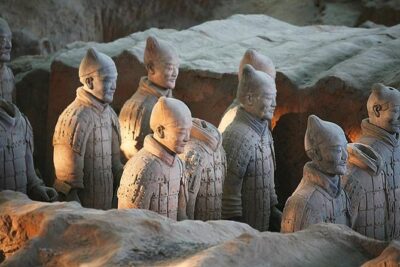
Mini Group Xian Day Tour to Terracotta Army, City Wall, Pagoda and Muslim Bazaar
Read our review →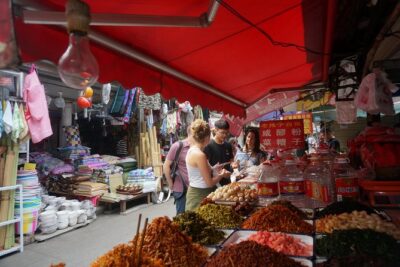
Half-Day Chengdu Cooking Class with a Local Market Visit
Read our review →
Shanghai Day Tour to Zhujiajiao Water Town, Yu Garden, Bazaar, Bund
Read our review →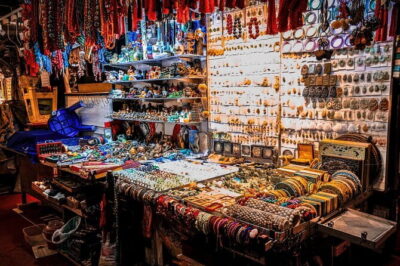
Kowloon Street Market & Food Culture Walking Tour
Read our review →
Organic Chinese Dumpling Class with Market Walk
Read our review →
Terracotta Army, Lunch, City Wall, Pagoda, Bazaar
Read our review →
Organic Xiao Long Bao Soup Dumpling Class & Market Walk
Read our review →
Lijiang Naxi Cuisine Cooking Class & Market Visit
Read our review →Where else this tour turns up