
Reviewed · MARKETS
3-Hour Herbal Wholesale TCM Market and a Local Wet Market Tour
Follow the scent of pepper and dried herbs. This three-hour Chengdu walk takes you from Wenshu Yuan Monastery into wholesale markets filled with Sichuan spices and traditional Chinese medicine. I like the unusually local setting and the chance to compare more than ten kinds of chili peppers and Sichuan peppercorns from different places. The main drawback is that the tour is best for curious walkers, not anyone seeking a fast-moving list of major sights.
I also like that the tour combines two sides of daily life: the covered TCM market, where thousands of herbs and plants are sold, and a local wet market centered on food. Lance and his unnamed partner have been praised for their calm, kind guiding style and their willingness to discuss everyday Chengdu life. Plan on a relaxed pace, strong smells, and plenty of time to ask questions.
In This Review
- Key points at a glance
- Starting at Wenshu Yuan Monastery
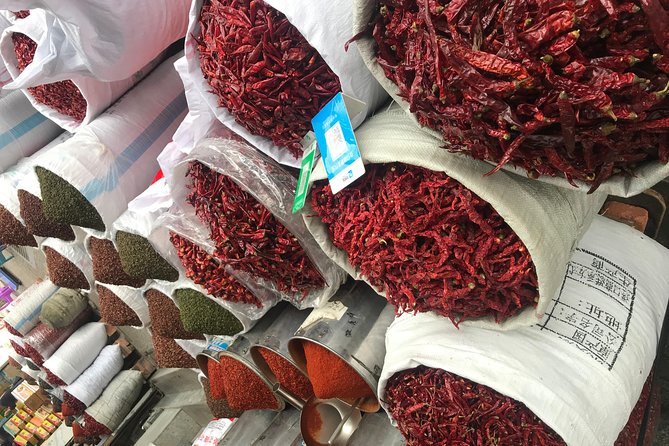
- The wholesale spice market and Sichuan’s many peppers
- Inside the Traditional Chinese Medicine market
- The local wet market and everyday Chengdu
- How the private format changes the visit
- Timing, walking, and practical comfort
- Who will get the most from this Chengdu tour
- Should you book the three-hour market walk?
- FAQ
- How long does the tour last?
- Where does the tour begin?
- Where does the tour end?
- Is transportation included?
- Is this a private tour?
- What markets does the tour visit?
- What spices can you see?
- How much does the tour cost?
- Can you cancel for a refund?
Key points at a glance
- More than ten kinds of chili peppers: Compare the colors, shapes, and origins of peppers used in Sichuan cooking.
- A serious TCM market: See thousands of herbs and plants in a covered wholesale setting, with guidance on their place in Chinese culture.
- A second market for local food: The wet market adds a practical look at what people buy and eat in Chengdu.
- A private three-hour walk: Only your group takes part, which gives you room to ask questions and set the pace.
- A Wenshu Yuan Monastery meeting point: The tour starts and ends at 66 Wen Shu Yuan Jie, near public transportation.
- Relaxed rather than packed: This is a slow, conversational outing, with free cancellation up to 24 hours before the start time.
Starting at Wenshu Yuan Monastery
The tour begins at Wenshu Yuan Monastery, at 66 Wen Shu Yuan Jie in Chengdu’s Qingyang District. That is a useful starting point because it gives the walk a clear landmark rather than leaving you to find an obscure shop entrance or market stall.
The tour information also says pickup is offered, but the stated meeting point is the monastery, so confirm the exact arrangement when you book. If you are making your own way there, the location is near public transportation. The activity returns to the same meeting point at the end, which makes the three-hour plan easier to fit around the rest of your Chengdu sightseeing.
From the start, this is a walking experience. Wear shoes that can handle a few hours on hard pavement, and bring water. The pace is described as relaxed, but markets involve standing, turning through narrow areas, and stopping often.
You will not spend the morning ticking off famous monuments. Instead, you will be looking closely at things many people pass without understanding: sacks of dried plant material, rows of peppers, unfamiliar roots, and the people who trade in them. That focus is the reason to book this outing.
More Market Tours in Chengdu
- Half-Day Chengdu Cooking Class with a Local Market Visit
★ 5.0 · 465 reviews - Chengdu: Cooking Class with Fresh Market Half Day Experience
★ 5.0 · 42 reviews - Half-Day steamed Buns Cooking Class with a Local Market Visit
★ 5.0 · 26 reviews
The wholesale spice market and Sichuan’s many peppers
Sichuan food is known well beyond China, but a restaurant menu only gives you part of the story. In the wholesale spice market, you can see the ingredients in their working form and compare types that are easy to lump together when they are already ground into powder.
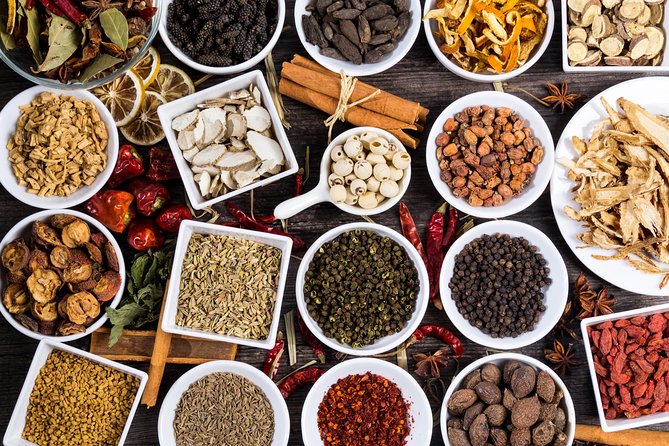
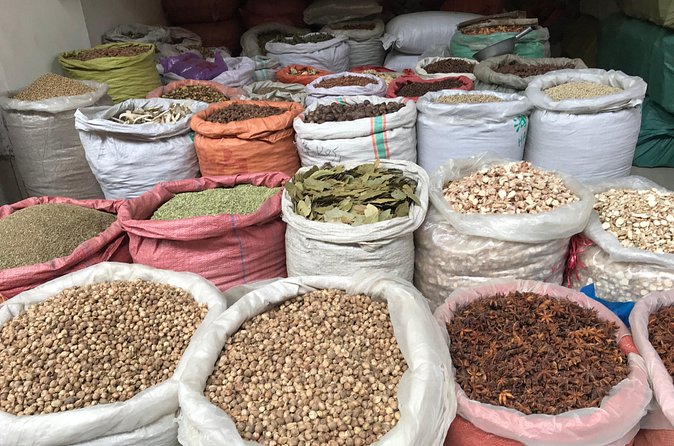
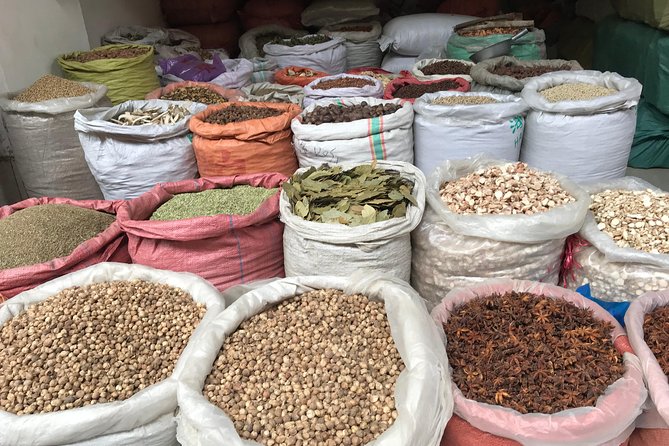
The tour focuses on turmeric, non-Sichuan peppers, more than ten kinds of chili pepper, and huajiao, the Sichuan peppercorn. The peppercorns may come from different places of origin, giving your guide a useful way to explain how ingredients vary before they reach a kitchen.
That detail matters if you cook, eat widely, or simply want to understand why Sichuan dishes have such a particular character. Chili brings heat, while huajiao is associated with the distinctive numbing sensation found in many Sichuan dishes. The market lets you see that these are not just generic red or brown seasonings. They are traded as separate products, with their own appearance, source, and use.
I would not expect a formal cooking class or a long tasting session. The value is in seeing the raw materials, smelling them, and hearing how they fit into regional food. The market setting is practical, not polished for sightseeing, which can make it more interesting but also less comfortable for anyone who prefers tidy, clearly labeled displays.
The smell may be the first thing you notice. Dried spices and herbs can create a powerful mix, especially in a covered wholesale area. That is part of the experience, but it is worth keeping in mind if you are sensitive to strong aromas.
Inside the Traditional Chinese Medicine market
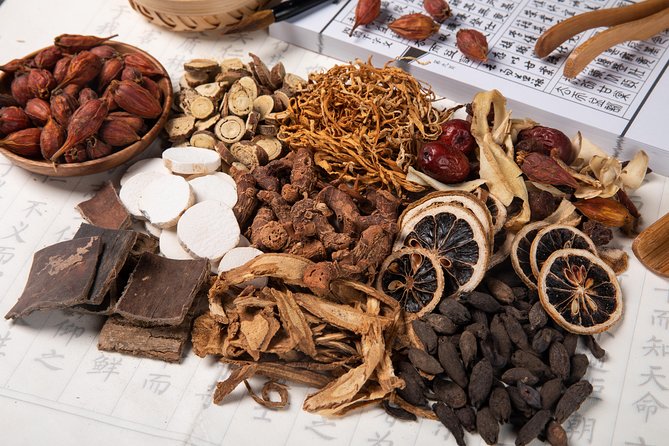
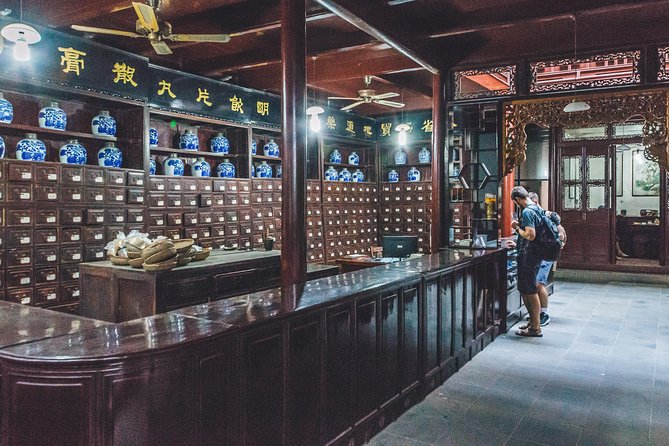
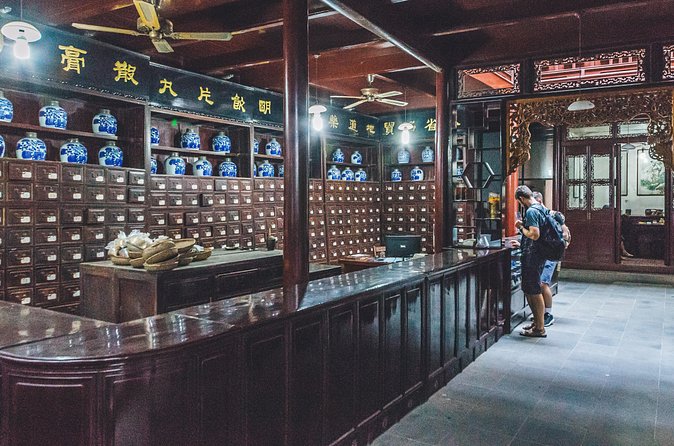
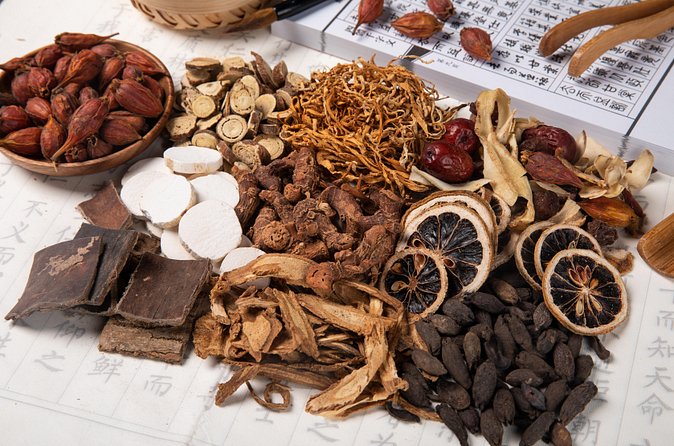
The TCM market is the most unusual part of the walk. You can expect thousands of types of herbs and plants, arranged for trade rather than staged for visitors. The sight is less like a museum and more like a working supply center tied to a long-standing part of Chinese culture.
Your guide can explain why Traditional Chinese Medicine has mattered in China for thousands of years and how it contributed to the development of Chinese society. The tour description presents TCM as an integral part of Chinese culture, so the focus is cultural and educational rather than a personal medical consultation.
That distinction is important. You should listen for context, ask about names and uses, and enjoy the visual and aromatic range of the market. You should not treat a short tour as medical advice or buy an unfamiliar remedy for self-treatment without proper professional guidance.
The market also gives you a useful look at how food, health, trade, and tradition can overlap. Some items may look like cooking ingredients, while others are associated with remedies. Without a guide, many would be difficult to identify. Lance and his partner have been praised for explaining the material clearly and for making the visit feel easygoing instead of turning it into a lecture.
The relaxed pace is a real advantage here. You can stop to ask what a particular plant is, how people use it, or why one product is stored and sold differently from another. Since this is a private activity for your group, you do not have to compete with a large tour party for the guide’s attention.
Still, expectations matter. The description does not promise samples, purchases, or demonstrations. You are visiting a market and learning about what you see. If your main interest is buying a specific prescription or receiving a TCM diagnosis, this is not the right format.
The local wet market and everyday Chengdu
The second market shifts the focus from medicinal herbs and spices to local food. That contrast helps the tour make sense. You first see products connected to seasoning and traditional remedies, then move into a market that reflects ordinary shopping and cooking.
A wet market can be more useful than a restaurant visit if you want to understand daily food routines. You see what is sold locally, how ingredients are arranged, and how a city feeds itself outside the tourist center. The supplied experience information does not list every stall or product, so you should think of this as a guided introduction rather than a guaranteed checklist of meat, seafood, produce, or snacks.
The guide’s role is especially helpful here. Lance and his partner have been praised for answering questions about local Chengdu life, not just naming ingredients. That opens the door to practical conversations about food habits and routines. You can ask what an item is, how it is prepared, or why it appears in this market.
This stop is also where the tour feels most connected to the city around you. The spice and TCM wholesale areas are specialized places. The wet market brings you back to the daily business of buying food.
Do not expect a major food tour with a series of tastings. The focus is walking, observing, and talking. If you want a market visit without the pressure of constant activity, that is a strength. If you want a full meal or many samples, you may find the format limited.
More Shopping Tours in Chengdu
- Half-Day Professional Mapo Tofu Cooking with a Local Market Visit
★ 5.0 · 19 reviews - Half-day Dandan Noodles Cooking Class with a Local Market Visit
★ 5.0 · 8 reviews - Three-Hour Private Chengdu Tea Wholesale Market Tour
★ 5.0 · 4 reviews - Half-Day Private Hot-Pot Cooking Class with a Local Market Visit
★ 5.0 · 3 reviews
How the private format changes the visit
This is a private tour, so only your group participates. That is one of the strongest practical features. Market tours depend on questions, and a private group gives you a better chance to pause when something catches your attention.
A private format also helps with different interests. One person in your group might care about cooking, another about Chinese medicine, and another about ordinary Chengdu life. The guide can spend more time on whichever subject keeps the conversation moving.
The tour has received especially strong praise for its guides. Lance is named directly, and his partner also leads the experience. Their style is described as professional, kind, and relaxed. That combination suits a market walk, where a pushy or overly scripted guide would make the setting feel less natural.
There is a trade-off. A private tour usually costs more per person than joining a large group, though the listed price of $46.16 per person is reasonable for three hours with a dedicated guide. You are paying for access, interpretation, and the ability to ask questions, not for admission to a famous attraction. The tour lists admission as free, so the price is mainly for the guided experience.
For two or more people, the value improves because you share the guide cost. Group discounts are also offered. If you are traveling alone, compare the price with your interest level. A cooking enthusiast, food writer, or TCM enthusiast may find it worthwhile. Someone who only wants quick photos of a market may not.
Timing, walking, and practical comfort
The tour lasts about three hours and starts and ends at Wenshu Yuan Monastery. That makes it a manageable half-day activity, especially if you schedule it before or after other plans in Chengdu.
The pace is intentionally easygoing. You will move between markets, stop for explanations, and spend time looking at products. The experience is not built around one dramatic attraction, so allow yourself to enjoy the small details.
The activity requires good weather. If poor weather causes cancellation, you will be offered another date or a full refund. You can cancel for a full refund up to 24 hours before the start time, but changes or cancellations inside that window are not accepted.
Confirmation is provided at booking. Most people book about 22 days ahead, which suggests you should not leave it until the last minute if the tour is important to your schedule. The activity is near public transportation, and most people can participate, though you should be comfortable walking and standing for approximately three hours.
Because the market is a working environment, modest clothing and polite behavior are sensible. Ask before photographing people or individual stalls. The information provided does not promise translation of every label or permission to photograph all areas, so let your guide set the tone.
Who will get the most from this Chengdu tour
I would recommend this experience if you like food origins, traditional culture, and places that still serve a local purpose. It is particularly well suited to you if:
- You want to understand Sichuan pepper and chili beyond restaurant descriptions.
- You are curious about TCM as part of Chinese culture.
- You prefer a private, conversational walk to a large organized group.
- You enjoy markets more for their daily activity than for shopping.
- You like asking detailed questions about local routines.
- You want a slower morning or afternoon without a packed schedule.
Families and mixed-interest groups may also find the private format useful, provided everyone can manage the walking. The tour allows most people to participate, but the supplied details do not promise special arrangements for mobility needs.
I would be less likely to recommend it if you have only one day in Chengdu and want to focus on major landmarks. I would also choose another activity if you expect a cooking lesson, extensive food tasting, a medical consultation, or a shopping trip built around buying specific products.
Should you book the three-hour market walk?
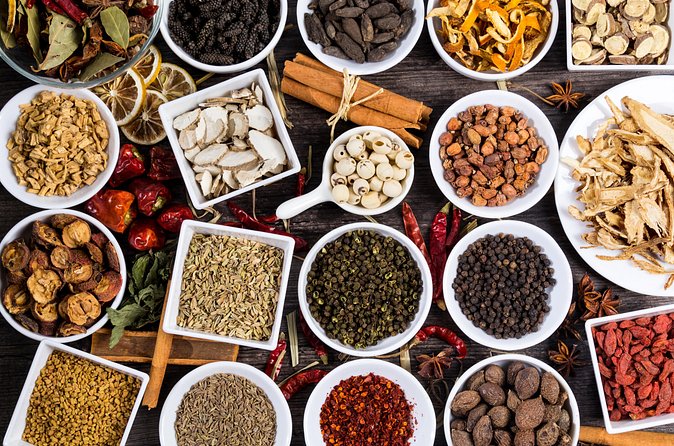
Book it if you want a close look at Chengdu’s food culture and TCM trade, with a guide who can explain what you are seeing. The combination of a wholesale spice market, a TCM market, and a local food market gives the outing a clear purpose, and the private format makes the $46.16 price easier to justify.
Skip it if markets make you uncomfortable, strong smells bother you, or you need an attraction with a dramatic payoff. This is a quiet, observant experience. Its best moments come from comparing peppers, asking about unfamiliar herbs, and seeing ordinary food commerce up close.
For the right person, it is one of those useful city walks that gives context to every spicy meal afterward. Just bring comfortable shoes, keep your questions ready, and leave room in your schedule for the market to set the pace.
FAQ
How long does the tour last?
The walking tour lasts approximately three hours.
Where does the tour begin?
It begins at Wenshu Yuan Monastery, 66 Wen Shu Yuan Jie, Qingyang District, Chengdu, Sichuan, China, 610084.
Where does the tour end?
The activity ends back at the meeting point at Wenshu Yuan Monastery.
Is transportation included?
The tour is a walking experience, and the meeting point is near public transportation. Pickup is also offered, but the exact pickup arrangement should be confirmed when booking.
Is this a private tour?
Yes. Only your group participates in the activity.
What markets does the tour visit?
It visits a wholesale market for Sichuan spices and Traditional Chinese Medicine herbs, along with a local wet market focused on food.
What spices can you see?
The tour includes turmeric, different types of peppers, more than ten kinds of chili peppers, and huajiao, also known as Sichuan peppercorn, from different places of origin.
How much does the tour cost?
The listed price is $46.16 per person. Group discounts are available.
Can you cancel for a refund?
Yes. You can cancel at least 24 hours before the experience start time for a full refund. Cancellations or changes made less than 24 hours before the start time are not accepted.
Just added in Chengdu
- Visiting Chengdu Panda Base in a Half Day★ 5.0 · 4 reviews
- Classsic sichuan Opera at sichuan Provincial Theater★ 5.0 · 4 reviews
- Tea Village in lost Town and Buddha 1 day tour★ 5.0 · 32 reviews
- Panda, Leshan, and Emei Mountain 2-day tour★ 5.0 · 4 reviews
- Sichuan Opera Show with Hotel Pickup★ 5.0 · 3 reviews
- Mini Group: Half-Day Chengdu Pandas Guided Tour★ 5.0 · 3 reviews
- Sichuan Opera with face-changing at Sichuan opera theater★ 4.5 · 6 reviews
- Sanxingdui Ruins and Giant Pandas Private Day Tour from Chengdu★ 5.0 · 5 reviews
Markets, compared.
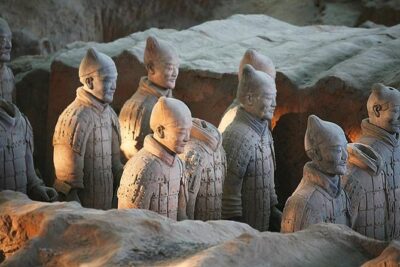
Mini Group Xian Day Tour to Terracotta Army, City Wall, Pagoda and Muslim Bazaar
Read our review →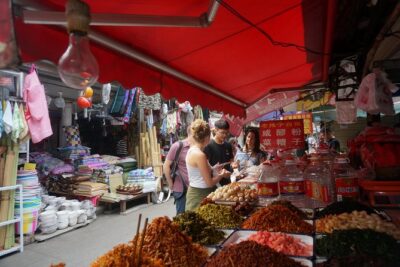
Half-Day Chengdu Cooking Class with a Local Market Visit
Read our review →
Shanghai Day Tour to Zhujiajiao Water Town, Yu Garden, Bazaar, Bund
Read our review →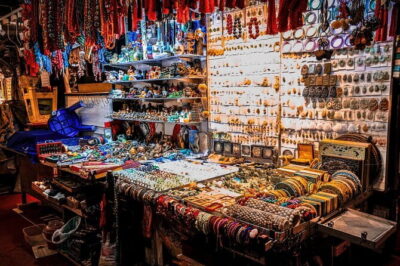
Kowloon Street Market & Food Culture Walking Tour
Read our review →
Organic Chinese Dumpling Class with Market Walk
Read our review →
Terracotta Army, Lunch, City Wall, Pagoda, Bazaar
Read our review →
Organic Xiao Long Bao Soup Dumpling Class & Market Walk
Read our review →
Lijiang Naxi Cuisine Cooking Class & Market Visit
Read our review →Where else this tour turns up