
Reviewed · LHASA TOURS
8 Days Lhasa Gyantse Shigatse Mt Everest Group Tour
Tibet rewards a carefully planned first trip. This eight-day route links Lhasa, Gyantse, Shigatse, and Mount Everest without asking you to arrange long-distance transport, permits, or hotels yourself. I especially like the strong mix of monasteries and mountain scenery, plus the included airport or railway transfers, breakfasts, and local English-speaking guide. The main caution is altitude: this is a demanding route, with high passes and an overnight near Everest.
I also like the small group size, capped at 12 people, and the practical inclusion of an emergency oxygen tank. You get time in Lhasa before heading higher, which matters. Still, the schedule includes a very long driving day to the Everest area, and lunch, dinner, flights, trains, visas, insurance, and gratuities are extra.
In This Review
- Key things to know before booking
- Why this eight-day route works for first-time visitors
- Lhasa begins with Drepung, the Tibet Museum, and Norbulingka
- Potala Palace, Jokhang Temple, and Barkhor Street
- Yamdrok Lake and Karola Glacier on the road to Gyantse
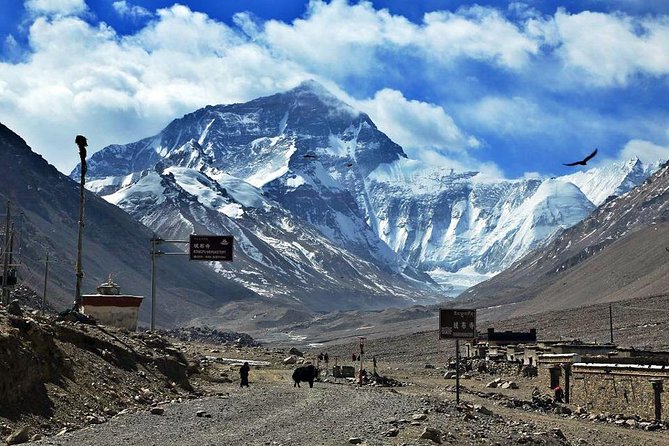
- The long road to Qomolangma National Nature Preserve
- Sunrise near Everest and the basic overnight
- Shigatse and Tashilunpo Monastery
- Hotels, meals, transfers, and what the $1,100 covers
- Who should book this Tibet group tour?
- Should you book the eight-day Lhasa to Everest route?
- FAQ
- Is the Tibet Tourism Bureau Permit included?
- Are flights or trains included in the tour price?
- What type of accommodation is provided?
- Are meals included?
- How many people can join the group?
- Can I be picked up at Lhasa airport at any time?
Key things to know before booking
- Everest is reached by road: Day 5 involves about 10 hours of driving toward the Qomolangma National Nature Preserve.
- Lhasa comes first for acclimatization: The opening sightseeing days keep you lower than the mountain portion of the trip.
- The group is limited to 12 people: That is small enough for easier coordination without the cost of a private tour.
- One night is basic: Six nights are in twin en suite rooms at three-star or four-star hotels, while one night is in a dorm bed at a guesthouse or nomad tent.
- The price covers important paperwork: The $1,100 cost includes the Tibet Tourism Bureau Permit, transport, guide, six breakfasts, accommodation, and selected entrance tickets.
- The route is culture-heavy and scenery-heavy: You see major Lhasa temples, Tibetan royal gardens, holy Yamdrok Lake, a glacier, historic monasteries, and Mount Everest.
Why this eight-day route works for first-time visitors
For a first visit to Tibet, the biggest advantage is not simply the number of sights. It is the coordination. Tibet travel involves permits, long road transfers, restricted routes, changing weather, and hotels spread across a huge area. Here, the main pieces are arranged together.
You begin in Lhasa, spend two days seeing the city, then travel west through Gyantse and Shigatse before reaching Everest. That order gives you some time to adjust before the road climbs higher. I like this structure because it avoids throwing you straight into the most remote section.
The group limit of 12 is another plus. You are not paying private-tour prices, but you are also unlikely to be part of a huge convoy. The exact vehicle depends on group size and season, though fuel and parking are included.
The tour costs $1,100 per person. That is a fair value if you want an organized route and intend to visit Everest, because the price includes several costly and time-consuming pieces: the Tibet permit, six hotel nights, one basic overnight, transport, guide service, entrance tickets for several major sites, six breakfasts, bottled water, and airport or railway transfers at set times.
The price is not all-inclusive. You still need to budget for your international or domestic flight, train, China visa, lunch, dinner, optional sights, personal expenses, insurance, and tips. A single supplement applies if you do not share a twin room, although it may be refunded if the operator later matches you with another person.
A few more to weigh up in China
- Tibet Tour 8 Days Lhasa to Everest Base Camp Small Group Tour
★ 5.0 · 578 reviews - 7 Days Lhasa to Kathmandu Overland Small Group Tibet Tour via EBC
★ 5.0 · 188 reviews - 10 Days Tibet Everest Base Camp and Namtso Small Group Tour
★ 5.0 · 108 reviews
Lhasa begins with Drepung, the Tibet Museum, and Norbulingka
Your first sightseeing day visits Drepung Monastery, the Tibet Museum, and Norbulingka. It is a good introduction because the three stops show different sides of Tibetan life: monastic practice, cultural objects and customs, and the former Dalai Lama summer residence.
Drepung is allotted about two hours, with admission included. It is one of Tibet’s most important monasteries and was once among the largest monastic institutions in the world. The scale matters, but so does the setting outside central Lhasa. You get a sense of how religious communities were organized beyond the city’s main temples.
The Tibet Museum follows in the afternoon. You can expect displays covering clothing, house design, festival customs, daily life, and Tibetan cultural objects. This stop is useful early in the trip because it gives you background before you encounter more active religious sites.
Norbulingka, translated as Precious Stone Garden, takes about two hours. This Tibetan-style royal garden served as a summer retreat for the Dalai Lama. I would treat it as a slower stop after the museum, with gardens and palace spaces offering a change from monastery interiors.
The first day of sightseeing is fairly full but not unreasonable. The larger concern is altitude. Even in Lhasa, you may feel tired, short of breath, or headachy. The tour includes bottled water and carries oxygen for emergency use, but those provisions are not a substitute for taking symptoms seriously.
Potala Palace, Jokhang Temple, and Barkhor Street
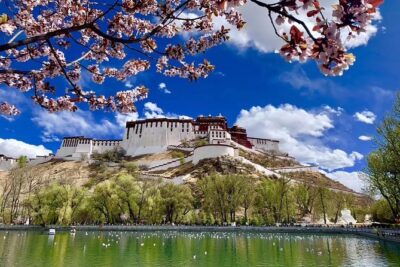
Day 3 brings the most famous sights in Lhasa, beginning with Potala Palace. The visit lasts about two hours and admission is included. The palace is the main symbol of Tibet, and its position above the city gives you a powerful first look at Tibetan architecture.
The visit is likely to involve stairs and steady walking, so move slowly. This is not the place to rush from room to room. Give yourself time to notice the painted details, religious objects, and the sheer scale of the building.
In the afternoon, you visit Jokhang Temple, the spiritual center of old Lhasa. It sits in the heart of the city and remains an important destination for pilgrims. The scheduled visit lasts about two hours.
Jokhang feels different from Potala Palace. Potala is monumental and formal. Jokhang is more closely tied to daily devotion. The tour description highlights the steady flow of local pilgrims, so this is a place to watch respectfully and follow your guide’s instructions.
The final stop is Barkhor Street, which circles Jokhang Temple. You spend about two hours walking through this old devotional route and central market area. This is one of the best parts of the Lhasa portion because it connects the temple to ordinary city life.
Stay alert to the schedule here. Barkhor Street is not just a shopping area. It is also a religious circuit, so you should follow the direction of movement and avoid treating the route like an ordinary sightseeing square.
The operator can change the order of Lhasa attractions. That flexibility may be necessary because of access rules or local conditions, but you should expect the same general group of sights rather than a rigid timetable.
Yamdrok Lake and Karola Glacier on the road to Gyantse
Day 4 is the turning point from city sightseeing to long-distance road travel. You leave Lhasa for Shigatse, with stops at Yamdrok Yumtso Lake, Kampala Pass, Karola Glacier, and Pelkor Chode Monastery in Gyantse.
Kampala Pass reaches about 4,790 meters. That number is not a minor detail. At this height, even a short walk can feel strenuous, and cold or thin air can make simple tasks tiring. Follow your guide’s pace and do not use the stop as a test of fitness.
Yamdrok Lake is one of Tibet’s three holy lakes. The tour allows about an hour at the shore, and there is no separate admission charge. The appeal is the open view, the high mountain setting, and the contrast between the road journey and the deep blue water.
The schedule then includes a roadside view of Karola Glacier. The glacier lies roughly 300 meters from the main highway on the way to Gyantse, so this is more of a scenic stop than a long hike. That is a sensible arrangement at altitude. You can see a major natural feature without adding a strenuous trek.
In Gyantse, you visit Pelkor Chode Monastery. The description does not specify the exact visit length, but the monastery is a central sight in town. Its location makes it a useful stop between Lhasa and Shigatse, and it adds another important religious site without requiring a separate detour.
This day is scenic, but you should not think of it as a relaxed drive. Roads, weather, and altitude can affect the pace. Keep water, warm clothing, medication, and snacks close at hand rather than buried in your luggage.
A completely different sort of day out:
- From Beijing: Mutianyu Great Wall Tours with Options
★ 4.9 · 9,216 reviews - Beijing: Forbidden City Tour(Group/Private)-Tickets Included
★ 4.8 · 7,974 reviews - Beijing: T-Square & Forbidden City Group or Private Tour
★ 4.8 · 4,446 reviews - Beijing: Mutianyu Great Wall Daily Tour with Ticket & Lunch
★ 5.0 · 3,056 reviews
The long road to Qomolangma National Nature Preserve
Day 5 is the toughest day in the program. You travel from Shigatse toward Lhatse, a small town about 150 kilometers away, with lunch possible at a local restaurant. After a short break, the route continues toward Tingri and the Qomolangma National Nature Preserve.
The listed duration is about 10 hours. That tells you exactly what kind of day to expect: long stretches in the vehicle, brief stops, and a late arrival or a schedule shaped by road conditions. If you dislike long drives, this is the section to consider carefully before paying.
The reward is the approach to Everest. The route includes high passes and broad mountain views, but the tour does not promise a particular Everest view. Weather can change quickly, and the operator notes that natural disasters, landslides, avalanches, major traffic delays, government action, or other unavoidable events can force changes.
This is also the point where altitude becomes a serious practical issue. One past participant joined after arriving early to acclimatize, and another person in the group had to leave for lower altitude because oxygen and an IV did not improve the situation. That detail should not frighten you away, but it should stop you from treating this as an ordinary sightseeing holiday.
Arriving a couple of days early to adjust was helpful for at least one person, though the tour does not include those extra nights. Discuss altitude concerns with a medical professional before booking, and do not assume the emergency oxygen supply guarantees that you can complete the route.
Sunrise near Everest and the basic overnight
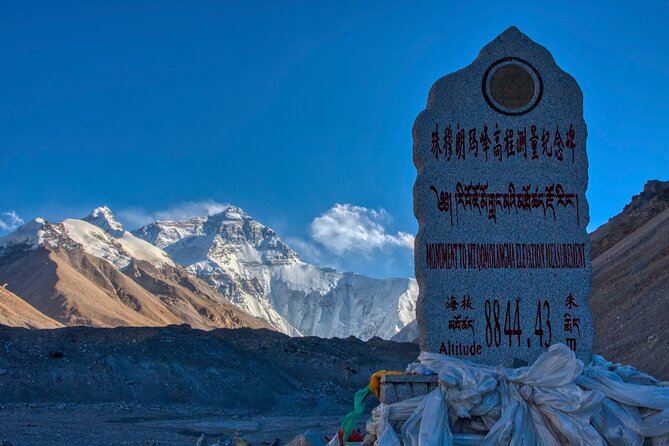
Day 6 is built around the Everest area. If the weather cooperates, you can rise early for sunrise at the Everest Peak Lodge. The morning visit to the Qomolangma National Nature Preserve lasts about four hours.
The overnight arrangement here is much simpler than the city hotels. One night is in a dorm bed at a guesthouse or nomad tent. That may be part of the appeal: you are close to a remote mountain area rather than sleeping in a polished city hotel. But you need to be ready for basic conditions, shared sleeping arrangements, and cold weather.
The tour provides accommodation for this night, but the information does not promise private bathrooms, heating, or a particular style of tent. Ask for the current setup before booking if those details matter to you.
The sunrise plan depends on weather and road conditions. Even with clear skies, high-altitude mornings can be very cold. Pack layers, gloves, and a hat in your day bag. You should not count on reaching into the main luggage during an early departure.
This is the emotional peak of the trip for many people. The route does not offer a long Everest trek, and it is not a mountaineering expedition. Instead, it gives you a road-based visit to the Everest region, paired with a short stay near the mountain.
Shigatse and Tashilunpo Monastery
After the Everest portion, the group returns toward Shigatse. Day 7 visits Tashilunpo Monastery, the home of the Panchen Lama, for about two hours. Admission is included.
Tashilunpo was founded by the First Dalai Lama in 1447. The monastery is one of Shigatse’s key religious and historical sites, and its connection to the Panchen Lama gives it special importance in Tibetan Buddhism.
By this stage, the monastery visits have a different effect than they did in Lhasa. You have already seen Drepung, Jokhang, and Pelkor Chode, so you can compare their settings and roles. That repeated exposure is useful. It helps you notice that Tibetan religious sites are not interchangeable photo stops.
The tour is action-packed, but it still allows about two hours at the main monastery sites. Several people praised the guides for explaining details clearly, keeping good time, and allowing enough free time. Lobsang received especially warm praise for his guiding, while Jennie was singled out for being responsive during arrangements. The agency also has staff named Merry, Emily, and Beatrice involved in customer support, according to the supplied comments.
Do not expect every group to have the same guide. The important point is that the operator uses an experienced local English-speaking guide, and guide quality appears to be one of the tour’s strongest features.
Hotels, meals, transfers, and what the $1,100 covers
Six nights are in twin en suite rooms at three-star or four-star hotels. One night is in a dorm bed at a guesthouse or nomad tent. That split reflects the route: city accommodation is more conventional, while the Everest portion is basic.
Six breakfasts are included. Lunch and dinner are not, so you need a daily food budget. One participant noted that vegetarian choices were an area the operator could improve, so vegetarian visitors should explain their needs before departure rather than waiting until the road portion.
Airport pickup is free at 9:30 a.m., 1 p.m., and 4 p.m. on the first day. If your flight arrives outside those windows, a private Lhasa airport transfer costs $60 per vehicle per time. Railway station transfers are free on the first and last day, and airport drop-offs are also offered at set times: 8:30 a.m., 12:30 p.m., and 2:30 p.m.
On arrival and departure days, the driver may handle the transfer while the guide collects or drops off other group members. Do not expect a guide to be beside you at every airport or railway pickup.
The tour includes two bottles of mineral water per person per day, vehicle costs, fuel, parking, guide and driver expenses, government tax, agency liability insurance, permit delivery, and the Tibet Tourism Bureau Permit. Personal travel insurance is not included, and you should arrange your own cover.
The permit process usually takes about 12 working days. You must provide passport name, passport number, expiry date, and country for every person at booking. If required documents arrive late, an extra fee of about $50 to $80 per permit may apply.
The booking is non-refundable and cannot be changed for any reason. Since this is a major restriction, do not book until your flights, visa plans, health situation, and dates are firm.
Who should book this Tibet group tour?
I would recommend it most strongly to a first-time visitor who wants the main Tibetan sights in one organized trip. You get Lhasa’s major monuments, a useful museum stop, holy Yamdrok Lake, Gyantse, Shigatse, and a road trip to Everest without having to build the permit and transport arrangements yourself.
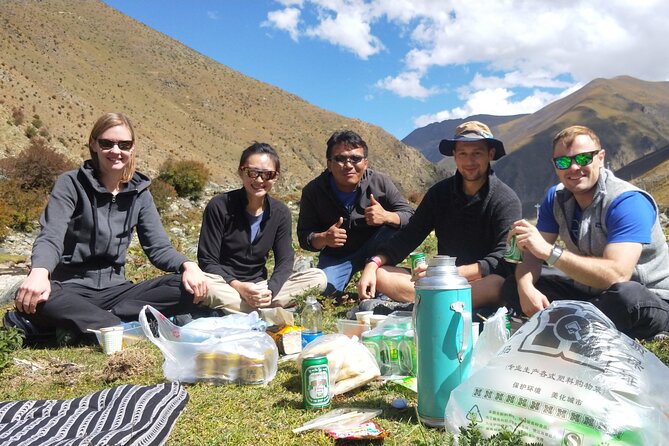
It also suits you if you value a local guide and a small group more than complete independence. The group cap of 12 keeps the price below a private tour while preserving a more personal feel than a large coach trip.
I would hesitate to recommend it to anyone who needs a gentle pace, dislikes long drives, or has not considered altitude carefully. The 10-hour road day, high Kampala Pass, Everest overnight, and basic dorm accommodation are real parts of the experience, not footnotes.
Should you book the eight-day Lhasa to Everest route?
Book this tour if you want a practical first look at Tibet and accept that comfort will vary. The best features are the clear route, included permit, strong selection of major sites, small group limit, airport and railway transfers, and generally well-praised guide service.
Before booking, confirm the Everest-area sleeping arrangement, explain dietary needs, check the airport transfer window, and allow enough time for permit processing. If you can handle altitude and long road days, $1,100 offers solid value for such a wide-ranging route. If you want slow travel, private rooms every night, or flexible cancellation, choose a shorter or private arrangement instead.
FAQ
Is the Tibet Tourism Bureau Permit included?
Yes. The Tibet Tourism Bureau Permit is included, along with express delivery of the permit. The permit usually takes about 12 working days to apply for.
Are flights or trains included in the tour price?
No. Flights and trains are not included. China visa costs are also excluded.
What type of accommodation is provided?
Six nights are in twin en suite rooms at three-star or four-star hotels. One night is in a dorm bed at a guesthouse or nomad tent.
Are meals included?
Six breakfasts and a welcome meal are included. Lunch and dinner are not included.
How many people can join the group?
The tour has a maximum group size of 12 people.
Can I be picked up at Lhasa airport at any time?
Free airport pickup is offered at 9:30 a.m., 1 p.m., and 4 p.m. on the first day. A private transfer outside those times costs $60 per vehicle per time.
Just added in China
- Songcheng Park & Lengend of Song Dynasty Show Ticket★ 4.5 · 3 reviews
- Classic Hangzhou One Day Private Tour★ 5.0 · 3 reviews
- Private Wuzhen Water Town Day Tour from Hangzhou★ 5.0 · 2 reviews
- Wuzhen Water Town Self-Guided Tour with Private Transfer from Hangzhou★ 5.0 · 12 reviews
- Wuzhen Classical Water Town day tour★ 5.0 · 4 reviews
- Wuzhen Water Town Delight Tour With Riverside Lunch Experience★ 5.0 · 15 reviews
- Private Transfer to Shanghai Pudong Airport from Hangzhou★ 5.0 · 3 reviews
- Day Tour to Discover the Secrets of Hangzhou’s Tea Culture★ 5.0 · 19 reviews
Lhasa Tours, compared.
Tibet Tour 8 Days Lhasa to Everest Base Camp Small Group Tour
Read our review →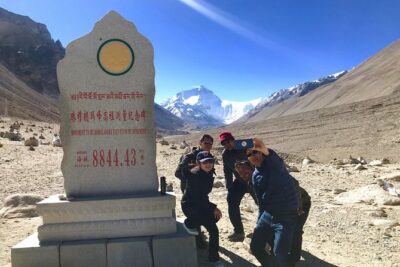
7 Days Lhasa to Kathmandu Overland Small Group Tibet Tour via EBC
Read our review →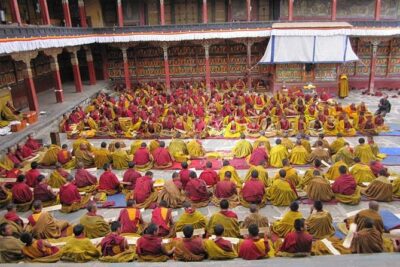
10 Days Tibet Everest Base Camp and Namtso Small Group Tour
Read our review →
Where else this tour turns up