
Reviewed · LHASA TOURS
10 Days Tibet Everest Base Camp and Namtso Small Group Tour
Everest is only part of the story. This 10-day small-group journey pairs the big mountain with Lhasa’s sacred temples, old villages, high passes, glacier views, and Namtso Lake. I like that the practical work is handled for you, including Tibet permits, airport or train pickup, hotels, transport, entrance fees, and an English-speaking Tibetan guide.
I also like the small maximum of 12 people, since a minibus group is easier to manage than a large coach. Guides such as Lobsang, Tseyang, Ga Rong, Tenzin, and Bai have earned especially warm praise for their care and cultural explanations. The main caution is altitude: this is not a gentle sightseeing holiday, and long drives, basic Everest-area lodging, and changing conditions can test your patience.
The advertised price is $1,329 per person, based on two people sharing a room. That is strong value for a tightly organized Tibet trip, but you still pay for your international or domestic journey to Lhasa, most lunches and dinners, tips, and possibly a single-room supplement.
In This Review
- Key points before you book
- What the $1,329 price really covers
- Arrival in Lhasa and the first taste of Tibet
- Potala Palace, Jokhang Temple, and Barkhor Street
- Dadong Village and Sera’s famous monk debates
- Yamdrok Lake, high passes, and the road to Gyantse
- The long push toward Everest Base Camp
- Sunrise at Rongbuk and the Everest Base Camp experience
- Tashilhunpo Monastery and the return to Lhasa
- Namtso Lake and the Zhaxi Peninsula
- The northern shore and Stone Elephant Gate
- Group size, guide quality, and comfort
- Who should book this Tibet tour?
- Should you book it?
- FAQ
- How long is the Tibet Everest Base Camp and Namtso tour?
- What is included in the $1,329 price?
- Are meals included?
- Is the tour suitable for people with limited fitness?
- How many people are in the group?
- What type of accommodation is provided?
- How far in advance do I need to arrange the Tibet permit?
Key points before you book
- Everest Base Camp is reached by road: Expect an extended driving day through passes above 4,600 meters before reaching the Everest area.
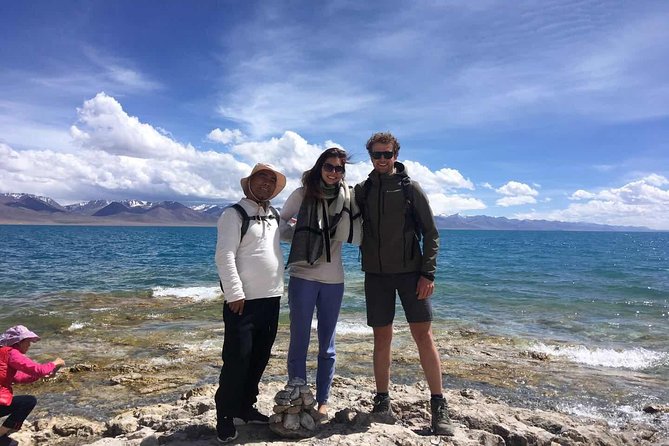
- Namtso reaches extreme altitude: The lake sits at about 4,718 meters, so the final two days are scenic but physically demanding.
- Lhasa gives the tour its cultural core: Potala Palace, Jokhang Temple, Barkhor Street, Drepung, Sera, and Dadong Village balance the mountain scenery.
- A small group keeps the pace manageable: The minibus carries no more than 12 people, with an experienced local driver.
- The permit process needs advance planning: Passport and China visa copies are required at least 20 days before departure.
- Everest lodging is basic: The Rongbuk stay uses a dorm bed, an important trade-off for sleeping close to the mountain.
What the $1,329 price really covers
At first glance, $1,329 is an attractive price for 10 days in Tibet. The value comes from the number of costly and complicated pieces bundled together: Tibet Travel Permit and other required permits, airport or train pickup and drop-off in Lhasa, private group transport, an English-speaking guide, hotels with breakfast, listed attraction tickets, the Everest Base Camp shuttle, bottled drinking water, oxygen in the vehicle, and liability insurance.
You also receive a welcome dinner in a local restaurant when the group meets in Lhasa. Breakfast is included for all nine mornings. That saves time and keeps the daily routine simple, though you should budget separately for lunch and dinner.
The price is based on shared twin rooms. A single room costs extra and depends on availability. Your train or flight to Lhasa is not included, and tips for the guide and driver are also separate.
There is one detail I would clarify before paying. Several individual stop descriptions mark admission as not included, while the overall package information says entrance fees for all listed sights are included. Ask the operator to confirm exactly what is covered, especially at Potala Palace, Jokhang Temple, Yamdrok Lake, the glacier, and the Everest area.
The booking pattern suggests that people reserve this trip well ahead, with an average booking time of about 112 days. That makes sense because permits and transport need planning. The minimum stated lead time is 20 days, but I would not leave it that late if your dates are fixed.
A few more to weigh up in China
- Tibet Tour 8 Days Lhasa to Everest Base Camp Small Group Tour
★ 5.0 · 578 reviews - 7 Days Lhasa to Kathmandu Overland Small Group Tibet Tour via EBC
★ 5.0 · 188 reviews - 4 Days Lhasa Impression Small Group Tour
★ 4.5 · 67 reviews
Arrival in Lhasa and the first taste of Tibet
Your Tibetan guide meets you at the airport or train station and takes you into central Lhasa. The transfer is not just a shuttle ride. You get views of the Yarlung Tsangpo River and the road toward the capital, with time to settle into the altitude before the sightseeing begins.
The first day is intentionally light. That is welcome because Lhasa sits high, and rushing straight into temples would be a poor way to begin. Use the arrival day for a slow meal, water, and rest.
The tour supplies oxygen in the vehicle, in either a 4-liter or 7-liter cylinder. That is useful backup, but it does not replace taking the altitude seriously. You need moderate physical fitness, and the tour includes stairs, walking, high passes, and long periods in the minibus.
Potala Palace, Jokhang Temple, and Barkhor Street
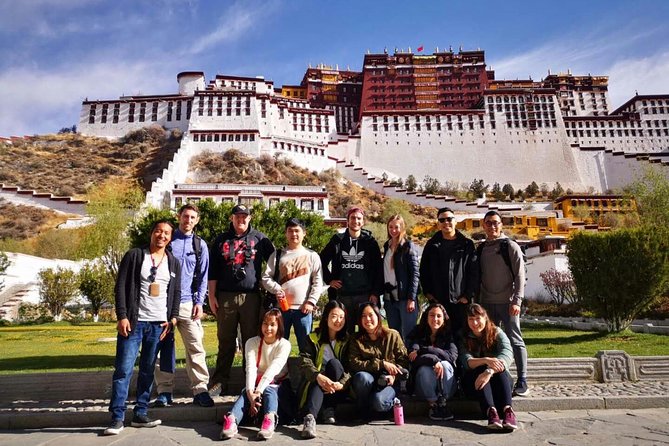
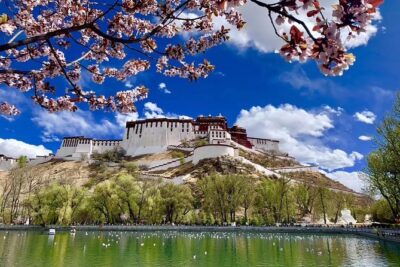
Day two brings the grandest sights in Lhasa. Potala Palace, the former winter palace of the Dalai Lama, has roots reaching back to the seventh century and the reign of Tibet’s 33rd great king. The visit is scheduled for about 90 minutes.
The palace is the kind of place where the approach matters as much as the rooms. Allow yourself time to absorb its position above the city and its vast scale. Inside, your guide can help explain the religious and political importance of the palace and point out its valuable collections.
After lunch, you visit Jokhang Temple for another 90 minutes. The key object is a statue of Buddha Sakyamuni shown at age 12, a focus of devotion for Tibetan Buddhists. This is an active religious site, not simply a museum, so respectful behavior and patience matter.
Barkhor Street surrounds the temple. Here you can walk the kora, the religious circuit made by pilgrims and local worshippers. You can also explore the old market and try Tibetan tea in a local tea house. For me, this is one of the most useful parts of the schedule because it connects the major monument with everyday religious life.
The day includes about four hours of major sightseeing, plus lunch and transfers. It is full but not overloaded. The short walking tour around Barkhor helps you get your bearings in Lhasa without turning the day into a forced march.
Dadong Village and Sera’s famous monk debates
The third day shifts from palace and temple interiors to village life. Dadong Village lies about 25 kilometers southwest of central Lhasa and is presented as a well-protected ancient Tibetan village. The visit lasts about four hours.
This stop matters because it gives you a break from major religious monuments. You can see traditional village surroundings and gain a better sense of how older Tibetan settlements differ from the capital. Since the description provides limited detail about the exact activities, keep your expectations centered on atmosphere, scenery, and the guide’s explanation rather than a long list of formal attractions.
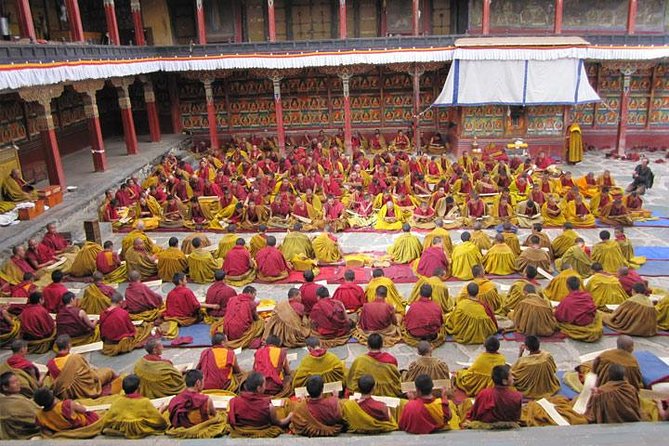
In the afternoon, Sera Monastery fills about two hours. It is one of Tibet’s three major Gelug monasteries, and the scheduled highlight is the monks’ debate, usually held from about 3 to 5 p.m. The energetic debate tradition gives the visit a human edge. You are not just looking at old buildings. You are watching religious training in action.
The timing here is important. If your group arrives outside the debate period, the experience may feel quieter. The schedule aims for the right hours, but monastery activities can change because of closures or other conditions.
A completely different sort of day out:
- From Beijing: Mutianyu Great Wall Tours with Options
★ 4.9 · 9,216 reviews - Beijing: Forbidden City Tour(Group/Private)-Tickets Included
★ 4.8 · 7,974 reviews - Beijing: T-Square & Forbidden City Group or Private Tour
★ 4.8 · 4,446 reviews - Beijing: Mutianyu Great Wall Daily Tour with Ticket & Lunch
★ 5.0 · 3,056 reviews
Yamdrok Lake, high passes, and the road to Gyantse
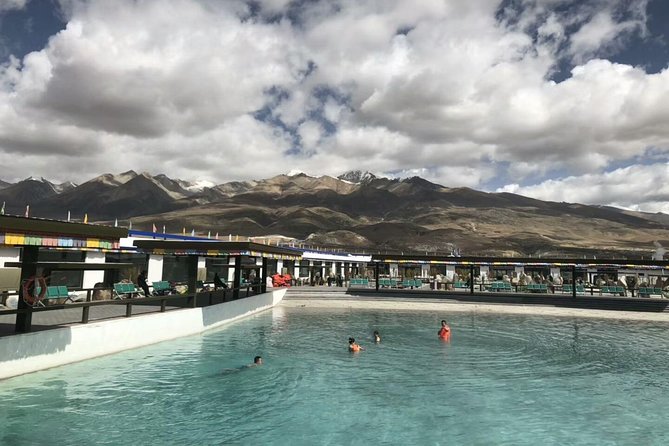
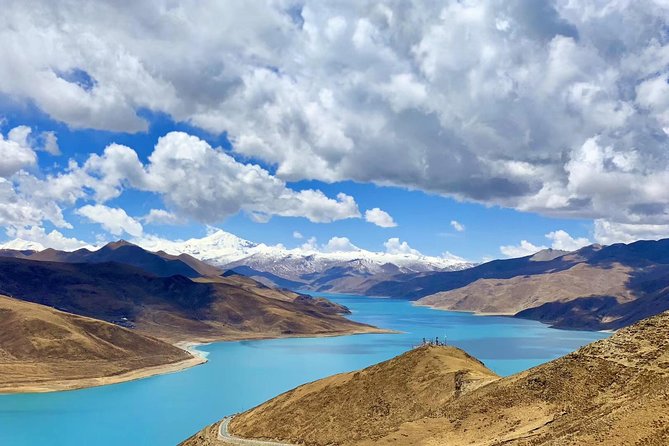
Day four begins the westward road journey. You leave Lhasa for Shigatse and cross Gampala Pass at about 4,790 meters. From there, you get a view of Yamdrok Yumtso, also called Yamdrok-tso, at roughly 4,400 meters.
The lake is surrounded by snow-capped mountains, and the stop lasts only about 30 minutes. That may feel brief, but the altitude and the amount of road covered explain the short visit. Keep your camera ready and wear layers. Mountain weather can shift quickly, and you may not want to spend the whole stop outside.
The route continues past Karola Glacier, viewed from the roadside. You also pass Manak Dam Lake and Simila Mountain Pass, where you can hang prayer flags. The day ends in Gyantse, historically Tibet’s third-largest city after Lhasa and Shigatse.
This is one of the tour’s most scenic days, but it is also a road day. You should expect repeated stops, winding routes, and plenty of time in the minibus. If you need lots of free time at each viewpoint, this schedule may feel rushed. If you want to see several major sights without arranging complicated transport, it works well.
The long push toward Everest Base Camp
Day five is the hardest on paper. After obtaining the required Alien’s travel permit, you drive to Lhatse for lunch, then cross Tsola Pass at about 4,600 meters and Gyatsola Pass at about 5,248 meters before entering the Qomolangma National Nature Preserve.
The stated duration is about 12 hours. That is a serious day, especially at altitude. Pack snacks, water, warm clothing, medication you already know you need, and entertainment for the road. The vehicle carries drinking water and oxygen, but the long distance cannot be made magically short.
The reward is entering the Mount Everest region by road, with views of high passes and open mountain country along the way. The tour handles the permits and the transport, which is especially valuable here because independent movement in Tibet is restricted and permit arrangements are essential.
You should also understand that weather can affect the route and visibility. Monasteries may close, roads may change, and activities can be altered or canceled because of force majeure, including bad weather.
Sunrise at Rongbuk and the Everest Base Camp experience
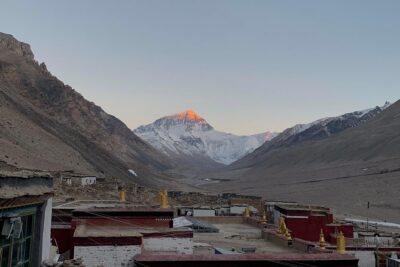
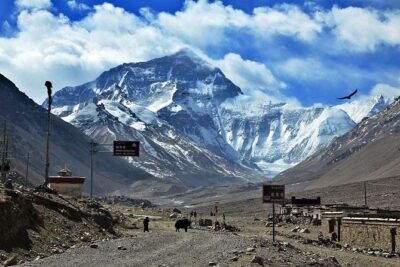
Rongbuk Monastery is the key stop on day six. The plan is to watch sunrise over Mount Everest and see the mountain from Rongbuk, described as a vantage point where Everest appears like a snow-covered pyramid.
This is the emotional center of the trip. The view depends on weather, of course, but the location gives you a strong chance to experience Everest in a setting tied to Tibetan Buddhism rather than from a crowded city viewpoint.
The stay is at Rongbuk Guest House, using a dormitory bed. That is a clear comfort compromise. You are not paying for a polished hotel at the foot of Everest. You are paying for proximity, access, and the chance to wake near the mountain.
The package includes the Everest Base Camp shuttle bus and platform service fee. That matters because the final approach is not simply a matter of walking wherever you want. Listen carefully to your guide and follow local access rules.
The supplied experiences with guides repeatedly praise personal care. Lobsang was singled out for helping a group member up temple steps and sharing local details. Ga Rong was praised for his explanations of Tibetan religion, history, and culture, while Tseyang was described as responsible and good company. That kind of support matters most on a morning when altitude and uneven ground make simple movement harder.
Tashilhunpo Monastery and the return to Lhasa
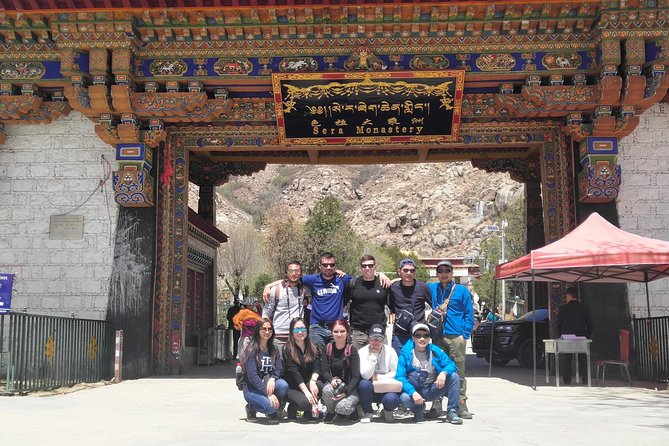
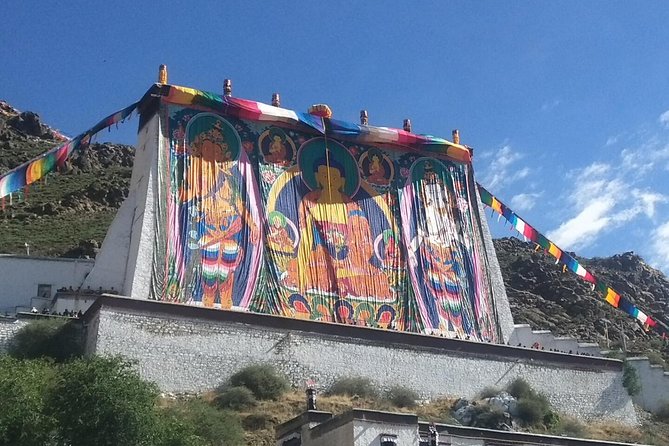
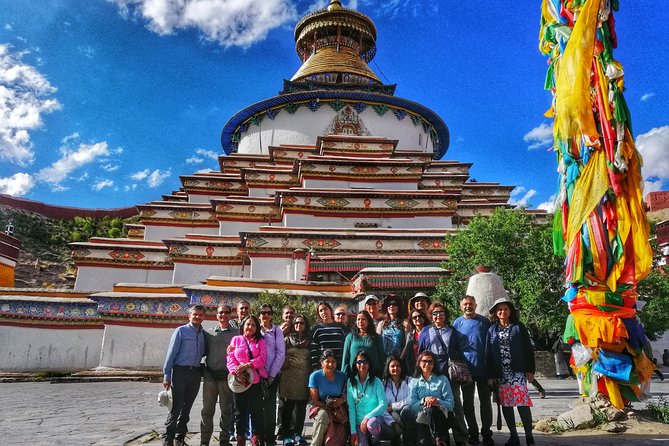
On day seven, you visit Tashilhunpo Monastery, the seat of Tibet’s second-highest incarnation, the Panchen Lama. The scheduled visit takes about two hours.
This stop gives the route more religious context after the Everest excursion. It also breaks up the return to Lhasa, which covers about 280 kilometers, or 175 miles, by road.
The day is still transport-heavy. You should not expect a leisurely city afternoon after the monastery. The payoff is a final major monastic site and a chance to connect the religious traditions seen in Lhasa with those of Shigatse.
Namtso Lake and the Zhaxi Peninsula
Day eight heads north from Lhasa to Namtso, one of Tibet’s four holy lakes and the world’s highest saline lake. Along the way, you see the snow-capped Nyenchen Thanglha mountain range.
The lake is the second great natural feature of the tour after Everest, but it offers a different mood. Everest is a single dramatic summit. Namtso is a vast body of water surrounded by high mountains and religious associations.
At the Zhaxi Peninsula, you spend about two hours. Five holy islets are said to represent the Five Buddhas, and Tashi Island is the largest, with panoramic views across Namtso. The stop gives you time to walk, look, and take photographs rather than simply pull over for a quick roadside picture.
Namtso is also very high, at about 4,718 meters. Do not treat it as an easy lake outing. The combination of altitude, cold, wind, and walking can make this day more demanding than the schedule suggests.
The northern shore and Stone Elephant Gate
Day nine continues at Namtso. After breakfast, you use an off-road vehicle and tourist shuttle bus to reach Stone Elephant Gate on the northern shore. The stop itself is listed as only one minute, which likely means the formal sightseeing time is brief, not that the whole transfer takes one minute.
This part of the route is about reaching a dramatic viewpoint rather than spending hours at a single attraction. The transport arrangement is useful because it avoids requiring the group to handle the rougher approach independently.
The schedule then leads toward the end of the journey. The final day is reserved for departure, with airport or railway drop-off available through the supplier if arranged. The day count in the supplied details is inconsistent: the tour is sold as 10 days, but one departure note refers to a 15-day journey and more than 2,000 kilometers. Confirm the exact dates and route before booking.
Group size, guide quality, and comfort
The group has a maximum of 12 people and travels by comfortable van or minibus with an experienced local driver. That is a sensible format for Tibet, where roads, permits, and long transfers require coordination.
The guide can make or break this experience. The strongest praise centers on friendly, responsible guides who explain Tibetan culture and help people manage difficult steps and high-altitude days. You should ask who will guide your departure if a particular guide matters to you, since names are not guaranteed.
Accommodation is based on twin sharing, with breakfast included. The Rongbuk dorm bed is the exception and is basic by design. Lunches and dinners are your responsibility, except for the welcome dinner.
The tour supplies a Tibet map, drinking water, vehicle oxygen, permits, and liability insurance. Those are small items individually, but together they reduce the number of details you must solve in a destination with strict entry rules.
Who should book this Tibet tour?
I would choose this trip if you want the main highlights of Tibet in one organized route: Lhasa’s sacred center, village life, Gyantse, Shigatse, Everest Base Camp, and Namtso Lake. It suits people who value local guiding and access more than luxury hotels or a relaxed pace.
I would be cautious if you dislike long drives, shared rooms, dormitory lodging, or high-altitude travel. The 12-hour drive toward Everest and the road-heavy return days are not minor inconveniences. They are central parts of the experience.
The cancellation terms are also worth noting. A full refund is available when you cancel at least six full days before the start time. Cancellations two to six days ahead receive 50 percent, while cancellations less than two full days before departure are nonrefundable.
Book at least 20 days ahead so the operator can obtain the Tibet permit. You must provide passport and China visa copies at least 20 days before departure. If you enter Tibet from Kathmandu, do not apply for a China visa in advance without checking the required group visa process through the agency in Kathmandu. If you enter from another Chinese city, the stated instructions say you need a China L visa from the Chinese embassy in your country.
Should you book it?
I would book this tour for the strong value, compact route, and excellent guide potential, provided I was comfortable with altitude and long road days. Seeing Everest and Namtso while also visiting Jokhang Temple, Barkhor Street, Sera, and Tashilhunpo gives you far more than a mountain photo stop.
Before booking, I would confirm three things in writing: the exact 10-day schedule, which entrance fees are included, and the accommodation standard outside Lhasa. If those details suit you, this is a practical way to experience Tibet without having to manage permits, vehicles, and border-region logistics alone.
FAQ
How long is the Tibet Everest Base Camp and Namtso tour?
The experience is sold as a 10-day tour. One departure note refers to a 15-day journey, so you should confirm the exact dates and duration with the operator before booking.
What is included in the $1,329 price?
The package includes required Tibet permits except the China L visa, transportation by van or minibus, an English-speaking Tibetan guide, a welcome dinner, oxygen in the vehicle, liability insurance, drinking water, a Tibet map, Lhasa airport or train pickup and drop-off, accommodation with breakfast, listed entrance fees, the Everest Base Camp shuttle, and platform service fees.
Are meals included?
Nine breakfasts and one welcome dinner are included. Lunches and other dinners are not included.
Is the tour suitable for people with limited fitness?
The tour requires a moderate level of physical fitness. It includes walking, temple steps, high mountain passes, long drives, and visits to places above 4,000 meters.
How many people are in the group?
The maximum group size is 12 people. Transport is provided by a comfortable van or minibus with a local driver.
What type of accommodation is provided?
Hotels are based on twin sharing with breakfast. At Rongbuk, the accommodation is a dormitory bed at Rongbuk Guest House. A single-room supplement is available subject to availability and an additional charge.
How far in advance do I need to arrange the Tibet permit?
You need to book at least 20 days before departure so the operator can obtain the permit. Passport and China visa copies must also be provided at least 20 days before travel.
Just added in China
- Songcheng Park & Lengend of Song Dynasty Show Ticket★ 4.5 · 3 reviews
- Classic Hangzhou One Day Private Tour★ 5.0 · 3 reviews
- Private Wuzhen Water Town Day Tour from Hangzhou★ 5.0 · 2 reviews
- Wuzhen Water Town Self-Guided Tour with Private Transfer from Hangzhou★ 5.0 · 12 reviews
- Wuzhen Classical Water Town day tour★ 5.0 · 4 reviews
- Wuzhen Water Town Delight Tour With Riverside Lunch Experience★ 5.0 · 15 reviews
- Private Transfer to Shanghai Pudong Airport from Hangzhou★ 5.0 · 3 reviews
- Private Amazing Hangzhou Airport Layover Tour with Lunch or Dinner Option★ 5.0 · 2 reviews
Lhasa Tours, compared.
Tibet Tour 8 Days Lhasa to Everest Base Camp Small Group Tour
Read our review →
7 Days Lhasa to Kathmandu Overland Small Group Tibet Tour via EBC
Read our review →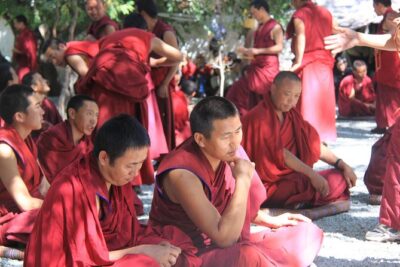
8 Days Lhasa Gyantse Shigatse Mt Everest Group Tour
Read our review →Where else this tour turns up