
Reviewed · GUILIN TOURS
7Day Sanjiang+ZhaoXing+Huangguoshu Waterfall private Tour
Seven days, three worlds, one busy road. This private journey links Guilin’s limestone scenery with the Longji Rice Terraces, Dong and Miao villages, and Huangguoshu Waterfall in Guizhou. I like the mix of famous sights and rural stops, especially Chengyang’s timber bridge and the quieter villages around Huanggang. I also like having a private car and English-speaking driver for a route that would be awkward to piece together alone.
The trade-off is the pace. Several days run for nine to twelve hours, with long drives between mountain communities. The advertised price of $579.50 per person does not include your hotels or meals, so the real cost will be higher. You need to treat this as an ambitious road trip, not a slow village holiday.
In This Review
- Key points to know before booking
- Why this Guilin to Guiyang route is appealing
- Day 1: Longji Rice Terraces and a taste of village life
- Day 2: Chengyang’s covered bridge and Sanjiang’s drum tower
- Day 3: Crossing into Guizhou through Tang’an and Zhaoxing
- Day 4: Huanggang, Bapa and the unusual village of Basha
- Day 5: Rural Guizhou along the road to Kaili
- Day 6: Huangguoshu Waterfall and the big finale
- What the private service adds
- Is $579.50 per person good value?
- Who should book this seven-day journey?
- FAQ
- How long is the tour?
- Is this a private tour?
- What type of transportation is provided?
- Is an English-speaking driver included?
- Are my hotels included?
- Are my meals included?
- Are attraction entrance fees included?
- Are cable cars, elevators, and sightseeing cars included?
- Can I cancel for a full refund?
- Can most people take part?
- Should you book it?
Key points to know before booking
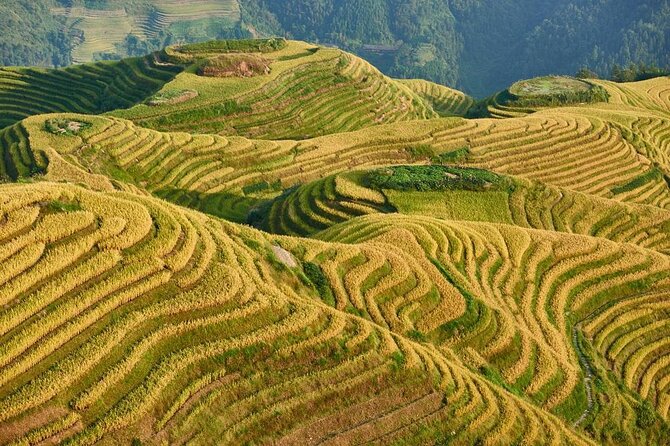
- Longji begins with terraces and a local family meal: You can hike among the layered rice fields after reaching the area from Yangshuo.
- Chengyang brings Dong culture into focus: Its famous Wind and Rain Bridge, village lanes, hill walk, and Sanjiang Drum Tower make this one of the strongest cultural days.
- Zhaoxing and Huanggang offer different village experiences: Zhaoxing is a major Dong village stop, while Huanggang is described as less changed by tourism.
- Basha is an unusual Miao village: It is noted for its wooden homes, river setting, and special permission for residents to have guns.
- The route crosses from Guangxi into Guizhou: You move through several ethnic areas rather than seeing only Guilin’s best-known sights.
- Huangguoshu is the grand finale: China’s largest waterfall is 77.8 meters high and 101 meters wide, with a powerful horseshoe-shaped drop.
Why this Guilin to Guiyang route is appealing
Many tours around Guilin stay close to Yangshuo, the Li River, and the familiar karst peaks. This one goes much farther. It carries you north toward Longji and Sanjiang, then west into Guizhou, where Dong and Miao communities shape the trip.
That change of scenery gives the journey its purpose. You are not simply collecting viewpoints. You are moving from rice terraces to covered wooden bridges, drum towers, village markets, and one of China’s biggest natural attractions.
The route is best for you if you want variety and do not mind road time. A private vehicle matters here because the villages are spread across mountain districts, and the schedule includes stops that are difficult to combine with ordinary public transport.
The vehicle may be a private car or MPV van. Fuel, tolls, parking, and the driver’s accommodation and meals are included. Your own accommodation and food are not included, and fees for sightseeing cars, elevators, cable cars, service charges, and taxes are also outside the stated price.
A few more to weigh up in Guilin
- 1 Day Li River Cruise from Guilin to Yangshuo with Private Guide & Driver
★ 5.0 · 148 reviews - Longji Rice Terraces with Minority Village Private Day Tour
★ 5.0 · 122 reviews - Guilin: Classic Private Full–Day Tour
★ 4.9 · 113 reviews
Day 1: Longji Rice Terraces and a taste of village life
The first day starts with a transfer from Yangshuo to the Dragon’s Backbone, or Longji, Rice Terraces. The drive takes about three and a half hours, so you should expect a full day once travel, lunch, hotel check-in, and walking are counted.
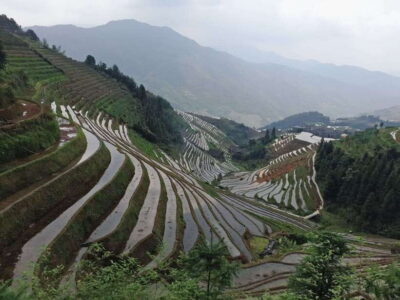
The terraces are the star here. Rice fields climb the hills in broad, repeated bands, creating the kind of view that changes with the season and weather. The appeal is not just the scenery. These slopes show how farming communities made productive ground from steep terrain.
After arrival, you check in and have lunch. The plan gives you the chance to eat a local meal in a family home, which can be more personal than a standard restaurant stop. Because the exact meal is not specified, keep your expectations simple and see it as a chance to sample local cooking rather than a formal food tour.
The afternoon is set aside for hiking above and through the terraces. You will want practical shoes, water, and patience for uneven paths. The description does not give a precise hiking distance or difficulty rating, so ask your guide how much walking is planned before setting out.
A possible weakness is the length of the approach. Three and a half hours from Yangshuo is a serious transfer, especially before a hill walk. Still, for anyone who wants more than Guilin’s central sights, Longji gives the trip a strong opening.
Day 2: Chengyang’s covered bridge and Sanjiang’s drum tower
The second day moves from Longji toward Chengyang. The village is known for its Wind and Rain Bridge, one of Guangxi’s best-known Dong structures. These bridges were built as sheltered meeting places, giving people a place to cross streams and pause out of the rain.
The bridge is more than a quick photo stop. It introduces the building style and public spaces associated with Dong communities. Take time to look at the timber work and the way the bridge relates to the village around it.
The afternoon is for exploring Chengyang’s Dong villages. You can also hike up Chengyang Hill if you want a higher view and more exercise. That optional wording is useful because the day is already long, and not everyone will want another climb after the morning’s sightseeing.
Later, you transfer back to Sanjiang and visit the Sanjiang Drum Tower in the early evening. Drum towers are important community buildings in Dong areas, and the stop gives the day a clear cultural finish.
I would rank this among the most rewarding parts of the route. It combines a recognizable landmark with time in village communities, rather than reducing the area to a single bridge photograph. The drawback is again the clock: the planned day lasts about twelve hours.
Day 3: Crossing into Guizhou through Tang’an and Zhaoxing
From Sanjiang, the route crosses into Guizhou Province. The first important stop is Tang’an Dong Village, a small settlement in the hills. Its position makes it a good place to see how Dong villages fit into the surrounding terrain.
From Tang’an, you may choose to hike down toward Jitang Village or continue by vehicle toward Zhaoxing Dong Ethnic Minority Village. This choice is one of the better features of a private tour. You can match the day to your energy level instead of following a fixed group pace.
The information does not state the length or grade of the Tang’an to Jitang walk, so ask for those details on the morning of the visit. If you choose the hike, wear proper walking shoes and allow for the fact that a village path may not feel like a paved sightseeing route.
Zhaoxing is the main destination for the night. It is a well-known Dong village and gives you more time around wooden homes and local community spaces. The schedule says you will have time to enjoy the village, but it does not list a specific evening activity, so your exact free time will depend on driving and the day’s stops.
This is where the tour’s private format becomes especially useful. The route includes a choice between walking and riding, and you can ask the English-speaking driver to explain the day as conditions change.
A completely different sort of day out:
- Longji Rice Terraces: Full-Day Private Tour from Guilin
★ 4.8 · 85 reviews - From Guilin: 4 Star Luxury Li River Cruise with Buffet Lunch
★ 4.3 · 80 reviews - 1-Day Guilin Tour to Reed Flute Cave, Xianggong Hill, Bamboo Boat and Night Show
★ 5.0 · 71 reviews - 1-DAY Private Longji Rice Terraces and Minority Villages Tour
★ 5.0 · 69 reviews
Day 4: Huanggang, Bapa and the unusual village of Basha
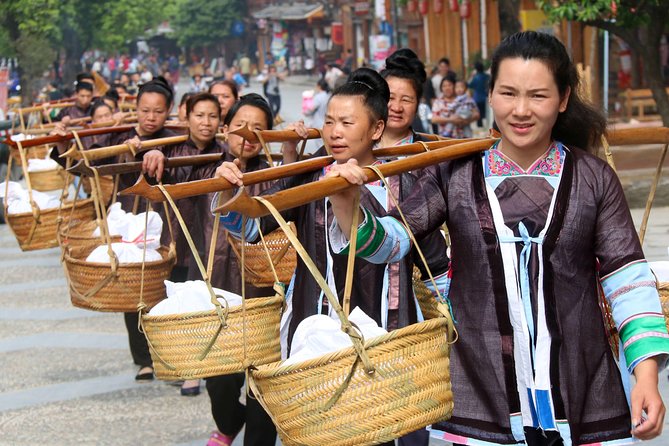
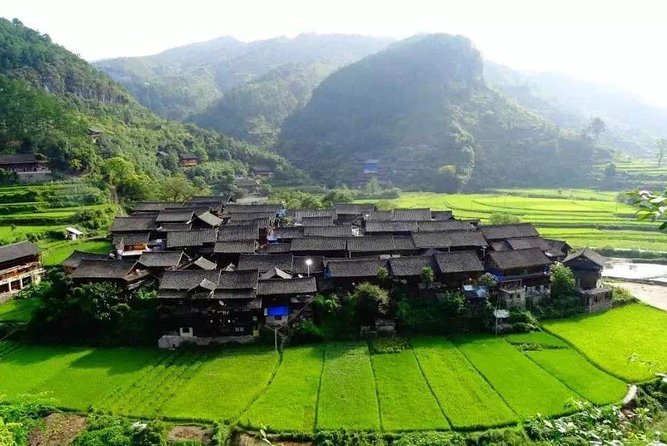
The fourth day continues the cultural focus. You begin with more time in Zhaoxing, then head to Huanggang Dong Village and Bapa Village. Huanggang is described as one of the less altered villages in Guizhou, offering a closer look at ordinary local life away from larger towns.
That does not mean you should expect a museum frozen in time. It means the visit is framed around homes, scenery, and daily routines rather than a major commercial attraction. Be respectful around residents, and remember that a village is a living community, not a backdrop built for photographs.
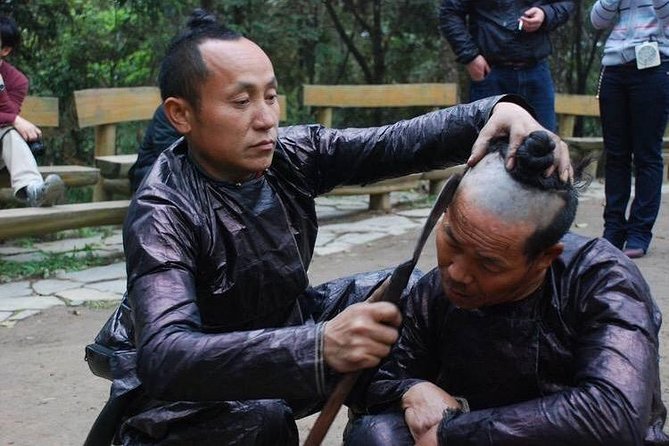
The route then reaches Basha, a Miao village with an unusual distinction. It is described as the largest village in China permitted to have guns. The detail is striking, but it should not become the whole point of the stop. The wooden houses, nearby river, and traditional Miao culture are the broader reasons to visit.
This is a nine-hour day, shorter than some others but still full. The sequence includes several villages, so you should expect time in the vehicle as well as walking and looking around. The itinerary does not specify performances, demonstrations, or meals, so do not assume these are part of the experience.
For me, the value of this day lies in its contrast. Zhaoxing is a major Dong village destination, while Huanggang is presented as quieter and less changed. Basha then adds a distinct Miao identity. You see different communities rather than one repeated version of rural Guizhou.
Day 5: Rural Guizhou along the road to Kaili
The next morning, you travel from Rongjiang toward Kaili on the S308 road. This is not described as a single headline attraction. Its appeal comes from the string of Miao villages, markets, small towns, and glimpses of rural daily life along the way.
The private vehicle lets you stop at different places on the road. You may find a market, village, or festival worth a pause, though festivals depend on the date. That uncertainty is part of the day’s character. It is flexible, but it is not a guaranteed cultural show.
Kaili is the overnight base, with the evening free. After several long sightseeing days, this open time matters. You can rest, walk around on your own, or simply have an unhurried meal, though your accommodation and meals must be arranged separately.
The weakness is that this day depends heavily on what is happening along the road. If you prefer a tightly defined list of monuments, it may feel less structured than the waterfall or rice terraces. If you enjoy rural observation and flexible stops, it can be one of the more genuine sections.
Day 6: Huangguoshu Waterfall and the big finale
Huangguoshu Waterfall is the trip’s most famous natural sight. Located near Anshun in Guizhou, it drops 77.8 meters and spreads 101 meters across a cliff in a broad horseshoe shape.
The scale is easy to understand from those figures, but the sound is part of the experience too. The water hits with a heavy roar, and the waterfall is presented as a major national attraction rather than a small scenic stop.
Admission to the listed scenic spots is included, but sightseeing vehicles, elevators, cable cars, and similar services are not. Since the tour information does not say which of those options you will need or whether they are compulsory at a given area, ask your driver for the current arrangement and cost.
The day is planned for about twelve hours. That likely includes the long transfer from Kaili and time at the waterfall area, so keep your schedule clear. You should also expect crowds at a major attraction of this size, although the supplied information does not give crowd levels for your travel date.
Huangguoshu works well as the final major stop because it changes the scale of the journey. After quiet villages and small roads, you finish at a waterfall that is broad, loud, and instantly memorable.
What the private service adds
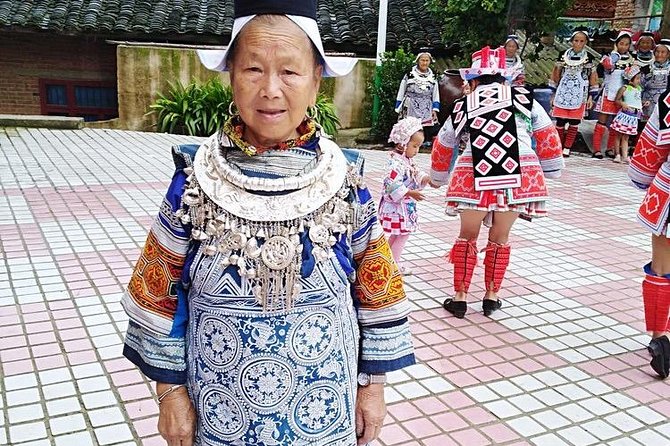
This is a private activity, meaning only your own group takes part. That gives you more control than a large coach tour, especially on the Tang’an walking choice and the roadside stops between Rongjiang and Kaili.
The driver provides English-speaking service. One guide named Charles received especially warm praise for his service, his enthusiasm when explaining Chinese history, and his connection to Guilin, his hometown. The comments also credit him with doing his best to provide high-quality service, so requesting Charles may be worth asking about, but his availability is not guaranteed by the information provided.
A private car also helps with a route that has several separate provinces and rural districts. You avoid arranging each transfer yourself, while the driver handles fuel, tolls, and parking. You still need to communicate clearly about walking, rest breaks, meal preferences, and optional scenic-area transport.
Do not confuse private transport with an all-inclusive package. The stated rate covers the vehicle and driver-related costs, but not your hotels, meals, air tickets, personal spending, taxes, service charges, or cable cars and similar add-ons.
Is $579.50 per person good value?
At $579.50 per person, the price can be attractive for a private seven-day route, particularly if you are splitting the vehicle cost with other people. Entrance to the listed scenic spots is included, and the route covers several regions rather than one city.
The value depends on group size and your accommodation choices. Since hotels and your meals are extra, calculate the full trip cost before booking. A previous private arrangement associated with this route was priced at about $1,000 and included accommodation and food, so you should confirm exactly which package and inclusions apply to your booking.
Group discounts are available, but no discount amount is stated. Ask for the price based on your exact party size. A private tour may make more financial sense for a small group than for one person traveling alone.
The tour is booked, on average, about 250 days in advance. That points to strong advance demand, but it does not guarantee that every departure date will suit you. Confirmation is provided when you book, and the free-cancellation rule allows a full refund if you cancel at least 24 hours before the start time.
Who should book this seven-day journey?
I would choose this tour if you want a broad introduction to southwest China and prefer a private vehicle to a complicated chain of trains and local transfers. It suits people who enjoy scenery, village visits, ethnic cultures, and long days on the road.
It is less suitable if you want slow mornings, luxury hotels, or a detailed food program included in the price. The schedule is active, and several days last nine to twelve hours.
You should also be comfortable with uncertainty around some village stops. Tang’an offers a walking or driving choice, roadside markets and festivals depend on timing, and the exact arrangements for scenic-area vehicles are not listed.
FAQ
How long is the tour?
The experience lasts approximately seven days.
Is this a private tour?
Yes. Only your group participates in the activity.
What type of transportation is provided?
Transportation is provided in a private car or MPV van. Fuel, tolls, and parking fees are included.
Is an English-speaking driver included?
Yes. The tour includes English-speaking driver service.
Are my hotels included?
No. Your accommodation is not included in the stated price. The driver’s accommodation is included.
Are my meals included?
No. Your meals are not included. The driver’s meals are included.
Are attraction entrance fees included?
Entrance to the scenic spots listed in the itinerary is included.
Are cable cars, elevators, and sightseeing cars included?
No. Scenic-area sightseeing cars, elevators, cable cars, and similar fees are not included.
Can I cancel for a full refund?
Yes, if you cancel at least 24 hours before the experience start time. Cancellations made less than 24 hours in advance are not refunded.
Can most people take part?
Yes. The tour information says most people can participate, and service animals are allowed.
Should you book it?
Book it if you want variety over ease: terraces, Dong bridges, drum towers, Miao villages, rural roads, and a major waterfall all in one private route. The strongest parts are the cultural stops around Chengyang, Zhaoxing, and Huanggang, plus the freedom to choose walking or driving at Tang’an.
Before paying, confirm the exact accommodation and meal arrangements, the final route from Guilin toward Guiyang, the availability of Charles if you want him, and the likely cost of scenic-area transport. If you accept long days and extra expenses, this is a useful way to reach parts of Guangxi and Guizhou that are hard to connect on your own.
Just added in Guilin
- Xianggong Hill Cormorant fishing show Fuli ancient bridge DayTour★ 4.5 · 7 reviews
- Fully-Guided Private Day Tour of Longji Terraces From Guilin★ 5.0 · 3 reviews
- Full/Half-Day Yangshuo Xianggong Mountain Sunrise Private Tour★ 5.0 · 10 reviews
- 4 Days Guilin Essence and Yangshuo Countryside Tour★ 5.0 · 18 reviews
- Private Arrival Transfer: Guilin International Airport (KWL) to Downtown Hotel★ 5.0 · 3 reviews
- Short Li-River cruise and Longji Rice Terraces Private Day Tour★ 5.0 · 4 reviews
- Private Guilin Half Day Tour: Fubo Mountain, Reed Flute Cave and Elephant Hill★ 4.0 · 7 reviews
- 3-Day Private Guilin Tour with Li River Cruise and Yangshuo★ 5.0 · 35 reviews
Guilin Tours, compared.
1 Day Li River Cruise from Guilin to Yangshuo with Private Guide & Driver
Read our review →
Longji Rice Terraces with Minority Village Private Day Tour
Read our review →
Longji Rice Terraces: Full-Day Private Tour from Guilin
Read our review →
1-Day Guilin Tour to Reed Flute Cave, Xianggong Hill, Bamboo Boat and Night Show
Read our review →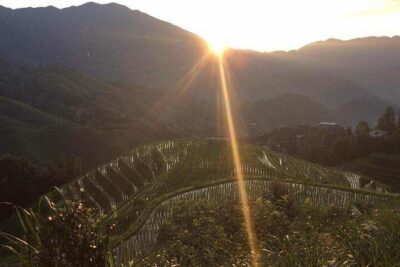
1-DAY Private Longji Rice Terraces and Minority Villages Tour
Read our review →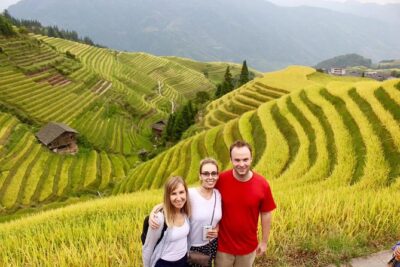
Longji rice terraces & minority villages private day tour
Read our review →Where else this tour turns up