
Reviewed · 7-DAY EXPERIENCES
7-Day TaiChi & Qigong Wellness Retreat in China
Slow movement, serious learning, southern China. This seven-day retreat at FangYuan TaiChi Centre combines 20 hours of guided Tai Chi, Qigong, and meditation with cultural workshops and seven nights of lodging. I like the direct teaching in English by high-level masters, and I like that beginners can arrive without prior training. The main caution is that private transportation is not included, and the advertised $100 price is unusually low for a week with accommodation and three meals a day, so confirm exactly what is covered before paying.
This is not a sightseeing trip with a little exercise added. Your week is built around practice, breathing, stretching, and discussion, with free time to rest and explore during the weekend. The small group limit of 10 should make it easier to ask questions, although the schedule may feel demanding if you prefer a purely restful retreat.
In This Review
- Key details before you book
- What the seven-day retreat is really about
- Arriving at Jieyang Chaoshan Airport
- Your first lessons: history, stretching, and breath
- Learning Eight Brocade Qigong
- Ten easy Tai Chi forms for beginners
- How the week is paced
- Chinese meals and seven nights of accommodation
- Cultural workshops and life at the center
- What makes Master Ping’s teaching important
- Who will get the most from this retreat?
- Practical points that affect the decision
- Should you book the FangYuan TaiChi Centre retreat?
- FAQ
- Is this Tai Chi and Qigong retreat suitable for beginners?
- How long does the retreat last?
- How many hours of training are included?
- What will I learn during the week?
- Is instruction available in English?
- Are meals included?
- Is airport pickup included?
- How large is the group?
- Can I cancel for a full refund?
Key details before you book
- Twenty hours of personal training: Instruction is adjusted to your goals, with time for practice and discussion.
- Beginners are welcome: You need no previous Tai Chi or Qigong experience.
- Three meals each day: Breakfast, lunch, and dinner are included, with Chinese food plus some familiar comforts.
- Seven nights at the center: Your accommodation is part of the retreat rather than a separate hotel arrangement.
- English-language instruction: Master Ping and other high-level teachers help make the tradition accessible to international students.
- Airport pickup is offered: The stated meeting point is Jieyang Chaoshan Airport, but private transportation is not included, so confirm the pickup details.
What the seven-day retreat is really about
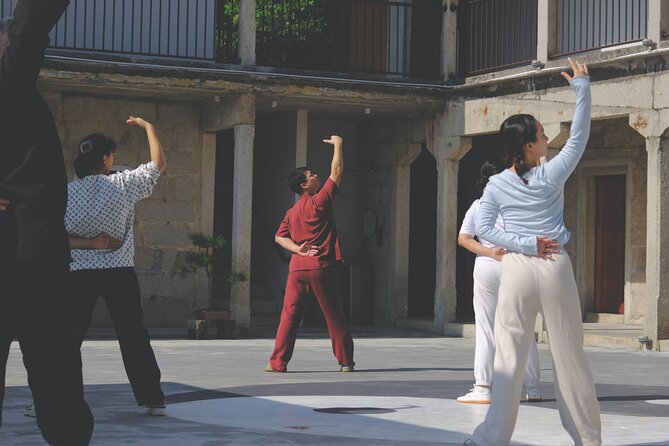
Tai Chi and Qigong are often presented as gentle exercise, and they can look simple from across a courtyard. The work is subtler than that. You coordinate posture, breathing, balance, attention, and controlled movement, with one position flowing into the next without a pause.
At FangYuan TaiChi Centre, the week is meant to give you more than a short class. You have time to repeat movements, ask about the principles behind them, and discuss how practice relates to daily life. That extra time matters. A single introductory lesson can show you the shape of Tai Chi, but several days let you notice where your balance, breathing, or concentration needs work.
The retreat also includes meditation, body stretching, and Qigong. The aim is not speed or athletic display. You work with steady movements and awareness, which makes the programme approachable for a wide range of fitness levels. Still, approachable does not mean effortless. You should be ready to stand, move, stretch, and concentrate for repeated sessions during the week.
Other trips worth a look in China:
- From Beijing: Mutianyu Great Wall Tours with Options
★ 4.9 · 9,216 reviews - Beijing: Forbidden City Tour(Group/Private)-Tickets Included
★ 4.8 · 7,974 reviews - Beijing: T-Square & Forbidden City Group or Private Tour
★ 4.8 · 4,446 reviews
Arriving at Jieyang Chaoshan Airport
The stated starting point is Jieyang Chaoshan Airport in Rongcheng District, Jieyang. Pickup is offered, which can remove one of the more awkward parts of arriving in a new part of China. Since private transportation is listed as not included, you should ask the center how the pickup works, whether it is scheduled in advance, and if any transfer cost applies.
The operating hours provided are 8:00 a.m. to 8:00 p.m., Monday through Sunday, for dates from January 3, 2025, through April 1, 2027. That gives you a useful arrival window, but it does not tell you the exact daily pickup schedule. Send your flight details early and keep the center’s contact information handy.
The airport meeting point also gives the retreat a clear beginning. You are not left to find an unfamiliar training school on your own. That practical welcome is important here because the value of the week depends partly on settling in quickly and having enough energy for the first lesson.
Your first lessons: history, stretching, and breath
The teaching begins with an introduction to the history of Qigong and Tai Chi. This is useful because the movements are easier to understand when you know they belong to long traditions of exercise, healing practice, mindfulness, and martial training.
The programme introduces Qigong as a tradition with roots described at the center as about 3,000 years old, while Tai Chi is presented as a roughly 400-year-old tradition. You are not simply copying shapes. You are given a sense of why the movements are practiced and how posture and breathing fit together.
Body stretching techniques form another early building block. This is a sensible choice for beginners. Stretching helps you pay attention to how your body feels before you attempt longer sequences. It also gives you a way to approach practice without worrying about getting every movement perfect on the first day.
The English teaching is a major advantage. Master Ping is repeatedly praised for both his instruction and his personal attention, and the center’s hosts speak English. That does not mean every cultural detail will be translated into a long lecture, but you should have a practical way to ask about form, breathing, and the ideas behind the exercises.
Learning Eight Brocade Qigong
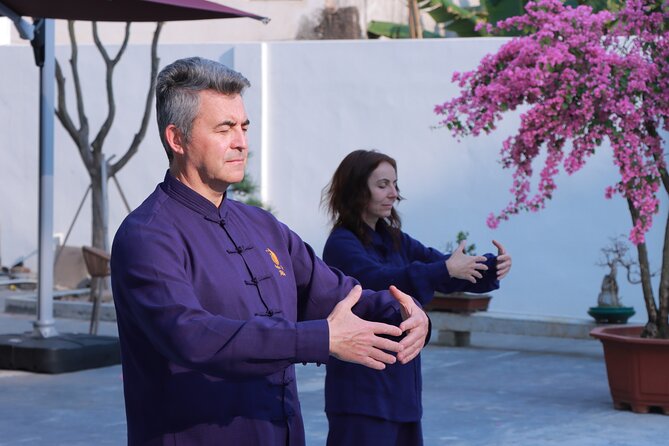
One of the specific parts of the programme is Eight Brocade Qigong, also called Baduanjin. It is a set of eight exercises, and its clear structure makes it a good introduction to Qigong.
You learn to link movement with breathing and attention rather than treating exercise as a race. The sequence gives you something concrete to practice after returning home. That is a real strength of this retreat. A useful wellness course should leave you with a routine you can remember, not just a pleasant week that disappears once you fly home.
The centre also presents Qigong as a health-oriented practice. You may find the gentle pace appealing if you want to work on mobility, concentration, or relaxation. However, you should not treat the programme as medical care. One person describes using Qigong and Tai Chi as part of pain management after spinal surgeries, but that is an individual experience, not a promise of treatment. If you have a medical condition, ask your doctor before booking.
A completely different sort of day out:
- Beijing: Mutianyu Great Wall Daily Tour with Ticket & Lunch
★ 5.0 · 3,056 reviews - All-Inclusive Tour: Tiananmen Square, Forbidden City, Great Wall
★ 5.0 · 2,873 reviews - MuBus: Mutianyu Great Wall ENG/ESP/RUS Guided Bus Tour
★ 5.0 · 2,361 reviews - 4-Hour Small Group Tour to Forbidden City with Entry Tickets
★ 5.0 · 1,863 reviews
Ten easy Tai Chi forms for beginners
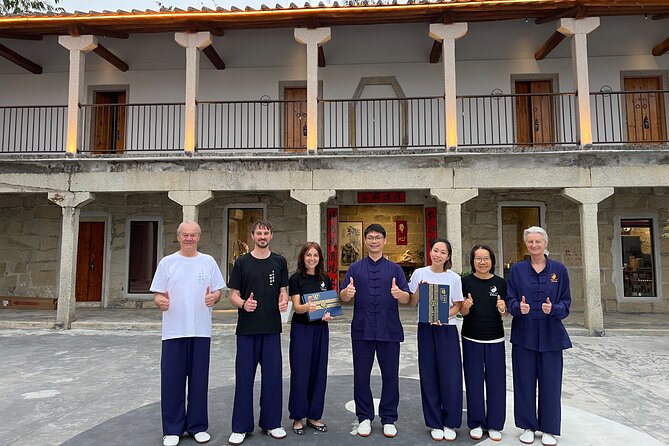
The course includes 10 easy Tai Chi forms. That wording is encouraging for first-time students, but you will still need patience. Tai Chi asks you to remember sequences while keeping your movements relaxed and controlled. The challenge is often concentration rather than strength.
The advantage of learning several simple forms is variety. You can begin to understand how a posture changes into the next one and how the body stays in continuous motion. The forms also give the masters more material to adjust to your goals during the 20 hours of training.
The course is designed for beginners, with no previous experience required. It may also suit someone who already practices and wants a focused week with an experienced teacher. An experienced student should check the level of instruction before booking, since the advertised programme is built around accessible forms rather than advanced specialist training.
The small group size matters here. The maximum is 10 people, although one account describes a group of about 11. Group numbers can change, so ask for the expected size when you reserve. In either case, this is likely to feel more personal than a large commercial class, with better chances to receive corrections and ask questions.
How the week is paced
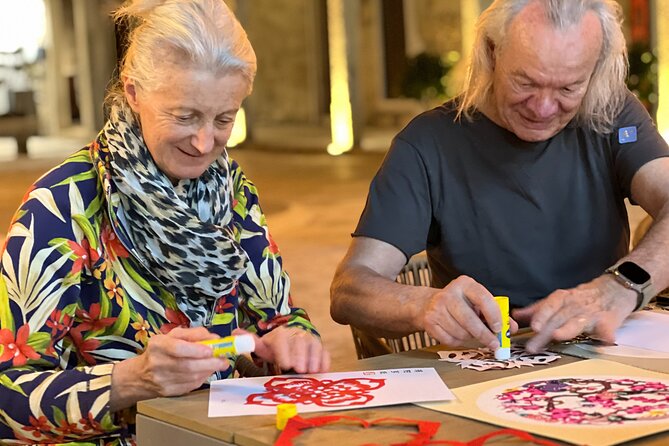
The centre describes the retreat as a focused week of training and mindfulness, with free time during the weekend. The exact daily timetable is not provided, so you should not assume that every morning and afternoon follows a fixed schedule.
A likely rhythm is a mixture of movement practice, meditation, stretching, and time for discussion. The value of the format is the space between lessons. You can think about what you practiced, rest your body, and speak with other students or the masters about Tai Chi and life.
The weekend break is especially helpful. Seven nights can feel long if every hour is scheduled, but a pause gives you time to regenerate and see nearby attractions, local culture, and nature. Since no specific excursions are promised, treat this as free time rather than a guided sightseeing programme.
I like this balance. You get enough repetition to make progress, but you are not locked into a week of nonstop classes. The possible drawback is that anyone expecting a detailed sightseeing itinerary may find the free days too open-ended. This experience is centered on practice, not on checking off attractions.
Chinese meals and seven nights of accommodation
Breakfast, lunch, and dinner are included, which simplifies the week and adds considerable value. The food is Chinese cuisine with a mix of home comforts, so you can expect the meals to support the cultural side of the retreat without assuming that every dish will feel familiar.
Food is more than a convenience on a residential retreat. Shared meals give you time to meet the other students and keep the day connected to local life. At the same time, dietary details are not provided. If you have allergies, follow a special diet, or need vegetarian or other options, ask the center before booking rather than relying on the phrase home comforts.
Seven nights of accommodation are included. The material describes the lodging as comfortable, and several accounts praise the combination of rooms, food, teaching, and welcome. Exact room types, bathroom arrangements, and Wi-Fi details are not stated, so request those specifics if they affect your decision.
You should also remember that the low advertised price may not tell the whole story. At $100, a seven-day package with lodging, 20 hours of instruction, three daily meals, taxes, and a certificate appears to offer exceptional value. Prices can vary by date or booking conditions, so verify the current total, what pickup involves, and whether any extras are payable locally.
Cultural workshops and life at the center
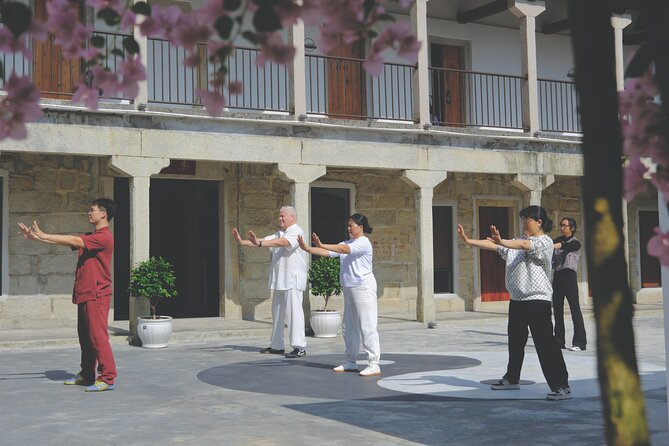
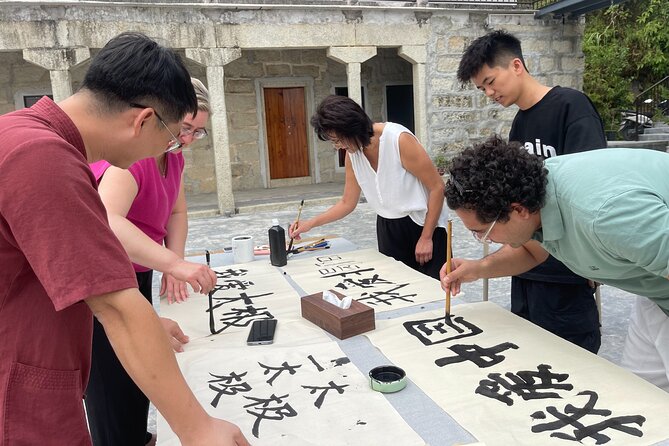
The cultural workshops give the week a wider purpose. Tai Chi is not taught as a generic fitness class separated from China. You have time to discuss its background, practice with teachers connected to the tradition, and share meals in the same setting.
That does not mean the programme provides a full cultural tour of southern China. The information does not promise visits to monuments, markets, or villages. Instead, the cultural contact comes through the teaching, workshops, food, and time spent with the FangYuan family and staff.
This personal side receives some of the strongest praise. Master Ping and his extended family are described as welcoming from pickup through departure. The atmosphere is presented as warm, patient, and unpretentious. If you prefer a polished resort with a formal spa menu, this may not be the right fit. If you want a more personal school setting, that informality is part of the appeal.
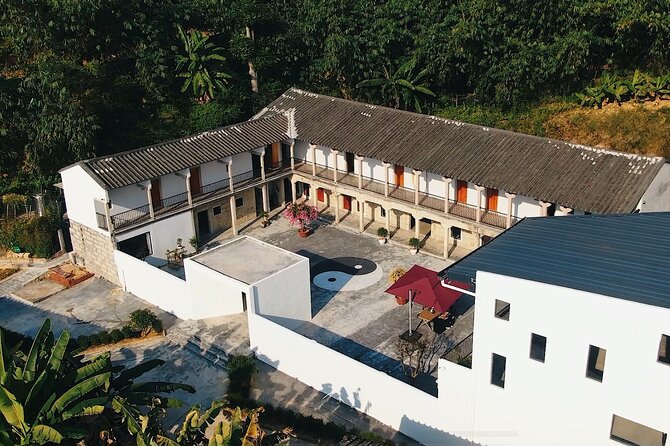
The centre is also described as being in a place with pleasant weather. That is a welcome help for outdoor movement, though the information does not specify the exact season or training location. Check the forecast for your dates and pack light clothing that allows free movement, along with layers for cooler mornings or evenings.
What makes Master Ping’s teaching important
The instructor is not a minor detail here. Master Ping is the central figure in the experience, and the teaching is described as precise, authentic, and patient. One returning student had already practiced and taught Tai Chi before attending, yet still considered training with Master Ping a long-held goal that met expectations.
That is a strong sign for students who care about lineage and technique rather than just a relaxing activity. The teaching appears to connect the physical forms with philosophy and daily conduct. You can ask questions and spend more time on ideas that are often rushed in a one-hour class.
The word authentic should still be understood carefully. It does not mean the course will match every Tai Chi school or family tradition in China. It means the centre presents its teaching as connected to Chinese Tai Chi and Qigong practice, with experienced practitioners leading the sessions. If you have a specific style in mind, ask which lineage and forms are taught.
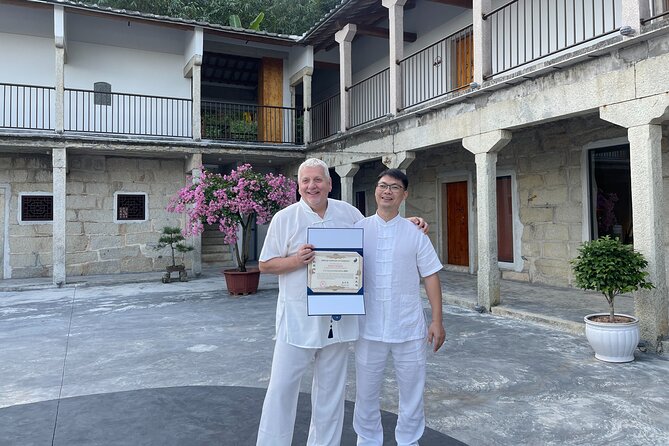
You also receive a certificate of completion. It can mark your participation, but it should not be treated as a professional qualification or teaching credential. The real result is the training and the routine you can carry home.
Who will get the most from this retreat?
I would recommend this experience most strongly to you if you:
- Are new to Tai Chi, Qigong, meditation, or controlled movement
- Want instruction in English
- Prefer a small residential programme over a large fitness retreat
- Like learning the ideas behind a practice, not just copying exercises
- Want Chinese food, cultural contact, and time with local teachers
- Are comfortable with a week focused more on practice than sightseeing
It may also suit an established Tai Chi student looking for concentrated instruction from Master Ping. You should ask about the level and forms first, since the official programme is aimed at beginners.
You may want to choose something else if you need a highly detailed daily itinerary, private transport included in the price, luxury accommodation, or a medical rehabilitation programme. The retreat can support personal wellbeing, but it does not replace a doctor, physiotherapist, or clinical treatment.
Practical points that affect the decision
Confirmation is provided at booking, and free cancellation is available if you cancel at least 24 hours before the local start time. Changes or cancellations made later are not accepted for a refund.
Most people can participate, but the programme still involves standing, stretching, and repeated movement. The supplied information does not give an accessibility statement or medical screening process. If mobility, balance, or health concerns affect your participation, contact the provider before reserving.
The centre is near public transportation, but private transportation is not included. Pickup is offered at Jieyang Chaoshan Airport, so clarify the arrangement instead of assuming it is included in the $100.
The experience is limited to a maximum of 10 participants. That makes early questions worthwhile, especially if you care about personal correction, room arrangements, or a quieter group.
Should you book the FangYuan TaiChi Centre retreat?
I would book this if your main goal is to learn Tai Chi and Qigong in China with patient English-speaking instruction, meals, lodging, and enough time to practice properly. The strongest reasons are the personal teaching, the beginner-friendly structure, the small group cap, and the warm family-run setting associated with Master Ping.
I would pause before booking if the price still shows as $100 and the inclusions are unclear. Confirm the full cost, airport pickup, room details, dietary options, daily schedule, and expected group size. Once those points are clear, this looks like a particularly good fit for someone who wants an authentic school experience rather than a quick wellness class.
FAQ
Is this Tai Chi and Qigong retreat suitable for beginners?
Yes. The programme is specifically for beginners, and no prior experience is needed.
How long does the retreat last?
The experience lasts approximately seven days and includes seven nights of accommodation.
How many hours of training are included?
The retreat includes 20 hours of personalized training tailored to your goals.
What will I learn during the week?
The programme covers an introduction to Qigong and Tai Chi history, body stretching techniques, Eight Brocade Qigong, and 10 easy Tai Chi forms.
Is instruction available in English?
Yes. Teaching is provided in English by high-level masters, and the hosts are described as speaking English.
Are meals included?
Yes. Breakfast, lunch, and dinner are included each day. The food combines Chinese cuisine with some familiar home comforts.
Is airport pickup included?
Pickup is offered from Jieyang Chaoshan Airport. Private transportation is listed as not included, so you should confirm the exact pickup arrangement and any cost before booking.
How large is the group?
The maximum group size is 10 participants. A past group was described as being about 11 people, so confirm the expected number for your dates.
Can I cancel for a full refund?
Yes, if you cancel at least 24 hours before the experience start time. Cancellations or changes made less than 24 hours in advance are not accepted for a refund.
Just added in China
- Zhujiajiao Water Village: Private Tour from Shanghai★ 4.9 · 43 reviews
- Zhujiajiao with Private Customized Shanghai City Highlights★ 5.0 · 14 reviews
- Zhujiajiao & Shanghai:Private Day Tour Water Town to Skyline★ 5.0 · 12 reviews
- Zhujiajiao Water Town Private Tour with Night River Cruise★ 5.0 · 9 reviews
- Zhujiajiao & Shanghai:Small Group Tour Water Town to Skyline★ 5.0 · 4 reviews
- Zhangjiajie: Highlights Tour with Glass Bridge & Cable Car★ 5.0 · 32 reviews
- Zhengzhou: Private Tour to Shaolin Temple & Longmen Grottoes★ 4.8 · 8 reviews
- Zhangjiajie: Tianmen Fox Fairy Live Performance★ 4.8 · 11 reviews
7-Day Experiences, compared.
7 Days Lhasa to Kathmandu Overland Small Group Tibet Tour via EBC
Read our review →
7 Days Private Tour of Beijing, Xian, Shanghai by Bullet Train
Read our review →
7Day Sanjiang+ZhaoXing+Huangguoshu Waterfall private Tour
Read our review →
7 Days Silk Road Adventure with Desert Feast and Historical Sites
Read our review →Where else this tour turns up