
Reviewed · BULLET TRAIN DAY TRIPS
7 Days Private Tour of Beijing, Xian, Shanghai by Bullet Train
China in one fast, well-planned week. This private tour links Beijing, Xi’an, and Shanghai by high-speed rail, pairing famous sights with useful local help. I like the door-to-door transfers and the no-shopping policy, which keeps your limited time focused on places such as Mutianyu, the Terracotta Warriors, and the Bund. The main drawback is the pace: early trains, long sightseeing days, and several major attractions leave little room for unscheduled wandering.
I also like having a private guide and vehicle in each city, especially for a first visit when transport and ticket arrangements can feel like a full-time job. The strongest praise centers on the careful arrangements, helpful guides, and the feeling of safety when walking around at night. You should still budget for meals, gratuities, the hutong rickshaw, and personal expenses, since those are not included.
In This Review
- Key points to know before booking
- What $1,835.56 buys you
- Arrival in Beijing: an easy first afternoon
- Mutianyu and the Ming tombs on day two
- Imperial Beijing on day three
- Beijing to Xi’an by bullet train
- Terracotta Warriors and Tang-era Xi’an
- Xi’an to Shanghai, then the Bund at night
- Shanghai Museum, Yu Garden, and Xintiandi
- Guides, vehicles, hotels, and daily effort
- Who should book this private China tour?
- FAQ
- Does the tour include bullet train tickets?
- Are hotels and breakfast included?
- Are lunch and dinner included?
- Is the Forbidden City open every day?
- Can children join the tour?
- What information is needed to book?
- Should you book it?
Key points to know before booking
- Three major cities in seven days: You see imperial Beijing, ancient Xi’an, and modern Shanghai without arranging each transfer yourself.
- Two long bullet train rides: Beijing to Xi’an takes about four and a half hours, while Xi’an to Shanghai takes nearly six hours.
- Mutianyu instead of a rushed city wall visit: The Great Wall receives a full three-hour visit, with transport included.
- Private, no-shopping touring: Your group has its own guides and air-conditioned vehicle, with no forced factory or retail stops.
- Early starts are part of the deal: The Beijing to Xi’an train requires a hotel pickup at about 5:30 a.m.
- Meals are your responsibility: Daily hotel breakfast is included, but lunches and dinners are not.
What $1,835.56 buys you
At $1,835.56 per person, this is not a budget independent trip. The price is easier to justify if you value time, private transportation, English-speaking guides, and someone else handling train tickets and major admissions.
You receive six hotel nights, daily breakfast, second-class bullet train tickets, private transfers, entrance fees listed in the schedule, bottled water each day, and airport or station service at the beginning and end. Two people share a room, and you can choose between comfortable and luxury hotel levels, subject to the selected arrangement.
The value comes from reducing friction. Beijing, Xi’an, and Shanghai are large cities, and each has its own traffic, station, ticket, and sightseeing challenges. A private driver can collect you at the airport or train station, while a local guide takes over in each city. That is a useful setup when you want to see a lot without spending evenings solving transport problems.
Still, the price does not cover any meals beyond breakfast. It also excludes guide service during the train journeys, gratuities, the optional hutong rickshaw, and personal spending. If you are comfortable using trains, booking hotels, and arranging taxis or ride-hailing services yourself, an independent trip could cost less. If you have only a week and want the major sights handled, the added cost may be fair.
The no-shopping rule is another real benefit. Some organized China tours lose time at jade shops, silk factories, or other commercial stops. Here, the schedule is built around sightseeing, and that gives you more control over a short visit.
More Bullet Train Day Trips in Beijing
- Beijing to Xi’an See Terracotta Warriors with Bullet Train Round Trip Transfer
★ 5.0 · 238 reviews - Beijing to Datong See YunGang Cave, Hanging Temple (Bullet Train)
★ 5.0 · 39 reviews - Private Day Trip to Tianjin from Beijing by Bullet Train
★ 5.0 · 22 reviews
Arrival in Beijing: an easy first afternoon
Your first day is intentionally light. A driver meets you at the airport or train station exit with a name board and takes you to your hotel. The listed touring time is only about 30 minutes, leaving the rest of the day for rest or your own plans.
That gentle start matters. Long international flights, airport formalities, and the time difference can make a packed first afternoon unpleasant. Use the free time to settle in, find an ATM or convenience store, and ask your guide about the next morning’s pickup.
The practical details are worth noting. Your passport name, number, expiry date, and country are required at booking for every person. You receive confirmation when you book, and the guide or operator contacts you before each touring day with pickup information. The guide may also call or leave a message through the hotel the night before.
Mutianyu and the Ming tombs on day two
Day two goes north of Beijing to Mutianyu Great Wall, with roughly three hours at the site. This is one of the trip’s strongest choices. Mutianyu gives you the classic watchtower and mountain-ridge setting many people hope to see, while the longer visit gives you time to walk rather than simply take a few photographs and leave.
Wear sturdy, comfortable shoes. The wall includes steps and uneven surfaces, and even a three-hour stop can feel demanding. The tour includes the entrance ticket, but the schedule does not spell out every optional lift or ride, so ask your guide what is covered before choosing any extra transport.
After Mutianyu, you visit Dingling Underground Palace in the Ming Thirteen Tombs area. The stop lasts about 90 minutes and focuses on the underground burial chamber of Emperor Wanli. It is the only excavated imperial tomb among the Ming tombs, making it a useful contrast to the open-air Great Wall.
Dingling is less immediately grand than Mutianyu, but that is part of its appeal. You move from a defensive structure built for the living to a carefully planned imperial burial site. The underground setting can also mean stairs and enclosed spaces, so anyone uncomfortable with those conditions should ask about the route.
Back in central Beijing, the group stops for exterior photographs of the Bird’s Nest National Stadium and the Water Cube. The entry ticket is not included, and the listed stop is about 30 minutes. Treat it as a quick architectural photo stop, not a full Olympic venue visit.
Imperial Beijing on day three
Day three brings the city’s most important historic sights. At Tiananmen Square, you have about 30 minutes to take in the enormous public space and its role as the symbolic heart of Beijing. Security and access procedures can change, so follow your guide’s instructions and keep your passport details available if requested.
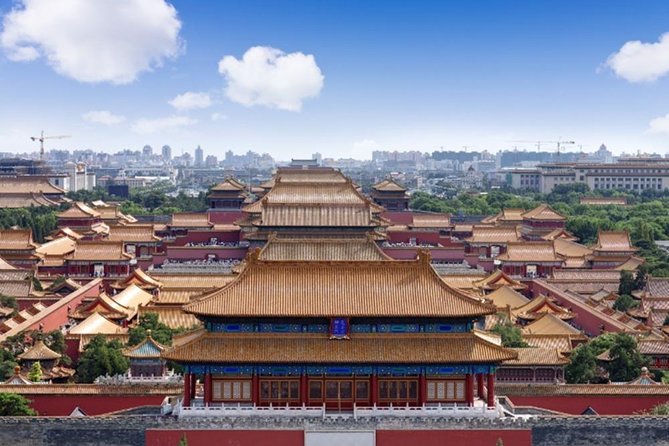
The Forbidden City receives about two hours. This is the core of the Beijing program, with palace courtyards, ceremonial spaces, and wooden imperial buildings spread across a vast complex. Two hours gives you a useful first look, but not enough time for every hall and side court. Your guide’s route matters here because the site can feel overwhelming without some structure.
The Palace Museum is closed every Monday. Build your travel dates around that fact, especially because this tour has little spare time for a replacement visit. Confirm the exact day of operation before you pay for nonrefundable flights or hotels.
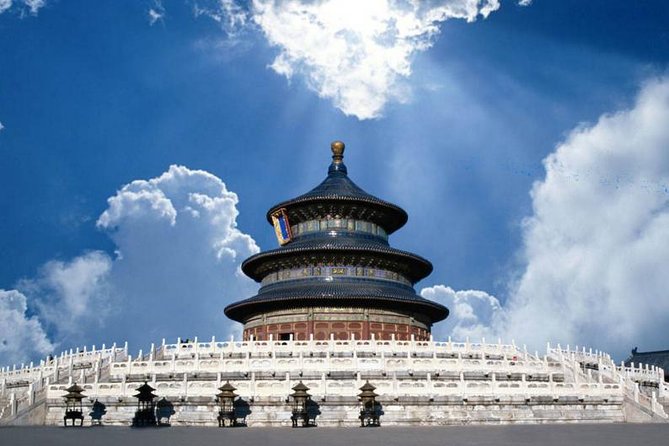
At the Temple of Heaven, you have around 90 minutes. The complex was used by Ming and Qing emperors for ceremonies and prayers for good harvests. The setting also gives you a different view of imperial China, one tied to ritual and the relationship between rulers, heaven, and agriculture rather than palace life.
The final stop is a Beijing hutong neighborhood, where you see traditional residential lanes and local daily life. A rickshaw ride is available at your own cost. I would treat that ride as optional. The walk and your guide’s explanation may be enough, while the rickshaw can be worthwhile if you want a slower look at the lanes.
This day is packed, but the sequence works. Tiananmen Square and the Forbidden City explain imperial power from a formal public angle. The Temple of Heaven adds religious ceremony, and the hutong visit brings the discussion down to neighborhood scale.
More Train Trips in Beijing
- Beijing: Xi’an Terracotta Tour by Train-All Tickets Included
★ 5.0 · 27 reviews - Beijing:Bullet Train Tour to Hanging Temple&Yungang Grottoes
★ 5.0 · 16 reviews - Private Day Trip: Discover Tianjin by Bullet Train from Beijing
★ 5.0 · 14 reviews - Beijing to Xi’an Terracotta Tour by Roundtrip Bullet Train
★ 4.8 · 13 reviews
Beijing to Xi’an by bullet train
Day four begins early, with hotel pickup at about 5:30 a.m. You take a train around 6:53 a.m. and arrive in Xi’an at roughly 11:24 a.m. The exact service may change, but the point is the same: you lose part of your morning to the transfer, yet avoid a flight and enjoy a comfortable rail journey across China.
The tour includes second-class seats, not business class. The vehicles used for city touring are described as business-class air-conditioned vehicles, but the train ticket is second class. There is no guide service on the train, so you should be ready to manage your seat, luggage, and personal needs independently for this portion.
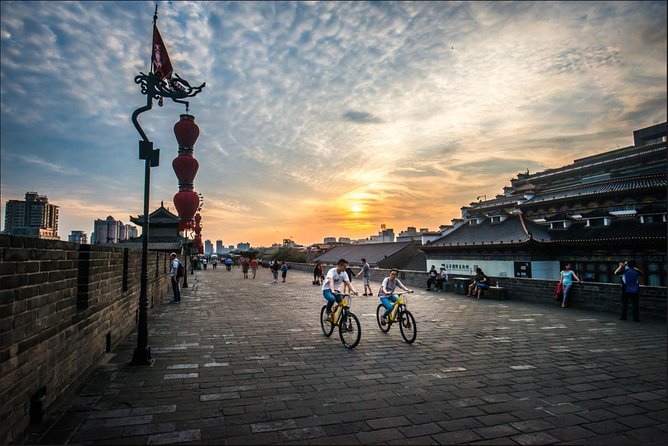
A Xi’an guide and driver meet you at the station. That handoff is valuable because Xi’an station transfers can otherwise eat into the afternoon. After arrival, you visit the Xi’an City Wall, one of the best-preserved and largest city walls in China, for about an hour.
You can optionally rent a bicycle on the wall. The schedule does not include that cost, so decide after seeing the weather and your energy level. A bike gives you a wider view of the fortifications, but walking may be more comfortable after the early start.
The afternoon continues at Drum Tower Square with exterior views of the Bell Tower and Drum Tower, followed by about an hour in the Muslim Quarter. This is a good place to focus on food and street atmosphere, but meals are not included. You can choose what you want to try instead of being tied to a group restaurant.
The Muslim Quarter is also a commercial area, with food stalls, shops, and entertainment. It can feel busy, so keep your belongings close and stay aware of the meeting time. Your guide can help you identify local specialties, but you pay for anything you eat.
Terracotta Warriors and Tang-era Xi’an
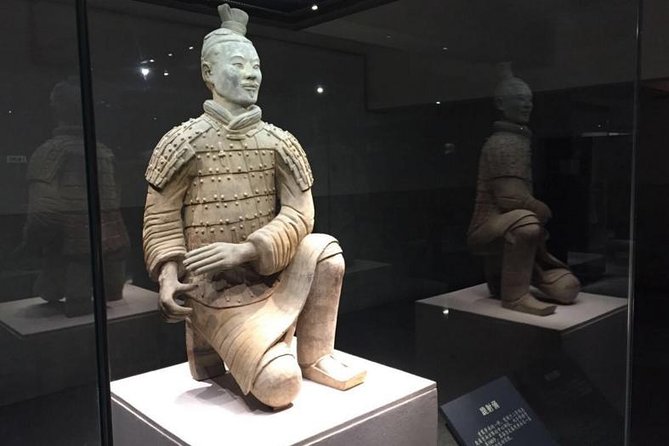
Day five is the historical high point for many people. The Museum of Qin Terracotta Warriors and Horses is about 30 kilometers east of Xi’an, and the visit lasts around two hours. You see the excavation halls and the thousands of clay soldiers, horses, and other figures made for Qin dynasty Emperor Qin Shi Huang.
Two hours is enough to understand the main pits and the scale of the project, though the site deserves attention rather than a hurried photo stop. Ask your guide to explain how the figures were arranged and what the excavation reveals about the emperor’s burial plans. The entrance fee is included.
After the museum, the program includes a one-hour activity where children can make a small replica terracotta soldier and take it home. This is a particularly useful addition for families because it gives children something hands-on after a museum visit that can otherwise be visually impressive but tiring.
In the afternoon, you visit the Big Wild Goose Pagoda for about an hour. Built in 652 during the Tang dynasty, the pagoda was used to store Buddhist scriptures brought back by the monk Xuanzang. It gives you a direct link between Xi’an and the movement of Buddhism along the Silk Road.
The nearby Grand Tang Dynasty Ever-bright City receives about 90 minutes. Its Tang-style architecture and evening presentation create a more theatrical atmosphere than the pagoda itself. The contrast is useful: first you see a surviving religious landmark, then a modern entertainment district built around Tang-era imagery.
Keep expectations clear. This is not an archaeological site preserved exactly as it was in the Tang period. It is a recreated public area, and its value lies in the atmosphere, lights, architecture, and evening walk.
Xi’an to Shanghai, then the Bund at night
Day six begins with another early transfer. Pickup is around 7:20 a.m., followed by a train at about 8:49 a.m. that arrives in Shanghai around 2:45 p.m. This is nearly six hours on the train, so the day is mainly a transport day with evening sightseeing.
You meet a Shanghai guide at Shanghai South Railway Station. The schedule lists about an hour for the station transfer and the beginning of the city tour, so allow some flexibility if the train arrives late or the station exit takes time.
The Bund is the right first stop. Along the Huangpu River, you see a long row of historic buildings in Gothic, Baroque, Romanesque, and classical styles, facing Shanghai’s modern Pudong skyline. The contrast is the city’s visual signature, and an hour gives you time for photographs and a first orientation.
The included Huangpu River night cruise lasts about an hour. From the water, the Bund and Pudong appear as two sides of Shanghai’s story: colonial-era commercial buildings on one bank and a modern financial center on the other. Night is the best time for the city lights, but bring a layer because river air can feel cooler than the streets.
Because the train takes up most of the day, you should not expect a long, relaxed Shanghai introduction on day six. The advantage is that you avoid another hotel change by air and arrive with the evening still useful.
Shanghai Museum, Yu Garden, and Xintiandi
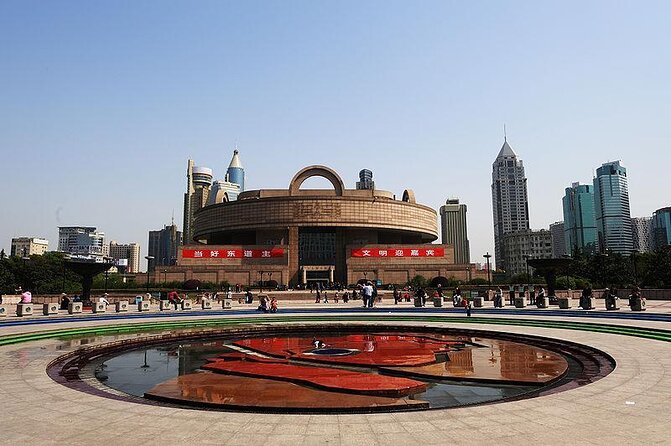
The final sightseeing day starts at the Shanghai Museum in People’s Square, with about an hour inside. The museum holds more than 120,000 cultural objects, covering periods from the Old Stone Age to modern times. One hour is a quick visit, so ask your guide to focus on the collections that interest you most.
Yu Garden receives two hours and is one of the more rewarding stops for a first Shanghai visit. The classical garden was built for the parents of Pan Yunduan, who wanted a peaceful place for them in old age. Nearby Yuyuan Market adds shops and food stalls, so the visit combines formal garden design with a lively commercial setting.
Allow extra self-control around the market. Meals and personal purchases are your own responsibility, and the schedule can move quickly. If you want to buy gifts, this may be your best chance, but shopping is not the purpose of the tour and should not crowd out the garden.
Xintiandi finishes the city program with about an hour. The pedestrian district preserves Shikumen residential architecture while adding restaurants, boutiques, and galleries. It is a polished modern neighborhood, but the preserved stone-gate homes help explain how older Shanghai housing fits into the current city.
Afterward, your guide and driver take you to the airport or train station for departure. Confirm the drop-off point early, particularly if you are continuing by train rather than flying.
Guides, vehicles, hotels, and daily effort
The private format is the tour’s practical strength. Your group travels in its own air-conditioned vehicle, and an English-speaking local guide handles sightseeing in each city. That means you can ask questions, adjust the pace within reason, and avoid waiting for a large coach group.
The published feedback gives especially strong credit to the arrangements and helpful guides. That matches the design of the trip: separate local teams meet you at airports, hotels, and railway stations, reducing the chance that a long-distance transfer becomes a confusing solo task.
The six hotel nights include breakfast and are based on two people sharing a room. You can select a comfortable or luxury level, but the exact hotel names are not provided here. Ask for those details before booking if neighborhood, room size, or hotel standard matters to you.
The pace is the tradeoff. You have full sightseeing days in Beijing and Xi’an, two long train transfers, and early morning pickups. Comfortable shoes are specifically recommended, and that advice is worth taking seriously. The Great Wall, city wall, palace grounds, and museum complexes all involve substantial walking.
China is described by one published account as clean and friendly, with a strong feeling of safety when walking at night. You should still expect differences in public facilities, including squat toilets in some places. That can be a minor shock, so carry tissues and hand sanitizer as a sensible precaution.
Who should book this private China tour?
I would choose this trip if you want the major landmarks with very little planning work. It suits first-time visitors, couples, families, and small groups who prefer a private guide to a large coach. Families may especially appreciate the terracotta soldier activity and the ability to keep their own group together.
It is also a good fit if you want to experience China’s high-speed rail network rather than fly between cities. The train rides are long, but they connect the three destinations in a direct and memorable way.
I would hesitate if you prefer slow mornings, long meals, or independent exploration. The 5:30 a.m. Beijing station pickup and nearly six-hour Xi’an to Shanghai train ride are demanding. You also need to pay separately for every lunch and dinner, optional activities, and gratuities.
Cancellation terms are strict close to departure. Cancel at least six full days before the start for a full refund. A cancellation two to six full days ahead receives 50 percent, while cancellation less than two full days ahead receives no refund. Check the local cut-off time before making changes.
FAQ
Does the tour include bullet train tickets?
Yes. Second-class bullet train tickets from Beijing to Xi’an and Xi’an to Shanghai are included. Guide service on the trains is not included.
Are hotels and breakfast included?
Yes. Six nights of accommodation and daily hotel breakfast are included for two people sharing a room. The accommodation level is described as comfortable or luxury.
Are lunch and dinner included?
No. The tour includes daily breakfast, but all other meals are your own responsibility.
Is the Forbidden City open every day?
No. The Forbidden City is closed every Monday. Check your dates carefully before booking.
Can children join the tour?
Yes, children can participate, and a terracotta soldier replica activity is included in Xi’an. Anyone under 18 must be accompanied by an adult.
What information is needed to book?
You must provide each participant’s passport name, passport number, expiry date, and country. A vegetarian option is available if you request it at booking.
Should you book it?
Book this tour if you want a well-supported first visit to China and value private transfers, local guides, included admissions, and rail connections more than a low price. The route covers an impressive range: the Great Wall and imperial Beijing, the Terracotta Warriors and ancient Xi’an, then Shanghai’s riverfront and modern city life.
Skip it if you want an unhurried holiday or plan to spend hours choosing your own restaurants and neighborhoods. Seven days is enough for a powerful introduction, not a relaxed study of three enormous cities. For the right person, the careful arrangements and no-shopping policy make the price worthwhile, provided you are ready for early starts and long days.
Just added in Beijing
- Private Transfer to Mutianyu Great Wall with professional driver★ 5.0 · 19 reviews
- One day tour to downtown Tianjin from Beijing by high speed train★ 5.0 · 3 reviews
- ZANBUS: Trip to the Jinshanling Great Wall Departing at 7:30 AM★ 5.0 · 5 reviews
- camp on the Great Wall overnight with sunrise and sunset on the wall★ 5.0 · 11 reviews
- Yuxiandu Chinese Royal Cuisine Museum with Show and Royal Banquet★ 5.0 · 4 reviews
- Wild Great Wall Hikes★ 5.0 · 10 reviews
- BusDa:Ancient Great Wall &Badaling Great Wall Full-day Bus Tour★ 4.5 · 6 reviews
- Wild Great Wall Huanghuacheng Half Day Tour★ 5.0 · 15 reviews
Bullet Train Day Trips, compared.
Suzhou Private Day Trip from Shanghai with Bullet Train Option
Read our review →
Private Suzhou Day Trip from Shanghai by Bullet Train with All Inclusive Option
Read our review →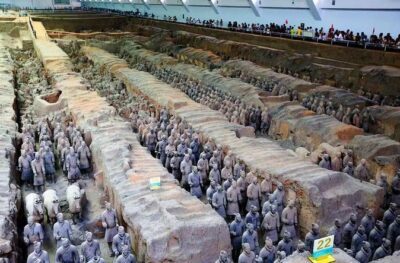
Beijing to Xi’an See Terracotta Warriors with Bullet Train Round Trip Transfer
Read our review →
Flexible Hangzhou Private Tour from Shanghai by Bullet Train
Read our review →
Private Guided Tour to Hangzhou by Bullet Train
Read our review →Where else this tour turns up