
Reviewed · WALKING TOURS
Sheung Wan & Central Walking Tour: Into the Colonial Hong Kong
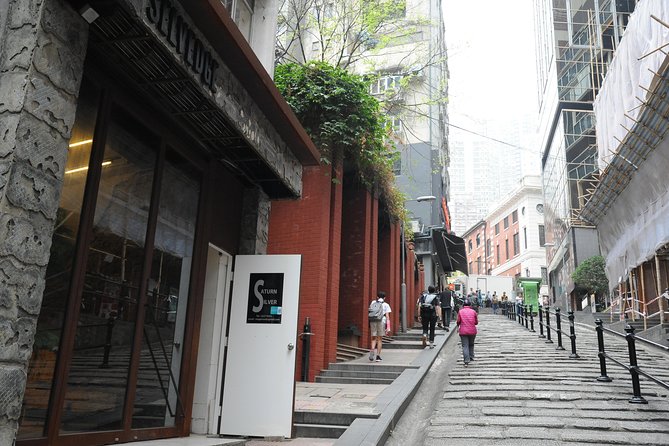
History comes alive on Hong Kong’s steep streets. This small-group walk connects Man Mo Temple and PMQ with Central’s grand colonial buildings, and I like the mix of Chinese tradition, British-era architecture, and everyday market life. I also like the old tram ride and included sugar-cane juice, though the 2.5-hour route requires moderate fitness and offers little shelter if the weather turns poor.
The group is limited to eight people, which gives the guide room to explain details instead of rushing from stop to stop. A guide named Ivan has been praised for making the walk both enjoyable and informative, a useful sign for anyone who wants more than a quick list of dates. The one thing to weigh is the tour’s narrow focus: if you want skyline views, shopping, or a broad introduction to Hong Kong, this is not the right outing.
In This Review
- Key Points to Know Before You Book
- Why This Sheung Wan and Central Walk Works
- Starting at Man Mo Temple in Sheung Wan
- PMQ and the Former Central Police Station
- Riding the Historic Tram Toward Central
- HSBC Main Building and the Power of Architecture
- Graham Street Market and Sugar-Cane Juice
- St. John’s Cathedral and Government Hill
- What the Small Group Adds
- Who Will Get the Most From This Tour
- Price, Timing, and Cancellation Advice
- Should You Book the Sheung Wan and Central Walk?
- FAQ
- Where does the tour start?
- Where does the tour end?
- How long does the experience last?
- How many people can join the group?
- Is the tram ride included in the price?
- Can I cancel for a full refund?
Key Points to Know Before You Book
- Man Mo Temple opens the story: You begin with Chinese religious life during British rule, not with a dry parade of colonial buildings.
- PMQ shows old buildings with a new purpose: The former heritage site now gives local designers and artists space to work and display their ideas.
- The tram ride is part of the lesson: Your fare is included, and the journey lets you see how Central’s skyline and coastline have changed.
- Graham Street Market keeps the tour grounded: This long-running open market adds ordinary neighborhood life to the political and architectural story.
- The group has a maximum of eight people: That small size is especially useful when streets are tight or when you want to ask questions.
- The tour ends near Central Ferry Pier No. 6: You start at Sheung Wan Station and finish in Central, so the route works as a useful bridge between two districts.
Why This Sheung Wan and Central Walk Works
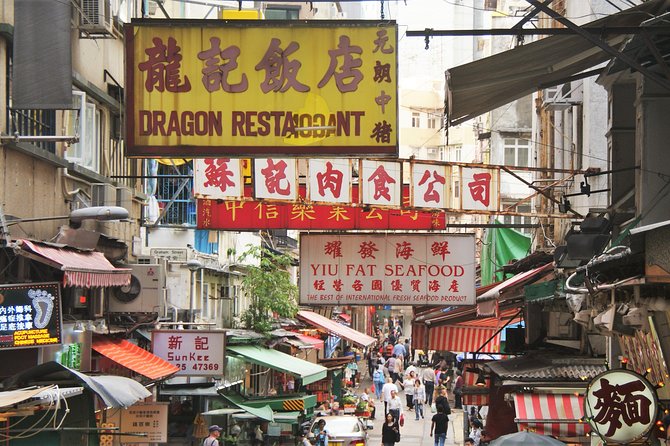
Hong Kong’s colonial story is easiest to understand when you see Chinese and British influences side by side. This walk does that without separating the city into neat categories. A temple, a former police compound, a major bank, a street market, and a cathedral all appear within one short route.
That combination is the main strength of the experience. You are not simply looking at old facades. You are following the way power, trade, religion, and daily life shared the same compact part of town.
I especially like the scale. Two and a half hours is long enough to build a clear story, but short enough to fit into a busy Hong Kong visit. The group limit of eight should also make the experience more personal than a large walking tour, particularly at Man Mo Temple and the market, where a guide can pause to explain details.
The tour costs $43.90 per person. That is not the cheapest way to walk around Sheung Wan and Central, since the districts are easy to explore independently. The value comes from the interpretation, the included tram fare, the light refreshment, and the time saved figuring out how the sites connect. If you already know Hong Kong’s history well, the price may feel less attractive. If you want context and a clear route, it is easier to justify.
More Walking Tours in Hong Kong
- Dark Side of Hong Kong – Kowloon Caged Homes Walking Tour
★ 5.0 · 418 reviews - Introduction to Hong Kong: Central Tip Based Walking Tour
★ 5.0 · 202 reviews - Full-Day Private Customized Walking Tour of Hong Kong
★ 5.0 · 106 reviews
Starting at Man Mo Temple in Sheung Wan
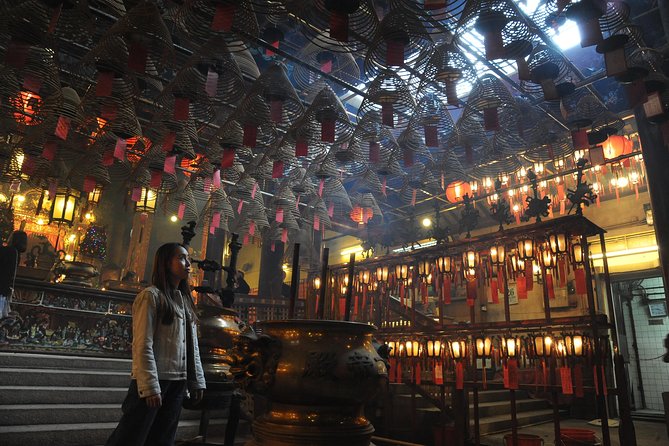
The walk begins at Sheung Wan Station and moves first to Man Mo Temple, one of Hong Kong’s best-known sights. Admission is free, but the setting is still important. This is not just a photo stop. The guide explains the temple’s gods and myths, along with its place in the Chinese community during the British colonial period.
That opening gives the tour a useful balance. You start with local religious and cultural life before moving toward the government buildings, banks, and institutions associated with British rule. It helps you see that colonial Hong Kong was never simply a British city. Chinese traditions remained central to the life of the community.
The scheduled stop lasts about 30 minutes. That should give you enough time to look around and listen without turning the visit into a rushed glance inside. Since the temple is a popular Hong Kong attraction, a small group is helpful. You can stay close to the guide and ask about details that might otherwise pass unnoticed.
I would wear shoes with a firm sole here and for the rest of the route. The tour is on foot, and Hong Kong’s older districts are not designed like a quiet museum campus. You should expect street movement, steps or uneven sections, and the need to keep pace with the group.
PMQ and the Former Central Police Station
From the temple, the route continues to PMQ, a revitalized heritage site where you can see the work of local designers and artists. The stop offers a different way to view colonial buildings. Instead of treating old structures as frozen relics, Hong Kong has given the site a new role.
The planned visit lasts around 30 minutes. That is enough time for a glimpse of the creative spaces and a discussion of how the former colonial setting has been reused. I like this stop because it keeps the tour from becoming a simple march through government architecture. It shows how older buildings can remain part of present-day city life.
The route also includes a look at the former Central Police Station compound, now newly revitalized. The information provided does not assign a separate time block to this stop, so think of it as part of the walk between the main sites rather than a long museum visit.
This distinction matters. You are getting an informed outdoor tour, not an extended visit to every interior. If you want hours inside heritage buildings or detailed exhibitions, you may need extra time on your own. The tour’s job is to connect the places and explain their role in colonial Hong Kong.
Riding the Historic Tram Toward Central
The tram ride is one of the most appealing parts of the experience. The fare is included, and the ride takes you between the Sheung Wan and Central sections of the tour. It also gives you a moving view of how the city has changed.
The guide uses the journey to discuss the transformation of Hong Kong’s skyline and coastline. That is a smart use of a short ride. Instead of treating public transportation as dead time, the tour turns it into part of the historical explanation.
I would not book this expecting a long scenic tram excursion. The ride is included as one element of a walking route, and the exact duration is not specified. Still, it adds something you cannot get from walking every step. You see the city from street level while moving through the gap between old districts and modern Central.
The tram also gives your feet a brief rest. That matters on a route where you are walking, standing, listening, and looking upward for much of the afternoon. Keep your expectations practical: this is transportation with historical meaning, not a separate sightseeing attraction.
A completely different sort of day out:
- Lantau Island Day Trip – Big Buddha & Tai O
★ 4.5 · 1,328 reviews - Big Bus Hong Kong Open Top Hop-On Hop-Off Sightseeing Tour
★ 4.0 · 1,077 reviews - Hong Kong Day Tour: City Landmarks & Highlights
★ 4.5 · 798 reviews - Hong Kong International Airport Plaza Premium Lounge Access
★ 3.5 · 787 reviews
HSBC Main Building and the Power of Architecture
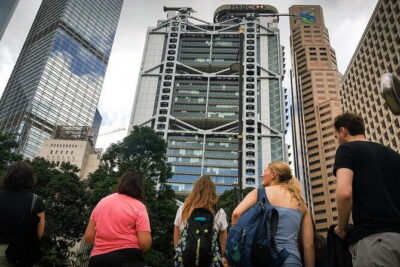
The HSBC Main Building is the Central stop where architecture becomes a direct clue to political and financial power. The guide explains the story behind this iconic building and places it within the wider colonial setting.
The scheduled stop is about 15 minutes, so expect a focused explanation rather than a full architectural tour. That short time can work well if the guide keeps the story sharp. You will have enough time to examine the building and understand why it matters without losing the pace of the walk.
This is one of the places where the tour’s theme comes into focus. The buildings of Central tell a story about the relationship between Hong Kong, Britain, and China. A major bank is not just an impressive structure. It represents the commercial system that helped shape the city under British administration.
I like that the tour does not rely only on churches and government buildings to explain colonial life. The bank adds business and finance to the picture. Along with the temple, market, and police compound, it helps create a more complete view of how the district worked.
Graham Street Market and Sugar-Cane Juice
Graham Street Market brings the tour back to street-level life. It is described as Hong Kong’s first open market, dating from 1841, and it remains a useful contrast to the formal buildings of Central.
The stop lasts about 15 minutes. You can wander through the market and receive a cup of sugar-cane juice from a traditional herbal tea shop, with the cost included. This small refreshment is a welcome touch, especially during a warm or humid walk.
The market is valuable because it shows a part of Hong Kong that does not fit neatly into a colonial architecture lesson. Food, trade, neighborhood routines, and older commercial habits all belong in the story too. The tour lets you see how the city’s past survived in ordinary places, not only in grand buildings.
Fifteen minutes is not enough for a full market visit or a leisurely browse. If you enjoy food markets, you may want to return later and explore at your own pace. During the tour, focus on the guide’s explanation and the contrast between the market and the nearby financial district.
The sugar-cane juice is also a practical detail rather than a grand culinary experience. It gives the group a taste of a local refreshment and a short pause, but you should not book the tour mainly for food.
St. John’s Cathedral and Government Hill
The final major stop is St. John’s Cathedral, located on Government Hill among a group of British governmental buildings. The visit lasts about 30 minutes and deals with the complicated relationship between Hong Kong, Britain, and China.
This is a strong place to end because the earlier stops have already introduced several parts of the story. At the temple, you see Chinese community life. At PMQ and the police compound, you see colonial buildings reused in the present. At HSBC, you see the financial side of British rule. The cathedral and surrounding government buildings bring those threads together.
The tour does not present the colonial era as a simple tale of impressive architecture. The description points to a complicated political relationship, which is the right approach. Hong Kong’s buildings can look elegant, but the history behind them includes questions of authority, identity, and competing ties to Britain and China.
The cathedral stop should appeal to architecture fans, but it is also useful for anyone trying to understand why Central feels so different from Sheung Wan. You are looking at a concentrated group of institutions that helped shape the city’s public life.
The tour ends at Central Ferry Pier No. 6 on Man Kwong Street. That is a practical finish, since you are left in Central rather than returned to Sheung Wan. Plan your day around that one-way route.
What the Small Group Adds
A maximum of eight people is more than a marketing detail. It changes how a walking tour feels. You are less likely to be separated from the guide at a busy crossing, and questions should be easier to ask during the stops.
Small groups are especially helpful at Man Mo Temple and Graham Street Market. These are active public places, not quiet halls where everyone can gather in a neat circle. A compact group makes it easier to hear the explanation and keep the walking pace comfortable.
The quality of the guide will still matter. One guide named Ivan has been praised for being well informed and making the walk thoroughly enjoyable, including for someone who had already visited Hong Kong and explored parts of it before. That detail is encouraging if you worry the tour will feel too basic after a previous trip.
At the same time, there are only two published ratings available in the supplied information. The perfect rating is a positive sign, but it is not a large sample. I would treat the guide quality as an important reason to book, while keeping reasonable expectations about the limited amount of independent feedback.
Who Will Get the Most From This Tour
I would recommend this walk to you if you enjoy history, architecture, and city neighborhoods more than shopping or major attractions. It suits someone who wants to understand how Hong Kong’s Chinese and British influences appear in the same few blocks.
It is also a good fit if you have visited Hong Kong before. The route gives familiar districts a clearer story, and the tram ride provides a different way to see the movement from Sheung Wan into Central.
You should have a moderate level of physical fitness. The experience lasts about two hours and 30 minutes and combines walking with standing at several stops. The tour information does not give a detailed accessibility assessment, so contact the provider if you have specific mobility needs. Service animals are allowed, and the route is near public transportation.
This is less suitable if you want a relaxed café walk, a long tram ride, or substantial free time at every attraction. It is also not the best choice if poor weather would spoil your day. The experience requires good weather, and a cancellation for that reason leads to a different date or a full refund.
Price, Timing, and Cancellation Advice
At $43.90 per person, this sits in the reasonable middle range for a guided small-group city walk. You are paying for a maximum group size of eight, a guide-led historical route, the tram fare, and a light refreshment.
The value is strongest when you want interpretation. You could walk past Man Mo Temple, PMQ, HSBC, Graham Street Market, and St. John’s Cathedral on your own, but you would not automatically understand how they fit together. The guide turns separate sights into one story.
The tour is booked, on average, 60 days ahead, so I would not leave it until the last moment if your schedule is fixed. Confirmation arrives within 48 hours of booking, subject to availability.
You can cancel for a full refund up to 24 hours before the start time. Changes or cancellations inside that 24-hour window are not accepted for a refund. The same 24-hour rule uses local Hong Kong time, so check the deadline carefully if you are booking from another time zone.
The experience also requires a minimum number of participants. If that minimum is not reached, you will be offered another date or experience, or a full refund.
Should You Book the Sheung Wan and Central Walk?
Book it if you want a short, focused lesson in how Hong Kong’s Chinese traditions and British colonial institutions developed side by side. The best reasons are the small group, the clear route, the old tram ride, and the mix of major buildings with a working market.
I would be especially comfortable recommending it to history fans, architecture fans, and returning visitors who want more context than a self-guided stroll provides. The praised work of Ivan also suggests that a strong guide can make the difference here.
Skip it if you want a broad first-day introduction to Hong Kong, lots of free time, or a food-centered outing. The route is compact, walking-heavy, and built around explanation. For the right kind of visitor, $43.90 buys a useful shortcut into the city’s past, with enough street life to keep the history from feeling sealed behind glass.
FAQ
Where does the tour start?
The tour starts at Sheung Wan Station in Hong Kong.
Where does the tour end?
It ends at Central Ferry Pier No. 6 on Man Kwong Street in Central.
How long does the experience last?
The walking tour lasts approximately two hours and 30 minutes.
How many people can join the group?
The tour has a maximum of eight participants.
Is the tram ride included in the price?
Yes. The historic tram ride between the two areas is included.
Can I cancel for a full refund?
Yes. You can cancel at least 24 hours before the local start time for a full refund. Cancellations or changes made less than 24 hours before the start time are not accepted for a refund.
Just added in Hong Kong
- Walking Tour in Hong Kong – Local Experience (New & Best)★ 4.5 · 33 reviews
- Full Day Private Trip in Hong Kong( impeccable local )walk tour★ 5.0 · 11 reviews
- Hong Kong Guided Dinner + Laser Show Lounge Entry (2023) | 200+ booked★ 3.5 · 7 reviews
- Victoria Peak Tram and Sky Terrace 428 Admission Hong Kong★ 4.5 · 33 reviews
- TurboJet Ferry E-Ticket from Hong Kong to Macau★ 4.5 · 10 reviews
- VIP Private Hong Kong City Sightseeing Tour★ 5.0 · 2 reviews
- Group Vegetarian Food & Cultural Tour★ 5.0 · 16 reviews
- Hong Kong Victoria Harbour Sightseeing Cruise Tickets★ 4.5 · 8 reviews
Walking Tours, compared.
Beijing Hutong Walking Food and Beer Tour at Hidden Restaurants
Read our review →
Private Beijing Walking Tour of the Forbidden City with 7 Options
Read our review →
Dark Side of Hong Kong – Kowloon Caged Homes Walking Tour
Read our review →
Forbidden City Private Walking Tour with Optional Sights
Read our review →
Introduction to Hong Kong: Central Tip Based Walking Tour
Read our review →
Shanghai Highlights Walking Tour With A Real Local
Read our review →Where else this tour turns up