
Reviewed · MUSEUMS IN SHANGHAI
Shanghai: Natural Museum tickets with guide(optional)
Nature gets a city-sized showcase here. The Shanghai Natural History Museum makes a strong rainy-day or family stop, with more than 11,000 specimens and models from all seven continents and a clear route through Earth’s story. I like the freedom to explore at my own pace, and I like the mix of traditional displays, immersive theaters, live animals, and hands-on learning. The main catch is that food and drinks are not allowed, and visitors without a mainland Chinese real-name mobile number must send passport details to the provider before their visit.
The museum’s theme, Nature, Humanity, Harmony, gives the visit a useful thread. You are not just looking at animals in glass cases. You are following origins, evolution, ecosystems, human influence, and possible futures. At $13 per person, the ticket is good value if you give the museum several hours rather than treating it as a quick photo stop.
In This Review
- Key points at a glance
- A major museum in the middle of Shanghai
- Begin with the mystery of origins
- Follow the long river of life
- See Earth’s treasures and diverse life
- Study ecological wonders and survival skills
- Consider the human connection
- Find Shanghai stories close to home
- Finish with the path to the future
- Theaters, live animals, and hands-on learning
- How much time should you allow?
- Is the $13 ticket good value?
- Booking details you should not miss
- Who should book this museum visit?
- Should you book the Shanghai Natural History Museum?
- FAQ
- Where is the Shanghai Natural History Museum?
- How much does admission cost?
- How long is the ticket valid?
- What does the ticket include?
- Is an English guide available?
- What identification should I bring?
- Can I bring food or drinks into the museum?
Key points at a glance
- 11,000-plus specimens and models: Displays cover the seven continents and a wide range of plant, animal, geological, and human topics.
- Ten themed exhibition areas: The route moves from the origins of life through evolution, ecology, Shanghai, and the future.
- Five immersive theaters: These add film and sensory presentations to the standard museum displays.
- A 300-square-meter live breeding area: You may see living creatures alongside the museum’s preserved specimens and models.
- A 1,200-square-meter Exploration Center: This area supports activities aimed at children, families, and curious adults.
- Central Jing’an location: The museum is at 510 West Beijing Road inside Jing’an Sculpture Park.
A major museum in the middle of Shanghai
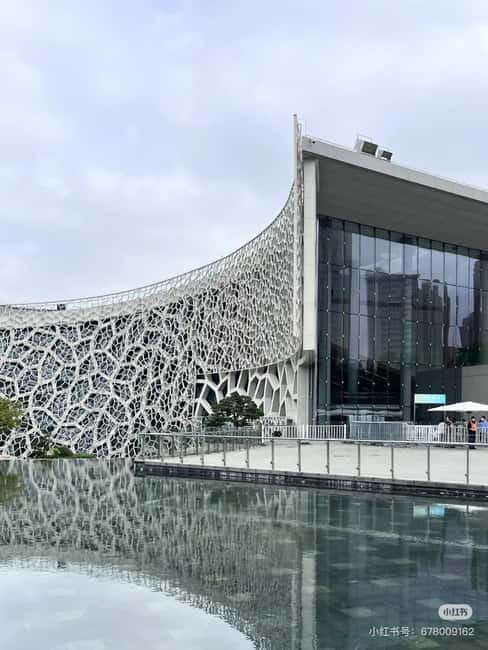
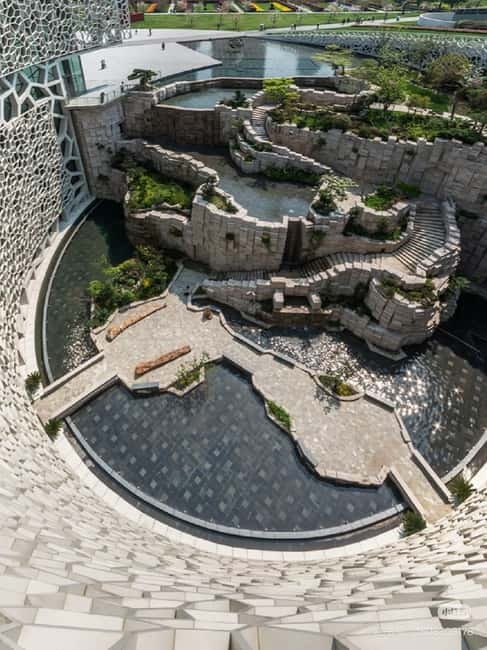
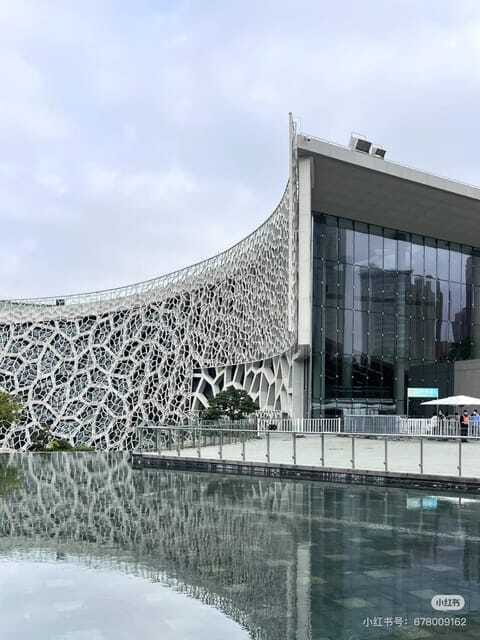
The Shanghai Natural History Museum is a branch of the Shanghai Science and Technology Museum. Its building covers 45,257 square meters, with 32,200 square meters devoted to exhibitions and education.
That scale matters. This is not a small collection you can finish in 30 minutes. You will find a full day of material here, although your actual visit may be shorter depending on your pace and interest. Families can spend extra time with interactive material, while adults who prefer labels and scientific displays can move more quickly through familiar topics.
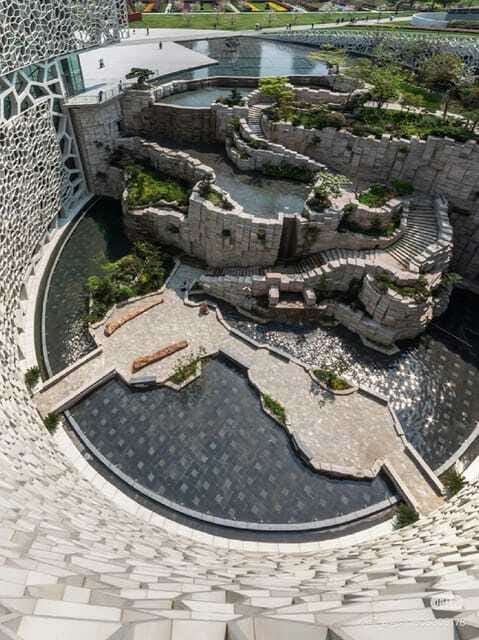
The museum sits at 510 West Beijing Road in Jing’an District, within Jing’an Sculpture Park. That gives you a practical chance to pair the museum with time outdoors. The ticket itself covers admission to the museum, while food is not included.
The setting also makes this an easy choice when Shanghai’s weather turns wet or unpleasant. You get an indoor activity with enough variety to suit different ages. Just remember that smoking, food, and drinks are not allowed inside.
More Museums in Shanghai
- Shanghai: Private Tour of the Shanghai Museum
★ 5.0 · 10 reviews - Shanghai: Xintiandi, CCP Museum and French Concession Tour
★ 5.0 · 9 reviews - Private Shanghai Day Tour: Shanghai Museum, Yu Garden, Bund, Huangpu Cruise
★ 5.0 · 6 reviews
Begin with the mystery of origins
The first exhibition area, Mystery of Origins, asks the biggest question in natural history: how did life begin?
Expect this section to set the tone for the rest of the museum. Instead of treating nature as a collection of unrelated animals, it presents life as part of a long process. The subject can be difficult to explain to children, but the museum’s combination of specimens, models, theaters, and educational spaces should give families several ways to approach it.
The strength of this section is scale. You are encouraged to think beyond one species or one period. The museum uses natural science to place human life within a much longer story, which helps make later sections easier to understand.
Follow the long river of life
The Long River of Life and Path of Evolution continue the story through time. These areas focus on the development and change of life, showing how species relate to one another and how nature keeps shifting.
I like this part of the museum because it can turn a familiar topic into a visual sequence. Evolution is often taught as a list of dates and names. Here, the museum’s large collection of specimens and models gives you a more physical sense of change.
You might find this section especially useful if you are visiting with children who ask why animals look the way they do. It offers a starting point for those questions without requiring you to know much science beforehand.
Do not rush through these rooms simply because you recognize the subject. The museum’s larger message depends on the link between origins, evolution, biodiversity, and human responsibility.
See Earth’s treasures and diverse life
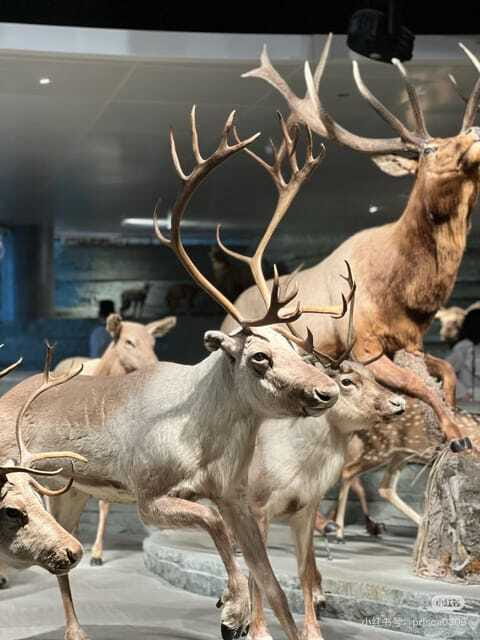
Earth Treasures shifts the focus toward the planet itself. This is the place to look for geological and natural features that help explain the conditions in which life developed.
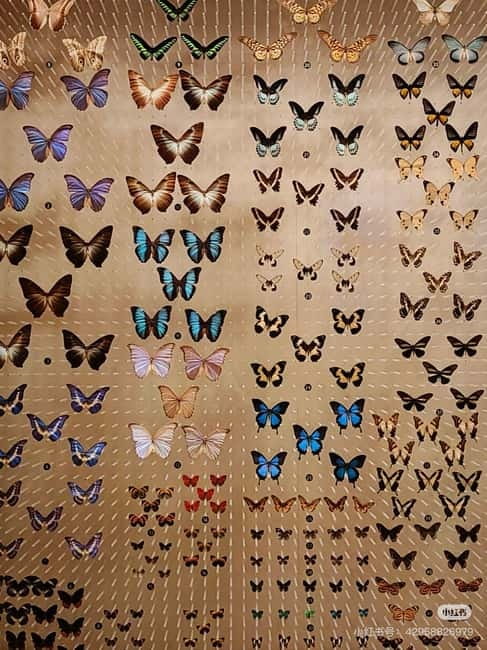
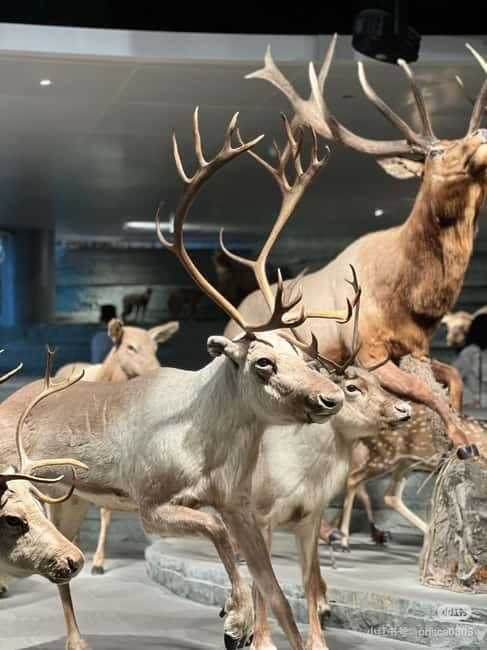
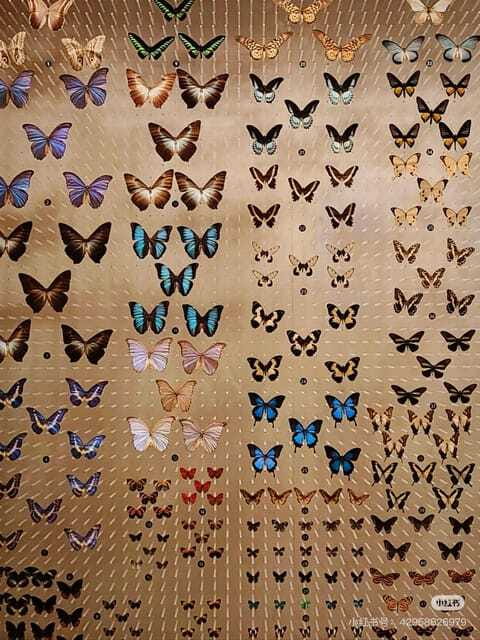
Diverse Life then widens the view again, with material from all seven continents. The value here is variety. You are not seeing only local Chinese species or the most famous animals. The international scope lets you compare different forms of life and different natural settings in one visit.
The displays may appeal to adults who prefer specimens and models over high-tech presentation. At the same time, the scale of the collection gives younger visitors plenty to look at. The museum does not rely on one blockbuster exhibit to carry the visit. Its strength comes from the number of subjects and the way they are arranged.
If you have limited time, pay attention to which sections hold your interest instead of trying to read every label. A museum this large rewards selective attention.
A completely different sort of day out:
- Authentic Local Food Tour in Central Shanghai
★ 5.0 · 1,382 reviews - Zhujiajiao Water Town and Shanghai City Private Day Tour
★ 5.0 · 1,016 reviews - Private Shanghai Full Day City Tour with Old and New Highlights
★ 5.0 · 995 reviews - Shanghai: Hop-on Hop-off Bus Ticket and Optional Attractions
★ 3.4 · 692 reviews
Study ecological wonders and survival skills
Ecological Wonders examines how living things fit into their surroundings. Survival Wisdom looks at the ways organisms adapt, compete, and cope with the conditions around them.
These two areas are important because they connect the museum’s scientific material to everyday questions. Why do species develop certain traits? How do animals manage limited resources? What happens when natural systems are disturbed?
The museum’s theme of harmony between nature and humanity becomes clearer here. The goal is not simply to show impressive animals. It is to help you see relationships between species, habitats, and human decisions.
I would give these sections extra time if you enjoy ecology or environmental issues. If you are visiting with young children, use the displays as prompts rather than trying to explain every scientific point. Asking what an animal needs to survive can be enough to turn a display into a useful conversation.
Consider the human connection
Human and Nature Bond is one of the most relevant exhibition areas for a city visit. Shanghai is a huge urban center, and this section asks how people interact with the natural world.
The title suggests a balanced approach. You will see the benefits of science and technology, but also the need to understand limits and consequences. That keeps the museum from becoming only a celebration of human progress.
This is also where the museum’s main theme feels most direct. Nature and humanity are presented as linked rather than separate subjects. For you, that means the visit can work as more than a child-friendly animal exhibition. It can also prompt questions about conservation, development, and the role of science.
Find Shanghai stories close to home
Shanghai Stories brings the global material back to the city. After looking at the seven continents and broad stages of evolution, you get a local point of reference.
This section helps prevent the visit from feeling like a generic world museum. Shanghai becomes part of the natural history story, not just the address outside the entrance. If you are spending several days in the city, this local focus adds context to what you see beyond the museum.
The information provided does not specify individual specimens in this section, so I would treat it as a place to slow down and look for connections with the city around you. It may be especially useful for families who want to relate museum subjects to their own surroundings.
Finish with the path to the future
The Path to the Future closes the ten-part sequence. It looks toward the relationship between nature, people, science, and technology.
This final area gives the visit a sense of direction. You have moved from the origins of life through evolution and ecological systems, then into the human role. The ending asks what comes next.
Do not expect the museum to give one simple answer. The value is in the question. A natural history museum can preserve the past, but this section asks you to think about choices that are still being made.
For children, the future theme can be a good reason to talk about conservation and responsible use of technology. For adults, it provides a useful pause before leaving rather than ending with one more display case.
Theaters, live animals, and hands-on learning
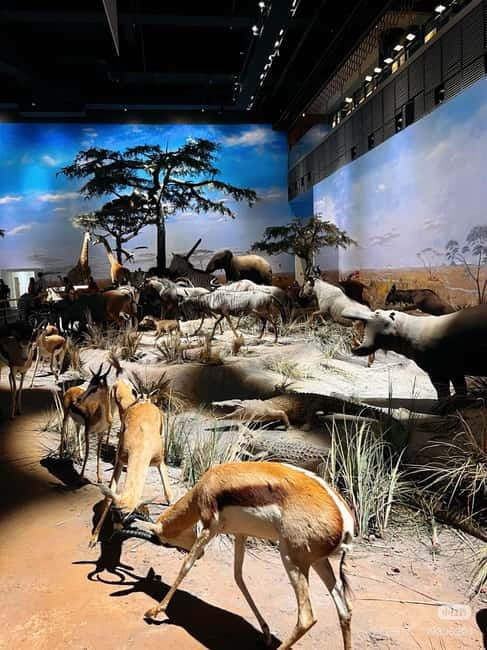
The museum includes five immersive theaters, which add a different type of experience from the exhibition halls. The supplied information does not provide the individual theater schedules or formats, so you should check availability on the day of your visit.
The theaters are useful when you want a break from reading labels. They can also help younger visitors stay engaged during a long museum session. Since exact presentation times are not stated, do not build a strict visit plan around seeing every one.
The 300-square-meter live breeding area is another change of pace. Seeing living creatures alongside preserved specimens and models can make the museum’s central message feel more immediate. You are not only looking at the past. You are also seeing living systems in the present.
The 1,200-square-meter Exploration Center is aimed at active learning. Educational activities include Nature Exploration Camp and Drawing Nature. These programs suggest that the museum is designed for participation, not just quiet observation.
Activity schedules and availability are not specified, so regard them as possible additions rather than guaranteed parts of the ticket. If you are visiting with children, ask about the day’s programs when you arrive.
How much time should you allow?
The ticket is valid for one day, and the experience is listed as a one-day activity. That does not mean you must spend every opening hour inside. It means you have enough time to plan a relaxed visit rather than racing through the ten areas.
I would allow at least several hours if you want to see the major exhibition zones, spend time in the theaters, and visit the live breeding area. Families may need longer because children tend to stop at interactive displays and educational activities.
You can move through the museum at your own pace, which is one of the better features of this ticket. There is no stated fixed walking route or required group schedule for the museum visit.
If an English guide is part of the option you select, a small group is limited to five participants. That could be useful if you want help understanding the museum’s main ideas without joining a large crowd. However, the included items specifically list admission and an information service fee, so confirm exactly what type of guiding is included before paying for an optional guide.
Is the $13 ticket good value?
At $13 per person, this is a sensible ticket for anyone interested in science, animals, geology, or family education. You are paying for access to a very large museum with ten exhibition areas, five theaters, a live breeding area, and an Exploration Center.
The value improves if you use the ticket as a half-day or longer outing. A quick visit would still expose you to the museum, but it would leave much of the collection unseen.
Food is not included, and food and drinks are not allowed inside. Plan around that rule. You may need to eat before or after your museum visit, depending on the rest of your day.
The experience has a 4.8 rating from eight verified bookings. The available comments are brief, with Nill from Hong Kong describing the experience as great and Hasmik from Spain calling it good. Those comments support the basic appeal of the visit, but they do not provide detailed guidance on individual galleries or theater schedules. I would use the rating as a positive sign, not as a substitute for checking the practical details.
Booking details you should not miss
You must bring your passport or ID card. After buying the ticket, send the provider your expected visit date, your full name, and your passport number by email.
Your name must match your passport exactly, including capitalization. This is the kind of small administrative detail that can cause trouble if you leave it until the last minute, so prepare the information carefully.
If you have a mainland China real-name registered mobile phone number, you can buy museum tickets yourself through the WeChat mini program. In that case, this third-party option may be less useful to you.
The experience offers free cancellation up to 24 hours before the visit for a full refund. It also allows you to reserve now and pay later, which helps if your Shanghai schedule is still changing.
The listed language is English. The group type is small, with no more than five participants. Since the guide is described as optional, check whether you are booking admission only or an English-guided version.
Who should book this museum visit?
I would recommend it most strongly to families, science fans, school-age children, and anyone who wants a thoughtful indoor activity in central Shanghai.
It also suits visitors who prefer to set their own pace. You can focus on evolution, animals, ecology, geology, Shanghai, or the future without having to give equal time to every room.
The museum may be less suitable if you want a short, tightly scheduled attraction with a single famous centerpiece. The collection is broad, and the amount of material can feel like a lot if you have only an hour.
I would also think twice about the ticketing process if you have no time to email passport information or if you already have access to the WeChat mini program. The $13 price is fair, but the third-party booking is most useful when you need help arranging admission.
Should you book the Shanghai Natural History Museum?
Book it if you want a substantial, flexible museum visit for $13. The ten themed areas give you a clear path from the origins of life to Shanghai and the future, while the theaters, live breeding area, and Exploration Center keep the visit from becoming a long row of display cases.
The strongest reason to go is the range. You can see specimens and models from seven continents, then connect those global subjects with the human and local story. Add the one-day validity and possible English support for a practical option in Jing’an.
Skip it if you only want a brief stop, dislike educational museums, or cannot manage the passport and email requirements. For most families and curious adults, though, this is a good-value way to spend several indoor hours in Shanghai.
FAQ
Where is the Shanghai Natural History Museum?
The museum is at 510 West Beijing Road in Jing’an District, Shanghai, inside Jing’an Sculpture Park.
How much does admission cost?
The listed price is $13 per person.
How long is the ticket valid?
The ticket is valid for one day. Starting times depend on availability.
What does the ticket include?
It includes admission to the Shanghai Natural History Museum and an information service fee.
Is an English guide available?
English is the listed language, and the experience offers a live tour guide option. The group size is limited to five participants. Check the exact booking option to confirm whether you are selecting admission only or a guided visit.
What identification should I bring?
Bring your passport or ID card. Your booking name must match your passport exactly, including capitalization.
Can I bring food or drinks into the museum?
No. Smoking, food, and drinks are not allowed inside.
Just added in Shanghai
- Suzhou Private Guided Day Trip from Shanghai by Bullet Train★ 5.0 · 46 reviews
- Suzhou and Zhujiajiao Private Guided Day Trip from Shanghai★ 5.0 · 27 reviews
- Shanghai: Zhujiajiao Water Town with Calligraphy Experience★ 5.0 · 17 reviews
- Shanghai:Wing Chun Kung Fu in Shanghai’s Beautiful Park★ 5.0 · 2 reviews
- Shanghai:Old Town, Yu Garden, Zhujiajiao Water Town Bus Tour★ 4.7 · 16 reviews
- Shanghai: Yu/Yuyuan Garden Entry Ticket–E ticket★ 4.4 · 24 reviews
- Shanghai: Yuyuan, City God Temple Old City Tour-Tip Based★ 5.0 · 10 reviews
- Shanghai: Zhujiajiao Water Town Private Tour with Boat Ride★ 5.0 · 2 reviews
Museums in Shanghai, compared.

Private Shanghai Day Tour: Shanghai Museum, Yu Garden, Bund, Huangpu Cruise
Read our review →
Where else this tour turns up