
Reviewed · WORKSHOPS
Shanghai: Hands-on Incense Tablet Making Class
Small crafts can carry big cultural meaning. This 1.5-hour Shanghai incense class pairs a clear introduction to China’s 2,000-year incense tradition with a hands-on project you can keep. I like the quiet, private setting and the chance to work with natural materials instead of buying another factory-made souvenir.
I also like the thoughtful finishing touches: tea tasting, experience photos, an elegant gift box, and a choice of carved molds. The main consideration is simple: at $78 per person, this is not a bargain-basement craft session. You are paying for a private cultural activity, guided instruction, materials, and a polished take-home object.
The class suits you best if you want a slower break from Shanghai sightseeing. It is especially appealing for families, couples, small teams, wellness-minded visitors, and anyone who prefers making something over simply looking at something.
In This Review
- Key points before you book
- Why an incense tablet makes a better souvenir
- Entering the yellow historic villa
- A 2,000-year introduction to Chinese incense
- Mixing natural ingredients by traditional ratios
- Pressing the clay into symbolic molds
- Adding cords, beads, and a personal finish
- Tea, photographs, and a quieter kind of Shanghai memory
- What the $78 price includes
- Who will enjoy this class most
- Practical notes for a smooth visit
- Should you book the incense tablet class?
- FAQ
- How long does the incense tablet class last?
- How much does the class cost?
- What is included in the experience?
- What languages are available?
- Is the class private?
- Where do I meet the instructor?
- Is the activity wheelchair accessible?
Key points before you book
- Work with natural fragrant clay: Mix plant-based essential oils and other eco-friendly ingredients without synthetic additives.
- Learn the meaning behind the designs: Molds may feature bats for luck, lotus flowers for purity, or Chinese zodiac animals.
- Expect patient, hands-on teaching: The instructor demonstrates the right pressure for kneading and pressing, then helps you refine the edges.
- Take home more than an object: Your tablet comes in souvenir packaging and can later be used as a car pendant, wardrobe sachet, or decorative charm.
- Enjoy a calm private setting: The activity is designed for a private group, with English, Chinese, Korean, and Japanese instruction available.
- Plan around the meeting details: You meet at the yellow historic villa, with the exact address and instructions sent through WhatsApp after booking.
Why an incense tablet makes a better souvenir
Shanghai offers no shortage of things to buy. Many are easy to pack, but few tell you much about Chinese culture. An incense tablet gives you both a small object and a practical story.
The activity focuses on xiang pai, or fragrant tablets made from scented materials. These pieces can be decorative, useful, and personal. You choose the mold, shape the material yourself, and add cords or beads. The result carries the marks of your hands, including the occasional slightly uneven edge that proves you made it.
That personal link is the point. You are not just purchasing a charm in a shop. You are learning how fragrance, symbolism, and craft fit together in Chinese life.
The tablet is also designed to remain fragrant for years after drying. You might hang it from a car mirror, place it in a wardrobe, attach it to a bag, or display it at home. The scent is described as subtle rather than overpowering, which makes it more suitable for daily use than a strong room fragrance.
More Workshops in Shanghai
- Private Cooking Class: Make Your Own Dim Sum In Shanghai
★ 5.0 · 27 reviews - Private Home Cooking Class with Shanghai Mama
★ 5.0 · 14 reviews - 2.5hrs Chinese Kitchen Cooking Class: Xiaolongbao Soup Dumplings
★ 5.0 · 12 reviews
Entering the yellow historic villa
The meeting point is a yellow historic villa. The exact address and meeting instructions arrive through WhatsApp after your booking is confirmed, so do not expect to find a full street address in advance.
That arrangement is convenient for quick support, but it calls for a little planning. Save the WhatsApp contact and check the message before leaving your hotel. Since hotel pickup and drop-off are not included, you are responsible for reaching the meeting point and returning on your own.
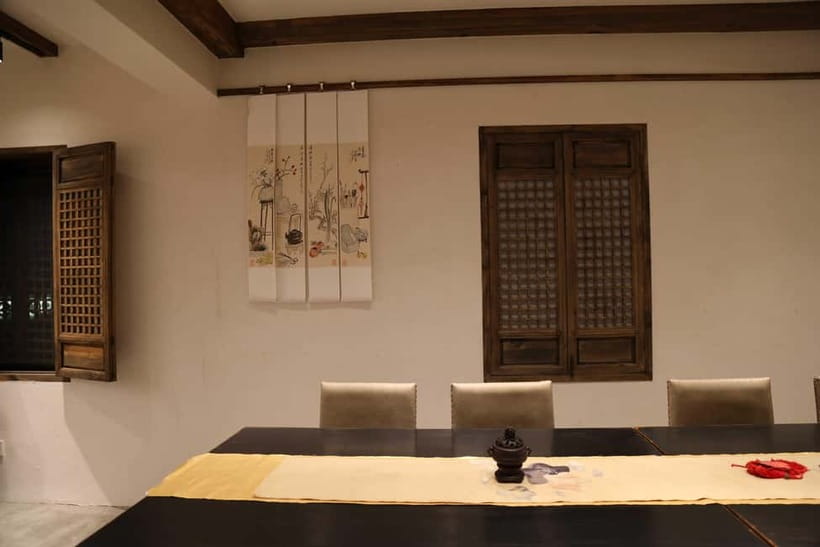
The class uses a private-group format. That matters because incense making is a hands-on process. You can ask questions, watch the pressure and texture closely, and get help without trying to compete with a large room of people.
The space has been described as clean, bright, and orderly. Tools and materials are arranged carefully, and the quiet setting helps the class feel more like a small workshop than a noisy group attraction.
A 2,000-year introduction to Chinese incense
The first part of the session explains China’s long relationship with fragrance. The introduction covers roughly 2,000 years of incense culture and looks at how scents such as sandalwood, musk, and amber were used.
Incense was not limited to religious ritual. It also had links to medicine, personal well-being, daily routines, and social customs. That context gives the craft more weight. A bat-shaped tablet is not just a pretty pattern, and a lotus design is not merely decorative. The shape connects the object to familiar Chinese symbolism.
This opening talk is likely to be most useful if you have little background in traditional Chinese incense. It gives you something to notice as you handle the materials. You begin to understand why certain scents are selected and why particular designs appear again and again.
The session also touches on the reported uses of different fragrant ingredients. Wellness-minded visitors may appreciate the connection to aromatherapy and traditional Chinese medicine, but keep your expectations sensible. The class is a cultural and craft activity, not a medical consultation or a guaranteed sleep treatment.
One piece of feedback described the finished incense tablet as helpful for sleep. That can be a pleasant personal benefit, but the experience does not promise a medical result. Think of the scent as a calming household fragrance, not a substitute for professional care.
Mixing natural ingredients by traditional ratios
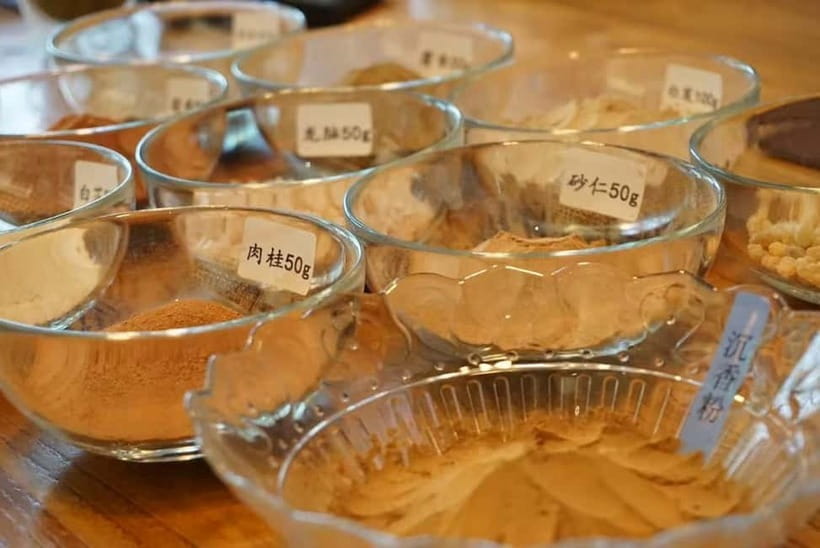
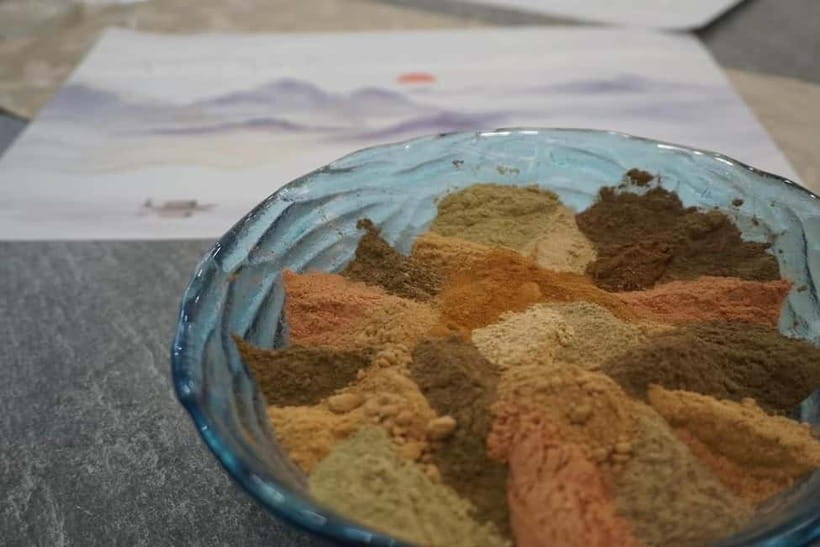
After the introduction, you prepare the material for the tablet. You mix natural ingredients with plant-based essential oils, following traditional ratios.
This is where the class becomes more than a demonstration. You can feel the material change as it comes together. The target is a smooth, workable fragrant clay that can be pressed into a mold without crumbling or becoming too sticky.
The use of eco-friendly ingredients free from synthetic additives will appeal to you if you pay attention to what goes into scented products. It also helps the activity feel connected to older craft methods, rather than being a modern plastic souvenir with a little perfume added.
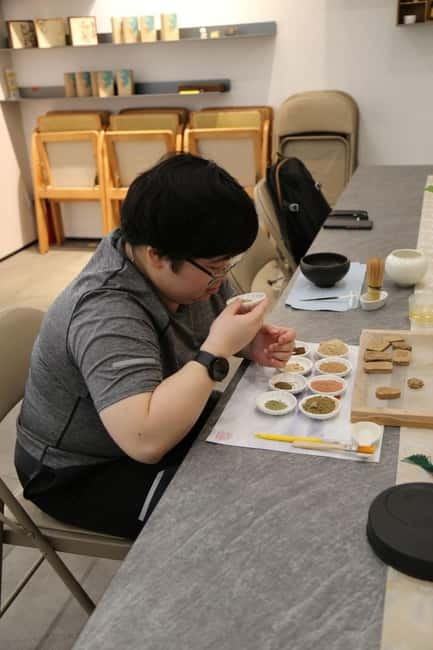
You should expect the instructor to guide you closely. The available feedback praises the patient demonstrations and careful reminders about small details. That is useful because the texture and pressure matter. A rushed knead or uneven mixture could affect the final shape.
The class is suitable for beginners, so you do not need prior craft experience. Art lovers may enjoy the control and detail, but you do not need a steady artist’s hand to take part. The goal is not perfect museum-quality work. The goal is to understand the process and make something pleasing.
A completely different sort of day out:
- Authentic Local Food Tour in Central Shanghai
★ 5.0 · 1,382 reviews - Zhujiajiao Water Town and Shanghai City Private Day Tour
★ 5.0 · 1,016 reviews - Private Shanghai Full Day City Tour with Old and New Highlights
★ 5.0 · 995 reviews - Shanghai: Hop-on Hop-off Bus Ticket and Optional Attractions
★ 3.4 · 692 reviews
Pressing the clay into symbolic molds
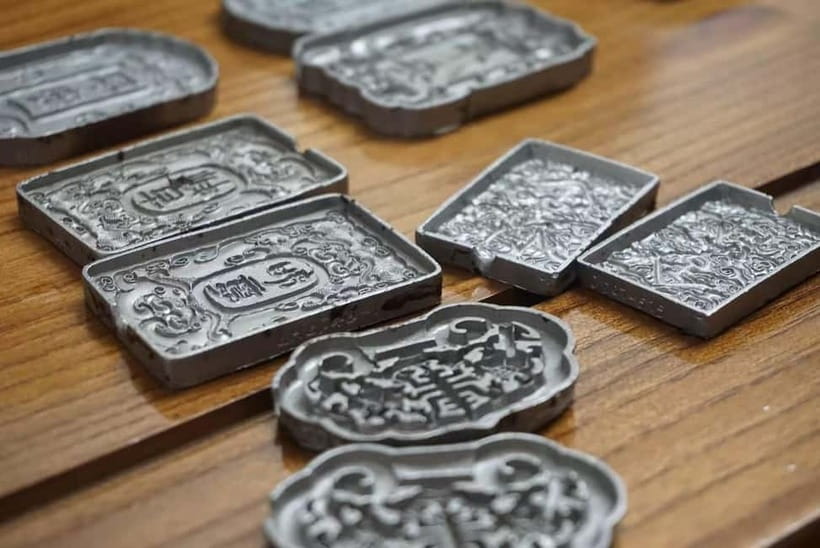
Once the material is smooth, you choose a carved mold. The options include symbols such as bats for luck, lotus flowers for purity, and Chinese zodiac animals.
This choice adds a personal layer to the activity. You can select a shape because you like its appearance, or choose a symbol that suits a family member or friend. A zodiac design can make a nice birthday gift, while a bat or lotus shape gives the object a more direct cultural meaning.
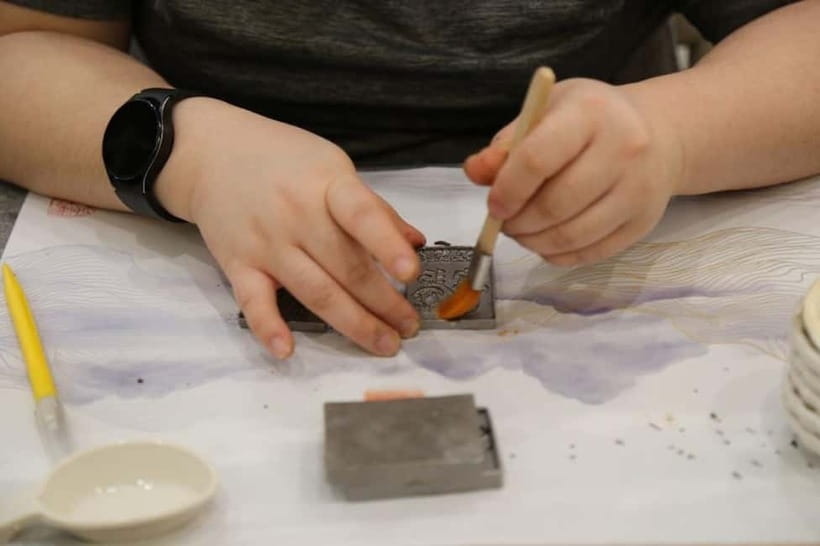
The pressing stage needs a little care. You place the fragrant clay into the mold, apply the right amount of pressure, then remove it without damaging the design. One of the most useful details from the class feedback is that the instructor teaches the pressure technique by hand. That guidance is valuable for first-timers.
Too little force may leave gaps or a weak pattern. Too much force could make removal harder. You will have a better result if you follow the demonstration rather than rushing to finish.
After removing the tablet, you refine the edges. This small step can make the difference between a rough craft project and a neat keepsake. Take your time here. The design is already formed, so the final polish comes from tidying the outline and correcting small imperfections.
Adding cords, beads, and a personal finish
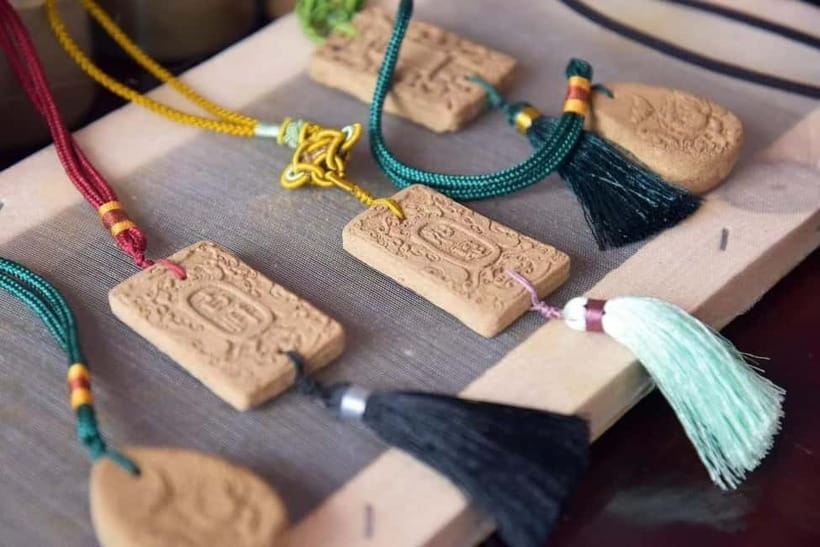
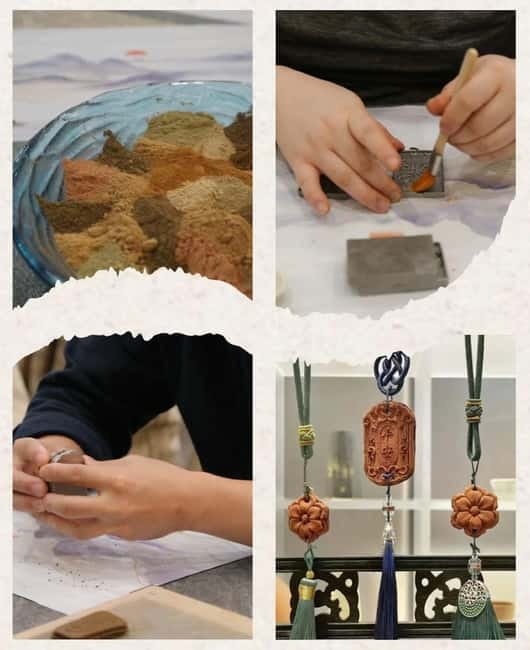
The final decoration lets you adapt the tablet for its future use. You can choose decorative cords or beads, then finish the piece as a hanging charm.
This is a good moment to think about the person who will use it. A compact tablet can work as a bag decoration, car pendant, wardrobe sachet, or home ornament. The souvenir packaging also makes it easier to give the piece as a gift without needing to find a separate box in Shanghai.
The gift box is more than a nice extra. Incense tablets are delicate before they fully dry, and good packaging helps protect the shape on your way home. It also turns a simple handmade object into a present that feels ready to give.
The finished piece needs time to dry. You should not expect to use it immediately in the workshop unless the instructor provides a ready-dried example or specific care instructions. Once dry, the tablet is intended to keep a light aroma for years.
Because the tablet is small and decorative, it is easy to fit into your luggage. Still, pack it with care. Keep the souvenir box away from heavy items and avoid crushing it under clothing or guidebooks.
Tea, photographs, and a quieter kind of Shanghai memory
Tea tasting is included, giving you a short pause between the cultural introduction and the craft work, or during the workshop. It fits the subject well. Fragrance and tea both reward attention to small differences, and the pause keeps the session from feeling like a race to produce an object.
Experience photos are also included. These can capture the mixing, molding, and finished tablet, giving you a record of the activity without needing to keep your phone in your hand throughout the class.
That is a useful touch for families and couples. One person can take part while another takes photographs, but an included photo service means nobody has to miss the hands-on work. The exact number and format of the photos are not specified, so do not assume a large professional photo package.
The overall mood is calm and focused. The workshop environment has been praised for being quiet, clean, and free from interruption. If you have spent the day moving through crowded streets and busy sights, this slower pace can be a welcome change.
What the $78 price includes
At $78 per person, the cost deserves a close look. You receive the class, all materials, tea tasting, souvenir packaging, experience photos, and WhatsApp customer service. You also get a private-group format and instruction in English, Chinese, Korean, or Japanese.
That is a solid package for someone who values personal attention and a finished souvenir. The value improves if two or more people in your party are making tablets together, since the activity becomes shared time rather than a simple purchase.
The price is less attractive if you only want a cheap souvenir or a quick demonstration. Shanghai has many lower-cost shopping options, and you could buy a decorative object without spending 1.5 hours making it.
I would judge the price by asking one question: do you want the object, or do you want the process? If you want both, the cost is easier to justify. The teaching, natural ingredients, private setting, packaging, and photos give the fee more substance than a basic craft kit.
Hotel transportation is not included, and tipping is also excluded. Add your own transport costs when planning your budget.
Who will enjoy this class most
This activity works well for people who want a cultural experience with a clear beginning and end. You get an introduction, a guided project, and a finished item within 1.5 hours.
Families can share the work without requiring advanced skills. Children may need close help with the kneading and mold removal, but the activity has an obvious result and a tactile process. Parents should consider the child’s ability to handle scented materials, since ingredient sensitivities are not discussed in the available information.
Couples can make tablets for each other or choose different symbols. Friends can compare zodiac animals and decorative finishes. Small work teams can use the session as a cooperative activity that does not depend on athletic ability or specialist knowledge.
It is also a good fit for you if you enjoy aromatherapy, traditional Chinese medicine, folk symbols, and handmade objects. The class gives those interests a practical form.
You may want to skip it if you prefer major sights, outdoor activity, or a packed schedule. The workshop is quiet by design. Its appeal comes from concentration and small details, not spectacle.
Practical notes for a smooth visit
Keep the activity’s meeting instructions handy on your phone. The exact address is sent by WhatsApp after confirmation, and customer support is available through WhatsApp if you need help.
Arrive with enough time to find the yellow historic villa. Since pickup is not included, leave room in your schedule for local transport in both directions. The listed duration is 1.5 hours, but you should also allow time to reach the venue and handle your finished souvenir afterward.
Wear something comfortable for working with fragrant clay. No special clothing or prior skill is required, and all materials are supplied. If you have scent allergies or sensitivities, ask about the ingredients before taking part, since several aromatic materials and essential oils are used.
The activity is wheelchair accessible. Language support is available in English, Chinese, Korean, and Japanese, which makes the workshop easier to follow for mixed-language groups.
Free cancellation is available up to 24 hours before the start time, and you can reserve now and pay later. That flexibility is useful when your Shanghai plans depend on weather, train schedules, or a changing sightseeing list.
Should you book the incense tablet class?
Book this class if you want a small, useful souvenir with a story behind it. The strongest parts are the quiet private setting, careful instruction, natural fragrant materials, symbolic molds, and the chance to finish an object yourself.
The experience is particularly good for a first visit to China, a family day, or a couple looking for something calmer than another landmark. The gift box, tea, and photos make the $78 price easier to accept, especially when you value personal attention.
Skip it if your main goal is saving money or seeing as many sights as possible. You are paying for time, teaching, and cultural context, not just a piece of scented clay.
For the right visitor, this is a pleasant way to slow down in Shanghai and take home something more personal than a mass-produced souvenir.
FAQ
How long does the incense tablet class last?
The activity lasts 1.5 hours.
How much does the class cost?
The price is $78 per person.
What is included in the experience?
The class includes WhatsApp customer service, all materials, tea tasting, souvenir packaging, and experience photos.
What languages are available?
Instruction is available in English, Chinese, Korean, and Japanese.
Is the class private?
Yes. The experience is offered for a private group.
Where do I meet the instructor?
You meet at the yellow historic villa. The exact address and meeting details are sent by WhatsApp after your booking is confirmed.
Is the activity wheelchair accessible?
Yes, the activity is wheelchair accessible.
Just added in Shanghai
- Suzhou Private Guided Day Trip from Shanghai by Bullet Train★ 5.0 · 46 reviews
- Suzhou and Zhujiajiao Private Guided Day Trip from Shanghai★ 5.0 · 27 reviews
- Shanghai: Zhujiajiao Water Town with Calligraphy Experience★ 5.0 · 17 reviews
- Shanghai:Wing Chun Kung Fu in Shanghai’s Beautiful Park★ 5.0 · 2 reviews
- Shanghai:Old Town, Yu Garden, Zhujiajiao Water Town Bus Tour★ 4.7 · 16 reviews
- Shanghai: Yu/Yuyuan Garden Entry Ticket–E ticket★ 4.4 · 24 reviews
- Shanghai: Yuyuan, City God Temple Old City Tour-Tip Based★ 5.0 · 10 reviews
- Shanghai: Zhujiajiao Water Town Private Tour with Boat Ride★ 5.0 · 2 reviews
Workshops, compared.

Half-Day Chengdu Cooking Class with a Local Market Visit
Read our review →
Organic Chinese Dumpling Class with Market Walk
Read our review →
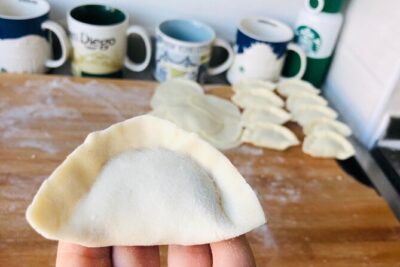
Online Cooking Class Beijing Dumplings and Cuisine by Sunflowerli Renowned Chef
Read our review →
Organic Xiao Long Bao Soup Dumpling Class & Market Walk
Read our review →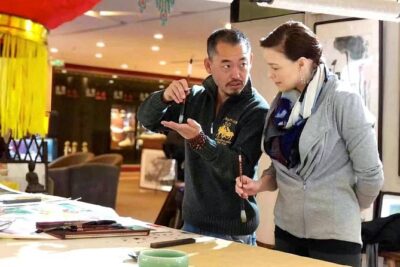
Beijing Wangfujing Calligraphy Class by Forbidden City
Read our review →Where else this tour turns up