
Reviewed · WALKING TOURS
Shanghai French Concession Walking Tour-Tip Based
Shanghai reveals itself one street at a time. This 2.5-hour walk links former French colonial landmarks, leafy avenues, old lane houses, and polished modern districts, with native Shanghainese guide Bill providing local context along the way. I like the route’s clear story, moving from the former French Club to Xintiandi, and I like that the tour includes several pauses rather than making you march for two and a half hours.
The main point to understand is the tip-based price. The $3.59 booking charge only reserves your place. At the end, the recommended tip is 150 to 300 yuan per person, roughly $20 to $40 or euros, depending on how satisfied you are. That makes the final cost much higher than the headline price, so you should budget honestly before booking.
In This Review
- Key points at a glance
- Why the French Concession is worth your time
- Starting at the former French Club
- Jinjiang Hotel and a major diplomatic moment
- The former French Racecourse at Culture Square
- Huaihaifang and the lanehouse way of life
- Sinan Mansions and Shanghai’s polished makeover
- Finishing in Xintiandi
- What Bill adds to the walk
- How much the tour really costs
- Pace, group size, and practical comfort
- Who should book this Shanghai walk
- Should you book the French Concession walk?
- FAQ
- How long is the Shanghai French Concession walking tour?
- What is the full expected tip?
- Is the $3.59 booking payment the full tour price?
- Where does the tour begin?
- Where does the tour end?
- Are admission tickets included?
- Can I cancel for a full refund?
- What happens if the weather is poor?
Key points at a glance
- A native Shanghainese guide: Bill grew up in Shanghai and uses personal memories alongside the city’s wider story.
- A historic-to-modern route: You walk from the former French Club and French Racecourse to restored lane houses, Sinan Mansions, and Xintiandi.
- Six stops in 2.5 hours: Each planned stop lasts about 20 minutes, with time to listen, look around, and take breaks.
- A walking tour with no admission fees listed: The value comes from explanation, orientation, and access to places that are mainly viewed from outside.
- A tip-based payment model: The low booking price is not the full tour cost. Plan for 150 to 300 yuan per person at the end.
- A useful finishing point: The tour ends at Xintiandi near South Huangpi Road Subway Station, with shops, cafés, and restaurants nearby.
Why the French Concession is worth your time
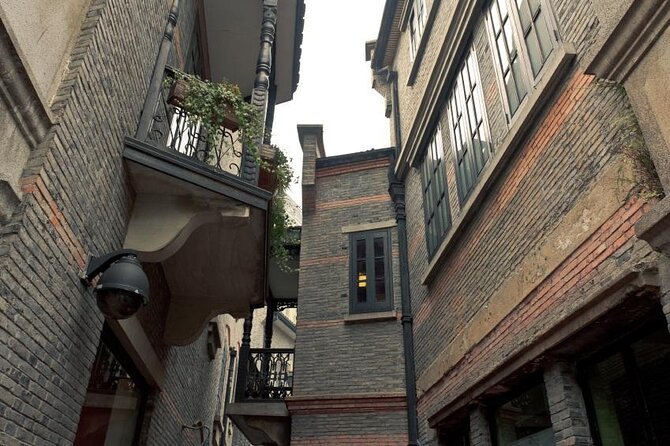
The French Concession was administered by the French government from 1849 to 1943. Its appeal today is not one single monument. It is the combination of broad, tree-lined roads, older homes, wrought iron fences, stair rails, and the way Chinese urban life has grown around those European touches.
You will not experience the district as a preserved museum. It is a living part of central Shanghai. A stylish café may occupy one old building, while a busy road or modern venue sits just around the corner. That mix is the point. The walk helps you notice how the area changed from a foreign-administered district into one of Shanghai’s most sought-after central neighborhoods.
I find this kind of tour especially useful early in a Shanghai visit. The route gives you a map in your head. Afterward, you can return to the streets or neighborhoods that caught your attention, instead of trying to understand the area from a taxi window.
More Walking Tours in Shanghai
- Shanghai Highlights Walking Tour With A Real Local
★ 4.9 · 153 reviews - Shanghai Breakfast Walking Tour of Former French Concession
★ 5.0 · 139 reviews - Private Shanghai Evening Street Food Walking and Cruise Tour
★ 5.0 · 123 reviews
Starting at the former French Club
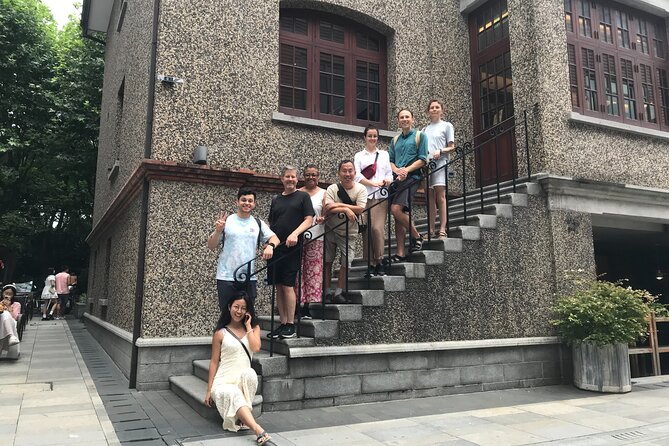
The walk begins at the Okura Garden Hotel Shanghai, at 58 Mao Ming Nan Lu. This site was formerly home to the French Club, making it a fitting place to begin a tour about the French Concession.
The first 20 minutes focus on the site and its setting. You can expect the guide to explain how the club fit into the social world of the former concession, while pointing out the surrounding architecture and street character. There is no admission ticket listed, so the stop is about seeing the location and hearing its story rather than entering a paid attraction.
This opening should suit you if you want context before photographs. It also gives you a chance to settle into the pace. The tour is not built around rushing from one famous interior to another. Much of its value comes from understanding what you are looking at from the street.
The starting location is central and near public transportation, but you should still allow time to find the hotel entrance and meeting point. A mobile ticket is provided, and confirmation is sent at booking.
Jinjiang Hotel and a major diplomatic moment
The second stop is Jinjiang Hotel, another 20-minute visit. The hotel is described as China’s oldest modern hotel and is associated with the announcement of the Sino-US joint declaration on normalizing relations.
That gives the walk a useful shift in focus. The French Concession is not only about balconies, trees, and old villas. It also sits inside the political story of modern China. At Jinjiang Hotel, the guide can connect the physical building with a major moment in international relations.
This is one of the stronger stops for anyone who wants more than architectural sightseeing. You get a sense of how one district has carried several different identities over time: foreign concession, local neighborhood, diplomatic setting, and high-value central address.
The attraction here is primarily the explanation and the building’s connection to the event. No admission fee is listed, so do not expect a formal hotel tour or an indoor museum visit as part of the standard plan.
The former French Racecourse at Culture Square
The route then reaches Culture Square, identified as the site of the former French Racecourse. The scheduled stop lasts about 20 minutes.
A racecourse may sound like a side note, but it helps explain the kind of social world that existed in the concession. The area was not simply a residential quarter. It had clubs, leisure spaces, and institutions designed around the foreign community’s interests and status.
Culture Square also gives the guide a chance to explain change over time. The name and present-day use point to a modern city, while the former racecourse recalls an earlier period. That contrast is typical of this walk. You are not seeing a perfectly preserved colonial district. You are seeing layers of Shanghai occupying the same ground.
This stop may feel less immediately photogenic than the old houses later in the route. Its value comes from the story attached to the place. If you prefer a tour made entirely of ornate façades and postcard views, this section may seem less memorable. If you like knowing why a city developed as it did, it earns its place.
A completely different sort of day out:
- Authentic Local Food Tour in Central Shanghai
★ 5.0 · 1,382 reviews - Zhujiajiao Water Town and Shanghai City Private Day Tour
★ 5.0 · 1,016 reviews - Private Shanghai Full Day City Tour with Old and New Highlights
★ 5.0 · 995 reviews - Shanghai: Hop-on Hop-off Bus Ticket and Optional Attractions
★ 3.4 · 692 reviews
Huaihaifang and the lanehouse way of life
At Huaihaifang, the group visits a local lanehouse compound for about 20 minutes. This is an important part of the route because it brings you closer to the residential form that gives central Shanghai much of its character.
Lane houses are closely packed urban homes built around shared lanes and compact compounds. The details can be easy to miss on your own. The entrance, narrow passageways, fences, doors, and relationship between private homes and shared space all help show how people lived in a dense city.
I particularly like having this stop between the older institutional landmarks and the more polished districts ahead. It keeps the tour from becoming a parade of grand buildings. You see a neighborhood type tied to ordinary urban life, not only the places associated with diplomats, clubs, or wealthy residents.
Because this is a local residential compound, you should be respectful. Keep your voice down, follow the guide’s instructions, and avoid treating private doorways as photo props. The information provided does not promise entry into individual homes, so think of this as a visit to the compound and its lanes.
Sinan Mansions and Shanghai’s polished makeover
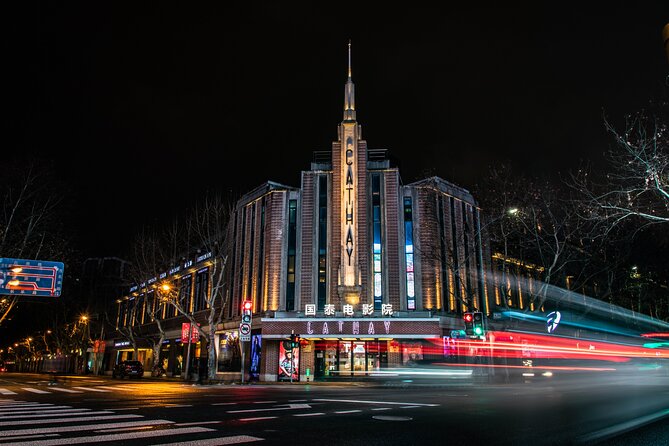
Sinan Mansions is the most fashion-conscious stop on the route. The area was remodeled from 51 Art Deco residential blocks into a compound of trendy venues.
The appeal is the contrast between preservation and commercial renewal. The old residential architecture remains part of the setting, but the area now has cafés, restaurants, shops, and a more polished feel. It is a good place to see how Shanghai turns historic housing into a current social district.
This stop may appeal to you if you enjoy architecture with a modern urban edge. It also gives you a chance to compare two different approaches to old neighborhoods. Huaihaifang offers a more local lanehouse setting, while Sinan Mansions presents restored buildings prepared for contemporary use.
The tradeoff is that the area may feel more designed and less everyday. You are seeing an attractive part of Shanghai, but not necessarily an untouched slice of local life. The guide’s explanation helps make that difference clear.
Finishing in Xintiandi
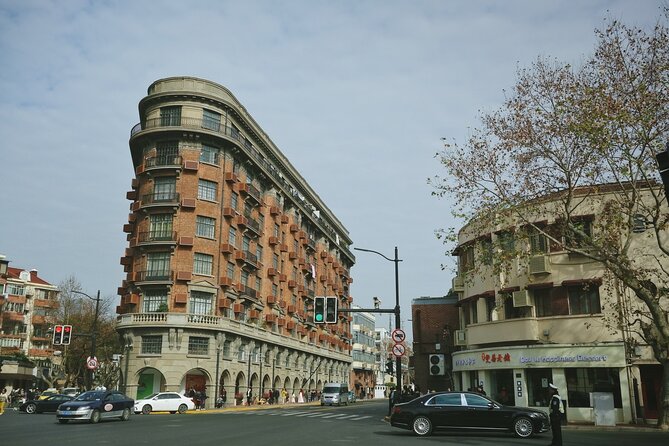
The tour ends at Xintiandi, at 123 Madang Road, near South Huangpi Road Subway Station. The scheduled stop lasts about 20 minutes, though the end point is also practical for spending more time on your own.
Xintiandi was remodeled from a dilapidated old lanehouse area into a district of cafés, souvenir stores, art galleries, and other venues. It is one of the clearest examples on this route of old urban fabric being given a new commercial role.
I like ending here because you are not left in an isolated corner of the city. You can rest, shop, dine, or continue by subway. The district is easy to treat as a final stop rather than a hard ending. If the walk has made you curious about the former lanehouse areas, Xintiandi gives you a more polished version to compare with Huaihaifang.
There is also a possible downside. Xintiandi is designed for visitors and social outings, so prices may not feel as local as those in less renovated parts of Shanghai. Use it as a convenient place to finish, but do not assume every café or shop offers the best value in the city.
What Bill adds to the walk
The guide is Bill, a Shanghai native who was born and raised in the city. His personal connection is one of the tour’s strongest features. He has lived through both the difficult and positive periods of Shanghai’s modern development and presents the city from the point of view of someone who has watched it change.
That matters because the French Concession can otherwise become a collection of attractive streets with disconnected dates. Bill’s personal anecdotes help connect the buildings to the city’s later development. The written tour details also describe him as someone who has traveled widely and wants to share the places and stories that made him love Shanghai.
The praise for Bill is consistent: he is described as engaging, funny, patient, and good at explaining the importance of each location. One account specifically notes that he included plenty of breaks to sit down, which is useful for anyone concerned about the length of the walk.
You should still remember that a tip-based tour depends heavily on the guide and the group on your particular date. The experience is not a fixed museum presentation. If Bill’s style suits you, the personal approach can make the walk feel special. If you prefer a tightly scripted tour with headsets and exact timing, this format may feel more relaxed than you want.
How much the tour really costs
The booking price is listed as $3.59 per person, but that is only a reservation payment. The recommended tip at the end is 150 to 300 yuan per person, or about $20 to $40 or euros depending on the stated conversion and your payment method.
That means you should judge the tour as a roughly $20 to $40 experience, not as a $3.59 bargain. The final amount is discretionary, but the recommendation gives you a clear expectation. Carry enough yuan for the tip and decide before you arrive what the guide’s time and service are worth to you.
The value is strongest if you want a local guide, historical explanation, and an efficient introduction to several central districts. It is weaker if you are mainly looking for paid entry into historic buildings, since no admission tickets are included and no paid interior visits are specified.
For a first look at the French Concession, the price can be fair. You receive a long guided walk, a native perspective, and a route that would take more effort to assemble on your own. Still, the tip model should be treated as part of the cost rather than an optional surprise.
Pace, group size, and practical comfort
The advertised duration is about two hours and 30 minutes. Six stops are listed, each with around 20 minutes of sightseeing or explanation. That leaves time for walking between locations, pauses, photographs, and the small delays that come with moving through central Shanghai.
The tour is described as suitable for most people and near public transportation. Service animals are allowed. The stated maximum is 100 people, which is a very large possible group, although the available information does not say how many people usually attend a particular departure.
That group-size limit is worth noting. A small group would make it easier to hear personal stories and ask questions. A group near the maximum would be less intimate, especially on busy streets. If you book, arrive ready to stay close to the guide and listen carefully at each stop.
Wear comfortable walking shoes. The route includes several neighborhoods and compounds, and the experience is outdoors. The tour requires good weather, so rain or poor conditions can lead to a different date or a full refund.
Who should book this Shanghai walk
I would recommend this tour to you if:
- You want a first introduction to the French Concession.
- You enjoy city history explained through streets and buildings.
- You prefer a local guide to a formal audio guide.
- You want to combine architecture, diplomacy, residential life, and modern redevelopment.
- You appreciate a relaxed pace with chances to sit and take photographs.
- You plan to spend more time at Xintiandi after the walk.
It may not suit you if you want extensive indoor access, a small guaranteed group, or a tour focused only on architecture. The route is also less appealing in poor weather, since the experience depends on walking outside.
Should you book the French Concession walk?
You should book if you want a well-organized introduction to one of Shanghai’s most interesting central districts and you are comfortable paying the recommended tip. The strongest reasons are the route’s variety and Bill’s local perspective. You move from colonial-era institutions to lanehouse compounds, restored Art Deco blocks, and a modern dining district without needing to plan the connections yourself.
Before booking, write down the real expected cost: $3.59 to reserve, plus 150 to 300 yuan per person at the end. If that fits your budget, this is a sensible choice for a first visit to the French Concession. If you want a low-cost walk with no expected gratuity, the headline price may leave the wrong impression.
FAQ
How long is the Shanghai French Concession walking tour?
The tour lasts approximately two hours and 30 minutes.
What is the full expected tip?
The recommended tip is 150 to 300 yuan per person, described as approximately $20 to $40 or euros depending on the conversion.
Is the $3.59 booking payment the full tour price?
No. The $3.59 payment only reserves your spot. The tour is tip-based, and you give the guide an amount you consider appropriate at the end.
Where does the tour begin?
The tour begins at the Okura Garden Hotel Shanghai, 58 Mao Ming Nan Lu, Huang Pu Qu, Shanghai.
Where does the tour end?
The tour ends at Xintiandi, 123 Madang Road, near South Huangpi Road Subway Station.
Are admission tickets included?
No admission fee is charged for the listed stops. The experience includes a professional English-speaking guide, but it does not list paid attraction admission.
Can I cancel for a full refund?
Yes, if you cancel at least 24 hours before the local start time. Cancellations made less than 24 hours in advance are not refunded, and changes within that period are not accepted.
What happens if the weather is poor?
The tour requires good weather. If it is canceled because of poor weather, you are offered another date or a full refund.
Just added in Shanghai
- Zhujiajiao Water Village: Private Tour from Shanghai★ 4.9 · 43 reviews
- Zhujiajiao with Private Customized Shanghai City Highlights★ 5.0 · 14 reviews
- Zhujiajiao & Shanghai:Private Day Tour Water Town to Skyline★ 5.0 · 12 reviews
- Zhujiajiao Water Town Private Tour with Night River Cruise★ 5.0 · 9 reviews
- Zhujiajiao & Shanghai:Small Group Tour Water Town to Skyline★ 5.0 · 4 reviews
- Yu Garden Shanghai Entry Tickets Booking And Trip★ 3.6 · 9 reviews
- Water Town Zhujiajiao Shanghai: Boat Ride,Sights,Bites&Sips★ 5.0 · 7 reviews
- shanghai Disney tour★ 5.0 · 12 reviews
Walking Tours, compared.
Beijing Hutong Walking Food and Beer Tour at Hidden Restaurants
Read our review →
Private Beijing Walking Tour of the Forbidden City with 7 Options
Read our review →
Dark Side of Hong Kong – Kowloon Caged Homes Walking Tour
Read our review →
Forbidden City Private Walking Tour with Optional Sights
Read our review →
Introduction to Hong Kong: Central Tip Based Walking Tour
Read our review →
Shanghai Highlights Walking Tour With A Real Local
Read our review →Where else this tour turns up