
Reviewed · FOOD & DRINK
Puer Tea Picking and Tasting | 6 Hour Morning Trip
Tea tastes better after you pick it yourself. This half-day trip links a scenic ride from Jinghong or Pu’er with a working tea farm, local guidance, hands-on leaf processing, and a tasting of freshly made Pu’er tea. I like the small group size, limited to six, and the chance to take home 300 grams of tea that you picked and processed yourself. The main point to consider is timing: the trip can last anywhere from five to seven hours, and the optional food and possible coffee visits can make the day longer.
The guide, Maxime, receives especially warm praise for translating questions, explaining tea and coffee production, and helping visitors connect with local hosts. I also like that the farm does not appear to pressure you into buying extra tea. Still, you should confirm the exact lunch arrangements before booking, since the details describe lunch both as included and as an optional meal costing 60 yuan per person.
In This Review
- Key Points at a Glance
- The Ride From Jinghong or Pu’er
- Walking the Tea Fields Near Pu’er
- Picking Your Own Tea Leaves
- From Fresh Leaves to Finished Pu’er
- Tasting Tea at the Farm
- Lunch and the Local Food Side of the Day
- How Much Value Do You Get for $82?
- Who Will Enjoy This Most?
- Practical Details Before You Book
- Should You Book This Pu’er Tea Trip?
- FAQ
- Where does the tea trip begin?
- How long does the experience last?
- How many people can join?
- What vehicle is used for pickup?
- Which languages are available?
- Is tea included?
- Is lunch included?
- Can I cancel or pay later?
Key Points at a Glance
- Pick and process 300 grams of tea: You do more than watch. You gather leaves and take part in the early stages of turning them into Pu’er tea.
- Small groups keep the visit personal: The tour accepts up to six people, with an electric VW ID.4 for up to three guests and a six-seat minivan for larger groups.
- Maxime is a strong guide for language support: English, French, German, and Italian are available, and translation helps you ask detailed questions at the farm.
- The tasting follows the production story: You see the leaves being handled, then taste the result through local brewing methods.
- A meal may add local flavor: Food at the farm costs 60 yuan per person when selected, though you should clarify whether it is included in your booking.
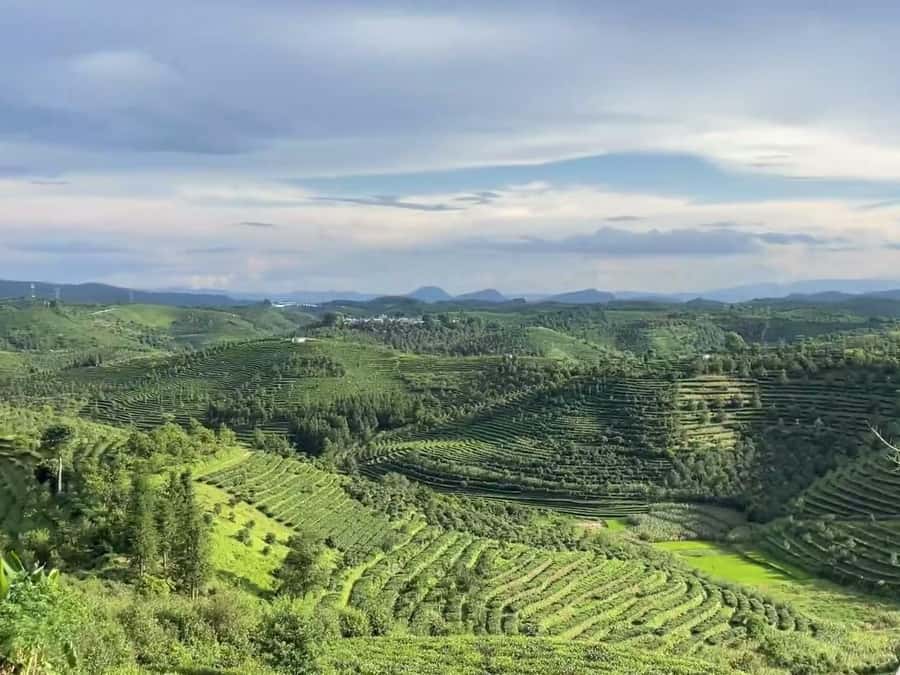
- The ride is part of the outing: The route from Jinghong or Pu’er passes through green Yunnan scenery before reaching the tea fields.
The Ride From Jinghong or Pu’er
The outing begins with hotel pickup in Jinghong or Pu’er. That is useful in this part of Yunnan, where a tea farm outside town may be awkward to reach without your own vehicle or a Chinese-speaking driver.
For up to three guests, transport is provided in a VW ID.4. Larger groups use a comfortable six-seat minivan. The electric car is a pleasant touch for a quiet ride, while the minivan makes more sense for families or friends booking together.
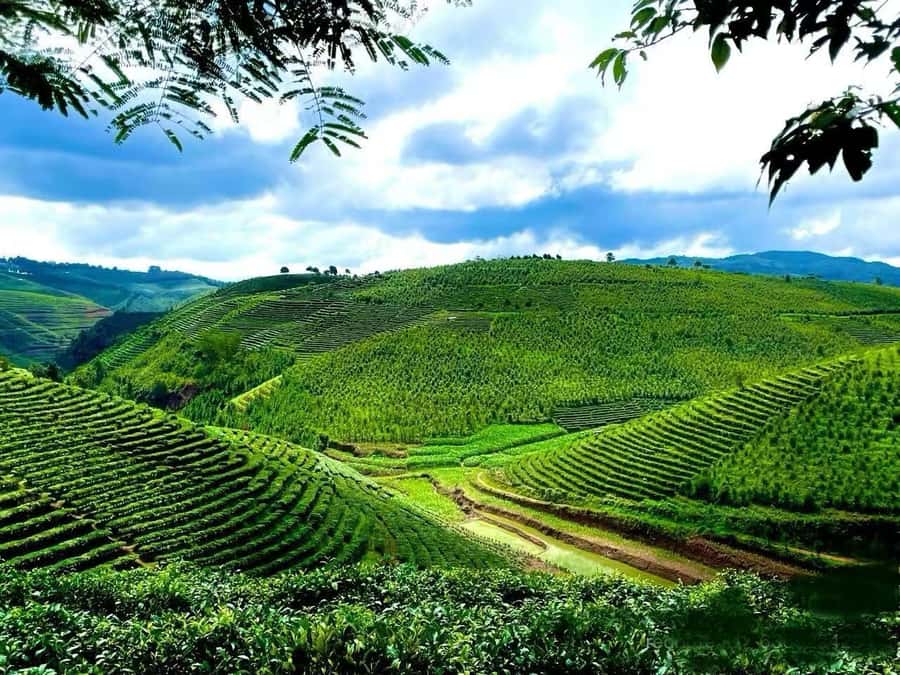
The drive through southwestern China is not dead time. You pass broad views of cultivated hills and green fields, and the scenery gives you a feel for the farming country around Pu’er. Several hours are set aside for the complete outing, so this is not a quick photo stop squeezed between city sights.
If you are staying in Jinghong, allow room in your morning schedule for the road transfer. If you are staying in Pu’er, the pickup is naturally simpler. Anyone with a train to catch should tell the guide in advance. One solo visitor had to leave for a train and wished for more time, which is a useful warning: the program has plenty to offer, but it is not designed for a rushed exit.
More Food Tours in China:
- Authentic Local Food Tour in Central Shanghai
★ 5.0 · 1,382 reviews - Beijing Hutong Walking Food and Beer Tour at Hidden Restaurants
★ 5.0 · 1,132 reviews - Xi’an Evening Food Tour by TukTuk
★ 5.0 · 715 reviews
Walking the Tea Fields Near Pu’er
At the plantation, the first important step is seeing the tea plants where they grow. A guide leads you through the fields and explains why Pu’er tea matters in Yunnan, both as a drink and as part of local culture.
The setting is calm and agricultural rather than polished or theatrical. You visit a working plantation and processing farm, not simply a shop arranged for tourists. That difference matters. You can connect the appearance of the leaves with the finished tea in your cup.
The surrounding area also gives the visit a wider cultural setting. The guide can explain local traditions, including Dai culture, and help translate questions for the plantation manager. This is one of the best reasons to choose a guided visit instead of trying to reach a tea farm alone.
Bring comfortable shoes. The practical instructions are brief, but the activity takes place around plantation fields and farm buildings, so sensible footwear is more useful than dress shoes. Pets are not allowed.
Picking Your Own Tea Leaves
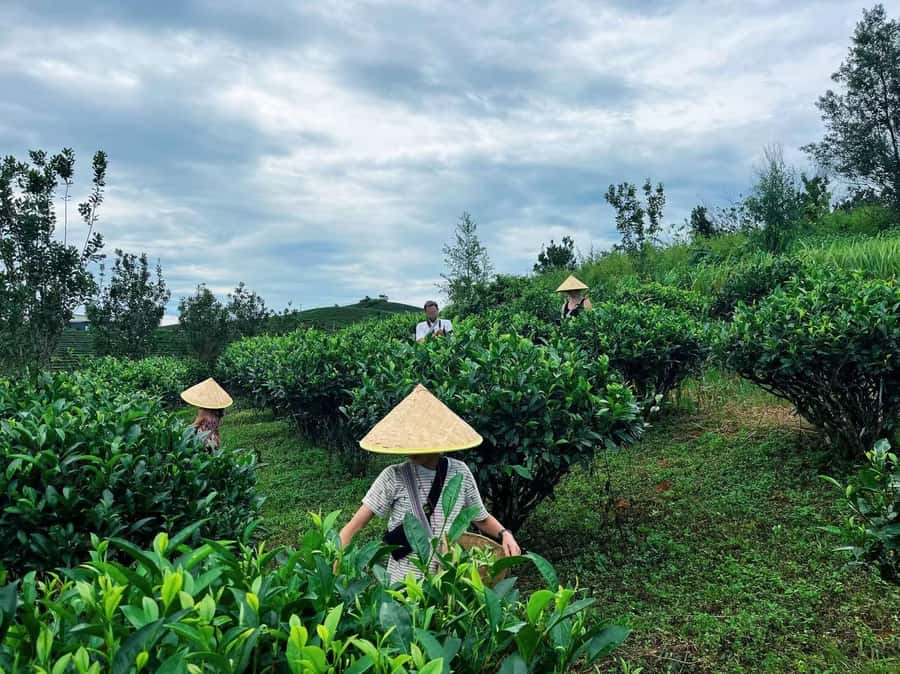
The hands-on picking session is the heart of the trip. Local staff show you how to select suitable leaves, then you work among the plants yourself.
This sounds simple, but it changes how you taste tea later. Once you have handled the leaves and seen how much care goes into choosing them, a cup of Pu’er becomes less anonymous. You begin to notice that tea production starts with small choices in the field, not with the teapot.
The activity is also a good fit for people who prefer doing something over simply listening to a lecture. You are not just told how tea is made. You take part in the process and leave with a batch connected to your own visit.
The included amount is 300 grams of Pu’er tea picked and processed by visitors. That is a generous souvenir, and it gives the experience practical value beyond the morning itself. You can share it at home or keep it as a reminder of Yunnan.
From Fresh Leaves to Finished Pu’er
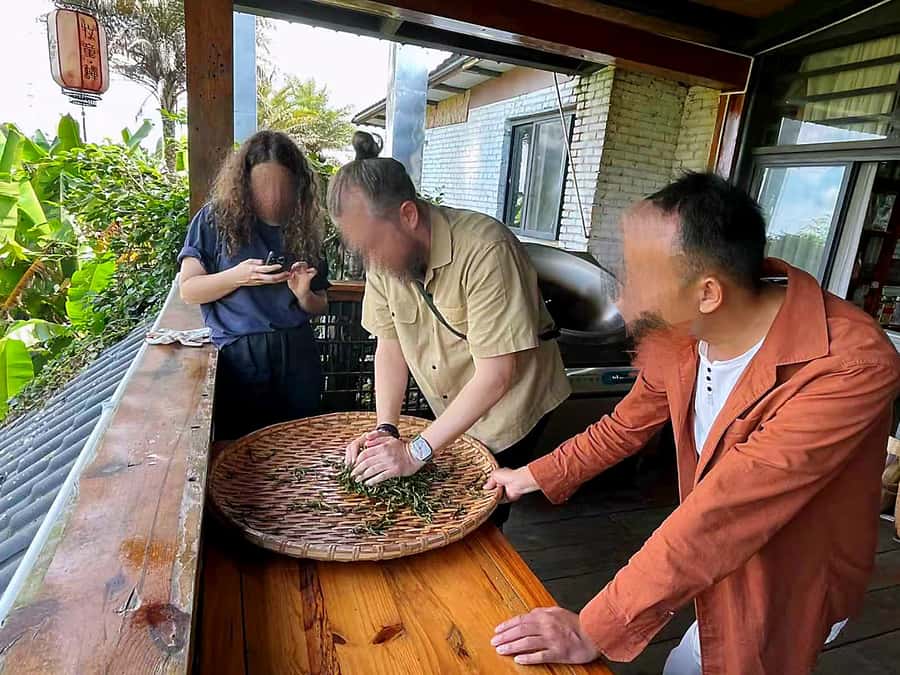
After picking, you visit the farm processing area. The guide explains the main steps, including withering, rolling, and drying. You can watch local workers and try some of the tasks yourself.
This portion is especially useful if you know tea mainly as a finished drink. The farm shows the work between field and cup, helping you understand why processing affects aroma, texture, and style. The visit also puts the term Pu’er into a real setting, connected to leaves, tools, workers, and drying areas rather than a package on a shelf.
The exact balance between watching and doing may depend on the farm’s schedule. Processing is hands-on, but you should not expect to run the entire production line. The appeal is learning the sequence and trying selected stages under local direction.
Some sessions include several kinds of tea, such as aged tea, raw tea, candy tea, and red tea. The precise selection can vary, but the broader lesson is clear: Pu’er is not one single flavor. Age, processing, and brewing all shape what reaches your cup.
A completely different sort of day out:
- From Beijing: Mutianyu Great Wall Tours with Options
★ 4.9 · 9,216 reviews - Beijing: Forbidden City Tour(Group/Private)-Tickets Included
★ 4.8 · 7,974 reviews - Beijing: T-Square & Forbidden City Group or Private Tour
★ 4.8 · 4,446 reviews - Beijing: Mutianyu Great Wall Daily Tour with Ticket & Lunch
★ 5.0 · 3,056 reviews
Tasting Tea at the Farm
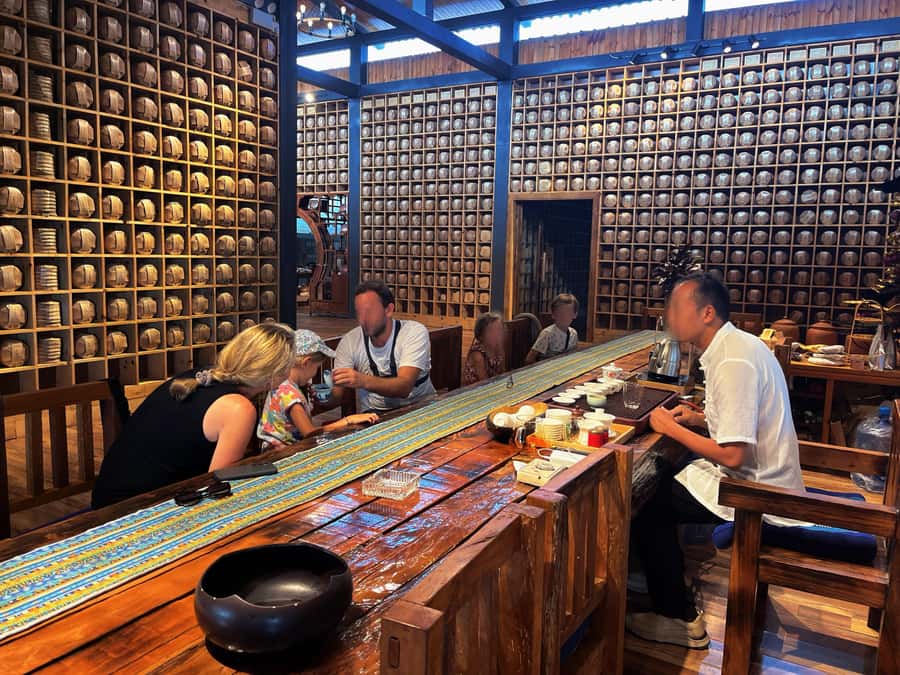
The tasting session brings the morning together. You sample tea processed at the farm and learn how different varieties are brewed.
Freshly processed tea can show a different side of Pu’er from the older, more familiar styles found in tea shops. The guide can explain what you are tasting and answer questions in your language. English, French, German, and Italian are offered.
This is where Maxime’s role seems most valuable. He can translate detailed questions between visitors and the plantation host, rather than giving you only a set speech. That makes a difference if you want to ask about harvest, processing, age, or brewing.
The tasting is not presented as a hard-sell shopping stop. You may buy additional tea if you like, and a 20 percent discount has been offered on tea purchases at the end of some visits. The farm owner is described as relaxed about sales, so you can taste first and decide later.
Your included 300 grams is the key takeaway. Extra purchases are optional, and gifts or souvenirs beyond the personal tea are not included in the price.
Lunch and the Local Food Side of the Day
The meal can add a welcome second layer to the outing. Local specialties are served at the farm, with Dai food included in some descriptions and priced at 60 yuan per person in the optional-lunch details.
The food is not just a convenience. Eating at the farm gives you more time to talk, taste, and take in the rural setting. One reported visit paired the tea experience with a delicious local meal, while another continued to a small coffee estate for food and coffee tasting.
Here is the point to clarify before you go: the information is inconsistent about lunch. The inclusions list says lunch at the farm, while the schedule describes it as optional for 60 yuan per person. Ask the provider what your price covers and whether the meal is part of your specific departure.
Coffee also appears in accounts of the wider day, including visits to a coffee estate south of Pu’er and a drive through the area known for coffee production. The core description centers on tea, so you should confirm whether coffee is included in your selected plan rather than assuming it is guaranteed.
How Much Value Do You Get for $82?
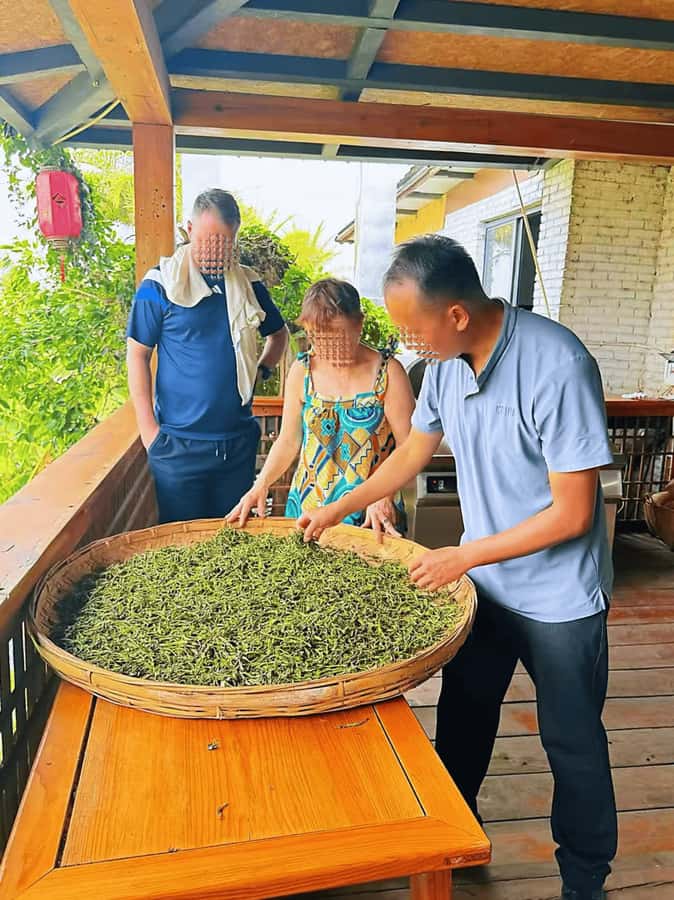
At $82 per person, this is not the cheapest way to drink a cup of tea. It can be a good value if you want transport, an English or multilingual guide, access to a working plantation, interpretation at the farm, tastings, and 300 grams of tea to take home.
The value is strongest for solo visitors and couples who would otherwise need to arrange a private car and translation. A small group of no more than six also limits the waiting and crowding that can weaken a farm visit.
The tea souvenir matters. If you value the 300 grams at all, part of the price returns to you in a useful product rather than only photographs. The included processing activity also gives the visit a personal element that a standard tasting lacks.
The price is less attractive if you only want a short plantation walk or if you do not care about tea production. You may also spend more if you add lunch, extra tea, or any coffee-related extension. Ask about these costs before departure.
Who Will Enjoy This Most?
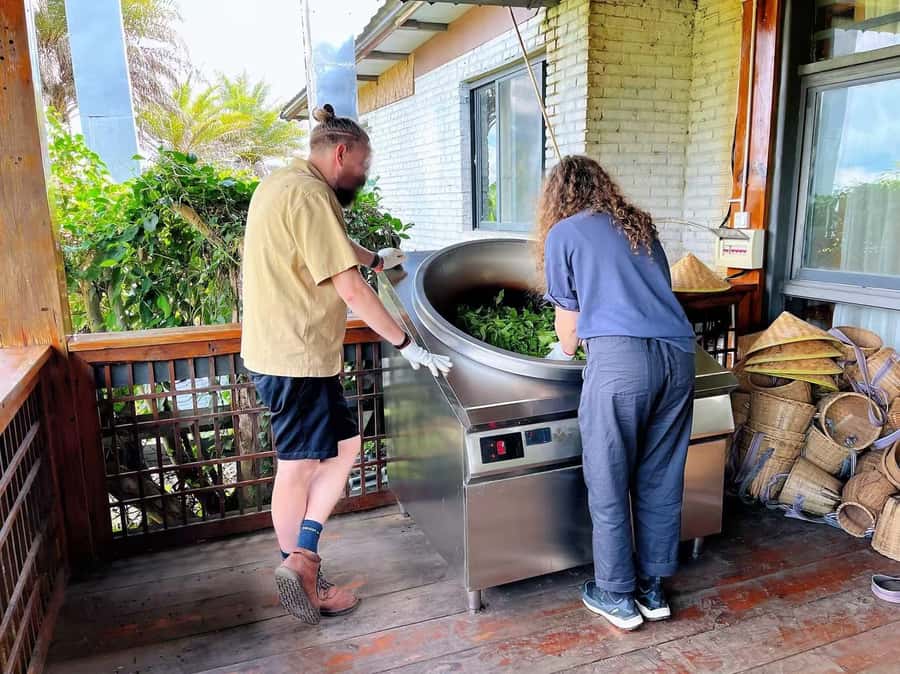
I would choose this trip if you like food and farming experiences, want access to local producers, or have a serious interest in Chinese tea. It also suits people who appreciate a guide who can translate freely and explain cultural details.
It works well for solo visitors because pickup and a small group remove much of the uncertainty of visiting a rural farm alone. One solo woman found Maxime reassuring and responsive before the trip, which is useful if you are booking without companions.
Families can also consider it. The guide has adapted the experience for three children, but the formal information says it is not suitable for babies under one year. It also excludes people over 70, so older visitors should confirm their eligibility before paying.
This is not the best choice if you need a tightly timed five-hour program. The advertised duration is five to seven hours, and the relaxed pace is part of its appeal. The more questions you ask, the more useful the visit becomes, but the less predictable the finish time may be.
Practical Details Before You Book
The tour offers free cancellation up to 24 hours before departure, and you can reserve now and pay later. Starting times depend on availability, so check the morning schedule against your hotel plans.
The group limit is six. Up to three people ride in the VW ID.4, while larger groups use a six-seat minivan. Pickup and return are provided from Jinghong or Pu’er.
Wear comfortable shoes and clothes suitable for a farm visit. Pets are not allowed. If you have mobility concerns, ask the provider for more detail, since the supplied information only specifies the footwear advice and age limits.
You should also confirm three points before booking:
- Is lunch included in your exact reservation, or is it 60 yuan per person?
- Does your chosen departure include a coffee farm visit, or only the tea program?
- What time will you return if you need to catch a train or continue to another activity?
These questions are simple, but they prevent the only real surprises in an otherwise clear plan.
Should You Book This Pu’er Tea Trip?
Book it if you want to understand Pu’er tea through the people, plants, and farm work behind it. The best features are the small group, the patient translation, the chance to pick and process 300 grams of tea, and the tasting that follows the production lesson.
I would especially recommend it from Jinghong or Pu’er when you do not have a car. The pickup, return ride, and local guide solve the hardest practical parts of reaching a plantation.
Skip it if you want only a quick scenic stop, dislike farm activities, or have a tight onward connection. For everyone else, $82 buys more than tea tasting. It buys context, conversation, rural scenery, and a souvenir you helped make.
FAQ
Where does the tea trip begin?
Pickup is provided from Jinghong or Pu’er in southwestern China.
How long does the experience last?
The advertised duration is five to seven hours, with the activity described as a six-hour morning trip.
How many people can join?
The tour is limited to six participants.
What vehicle is used for pickup?
Up to three guests are picked up in a VW ID.4. Groups of more than three use a comfortable six-seat minivan.
Which languages are available?
Live guiding is available in English, French, German, and Italian.
Is tea included?
Yes. You receive 300 grams of Pu’er tea that you pick and process during the visit.
Is lunch included?
The details describe lunch at the farm and also mention an optional local meal costing 60 yuan per person. Confirm the arrangement for your specific booking.
Can I cancel or pay later?
You can cancel up to 24 hours in advance for a full refund. Reserve now and pay later is also available.
Just added in China
- Songcheng Park & Lengend of Song Dynasty Show Ticket★ 4.5 · 3 reviews
- Classic Hangzhou One Day Private Tour★ 5.0 · 3 reviews
- Wuzhen Water Town Self-Guided Tour with Private Transfer from Hangzhou★ 5.0 · 12 reviews
- Private Wuzhen Water Town Day Tour from Hangzhou★ 5.0 · 2 reviews
- Wuzhen Classical Water Town day tour★ 5.0 · 4 reviews
- Wuzhen Water Town Delight Tour With Riverside Lunch Experience★ 5.0 · 15 reviews
- Private Transfer to Shanghai Pudong Airport from Hangzhou★ 5.0 · 3 reviews
- Private Amazing Hangzhou Airport Layover Tour with Lunch or Dinner Option★ 5.0 · 2 reviews
Food & Drink, compared.
Authentic Local Food Tour in Central Shanghai
Read our review →
Beijing Hutong Walking Food and Beer Tour at Hidden Restaurants
Read our review →
Hong Kong’s Tin Hau Hidden Eats Food Tour with 7+ Local Tastings
Read our review →
Hong Kong Food Tour: Central and Sheung Wan Districts
Read our review →Where else this tour turns up