

Reviewed · WALKING TOURS
Private Half-Day Walking Tour of the New Territories Region in Hong Kong
Old Hong Kong is still here. This private four-hour walk through the New Territories gives you a close look at village life, ancestral halls, temples, and Tsui Shing Lau, one of Hong Kong’s oldest pagodas. I like the small private format, which lets you ask questions and set a comfortable pace. I also like the mix of major heritage sites and ordinary streets, where you get a better sense of local life than you would from a sightseeing bus.
The main consideration is the walking. You cover about 5 kilometers and manage some steep slopes, so comfortable shoes and reasonable stamina matter. The tour costs $213.20 per person, which is a serious price for half a day, but the value improves if you want personal guiding, local context, and a private group rather than a standard shared excursion.
In This Review
- Key points at a glance
- Why the New Territories are worth your morning
- Meeting at Tin Shui Wai and setting off
- Tsui Shing Lau: a small pagoda with a big role
- Sheung Cheung Wai and the village streets
- Yeung Hau Temple and local worship
- Yu Kiu Ancestral Hall and Tang Ancestral Hall
- Kun Ting Study Hall and Ching Shu Hin
- Hung Shing Temple and the final heritage stops
- What the private format is really worth
- Walking conditions, timing, and what to bring
- Who will enjoy this tour most
- Should you book the Ping Shan walking tour?
- FAQ
- How long does the tour last?
- Where does the tour begin?
- Where does the tour end?
- How far do you walk?
- Is this a private tour?
- What language does the guide speak?
- Are food and drinks included?
- What happens if bad weather cancels the tour?
Key points at a glance
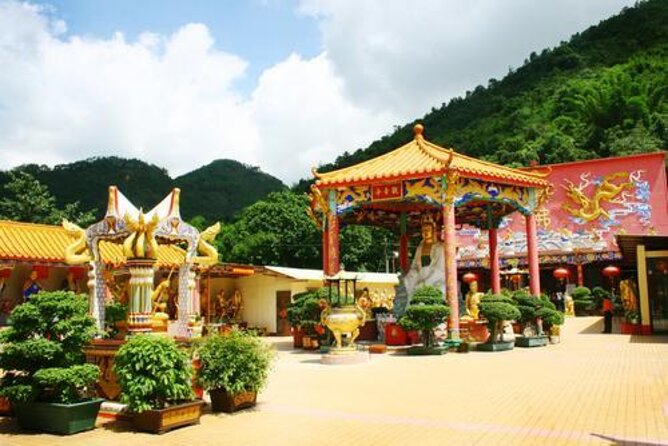
- Tsui Shing Lau begins the story: Start beside one of Hong Kong’s oldest pagodas, then follow the Ping Shan Heritage Trail through historic villages.
- Nine meaningful stops: See temples, ancestral halls, a study hall, a walled village, a historic police station, and the Shrine of the Earth God.
- Private guiding makes a difference: Your English-speaking licensed guide can explain local customs, answer questions, and help with directions after the walk.
- A real neighborhood walk: Sheung Cheung Wai and the surrounding villages give you more than a quick look at Hong Kong’s skyscraper side.
- Plan for hills and distance: The route involves around 5 kilometers of walking, with some steep sections.
- Easy rail access: The tour starts at Tin Shui Wai MTR Station and ends at Yuen Long MTR Station, with hotel pickup offered as an option.
Why the New Territories are worth your morning
Hong Kong is often reduced to harbor views, shopping streets, and high-rise towers. The New Territories offer a different picture. Here, the focus shifts to clan villages, religious buildings, old study halls, and places connected with everyday worship and community life.
The Ping Shan Heritage Trail is especially useful for seeing several historic sites in one walk. You do not need to arrange separate taxis or puzzle out how the buildings fit together. Your guide links the places for you and explains what you are looking at as you move between them.
I like this kind of route because the history is not locked away in a museum. It appears along village lanes and beside ordinary homes. You may see a temple, turn a corner, and find yourself walking through a lived-in neighborhood rather than a preserved historical set.
The private setup also gives the outing a more personal feel. You choose your group size, and only your party joins the tour. That matters if you want to stop for photographs, ask about family traditions, or slow down on a hill without holding up a larger group.
More Walking Tours in Hong Kong
- Dark Side of Hong Kong – Kowloon Caged Homes Walking Tour
★ 5.0 · 418 reviews - Introduction to Hong Kong: Central Tip Based Walking Tour
★ 5.0 · 202 reviews - Full-Day Private Customized Walking Tour of Hong Kong
★ 5.0 · 106 reviews
Meeting at Tin Shui Wai and setting off
The tour begins at Tin Shui Wai MTR Station at 10:00 a.m., unless you arrange hotel pickup. The station meeting point is practical for anyone already using Hong Kong’s rail network, though you should allow enough time to reach the northwestern New Territories from central areas.
From the start, expect a walking tour rather than a quick sequence of photo stops. The full outing lasts about four hours, and the route covers roughly 5 kilometers. Some sections include steep slopes, so I would not treat this as a gentle stroll through flat city streets.
The guide leads you toward the Ping Shan Heritage Trail and the villages of Hang Tau Tsuen and Hang Mei Tsuen. The route unfolds in stages, with temples and clan buildings appearing among the village lanes.
The tour includes expert commentary and local insights from an English-speaking licensed guide. A strong guide is particularly helpful here because many of the buildings are more meaningful once you understand their purpose. A hall may look simple from outside, but its connection to family organization, education, or worship gives it much greater importance.
Tsui Shing Lau: a small pagoda with a big role
The first major stop is Tsui Shing Lau Pagoda. It is described as one of Hong Kong’s oldest pagodas and forms a natural opening to the trail.
The pagoda is part of the Ping Shan story, not an isolated attraction. Your guide can place it within the surrounding villages and explain why such a structure mattered to the local community. This is a good point to take photographs, but the more useful part is hearing how the pagoda fits into the area’s beliefs and traditions.
You spend about 10 minutes at the pagoda, although the timing can depend on the group and the guide’s pace. Since admission is free, the value comes from the explanation and the way the stop connects with the rest of the route.
If you expect a tall monument or a large museum, adjust your expectations. Tsui Shing Lau is a focused stop. Its importance is historical and cultural rather than grand in scale.
Sheung Cheung Wai and the village streets
The walk continues through Sheung Cheung Wai, a walled village dating back about 200 years. This is one of the most interesting sections for anyone who wants to see how village communities were organized.
The walled setting gives the village a clear sense of place. Rather than simply looking at an old building and moving on, you pass through a settlement where the relationship between homes, lanes, and communal structures becomes easier to understand.
The listed visit lasts about 10 minutes, but you will also experience the village as part of the walk between other stops. Your guide talks about local people and daily life as you move through the area. That context is useful because the route is not only about famous buildings. It is also about how old villages fit into present-day Hong Kong.
Be respectful with photography here. The tour passes through places connected with local residents, not just decorative heritage sites. Keep your voice down, follow the guide’s directions, and avoid treating private homes as museum displays.
A completely different sort of day out:
- Lantau Island Day Trip – Big Buddha & Tai O
★ 4.5 · 1,328 reviews - Big Bus Hong Kong Open Top Hop-On Hop-Off Sightseeing Tour
★ 4.0 · 1,077 reviews - Hong Kong Day Tour: City Landmarks & Highlights
★ 4.5 · 798 reviews - Hong Kong International Airport Plaza Premium Lounge Access
★ 3.5 · 787 reviews
Yeung Hau Temple and local worship
Yeung Hau Temple receives about 20 minutes on the route. It is one of the main religious sites visited during the walk and gives you a chance to see a more active form of local heritage.
Your guide explains the temple and its place in the community. The value of this stop is not just architectural. It helps you understand how worship, village identity, and local customs can overlap.
As with any religious building, dress and behavior should be considerate. The supplied tour information does not specify a dress code, but modest clothing and a quiet manner are sensible choices. Your guide can tell you where to stand and what is appropriate during the visit.
I would give this stop your full attention rather than rushing through it for photographs. The route includes several historic buildings, and the guide’s explanations help separate one site from another.
Yu Kiu Ancestral Hall and Tang Ancestral Hall
The ancestral halls provide some of the clearest insight into family and clan life. Yu Kiu Ancestral Hall receives about 10 minutes, while Tang Ancestral Hall receives about 20 minutes.
These are not simply old rooms with wooden furniture. They represent the importance of extended family networks and shared identity in traditional village life. Your guide can help you understand who used these halls and why they were built.
The longer stop at Tang Ancestral Hall gives you more time to look closely and ask questions. This is where private guiding can be especially helpful. In a large group, you may hear a short explanation and move on. With your own guide, you can ask about names, rituals, architecture, or the role of the hall in the village.
Do not expect every building to be open in exactly the same way at every moment. The tour includes the sites listed, but local access and conditions can affect how long you spend inside or outside. The itinerary is best understood as a guided heritage walk, not a promise of lengthy indoor visits at every stop.
Kun Ting Study Hall and Ching Shu Hin
Kun Ting Study Hall is another 20-minute stop. Its presence adds an education theme to the walk. The trail is not only about religion and ancestry. It also shows how learning was valued within the local community.
Your guide can connect the study hall with the area’s wider social structure. The building gives you another way to think about village life, especially the importance of education and status.
Ching Shu Hin also receives about 20 minutes. Together, these stops slow the pace and give the tour more depth. You are not merely collecting names from a checklist. You are seeing the different institutions that helped hold a community together.
The drawback is that this style of sightseeing rewards patience. If you prefer dramatic views, fast movement, or large headline attractions, some of the halls may feel subtle. I think they work best for visitors who enjoy details and want to understand how a place functioned.
Hung Shing Temple and the final heritage stops
Hung Shing Temple is another important religious stop along the Ping Shan Heritage Trail. By this stage, the buildings begin to form a connected picture of the area rather than a series of unrelated sights.
The route also includes the Shrine of the Earth God, Hau Wong Tang Hall, and a historic police station. Not every one of these places receives a separate timed stop in the itinerary, but they are part of the route and broaden the story beyond temples and family halls.
The Shrine of the Earth God is a particularly small-scale detail. It is the sort of feature you could easily miss if you walked alone without knowing where to look. That is one of the strongest reasons to book a guide for this area. The guide directs your attention to details that do not announce themselves with large signs.
The historic police station adds another layer, showing that the route is not limited to religious or clan history. You get a wider look at how the area developed and how different buildings served different needs.
What the private format is really worth
At $213.20 per person, this is not a budget walking tour. The price covers a private experience, an English-speaking licensed guide, and a four-hour route with several heritage sites. Admission to the sites is free, so you are paying mainly for the guide’s time, planning, interpretation, and personal attention.
The price makes more sense for a couple, family, or small group that wants flexibility. If several people share the private booking, the cost may feel more reasonable than it does for one person traveling alone.
I also see value in the ending point. The guide leaves you at Yuen Long MTR Station and can help with directions if needed. That makes it easier to continue exploring or return to your accommodation without having to work out the route yourself.
Food and drinks are not included. Personal expenses are estimated at about $20 USD, or $150 HKD, for the duration. The tour does not promise a meal stop, so eat beforehand and carry water.
Walking conditions, timing, and what to bring
The tour involves around 5 kilometers of walking and some steep slopes. Wear shoes with good grip and bring water. If you have trouble walking uphill or standing for several hours, ask about the route before booking.
The 10:00 a.m. start gives you a full morning and early afternoon activity. Four hours is long enough to see the main sites without turning the day into an endurance test, but the route will feel active rather than leisurely.
Hong Kong’s weather can affect the experience. The tour requires good weather, and poor conditions may lead to a different date or a full refund. The route includes outdoor village streets, so a wet day could make the slopes less pleasant even if the tour goes ahead.
A mobile ticket is provided, and the tour is near public transportation. Confirmation arrives within 48 hours of booking, subject to availability. Free cancellation is available if you cancel at least 24 hours before the start time. Changes or cancellations made later are not accepted.
Who will enjoy this tour most
I would choose this tour if you have already seen central Hong Kong and want a quieter, more local side of the territory. It suits people who enjoy religious buildings, family history, old villages, and guided walking.
It is also a good choice if you dislike large tour groups. You can choose your private group size, ask questions freely, and set a pace that works for your party.
Families may appreciate the private format, especially if children need a break or extra explanation. Still, the 5-kilometer distance and steep slopes mean you should consider your group’s walking ability first.
This is less suitable if you want shopping, food tasting, sweeping city views, or a highly polished attraction with lots of visitor facilities. The appeal here is quieter and more specific. You are coming to understand the New Territories, not to collect a quick skyline photograph.
Should you book the Ping Shan walking tour?
Book it if you want a personal introduction to Hong Kong’s village history and prefer real streets to a bus window. The strongest features are the excellent range of stops, the private guide, and the chance to see details such as the Shrine of the Earth God and Sheung Cheung Wai.
The price is high, especially for a solo visitor, and the walk requires moderate fitness. For a small group that values explanation and convenience, the cost can be justified. For a budget-minded visitor, you may prefer to explore independently, though you would lose the guide’s local context and help with navigation.
The available feedback is very positive, with a full five-star rating from seven reviews. One review specifically praises the guide as extremely knowledgeable and kind, and describes the tour as fun, informative, and well planned. I would place the most weight on that point: the quality of the guide is central to this experience.
FAQ
How long does the tour last?
The tour lasts approximately four hours.
Where does the tour begin?
It begins at Tin Shui Wai MTR Station in Hong Kong at 10:00 a.m. Hotel pickup is also offered as an option.
Where does the tour end?
The tour ends at Yuen Long MTR Station, where the guide can help with directions if needed.
How far do you walk?
You should expect around 5 kilometers of walking, including some steep slopes.
Is this a private tour?
Yes. Only your group participates, and you can choose your private group size.
What language does the guide speak?
The tour includes an English-speaking licensed guide.
Are food and drinks included?
No. Food and drinks are not included. Personal expenses are estimated at about $20 USD, or $150 HKD, during the tour.
What happens if bad weather cancels the tour?
Because the experience requires good weather, you will be offered a different date or a full refund if poor weather causes cancellation.
Just added in Hong Kong
- Walking Tour in Hong Kong – Local Experience (New & Best)★ 4.5 · 33 reviews
- Full Day Private Trip in Hong Kong( impeccable local )walk tour★ 5.0 · 11 reviews
- Hong Kong Guided Dinner + Laser Show Lounge Entry (2023) | 200+ booked★ 3.5 · 7 reviews
- Victoria Peak Tram and Sky Terrace 428 Admission Hong Kong★ 4.5 · 33 reviews
- TurboJet Ferry E-Ticket from Hong Kong to Macau★ 4.5 · 10 reviews
- VIP Private Hong Kong City Sightseeing Tour★ 5.0 · 2 reviews
- Group Vegetarian Food & Cultural Tour★ 5.0 · 16 reviews
- Hong Kong Victoria Harbour Sightseeing Cruise Tickets★ 4.5 · 8 reviews
Walking Tours, compared.
Beijing Hutong Walking Food and Beer Tour at Hidden Restaurants
Read our review →
Private Beijing Walking Tour of the Forbidden City with 7 Options
Read our review →
Dark Side of Hong Kong – Kowloon Caged Homes Walking Tour
Read our review →
Forbidden City Private Walking Tour with Optional Sights
Read our review →
Introduction to Hong Kong: Central Tip Based Walking Tour
Read our review →
Shanghai Highlights Walking Tour With A Real Local
Read our review →Where else this tour turns up