
Reviewed · WALKING TOURS
Private 2-Hour Walking Tour of Shanghai’s Jewish Ghetto
Shanghai’s Jewish past is easy to miss. This private two-hour walk brings you through Hongkou, where the Jewish Refugees Museum, old neighborhood streets, Huoshan Park, and Xiahai Temple tell a story that reaches far beyond the museum walls. I especially like the chance to see everyday Shanghai alongside wartime history, and the personal touch some guides add, including Mason’s visit to his family home. The main concern is focus: the museum can feel partly self-guided, and the Buddhist temple may not suit you if you want only Jewish history.
The tour costs $131.28 per person, with group discounts available, so the value depends heavily on your party size and guide. Annie, Zoe, Mason, Mary, and other guides have earned strong praise for clear English and thoughtful help, but guide quality and historical depth appear to vary. Two hours also passes quickly.
In This Review
- Key points at a glance
- Why Hongkou matters to this two-hour walk
- Starting on Changyang Road with a local guide
- The Jewish Refugees Museum and Ohel Moishe Synagogue
- The Joint Distribution Committee and Huoshan Park
- Walking through the former Jewish Ghetto
- Xiahai Temple and the tour’s unexpected ending
- What the $131.28 price really buys
- Who will enjoy this walk most
- Tips for making the two hours count
- Should you book this Shanghai Jewish Ghetto tour?
- FAQ
- How long does the walking tour last?
- Is this a private tour?
- What is included in the price?
- Is hotel pickup included?
- Where does the tour begin?
- Where does the tour end?
- Does the tour visit the Jewish Refugees Museum?
- Does the tour include Xiahai Temple?
- Are food and drinks included?
- Can I cancel for a full refund?
Key points at a glance
- The Ohel Moishe Synagogue site anchors the tour: The Jewish Refugees Museum explains why Shanghai became a refuge for Jews escaping persecution in Europe.
- Hongkou adds present-day context: You walk through local streets, shops, seafood stalls, and modest residential areas rather than seeing history only behind glass.
- A private format gives you room to ask questions: Only your party participates, making it easier to discuss family connections or request more time at a particular stop.
- Huoshan Park offers a quiet pause: Its memorial to Jewish immigrants gives the walking route a place for reflection.
- Xiahai Temple is an unusual final stop: This Buddhist temple, once known as the fish man’s temple, helps explain the wider neighborhood but may feel unrelated to some Jewish-history visitors.
- Meeting details deserve attention: You meet on Changyang Road, return to the meeting point, and arrange your own transport and food.
Why Hongkou matters to this two-hour walk
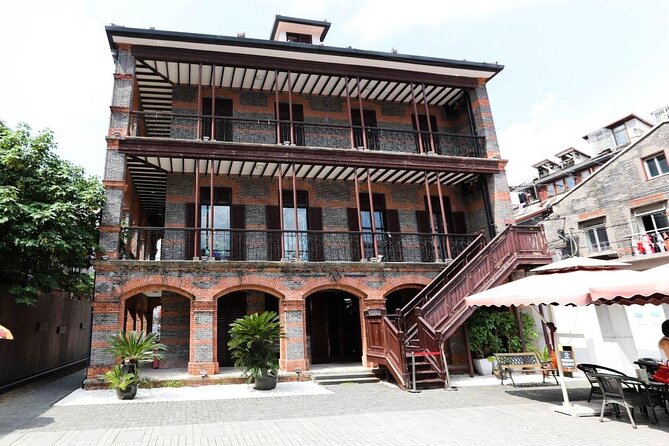
Hongkou is the key to understanding this experience. Shanghai’s Jewish quarter was not a preserved historic district in the polished sense. It was a living neighborhood where refugees shared crowded housing with local residents during difficult years.
That mix is still central to the walk. You see the museum and synagogue site, then move into streets where daily life continues. Craft shops, fresh seafood stalls, rustic restaurants, and ordinary homes give you a sense of the area as a community rather than a single memorial site.
I like this broader approach. The tour does not treat Jewish history as an isolated subject, detached from Shanghai. It shows how refugees lived within a Chinese city and how the district functions today.
Still, you should set your expectations carefully. This is not a full-day historical study, and it is not focused on every Jewish site in Shanghai. One past participant specifically wished the route had included more locations, such as additional ghetto homes and the Peace Hotel. The advertised route centers on Hongkou.
More Walking Tours in Shanghai
- Shanghai Highlights Walking Tour With A Real Local
★ 4.9 · 153 reviews - Shanghai Breakfast Walking Tour of Former French Concession
★ 5.0 · 139 reviews - Private Shanghai Evening Street Food Walking and Cruise Tour
★ 5.0 · 123 reviews
Starting on Changyang Road with a local guide
The meeting point is on Changyang Road in Yangpu District, and the tour finishes back at the meeting point. Hotel pickup and drop-off are not included, so you need to plan your way there and back using Shanghai’s public transport or another option.
Clear directions matter. Mary helped one group find the correct subway after the walk, and Annie was praised for sending precise meeting instructions. At the same time, communication about the meeting place has caused trouble for some people, particularly when arrangements were not clear in advance. I would confirm the exact meeting point, time, and guide contact details before the day of the walk.
The tour is private, which is its best practical feature. Your party is not folded into a large group, and you can ask about family names, refugee routes, religion, or neighborhood life as you go. That matters especially if you have a personal connection to Shanghai’s Jewish community.
Guide quality is less predictable than the private format. Annie, Zoe, Mason, and Masin received especially warm praise for strong English, enthusiasm, and detailed explanations. Other experiences were less satisfying, with concerns about limited Jewish-history knowledge or explanations that lacked sensitivity. I would treat the guide as an important part of the value, not a minor detail.
The Jewish Refugees Museum and Ohel Moishe Synagogue
The tour’s main historical stop is the Shanghai Jewish Refugees Museum, built on the site of Ohel Moishe Synagogue. Admission is included.
This is where the story becomes concrete. You learn how Shanghai served as a place of refuge during periods of persecution in Europe, and why the synagogue mattered to people trying to preserve faith and community far from home. The museum also helps explain the different Jewish groups who reached Shanghai, including people from Iraq, Iran, Russia, and other parts of Europe.
The stop can be deeply moving. One person visited because a parent had gone to the synagogue after fleeing the Nazis and remained in China for eight years. That kind of connection is possible here because the site is not only about distant dates. It can connect directly to family memory.
The museum also covers the work of the American Jewish Joint Distribution Committee, which helped refugees with food, shelter, and other support. The walking route passes the former committee location, adding a useful link between the museum exhibits and the neighborhood outside.
Here is the tour’s central weakness: the museum has its own displays and volunteer interpretation, so you may feel you could have visited it without paying for a private guide. Some guides spend a large share of the two hours inside or around the museum, and a few people felt the museum explanation was rushed or largely self-guided.
I would ask your guide at the start how much time will be spent inside and how much will be devoted to the streets. If your priority is the museum alone, going independently may offer better value. If you want the surrounding neighborhood explained, the private walk earns its price more easily.
The Joint Distribution Committee and Huoshan Park
After or around the museum visit, the route points out the American Jewish Joint Distribution Committee and continues toward Huoshan Park. These stops expand the story from one synagogue to the wider support network that helped refugees survive.
Huoshan Park provides a change of pace. Its trees and memorial to Jewish immigrants offer a quiet place to think about the people who passed through Hongkou, often under pressure and uncertainty. It is not a long attraction, but it gives the route emotional breathing room.
I value this stop because walking history needs pauses. A two-hour tour can otherwise become a list of names, buildings, and dates. The park helps you stop and consider what those facts meant for families living in exile.
The guide’s role is important here. A strong guide can explain how the memorial relates to the refugee community and point out details you might overlook. A less prepared guide may simply lead you through the park without adding much. The difference between those two experiences is substantial.
A completely different sort of day out:
- Authentic Local Food Tour in Central Shanghai
★ 5.0 · 1,382 reviews - Zhujiajiao Water Town and Shanghai City Private Day Tour
★ 5.0 · 1,016 reviews - Private Shanghai Full Day City Tour with Old and New Highlights
★ 5.0 · 995 reviews - Shanghai: Hop-on Hop-off Bus Ticket and Optional Attractions
★ 3.4 · 692 reviews
Walking through the former Jewish Ghetto
The most distinctive part of the tour may be the time spent away from formal sights. You walk through a local neighborhood and see how the former Jewish Ghetto fits into modern Shanghai.
Expect narrow streets, local businesses, seafood stalls, small restaurants, and homes. The route is intended to show daily life and traditional customs, not just historic plaques. That makes the experience more grounded than a museum visit alone.
Some guides have arranged unusually personal encounters. Mason brought a group into his home to show rooms once rented by Jewish refugees, along with a collection of historical photographs. Annie also helped groups enter homes and communicate with elderly Chinese residents. These are memorable moments, but they should not be treated as guaranteed features of every departure. They depend on the guide, the residents, and the circumstances that day.
You may also find that this part of the walk raises difficult questions. The district is not a frozen memorial. People live there now, and the buildings may be modest, altered, or used for purposes unrelated to the past. A respectful attitude matters. You are looking at a real neighborhood, not a stage set.
For me, this is where the private format has its strongest case. You can pause, ask how refugees were housed, and compare past living conditions with the homes you see today. If you care about ordinary life as much as famous buildings, this section may be worth more than another formal exhibit.
Xiahai Temple and the tour’s unexpected ending
The final included stop is Xiahai Temple, a Buddhist temple once known as the fish man’s temple. It is described as a quieter site away from the main tourist path, and the guide explains the temple’s role in the neighborhood and aspects of Buddhist faith.
This stop gives you a wider view of Hongkou. The former Jewish quarter was also a Chinese community, and the temple helps place the refugee story within the area’s older religious and social life.
But the connection may feel thin if your goal is specifically Jewish history. Several people questioned why the tour ended at a Buddhist temple, and some felt it had little to do with the advertised subject. That criticism is fair. The temple can be interesting, but it is not a substitute for more Jewish sites.
I would make your preference clear before you begin. If you enjoy learning about local religion and neighborhood culture, Xiahai Temple adds variety. If you want every minute devoted to Jewish Shanghai, ask whether the guide can spend more time on the former ghetto streets or refugee housing instead.
What the $131.28 price really buys
At $131.28 per person, this is a costly two-hour activity, especially for one or two people. The price includes a private walking tour, an English-speaking local guide, and admission to the Jewish Refugees Museum and Xiahai Temple. Food, drinks, and transport are extra.
The value improves for a group that can use the available discount. You are paying not just for entrance tickets but for a private appointment and local interpretation. A strong guide can make the difference between looking at a neighborhood and understanding why it mattered.
The value drops if you mainly want the museum. The museum is the tour’s clearest essential stop, and its displays can be visited independently. A guide who offers little beyond the museum’s own information will make the price feel hard to justify.
The best reason to book is personal attention. Family research, a serious interest in wartime refuge, or a desire to see residential Hongkou can make this more worthwhile. If you simply have two spare hours and want a quick overview, compare the cost with visiting the museum on your own.
Who will enjoy this walk most
I would recommend this tour to you if you want a small, personal look at history and daily life. It suits people interested in Jewish migration, World War II history, Shanghai neighborhoods, Chinese religious life, and family connections.
It is also useful for anyone who prefers questions and conversation over a fixed audio guide. A private guide can adjust explanations to your interests, though you should still state those interests clearly at the beginning.
You may want another option if you dislike mixed-topic tours. The route covers Jewish refugees, modern local life, and Buddhism. That combination is part of its character, but it will frustrate you if you expect a tightly focused Jewish heritage tour.
The walk is near public transportation, service animals are allowed, and most participants can take part. No special physical restrictions are stated, but it is still a walking tour through streets and parks, so sensible footwear is a good idea.
Tips for making the two hours count
Confirm the meeting details on Changyang Road before you leave. The tour does not include hotel pickup, and unclear instructions have been a problem for some bookings.
Tell the guide whether your priority is the museum, refugee housing, Jewish religious history, local residents, or Xiahai Temple. A private tour gives you a better chance of shaping the balance.
If you have a family connection, bring names and dates that you are comfortable discussing. Guides such as Mason and Annie have helped connect personal stories with the neighborhood, and a private setting is well suited to that kind of conversation.
Allow extra time elsewhere in your schedule if you want to study the museum carefully. Two hours covers several stops, and some people found the museum portion too brief.
Finally, remember that guide quality matters. Strong guides such as Annie, Zoe, and Mason have been praised for clear English, warmth, and historical detail. Since the experience can vary, a confirmation message asking who will guide your group and what the route will cover is sensible.
Should you book this Shanghai Jewish Ghetto tour?
Book it if you want the museum plus the streets around it, and especially if you value a private guide who can connect history with present-day Hongkou. The most rewarding version includes careful explanations, time in local homes when appropriate, and a thoughtful link between the synagogue, refugee aid, the park, and neighborhood life.
Skip it, or visit the museum independently, if your only goal is the exhibits or if $131.28 feels steep for two hours. You should also reconsider if the Buddhist temple sounds like a distraction rather than an interesting part of Shanghai’s wider story.
My call: a worthwhile but guide-dependent experience. For a group with a strong interest in Jewish Shanghai or a family connection, it can be moving and unusually personal. For a casual history stop, the price is harder to defend.
FAQ
How long does the walking tour last?
The tour lasts approximately two hours.
Is this a private tour?
Yes. Only your group participates in the activity.
What is included in the price?
The price includes the private walking tour, a local English-speaking guide, admission to the Shanghai Jewish Refugees Museum, and admission to Xiahai Temple.
Is hotel pickup included?
No. Hotel pickup and drop-off are not included.
Where does the tour begin?
The tour begins on Changyang Road, in Yangpu District, Shanghai.
Where does the tour end?
The activity ends back at the meeting point.
Does the tour visit the Jewish Refugees Museum?
Yes. The museum is located on the site of the Ohel Moishe Synagogue, and admission is included.
Does the tour include Xiahai Temple?
Yes. Xiahai Temple is an included stop, and the guide discusses its Buddhist role in the neighborhood.
Are food and drinks included?
No. Food and drinks are not included.
Can I cancel for a full refund?
Yes, if you cancel at least 24 hours before the experience start time. Cancellations made less than 24 hours in advance are not refunded, and changes within that period are not accepted.
Just added in Shanghai
- Zhujiajiao with Private Customized Shanghai City Highlights★ 5.0 · 14 reviews
- Zhujiajiao Water Village: Private Tour from Shanghai★ 4.9 · 43 reviews
- Zhujiajiao & Shanghai:Private Day Tour Water Town to Skyline★ 5.0 · 12 reviews
- Zhujiajiao Water Town Private Tour with Night River Cruise★ 5.0 · 9 reviews
- Zhujiajiao & Shanghai:Small Group Tour Water Town to Skyline★ 5.0 · 4 reviews
- Yu Garden Shanghai Entry Tickets Booking And Trip★ 3.6 · 9 reviews
- Water Town Zhujiajiao Shanghai: Boat Ride,Sights,Bites&Sips★ 5.0 · 7 reviews
- shanghai Disney tour★ 5.0 · 12 reviews
Walking Tours, compared.
Beijing Hutong Walking Food and Beer Tour at Hidden Restaurants
Read our review →
Private Beijing Walking Tour of the Forbidden City with 7 Options
Read our review →
Dark Side of Hong Kong – Kowloon Caged Homes Walking Tour
Read our review →
Forbidden City Private Walking Tour with Optional Sights
Read our review →
Introduction to Hong Kong: Central Tip Based Walking Tour
Read our review →
Shanghai Highlights Walking Tour With A Real Local
Read our review →Where else this tour turns up