
Reviewed · MING TOMBS TOURS
Ming Tombs Admission Ticket
Royal tombs, quiet mountains, and a long stone road. The Ming Tombs give you a striking look at imperial China, with 13 Ming emperors buried near the southern foot of Tianshou Mountain. I especially like the Sacred Way’s stone carvings and the chance to enter Dingling’s underground palace. The main drawback is distance: the separate tombs are far apart, and this ticket does not include transport between them.
At about $19 per person, the admission is a fair deal if you want to see several major sites in one day. The QR code entry has been quick and simple for many visitors, but you should check the exact entry address carefully because one booking problem sent a visitor to the wrong location.
In This Review
- Key points to know before you go
- Why the Ming Tombs are worth your time
- Walking the Sacred Way and its stone guardians
- Changling and the Hall of Eminent Favor
- Dingling and its underground palace
- Zhaoling and the restored mausoleum
- Getting between the four separate sites
- What the $19 ticket really buys you
- Timing, booking, and what to carry
- How to plan a better one-day visit
- Who will enjoy the Ming Tombs most?
- Should you book this ticket?
- FAQ
- Where are the Ming Tombs located?
- How many Ming emperors are buried at the site?
- Which attractions are included?
- Is the underground palace open to the public?
- Does the ticket include transport between the tombs?
- Do I need to bring my passport?
- Is the ticket valid on any date?
- Can I cancel the booking?
Key points to know before you go
- The Sacred Way comes first for many visitors: Stone animals, officials, and guardians line this ceremonial approach to the imperial tomb area.
- Changling has the grandest surviving hall: The Hall of Eminent Favor is known for its double-eaved roof and golden nanmu pillars.
- Dingling is the underground highlight: It is the only Ming Tomb with an underground palace open to the public.
- Zhaoling adds a restored imperial setting: The tomb of Emperor Muzong offers another look at Ming mausoleum design.
- The sites are spread out: You need a private driver, local transport, or an electric cart at extra cost to move between the main stops.
- Bring your passport: Your full passport name and passport number are needed for the booking, and the ticket is valid only on the selected date.
Why the Ming Tombs are worth your time
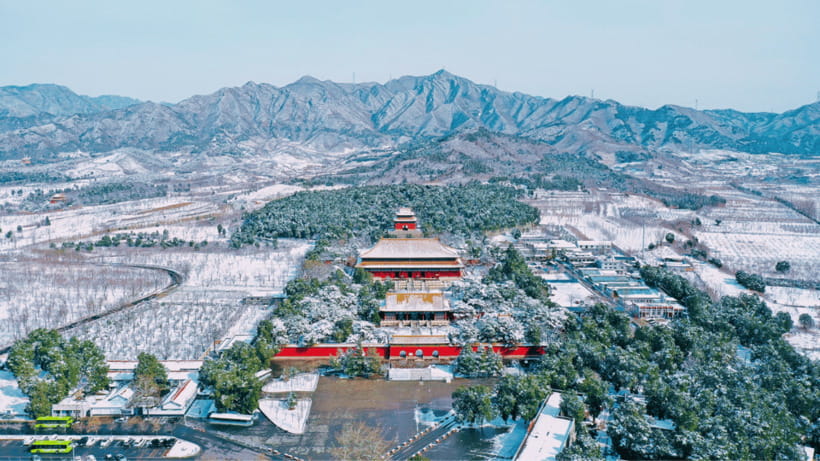
The Ming Tombs are not one single building. They are a large imperial burial area containing the mausoleums of 13 emperors from the Ming Dynasty, which ruled China from 1368 to 1644. The setting at Tianshou Mountain matters: the tombs sit among wooded hills and open ground rather than in the middle of Beijing’s crowded streets.
I like this visit because it combines architecture, sculpture, and royal ceremony. You are not simply walking through a museum. You are following the same broad pattern used to honor emperors, from the ceremonial Sacred Way to the individual tomb compounds.
The site also helps explain how Ming rulers presented power after death. Large gates, courtyards, halls, stone figures, and carefully planned burial areas all had a role. Even if you do not know much about Chinese dynasties, the scale makes the purpose clear.
The ticket covers Dingling, Changling, Zhaoling, and the Sacred Way, depending on the option you select. That combination gives you the best chance to see different sides of the area, but it also creates a transport problem. You cannot treat the four stops as one compact attraction.
More Ming Tombs visits:
- Great Wall of China at Badaling and Ming Tombs Day Tour from Beijing
★ 4.5 · 731 reviews - Private Beijing Day Trip: Mutianyu Great Wall and Ming Tombs
★ 5.0 · 114 reviews - Beijing: Mutianyu Great Wall and Ming Tombs Private Tour
★ 5.0 · 114 reviews
Walking the Sacred Way and its stone guardians
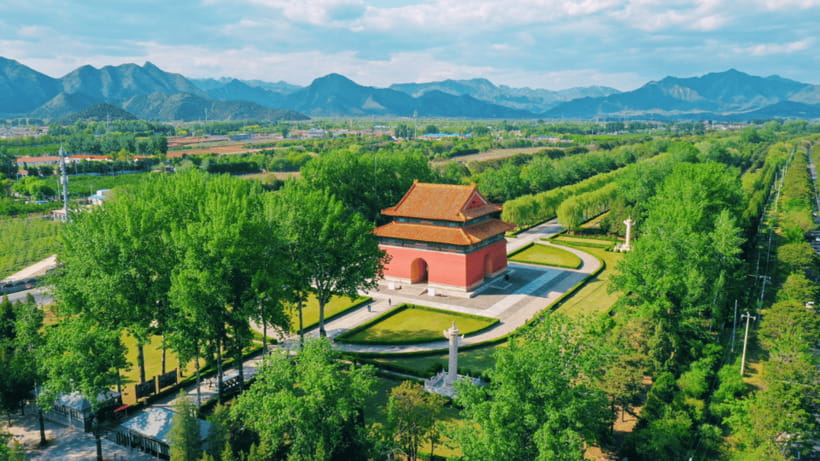
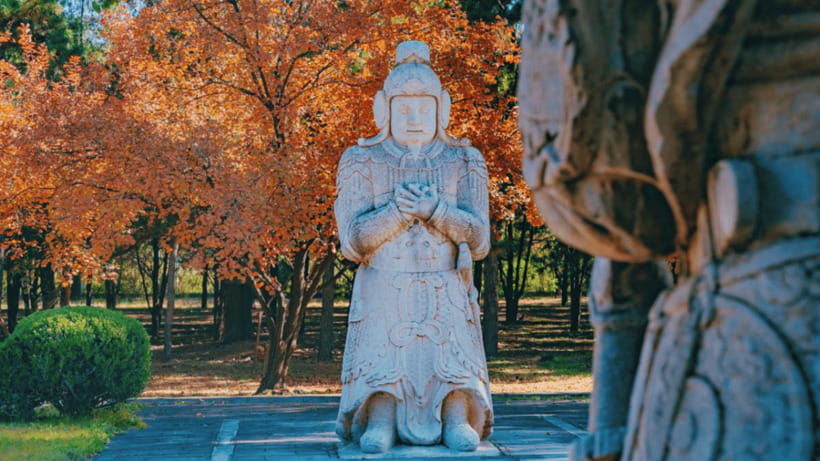
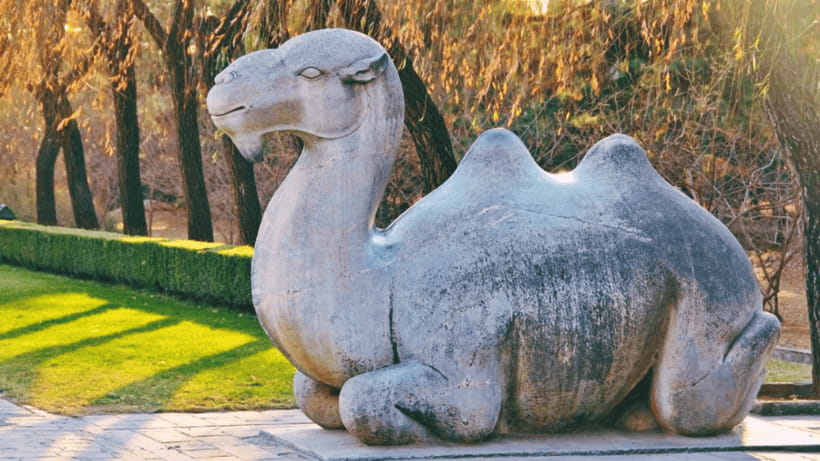
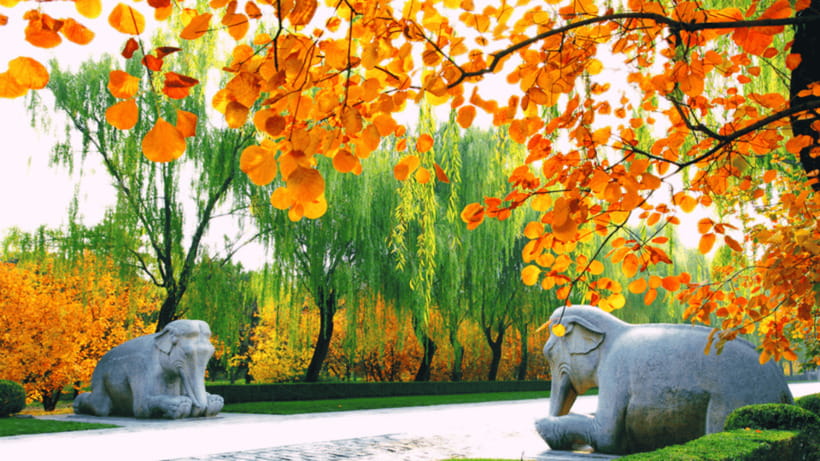
The Sacred Way is the natural starting point for understanding the Ming Tombs. This ceremonial road is lined with stone statues, including animals and human figures, placed to guide and protect the imperial approach.
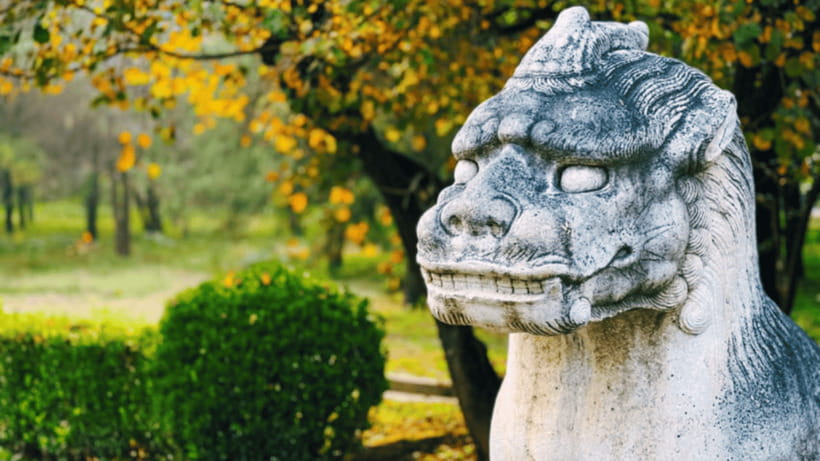
The carvings are one of the most memorable parts of the visit. Look closely at the faces, posture, and size of the figures. Ancient stone workers had to create convincing shapes from hard material, and the statues still communicate authority even after centuries outdoors.
The path also gives you a sense of movement. It was not designed as a random collection of sculptures. It connects the visitor to the tomb zone and creates a formal approach through the surrounding countryside.
Allow yourself time here rather than treating it as a quick photo stop. The road is one of the few parts of the visit where the wider setting and the imperial ceremony come together. You may find the walk more peaceful than the larger tomb compounds, especially when you pause beside the statues instead of rushing from one end to the other.
Changling and the Hall of Eminent Favor
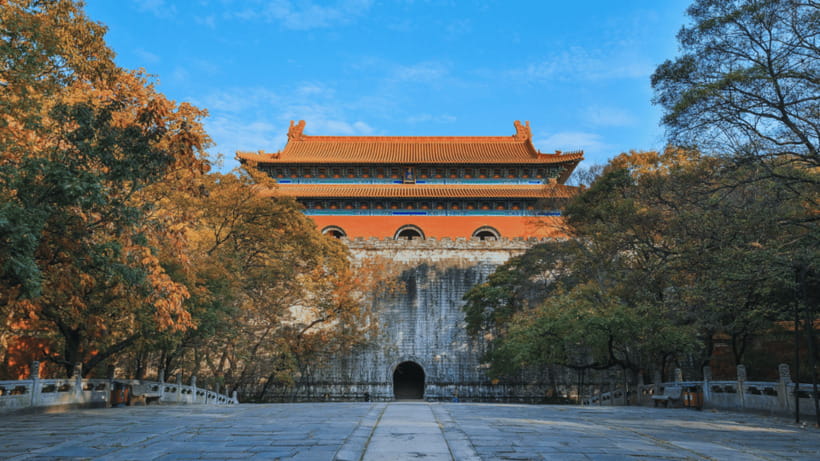
Changling is the tomb of Emperor Yongle, also known as Zhu Di. It is the largest and most impressive of the tombs included in this experience, so it deserves a proper visit rather than a short stop between transport connections.
The main architectural prize is the Hall of Eminent Favor. Its double-eaved roof gives it a grand, formal profile, while the golden nanmu pillars are especially notable. Nanmu was prized for its strength and quality, and these pillars help you appreciate the level of material and labor invested in an imperial building.
Changling is valuable even if you are more interested in architecture than burial customs. The hall, courtyards, and surrounding structures show how the Ming court used symmetry and scale to express status.
I would spend more time at Changling than at a minor exhibit or souvenir area. The building is a strong example of Ming design, and it helps put the other tombs into context. The drawback is that the scale can feel spread out, particularly if you are trying to visit all four included areas in a single day.
Dingling and its underground palace
Dingling is the tomb of Emperor Wanli, and it offers the most unusual part of the visit: an underground palace open to the public. This is the only underground palace at the Ming Tombs that visitors can enter.
The underground chambers change the mood completely. Above ground, the tombs present order, ceremony, and monumental architecture. Below ground, the focus shifts toward burial space and the engineering required to build a royal mausoleum beneath the earth.
You will also find artifacts and historical displays connected with the Ming period. These objects give the site more meaning than architecture alone, since they show the craftsmanship associated with the imperial court.
Dingling can be the busiest or most physically demanding stop because the underground setting includes stairs and enclosed spaces. The experience is still worthwhile if you want something beyond rooflines and courtyards, but you should not assume the entire visit is a flat walk.
The ticket information identifies the attraction as wheelchair accessible, although the underground palace may present practical limits depending on the route and facilities in use. If accessibility is important to you, confirm the specific arrangements before booking.
A few more to weigh up in Beijing
- From Beijing: Mutianyu Great Wall Tours with Options
★ 4.9 · 9,216 reviews - Beijing: Forbidden City Tour(Group/Private)-Tickets Included
★ 4.8 · 7,974 reviews - Beijing: T-Square & Forbidden City Group or Private Tour
★ 4.8 · 4,446 reviews - All-Inclusive Tour: Tiananmen Square, Forbidden City, Great Wall
★ 5.0 · 2,873 reviews
Zhaoling and the restored mausoleum
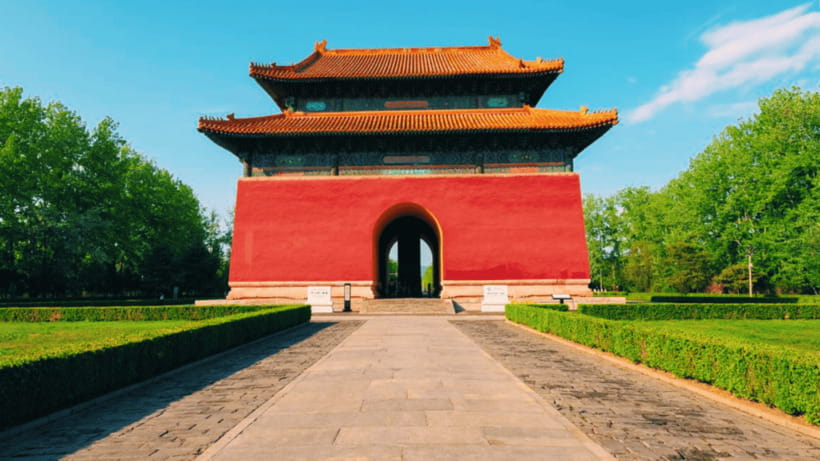
Zhaoling is the mausoleum of Emperor Muzong. Restoration has helped reveal the original splendor of this imperial burial complex, giving you another useful point of comparison with Changling and Dingling.
Zhaoling may not have the same name recognition as Changling, but it adds depth to the visit. You can see how the basic imperial mausoleum pattern was preserved while details and condition vary from one tomb to another.
This is the kind of stop that rewards visitors who enjoy old structures and careful comparison. Notice the placement of the halls, the gates, and the open spaces. Together, the sites show how a standard imperial plan could be adapted for different emperors.
If your time is tight, Zhaoling can feel like the stop most easily sacrificed. I would not skip it automatically, though. The restored structures provide a useful contrast with the larger and more famous Changling.
Getting between the four separate sites
This is the most important practical issue. The Sacred Way, Changling, Dingling, and Zhaoling are not all within a short walk of one another.
The admission ticket gets you into the listed attractions, but it does not include a guide, meals, souvenirs, or electric cart use. Electric carts cost extra, and you may need another form of transport to build a workable day.
One visitor arranged a private driver on site to travel from the statue-lined path to the three tombs and then continue to the metro for the return to Beijing. That approach can save considerable time, especially if you want to see every included stop rather than spend much of the day waiting or walking along roads.
You should plan your transport before arrival. A low ticket price loses some of its value if you spend hours trying to connect the sites. The attraction is best treated as a group of related locations, not a single walk-through monument.
Also check the entry address with care. A recent visitor arrived at the address shown during booking and was told the ticket was not valid there. The correct location was said to be about 10 kilometers away, and the visitor missed entry because there was not enough time to reach it. Confirm where the QR code is accepted and match that location with your transport plan.
What the $19 ticket really buys you
At $19 per person, this is a reasonable admission price for a full day of cultural sites. You receive access to major tombs and historical areas, including the Sacred Way, Changling, Dingling, and Zhaoling when selected in your option.
The value is strongest for an independent visitor who wants entry handled in advance and does not need a guide. The QR code has made entry easy and quick, and it is generally sent the day before the attraction. That can reduce time spent at ticket windows.
The price does not cover the parts that may matter most for a complicated day. You pay extra for electric carts, and you must arrange your own transport between distant tombs. There is also no meal or guided explanation included.
For that reason, I would compare the $19 admission with your full day budget, not just the headline price. If you already have a driver or a clear transport plan, the ticket is good value. If you are relying on improvised connections, the low admission cost may not feel like a bargain.
Timing, booking, and what to carry
The ticket is valid for one day and only on the date selected at booking. You should choose carefully because the booking information says tickets cannot be refunded once sold.
You must provide your full name exactly as it appears on your passport, along with your passport number. Bring that passport with you. If the required details are not sent in time, the booking may be canceled and a cancellation fee may apply.
Booking ahead is sensible during busy periods. The experience allows cancellation up to 24 hours in advance for a full refund under the stated cancellation terms, but once the ticket is sold, the separate non-refundable rule becomes important. Read the final booking conditions carefully before payment.
The experience is listed as wheelchair accessible, and you should still consider the spread-out grounds and the underground palace route when judging whether it suits your needs. Pets, weapons, sharp objects, alcohol, drugs, and explosive substances are not allowed.
The ticket is not considered suitable for children under 18. That makes this a better choice for adults interested in architecture, burial customs, sculpture, and Chinese royal history than for families looking for a casual attraction.
How to plan a better one-day visit
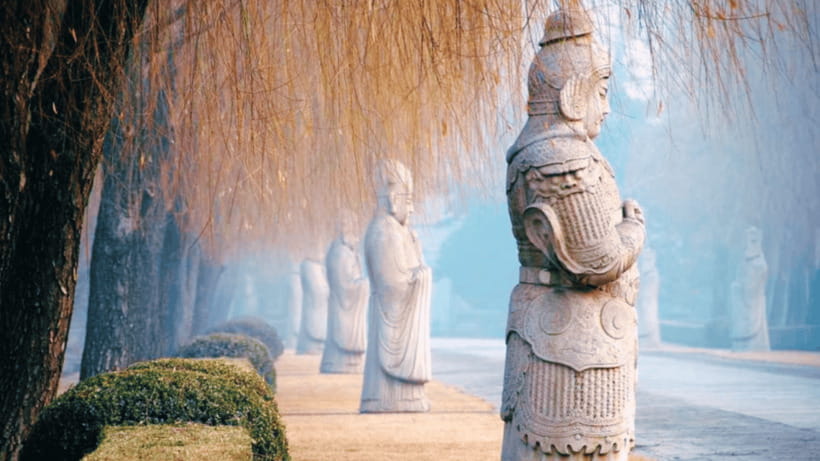
I would begin with the Sacred Way, then continue to Changling, Dingling, and Zhaoling if your transport allows. This order moves from the ceremonial approach to the major imperial compounds and finishes with the restored mausoleum, though your actual sequence may depend on entry instructions and local transport.
Do not schedule the day too tightly. The four stops are separated, and delays with a driver, electric cart, or entry point can quickly cut into your visiting time.
If you want the fullest experience, arrange transport for all major stops in advance. A private driver is one practical option, based on the experience of arranging one locally, but the ticket itself does not provide that service.
Give Changling and Dingling the most attention. Changling has the strongest architectural impact, while Dingling provides the rare underground experience. Use the Sacred Way for close study of the carvings, and treat Zhaoling as an important comparison rather than a spare stop.
You should also leave room to look at exhibits and artifacts. The buildings tell you how the imperial burial system looked, while the objects reveal the skill and materials behind it.
Who will enjoy the Ming Tombs most?
I recommend this experience if you like historic buildings, stone sculpture, royal burial sites, and large outdoor heritage areas. It works particularly well for adults who want a full day away from central Beijing and prefer to explore at their own pace.
It is less suitable if you want a guided explanation at every stop. No guide is included, so you need to read signs, arrange your own interpretation, or visit with someone who can explain the history.
You should also think twice if you dislike complicated transport. The sites are far apart, and the ticket does not solve that problem. A little planning makes the day much better.
The experience has received a strong overall rating of 4.3 out of 5, with particular praise for smooth admission and easy QR code entry. That positive side is worth emphasizing, but the address problem shows why you should verify the exact location before setting out.
Should you book this ticket?
Book it if you want access to several important Ming imperial sites for about $19 and you are comfortable arranging transport between them. The Sacred Way, Changling’s grand hall, Dingling’s underground palace, and Zhaoling’s restored setting create a varied day rather than four versions of the same tomb.
Skip it if you need a fully guided tour, included transportation, or a simple single-site visit. The admission is good value, but only when you treat transport and address checks as part of the plan.
For the best result, send your passport details promptly, carry your passport, confirm the correct entry point, and arrange a driver or electric cart budget before you arrive. Do that, and the Ming Tombs can provide one of Beijing’s most substantial looks at imperial architecture and ceremony.
FAQ
Where are the Ming Tombs located?
The Ming Tombs are at the southern foot of Tianshou Mountain in Changping District, about 50 kilometers north of Beijing.
How many Ming emperors are buried at the site?
Thirteen emperors from the Ming Dynasty are buried in the Ming Tombs area.
Which attractions are included?
Depending on the selected option, the ticket includes Dingling, Changling, Zhaoling, and the Sacred Way, along with admission to the listed historical sites and exhibits.
Is the underground palace open to the public?
Yes. Dingling is the only underground palace at the Ming Tombs opened to the public.
Does the ticket include transport between the tombs?
No. Electric cart use costs extra, and transport between the separate tomb areas is not included.
Do I need to bring my passport?
Yes. You must bring your passport, and the booking requires your full name as shown on the passport and your passport number.
Is the ticket valid on any date?
No. The ticket is valid only on the date selected during booking and is intended for one day.
Can I cancel the booking?
The stated cancellation policy allows cancellation up to 24 hours in advance for a full refund. Tickets are also described as non-refundable once sold, so check the final terms and select the date carefully.
Just added in Beijing
- Private Transfer to Mutianyu Great Wall with professional driver★ 5.0 · 19 reviews
- One day tour to downtown Tianjin from Beijing by high speed train★ 5.0 · 3 reviews
- ZANBUS: Trip to the Jinshanling Great Wall Departing at 7:30 AM★ 5.0 · 5 reviews
- camp on the Great Wall overnight with sunrise and sunset on the wall★ 5.0 · 11 reviews
- Yuxiandu Chinese Royal Cuisine Museum with Show and Royal Banquet★ 5.0 · 4 reviews
- Wild Great Wall Hikes★ 5.0 · 10 reviews
- BusDa:Ancient Great Wall &Badaling Great Wall Full-day Bus Tour★ 4.5 · 6 reviews
- Wild Great Wall Huanghuacheng Half Day Tour★ 5.0 · 15 reviews
Ming Tombs Tours, compared.

Great Wall of China at Badaling and Ming Tombs Day Tour from Beijing
Read our review →
Mutianyu Great Wall and Ming Tombs Private Tour
Read our review →
Private Beijing Day Trip: Mutianyu Great Wall and Ming Tombs
Read our review →Mutianyu Great Wall and Ming Tombs Private Tour
Read our review →
Mutianyu + Ming Tombs or Summer Palace Private Day Tour
Read our review →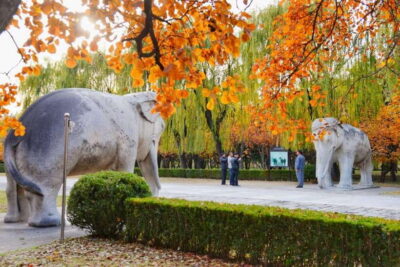
Juyongguan Great Wall, Sacred Way & Ming Tombs Trip
Read our review →
Private Tour: Ming Tombs and Great Wall at Mutianyu from Beijing
Read our review →
Private Tour to Mutianyu Great Wall and Ming Tombs
Read our review →Where else this tour turns up