
Reviewed · WORKSHOPS
Mahjong 101 Class for Beginners Workshop
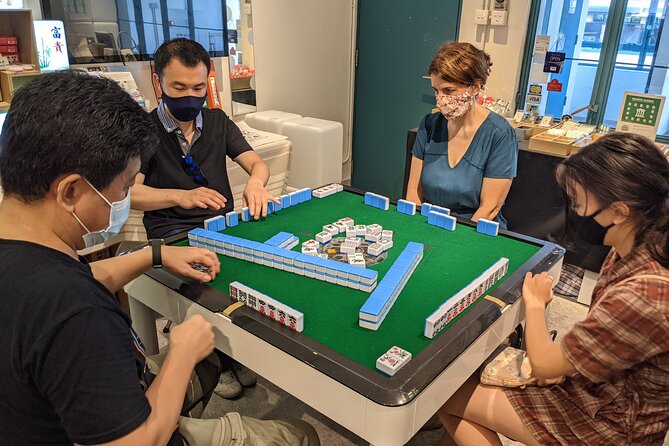
Mahjong is easier to learn than it looks. At Glocal Mahjong inside PMQ, you get a friendly introduction to Cantonese mahjong, plus a look at the tiles, customs, and stories that give this local game its staying power. I like the setting, a mahjong shop that also works as a small museum, and I like the hands-on format using an electronic table. The main consideration is the price: at $85.28 per person for about two hours, this is a specialized cultural activity rather than a cheap way to fill an afternoon.
You begin and end at Glocal Mahjong on the fourth floor of PMQ in Central. The class covers tile recognition, winning patterns, basic scoring, etiquette, and simple strategy. I also appreciate that the activity is private, so your group gets the instructor’s attention instead of trying to follow a lesson across a crowded room. Still, mahjong has a fair number of rules, and you should expect a brisk introduction, not mastery in one sitting.
In This Review
- Key points to know before you book
- Why mahjong makes a good Hong Kong lesson
- Starting at Glocal Mahjong inside PMQ
- The first lesson: recognizing the tiles
- Learning how a Cantonese mahjong hand wins
- Basic scoring and the role of etiquette
- Marco’s historical context adds value
- What the electronic table changes
- The private format and group size
- Who will enjoy this class most
- Timing, tickets, and the cancellation rule
- Should you book the Glocal Mahjong class?
- FAQ
- Where does the mahjong class meet?
- Where does the activity end?
- How long does the class last?
- How much does the class cost?
- Is this a private activity?
- Is the class suitable for beginners?
- What type of mahjong will you learn?
- Is equipment provided?
- Is the meeting point near public transportation?
- Can you cancel for a full refund?
Key points to know before you book
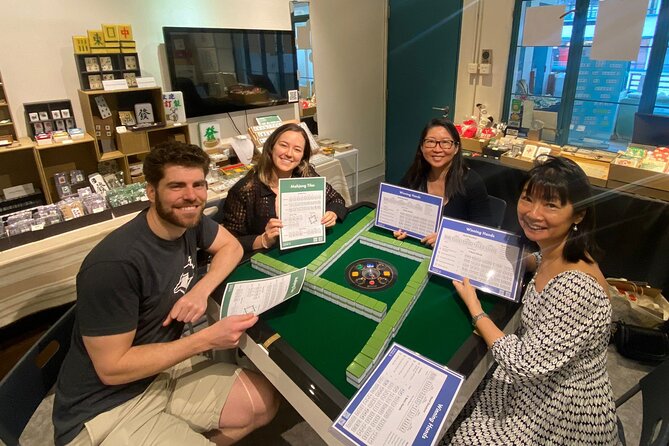
- A private two-hour Cantonese mahjong lesson: Your group has the class to itself, which makes it easier to ask questions and practice at your own pace.
- Held at Glocal Mahjong in PMQ: The venue is both a working mahjong shop and a small museum devoted to the game.
- Electronic mahjong table provided: You can focus on learning instead of worrying about setup and tile handling.
- Covers the useful basics: Expect instruction on tile types, winning a game, etiquette, scoring, and beginner strategy.
- A cultural activity as well as a game lesson: The class connects mahjong with Hong Kong traditions and its modern forms.
- Free cancellation up to 24 hours ahead: Late cancellations and changes are not accepted for a refund.
Why mahjong makes a good Hong Kong lesson
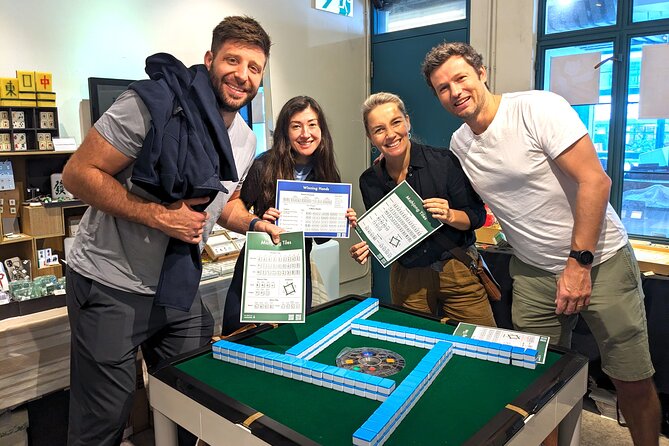
Mahjong is not simply a tile game. In Cantonese communities, it has long been tied to family gatherings, social time, competition, and luck. The rules can look bewildering when you first see a full table in action, but the game becomes less mysterious once you know what the tiles mean and what players are trying to build.
That is where this class earns its place in a Hong Kong itinerary. You are not only watching a cultural display. You are learning enough to understand why players sort tiles quickly, pause before discarding, and pay attention to every move around the table.
The class introduces Cantonese mahjong, rather than presenting a generic version of the game. That distinction matters because mahjong has different regional rules and customs. A lesson grounded in Hong Kong gives you a more local point of reference, even if you do not go on to play competitively.
I like this kind of activity for visitors who want a cultural experience with some participation. You are not sitting in a lecture for two hours. You are learning by looking at tiles, following examples, and trying to make sense of the decisions involved.
More Workshops in Hong Kong
- Organic Chinese Dumpling Class with Market Walk
★ 5.0 · 88 reviews - Organic Xiao Long Bao Soup Dumpling Class & Market Walk
★ 5.0 · 62 reviews - Tea Tasting and Pairing Concept Workshop
★ 5.0 · 57 reviews
Starting at Glocal Mahjong inside PMQ
The meeting point is Glocal Mahjong, also identified by its Chinese name, 一筒 麻雀. It is at S405 on the fourth floor of PMQ, at 35 Aberdeen Street in Central. The activity returns to the same spot when the class ends.
PMQ is a restored historic landmark and one of Central’s cultural venues. That makes the location useful in its own right. You can pair the class with other time at PMQ, though the class itself remains the main event.
Glocal Mahjong is more than a plain classroom. It is a mahjong-themed shop with a small museum component, so the setting helps explain the game before formal instruction begins. You might find the venue especially appealing if you enjoy objects, traditions, and design details as much as the activity itself.
The location is near public transportation, which simplifies the journey through Central. The supplied information does not specify the nearest station or the exact walking route, so allow enough time to find the correct floor and unit inside PMQ. PMQ can feel like a maze on a first visit, and S405 is a more useful direction than simply searching for the shop from outside.
The first lesson: recognizing the tiles
Every mahjong lesson has to begin with the pieces. The class teaches you how to recognize the tiles, an essential first step because the game makes little sense if the symbols and categories are still a blur.
You will work through the basic tile set and learn to distinguish the different types. The aim is not to memorize a huge amount of information at once. It is to give you enough visual control to see possible groups and understand what other players are holding or discarding.
This is one of the most valuable parts for a true beginner. Watching experienced players handle tiles can make mahjong seem impossibly fast. Learning the tile families first gives you a foothold.
The electronic table also helps here. Since the table is provided by Glocal Mahjong, you do not need to bring equipment or figure out how to arrange a traditional setup before the lesson can begin. The technology handles the table mechanics, leaving more time for the instructor to explain the game.
Learning how a Cantonese mahjong hand wins
Once you can identify the tiles, the class moves toward the central question: how do you win? You will learn the basic structure of a winning hand and the patterns you are trying to form.
Mahjong combines planning with changing circumstances. You may begin with one idea, then adjust when the tiles do not cooperate. Some decisions involve strategy, while others depend on luck. That mix is a large part of the game’s appeal, and the class gives you a way to see it without being thrown into a full table of experienced players.
Do not expect every possible winning hand or advanced tactic to be covered in detail. Two hours is enough for a useful foundation, not a complete rulebook. I would treat the class as a first set of tools: after it, you should understand what players are attempting and have a basis for practicing further.
The competitive side should still be present, but the private format makes the lesson less intimidating. You can ask why a tile was chosen or discarded without worrying about holding up a public game.
A completely different sort of day out:
- Lantau Island Day Trip – Big Buddha & Tai O
★ 4.5 · 1,328 reviews - Big Bus Hong Kong Open Top Hop-On Hop-Off Sightseeing Tour
★ 4.0 · 1,077 reviews - Hong Kong Day Tour: City Landmarks & Highlights
★ 4.5 · 798 reviews - Hong Kong International Airport Plaza Premium Lounge Access
★ 3.5 · 787 reviews
Basic scoring and the role of etiquette
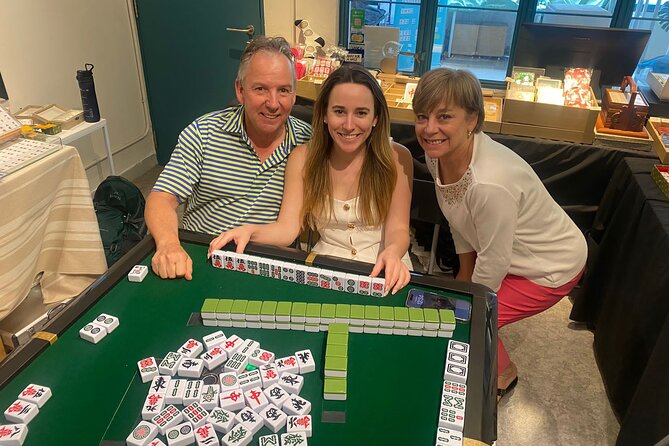
Scoring is often the point where beginners lose the thread. A winning hand is not always worth the same amount, and Cantonese mahjong uses scoring rules that affect how players approach the game.
The class covers basic scoring rules, giving you a working introduction rather than leaving you with the idea that every win has equal value. That is important because scoring changes the choices you make. A player may not simply chase the first possible win. The value of a hand can affect the risk.
You will also learn basic etiquette. This is a practical cultural lesson, not a decorative extra. Table games rely on a shared rhythm, and etiquette helps everyone understand when to draw, discard, wait, and respond.
The information provided does not list every custom covered in class, so you should not expect a full guide to every regional variation. Still, even a basic understanding can help you watch a mahjong game in Hong Kong with more confidence and less guesswork.
Marco’s historical context adds value
One particularly useful detail is the instructor’s name, Marco. The class has been praised for clear instruction and for the historical context he gives about how mahjong started.
That history matters because it connects the rules to real social use. You learn not only what to do with the tiles, but why the game has remained important and how it has reached people around the world. The lesson presents mahjong as both an old tradition and a game that continues to adapt.
I would value this part even if I had no plan to play again. A cultural class works best when it explains the object and the people around it, not just the mechanics. Marco’s historical material appears to give the session that wider frame.
The information does not promise that Marco will lead every scheduled class, so treat his participation as a useful detail rather than a guarantee. Confirmation is sent within 48 hours of booking, subject to availability.
What the electronic table changes
An electronic mahjong table may sound less traditional than a hand-arranged table, but it has clear advantages for a short beginner class. Setup is faster, tiles are easier to manage, and the instructor can keep the lesson moving.
For you, this means more time spent learning the game itself. Beginners often need their attention for symbols, patterns, turn order, and scoring. Removing some of the physical setup reduces the number of things competing for your attention.
There is also a tradeoff. If your main goal is to experience the tactile ritual of manually arranging and shuffling tiles, the electronic table may feel less old-fashioned. The class is designed for access and instruction, not for recreating every part of a traditional home game.
That balance seems sensible for a two-hour session. You get the social and competitive structure of mahjong while using equipment supplied by the venue.
The private format and group size
This is a private activity, meaning only your group participates. The class is also described as taking place in a small, cozy setting. The exact maximum number of people is not stated, so I would not book it expecting a specific class size.
The private format is one of the strongest practical features. If you are traveling with friends or family, you can learn together and ask questions that fit your group’s level. A mixed group of complete beginners and more experienced players may also benefit from the instructor’s ability to adjust the explanation.
Group discounts are available, which may improve the value for a larger party. At the listed price of $85.28 per person, the cost is easier to justify when you consider the private teaching, the venue, the equipment, and the cultural explanation.
Still, price-sensitive visitors should compare this with other short activities in Hong Kong. You are paying for instruction and access to a specialist setting, not for a full-day tour or a meal. The value is strongest if mahjong interests you or if you want a hands-on cultural lesson that you could not easily arrange on your own.
Who will enjoy this class most
I would recommend the class to several types of visitors:
- First-time mahjong players who want rules explained without pressure.
- Couples, families, or friends looking for a shared indoor activity.
- Visitors curious about Hong Kong customs beyond food and sightseeing.
- Anyone who enjoys strategy games and wants to understand the basics of a famous Asian pastime.
- Experienced players who want a look at Cantonese rules and local context.
It may be less suitable if you want a long, relaxed game with plenty of time for repeated practice. The session lasts about two hours, and the supplied outline focuses on learning the basics.
You should also know that the activity requires good weather under its cancellation terms. The class is indoors, but the provider may cancel in poor weather and offer another date or a full refund. Check conditions before setting your schedule around it.
Timing, tickets, and the cancellation rule
The activity lasts approximately two hours. It is booked, on average, 14 days ahead, so I would reserve early if your Hong Kong dates are fixed. Confirmation arrives within 48 hours, subject to availability.
A mobile ticket is accepted, which keeps the arrival process simple. Bring the booking information on your phone and allow time to reach the fourth floor of PMQ.
Free cancellation is available until 24 hours before the local start time for a full refund. If you cancel or request changes inside that 24-hour window, you should expect no refund. The same-day cutoff is worth remembering because short cultural classes often sit between larger sightseeing plans.
Should you book the Glocal Mahjong class?
Book it if you want a focused, local activity that combines game instruction, cultural context, and social play. The PMQ setting, private format, electronic table, and Marco’s historical explanation give the class more substance than a quick demonstration.
I would be especially happy to recommend it to a group of friends or family members. You can learn together, compare decisions, and leave with enough knowledge to recognize what is happening when mahjong appears elsewhere in Hong Kong.
Skip it if you are looking for a bargain activity, a full competitive match, or a broad tour of Central. At $85.28 per person, it is a niche class. For the right audience, though, it offers a clear look at a game that remains part of Hong Kong’s social life, and it does so in a welcoming setting rather than behind glass.
FAQ
Where does the mahjong class meet?
It meets at Glocal Mahjong 一筒 麻雀, unit S405 on the fourth floor of PMQ, 35 Aberdeen Street, Central, Hong Kong.
Where does the activity end?
The class ends back at the same meeting point at Glocal Mahjong.
How long does the class last?
The class lasts approximately two hours.
How much does the class cost?
The listed price is $85.28 per person.
Is this a private activity?
Yes. Only your group participates in the activity.
Is the class suitable for beginners?
Yes. It teaches tile recognition, how to win a game, basic etiquette, basic scoring, and beginner strategy.
What type of mahjong will you learn?
The class teaches Cantonese mahjong.
Is equipment provided?
Yes. The lesson uses an electronic mahjong table provided by Glocal Mahjong.
Is the meeting point near public transportation?
Yes. The meeting point is near public transportation.
Can you cancel for a full refund?
Yes. You can cancel at least 24 hours before the local start time for a full refund. Cancellations or changes made less than 24 hours before the start are not refunded.
Just added in Hong Kong
- Walking Tour in Hong Kong – Local Experience (New & Best)★ 4.5 · 33 reviews
- Full Day Private Trip in Hong Kong( impeccable local )walk tour★ 5.0 · 11 reviews
- Hong Kong Guided Dinner + Laser Show Lounge Entry (2023) | 200+ booked★ 3.5 · 7 reviews
- Victoria Peak Tram and Sky Terrace 428 Admission Hong Kong★ 4.5 · 33 reviews
- TurboJet Ferry E-Ticket from Hong Kong to Macau★ 4.5 · 10 reviews
- VIP Private Hong Kong City Sightseeing Tour★ 5.0 · 2 reviews
- Group Vegetarian Food & Cultural Tour★ 5.0 · 16 reviews
- Hong Kong Victoria Harbour Sightseeing Cruise Tickets★ 4.5 · 8 reviews
Workshops, compared.

Half-Day Chengdu Cooking Class with a Local Market Visit
Read our review →

Organic Chinese Dumpling Class with Market Walk
Read our review →
Online Cooking Class Beijing Dumplings and Cuisine by Sunflowerli Renowned Chef
Read our review →
Organic Xiao Long Bao Soup Dumpling Class & Market Walk
Read our review →
Beijing Wangfujing Calligraphy Class by Forbidden City
Read our review →Where else this tour turns up