
Reviewed · COOKING CLASSES
Half-day Chengdu Handmade Tofu Making and Mapo Tofu Cooking Class
Beans become dinner here. This Chengdu workshop pairs a local spice-market visit with hands-on tofu making, then turns the fresh tofu into Mapo Tofu. I like the bean-to-dish process, especially the chance to use a stone mill and see soy milk, tofu brain, and pressed tofu made in one session. I also like the small maximum of 15 people, which should give the chef room to help rather than leaving you stranded at the back of a crowded class.
The main consideration is time. The workshop is advertised as three to five hours, with the class itself listed at about four hours, so it takes a solid part of your day. At $90 per person, it is not a cheap meal, but the price includes instruction, food, drinks, recipes, a market visit, and hotel pickup and drop-off. For anyone who wants more than a restaurant plate of Mapo Tofu, that package can make sense.
In This Review
- Key points at a glance
- Why this class is more than a standard cooking lesson
- The spice market comes first
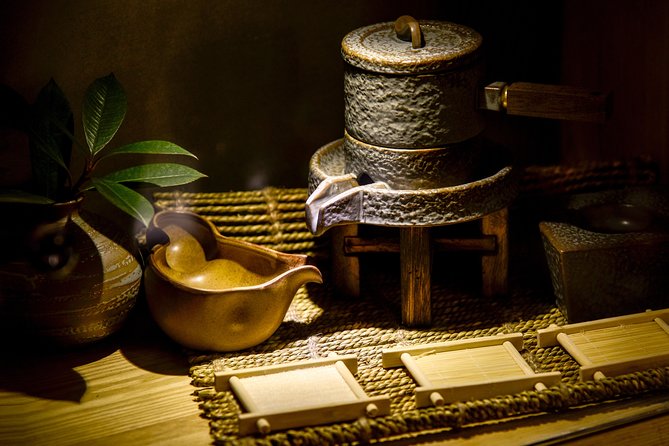
- Tea in a traditional Sichuan courtyard
- Turning soybeans into tofu
- Cooking Mapo Tofu with what you made
- What makes the teaching style appealing
- Is $90 a fair price?
- Timing, comfort, and who should book
- My verdict on this Chengdu food experience
- FAQ
- How long does the tofu and Mapo Tofu class last?
- What does the class include?
- Will I visit a market?
- How is the tofu made?
- Do I learn to make soy milk and tofu brain?
- Where does the activity start and end?
- Can I cancel for a full refund?
Key points at a glance
- Start with Sichuan’s working pantry: Visit a local spice market and learn about the ingredients used in the cooking session.
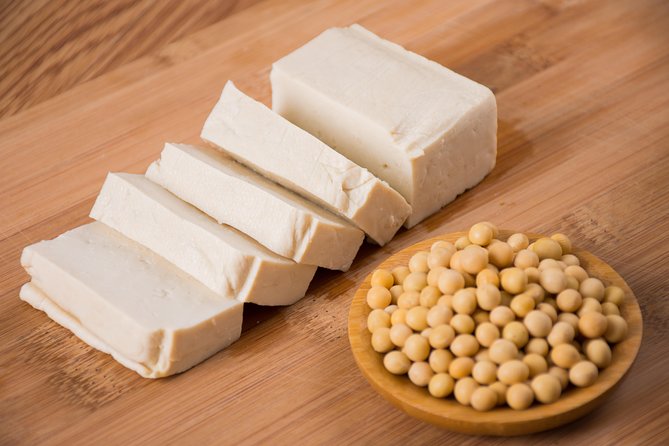
- Make tofu the old-fashioned way: Grind soaked soybeans with a stone mill, filter the pulp, boil the soy milk, add bittern, and press the curds.
- See three soy products in one class: The workshop covers soy milk, tofu brain, and handmade tofu.
- Cook the dish Chengdu is famous for: A professional chef guides you through making Mapo Tofu with the tofu you help produce.
- Enjoy a traditional courtyard setting: Sichuan tea is served before the cooking begins, following a local custom of welcoming visitors.
- Finish around the table: Food tasting, beer, water, tea, and other refreshing drinks are included.
Why this class is more than a standard cooking lesson
Many cooking classes begin with chopped ingredients lined up beside a stove. This one begins earlier, with the basic food itself. You get to see how soybeans change from a dry staple into soy milk, tofu brain, and a firm block of tofu.
That matters in Chengdu, where Mapo Tofu is not just a familiar Chinese dish but one of the city’s signature foods. The workshop connects the finished dish to the raw ingredients and the local methods behind it. You are not simply copying a recipe. You are seeing why tofu has its texture and how the process shapes the final meal.
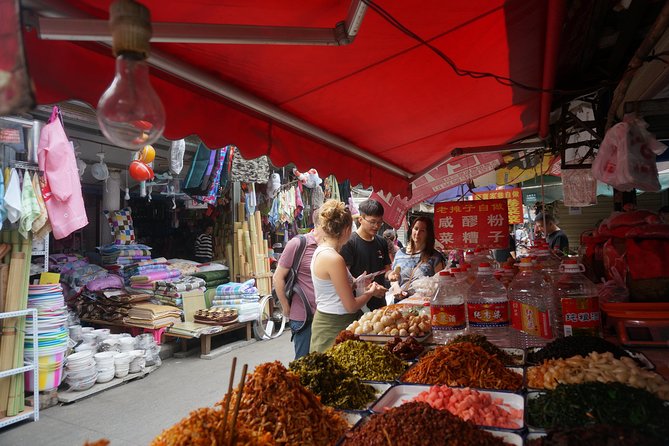
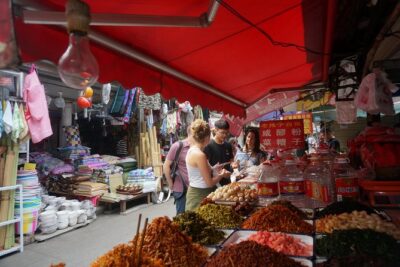
I especially like the way the class combines food production with market shopping. The spice market gives you a look at the ingredients before they are measured into a bowl. You can expect to encounter Sichuan spices, fresh produce, meats, and traditional Chinese medicine ingredients as you explore with a guide.
The experience is led by a professional guide and master chef. Lance is named as one of the team members, and past sessions have also included Jerry. The atmosphere is described as warm, relaxed, and well organized, which is useful for a class that includes several distinct stages.
More Cooking Classes in Chengdu
- Half-Day Chengdu Cooking Class with a Local Market Visit
★ 5.0 · 465 reviews - Chengdu: Cooking Class with Fresh Market Half Day Experience
★ 5.0 · 42 reviews - Half-Day steamed Buns Cooking Class with a Local Market Visit
★ 5.0 · 26 reviews
The spice market comes first
The first stop is an authentic local spice market in Chengdu. This is not just a quick shopping stop before the cooking. The tour includes fun challenges designed to help you identify Sichuan spices and other ingredients used later in the kitchen.
That format gives the market visit a purpose. Instead of walking past unfamiliar sacks, jars, fruits, vegetables, and cuts of meat, you have a reason to pay attention. If you have ever bought Sichuan food without knowing what creates its aroma or heat, this part can make the meal easier to understand.
The market also places the class in everyday Chengdu. You see the ingredients in their working setting before they are cleaned, portioned, or arranged for a lesson. It is a useful contrast with a restaurant, where the preparation is hidden behind the kitchen door.
The amount of time spent at the market is not specified, so you should not expect a long market tour with a full history of every ingredient. Think of it as a focused introduction tied to the recipes ahead. That is likely to suit you if you want context without turning the morning into a formal lecture.
Tea in a traditional Sichuan courtyard
After the market, the class moves to a traditional Sichuan-style courtyard. You are served local tea before the hands-on work begins, reflecting the local custom of offering tea to friends and visitors.
This pause is a small but important part of the experience. Tofu making involves several steps, and the tea gives the session a calmer start than rushing directly from the market to a stove. It also introduces a local social habit that you would not get from a cooking class held in a modern commercial kitchen.
The setting is described as a cozy kitchen within the courtyard. The group size can reach 15 people, so the experience is not a private lesson. Still, that maximum is manageable for a demonstration and shared cooking session, particularly if the chef moves everyone through the process in stages.
If you prefer complete control of every knife cut and cooking step, a larger group may feel less personal. If you like learning alongside other people and want a friendly setting, the group format should work well.
Turning soybeans into tofu
The most unusual part of the class is the tofu process itself. You learn how to start with soybeans and work toward a finished product using a stone mill.
The process includes:
- Soaking the soybeans
- Grinding them into pulp
- Filtering the pulp
- Boiling the resulting soy milk
- Adding bittern to make the soy curds separate
- Pressing the curds into shape
This is useful because tofu can seem like a plain, ready-made ingredient when you buy it in a shop. Here, you see the steps that create it. The stone mill also gives the demonstration an old-style character that modern kitchen equipment would not provide.
The class covers soy milk and tofu brain along the way. Tofu brain is a soft, delicate form of coagulated soy that has a different texture from pressed tofu. Seeing both products helps explain why tofu is not one single food with one fixed texture.
You should expect this section to be active, but it is also process-heavy. Soaking and filtering are not instant steps, and making tofu from beans takes more patience than opening a package. That is part of the value, but it also explains why this is a three-to-five-hour experience rather than a quick lesson.
The class is a good match for curious cooks, families with older children, and anyone interested in traditional food production. Children must be accompanied by an adult. The supplied information does not specify the minimum age or how much of the process children perform, so you should confirm those details if they matter to your booking.
More Workshops in Chengdu
- Half-Day Sichuan Cooking Class Experience in Chengdu
★ 4.0 · 17 reviews - Private Panda Tour with Cooking Class One-day Trip
★ 5.0 · 11 reviews - Half-day Dandan Noodles Cooking Class with a Local Market Visit
★ 5.0 · 8 reviews - Half day Chengdu Dumpling Class: Make from Scratch
★ 5.0 · 8 reviews
Cooking Mapo Tofu with what you made
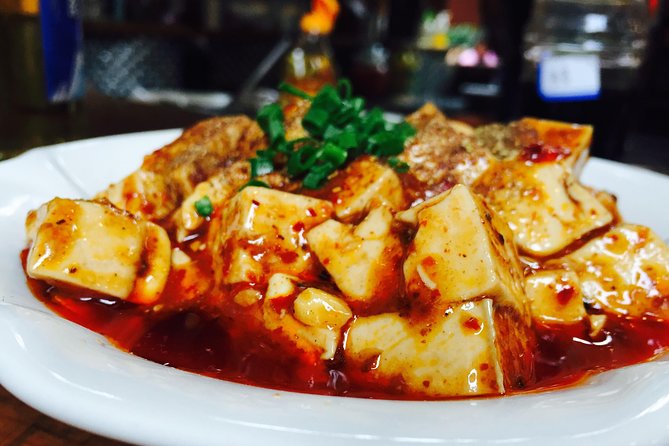
Once you have worked through the tofu process, the chef teaches you to cook Mapo Tofu. This is the natural payoff. You have learned where the tofu comes from, explored the Sichuan ingredients, and then used the central ingredient in one of Chengdu’s best-known dishes.
The class focuses on technique as well as tasting. A professional chef guides the cooking, so you can expect instruction rather than simply watching a demonstration. Recipes are included, giving you something practical to take home and use after your trip.
Mapo Tofu is a strong choice for this format because its character depends on the balance of tofu, spices, and sauce. The market visit helps introduce the ingredients, while the kitchen session shows how they work together. The exact spice level is not stated, so you should ask the chef about adjustments if you are sensitive to heat.
The finished dish is served as part of the food tasting. Beer, water, tea, and refreshing drinks are included, so you are not paying extra for a drink with the meal. The food is the main event, but sitting down afterward gives the class a satisfying ending instead of leaving you to hurry away as soon as the burner is turned off.
What makes the teaching style appealing
The strongest praise attached to this experience centers on the people running it. Lance is specifically mentioned as a guide who explains the fresh market, including fruits, vegetables, meats, spices, and Chinese medicine ingredients. That range suggests the market walk is not limited to the few items used in Mapo Tofu.
Another participant returned for a second class with Chilli Cool China and described the setting as fun, welcoming, and well organized. That is a useful sign for repeat visitors to Chengdu who want to try another food workshop later.
One session included Lance and Jerry, and the participant enjoyed it enough to add an afternoon class on steamed pork buns. That extra class is not part of the half-day tofu experience, and you should not assume it is automatically available or included. Still, it tells you that the teaching team may offer a broader cooking program if you want to build a full day around food.
I would choose this class for its relaxed tone rather than for a high-pressure culinary challenge. You get guidance, a chance to work with traditional tools, and a meal at the end. It is serious enough to teach a real method, but it does not sound designed for professional cooks.
Is $90 a fair price?
At $90 per person, this experience costs more than simply ordering Mapo Tofu in Chengdu. The comparison is not quite fair, though. You are paying for several linked activities:
- A guided spice-market visit
- A traditional courtyard setting
- Sichuan tea
- A professional guide and chef
- Handmade tofu production
- Mapo Tofu instruction
- Food tasting
- Beer, water, and other drinks
- Recipes
- Hotel pickup and drop-off
The value depends on how much you want from the day. If your goal is the lowest-cost meal, this is poor value. If you want a structured food experience that explains an ingredient from start to finish, the price is more defensible.
The included transport also matters in Chengdu. The listed meeting point is on North Section 3 of the First Ring Road, in Jinniu District, and the activity ends back at the meeting point. Hotel pickup and drop-off are included, but you should confirm the pickup arrangement when booking because the published meeting point and the transport inclusion are both provided.
The experience is typically booked about seven days ahead. That is not a rule, but it is a sensible planning guide if your Chengdu schedule is fixed. The maximum group size is 15, so leaving it until the last minute may reduce your options.
Timing, comfort, and who should book
The advertised duration is three to five hours, with the activity described elsewhere as about four hours. Plan for a half-day rather than trying to squeeze it between two tightly timed attractions.
You should book this if you:
- Want a hands-on food activity instead of a passive tasting
- Like learning how traditional ingredients are made
- Have a special interest in Sichuan cooking
- Enjoy markets and local food customs
- Are happy to spend several hours on one dish and its main ingredient
- Want a class that works for a small group, family, or couple
You may want to skip it if you dislike soy products, have very limited time in Chengdu, or prefer a polished restaurant meal to a process-based workshop. The class is also less suitable if you want a private chef and individually tailored instruction, since the group can include up to 15 people.
Most people can participate, and the activity is near public transportation. The information provided does not describe specific accessibility features, so contact the operator before booking if you need detailed assistance.
Free cancellation is available up to 24 hours before the start time for a full refund. Changes or cancellations inside that period are not accepted for a refund. The activity also requires good weather, and a weather cancellation results in a different date or a full refund.
My verdict on this Chengdu food experience
I would recommend this class if you want to understand Chengdu food through its ingredients and methods, not just eat a famous dish. The stone-mill tofu work is the unusual feature, while the market, tea, and courtyard setting give the session a strong local shape.
The main tradeoff is the $90 price and the amount of time required. You are paying for a guided cultural and cooking experience, not a bargain lunch. Book it if handmade tofu, Sichuan spices, and Mapo Tofu sound like the right kind of half-day. Skip it if you need a fast activity or only want to sample the finished dish.
FAQ
How long does the tofu and Mapo Tofu class last?
The experience lasts approximately three to five hours. The class is also described as taking about four hours.
What does the class include?
It includes tea, water, beer, food tasting, a professional guide and master chef, recipes, hotel pickup and drop-off, and the cooking activities.
Will I visit a market?
Yes. The experience begins with a visit to a local spice market, where you learn about Sichuan spices and ingredients used during the cooking class.
How is the tofu made?
You learn to soak soybeans, grind them with a stone mill, filter and boil the pulp, add bittern for coagulation, and press the curds into tofu.
Do I learn to make soy milk and tofu brain?
Yes. The workshop teaches the preparation of soy milk and tofu brain as part of the handmade tofu process.
Where does the activity start and end?
The listed meeting point is at 1st Ring Road North 3 Section, Yi Huan Lu Bei San Duan, Jinniu District, Chengdu. The activity ends back at the meeting point.
Can I cancel for a full refund?
Yes, if you cancel at least 24 hours before the experience start time. Cancellations or changes made less than 24 hours before the start time are not refunded.
Just added in Chengdu
- Visiting Chengdu Panda Base in a Half Day★ 5.0 · 4 reviews
- Classsic sichuan Opera at sichuan Provincial Theater★ 5.0 · 4 reviews
- Tea Village in lost Town and Buddha 1 day tour★ 5.0 · 32 reviews
- Panda, Leshan, and Emei Mountain 2-day tour★ 5.0 · 4 reviews
- Sichuan Opera with face-changing at Sichuan opera theater★ 4.5 · 6 reviews
- Sichuan Opera Show with Hotel Pickup★ 5.0 · 3 reviews
- Mini Group: Half-Day Chengdu Pandas Guided Tour★ 5.0 · 3 reviews
- Sanxingdui Ruins and Giant Pandas Private Day Tour from Chengdu★ 5.0 · 5 reviews
Cooking Classes, compared.
Half-Day Chengdu Cooking Class with a Local Market Visit
Read our review →
Online Cooking Class Beijing Dumplings and Cuisine by Sunflowerli Renowned Chef
Read our review →
Lijiang Naxi Cuisine Cooking Class & Market Visit
Read our review →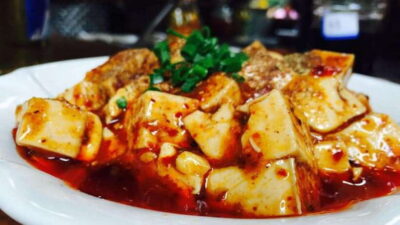
Cooking Class with Fresh Market Half Day Experience
Read our review →Private Cooking Class: Make Your Own Dim Sum In Shanghai
Read our review →
Half-Day steamed Buns Cooking Class with a Local Market Visit
Read our review →
Hong Kong Market Walking Tour & Chinese Cooking Class
Read our review →Where else this tour turns up