
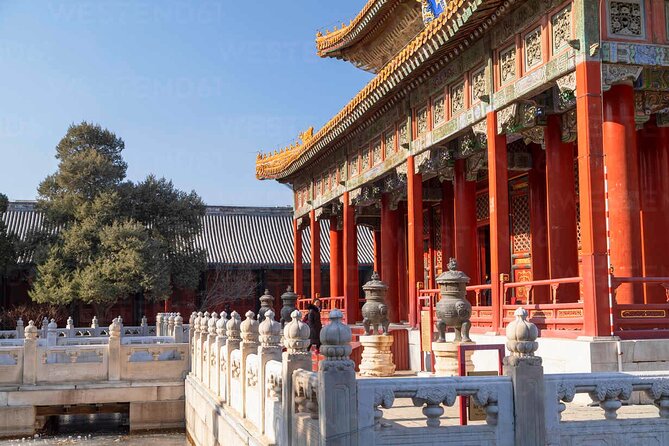
Reviewed · CONFUCIUS TEMPLE TOURS
Confucius Temple and Imperial College Entrance Ticket
Ancient scholarship in a quiet corner of Beijing. Just a short walk from the Lama Temple, the Temple of Confucius and Guozijian Museum offers a calm, focused look at how education worked in imperial China. I like the setting, which brings together ceremonial halls, statues, carvings, and long rows of stone records in one compact visit. I also like the price: at $8 per person, it is an easy addition to a day in this part of Beijing.
The main consideration is the ticket delivery and entry process. Your QR tickets are sent five days before the travel date, and one booking had trouble with one of two QR codes at the gate. The issue was resolved, but I would check both codes before leaving your hotel and keep the provider’s contact number available.
In This Review
- Key points to know before you go
- Why this Beijing site matters
- Entering the Temple of Confucius
- Walking through the former imperial college
- How long should you spend here?
- Is the $8 ticket good value?
- Self-guided visit or English-speaking guide?
- The QR ticket issue you should plan for
- Getting there and fitting it into your day
- Who will enjoy this experience most?
- Who might want to skip it?
- Cancellation and booking flexibility
- Should you book the Confucius Temple and Imperial College ticket?
- FAQ
- Where is the Temple of Confucius and Guozijian Museum?
- What does the ticket include?
- How long does the visit take?
- Are English instructions available?
- When are the QR tickets sent?
- Can I cancel for a full refund?
Key points to know before you go
- Two important sites in one visit: You enter both the Temple of Confucius and the former Guozijian, or imperial college.
- A short walk from the Lama Temple: The location makes this a useful pairing with one of Beijing’s best-known Buddhist sites.
- Allow two to three hours: English instructions and exhibit information make a self-guided visit practical.
- Imperial examination records: Hundreds of stone steles record the names of scholars who passed the old civil service examinations.
- Guide option available: You can select an English-speaking guide if you want help with the symbols, rituals, and educational system.
- Good small-group value: The activity is private to your group, and group discounts are available.
Why this Beijing site matters
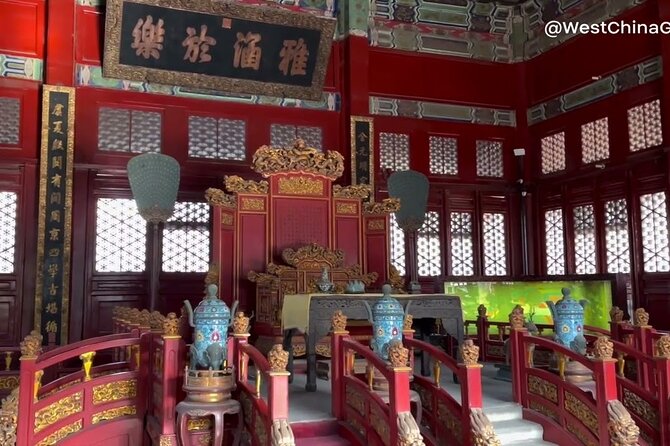
The Temple of Confucius and Guozijian Museum is not simply another collection of old buildings. Together, these two institutions show how imperial China linked education, government service, morality, and social rank.
The Confucius Temple was built in 1302. Officials came here to honor and offer sacrifices to Confucius, the teacher whose ideas shaped Chinese education and government for centuries. The temple is the second largest Confucian temple in China, after the one in Qufu, Confucius’s hometown.
Beside it is the Guozijian, constructed in 1306. It served as the imperial college during the Yuan, Ming, and Qing dynasties. This was the highest educational institution in imperial China, where students and officials studied the classics and prepared for the examinations that could lead to government careers.
That connection gives the visit its real value. You are not only looking at halls and stone carvings. You are seeing the setting for a system that selected officials through years of study and testing. The buildings help explain why education held such power in Chinese society.
More Confucius Temple visits:
- Beijing: Confucius Temple and the Impercial College E-ticket
★ 4.4 · 92 reviews - Beijing: Lama Temple, Confucius Temple and Guozijian Museum
★ 5.0 · 23 reviews - 4-Hour Private Tour: Lama Temple, Confucius Temple, Guozijian Museum with Dim Sum
★ 5.0 · 21 reviews
Entering the Temple of Confucius
The temple section gives you the ceremonial side of the experience. Expect a series of scholarly halls, statues, carvings, and stone inscriptions connected with Confucian teaching and official ritual.
The most useful detail to look for is the collection of stone steles. Hundreds record the names of scholars who passed the Imperial Examination. These stones turn an abstract idea into something you can see: success in the examination system was recorded permanently and linked to public honor.
I find this more interesting than a simple display of famous names. The steles help you picture the scale of the examination system and the importance placed on learning. They also offer a reminder that education was not just personal improvement. It could change a family’s status and open a path into government.
The temple’s statues and carvings add visual interest, but the site rewards patience more than speed. If you rush through the halls, you may see an attractive old complex but miss the reason it was created. Take time to read the English information and connect the objects with the wider Confucian tradition.
Walking through the former imperial college
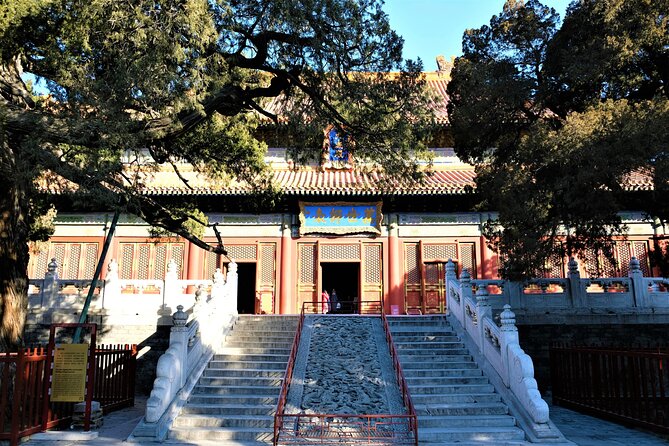
The Guozijian section explains the working side of imperial education. The Temple of Confucius was a place of honor and sacrifice, while the neighboring college was tied to study and administration.
That contrast makes the combined visit stronger than seeing either site alone. One side shows respect for the teacher and the tradition. The other shows how that tradition was organized into an educational system serving the state.
You will find multiple halls and displays related to scholarly life and imperial education. English instructions and exhibit text are available in many areas, so I would feel comfortable recommending the visit even if you do not choose the guided option.
Still, written information cannot answer every question. If you want help understanding how the examinations worked, why Confucius received official honors, or how the college fitted into the Yuan, Ming, and Qing governments, an English-speaking guide could add real value. The guide option is especially useful if this is your first serious look at Chinese history.
How long should you spend here?
The practical answer is two to three hours. That gives you enough time to visit both sections, read a good amount of the English material, and pause at the steles, statues, and carvings.
The listed duration is approximately one day, but that does not mean you need to spend a full day inside the museum. The site works best as one stop in a larger Beijing day.
A sensible plan is to combine it with the Lama Temple, since the two are only a short walk apart. You can visit the Buddhist temple first, then move to the Confucian temple and imperial college for a change of mood. The nearby location also makes the ticket useful if you are already exploring this part of the city.
I would not squeeze the museum into a rushed schedule. The entry price is low, but the experience depends on reading and looking carefully. Give it at least two hours if you want more than a quick walk through the courtyards.
A few more to weigh up in Beijing
- From Beijing: Mutianyu Great Wall Tours with Options
★ 4.9 · 9,216 reviews - Beijing: Forbidden City Tour(Group/Private)-Tickets Included
★ 4.8 · 7,974 reviews - Beijing: T-Square & Forbidden City Group or Private Tour
★ 4.8 · 4,446 reviews - All-Inclusive Tour: Tiananmen Square, Forbidden City, Great Wall
★ 5.0 · 2,873 reviews
Is the $8 ticket good value?
At $8 per person, the admission is easy to justify. You receive entry to both the Temple of Confucius and Guozijian Museum, not just one building or a single exhibit. The combination of historical setting, scholarly halls, stone records, and educational displays gives you plenty to examine for a modest cost.
The value is strongest for independent visitors. English information is available throughout the site, and one visitor specifically found that a self-guided visit could fill two to three hours. That means you do not need to pay for a guide to make the ticket worthwhile.
The guided upgrade changes the experience rather than simply adding more access. If you already know something about Confucianism and imperial China, the ticket alone may be enough. If you want the stories explained as you go, the guide can help you see links that are easy to miss.
Group discounts may make the price even more appealing for families or small parties. Since the activity is private to your group, you are not joining a large shared tour. The information does not specify the discount amount, so check the total before booking.
Self-guided visit or English-speaking guide?
I would choose the self-guided ticket if you enjoy reading museum panels at your own pace. The English instructions and exhibit information make this a practical choice, and you can linger at the parts that interest you without following a guide’s schedule.
This approach also keeps the cost down. At $8, the ticket is a strong fit for a budget-conscious day in Beijing, especially when paired with the nearby Lama Temple.
The guide option makes more sense in three cases:
- You want the historical background explained in plain language.
- You are curious about the Imperial Examination and its role in government.
- You prefer to ask questions instead of reading your way through the site.
A guide can also help with details that may not be obvious from the architecture alone. The relationship between Confucian ideals, state service, official ritual, and education is complex. A good explanation can turn a quiet series of halls into a clear story.
The available information does not name a particular guide, so you should not book this expecting a specific person. The important point is that an English-speaking guide is offered with the related option.
The QR ticket issue you should plan for
The ticket is sent five days before your travel date. That is useful because you have time to check the details, save the codes, and prepare for entry.
There has been an instance in which one QR code worked and a second code for the same booking did not. Two people were eventually admitted after a guard understood that the problem was not their fault, but that solution depended on goodwill at the entrance.
I would take three simple steps:
- Check that every person in your booking has a working QR code.
- Save the codes on your phone before heading out.
- Keep the provider’s contact phone number available in case the gate staff need help.
This is not a reason to reject the ticket, but it is a reason to avoid arriving unprepared. Digital entry is convenient when it works. A little checking beforehand can prevent a stressful start.
Getting there and fitting it into your day
The site is near public transportation and sits within a short walk of the Lama Temple. That makes it easier to add to a Beijing itinerary than a distant attraction requiring a separate journey.
You can treat the museum as a focused historical stop rather than a full-day tour. Start with the Lama Temple if you want a contrast between Buddhist religious life and Confucian state tradition. Then walk to the Confucius Temple and Guozijian Museum.
Because the activity is private to your group, you are not tied to the pace of other people. That matters here. You may want to spend extra time reading the examination records, while someone else may prefer the halls or carvings. The private format gives your group more control.
The supplied details do not give exact transport routes, opening hours, or a required meeting point. Check those details after booking and before setting out. The key advantage is the general location and nearby public transportation.
Who will enjoy this experience most?
This ticket suits you if you like history, museums, architecture, or the story behind China’s traditional education system. It is also a good choice if you want a quieter stop after visiting larger and more crowded Beijing sights.
Families with older children may find the examination records useful because they give a concrete way to discuss study, achievement, and government service. Younger children may enjoy the statues and carvings, but the written material could require more patience.
Students and teachers should get strong value from the visit. The site connects ideas about education with actual buildings and official records. It is one of the better places in Beijing to see how learning was tied to public life.
I would be less likely to recommend it if you want a guide included automatically or if you prefer a large attraction filled with dramatic visual displays. Much of the appeal comes from context, inscriptions, and careful observation. The site asks you to slow down.
Who might want to skip it?
If you have very little time in Beijing, you may choose more famous landmarks first. The Confucius Temple and Guozijian Museum is important, but it is not the kind of attraction you can understand fully in ten minutes.
You might also skip the guided upgrade if you are already comfortable reading historical information independently. The English displays make the basic visit workable without assistance.
On the other hand, if you have already visited several imperial palaces, temples, and museums, this site offers a different angle. Instead of focusing on emperors or military power, it shows the institutions that trained and ranked officials.
Cancellation and booking flexibility
Free cancellation is available if you cancel at least 24 hours before the experience start time. If you cancel later than that, the payment is not refunded, and changes made within 24 hours are not accepted.
The cut-off follows local Beijing time. That detail matters if you are booking from another time zone, so make any changes early rather than waiting until the last day.
Since tickets are sent five days before the travel date, you have a useful window to confirm the QR codes and decide if the visit still fits your plan.
Should you book the Confucius Temple and Imperial College ticket?
I would book it if you want an affordable, thoughtful museum visit close to the Lama Temple. The $8 admission gives you access to two connected institutions, and two to three hours is enough time to read the English material and appreciate the stone records, halls, statues, and carvings.
Choose the ticket-only option if you like exploring independently. Choose the English-speaking guide if you want the examination system and Confucian rituals explained as you walk.
My main caution is simple: check both QR codes as soon as they arrive. With that small bit of preparation, this is a useful Beijing experience for anyone who wants to see how education shaped imperial government, not just another old temple to photograph.
FAQ
Where is the Temple of Confucius and Guozijian Museum?
It is in Beijing, a short walk from the Lama Temple and near public transportation.
What does the ticket include?
The ticket includes entrance to the Temple of Confucius and Guozijian Museum. An English-speaking guide is included only if you select the related guided option.
How long does the visit take?
The experience is listed as approximately one day, but you can expect the museum visit itself to take about two to three hours if you read the English information and explore both sections.
Are English instructions available?
Yes. English instructions and exhibit information are available in many parts of the site.
When are the QR tickets sent?
The tickets are sent five days before the travel date.
Can I cancel for a full refund?
Yes, if you cancel at least 24 hours before the experience start time. Cancellations and changes made less than 24 hours before the start time are not accepted for a refund.
Just added in Beijing
- Private Transfer to Mutianyu Great Wall with professional driver★ 5.0 · 19 reviews
- One day tour to downtown Tianjin from Beijing by high speed train★ 5.0 · 3 reviews
- ZANBUS: Trip to the Jinshanling Great Wall Departing at 7:30 AM★ 5.0 · 5 reviews
- camp on the Great Wall overnight with sunrise and sunset on the wall★ 5.0 · 11 reviews
- Yuxiandu Chinese Royal Cuisine Museum with Show and Royal Banquet★ 5.0 · 4 reviews
- Wild Great Wall Hikes★ 5.0 · 10 reviews
- BusDa:Ancient Great Wall &Badaling Great Wall Full-day Bus Tour★ 4.5 · 6 reviews
- Wild Great Wall Huanghuacheng Half Day Tour★ 5.0 · 15 reviews
Confucius Temple Tours, compared.
Confucius Temple and the Impercial College E-ticket
Read our review →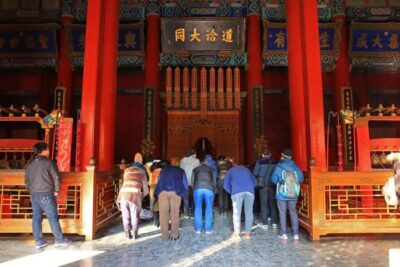
Lama Temple, Confucius Temple and Guozijian Museum
Read our review →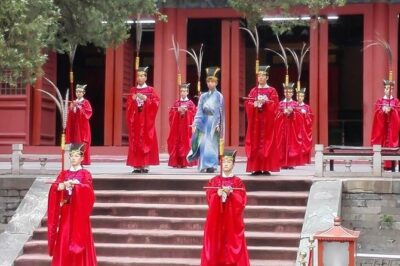
4-Hour Private Tour: Lama Temple, Confucius Temple, Guozijian Museum with Dim Sum
Read our review →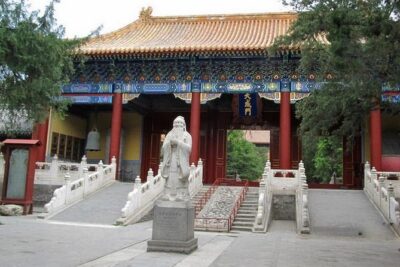
Half Day Tour To Lama Temple and Confucius Temple in Beijing
Read our review →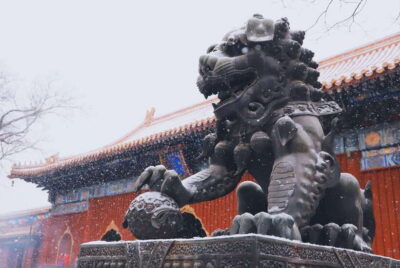
Beijing lama Temple Or Confucius Temple Tickets Reservation
Read our review →
Beijing Half Day Private Tour : Lama Temple, Confucius Temple, WuDaoYing Hutong
Read our review →Where else this tour turns up