
Reviewed · CONFUCIUS TEMPLE TOURS
Beijing: Confucius Temple and the Impercial College E-ticket
Ancient stone tablets tell the real story. Beijing’s Confucius Temple and Imperial College offer a quiet, rewarding look at China’s old education system, ceremonial traditions, and examination culture, all within two historic compounds near the city center. I especially like the 198 stone tablets carved with the names and ranks of 51,624 successful candidates, and I like that the QR code and original passport make entry simple.
The main drawback is that this is an independent attraction ticket, not a guided tour. You will need to read the displays at your own pace, and much of the experience depends on your interest in architecture, Confucian thought, and imperial education. An audio guide may be available for purchase at the temple entrance, which can help.
In This Review
- Key points to know before you go
- Why this small Beijing visit matters
- Entering through the Confucius Temple
- The 198 tablets and the imperial examination
- Dacheng Hall and the temple exhibitions
- Walking into the Imperial College
- What the Yuan Dynasty design reveals
- The exhibition of the imperial examination
- How long to allow and how to plan the day
- Who will get the most from this ticket
- Is $7 a good value?
- My advice before you enter
- Should you book the Confucius Temple and Imperial College ticket?
- FAQ
- How much does the ticket cost?
- How long is the ticket valid?
- What do I need to bring for entry?
- Can I enter with only a digital copy of my passport?
- Does the ticket include both the Confucius Temple and Imperial College?
- Is a guided tour included?
- Can I cancel for a full refund?
- Is the attraction wheelchair accessible?
Key points to know before you go
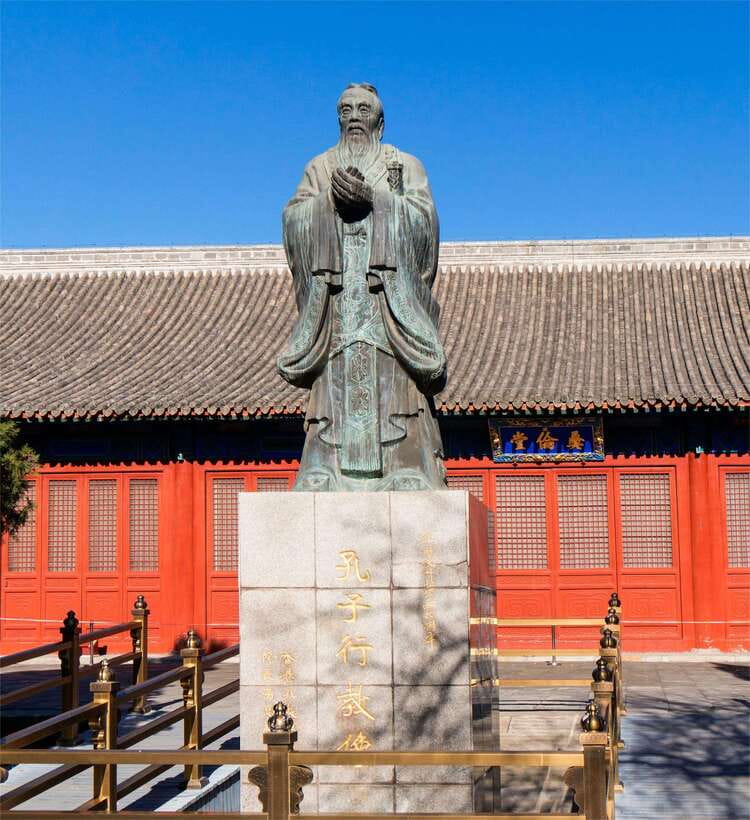
- Two historic institutions in one visit: See the Confucius Temple and the Imperial College, arranged according to the traditional temple-on-the-left, college-on-the-right plan.
- A remarkable examination record: The temple contains 198 stone tablets listing 51,624 successful imperial examination candidates, along with their birthplaces and ranks.
- Yuan Dynasty foundations: Both complexes began in the early 14th century, giving the visit more than 700 years of architectural and cultural history.
- A $7 ticket with useful flexibility: The low price covers attraction admission, and you can reserve now and pay later.
- Simple entry for international visitors: Bring your original passport, show the electronic ticket and QR code, and enter without waiting in the standard ticket line.
- A quiet alternative to Beijing’s largest sights: This is a good choice when you want cultural context and historic buildings rather than a major palace complex.
Why this small Beijing visit matters
Beijing has no shortage of famous historic sights. The Confucius Temple and Imperial College are less grand in scale, but they explain how education, government, and social status worked in imperial China. That makes this visit useful early in a Beijing stay, especially if you plan to see other palaces, temples, or museums later.
The site was built during the Yuan Dynasty, in the early 1300s. The Confucius Temple was completed in 1306, while the Imperial College was built in 1308. The two institutions were connected by their role in the state: Confucius was honored as the great teacher, while the Imperial College trained elite students and administered education.
I like this pairing because it gives you two different experiences within one ticket. The temple is ceremonial and memorial. The college is educational and administrative. Together, they show that learning was not simply a private pursuit. It was tied to official rank, public duty, and access to government service.
The attraction is listed at $7 per person. For that price, you are getting access to two historic compounds, several exhibitions, architectural remains, and one of Beijing’s most unusual records of the imperial examination system. If you enjoy history, the value is strong. If you prefer interactive exhibits or a guide explaining every building, the ticket alone may feel limited.
More Confucius Temple visits:
- Beijing: Lama Temple, Confucius Temple and Guozijian Museum
★ 5.0 · 23 reviews - 4-Hour Private Tour: Lama Temple, Confucius Temple, Guozijian Museum with Dim Sum
★ 5.0 · 21 reviews - Half Day Tour To Lama Temple and Confucius Temple in Beijing
★ 5.0 · 9 reviews
Entering through the Confucius Temple
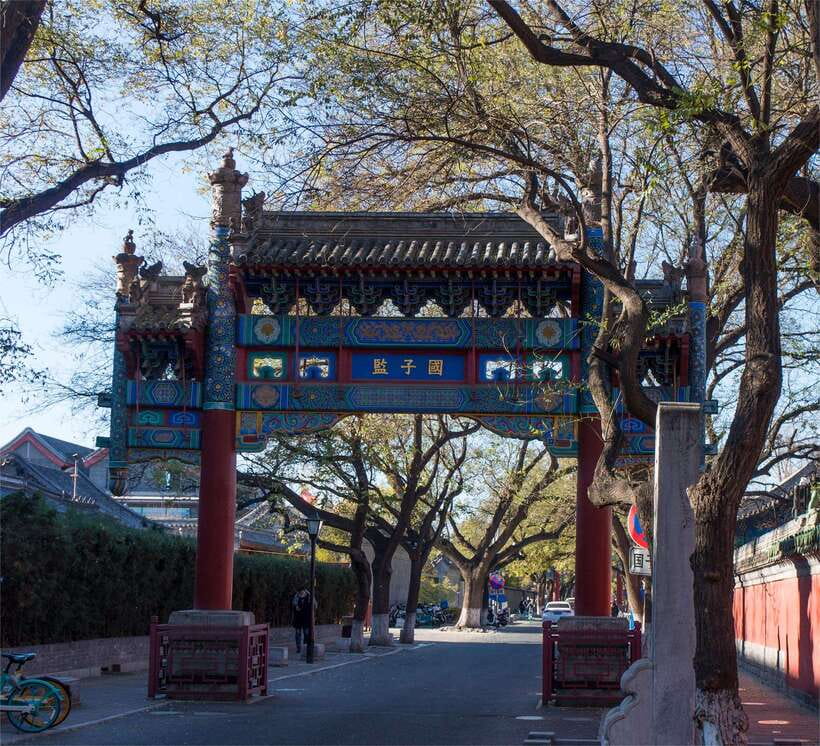
Your visit begins at the Confucius Temple, known in Chinese as Kong Miao. The temple covers more than 22,000 square meters, with a construction area of about 7,400 square meters. Its buildings are arranged across three courtyards along a central south-to-north axis.
The route includes the Teacher Gate, Dacheng Gate, Dacheng Hall, and Chong Sheng Temple. These names matter because they show the movement from entrance to ceremony. You are not simply walking through a collection of old buildings. You are following a planned route toward the main hall where memorial ceremonies for Confucius were held during the Yuan, Ming, and Qing Dynasties.
At the entrance, keep your original passport ready. The electronic ticket and QR code are useful, but the stated entry requirement is your original passport or identification document. A photograph or copy may not be enough, so do not leave the passport at your hotel.
The QR entry system is one of the easiest parts of the experience. You can skip the regular ticket line, show the required documents, and proceed into the complex. That is especially helpful if you have a full day of sightseeing planned and do not want a ticket purchase to slow you down.
The 198 tablets and the imperial examination
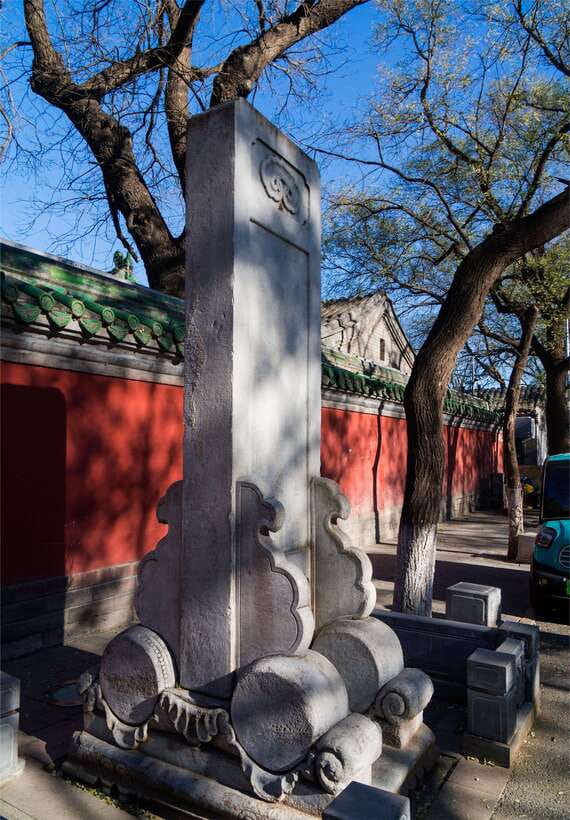
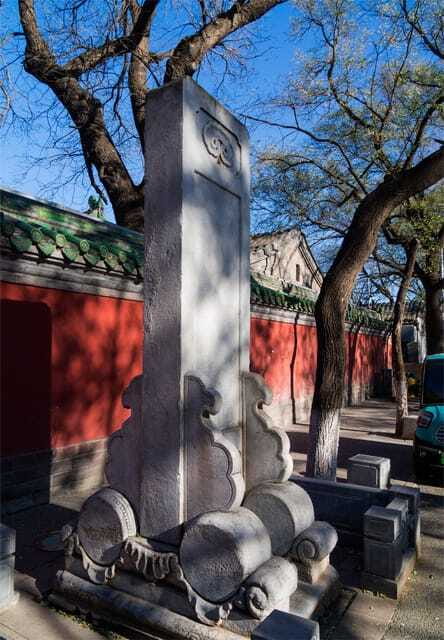
The most important stop for many visitors is the front courtyard, where 198 stone tablets are arranged in four groups. These tablets record 51,624 names, birthplaces, and ranks of successful candidates in the imperial examinations.
This is more than a list of names. The imperial examination system shaped China’s government for centuries. Success could open the door to official service, social status, and a better future for an entire family. The tablets give that system a physical form. You can see how achievement was recorded and publicly honored.
I would give this area plenty of time. The tablets may not have the instant visual impact of a palace roof or a giant statue, but they reward careful attention. If you have an interest in family history, bureaucracy, education, or the way governments selected officials, this may be the most meaningful part of the visit.
The site information describes the tablets as valuable material for studying the Chinese imperial examination. You do not need specialist knowledge to appreciate them. Even if you cannot read the inscriptions, the scale tells you something important: this was a system that measured success across generations and preserved those results in stone.
You might find the displays easier to follow with the audio guide available for purchase at the entrance. The details provided do not confirm the guide’s language options or price, so ask at the ticket area before buying. If you prefer to explore independently, the buildings and tablets still provide a clear sense of place.
Dacheng Hall and the temple exhibitions
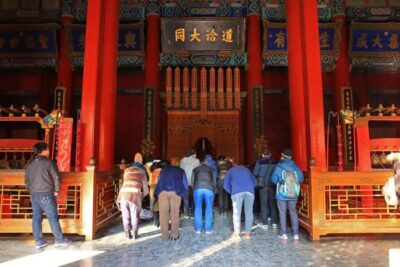
Dacheng Hall is the central ceremonial focus of the Confucius Temple. It is associated with the memorial rites held for Confucius, and its position along the main axis gives the complex a strong sense of order.
The temple currently includes three exhibitions: the Exhibition of the Restored Dacheng Hall, the Exhibition of the Great Confucius, and an exhibition on the history of the Beijing Confucius Temple. These displays add context to the architecture and help explain why the temple remained important through three dynasties.
The Exhibition of the Restored Dacheng Hall should appeal to you if you want to understand the building itself rather than simply photograph it. The Great Confucius exhibition focuses on the person and ideas at the heart of the temple. The history exhibition connects the site to Beijing’s long institutional past.
Because no guided narration is included, plan to read the material at your own speed. You may find that the experience works best when you first walk through the courtyards, then return to the exhibits that interest you most. That approach keeps the visit from becoming a long sequence of labels and names.
A few more to weigh up in Beijing
- From Beijing: Mutianyu Great Wall Tours with Options
★ 4.9 · 9,216 reviews - Beijing: Forbidden City Tour(Group/Private)-Tickets Included
★ 4.8 · 7,974 reviews - Beijing: T-Square & Forbidden City Group or Private Tour
★ 4.8 · 4,446 reviews - All-Inclusive Tour: Tiananmen Square, Forbidden City, Great Wall
★ 5.0 · 2,873 reviews
Walking into the Imperial College
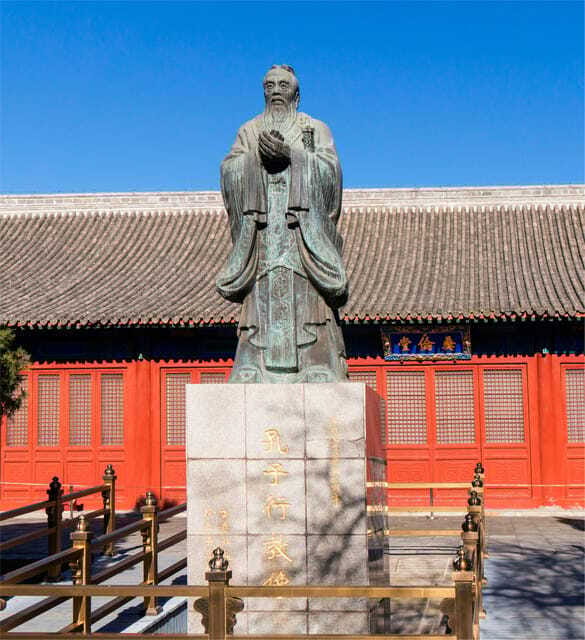
The second part of the visit is the Guozijian, or Imperial College. This was the highest educational institution and state education administration body during the Yuan, Ming, and Qing Dynasties. It covers about 28,000 square meters and also has three courtyards.
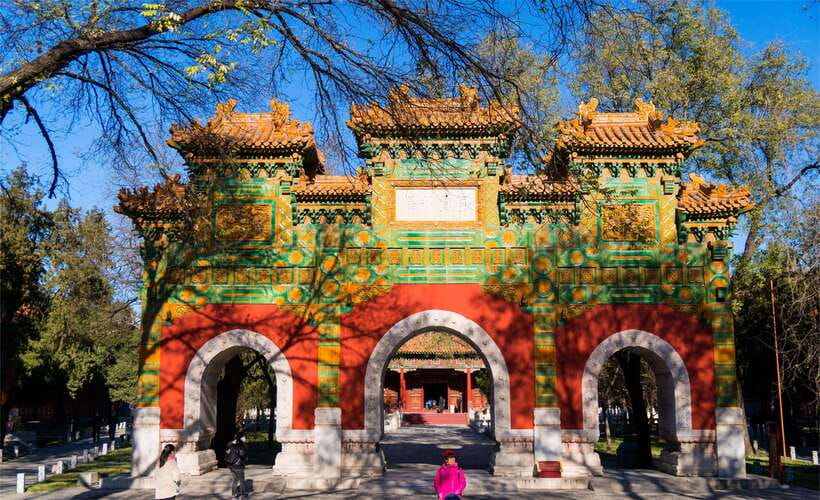
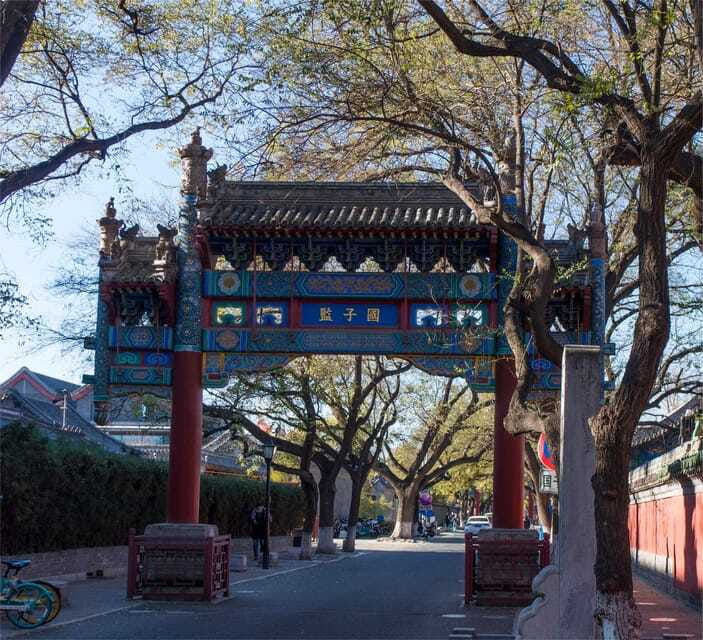
The route follows a central axis through Jixian Gate, the Taixue Gate, the Glazed Memorial Arch, Biyong Hall, Yilun Hall, and Jingyi Hall. The buildings are arranged with a formal symmetry that reflects the college’s official role.
The Glazed Memorial Arch marks a change in mood from the temple’s memorial function to the college’s educational setting. Biyong Hall is another major point along the route, followed by halls connected with teaching and study. The exact amount of time you spend at each building will depend on how closely you read the displays and how much architecture you want to examine.
Two halls and six main rooms are arranged beside the central axis, along with the Imperial Tablet Pavilion and Bell and Drum Pavilion. Their placement is traditionally symmetrical. That layout is worth noticing because it gives the college a disciplined, balanced appearance rather than the more devotional feel of a temple.
I like this half of the visit for its institutional story. The Imperial College was not just a school in the modern sense. It was part of the state system, and its location beside the Confucius Temple expresses the close relationship between moral teaching, scholarship, and government service.
What the Yuan Dynasty design reveals
The buildings here date from the Yuan Dynasty or were shaped by later rebuilding and restoration connected to that long institutional history. The site gives you a chance to see a different side of Beijing architecture from the better-known palace and imperial garden complexes.
The layout matters as much as any single building. The temple and college follow a controlled central axis, with gates, halls, pavilions, and courtyards placed in an ordered sequence. This design reflects ceremony and rank. You can read the site almost like a diagram of authority.
The temple covers a little over 22,000 square meters, while the college covers about 28,000 square meters. That is enough room for a substantial visit, but the two compounds are still manageable within one day. You will not need to treat this as an all-day expedition unless you read every display in detail.
Look for the relationship between open courtyards and enclosed halls. The courtyards create pauses between the formal buildings, while the central route keeps directing your attention forward. This is a place where the walking pattern is part of the historical message.
The exhibition of the imperial examination
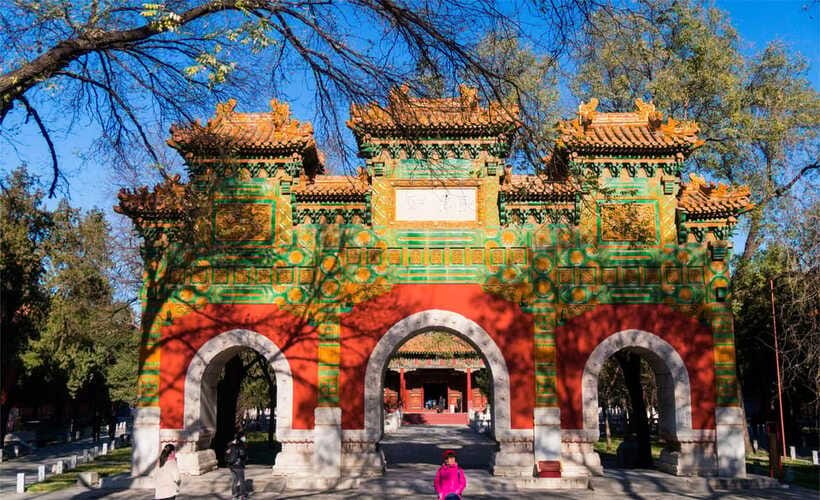
The imperial examination exhibition is one of the strongest reasons to choose this attraction. The examination system is often mentioned in general terms, but here you can connect the idea to the actual names, ranks, and places preserved on the stone tablets.
I find this especially useful for families and students because it turns an abstract political system into something visible. You can discuss what it meant to study for an official examination, how success was recorded, and why education carried such weight in Chinese society.
The exhibition may also help you understand why Confucius remained central to the state education system. His teachings influenced ideas about learning, conduct, duty, and social order. The temple honored him, while the college trained students within a system shaped by those values.
Do not rush through this section simply because the tablets look repetitive. Their repetition is the point. Thousands of names show how large and sustained the system was. If you have limited time, I would prioritize the stone tablets and examination exhibition over trying to inspect every room equally.
How long to allow and how to plan the day
The ticket is valid for one day, and starting times depend on availability when you check. No fixed tour duration is provided, so you can plan the visit around the rest of your Beijing schedule.
I would allow several hours if you want to see both compounds without rushing. You can move faster if you mainly want the major halls and courtyards, or take longer if the examination displays and stone inscriptions catch your attention.
There is no transportation or guided walking route included with the ticket. You are purchasing admission to the attraction itself. That keeps the cost low, but it also means you should arrive with a simple plan: enter the Confucius Temple, follow the central route, pause at the tablet courtyard, see the exhibitions, then continue through the Imperial College.
The attraction is listed as wheelchair accessible. That is helpful, though the information provided does not describe the condition of every path, courtyard surface, or interior doorway. If you need specific access details, confirm them before visiting.
The booking is described as a private group experience, but no guide or private tour service is included in the ticket details. I would treat this as private admission rather than a narrated private tour.
Who will get the most from this ticket
I would recommend this experience to you if you enjoy:
- Chinese history, education, or government
- Historic architecture and formal courtyards
- Quiet cultural sights away from Beijing’s largest crowds
- Self-guided museum visits
- Short, affordable additions to a Beijing sightseeing plan
- Places that explain how society worked, not just how rulers lived
Families may find the examination story useful because it gives children a clear question to consider: how did people earn a place in government? Students of history, architecture, and East Asian culture will have plenty to examine.
I would be more cautious if you want a live guide, a highly interactive museum, or a major visual spectacle at every turn. The attraction’s appeal comes from structure, records, and context. It asks you to pay attention.
The current score is 4.4 out of 5 from 92 ratings, and the strongest practical praise centers on the pleasant route and the easy entry process. One useful detail is that an audio guide may be purchased at the temple entrance. That gives you a way to add explanation without committing to a full guided tour.
Is $7 a good value?
At $7 per person, the admission is inexpensive for Beijing. You receive access to both the Confucius Temple and Imperial College, plus the temple exhibitions and the examination-related displays.
The value is strongest if you visit both compounds. Entering only to photograph one gate would not make as much sense, but taking time with the tablets, halls, and exhibitions makes the ticket worthwhile.
The pay-later option is also practical if your Beijing schedule is still changing. You can reserve a place without paying immediately, and cancellation is allowed up to 24 hours before the visit for a full refund. Check the available date and starting time when booking because the ticket is valid for one day rather than an open-ended period.
My advice before you enter
Bring the original passport used for the booking. Have the electronic ticket and QR code ready on your phone, and keep the screen brightness high enough for scanning.
Wear comfortable shoes, since the two compounds include multiple courtyards and a long central route. The attraction is wheelchair accessible, but anyone needing detailed mobility information should confirm the route in advance.
If you want more explanation, ask about the audio guide at the entrance. If you prefer to move quickly, focus on the four major areas: the Confucius Temple’s main axis, the stone tablets, the exhibitions, and Biyong Hall in the Imperial College.
Should you book the Confucius Temple and Imperial College ticket?
I would book it if you want an affordable, self-guided cultural visit with real historical substance. The stone tablets and imperial examination material give the experience a clear purpose, while the paired temple and college layout helps you understand how education and government were linked.
I would skip it only if your Beijing schedule is already packed with major imperial sights or if you strongly prefer guided storytelling. For most visitors who can spare several hours, this $7 ticket offers an unusually direct look at China’s old education system, with simple passport and QR-code entry to keep the practical side easy.
FAQ
How much does the ticket cost?
The ticket costs $7 per person.
How long is the ticket valid?
The ticket is valid for one day. Available starting times depend on the date you select.
What do I need to bring for entry?
Bring your original passport or identification document, along with the electronic ticket and QR code.
Can I enter with only a digital copy of my passport?
The entry information says you must enter with your original passport. A digital ticket is used for the QR code, but the original passport is also required.
Does the ticket include both the Confucius Temple and Imperial College?
Yes. The attraction ticket provides access to the Beijing Confucius Temple and the Imperial College.
Is a guided tour included?
The listed inclusion is the tourist attraction ticket. No guide is specified as included. An audio guide may be available to purchase at the temple entrance.
Can I cancel for a full refund?
Yes. You can cancel up to 24 hours in advance for a full refund.
Is the attraction wheelchair accessible?
Yes. The experience is listed as wheelchair accessible.
Just added in Beijing
- Private Transfer to Mutianyu Great Wall with professional driver★ 5.0 · 19 reviews
- One day tour to downtown Tianjin from Beijing by high speed train★ 5.0 · 3 reviews
- ZANBUS: Trip to the Jinshanling Great Wall Departing at 7:30 AM★ 5.0 · 5 reviews
- camp on the Great Wall overnight with sunrise and sunset on the wall★ 5.0 · 11 reviews
- Yuxiandu Chinese Royal Cuisine Museum with Show and Royal Banquet★ 5.0 · 4 reviews
- Wild Great Wall Hikes★ 5.0 · 10 reviews
- BusDa:Ancient Great Wall &Badaling Great Wall Full-day Bus Tour★ 4.5 · 6 reviews
- Wild Great Wall Huanghuacheng Half Day Tour★ 5.0 · 15 reviews
Confucius Temple Tours, compared.
Lama Temple, Confucius Temple and Guozijian Museum
Read our review →
4-Hour Private Tour: Lama Temple, Confucius Temple, Guozijian Museum with Dim Sum
Read our review →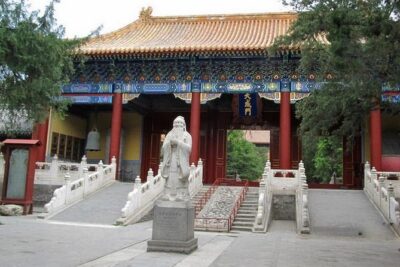
Half Day Tour To Lama Temple and Confucius Temple in Beijing
Read our review →
Beijing lama Temple Or Confucius Temple Tickets Reservation
Read our review →
Beijing Half Day Private Tour : Lama Temple, Confucius Temple, WuDaoYing Hutong
Read our review →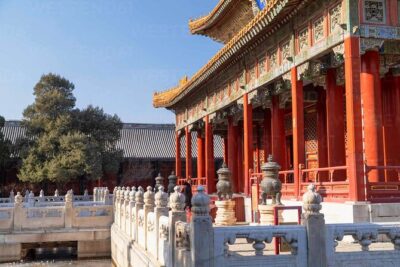
Confucius Temple and Imperial College Entrance Ticket
Read our review →Where else this tour turns up