
Reviewed · MUSEUMS
Chengdu: Wuhou Shrine Museum From Three Kingdoms Era
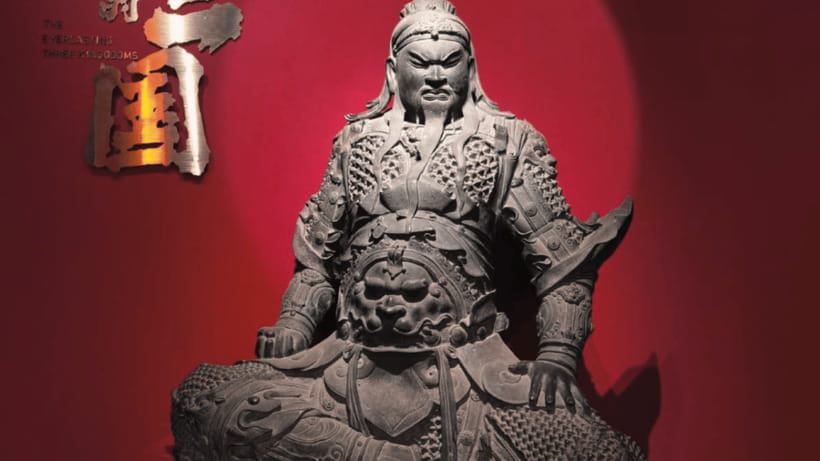
History comes alive here. Chengdu’s Wuhou Shrine Museum gives you a focused look at Zhuge Liang, Liu Bei, and the Shu Han Dynasty, all within an atmospheric site of red walls, old buildings, and leafy grounds. I like the clear connection between the exhibits and the Three Kingdoms era, and I like that the visit combines cultural displays with attractive photo settings. The main drawback is the booking procedure: your passport name and number must be sent in time, and the provided QR code is not valid for entry.
I also appreciate the $17 price, which is reasonable if you want a major Chengdu cultural stop without paying for a full private tour. The included admission, Three Kingdoms exhibitions, historical relics, ancient architecture, and free guided services make this more useful than a simple garden visit. Still, you should allow time to read and absorb the displays, since the site will mean more to you if you already know a little about the Three Kingdoms period.
In This Review
- Key points at a glance
- Why Wuhou Shrine matters in Chengdu
- Entering the red-walled museum grounds
- Meeting Zhuge Liang and Liu Bei through the displays
- Exploring the Three Kingdoms exhibitions
- Photo opportunities beyond the relics
- Is $17 good value?
- Booking details that can make or break the visit
- Who will enjoy this Chengdu visit?
- My booking recommendation
- FAQ
- How much does the Wuhou Shrine Museum experience cost?
- How long is the experience?
- What does the admission include?
- Are special exhibitions included?
- Do I need to bring my passport?
- Can seniors and children enter free?
- Can I cancel for a full refund?
Key points at a glance
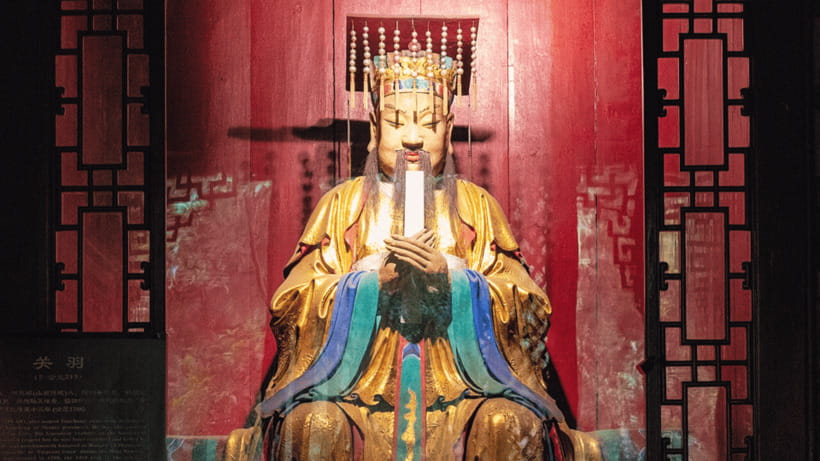
- Zhuge Liang and Liu Bei: The museum honors the famous Shu Han chancellor and Emperor Liu Bei, giving the visit a strong human focus.
- Three Kingdoms exhibitions: Artifacts, statues, and historical relics help explain the political and cultural world of Shu Han.
- Red walls and leafy grounds: The architecture and gardens provide some of Chengdu’s most distinctive museum photographs.
- One-day admission: Your ticket is valid for one day, with starting times depending on availability.
- Free guided services: Guidance is included, though no guide name or language schedule is provided in the supplied information.
- Passport details required: Your full passport name and passport number must be sent to complete the reservation.
Why Wuhou Shrine matters in Chengdu
The Three Kingdoms period is one of China’s best-known historical eras, shaped by rivalry among the kingdoms of Wei, Shu, and Wu. Wuhou Shrine Museum focuses on Shu Han, the kingdom associated with Chengdu, and on the people who gave that kingdom its identity.
The two central figures are Zhuge Liang and Liu Bei. Zhuge Liang is remembered as Shu Han’s celebrated chancellor, while Liu Bei was its emperor. Their presence gives the museum a useful structure. Instead of facing a loose collection of old objects, you can connect the buildings and displays to two leading figures from the period.
I like this kind of historical setting because it links Chengdu to a wider story. You are not only looking at old architecture. You are seeing how one dynasty shaped local identity, art, politics, and memory.
The museum also helps you understand why the Three Kingdoms era still matters in Chinese culture. Its displays cover the impact of Shu Han and present relics connected with ancient Chinese civilization. The visit works best if you treat it as a cultural lesson with beautiful surroundings, not simply as a scenic stroll.
More Museums in Chengdu:
- Private Chengdu Day Tour: Giant Pandas and Jinsha Site Museum
★ 5.0 · 142 reviews - Sanxingdui Museum+Chengdu Panda Base or Jinsha Site Tour
★ 5.0 · 10 reviews - Sanxingdui Museum Small Group Tour with Optional Panda Base
★ 5.0 · 3 reviews
Entering the red-walled museum grounds
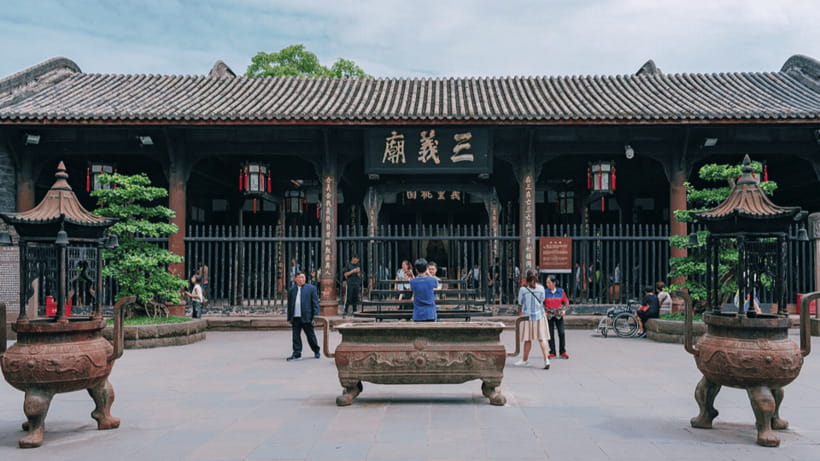
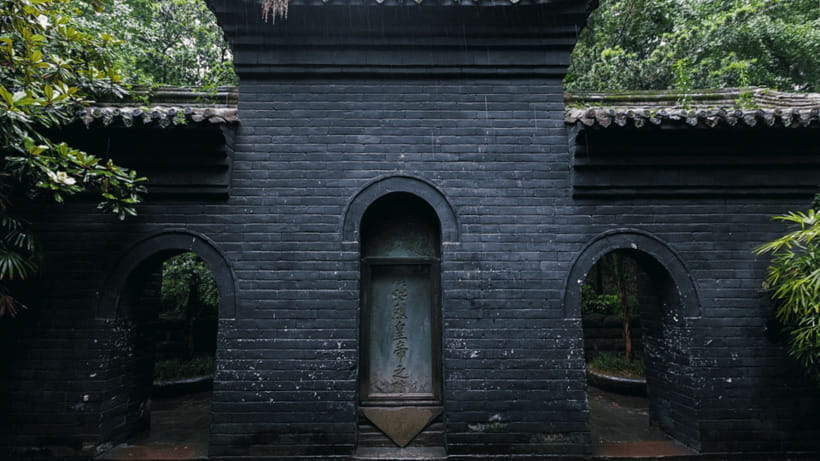
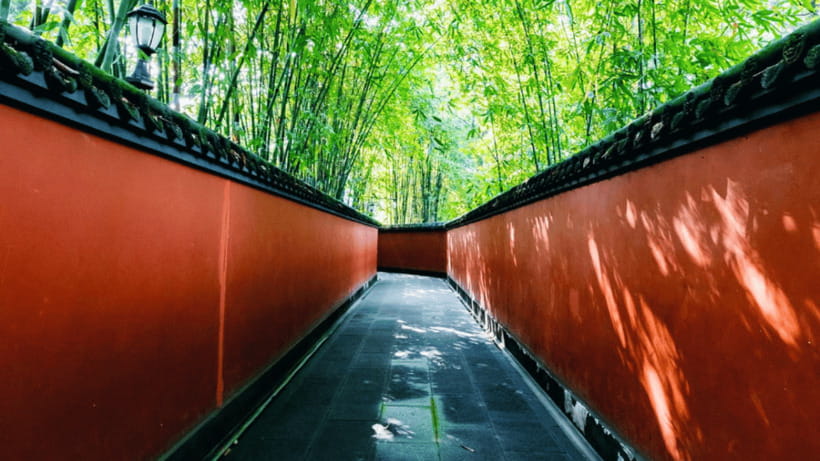
The first visual impression comes from the ancient red-walled architecture. Against the green plantings, the walls create a strong sense of place and give the museum a unified appearance. You will want your camera ready, especially around the traditional structures and garden paths.
The grounds are important because they slow the visit down. The exhibitions provide facts and objects, while the outdoor spaces give you time to look at the construction, colors, and layout. This combination makes the museum easier to enjoy than a display hall made up only of glass cases.
Do not rush straight through the entrance and treat the site like a quick photo stop. The red walls are attractive, but the museum’s main value comes from the connection between the scenery and the history. Take time to notice how the buildings frame the exhibitions and how the grounds create a calm setting for a serious subject.
The information provided does not specify a fixed walking route or individual buildings to visit in a particular order. You should therefore use the available exhibits and signs to create your own pace. If free guided services are operating when you arrive, they may help you place the objects within the larger Shu Han story.
Meeting Zhuge Liang and Liu Bei through the displays
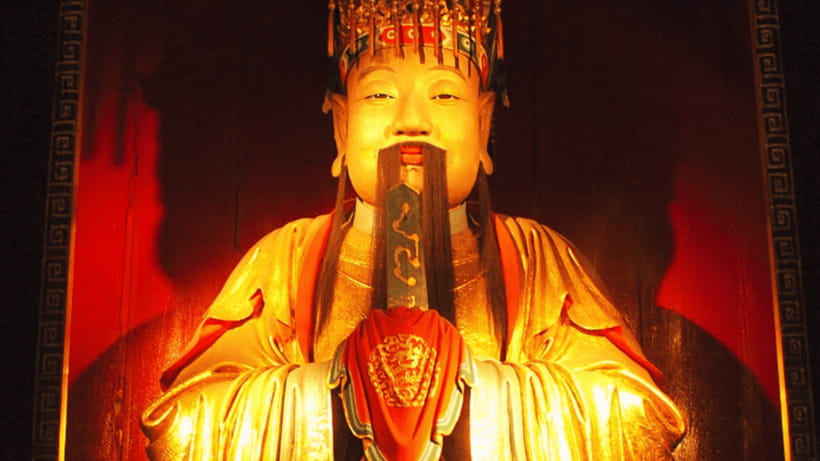
The museum is dedicated to Zhuge Liang and Liu Bei, so their roles form the heart of the visit. For many people, this is the most rewarding part. You get a direct introduction to the personalities behind Shu Han rather than an entirely broad survey of Chinese history.
Zhuge Liang is especially important here. As the renowned chancellor of Shu Han, he represents the administrative and intellectual side of the dynasty. Liu Bei, remembered as emperor, represents its ruling house. Together, they give you two ways to view the same period: through leadership and through statecraft.
The displays include statues, artifacts, and historical relics. These objects can make the era feel more concrete. A written account tells you what happened, but a surviving object or sculpture shows how later generations chose to remember those events and people.
You should keep your expectations sensible. The supplied information does not provide a detailed inventory of individual relics, so I would not plan your visit around one specific object. Instead, think of the collection as a broad introduction to Shu Han’s cultural and historical impact.
If you already enjoy Chinese history, you may want to read about the Three Kingdoms before arriving. Even a basic understanding of the three competing kingdoms can help you follow the displays. If you know little about the period, the museum still offers a useful starting point, but you may need to spend more time with the explanatory material.
Exploring the Three Kingdoms exhibitions
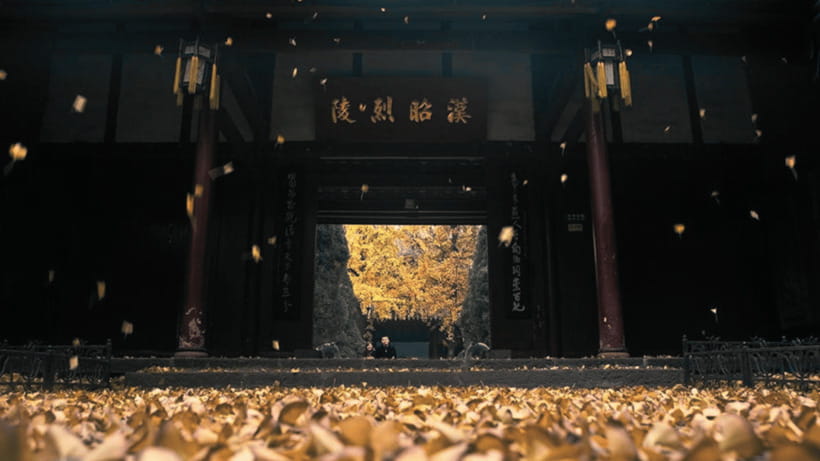
Admission includes the Three Kingdoms exhibitions, which is a major reason the $17 ticket offers fair value. You are paying for more than entry into an old complex. You are getting access to the main historical content tied to the site.
The exhibitions focus on Shu Han and the Three Kingdoms era. That focus keeps the experience manageable. You do not need to cover every period of Chinese history in one visit, and you can concentrate on the political world that shaped Chengdu.
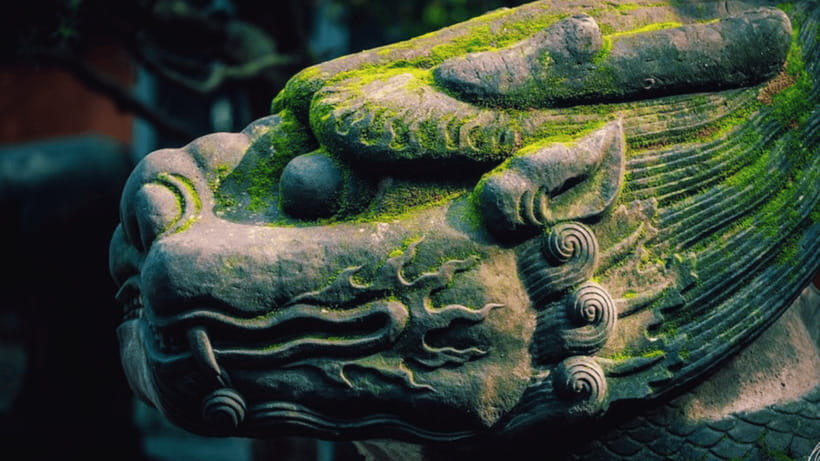
Historical relics and ancient architecture work together here. The relics give you evidence and detail, while the buildings provide atmosphere and a physical link to the past. I find this pairing useful because it serves different kinds of visitors. History fans can study the objects, while casual sightseers can appreciate the setting and still leave with a sense of the period.
Special exhibitions may require an extra fee. This is worth checking before you enter if you want to see every display. The regular admission includes the Three Kingdoms exhibitions, but it does not include those possible special exhibits, food, or souvenirs.
Free guided services are included. However, no details are supplied about the guide schedule, group size, or available languages. Ask at the museum if you want guidance, and do not assume that a particular language or tour time will be available.
A few more to weigh up in Chengdu
- Chengdu: Giant Panda Breeding Research Base Ticket
★ 4.5 · 580 reviews - Half-Day Chengdu Cooking Class with a Local Market Visit
★ 5.0 · 465 reviews - Tuktuk Food Tour Through Chengdu’s Local Eats
★ 5.0 · 435 reviews - Private Half-Day Chengdu Panda Breeding Center Tour with Optional Volunteer
★ 5.0 · 353 reviews
Photo opportunities beyond the relics
Bring a camera. The old red walls, traditional architecture, and lush grounds are among the most appealing parts of the experience for anyone who enjoys photography.
The setting gives you several types of images. You can photograph the strong color of the walls, the details of the old buildings, and the contrast between constructed spaces and greenery. These pictures will feel different from standard indoor museum photographs and help record the character of the visit.
Still, the photo value should support the history rather than replace it. The museum’s purpose is to present Shu Han and the Three Kingdoms, not simply to provide attractive backgrounds. I would take your first photographs as you get your bearings, then put the camera away for part of the exhibition.
Comfortable shoes are a smart choice. The activity is valid for one day, and the grounds, buildings, and exhibitions may encourage you to walk at an unhurried pace. The supplied details do not state the total walking distance, so comfortable footwear is the safe choice.
Pets are not allowed. That matters if you are arranging a day in Chengdu around an animal companion.
Is $17 good value?
At $17 per person, this is a solid choice for a focused cultural attraction. The price includes admission to the Three Kingdoms exhibitions, access to historical relics and ancient architecture, and free guided services. It also offers a skip-the-ticket-line arrangement, which can save time at a busy site.
The value depends on your interest. If Zhuge Liang, Liu Bei, or the Three Kingdoms already appeal to you, the museum gives you a strong subject in an attractive setting. If you prefer modern attractions or only want a quick photo, the ticket may feel less worthwhile because the museum rewards attention rather than speed.
Food and souvenirs are not included. Special exhibitions may also carry extra charges. These exclusions are normal, but you should keep them in mind when planning your total spending.
The ticket is valid for one day, with starting times based on availability. That gives you useful flexibility, but you still need to check the available time before booking. Seniors over 60 and children under 1.3 meters can enter free without a reservation, so eligible families should check those rules before paying for tickets.
Booking details that can make or break the visit
The most important practical warning concerns identification. The provided GetYourGuide QR code is not valid, so you must communicate with the provider or wait for the booking email.
You must send your full name exactly as it appears on your passport, along with your passport number, to complete the booking. If those details do not arrive on time, the booking can be canceled and a cancellation fee can apply.
This is not a minor detail. I would handle the passport information as soon as you decide to go, then check your email for the confirmation instructions. Bring your passport with you, since it is listed among the required items.
Advanced booking is recommended, especially on weekends and holidays. This is sensible for a popular cultural site, and it may also help you secure a suitable starting time. The skip-the-line feature is useful, but it does not remove the need to follow the identification process.
The activity allows free cancellation up to 24 hours in advance for a full refund. You can also reserve now and pay later, which helps if your Chengdu schedule is still changing. Read the exact booking terms carefully because failing to provide the requested passport information is treated differently from a normal cancellation.
Who will enjoy this Chengdu visit?
I would recommend Wuhou Shrine Museum to anyone who wants history, culture, and scenery in one stop. It suits visitors with an interest in ancient Chinese civilization, students of the Three Kingdoms, and photographers who like traditional architecture.
Families may also find it useful, especially if children are old enough to engage with the story of Shu Han. Eligible children under 1.3 meters can enter free without a reservation, according to the supplied rules. The museum offers more substance than a simple sightseeing walk, though younger children may need help connecting the displays to the wider history.
This is less suited to someone seeking a guided, tightly scheduled day tour with transportation and meals. Neither food nor transport is included in the activity details, and no fixed guided itinerary or guide name is provided. You are buying access to one major historical site, not a complete Chengdu sightseeing program.
I would also be cautious if you dislike handling booking paperwork. The passport-name requirement is strict, and the invalid QR warning means you need to pay attention to the provider’s instructions.
My booking recommendation
Book Wuhou Shrine Museum if you want a reasonably priced introduction to Chengdu’s Shu Han identity, with ancient buildings, relics, statues, and attractive red-walled grounds. The $17 admission is fair, particularly if you take time with the exhibitions and use the included guided services.
Skip it if your schedule is extremely tight, your interest in Chinese history is low, or you want a full-day tour with meals and transportation included. For everyone else, it is a worthwhile cultural stop, provided you send your passport details promptly and confirm the proper entry instructions before arriving.
FAQ
How much does the Wuhou Shrine Museum experience cost?
The listed price is $17 per person.
How long is the experience?
The activity is listed as valid for one day. Starting times depend on availability.
What does the admission include?
It includes admission to the Three Kingdoms exhibitions, viewing of historical relics and ancient architecture, and free guided services.
Are special exhibitions included?
No. Additional fees may apply for special exhibitions.
Do I need to bring my passport?
Yes. You should bring your passport, and you must send your full passport name and passport number to complete the booking.
Can seniors and children enter free?
Seniors over 60 and children under 1.3 meters can enter free without a reservation.
Can I cancel for a full refund?
Yes. You can cancel up to 24 hours in advance for a full refund.
Just added in Chengdu
- Visiting Chengdu Panda Base in a Half Day★ 5.0 · 4 reviews
- Classsic sichuan Opera at sichuan Provincial Theater★ 5.0 · 4 reviews
- Tea Village in lost Town and Buddha 1 day tour★ 5.0 · 32 reviews
- Panda, Leshan, and Emei Mountain 2-day tour★ 5.0 · 4 reviews
- Sichuan Opera with face-changing at Sichuan opera theater★ 4.5 · 6 reviews
- Sichuan Opera Show with Hotel Pickup★ 5.0 · 3 reviews
- Mini Group: Half-Day Chengdu Pandas Guided Tour★ 5.0 · 3 reviews
- Sanxingdui Ruins and Giant Pandas Private Day Tour from Chengdu★ 5.0 · 5 reviews
Museums, compared.
Tianmen Square, Forbidden City & Royal Museum Tours
Read our review →
Half-Day Mini Group Xian Tour to Terracotta Warriors Museum
Read our review →
Beijing:Jingshan Park (Palace Museum Garden) Ticket
Read our review →
Private Chengdu Day Tour: Giant Pandas and Jinsha Site Museum
Read our review →
Private Xi’an Tour: Terracotta Warriors, Hanyangling Museum, Cave Homes
Read our review →
Beijing Half Day: National Museum of China In-depth Tour with Subway Transfer
Read our review →
Terracotta Warriors Museum Ticket with Professional English-speaking tour guide
Read our review →Where else this tour turns up