
Reviewed · PRIVATE DRIVERS
Beijing Half Day: National Museum of China In-depth Tour with Subway Transfer
History gets a human voice here. This four-hour private visit to Beijing’s National Museum of China pairs expert English commentary with a focused route through some of China’s most important objects. I like the way guides such as Mike, Cathy, William, Diana, and Herbie make a huge museum easier to read, and I like that hotel pickup and ticket booking are included. The main catch is crowding, plus the museum is so large that three hours inside only scratches the surface.
At $114 per person, this is not a budget museum visit. Still, I see real value if you want help securing admission, need a ride from your hotel, or would rather understand the objects than simply walk past glass cases. The schedule is private and flexible within the planned half day, but your date may need adjustment if admission sells out.
In This Review
- Key points to know before booking
- Why the National Museum deserves half a day
- Meeting your guide at 8:30 a.m. or 1 p.m.
- Ancient China: the two-hour historical core
- Buddha statues and a quieter hour
- Crowds, pace, and the limits of a vast museum
- Is $114 a fair price?
- Who will get the most from this tour?
- My call: book it for context, not for total coverage
- FAQ
- How long does the National Museum tour last?
- What time does the tour begin?
- Is hotel pickup included?
- How do you get from the hotel to the museum?
- Is the National Museum admission included?
- Is this a private tour?
- What exhibitions does the tour cover?
- Can I cancel for a full refund?
Key points to know before booking
- A private guide keeps the visit focused: Only your group participates, so you can ask questions and move at a sensible pace.
- Ancient China is the main event: The route highlights the museum’s famous bronze vessels, jade, pottery, Sanxingdui objects, and early Chinese history.
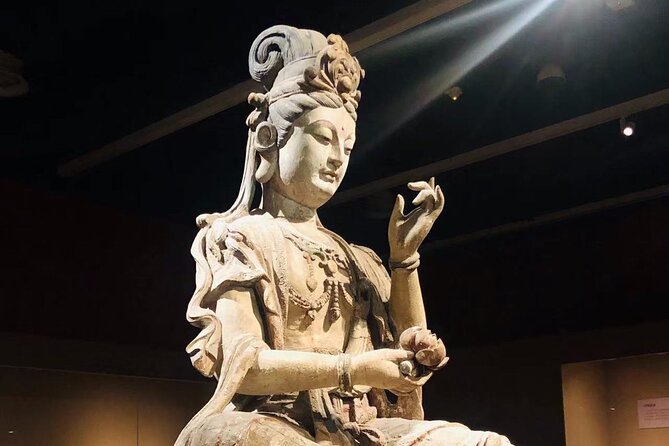
- The Buddha gallery adds a different mood: You may see a Song Dynasty painted wooden Guanyin, noted for its calm expression and fine detail.
- Hotel pickup reduces the morning hassle: The guide meets you in the lobby at 8:30 a.m. or 1 p.m., then uses the subway or taxi to reach the museum.
- Ticket access is part of the value: Booking admission can be difficult, especially when the museum opens reservations only seven days ahead.
- You need to accept a busy museum: Even with a good route, crowds can affect the pace and limit how long you linger.
Why the National Museum deserves half a day
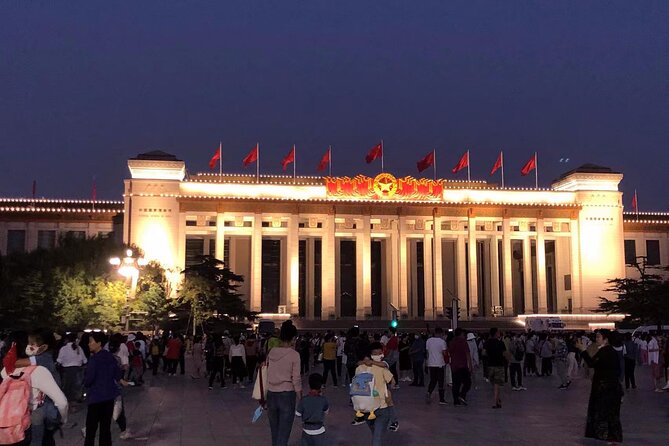
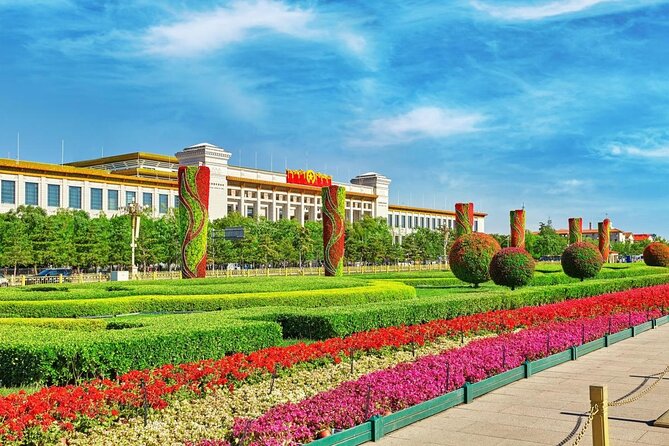
The National Museum of China sits on Beijing’s Tiananmen Square and covers an enormous sweep of time. Its collection contains more than 1.4 million relics, with nearly 6,000 described as first-class cultural relics. You are not seeing a small local museum with a neat beginning and end. This is a national survey of Chinese civilization, from prehistoric objects through the 1911 Revolution and into later periods.
That scale is both the pleasure and the problem. You can spend days here if you try to examine every room. In a four-hour outing, your guide helps you choose. That matters because a museum this large can turn into a march past labels, especially when you are still learning the basic dynasties and dates.
I like the phrase one step across the millennium for this visit, though the actual experience covers far more than a thousand years. A painted pottery jar, an ancient jade carving, a bronze ritual vessel, and a Buddhist statue each belong to different moments and belief systems. A good guide connects those objects so you can see change over time instead of treating each display as an isolated treasure.
The current rating is 4.9 from 70 reviews, with 99 percent recommending the experience. More important than the numbers is the pattern behind them: the strongest praise goes to the guides’ English, historical explanations, patience, and ability to work around crowds.
More Museums in Beijing
- Beijing: Tianmen Square, Forbidden City & Royal Museum Tours
★ 4.6 · 1,288 reviews - Beijing:Jingshan Park (Palace Museum Garden) Ticket
★ 4.5 · 185 reviews - Beijing’s Forbidden City with Special Viewing of Treasure Gallery and the Great Wall Ruins at Badaling
★ 4.5 · 24 reviews
Meeting your guide at 8:30 a.m. or 1 p.m.
You choose a morning or afternoon start, with the guide meeting you in your hotel lobby at 8:30 a.m. or 1 p.m. The outing lasts about four hours. Hotel pickup is included, and the transfer to the museum may be by subway or taxi.
The description also lists a single-way taxi transfer. Since the route says subway or taxi, confirm the exact transport plan when you book. Either way, having a local guide lead the first part of the journey is useful in Beijing, where traffic, entrances, and museum procedures can take more time than expected.
This is a private activity, not a large shared group. That gives you more control over questions and pace. If you are traveling with family or friends, you can stop to clarify a historical point without worrying about holding up strangers. Group discounts are also listed, so larger parties may find the per-person cost easier to justify.
The guide’s role begins before the first exhibit. Several guides have earned especially warm praise. Mike is repeatedly described as clear in English, friendly, and strong on both ancient and modern Chinese history. Cathy is noted for excellent English, humor, and an easy way of explaining complex subjects. William is praised for his broad knowledge and relaxed conversation, while Diana receives credit for bringing objects to life and answering questions carefully.
Those details matter. A museum guide can either help you see more or simply repeat labels. Here, the most valued quality is the ability to explain without making the visit feel like a lecture.
Ancient China: the two-hour historical core
The first major portion lasts about two hours and centers on the Ancient China exhibition. This is where the tour earns its name.
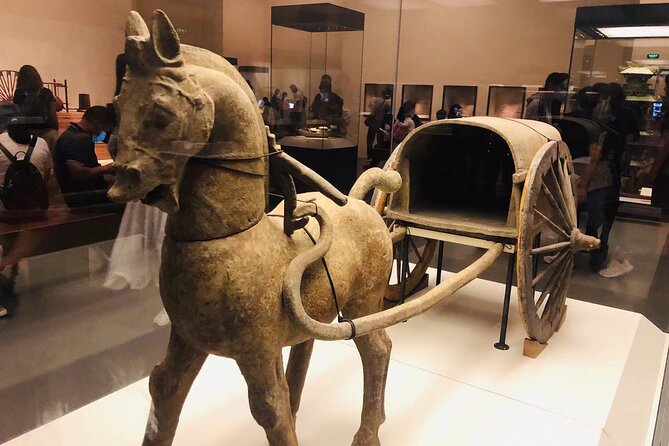
The galleries span a huge period, beginning with prehistoric material and continuing through the 1911 Revolution. You might start with painted pottery jars, objects whose patterns and original uses raise plenty of questions. From there, the displays move through jade, bronze, ceramics, and other objects tied to early Chinese society.
The jade dragon is an especially memorable piece. It is described as having a reputation as China’s first dragon, a useful detail because dragons are so central to later Chinese art and imperial symbolism. Seeing an early example gives you a better sense of how a familiar image developed.
Another unusual object is a refrigerator from about 2,000 years ago. The point is not that it worked like a modern appliance, but that ancient craft and practical design could be surprisingly sophisticated. This is exactly the sort of exhibit that benefits from explanation. Without context, you might glance at it and move on. With a guide, it becomes a doorway into ancient technology and daily life.
The bronze pieces are among the major highlights. The Simuwu Ding, unearthed in Henan Province in 1939, is presented as a hall treasure. Its size and purpose make it important, but the larger lesson is the role of bronze vessels in ritual and political life. Your guide can help explain why a vessel was much more than a container in early China.
The Siyang Fangzun is another star object. Its four sheep heads project from the corners, giving the vessel a strong animal presence. I like this kind of display because it makes ancient art feel less remote. The design is formal and ceremonial, but the animals give it an expressive quality that is easy to remember.
The Sanxingdui material adds another layer. This site civilization is associated with striking forms and a style that feels different from the better-known central plains tradition. The guide can help you understand why it matters rather than leaving you with the simple impression that the objects look unusual.
The exhibition is not just a parade of famous items. It also shows how Chinese civilization changed across long stretches of time. You may see evidence of ritual, craftsmanship, religion, technology, and political power in one route. That range is the reason I would choose a guide here, particularly if Chinese history is new to you.
A limitation is built into the schedule. Two hours is enough for highlights and a useful historical framework, but not for every case. If one object captures your attention, you may need to accept a shorter look at another section. The guide’s job is to manage that tradeoff.
Buddha statues and a quieter hour
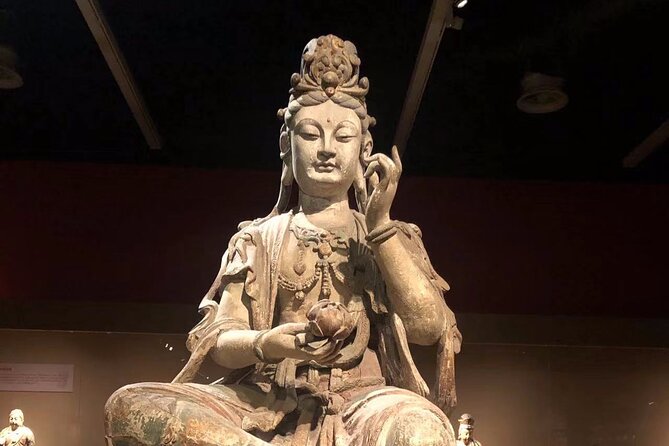
The second scheduled museum section lasts about one hour and focuses on ancient Buddhist statues. After the broad historical sweep of the Ancient China galleries, this part offers a more concentrated look at religious art.
The display includes Buddhist figures from different periods. Pay special attention to the painted wooden Guanyin from the Song Dynasty. It is singled out for its fine image and peaceful smile, with a comparison to the Mona Lisa. That comparison should not make you expect a Chinese version of Leonardo’s painting. The useful point is the face: subtle expression, careful modeling, and a sense of calm that rewards a slower look.
Buddhist sculpture can be difficult to read without help. Hand positions, posture, clothing, halos, and facial features often carry meaning. Your guide can point out changes across periods and explain what makes one statue different from another. That turns the gallery from a room of similar-looking figures into a record of changing artistic choices and religious ideas.
You may also see other exhibitions, including a food culture display. The exact extra galleries depend on the route and the time available, so do not book this expecting a full tour of every permanent collection. The advertised focus is Ancient China and Buddhist art, with the possibility of additional stops if the schedule permits.
This hour also gives you a chance to ask more personal questions. Guides such as Mike and Cathy are praised for explaining Chinese culture as well as dates and objects. That wider conversation can be valuable if you want to connect museum pieces with contemporary China.
More Private Transfers in Beijing
- Beijing:Mutianyu Great Wall Private Trip with English Driver
★ 5.0 · 1,263 reviews - Private Mutianyu Great Wall Trip with English-Speaking Driver
★ 5.0 · 927 reviews - Private Mutianyu Great Wall Trip With English-Speaking Driver
★ 5.0 · 899 reviews - Small Group 6km hiking Jinshanling Great Wall EN speaking driver
★ 5.0 · 347 reviews
Crowds, pace, and the limits of a vast museum
The National Museum can be extremely crowded. That is the most important practical warning in the whole experience.
A busy gallery changes the visit. You may not get a clear view of every object, and standing in front of a famous vessel for ten quiet minutes may not be possible. The positive side is that a skilled guide knows which rooms to prioritize and how to work around the heaviest clusters.
Mike is especially praised for finding a workable route when the building was packed. That does not make crowds disappear, but it can prevent the visit from becoming frustrating. Your guide may also point out less crowded displays or adjust the order of the galleries.
You should expect a brisk, selective tour rather than a private room-by-room inspection. The museum contains too much for that in four hours. If you want to study every dynasty, read every label, or visit many temporary exhibitions, plan a separate museum day.
The large building itself is part of the experience. Even before the objects, the scale signals the museum’s national role. You are entering an institution designed to tell a broad story of China, not a small specialist collection.
Is $114 a fair price?
At $114 per person, the price includes the professional English-speaking guide, hotel pickup, national museum ticket booking, and a one-way taxi transfer. Admission is also listed as included in the itinerary.
I would judge the value in three parts. First, there is the guide. If your main goal is context, the explanations from Mike, Cathy, William, Diana, or another assigned guide can make the visit far more useful than walking alone. Second, there is access. Museum tickets can be hard to secure, especially because reservations open only seven days ahead and the Chinese booking site may be difficult to use. Third, there is time management. A private route helps you avoid spending your limited half day wandering between galleries.
The price is harder to justify if you are comfortable arranging museum entry yourself and reading the displays independently. It is also less attractive if you want a long, slow museum day. In that case, paying for a four-hour private visit may feel restrictive.
For a first Beijing visit, a couple who values explanation, or a small family group that wants a clear introduction to Chinese history, I think the convenience can balance the cost. Group discounts may also help if several people book together.
Who will get the most from this tour?
I would choose this experience if you want a guided introduction to Chinese history without committing a full day. It suits you particularly well if you have limited time in Beijing, prefer private touring, or feel uncertain about arranging museum tickets.
It is also a good match for anyone who wants to ask questions. The guides are praised for patience and clear English, and the private format gives you room to stop and discuss an object instead of keeping quiet in a large group.
Families and mixed-interest groups may appreciate the broad route. Ancient technology, jade, animals, bronze vessels, Buddhist sculpture, and food culture offer different points of entry. A child may remember the dragon or the sheep-headed vessel even if the dynastic timeline becomes a blur.
You may want to skip it if you dislike structured touring or want to spend hours with one collection. The museum is too large for a complete visit in this format, and crowds can make the pace feel faster than you would choose on your own.
Cancellation is free if you cancel at least 24 hours before the local start time. Changes or cancellations made inside that window are not accepted for a refund.
My call: book it for context, not for total coverage
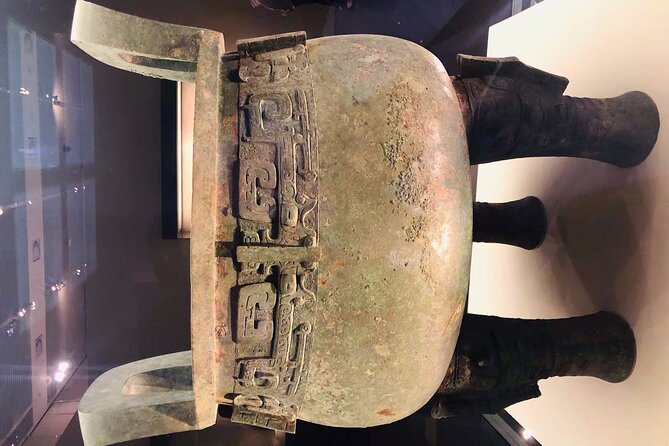
I would book this tour if the National Museum is high on your Beijing list and you want the objects to make sense. The Ancient China galleries alone contain enough material for a serious visit, and the guide adds the historical thread that a huge museum often lacks.
The strongest reason to book is not simply the taxi or the ticket. It is the chance to spend three focused hours with someone who can explain why the Simuwu Ding matters, how the jade dragon fits into Chinese imagery, what makes Sanxingdui distinctive, and why the Song Dynasty Guanyin deserves a quiet look.
Go in with sensible expectations. You will see highlights, not every room. The museum may be crowded, and the exact route can change. If that sounds like a fair trade for expert guidance, private pacing, and help with difficult admission, this is a strong half-day choice.
FAQ
How long does the National Museum tour last?
The experience lasts approximately four hours, including the transfer from your hotel and the museum visit.
What time does the tour begin?
The guide meets you at your hotel lobby at either 8:30 a.m. or 1 p.m.
Is hotel pickup included?
Yes. Hotel pickup is included in the tour price.
How do you get from the hotel to the museum?
The itinerary says the guide will use the subway or a taxi. A single-way taxi transfer is listed among the inclusions.
Is the National Museum admission included?
Yes. National Museum tickets are included, and ticket booking is part of the service.
Is this a private tour?
Yes. Only your group participates in the activity.
What exhibitions does the tour cover?
The main route includes the Ancient China exhibition and an Ancient Buddha Statue exhibition room. You may also visit additional displays, such as the food culture exhibition, depending on time.
Can I cancel for a full refund?
Yes, if you cancel at least 24 hours before the experience begins. Cancellations or changes made less than 24 hours before the local start time are not eligible for a refund.
Just added in Beijing
- Private Transfer to Mutianyu Great Wall with professional driver★ 5.0 · 19 reviews
- One day tour to downtown Tianjin from Beijing by high speed train★ 5.0 · 3 reviews
- ZANBUS: Trip to the Jinshanling Great Wall Departing at 7:30 AM★ 5.0 · 5 reviews
- camp on the Great Wall overnight with sunrise and sunset on the wall★ 5.0 · 11 reviews
- Yuxiandu Chinese Royal Cuisine Museum with Show and Royal Banquet★ 5.0 · 4 reviews
- Wild Great Wall Hikes★ 5.0 · 10 reviews
- BusDa:Ancient Great Wall &Badaling Great Wall Full-day Bus Tour★ 4.5 · 6 reviews
- Wild Great Wall Huanghuacheng Half Day Tour★ 5.0 · 15 reviews
Private Drivers, compared.
Mutianyu Great Wall Private Trip with English Driver
Read our review →
Private Mutianyu Great Wall Trip with English-Speaking Driver
Read our review →Private Mutianyu Great Wall Trip With English-Speaking Driver
Read our review →
Small Group 6km hiking Jinshanling Great Wall EN speaking driver
Read our review →
Beijing to Xi’an See Terracotta Warriors with Bullet Train Round Trip Transfer
Read our review →
Private Mutianyu Great Wall Flexible Trip English Speaking Driver
Read our review →
Mutianyu Great Wall Private Tour with English Driver
Read our review →
Private Sightseeing Nighttime Tour with Transfer
Read our review →Where else this tour turns up