
Reviewed · HUTONG TOURS
Beijing Hutongs Walking Tour
Beijing has a quieter face. This 90-minute to two-hour hutong walk leads you through old lanes, courtyard homes, and stories tied to China’s final imperial family, far from the grand avenues and palace gates. I like the relaxed pace, and I like that the tour focuses on ordinary neighborhoods rather than only famous monuments. The main consideration is simple: the $30 fee does not include admission tickets, and the route is short enough that timing matters.
Roy Li Tours Beijing keeps the group to a maximum of 15 people, with an English-speaking guide and a 10:00 a.m. start. Roy is praised for clear English, preparation, and using questions to involve the group. Arrive early at Nanluoguxiang metro station Exit E, since one unhappy booking ended after the guide and group left when the participant was judged to be late.
In This Review
- Key points to know before you book
- Why Beijing’s hutongs are worth your morning
- Meeting at Nanluoguxiang’s southern entrance
- Nanluoguxiang and the older Beijing street plan
- Mao’er Hutong and the Empress’s Mansion
- The water channel toward Qianhai and Houhai
- The stories behind the walk
- What $30 buys you
- Timing, group size, and the one important warning
- Who will get the most from this hutong walk
- Should you book the Beijing Hutongs Walking Tour?
- FAQ
- Where does the Beijing Hutongs Walking Tour start?
- What time does the tour begin?
- How long does the tour last?
- Where does the tour finish?
- Is an English-speaking guide included?
- What is the maximum group size?
- Are admission tickets included?
- Can I cancel for a full refund?
Key points to know before you book

- Start at Nanluoguxiang metro station Exit E: The meeting point is at the south end of Nanluoguxiang, served by Beijing Metro Lines 6 and 8.
- Walk through Mao’er Hutong: This old lane brings courtyard architecture and local stories into view, including the former home of Empress Wanrong.
- Learn beyond architecture: The guide covers Chinese time-keeping and the fate of the last emperor, Puyi.
- Finish near Houhai and the Drum Tower: The route moves toward the lake area, with the published end details naming both Houhai and the Drum Tower.
- Small group, modest price: At $30 per person, the tour offers guided context without the cost or time commitment of a full-day excursion.
- Be exact about the start time: The tour begins at 10:00 a.m., and the one negative account centers on a meeting-point timing dispute.
Why Beijing’s hutongs are worth your morning
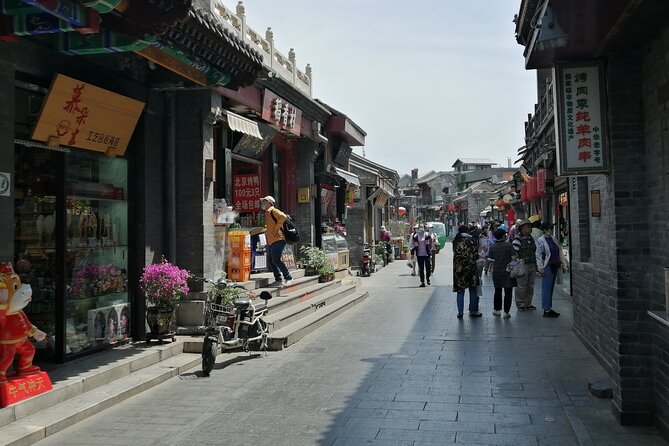
Beijing’s hutongs are traditional lanes lined with courtyard houses. They show a side of the capital that can disappear when your schedule is built only around the Forbidden City, Tiananmen Square, and the Great Wall.
The appeal here is the change in scale. Grand imperial sights explain official China. A hutong walk helps you think about how streets, homes, gates, walls, and shared lanes shaped daily life. You are not simply looking at old buildings from a distance. You are walking through the kind of urban fabric that gives central Beijing its character.
I like this tour for first-time visitors who want orientation without spending half a day on a major attraction. The route lasts about 1 hour 30 minutes to two hours, so you can fit it before lunch or use it as a gentle introduction on an early day in the city.
The small-group format also matters. With a maximum of 15 people, the guide has a fair chance to answer questions and point out details that a large coach group would pass. That does not guarantee an intimate private tour, but it is a reasonable middle ground between wandering alone and joining a crowd.
More Walking Tours in Beijing
- Beijing Hutong Walking Food and Beer Tour at Hidden Restaurants
★ 5.0 · 1,132 reviews - Private Beijing Walking Tour of the Forbidden City with 7 Options
★ 5.0 · 675 reviews - Forbidden City Private Walking Tour with Optional Sights
★ 5.0 · 400 reviews
Meeting at Nanluoguxiang’s southern entrance
The tour begins at Nanluoguxiang metro station, Exit E, near the south entrance to Nanluoguxiang. The Chinese location is written as 南锣鼓巷南口 or 南锣鼓巷地铁站E出口, useful if you need to confirm the location locally.
This is one of the most important practical details. Do not treat the meeting point as a general neighborhood. Exit E and the south end of the lane are the specific places given for the start. The route begins at 10:00 a.m., so I would arrive with enough time to leave the station, identify the exit, and find the guide without rushing.
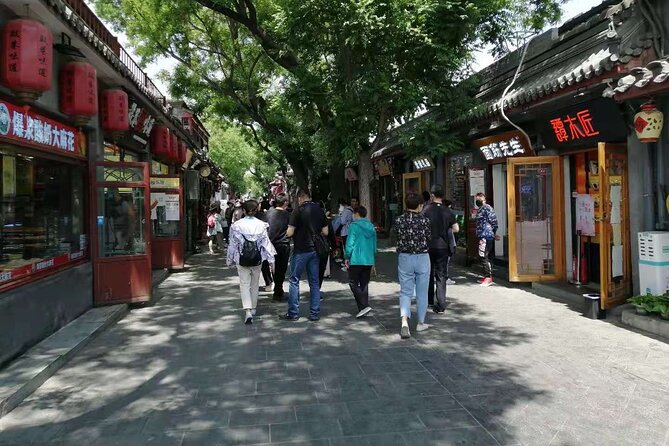
Nanluoguxiang takes you into a lane associated with Beijing’s Yuan Dynasty period. Its traditional courtyard homes, gray tones, and mature trees give you an early look at the city’s older building style.
The lane is useful as a starting point because it introduces the basic visual language of the hutong: low courtyard compounds, narrow passages, and a strong contrast with Beijing’s broad modern roads. The information provided does not promise entry into private homes, so you should expect to see the neighborhood from public lanes rather than tour residential interiors.
Nanluoguxiang and the older Beijing street plan
The walk through Nanluoguxiang is less about ticking off a single monument and more about understanding how old Beijing was arranged. The route brings you back toward the Yuan Dynasty, when the city’s street planning helped shape the pattern still visible in its traditional lanes.
That context gives the gray courtyard buildings more meaning. Without a guide, you might notice the color and shape but miss why the area matters. With an English-speaking guide, you get the architectural setting along with stories about the people and changes connected to the neighborhood.
This is where the tour’s slower pace earns its price. You have time to look up at old trees, study the lane walls, and hear an explanation rather than simply passing through on the way to another attraction.
Nanluoguxiang is also a popular name in Beijing, so do not assume that recognizing the neighborhood is enough. The useful part is having a guide connect the physical lane to the wider story of Beijing. The walk is designed for that connection, not for a long list of stops.
Mao’er Hutong and the Empress’s Mansion
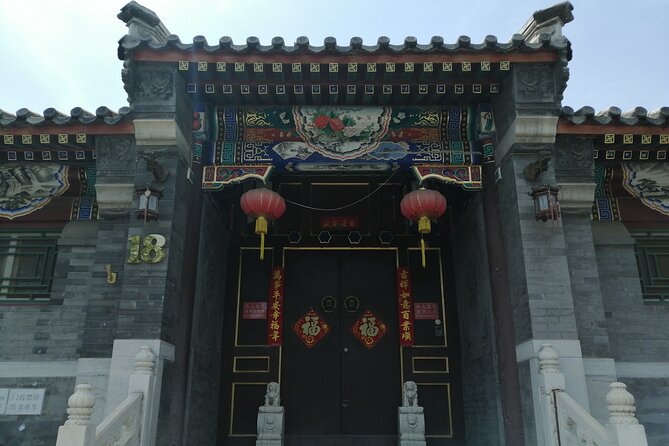
From Nanluoguxiang, the route continues along Mao’er Hutong. This lane adds more character stories and historic buildings to the walk.
The most specific stop is the former residence of Wanrong, the empress of China’s last emperor, Puyi. It is referred to as the Empress’s Mansion and is a natural picture stop. This is one of the tour’s strongest details because it links a quiet residential lane with a major turning point in Chinese history.
You get a useful contrast here. The setting is not an immense palace complex. It is a traditional hutong environment, which makes the story of Wanrong and Puyi feel connected to Beijing’s changing neighborhoods rather than sealed inside a formal museum.
The stop is especially good for visitors who know little about the last imperial household. The guide also discusses the fate of Puyi, giving the walk a political and personal thread beyond architecture. The supplied details do not state that the interior is visited, so expect an exterior viewing and photographs unless the guide tells you otherwise.
This section may be the most rewarding part of the walk for anyone who enjoys biography and social history. It also shows why a guide helps. A historic residence can look like one more gray wall until somebody explains who lived there and why the address matters.
More Hutong Walks in Beijing:
- Temple Heaven, Summer Palace, Lama Temple, Hutong Bus Tour
★ 4.7 · 319 reviews - Temple of Heaven, Summer Palace, Lama Temple, Hutong Tours
★ 5.0 · 311 reviews - Beijing Private Hutong Food Walking Tour
★ 5.0 · 299 reviews - The Hutong Experience by Bike
★ 5.0 · 163 reviews
The water channel toward Qianhai and Houhai
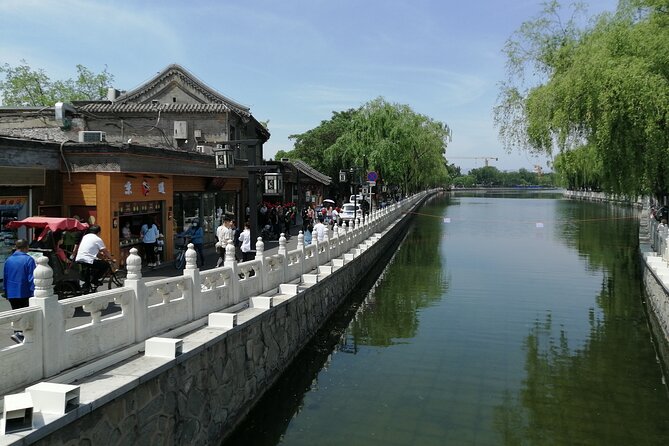
The route then reaches a narrow channel connecting Qianhai Lake and Houhai Lake. This shifts the mood from enclosed lanes to water and open space.
The walk does not simply stop at hutong houses. It shows how the lanes relate to Beijing’s lakeside area, giving you a more complete sense of the district. You move from shaded courtyards and narrow streets toward the water, then finish around Houhai and the Drum Tower area.
The published details identify the end in two ways: Houhai in the district information and the Drum Tower in the final note. That is not necessarily a problem, since these locations are part of the same general route, but you should ask the guide where the walk will finish if you need to meet a driver or keep a strict afternoon schedule.
The water section also makes the tour feel less repetitive. Hutongs can blur together if you see too many without a change of scenery. The channel and lake area give the walk a natural final stretch before the Drum Tower.
The stories behind the walk
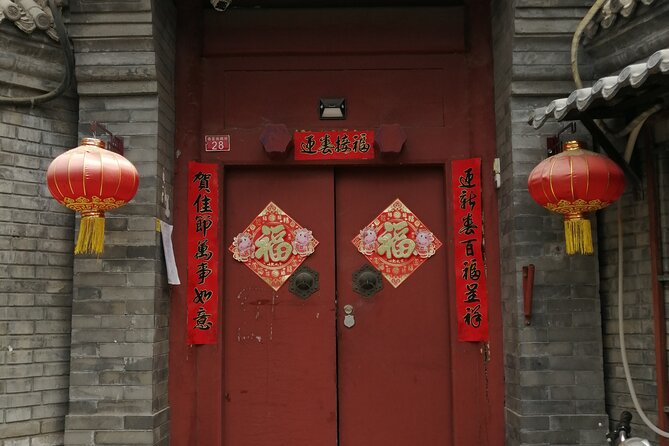
A major strength is the guide’s use of subjects beyond buildings. The tour includes Chinese time-keeping and the fate of Puyi, so the experience is not limited to pointing at doorways and walls.
Chinese time-keeping is a useful topic in this setting because the Bell and Drum Towers are part of the opening description and the route finishes near the Drum Tower. The subject helps explain how time was communicated in older Beijing, while the surrounding hutongs show the physical city that operated under those systems.
The Puyi material adds a different kind of story. His life connects imperial tradition with the political changes that followed, and Wanrong’s former residence gives that subject a physical address. You get a human scale that is often missing from broad historical timelines.
The guide style is also worth noting. One particularly positive assessment praises Roy’s English and his understanding of the hutongs. Another describes a guide who was prepared, involved the group, and used questions to make people think about the stories. If that approach is consistent, you can expect more than a one-way speech.
A question-based tour suits you if you enjoy conversation. It may be less ideal if you want a silent photo walk or a rigid list of dates. The tour’s value comes from explanation and interaction.
What $30 buys you
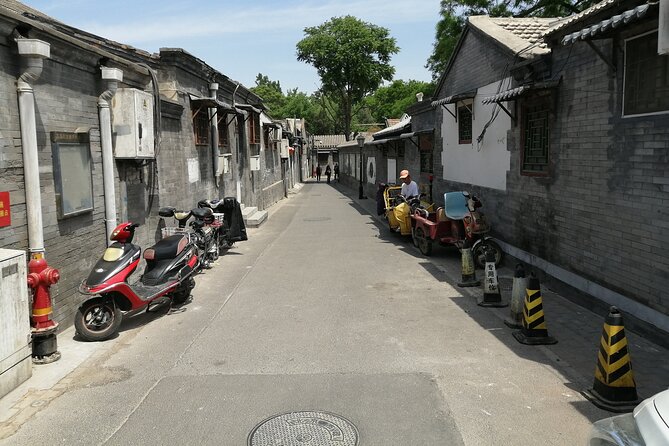
At $30 per person, this is not the cheapest way to walk through a Beijing neighborhood, since you can explore public lanes on your own. The fee pays for an English-speaking guide who provides historical context, helps you follow the route, and points out connections that are easy to miss.
I consider that fair value for a first visit, especially if you have only a short time in Beijing. The small group limit of 15 keeps the price below a private tour while offering more personal contact than a large organized group.
The cost is easier to justify if you care about the stories behind the buildings. If you only want photographs, you may prefer to walk Nanluoguxiang independently and spend the $30 elsewhere.
Admission tickets are not included. The tour information does not identify a separate paid entry stop, so the practical issue is that any ticket required during the route would be extra. Bring a mobile ticket confirmation, since the booking uses mobile tickets.
The experience includes only the English-speaking guide. Food, transport, and other extras are not listed as included. You should plan your own way to and from the meeting point and finish.
Timing, group size, and the one important warning
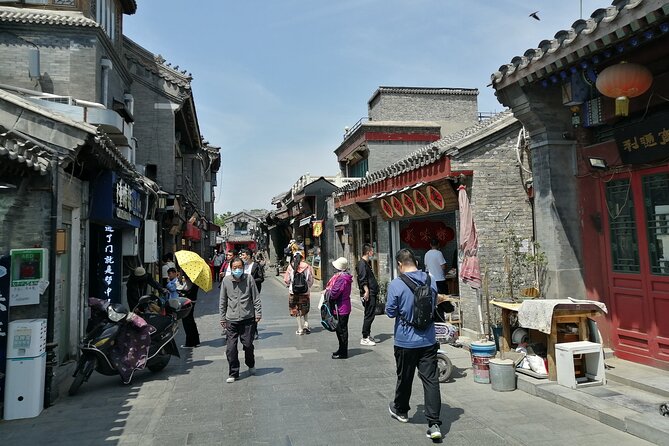
The tour runs from 1 hour 30 minutes to two hours and starts at 10:00 a.m. That makes it manageable for most schedules, but do not book it immediately before a fixed appointment unless you allow extra time after the stated finish.
The group maximum is 15 people. That is small enough for questions, though the actual group may still feel social rather than private. The tour is also listed as suitable for most participants and near public transportation.
The clearest warning concerns punctuality. One booking describes waiting about 25 minutes after the guide did not appear, followed by an unsuccessful attempt to contact him. The provider responded that the guide had been at the meeting point with four other people and that the group left because the participant was very late.
The conflicting accounts make one piece of advice essential: arrive early and verify the exact exit. Keep your phone available, save the local meeting-point wording, and do not rely on arriving at the last minute. This is a small operational detail, but it can decide whether a short tour works at all.
The overall rating is 4.8 from 22 reviews, with 95 percent recommending the experience. That is a strong result, while the single poor account is still worth taking seriously because it highlights a preventable meeting problem.
Who will get the most from this hutong walk
I would choose this tour for a first Beijing visit, a short stay, or the opening morning of a longer trip. It gives you a compact introduction to traditional lanes, courtyard homes, imperial-era stories, and the Houhai area.
It also suits you if you want history presented through places rather than only through museums. The former residence of Wanrong, the old lane architecture, and the Drum Tower area create a clear chain between people, buildings, and the city.
Families and mixed-age groups may appreciate the shorter duration. The tour is listed as suitable for most participants, and the relaxed pace is less demanding than a full-day sightseeing program.
You may want something else if you prefer private guiding, a longer architectural study, or guaranteed access inside historic homes. The available details promise a guided walk and picture stops, not private residence visits or a specialist-level architectural tour.
Should you book the Beijing Hutongs Walking Tour?
Book it if you want a short, affordable introduction to old Beijing with an English-speaking guide. The best reasons are the Mao’er Hutong stories, the connection to Wanrong and Puyi, the route toward Qianhai and Houhai, and the chance to ask questions in a group capped at 15.
I would book it early in your Beijing schedule, then use what you learn to explore more of the city on your own. Arrive before 10:00 a.m., confirm Exit E, and allow some flexibility at the finish near Houhai and the Drum Tower.
Skip it if you only want independent wandering or need a perfectly timed private itinerary. For most visitors who value context and a calm two-hour walk, $30 is a sensible way to see a less monumental, more residential side of the capital.
FAQ
Where does the Beijing Hutongs Walking Tour start?
It starts at the south entrance of Nanluoguxiang, near Nanluoguxiang metro station Exit E. The Chinese location is 南锣鼓巷南口 or 南锣鼓巷地铁站E出口.
What time does the tour begin?
The start time is 10:00 a.m.
How long does the tour last?
The tour lasts approximately 1 hour 30 minutes to two hours.
Where does the tour finish?
The published details identify Houhai as the end area and state that the tour will finish at the Drum Tower.
Is an English-speaking guide included?
Yes. An English-speaking guide is included.
What is the maximum group size?
The maximum group size is 15 people.
Are admission tickets included?
No. Admission tickets are not included.
Can I cancel for a full refund?
Yes, if you cancel at least 24 hours before the experience start time. Cancellations or changes made less than 24 hours before the start time are not refunded or accepted.
Just added in Beijing
- Private Transfer to Mutianyu Great Wall with professional driver★ 5.0 · 19 reviews
- One day tour to downtown Tianjin from Beijing by high speed train★ 5.0 · 3 reviews
- ZANBUS: Trip to the Jinshanling Great Wall Departing at 7:30 AM★ 5.0 · 5 reviews
- camp on the Great Wall overnight with sunrise and sunset on the wall★ 5.0 · 11 reviews
- Yuxiandu Chinese Royal Cuisine Museum with Show and Royal Banquet★ 5.0 · 4 reviews
- Wild Great Wall Hikes★ 5.0 · 10 reviews
- BusDa:Ancient Great Wall &Badaling Great Wall Full-day Bus Tour★ 4.5 · 6 reviews
- Wild Great Wall Huanghuacheng Half Day Tour★ 5.0 · 15 reviews
Hutong Tours, compared.

Beijing Hutong Walking Food and Beer Tour at Hidden Restaurants
Read our review →
Temple Heaven, Summer Palace, Lama Temple, Hutong Bus Tour
Read our review →
Temple of Heaven, Summer Palace, Lama Temple, Hutong Tours
Read our review →




Beijing City Walk: Explore Hutongs Life and Old Beijing
Read our review →Where else this tour turns up