
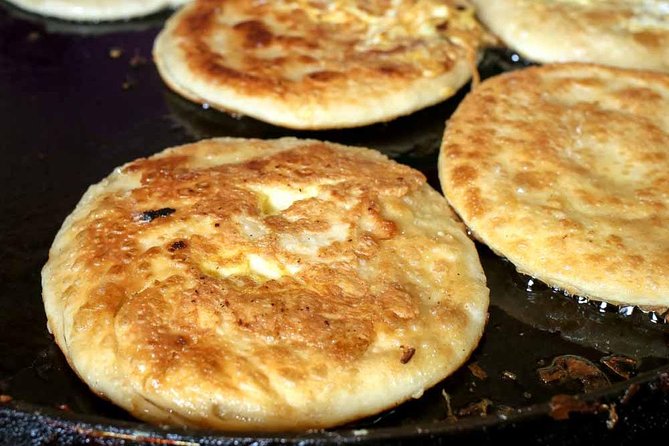
Reviewed · HUTONG TOURS
Beijing: Hutong Breakfast Food Tour
Old Beijing tastes best before noon. This three-hour walk takes you through northern Beijing’s hutongs for 12 or more dishes at five or more tucked-away food stops, with stories from the people who make them. I especially like the mix of familiar comfort food and bold local specialties, plus the chance to see courtyards, stone doorways, signs, and market life along the way. Kelly, Lynn, and Yoyo have earned especially warm praise for their stories and clear guidance.
I also like that the $45 price includes unlimited food and drinks at more than six eateries and street stalls, not just a few samples. The main consideration is the menu’s strong focus on traditional Beijing flavors. Douzhi can be a challenge, and several sweet red-bean desserts in one morning may feel repetitive. Vegetarian substitutions are limited, and the walking is not suitable for people with mobility impairments.
In This Review
- Five things to know before you go
- Why a Beijing hutong breakfast makes sense
- Meeting your guide at National Art Museum Station
- The local market and Aunt Jie’s handmade zongzi
- Douzhi, Beijing’s famously difficult breakfast drink
- Mr. Yu’s beef flatbread and tofu pudding
- Jianbing with a cheesy twist
- Crispy meat pies and imperial-era sweets
- Hutong clues between the food stops
- What the $45 price really buys
- Guides who make the morning work
- Who should book this Beijing food walk?
- Should you book the Hutong Breakfast Food Tour?
- FAQ
- How long does the Beijing Hutong Breakfast Food Tour last?
- Where does the tour meet?
- Is the tour available in English?
- How much does the tour cost?
- What food is included?
- Is the tour vegetarian-friendly?
- Can I bring luggage?
- What happens if the tour does not reach the minimum number of people?
Five things to know before you go
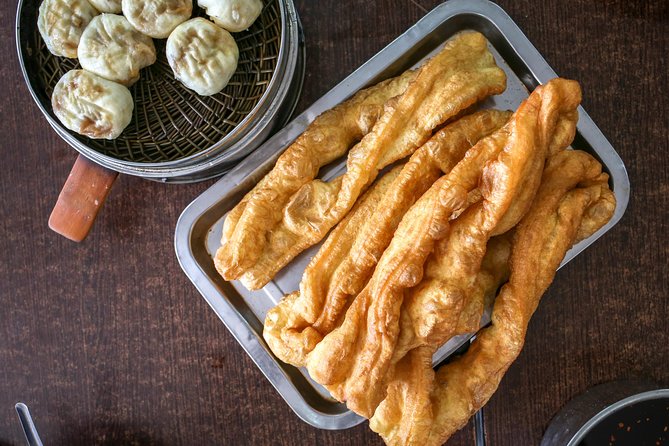
- A breakfast tour with 12 or more tastes: You get far more than one sit-down meal, from pork zongzi and beef flatbread to tofu pudding, jianbing, sweets, and drinks.
- Douzhi is the bold test: This fermented mung-bean drink is one of Beijing’s most famous acquired tastes, so approach it with curiosity rather than expectations of a sweet breakfast beverage.
- The people matter as much as the food: Aunt Jie’s handmade zongzi and Mr. Yu’s childhood comfort dishes give the meal a personal face.
- The meeting point is easy by subway: Take Line 8 to Zhongguo Meishuguan, or National Art Museum, Station and meet your guide outside Exit B.
- Come ready to walk and snack: Wear comfortable shoes, leave large luggage behind, and dress for rain or shine.
Why a Beijing hutong breakfast makes sense
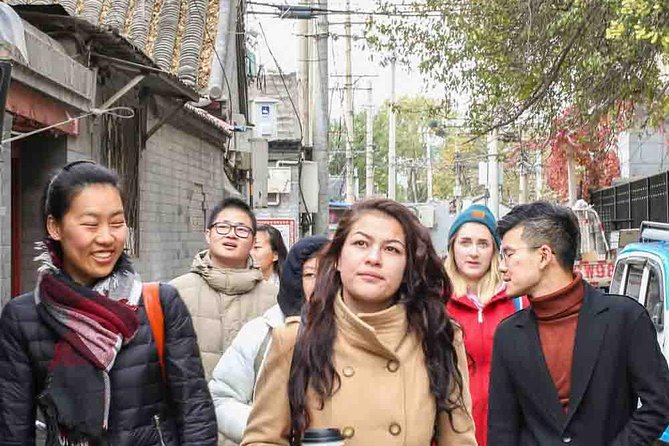
Beijing breakfast is not built around one standard plate. It is a collection of small foods eaten from stalls, neighborhood shops, markets, and family-run counters. This tour gives you a useful introduction without asking you to decode every menu on your own.
The hutongs add the setting. These narrow neighborhood lanes are full of clues if you know how to read them: stone doorways, old signs, courtyard entrances, and small businesses tucked into ordinary-looking buildings. The guide points out those details while leading you from one food stop to the next.
That combination is the tour’s real value. You are not only eating dishes. You are learning how food fits into everyday Beijing life, and you are seeing parts of the city that are easy to miss from a taxi window or a major sightseeing route.
The pace is also practical. Three hours is long enough for a substantial breakfast and a walk through the neighborhood, but short enough to fit into a busy Beijing morning. You should not plan a large lunch immediately afterward.
More Food Tours in Beijing
- Beijing Hutong Walking Food and Beer Tour at Hidden Restaurants
★ 5.0 · 1,132 reviews - Beijing: Hidden Gems Guided Food Tour with Beer and Tastings
★ 4.9 · 306 reviews - Beijing Private Hutong Food Walking Tour
★ 5.0 · 299 reviews
Meeting your guide at National Art Museum Station
The tour begins at Zhongguo Meishuguan Subway Station, also called National Art Museum Station, on Line 8. Follow the signs to Exit B and go upstairs to street level. Your guide carries a bright yellow Lost Plate tote bag.
I would use the subway rather than a taxi if possible. Traffic can be heavy around the station during rush hour, and a delayed car could turn a simple meeting into a stressful start. If you need to show a taxi or Didi driver the destination, use 地铁8号线中国美术馆地铁站 B出口.
The meeting instructions deserve a little care. The station exit is the actual meeting place, while map links can make the National Art Museum itself look like the destination. If you are unsure, contact the tour operator before setting out. Clear directions can be sent quickly, but it is better to sort this out before breakfast time.
There is no hotel pickup or drop-off. You need to reach the station yourself, which is simple by Line 8 but less convenient if you are carrying bags or staying far from the subway.
The local market and Aunt Jie’s handmade zongzi
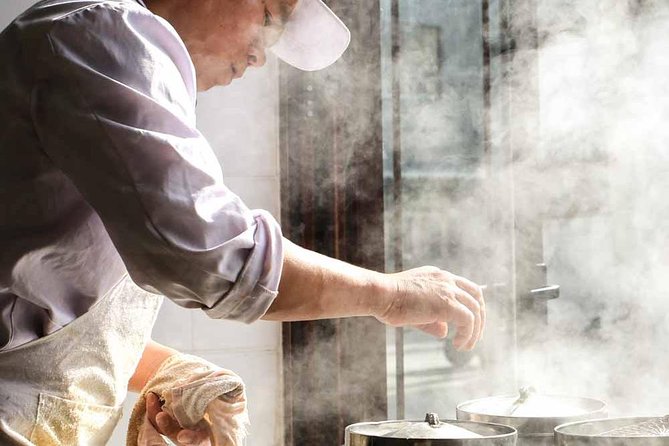
One early stop takes you into a local market, where the food feels tied to the neighborhood rather than arranged for sightseeing. Markets are useful places to begin because you can see ingredients, daily shopping, and small food businesses operating in their normal setting.
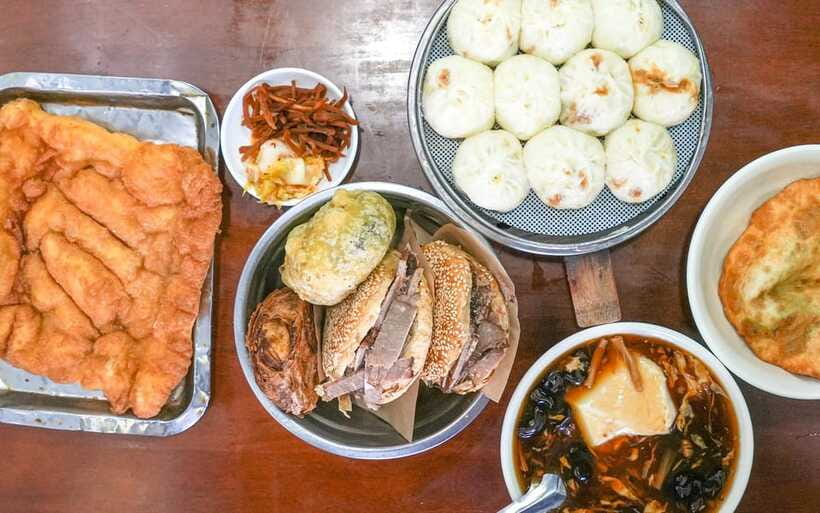
Here, you try Aunt Jie’s handmade pork zongzi. Zongzi are sticky rice parcels wrapped in leaves, and the appeal of this version is not only the pork filling. The tour connects the food to a generations-old recipe and to the person still making it.
That human link changes how you taste it. A packaged snack is easy to forget. A parcel made by someone who has kept the recipe in the family gives you a reason to pay attention to texture, seasoning, and wrapping.
The market stop also helps you understand the tour’s style. You are not simply sent to a famous restaurant to order one signature dish. You move through smaller places and meet the people behind the food. If you enjoy local markets but feel unsure about ordering or communicating, the English-speaking guide removes much of that friction.
Douzhi, Beijing’s famously difficult breakfast drink
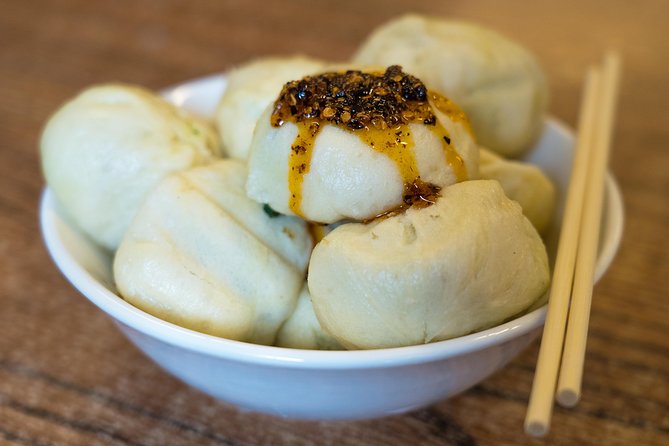
Then comes douzhi, one of the morning’s biggest tests. This fermented mung-bean drink is closely linked with Beijing food culture and has even received Michelin recognition as a local tradition. It is tangy and distinctive, not the sort of mild breakfast drink most first-time visitors expect.
I would treat douzhi as a cultural taste rather than a measure of your adventurousness. You may like it immediately, or you may need a second sip to understand it. Either response is fine. The point is to try one of Beijing’s most strongly local foods while someone explains why it matters.
This is one of the places where the guide adds real value. Without context, douzhi can seem like an odd drink placed in front of you for shock value. With context, it becomes part of the city’s food identity and a memorable story to take home.
The tour includes unlimited water and soft drinks, which helps keep the meal comfortable. Still, the menu is built around sampling many items, not around customizing every taste. If you dislike sour or fermented flavors, douzhi may be the hardest stop.
More Hutong Walks in Beijing:
- Temple Heaven, Summer Palace, Lama Temple, Hutong Bus Tour
★ 4.7 · 319 reviews - Temple of Heaven, Summer Palace, Lama Temple, Hutong Tours
★ 5.0 · 311 reviews - The Hutong Experience by Bike
★ 5.0 · 163 reviews - Beijing: Hutong Culinary Walking Tour with 15+ Tastings
★ 5.0 · 162 reviews
Mr. Yu’s beef flatbread and tofu pudding
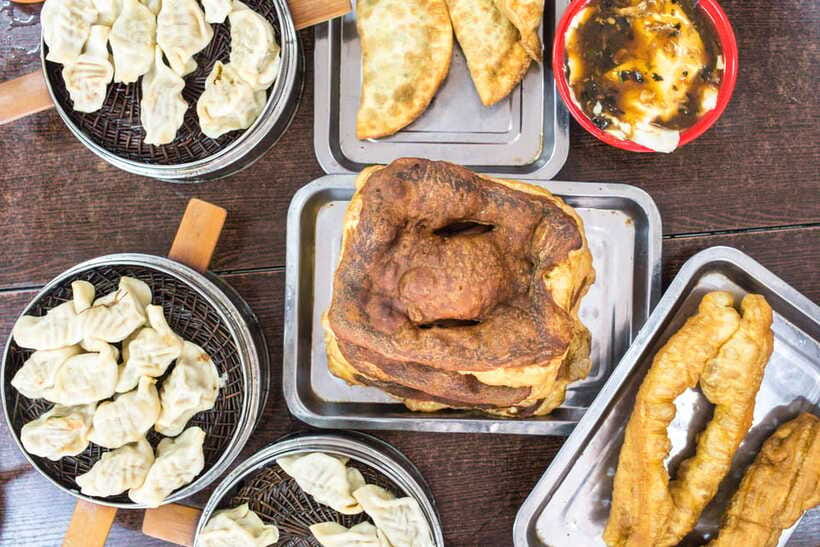
Another stop introduces Mr. Yu’s beef flatbread and tofu pudding, both described as Beijing comfort foods. The emphasis here is less on novelty and more on the dishes people eat because they remind them of home.
The beef flatbread gives the morning a savory, filling bite. Tofu pudding offers a softer change in texture. Together, they show why a good breakfast tour needs more than famous street snacks. You get foods that feel connected to ordinary routines and childhood memories.
Mr. Yu’s role is part of the story. The tour presents him as someone serving food he grew up with, which gives you a window into personal food memory. I like this approach because it keeps the focus on people and habits, not just on a checklist of dishes.
You should expect variety rather than large portions of any one item. The goal is to sample broadly, so each serving may be small enough to leave room for the next stop. That is good news if you want to try many foods, but less useful if you are looking for one substantial bowl or plate.
Jianbing with a cheesy twist
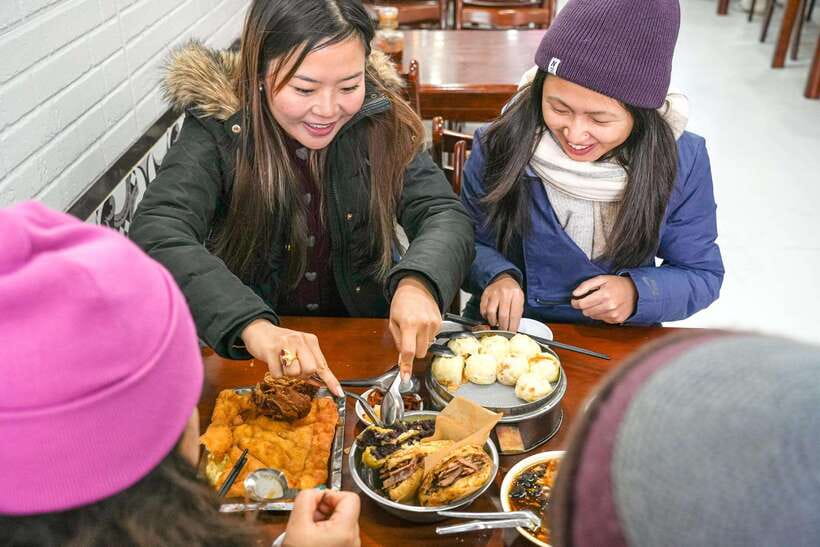
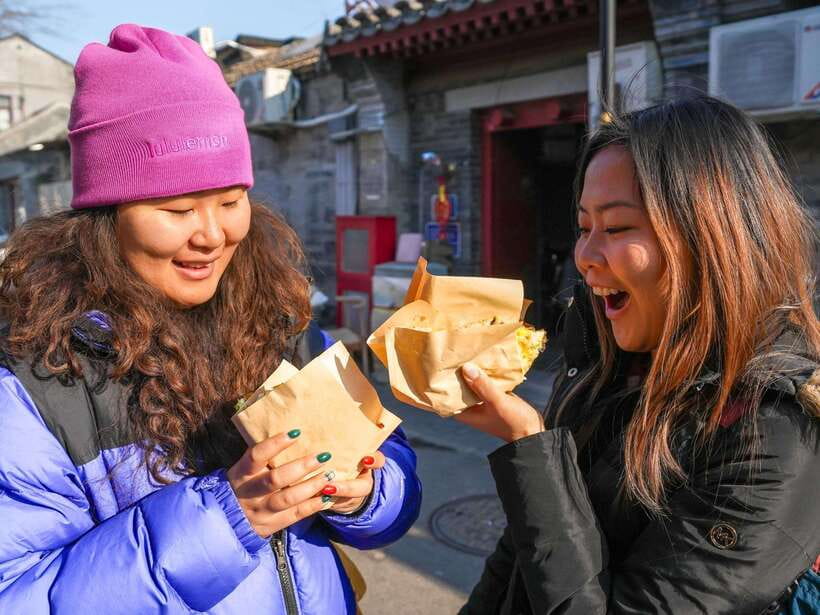
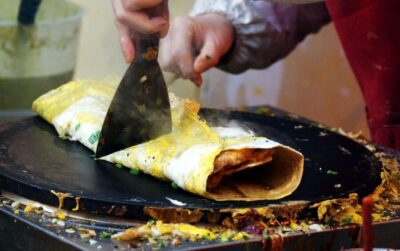
Jianbing is one of Beijing’s best-known breakfast foods, and this tour adds a playful twist at a small hole-in-the-wall favorite. The version includes cheese, putting a modern spin on a familiar street breakfast.
Jianbing is often made as a thin savory pancake with fillings and crisp elements folded inside. The cheesy version gives you an easy entry point if you are new to Beijing breakfast, while still showing how local food shops adapt popular dishes.
This stop is likely to be one of the most approachable parts of the morning. It has the comfort of a hot pancake and the fun of an unexpected filling. It also breaks up the more challenging tastes, especially after douzhi.
The small shop setting matters. A hole-in-the-wall food counter can look easy to miss, especially when you do not know what to order or where to queue. With a guide leading you, you can concentrate on eating rather than figuring out the mechanics of the stop.
Crispy meat pies and imperial-era sweets
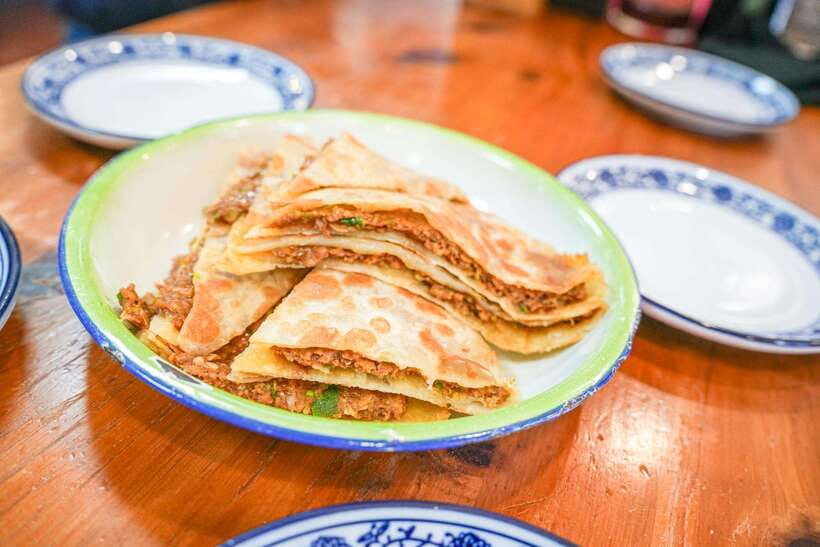
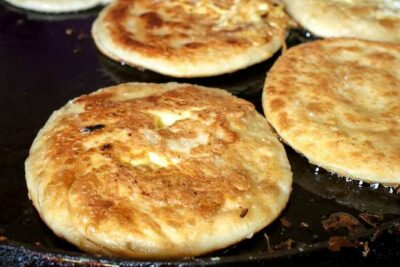
The food keeps moving between savory and sweet. Crispy meat pies add another hearty, handheld bite, while imperial-era sweets connect the morning to foods once made for emperors.
That historical connection is interesting, but the real benefit is sensory variety. Crisp pastry, meat, sticky rice, tofu, pancakes, fermented drink, and sweet red-bean fillings give you a broad picture of Beijing food in just three hours.
The sweets deserve a small warning. The tour includes several red-bean paste desserts, and that flavor can begin to feel repetitive if you prefer savory food. The Australian review specifically pointed out the concentration of sweet red-bean items and suggested that the balance could improve.
I would keep that in mind when deciding who should book. If you enjoy traditional sweets, this will be a pleasant part of the morning. If you prefer salty breakfasts, you may find the final portion less varied than the opening dishes.
Hutong clues between the food stops
The walking portions are not wasted time between meals. They are where you get the visual side of the tour. Your guide points out details in stone doorways, signs, and courtyards, helping you notice how the hutongs are organized and how old and new uses sit beside each other.
These details are easy to pass without explanation. A doorway may seem plain, a sign may look like decoration, and a courtyard entrance may tell you little at first glance. The guide turns those small features into clues about the neighborhood.
The streets also keep the tour grounded. You are not moving through a staged food hall. You are walking through a working part of Beijing, with food stalls and small eateries folded into the local lanes.
Bring comfortable shoes. The tour operates in rain or shine, so you should check the forecast and dress accordingly. Large bags and luggage are not allowed, and that rule makes sense in narrow lanes and compact food shops. Leave your suitcase at your hotel or storage point before arriving.
What the $45 price really buys
At $45 per person, the tour costs more than buying one Beijing breakfast on your own. But the comparison is not quite fair. You are paying for an English-speaking guide, more than 12 food tastes, unlimited food and drinks at over six eateries and stalls, neighborhood interpretation, and help ordering at places you might not find alone.
The value is strongest for first-time visitors to Beijing, people with limited time, and anyone who wants to sample widely without wasting a morning on wrong turns. You could certainly spend less by eating independently, but you would likely try fewer dishes and miss the explanations that connect them.
The tour also offers a practical way to manage unfamiliar flavors. Douzhi, tofu pudding, zongzi, and red-bean sweets may not be easy to identify from a menu. The guide gives you a starting point and explains what you are eating, which makes experimentation less risky.
The value is weaker if you already know Beijing food well, dislike group-style sampling, or want to choose every dish yourself. It is also less suitable if your priority is a long, relaxed restaurant breakfast. This is a walking food route with many stops, not a single-table meal.
Guides who make the morning work
The guide is central to this experience because the food shops are small and the dishes need explanation. Kelly receives especially strong praise for clear stories, helpful guidance, and making the morning easy. Lynn is associated with finding special local places, including the market, while Yoyo is praised for positive energy and stories connected to each food.
Guide quality can vary by departure, so you should not assume you will have one particular person. Still, the repeated praise for the guiding style points to what the tour does best: explaining the food, keeping the route manageable, and helping you feel comfortable in places you might not enter alone.
A good guide also controls the balance between eating and learning. You want enough explanation to understand the dish, but not so much that breakfast becomes a lecture. The comments about these guides suggest that storytelling is a major part of the morning rather than an afterthought.
Who should book this Beijing food walk?
I would recommend it to you if you:
- Want to try many traditional foods in one morning
- Prefer local markets and small shops to polished restaurants
- Enjoy learning the story behind a dish
- Are curious about bold flavors such as douzhi
- Have only a short time in Beijing
- Feel more comfortable with an English-speaking guide
I would think twice if you:
- Have mobility limitations
- Need vegetarian replacements for every dish
- Dislike fermented, sour, or sweet foods
- Are carrying luggage
- Want a private, sit-down breakfast
- Prefer to spend the morning at a slow pace
Vegetarians can join, but substitutions are not available for every dish. If you have strict dietary needs, ask before booking rather than assuming the entire menu can be changed.
The minimum operating requirement is two people. A booking can be canceled after confirmation if that minimum is not reached, with an alternative date or full refund offered. Free cancellation is available up to 24 hours before the tour, and you can reserve now and pay later.
Should you book the Hutong Breakfast Food Tour?
Book it if you want an efficient, friendly introduction to Beijing’s everyday food culture. The strongest reasons are the range of dishes, the market visit, the personal stories behind Aunt Jie and Mr. Yu, and the chance to see hutong details while moving between food stops.
Just arrive hungry, wear good shoes, and keep an open mind about douzhi. If you are sensitive to repeated sweet red-bean desserts, prepare for the menu to lean sweet near the end. At $45, the tour is a fair buy for the food, drinks, guide, and access to places that are not obvious to newcomers.
FAQ
How long does the Beijing Hutong Breakfast Food Tour last?
The tour lasts three hours. Check availability for the starting times offered on your chosen date.
Where does the tour meet?
The meeting point is outside Exit B at Zhongguo Meishuguan, also called National Art Museum, Subway Station. The station is on Line 8, and the guide carries a bright yellow Lost Plate tote bag.
Is the tour available in English?
Yes. The tour includes a live English-speaking guide.
How much does the tour cost?
The listed price is $45 per person.
What food is included?
The food includes 12 or more dishes at five or more food stops, with items such as handmade pork zongzi, douzhi, beef flatbread, tofu pudding, jianbing with cheese, crispy meat pies, and traditional sweets. Food and drinks are included at more than six eateries and street stalls.
Is the tour vegetarian-friendly?
Yes, the tour is vegetarian-friendly. However, substitutions are not available for every dish, so you should confirm whether the menu meets your needs before booking.
Can I bring luggage?
No. Luggage and large bags are not allowed. Bring comfortable shoes instead, since the tour involves walking through the hutongs.
What happens if the tour does not reach the minimum number of people?
At least two people are required for the tour to operate. If that minimum is not reached, the tour may be canceled after confirmation, and you will be offered another date or a full refund.
Just added in Beijing
- Private Transfer to Mutianyu Great Wall with professional driver★ 5.0 · 19 reviews
- One day tour to downtown Tianjin from Beijing by high speed train★ 5.0 · 3 reviews
- ZANBUS: Trip to the Jinshanling Great Wall Departing at 7:30 AM★ 5.0 · 5 reviews
- camp on the Great Wall overnight with sunrise and sunset on the wall★ 5.0 · 11 reviews
- Yuxiandu Chinese Royal Cuisine Museum with Show and Royal Banquet★ 5.0 · 4 reviews
- Wild Great Wall Hikes★ 5.0 · 10 reviews
- BusDa:Ancient Great Wall &Badaling Great Wall Full-day Bus Tour★ 4.5 · 6 reviews
- Wild Great Wall Huanghuacheng Half Day Tour★ 5.0 · 15 reviews
Hutong Tours, compared.
Beijing Hutong Walking Food and Beer Tour at Hidden Restaurants
Read our review →
Temple Heaven, Summer Palace, Lama Temple, Hutong Bus Tour
Read our review →
Temple of Heaven, Summer Palace, Lama Temple, Hutong Tours
Read our review →
Beijing City Walk: Explore Hutongs Life and Old Beijing
Read our review →Where else this tour turns up