
Reviewed · HUTONG TOURS
Beijing Hutong Breakfast & Coffee Tour
Old Beijing tastes best before noon. This 3.5 to 4-hour morning walk combines traditional breakfast, quiet lanes, a local market, Zhihua Temple, classic snacks, and coffee in a part of the city where old courtyard life still shows. I like the mix of food and culture, and I especially like that the route moves beyond the usual grand sights. You get sesame balls, wontons, jianbing, Beijing sweets, and a cup of coffee, while guides such as Coco and Wendy add personal care to the experience.
The main thing to consider is the price: $75 per person is not cheap for a breakfast tour. The value depends on how much you care about local guidance, several food tastings, and cultural context. The walking, early start, and uncertain group size may not suit everyone, and the temple music experience depends on timing.
In This Review
- Key reasons to consider this morning tour
- Why the breakfast route works
- Dengshikou Avenue: a warm start with sesame and broth
- Shijia Hutong: courtyard homes and daily routines
- Chaoyangmen Local Market: jianbing and ordinary Beijing
- Zhihua Temple: quiet rooms and old music
- Dongtangzi Hutong: names from Beijing’s modern past
- Huguosi Hutong: a second round of Beijing snacks
- Xizongbu Hutong: coffee after the old lanes
- Is $75 a fair price?
- Practical points before you book
- Who should book this Beijing morning walk?
- Should you book the Beijing Hutong Breakfast & Coffee Tour?
- FAQ
- Where does the Beijing Hutong Breakfast & Coffee Tour start?
- What time does the tour begin?
- How long does the tour last?
- What food is included?
- Does the tour include Zhihua Temple admission?
- Where does the tour end?
- What is the cancellation policy?
Key reasons to consider this morning tour
- Breakfast begins with classic Beijing comfort food: Try crisp sesame balls with red bean filling and thin-skinned wontons in warm broth.
- The route shows everyday hutong life: Shijia Hutong and Dongtangzi Hutong offer courtyard homes, narrow lanes, and stories tied to local residents.
- A real market stop adds local texture: At Chaoyangmen Local Market, you can see daily shopping and taste jianbing.
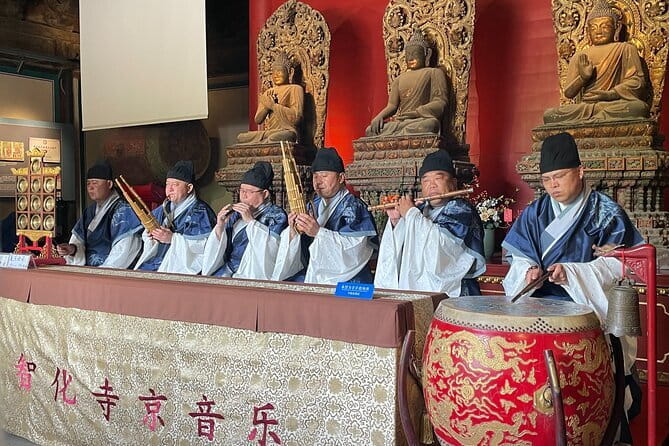
- Zhihua Temple brings a quiet cultural pause: The temple may offer a chance to hear Beijing temple music, an old musical tradition combining court, Buddhist, and folk elements.
- The food keeps changing: Huguosi Hutong introduces wandouhuang, ludagun, and aiwowo after the savory breakfast stops.
- Coffee closes the old-meets-new route: Xizongbu Hutong provides a modern finish after several hours in historic neighborhoods.
Why the breakfast route works
Many Beijing sightseeing days begin with the Forbidden City, Tiananmen Square, or the Great Wall. Those places matter, but this tour takes a different approach. It begins with what local people eat in the morning and uses food as a way into the city’s older neighborhoods.
The meeting point is at 5 Deng Shi Kou Da Jie in Dongcheng District, with an 8:30 am start. That early hour matters. Breakfast shops and markets are part of the morning rhythm, so you are seeing these streets at a useful time rather than after the day has fully begun.
The tour includes breakfast at two or three food stops, bottled water, coffee or tea, and food and drinks described as unlimited. Since the exact number of portions is not spelled out, I would ask what is included when booking, especially if you have a large appetite or dietary restrictions.
The group is advertised as fewer than 12 people, though the additional information gives a maximum of 20. That difference is worth checking before you pay. A group under 12 should make the lanes, market, and food counters easier to manage. A group closer to 20 could feel less personal, particularly in narrow hutongs.
More Hutong Walks in Beijing:
- Beijing Hutong Walking Food and Beer Tour at Hidden Restaurants
★ 5.0 · 1,132 reviews - Temple Heaven, Summer Palace, Lama Temple, Hutong Bus Tour
★ 4.7 · 319 reviews - Temple of Heaven, Summer Palace, Lama Temple, Hutong Tours
★ 5.0 · 311 reviews
Dengshikou Avenue: a warm start with sesame and broth
The first stop is an eatery on Dengshikou Avenue. This is where you begin with two traditional breakfast foods: sesame balls and wontons.
The sesame balls are described as golden and crisp, with sweet red bean paste inside. They offer a clear contrast in one bite: a crunchy shell followed by a soft, sweet center. Wontons bring a different mood, with thin wrappers, generous meat filling, and hot broth.
I like beginning with food that has a direct connection to ordinary morning life. These are not fancy dishes presented for show. They are simple, familiar foods that help explain what breakfast can mean in Beijing.
You have about 30 minutes here. That gives you time to eat and listen, though the stop is still brief. If you prefer to study every dish slowly, you may find the pace quick. If you want a practical introduction before walking into the old neighborhoods, it works well.
Shijia Hutong: courtyard homes and daily routines
From breakfast, the route continues to Shijia Hutong, where the focus shifts from eating to architecture and local life. Traditional siheyuan courtyards line the lane. These homes are built around shared courtyards, and their arrangement helps explain how older Beijing households lived.
The appeal here is not a single landmark. It is the setting. You may see older residents sitting outside, talking, or enjoying the morning, while children use the lane as a play area. Those details give the hutong a human scale that large monuments cannot provide.
A 25-minute stop is enough for a walk and explanation, but it will not allow a lengthy architectural study. You should think of this as an introduction to hutong life, not a full tour of courtyard interiors. The experience is mainly from the public lane, and access to private homes is not indicated.
This is also one of the places where a guide matters most. Without context, a hutong can look like a collection of narrow streets. With stories about residents, courtyards, and the changing city, the lane becomes easier to understand.
Chaoyangmen Local Market: jianbing and ordinary Beijing
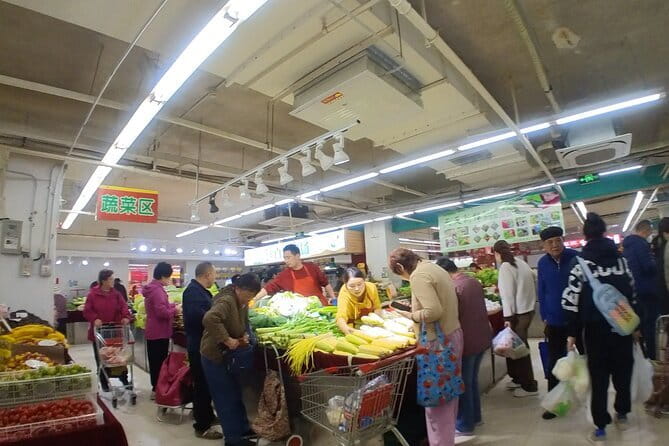
The market stop at Dafangjia Hutong near Nanxiaojie South Road is short, about 15 minutes. It is designed to show the practical side of the old city, with fresh produce and daily necessities rather than polished tourist displays.
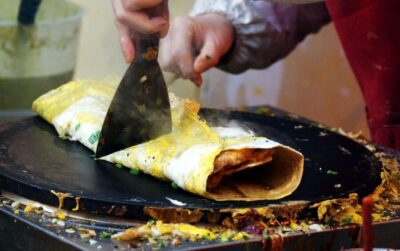
The food focus is jianbing, a savory crepe beloved in Beijing. You may watch the quick preparation and taste it as part of the route. The market setting matters because jianbing is not only a snack. It is linked to the morning rush and everyday shopping.
The short stop is the one part of the itinerary most likely to feel compressed. Fifteen minutes can pass quickly if the market is active or if the food takes time to prepare. Still, the brevity keeps the tour moving and leaves room for the temple and later snack stops.
I would keep your expectations practical. This is not a long market exploration or a shopping session. It is a quick look at local commerce paired with a key Beijing breakfast food.
A few more to weigh up in Beijing
- From Beijing: Mutianyu Great Wall Tours with Options
★ 4.9 · 9,216 reviews - Beijing: Forbidden City Tour(Group/Private)-Tickets Included
★ 4.8 · 7,974 reviews - Beijing: T-Square & Forbidden City Group or Private Tour
★ 4.8 · 4,446 reviews - All-Inclusive Tour: Tiananmen Square, Forbidden City, Great Wall
★ 5.0 · 2,873 reviews
Zhihua Temple: quiet rooms and old music
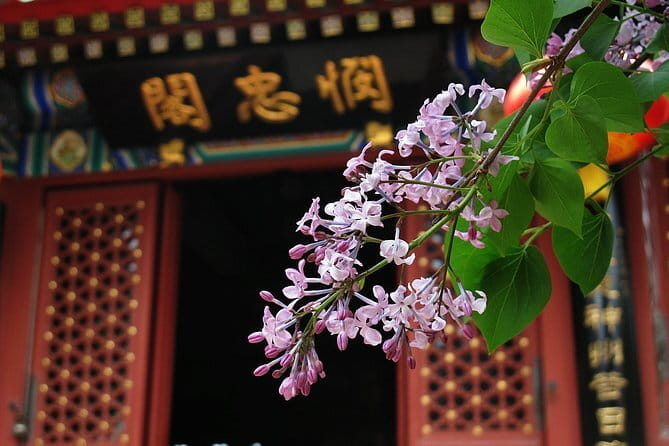
Zhihua Temple, located in Lumicang, offers the most peaceful pause of the morning. After the food and market activity, you enter a temple setting with historic architecture, Ming Dynasty murals, and Buddhist artifacts.
The temple is included in the tour price, which helps justify some of the cost. More important, it changes the pace. You are not simply moving from one snack to another. You are given time to consider the religious and artistic traditions that shaped Beijing.
The visit lasts about 40 minutes. That is a useful amount of time for the temple grounds and an explanation of what you are seeing. If timing permits, you may also hear Beijing temple music. This tradition combines imperial court, Buddhist, and folk elements, and is described as a living example of ancient Chinese music.
There is no guarantee that the music will take place during your visit. I would treat it as an excellent possibility rather than a promised performance. If you are especially interested in it, ask the guide at the start of the tour if the timing looks favorable.
Zhihua Temple is also a good reason to bring respectful clothing and behavior. The description does not set a formal dress code, but it is a religious site, so quiet conduct is appropriate.
Dongtangzi Hutong: names from Beijing’s modern past
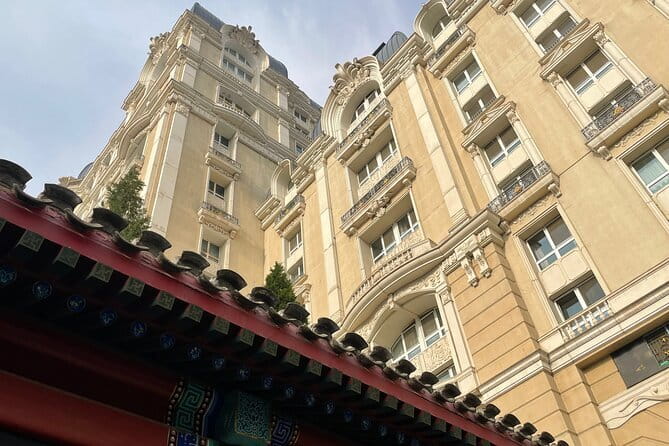
The longest walking section takes place in Dongtangzi Hutong, with about an hour devoted to the area. The lane has connections to notable figures including Wu Lien-teh and Cai Yuanpei.
This portion gives the tour a different historical angle. Shijia Hutong focuses on courtyard life and neighborhood routines. Dongtangzi Hutong connects the physical street to people who played a part in modern Chinese history.
You can expect a guided walk through weathered lanes and former residences. The attraction is the sense of continuity: the buildings have changed with time, but the street still carries traces of the people who lived and worked there.
An hour is a substantial portion of the tour, so this is where the walking becomes important. Wear comfortable shoes and expect to spend much of the morning on foot. The route is near public transportation, but the tour itself is a walking experience rather than a vehicle-based sightseeing trip.
For me, this is likely to be the most rewarding part for anyone who enjoys old neighborhoods more than formal museum displays. The drawback is that the experience may feel less dramatic if you prefer major monuments or fully restored sites.
Huguosi Hutong: a second round of Beijing snacks
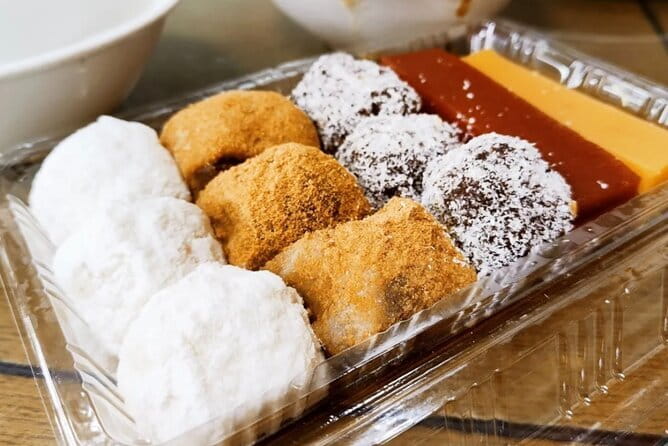
The next food stop moves from breakfast staples to traditional sweets at Huguosi Hutong Snack Street. The selection includes wandouhuang, ludagun, and aiwowo.
Wandouhuang is a mung bean cake. Ludagun is a glutinous rice roll, while aiwowo is a sweet rice cake. These snacks differ in texture and preparation, and sampling several in one place gives you a better sense of the variety within Beijing cuisine.
This is a useful stop for anyone who thinks Beijing food begins and ends with roast duck. The tour gives more attention to small snacks, breakfast items, and foods tied to neighborhood life.
You have about 20 minutes here. That is enough for tasting, but the stop is not designed as a full meal. By this point, you will have already eaten sesame balls, wontons, and jianbing, so pacing yourself early is wise.
The phrase unlimited food and drinks suggests you should not be left hungry, but individual serving sizes and choices are not specified. If you have a sensitive diet, ask in advance what substitutions are possible. The available information does not list vegetarian, vegan, allergy, or gluten-free arrangements.
Xizongbu Hutong: coffee after the old lanes
The final stop is Xizongbu Hutong, where the tour ends with coffee. This gives the route a clear modern note after a morning focused on older food, homes, temples, and streets.
The contrast is part of the appeal. Beijing is not a preserved museum. Traditional lanes and modern cafés exist close together, and the final coffee stop reflects that change. You can sit with a drink, review the morning, and finish without being rushed through another major sight.
The stop lasts about 20 minutes. The ending point is listed as Xizongbu Hutong, near 10000 Cafe. Since the tour ends there rather than returning to the starting point, plan your next move before you arrive. The tour does not include onward transportation.
Is $75 a fair price?
At $75, this tour asks you to pay for more than breakfast. The price covers several food stops, bottled water, coffee or tea, a temple admission, and a guide leading a route through historic neighborhoods.
If you visited the food stops on your own, you might spend less on the dishes. But you would also need to find the right places, understand what you are ordering, connect the neighborhoods efficiently, and know why the temple and hutongs matter. The value is strongest for a first visit to Beijing, especially if you want an organized introduction to local food and old-city streets.
The price is less convincing if you already know Beijing’s hutongs, speak Chinese, or mainly want a large breakfast. It is also worth checking the group size because a small group is a key part of the experience. The stated details describe a group of fewer than 12, while the maximum is 20.
The tour receives a top rating from the two written assessments provided. One praises it as a pleasant way to start the day and specifically thanks Coco for looking after the group. Another highlights the off-the-main-route locations and gives special credit to Wendy for making the food-focused outing enjoyable. Those names suggest that the guide’s care is an important part of the experience, not a minor extra.
Practical points before you book
The tour starts at 8:30 am, so check your route to Dengshikou Avenue the night before. The meeting point is at 5 Deng Shi Kou Da Jie, Dongcheng District, Beijing, and the area is near public transportation.
Wear shoes suitable for several hours of walking. The itinerary includes a one-hour hutong section, and even the shorter food and temple stops involve moving through old lanes.
Bring an appetite, but do not eat a heavy meal beforehand. The first stop begins with food, and more tastings follow at the market and Huguosi Hutong.
The tour uses a mobile ticket, and confirmation is provided at booking. Most people can participate, but no detailed accessibility information is given. If you need step-free access, shorter walking distances, or seating at each stop, ask the provider before booking.
Cancellation is free up to 24 hours before the start time for a full refund. Changes or cancellations inside that window are not accepted for a refund. The tour depends on good weather and a minimum number of people. If poor weather or low enrollment cancels it, you can choose another date or experience, or receive a full refund.
Who should book this Beijing morning walk?
I would recommend it most to first-time visitors who want a gentle introduction to Beijing beyond its headline sights. It also suits people who enjoy small portions, local snacks, neighborhood history, and a guide who can connect food with place.
It is a good fit for couples, friends, and families who can manage a few hours of walking. The early start makes it useful on a busy itinerary because you finish around late morning and still have most of the day ahead.
I would hesitate if you want a quiet, slow breakfast, a guaranteed temple music performance, or a very small group without confirming the final size. You may also prefer another activity if you dislike sweet rice snacks, savory crepes, or trying foods without a fully detailed menu.
Should you book the Beijing Hutong Breakfast & Coffee Tour?
Book it if you want food and neighborhood context in one morning. The route has a pleasing rhythm: breakfast, courtyard lanes, market food, temple quiet, historical streets, traditional sweets, and coffee.
The strongest reason to go is the range. You are not spending three hours in one restaurant or rushing through one famous landmark. You are seeing how food, homes, religion, history, and modern café life fit into the older city.
Before paying $75, confirm the expected group size and ask about the included food portions. If those details work for you, this is a worthwhile choice for an authentic-feeling start to a Beijing day.
FAQ
Where does the Beijing Hutong Breakfast & Coffee Tour start?
It starts at 5 Deng Shi Kou Da Jie in Dongcheng District, Beijing.
What time does the tour begin?
The tour begins at 8:30 am.
How long does the tour last?
It lasts approximately 3 hours and 30 minutes to 4 hours.
What food is included?
The tour includes breakfast at two or three food stops, traditional snacks, bottled water, and coffee or tea. Foods listed include sesame balls, wontons, jianbing, wandouhuang, ludagun, and aiwowo.
Does the tour include Zhihua Temple admission?
Yes. Admission to Zhihua Temple is included.
Where does the tour end?
It ends at Xizongbu Hutong, near 10000 Cafe.
What is the cancellation policy?
You can cancel at least 24 hours before the start time for a full refund. Cancellations or changes made less than 24 hours before the start time are not accepted for a refund.
Just added in Beijing
- Private Transfer to Mutianyu Great Wall with professional driver★ 5.0 · 19 reviews
- One day tour to downtown Tianjin from Beijing by high speed train★ 5.0 · 3 reviews
- ZANBUS: Trip to the Jinshanling Great Wall Departing at 7:30 AM★ 5.0 · 5 reviews
- camp on the Great Wall overnight with sunrise and sunset on the wall★ 5.0 · 11 reviews
- Yuxiandu Chinese Royal Cuisine Museum with Show and Royal Banquet★ 5.0 · 4 reviews
- Wild Great Wall Hikes★ 5.0 · 10 reviews
- BusDa:Ancient Great Wall &Badaling Great Wall Full-day Bus Tour★ 4.5 · 6 reviews
- Wild Great Wall Huanghuacheng Half Day Tour★ 5.0 · 15 reviews
Hutong Tours, compared.
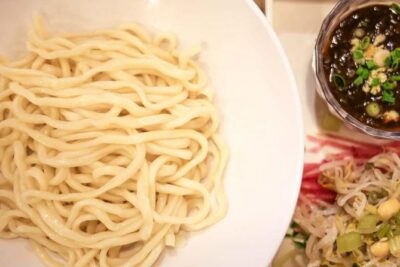
Beijing Hutong Walking Food and Beer Tour at Hidden Restaurants
Read our review →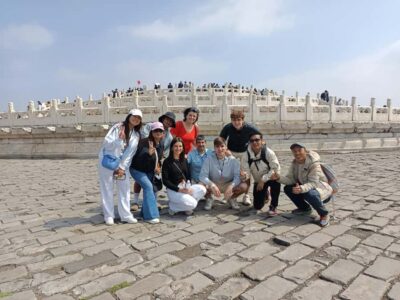
Temple Heaven, Summer Palace, Lama Temple, Hutong Bus Tour
Read our review →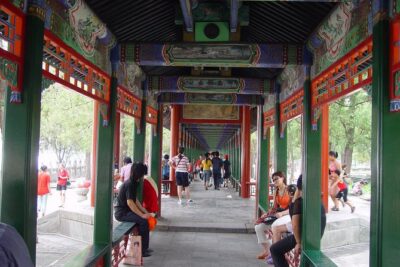
Temple of Heaven, Summer Palace, Lama Temple, Hutong Tours
Read our review →
Beijing City Walk: Explore Hutongs Life and Old Beijing
Read our review →Where else this tour turns up