

Reviewed · TERRACOTTA WARRIORS TOURS
Terracotta Tickets With Professional Guide In English / Italian
Xi’an’s clay army rewards a good guide. This six-hour private experience combines entry to the Museum of Qin Terra-cotta Warriors and Horses with an English or Italian-speaking guide, making a huge archaeological site easier to understand and easier to navigate. I like the help with advance booking and the guide’s practical advice on where to stand for the best views. The main drawback is that the First Qin Emperor’s Mausoleum admission is not included, so you should allow for an extra ticket cost.
I also like the small-group setup. Only your own party takes part, so the visit can feel more personal than a large coach tour. Guides such as Jenny have earned especially strong praise for clear explanations, short cuts through the site, good photo positions, and a warm, calm manner. The trade-off is the meeting point: you must reach the museum’s ticket office yourself.
In This Review
- Key points to know before booking
- Why a guide makes such a difference at Xi’an’s clay army
- Pit 1: The first great view of the army
- Pit 2: Cavalry, archers, and the kneeling archer
- Pit 3: A smaller room with a major role
- The museum visit takes about two hours
- The First Qin Emperor’s Mausoleum and its bronze chariots
- What the $47.20 price buys you
- A private tour with a flexible feel
- What Jenny’s guiding style adds
- Language, access, and basic planning
- Who should book this experience?
- Cancellation and booking timing
- Should you book the Terracotta Warriors guide?
- FAQ
- How long does the Terracotta Warriors experience last?
- Is admission to the Terracotta Warriors museum included?
- Is admission to the First Qin Emperor’s Mausoleum included?
- Which languages are available for the guide?
- Is this a private tour?
- Where does the tour start?
- Where does the tour end?
- Can I cancel for a full refund?
Key points to know before booking

- Three excavation pits show different sides of Qin’s army: Pit 1 gives you the scale, Pit 2 adds military variety, and Pit 3 offers clues about command.
- An English or Italian guide brings order to a vast museum: Jenny is specifically praised for her enthusiasm, clear speaking style, and ability to keep the visit moving.
- The first museum admission is included: The ticket covers the Museum of Qin Terra-cotta Warriors and Horses, while the mausoleum section requires a separate admission.
- The tour is private: Your group participates alone, which helps if you want to ask questions or adjust the pace.
- Plan on about six hours: The main museum visit takes roughly two hours, and the mausoleum area also takes about two hours, with the remaining time allowing for movement and the broader visit.
- Booking ahead matters in China: The mobile ticket and advance arrangement can save you from dealing with local ID and payment hurdles at a popular site.
Why a guide makes such a difference at Xi’an’s clay army
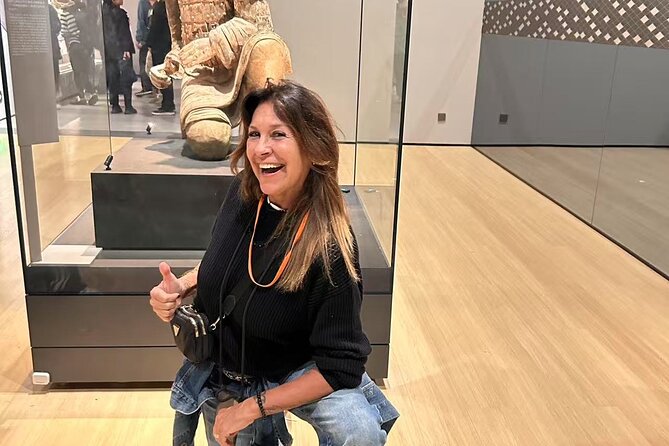
The Terracotta Warriors are easy to admire and surprisingly easy to misunderstand. You enter enormous halls filled with soldiers, horses, chariots, broken figures, and excavation work, but without context it can become a long procession of similar-looking faces.
A good guide gives the figures a military purpose. You learn why one pit contains the main army, why another has a more varied battle arrangement, and why the smallest pit may have served as a command post. That turns the visit from a display of old statues into a lesson in how the Qin state organized war and power.
This matters even more because the site is large. You need to know where the strongest views are, when to look across the full pit, and when to move closer to see details. Jenny is praised for showing short cuts and the best photo places. That kind of practical help has real value here, especially if you have limited time.
The guide’s language option is another strong point. You can book for English or Italian, which helps you follow the stories, dates, and military terms without relying only on signs. The supplied information identifies the provider as offering an official English and Italian guide, and Jenny is repeatedly praised as an English-speaking guide.
More Terracotta Warriors trips:
- Mini Group Xian Day Tour to Terracotta Army, City Wall, Pagoda and Muslim Bazaar
★ 5.0 · 1,320 reviews - Xi’an: Terracotta Army Mini Group or Private Tour
★ 5.0 · 926 reviews - Xian: Terracotta Army Ticket & Guided Bus Tour with Options
★ 4.6 · 579 reviews
Pit 1: The first great view of the army
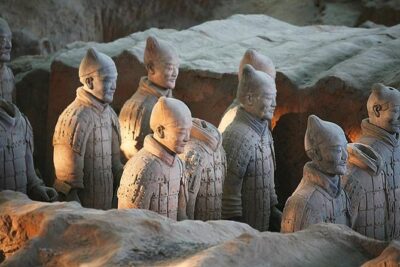
Pit 1 is the main event. It is the largest excavation hall and contains more than 6,000 life-sized terracotta warriors and horses arranged in battle formation.
The first view is about scale. Rows of soldiers stretch into the distance, and the broad hall lets you see how the figures were placed as an organized force rather than as isolated statues. The effect is strongest when you pause at the viewing rail and look across the whole formation before focusing on individual figures.
Your guide can help you notice the details hidden inside that mass. The figures are life-sized, and even small features such as fingers matter. The tour description calls attention to the sheer number of fingers, a detail that sounds odd until you see how much care went into giving each figure a human appearance.
Pit 1 is also where a guide can help with pacing. It is tempting to spend the whole visit taking photographs from the first viewing area. Jenny’s reported habit of pointing out the best places to stand should help you see the pit without wasting time circling the same spot.
You should not expect every section to look freshly restored. Some figures are complete, while others remain broken or are being assembled. That unfinished quality is part of the experience, but it also means the museum is not simply a polished hall of perfect statues.
Pit 2: Cavalry, archers, and the kneeling archer
Pit 2 is smaller and more varied than Pit 1. Here you see cavalry, chariots, archers, and infantry arranged in more complex military formations.
This is the pit where the army’s different roles become easier to compare. A mounted soldier does not communicate the same purpose as an infantryman. The archers add another layer, and the famous kneeling archer is one of the figures worth seeking out.
A good guide will help you understand why this pit matters instead of treating it as a second version of the first. The arrangement gives you more to study, including how different units may have worked together. The figures also offer a closer look at posture, equipment, and the care given to individual forms.
The kneeling archer is especially useful for understanding the skill of the craftsmen. You can look at the pose, body shape, and small details that make the figure feel ready for action. It is the sort of object that can disappear in a crowded display if you do not know where to look.
The supplied tour details also refer to well-preserved and iconic figures in this pit. Your guide can point these out and help you avoid spending too long on less important corners. If you have a time limit, this kind of guidance is one of the clearest reasons to pay for a private visit.
Pit 3: A smaller room with a major role
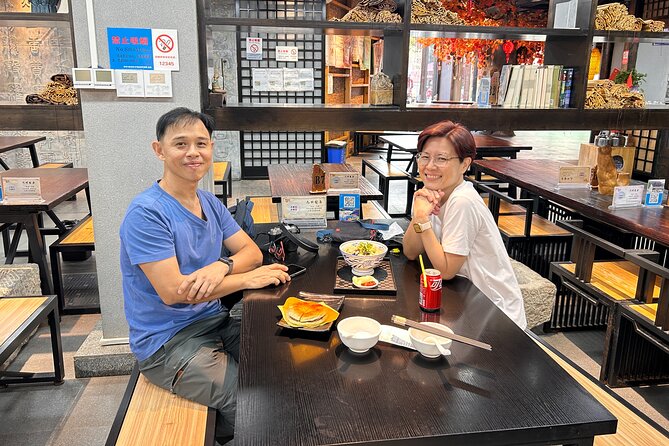
Pit 3 is the smallest of the three principal excavation pits. It is believed to have been a high-ranking command post and includes officers and a ceremonial chariot.
Its size changes the mood. After the broad military display of Pit 1 and the varied formations of Pit 2, Pit 3 gives you a more focused look at leadership and organization. The idea that this space may have served as a command area helps connect the individual pits into one planned army.
The officers and ceremonial chariot are important here. You are not just looking at more soldiers. You are looking at a possible headquarters setting, where rank and command had a visible place within the army’s structure.
This pit can be easy to rush because it does not offer the same dramatic sweep as Pit 1. I would listen closely to the guide here. The value comes less from size and more from what the space suggests about command.
A few more to weigh up in Xian
- Xi’an Evening Food Tour by TukTuk
★ 5.0 · 715 reviews - Customized Private Day Tour of Terracotta Warriors and Xi’an
★ 5.0 · 513 reviews - Xi’an: Exclusive Terracotta Army Tour & Local Family Lunch
★ 4.9 · 484 reviews - Half-Day Mini Group Xian Tour to Terracotta Warriors Museum
★ 5.0 · 467 reviews
The museum visit takes about two hours

The main museum portion is listed at about two hours, with admission included. That is enough time for a guided look at the three principal pits and the key displays, but it is not an invitation to inspect every object at length.
The visit works best if you let the guide establish the main story first. You can then use any remaining time to return to the figures or views that caught your attention. The tour is arranged to leave room for personal exploration, so you should not expect every minute to be a lecture.
You may also encounter ongoing archaeological work. The information provided specifically notes ongoing work at the museum, though it does not give a detailed schedule or identify which areas may be affected on a particular day. Conditions can change, so keep your expectations flexible.
The museum is a major site, not a quick photo stop. Comfortable shoes are sensible, although the supplied information does not specify walking distances or surface conditions. You will also want to keep your mobile ticket ready and follow the meeting instructions carefully.
The First Qin Emperor’s Mausoleum and its bronze chariots

The second major stop is the Mausoleum of the First Qin Emperor. This section takes about two hours, but the admission ticket is not included in the stated price.
The actual tomb mound remains unexcavated and is covered with vegetation. You can view the exterior and walk around the park-like area, but you do not enter the tomb. Stories of underground palaces and treasures surround the burial site, yet the interior remains sealed for preservation.
That limitation is important. If you expect to see an open royal tomb, you may feel disappointed. The value here is in seeing the burial mound and understanding the scale of the emperor’s burial project, not in touring an underground chamber.
The strongest indoor display at this stop is the pair of bronze chariots and horses. Each chariot is about half life-size and is drawn by four bronze horses. Their workmanship gives you a different view of ancient technology from the clay army.
The terracotta figures show mass production on an enormous scale. The bronze chariots, by contrast, reward close attention to metalwork and fine detail. Your guide can connect the chariots to the emperor’s military and ceremonial world, giving the second stop a clear purpose beyond being an extra museum hall.
Because admission is separate, check the cost before you book. The price of $47.20 per person is easier to judge when you remember that it covers the main museum ticket and private guiding, but not the mausoleum admission.
What the $47.20 price buys you
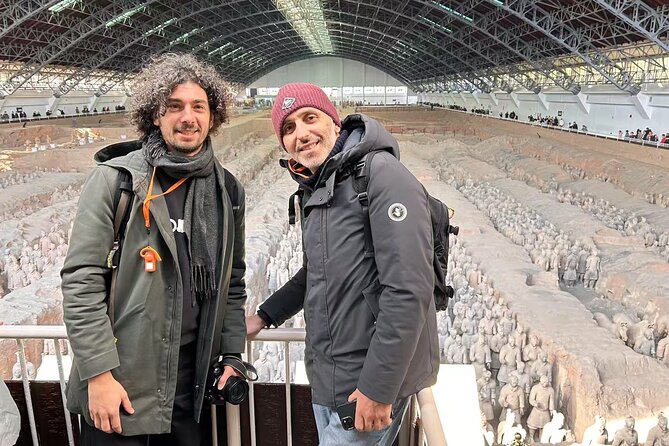
At $47.20 per person, this is not the cheapest way to see the Terracotta Warriors. It can still be good value if you want help with entry, interpretation, and navigation rather than simply walking into the museum alone.
The key value is the private guide. You are paying for someone who can explain the pits, identify important figures, show useful viewpoints, and answer questions in English or Italian. The guide may also help you avoid a common problem at large archaeological sites: seeing plenty but understanding little.
Advance booking has practical value in China. The tour information notes that booking attraction tickets online can be difficult without a local ID and payment method, while popular sites can involve long waits. The mobile ticket and arranged entry are intended to reduce that friction.
Still, the price does not cover everything. You must get to the meeting point at the Museum of the Terra-cotta Warriors and Horses ticket office, and the mausoleum admission is separate. The tour also does not present itself as a city pickup service, so do not assume transportation from your hotel is included.
A private tour with a flexible feel

The activity is private, meaning only your own group takes part. That is useful for families, couples, or friends who want to ask questions without holding up strangers.
It also gives the guide more room to respond to your interests. If you care about military formations, you can spend more time on the pits. If you prefer craft details, you can ask about the fingers, faces, horses, or bronze chariots.
The information says the visit allows plenty of time for you to explore at your own pace. That does not mean the schedule is completely open, since the overall duration is about six hours and the guide has two major stops to cover. It does mean the experience is not described as a rushed photo run.
The end point is the original meeting point. That is simple, but it means you should plan your onward transport from the museum area rather than expecting to finish in central Xi’an.
What Jenny’s guiding style adds
Jenny receives the strongest repeated praise in the supplied comments. Her strengths are specific: clear English, enthusiasm, strong site knowledge, short cuts, good photo positions, and a calm manner when helping with bags or assisting a parent.
That combination matters. A guide who only recites facts may leave you informed but tired. A guide who only moves quickly may help with logistics but fail to explain what you are seeing. Jenny is described as doing both parts well, including giving two hours of continuous historical and cultural explanation while keeping the visit enjoyable.
One useful detail is her attention to time. She is praised for making sure the most important and spectacular parts were covered even when the group was short on time. If you have a tight schedule, tell your guide early. The visit will be stronger if your priorities are clear.
The guide can also help with the site’s visual logic. Instead of asking you to admire every row equally, she can show you where to look for the most useful overall views and the best-preserved figures. That is practical guiding, not just historical narration.
Language, access, and basic planning
The tour is available with an English or Italian-speaking professional guide. If language is a major reason for booking, confirm your preferred language when making the reservation.
The meeting point is inside the Museum of the Terra-cotta Warriors and Horses area, at the ticket office in Lintong District, Xi’an. The supplied information lists nearby public transportation, but it does not provide a specific bus route, station, hotel pickup arrangement, or transfer time.
Confirmation is received at booking, and the experience uses a mobile ticket. Service animals are allowed, and the information says most people can participate. Since no detailed accessibility plan is provided, contact the provider if your group needs specific mobility assistance.
The listed operating period runs from April 7, 2025, through February 14, 2027. Opening hours are given as Monday through Saturday, from 6:00 a.m. to 11:30 p.m. Those hours are unusually broad for a museum listing, so I would still check the confirmed meeting time and date before setting out.
Who should book this experience?
I would choose this tour if you want the Terracotta Warriors explained in clear English or Italian, prefer a private group, and do not want to wrestle with local ticketing systems.
It is especially suitable for:
- First-time visitors to the museum
- People with only one day or a tight schedule in Xi’an
- Families who want a guide to keep the visit focused
- Couples or friends who prefer private touring
- Visitors who care about history but do not want to read every sign alone
- Anyone who wants help finding the best viewing and photo positions
You may prefer to arrange a different option if you want hotel pickup, a fully inclusive price, or a long independent visit with no set schedule. You should also account for the separate mausoleum ticket before deciding that $47.20 is the final cost.
Cancellation and booking timing
Free cancellation is available if you cancel at least 24 hours before the experience start time. Cancel within 24 hours and you receive no refund, and changes made inside that same window are not accepted.
The activity is often booked well ahead, with an average lead time of 66 days. You do not necessarily need to book that early, but the figure suggests that planning ahead is sensible, especially for a preferred date or language.
Should you book the Terracotta Warriors guide?
Book it if interpretation and easy entry matter to you. The main museum ticket is included, the tour is private, and the guide can turn a vast collection of clay soldiers into a readable story about army structure, command, technology, and Qin power.
I would be less eager if you want transport included or need a single all-in price. The separate mausoleum admission is a real detail, not a footnote.
For most first visits, though, the guide adds genuine value. Jenny’s praised approach, including short cuts, strong viewpoints, clear English, and patient help, is exactly what makes this enormous site easier to enjoy. You will still have time to look around on your own, but you will leave with a much better sense of what you actually saw.
FAQ
How long does the Terracotta Warriors experience last?
The total experience lasts approximately six hours.
Is admission to the Terracotta Warriors museum included?
Yes. Admission to the Museum of Qin Terra-cotta Warriors and Horses is included.
Is admission to the First Qin Emperor’s Mausoleum included?
No. Admission to the mausoleum section is not included in the stated price.
Which languages are available for the guide?
The experience offers a professional guide in English or Italian.
Is this a private tour?
Yes. Only your own group participates in the activity.
Where does the tour start?
It starts at the Museum of the Terra-cotta Warriors and Horses of Qin Shihuang ticket office in Lintong District, Xi’an.
Where does the tour end?
The activity ends back at the original meeting point.
Can I cancel for a full refund?
Yes, if you cancel at least 24 hours before the experience start time. Cancellations within 24 hours are not refunded, and changes within that period are not accepted.
Just added in Xian
- Top 3 Xian Sites to Terracotta Army & Dinner Show w/ Options★ 4.7 · 11 reviews
- Terracotta Army, Huaqing Palace & Song of Everlasting Sorrow★ 5.0 · 3 reviews
- Terracotta Warriors And Xi’An DowntownTour★ 5.0 · 6 reviews
- Terracotta Army E Ticket with Optional Transfer or Guide★ 5.0 · 32 reviews
- Terracotta Army Day Tour from Xi’an-Tickets&Flexible Pickup★ 5.0 · 8 reviews
- The Legend Of Camel Bell In Xi’An★ 5.0 · 4 reviews
- Terracotta Army, Big Wild Goose Pagoda, City Wall Day Tour★ 5.0 · 2 reviews
- From Xi’an: Mt. Huashan Private Tour and Cable Car Ride★ 4.8 · 3 reviews
Terracotta Warriors Tours, compared.
Mini Group Xian Day Tour to Terracotta Army, City Wall, Pagoda and Muslim Bazaar
Read our review →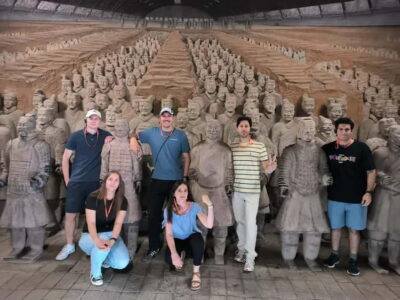

Terracotta Army Ticket & Guided Bus Tour with Options
Read our review →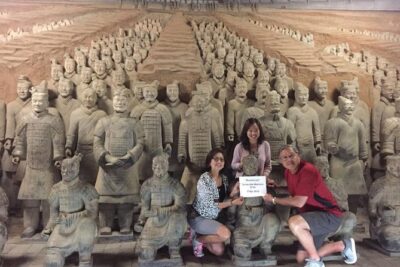
Customized Private Day Tour of Terracotta Warriors and Xi’an
Read our review →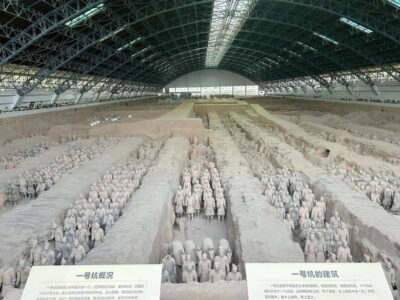
Exclusive Terracotta Army Tour & Local Family Lunch
Read our review →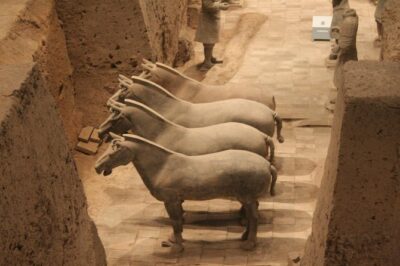
Half-Day Mini Group Xian Tour to Terracotta Warriors Museum
Read our review →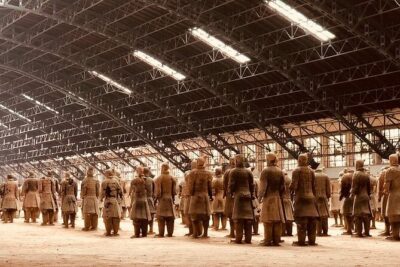

Private Customizable Terracotta Warriors Day Tour with Options
Read our review →Where else this tour turns up