Reviewed · MUTIANYU GREAT WALL TOURS
Mutianyu Great Wall 5-Kilometer Guided Hike with Uphill Cable Car
The best wall walk goes beyond the cable car crowd. This small-group outing gives you a five-kilometer route across all 20 Mutianyu watchtowers, with an uphill cable car ride saving your legs for the main event. I also like the central Beijing bus departure and the personal attention from guides such as Cici, Mike, and Taka. The main catch is simple: this is a demanding hike, not a quick photo stop.
You get about nine hours from meeting point to return, including round-trip transport, admission, internal shuttle rides, an English-speaking guide, and tea and snacks after the walk. At $65 per person, the package offers solid value, but you should be comfortable with long stretches of steps and uneven original paths.
In This Review
- Key points at a glance
- Why this Mutianyu hike is different
- The 8:00 am start near Dongzhimen
- Cable car first, walking second
- Five kilometers across 20 watchtowers
- Watchtowers, old paths, and the wall’s human scale
- Views that improve as the crowds thin
- Small-group guidance from Cici, Mike, and Taka
- Tea, snacks, and the optional toboggan
- Is $65 a good value?
- Who should book this walk?
- Practical advice before you go
- Should you book the Mutianyu 5-kilometer hike?
- FAQ
- Where does the tour start?
- How long does the experience last?
- How far do you walk on the Great Wall?
- Is transportation included?
- Is the toboggan included?
- What fitness level do I need?
Key points at a glance
- All 20 watchtowers: The route takes you far beyond the usual cable car area and covers roughly 5 kilometers of the Mutianyu section.
- Cable car up: You save energy with an uphill cable car ride before starting the walk.
- Small group of no more than 15: The guide can keep an eye on the group and explain the wall without using a megaphone.
- Strong guide service: Cici is praised for clear instructions and historical explanations, while Mike and Taka are noted for friendly, patient help.
- Central Beijing departure: The bus leaves from the China Post Newsstand area near Dongzhimen at 8:00 am.
- Optional toboggan: You can pay ¥100 separately for the downhill toboggan if you want a faster, more playful finish.
Why this Mutianyu hike is different
Mutianyu is one of Beijing’s most popular sections of the Great Wall. That popularity can make the area near the main cable car station feel more like a sightseeing hub than a frontier fortification.
This tour tackles that problem with distance. Instead of stopping after a few towers, you walk about five kilometers and aim to visit all 20 watchtowers along the section. That gives you a much clearer sense of how the wall runs over ridges, rises, drops, and turns with the terrain.
I like this approach because the wall becomes more than a backdrop for a photograph. You get time to notice changes in the masonry, the spacing of the towers, and the way the path alternates between broad paved sections and older, less repaired stretches.
A side passage and bush-lined sections may form part of the route, according to the detailed experience of one participant. That sounds appealing if you want a more rugged feel, but it also explains why the tour asks for moderate physical fitness. This is not a flat promenade.
More Cable Car Tickets in Beijing
- Private Half-Day Mutianyu Great Wall Tour including Round Way Cable Car or Toboggan
★ 5.0 · 115 reviews - Mutianyu Wall Cable Car/Toboggan Ticket+Transfer&Guide Option
★ 5.0 · 37 reviews - Small Group Mutianyu Great Wall and Ming Tombs Tour with Cable Car and Lunch
★ 5.0 · 28 reviews
The 8:00 am start near Dongzhimen
Your day begins at the China Post Newsstand area on Dongzhimen Outer Street in central Beijing. The stated start time is 8:00 am, and the tour ends back at this same meeting point after roughly nine hours.
The central departure is useful if you are staying in central Beijing and want to avoid arranging a private taxi to the countryside. Round-trip bus transport is included, so you can let someone else handle the road connections while you focus on the wall.
I would treat the meeting point carefully. The address includes both English and Chinese, with the Chinese location written as 中国邮政报刊. Save the exact meeting details on your phone before leaving your hotel, and allow time to reach Dongzhimen. A mobile ticket is provided, and confirmation arrives when you book.
The early start is sensible. It gives the group time to reach Mutianyu, take the included internal transport, ride uphill by cable car, complete the long walk, and return to Beijing within the advertised nine-hour window. The tradeoff is that you lose much of the morning to the tour schedule, but a route of this length needs that time.
Cable car first, walking second
The uphill cable car is one of the smartest parts of the plan. Mutianyu’s access point is not the wall itself, so reaching the watchtowers can involve a climb before the real hike begins. The cable car removes that initial uphill effort.
That matters because five kilometers on the wall is not the same as five kilometers on a city sidewalk. The route includes steps and changes in grade, and the wall itself rises and falls over the mountains. Saving your strength at the start gives you a better chance of reaching the far end without turning the last section into a grim march.
The package also includes uphill and downhill internal shuttle tickets. These are separate from the main cable car ride and help with movement between the entrance area and the wall access points. The exact order of these short transfers can depend on the day’s operations, so listen closely when your guide gives instructions.
The cable car is practical rather than luxurious. Its value is in preserving energy. If your main goal is to walk the wall, this is a better use of your legs than climbing every approach path from the valley.
Five kilometers across 20 watchtowers
The central promise is a guided five-kilometer hike across the Mutianyu Great Wall. The route aims to visit all 20 watchtowers, using original pathways rather than keeping you in the busiest central zone.
You should picture a series of strong climbs, descents, stairways, and tower passages. The distance alone does not tell the whole story. A short section can feel strenuous when the steps are steep, and the route may take longer than expected if the group pauses for views, photographs, and explanations.
That physical challenge is also the reward. From the farther end of the section, the views open out across the ridges and wooded slopes around Mutianyu. You get a broader sense of the wall’s scale, rather than seeing only the towers nearest the cable car.
The guide leads the way and helps the group navigate the different parts of the wall. Mike is described as patient and clear when explaining how to move through the route. Cici is praised for giving historical background at different landmarks and making sure no one felt left behind. Taka is noted for helping a solo participant feel included in the group.
Those details matter on a long walk. A guide who explains the next step, checks the group, and answers questions can make the difference between an enjoyable challenge and a confusing one.
More Hiking Trips in Beijing
- From Beijing: Small Group Hike at Jinshanling Great Wall
★ 4.9 · 667 reviews - Beijing: Jingshanling Great Wall Trekking Tours with Options
★ 4.9 · 411 reviews - Beijing: Full-Day Small-Group Great Wall Hiking at Jinshanling
★ 5.0 · 347 reviews - Small Group 6km hiking Jinshanling Great Wall EN speaking driver
★ 5.0 · 347 reviews
Watchtowers, old paths, and the wall’s human scale
The watchtowers are not simply repeated photo stops. They help you understand how the wall worked as a chain of observation and communication points.
As you move between them, your guide can put the structures into context and explain the role of the wall and the soldiers who once marched between the towers. The supplied tour description promises stories about the wall, while the guide feedback points to historical explanations at individual landmarks.
I would pay attention to the route itself. Some sections may be restored and easier to walk, while other portions feel rougher and less polished. A less repaired pathway can offer a stronger sense of age, but it also calls for careful footing. Wear shoes with good traction, and do not treat the walk as a casual stroll.
The five-kilometer length also gives you room to spread out. Even with a popular site, the far end should feel less crowded than the cable car station. That is the point of this outing: the wall becomes a place to walk and observe, not just a place to arrive, pose, and leave.
Views that improve as the crowds thin
The farther you go from the access point, the more the experience shifts. Near the station, you may have more activity and more people trying to get their bearings. Farther along, the wall, towers, ridges, and sky take up more of your attention.
The panoramic views are a major reason to choose this route. You see the wall tracking across high ground, with its path shaped by the contours of the mountains. From a tower, the wall can look almost delicate against the larger setting, then feel surprisingly steep when you are walking its steps.
I like that the route gives you time to see these changes. A short visit can show you the famous outline of Mutianyu. This longer walk shows you how the wall behaves as a real route, with climbs, turns, and changing sightlines.
Still, weather will affect the payoff. The tour promises panoramic views, but clear conditions are never guaranteed by a fixed itinerary. The physical effort remains even on a hazy day, so book this for the walk itself, not only for a perfect photograph.
Small-group guidance from Cici, Mike, and Taka
The maximum group size is 15 people. That is not a private tour, but it is far more manageable than a large coach group.
A small group helps in several ways. You can hear the guide’s explanations, ask questions, and receive clearer instructions at turns and meeting points. On a long route, it also makes it easier for the guide to notice if someone needs a slower pace or a short pause.
Cici receives especially strong praise for organization, friendly communication, and clear instructions. She is also described as explaining the wall’s story during the ride to Mutianyu and providing background at the landmarks.
Mike is recognized for fluent English, patience, and a helpful approach to navigating the different wall sections. Taka is praised for making a solo participant feel part of the group and for explaining the wall throughout the walk.
You should not expect a private historian assigned only to you. The experience depends partly on the guide working with the full group. Still, the repeated emphasis on communication and personal care is reassuring, particularly for solo visitors and families.
Tea, snacks, and the optional toboggan
Tea and snacks are included after the hike. That is a welcome detail after several hours of walking, though it is not a full meal listed in the package.
One account also refers to a buffet lunch with many options. Because the formal inclusions specify tea and snacks rather than lunch, I would not book this tour expecting a buffet. If lunch matters to you, confirm the day’s arrangements before departure.
The downhill toboggan is optional and costs ¥100. It is not included in the tour price. You can choose it if you want a more entertaining descent, but the package already includes downhill internal transport, so you do not need to pay extra to get back down.
For a serious hiker, the included transport is enough. For families or anyone who enjoys a bit of amusement after a long walk, the toboggan may be worth the additional cost. Keep cash or a payment method ready if you think you will want it, since the listed price is separate from the $65 tour fee.
Is $65 a good value?
At $65, the tour is priced fairly for what it includes. You receive round-trip bus transport from central Beijing, entrance admission, an English-speaking guide, internal shuttle rides, the uphill cable car, and the guided five-kilometer walk.
Buying those pieces separately could be more complicated, even if the total price might vary. The largest value comes from the logistics. You do not need to work out how to reach Mutianyu, where to buy admission, how to connect with the cable car, or how to find the longer route across the towers.
The small group adds value, too. A maximum of 15 makes the day feel more personal than a standard big-bus outing. You are paying for a planned route and guidance, not merely a ride to a famous wall section.
The price does not cover the optional ¥100 toboggan. Lunch is also not clearly listed among the inclusions, so budget for food beyond the supplied tea and snacks unless the operator confirms otherwise.
Who should book this walk?
I would choose this tour if you want to experience Mutianyu as a long walk rather than a quick attraction. It suits people with moderate fitness who are happy with steps, uneven surfaces, and several hours on their feet.
It is also a good fit for solo visitors. Taka’s friendly approach and the small group format can make the day feel social without forcing you into a huge organized crowd.
Families can enjoy it too, but children must be accompanied by an adult. Parents should judge the five-kilometer distance honestly. The cable car helps at the beginning, yet it does not remove the effort of the wall route.
I would skip this option if you want a short, easy visit, dislike fixed group schedules, or hope to spend most of the day sitting. The nine-hour duration includes transport, but the main activity is still a substantial hike.
Practical advice before you go
Bring water and wear sturdy shoes. The route includes original pathways and may include less repaired sections, so sandals or smooth casual shoes are poor choices.
Keep your phone charged for the mobile ticket and photographs. Save the meeting point in both English and Chinese, and arrive early for the 8:00 am departure.
Listen carefully whenever the guide explains where to regroup. The wall has repeated towers and branching access points, and clear instructions are especially useful when the group stops for photographs.
Finally, leave room in your plan for tired legs. Do not schedule a demanding evening activity immediately afterward unless you are used to long uphill walks. The walk is rewarding, but it asks something of you.
Should you book the Mutianyu 5-kilometer hike?
Book it if you want the fuller Mutianyu experience, especially the far end, all 20 watchtowers, and a route that gets away from the cable car crowds. The combination of cable car access, central bus transport, a small group, and strong guide support makes $65 a sensible price.
Skip it if you want a relaxed wall visit with little walking. For everyone else, this is a well-organized way to trade a quick landmark stop for a more complete day on the Great Wall.
FAQ
Where does the tour start?
The meeting point is at the China Post Newsstand area on Dongzhimen Outer Street in central Beijing. The listed start time is 8:00 am.
How long does the experience last?
The full activity lasts approximately nine hours and ends back at the original meeting point.
How far do you walk on the Great Wall?
The guided route covers approximately five kilometers and aims to visit all 20 Mutianyu watchtowers.
Is transportation included?
Yes. Round-trip bus transportation from the meeting point, uphill and downhill internal shuttle tickets, and the uphill Great Wall cable car are included.
Is the toboggan included?
No. The downhill toboggan is optional and costs ¥100 separately. Downhill internal transport is included in the package.
What fitness level do I need?
A moderate level of physical fitness is required. The route is a five-kilometer hike with original pathways, steps, and changing grades. Children must be accompanied by an adult.
More Mutianyu Great Wall Trips
- Mubus: Mutianyu Great Wall Bus Tour with Summer Palace Options
★ 5.0 · 1,272 reviews - Beijing:Mutianyu Great Wall Private Trip with English Driver
★ 5.0 · 1,263 reviews - Beijing: Mutianyu Gt Wall Trip, Depart 8-10am Bus w/ Tickets
★ 4.9 · 1,256 reviews - Beijing: Mutianyu Great Wall & Summer Palace Day Tour
★ 4.8 · 1,004 reviews
More Great Wall Trips
- From Beijing: Mutianyu Great Wall Tours with Options
★ 4.9 · 9,216 reviews - All-Inclusive Tour: Tiananmen Square, Forbidden City, Great Wall
★ 5.0 · 2,873 reviews - MuBus: Mutianyu Great Wall ENG/ESP/RUS Guided Bus Tour
★ 5.0 · 2,361 reviews - Beijing Full Day Tours: Tiananmen Sq, Forbidden City, Great Wall
★ 5.0 · 1,634 reviews
Just added in Beijing
- Private Transfer to Mutianyu Great Wall with professional driver★ 5.0 · 19 reviews
- One day tour to downtown Tianjin from Beijing by high speed train★ 5.0 · 3 reviews
- ZANBUS: Trip to the Jinshanling Great Wall Departing at 7:30 AM★ 5.0 · 5 reviews
- camp on the Great Wall overnight with sunrise and sunset on the wall★ 5.0 · 11 reviews
- Yuxiandu Chinese Royal Cuisine Museum with Show and Royal Banquet★ 5.0 · 4 reviews
- Wild Great Wall Hikes★ 5.0 · 10 reviews
- BusDa:Ancient Great Wall &Badaling Great Wall Full-day Bus Tour★ 4.5 · 6 reviews
- Wild Great Wall Huanghuacheng Half Day Tour★ 5.0 · 15 reviews
Mutianyu Great Wall Tours, compared.

Mutianyu Great Wall Daily Tour with Ticket & Lunch
Read our review →
MuBus: Mutianyu Great Wall ENG/ESP/RUS Guided Bus Tour
Read our review →
Mubus: Mutianyu Great Wall Bus Tour with Summer Palace Options
Read our review →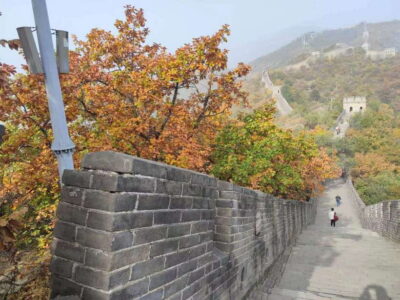
Mutianyu Great Wall Private Trip with English Driver
Read our review →
Mutianyu Gt Wall Trip, Depart 8-10am Bus w/ Tickets
Read our review →