
Reviewed · CHENGDU TOURS
Half Private Day Chinese Bamboo Weaving Exprience
Make something you can carry home. This 2.5-hour Chengdu workshop introduces you to traditional Chinese bamboo weaving in a quiet Chinese-style garden near Wenshu Monastery and People’s Park. I like the hands-on format, and I like that the finished craft becomes a personal souvenir rather than another purchased trinket.
Lala, the local host, meets you at People’s Park and guides you to the workshop, which helps with Chengdu’s busy streets. The professional English-speaking guide and step-by-step teacher support are another strong point. The main consideration is the $68 price, which is fair for a private cultural lesson but higher than a casual craft class if you mainly want a quick activity.
In This Review
- What makes this Chengdu bamboo workshop special
- Why bamboo matters in Chinese culture
- Meeting Lala at People’s Park at 2:00 pm
- A quiet garden near Wenshu Monastery
- The introduction to bamboo weaving
- Learning from an intangible cultural heritage teacher
- Making your own bamboo gift
- A small business led by professional women
- What the $68 price includes
- Who will enjoy this activity most
- How to fit it into a Chengdu day
- Booking and cancellation details
- Should you book the bamboo weaving experience?
- FAQ
- Where does the bamboo weaving experience begin?
- What time does the activity start?
- How long does the bamboo weaving experience last?
- Is transportation included?
- Is this a private activity?
- Can I cancel for a full refund?
What makes this Chengdu bamboo workshop special
- Bamboo craft with a real local connection: You learn from a teacher described as an inheritor of traditional intangible cultural heritage.
- A finished souvenir: You make a bamboo item yourself and take it home.
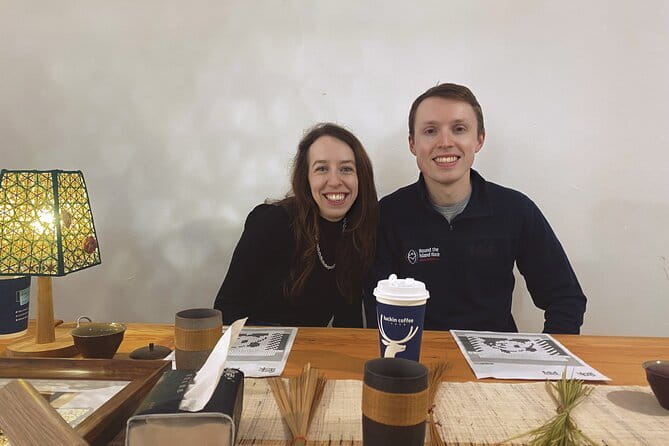
- Private half-day format: Only your own group participates, making it easier to ask for help.
- Easy central meeting point: The activity begins at People’s Park at 2:00 pm and ends back at the same meeting point.
- A small local business: The workshop is run by professional women, adding a useful community angle to the experience.
- A calm setting: The class takes place in a quiet, antique Chinese-style garden near Wenshu Monastery.
Why bamboo matters in Chinese culture
Bamboo is not simply a plant used for baskets and household goods. In China, it has been part of daily life for thousands of years.
Its use reaches back to at least the 11th century BC. Across different periods, people used bamboo for food, homes, transport, weapons, musical instruments, and books. That broad use helps explain why bamboo remains such a useful symbol in Chinese culture. It is practical, flexible, strong, and easy to work with once prepared.
China is sometimes called the Bamboo Kingdom because it grows more bamboo than any other country. Around 40 percent of the world’s known bamboo species grow in China, and roughly one fifth of the world’s bamboo supply is produced there. Sichuan is one of the provinces with the largest areas of bamboo cultivation, so Chengdu is a sensible place to learn this craft.
The short cultural introduction gives the activity more meaning. You are not just bending strips around a frame. You are learning about a material that has helped shape Chinese food, homes, travel, music, writing, and household life.
A few more to weigh up in Chengdu
- Chengdu: Giant Panda Breeding Research Base Ticket
★ 4.5 · 580 reviews - Half-Day Chengdu Cooking Class with a Local Market Visit
★ 5.0 · 465 reviews - Tuktuk Food Tour Through Chengdu’s Local Eats
★ 5.0 · 435 reviews
Meeting Lala at People’s Park at 2:00 pm
Your afternoon begins at People’s Park, at 9 Ci Tang Jie in Qingyang District. The listed start time is 2:00 pm, and the activity ends at the same meeting point.
This arrangement is practical. You do not need to arrange a taxi to a remote village or search for a workshop on your own. Lala meets you in the park and leads you to the class. That small escort matters in a city where finding an exact side-street venue can take more time than expected.
People’s Park is also a useful place to plan around. You can arrive early, enjoy some time there, and then meet the host without building a complicated day around the class. The workshop is near public transportation, which is helpful if you are staying elsewhere in central Chengdu.
The meeting point is not the workshop itself, so allow enough time to reach People’s Park. Keep the host’s contact details available on your phone, and check the exact meeting instructions after booking. The activity is mobile-ticketed, and confirmation is provided at booking.
A quiet garden near Wenshu Monastery
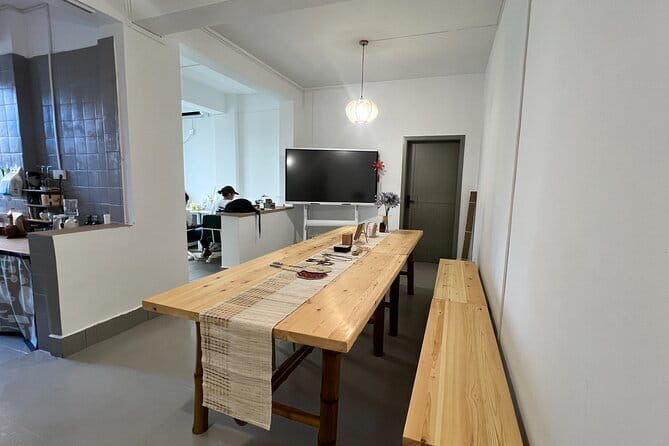
After meeting Lala, you head to the bamboo workshop in a quiet, antique Chinese-style garden near Wenshu Monastery. The change from an open public park to a smaller craft setting gives the class a clear sense of place.
The garden setting is important because bamboo weaving is best understood as a patient hand skill, not a rushed tourist stop. You have a chance to focus on the strips, the pattern, and the movement of your hands. The setting also gives the class a traditional Chinese feel without requiring you to travel to another part of Sichuan.
The description places the workshop near Wenshu Monastery and also says it is close to People’s Park. You should think of this as a central Chengdu activity, not a countryside excursion. You will not be visiting bamboo farms or touring several monuments. The value lies in the lesson itself and in the people teaching it.
The introduction to bamboo weaving
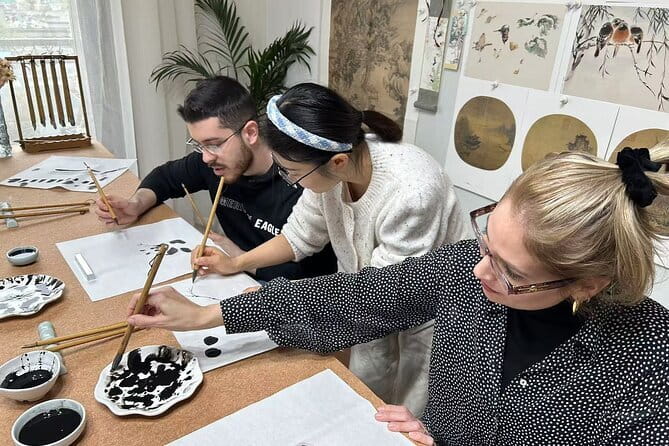
The first part of the class provides a short introduction to Chinese bamboo-weaving culture. The professional English-speaking guide handles translation and helps explain the background before the practical work begins.
This opening should be useful even if you already know a little about bamboo. It connects the material in front of you with its place in Chinese life. Bamboo can look simple, but the finished objects depend on careful preparation, regular spacing, and control of pressure.
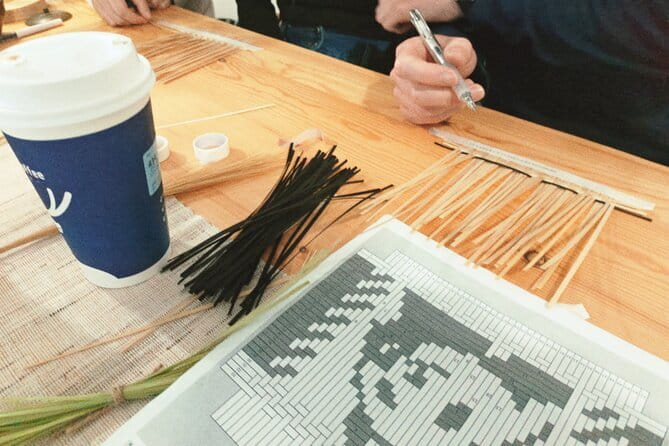
The supplied bamboo is already processed and ready for use. That is a major advantage for a two-and-a-half-hour class. You can spend your time learning the weaving rather than cutting, drying, splitting, and treating raw bamboo.
The class also includes the materials needed for the craft. You do not need to bring bamboo strips or special equipment. The venue fee, teacher’s commission, translation service, and prepared bamboo are included in the listed price.
A completely different sort of day out:
- Private Half-Day Chengdu Panda Breeding Center Tour with Optional Volunteer
★ 5.0 · 353 reviews - Chengdu: Sichuan Opera Shu Feng Yan Yun Evening Show Ticket
★ 4.7 · 185 reviews - Private Chengdu Day Tour: Giant Pandas and Jinsha Site Museum
★ 5.0 · 142 reviews - Visiting Dujiangyan Yaan Wolong Panda Base Optional Volunteering
★ 5.0 · 105 reviews
Learning from an intangible cultural heritage teacher
The most important part of the experience is the instruction. You are guided by a bamboo-weaving teacher described as an inheritor of Chinese intangible cultural heritage.
That phrase matters. China has many traditional skills that require years of practice, and bamboo weaving is one of them. The class will not turn you into a master in one afternoon, but it gives you a direct look at how the craft is taught and preserved.
The teaching is described as hand by hand and step by step. That is exactly what you want from a practical class. Bamboo strips can be awkward at first, and a written explanation would not tell you how tightly to pull or how to correct a crooked section. A teacher can show you immediately.
The private format also helps. Only your own group participates, so the instructor can focus on your pace rather than managing a large room. If one part of the pattern is confusing, you should be able to ask for another demonstration.
The guide and the craft teacher may have separate roles. The English-speaking guide provides explanation and translation, while the weaving teacher leads the hands-on work. That arrangement is useful because it keeps the cultural explanation and the technical instruction clear.
Making your own bamboo gift

Once the introduction is over, you begin weaving your own bamboo craft. The exact finished object is not specified, so you should not book this expecting a particular basket, animal, box, or decoration.
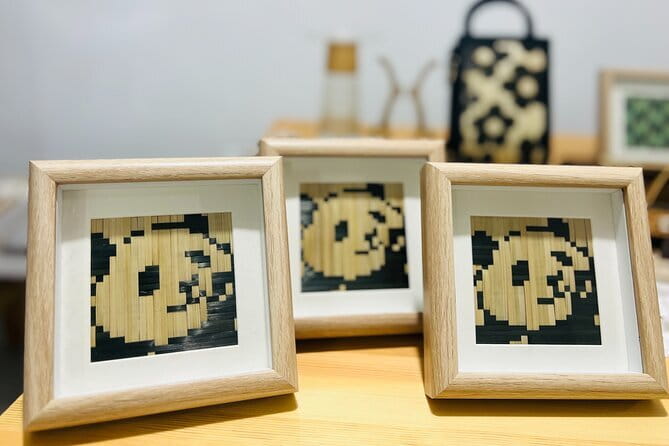
What is clear is that you work on a traditional bamboo gift with the teacher’s help and take the finished piece home. That gives the activity a satisfying purpose. You are not only watching someone demonstrate a skill. You are producing something that records your time in Chengdu.
The craft may not be perfect, and that is part of the point. Handmade bamboo work shows small differences in spacing and shape. A first attempt should be judged as a personal souvenir, not as a shop-quality object.
I would treat the class as a lesson first and a shopping substitute second. If you want a polished bamboo product, you may find better examples for sale. If you want to understand how such objects are made and leave with something shaped by your own hands, the workshop offers stronger value.
Wear clothing that lets you sit and work comfortably. The supplied information does not specify a dress code, special equipment, or a particular craft shape, so practical, relaxed clothing is the safest choice. Keep your hands free of unnecessary bags while weaving.
A small business led by professional women

The workshop is described as a small business led by professional women. That gives the experience a local economic angle that many sightseeing stops lack.
Your payment supports a hands-on craft business and the teachers who keep the skill in use. The experience provider is Lalaland Chengdu, and Lala is the named host who meets you at People’s Park.
This is not a large production show or a souvenir market presentation. The emphasis is on a small team, personal instruction, and making something yourself. That can feel more direct and useful than simply buying a bamboo product with no idea who made it.
You should still keep your expectations sensible. The class is only about two and a half hours, so it offers an introduction rather than a full apprenticeship. Its purpose is to give you a close look at the craft and a guided first attempt.
What the $68 price includes
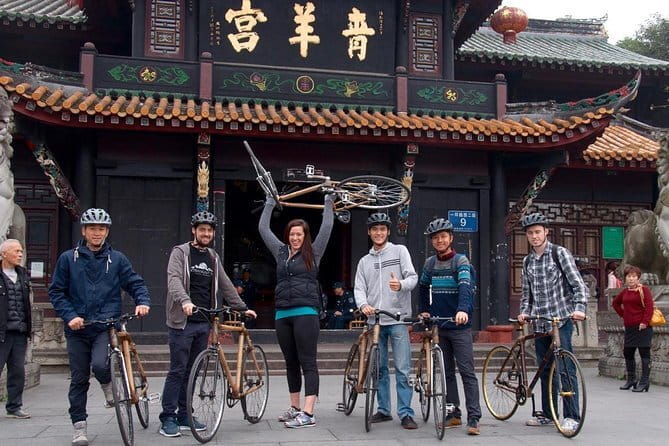
At $68 per person, the price deserves a careful look. It includes the professional English-speaking guide, the venue fee, translation, the craft teacher’s commission, prepared bamboo, and other required materials.
The private format adds value. Your group does not share the activity with unrelated participants, and you receive direct help during the weaving. The meeting service at People’s Park also saves you from finding the workshop alone.
The price is strongest for someone who values personal instruction and cultural context. If you compare it with a simple drop-in craft table, it may seem expensive. If you compare it with a private English-supported cultural activity that includes materials and a finished object, it is more reasonable.
Transportation is not included. You need to make your own way to People’s Park and away from the meeting point afterward. Gratuities are also not included, so plan for those separately if you choose to tip.
The activity is often booked well ahead, with an average booking time of 27 days in advance. That suggests you should reserve it early if the 2:00 pm schedule fits a fixed Chengdu itinerary.
Who will enjoy this activity most
I would recommend this class to you if you want a slower, more personal break from Chengdu’s major sights. It works especially well for people interested in traditional crafts, local business, Chinese material culture, or hands-on activities.
It is also a good choice for families and mixed-age groups, provided everyone can participate in a seated craft lesson. The activity information says most people can take part, but it does not give detailed accessibility information, so ask the provider if anyone in your group has specific mobility or hand-use needs.
The private format suits couples, families, and friends who want to learn together. You can share the finished objects later, and the class gives a group something to do beyond taking photographs.
This is less suitable if you want a fast, highly scheduled sightseeing tour. There are no listed pandas, major monuments, food tastings, or transport between several attractions. The experience centers on one craft in one workshop.
It may also disappoint you if you expect to work with raw bamboo from start to finish. The bamboo is processed and ready for use, which makes the class manageable but removes the forestry and preparation stages.
How to fit it into a Chengdu day
The 2:00 pm start makes this easy to pair with a morning activity. You could spend the earlier part of the day sightseeing, then arrive at People’s Park with time to spare.
Because the activity ends back at the starting point, you finish in a central area rather than at an unknown workshop. That makes it easier to continue your evening plans, though transportation after the class remains your responsibility.
I would avoid scheduling a major timed attraction immediately afterward. The duration is approximately two hours and 30 minutes, and hands-on classes can run at a natural pace. Leave room for the return to People’s Park and any final questions or photographs.
The workshop’s location near Wenshu Monastery gives you another possible Chengdu stop in the same general part of the city. The supplied details do not promise a monastery visit as part of the class, so treat that as an optional nearby plan, not an included tour stop.
Booking and cancellation details
The activity provides mobile ticketing and confirmation at the time of booking. It is available as a private activity, with only your group participating.
Free cancellation is available if you cancel at least 24 hours before the local start time. A cancellation made less than 24 hours before the 2:00 pm start is not refundable, and changes inside that window are not accepted.
The provider is Lalaland Chengdu. Since the experience is often reserved several weeks ahead, booking early is sensible, especially if you need a particular date during a short stay.
Should you book the bamboo weaving experience?
Book it if you want to make something with your own hands, learn about a long-standing Chinese craft, and support a small local workshop. The best parts are the personal guidance, the English support, the private setting, and the finished bamboo souvenir.
Skip it if your priority is a low-cost activity, a broad Chengdu sightseeing tour, or a visit to a bamboo-growing area. The $68 price is not a bargain craft lesson, and transportation is extra.
For the right person, though, this is a thoughtful afternoon choice. Lala’s role in meeting you at People’s Park removes some of the usual friction, while the professional women running the workshop add a human touch. You leave with more than a purchased object: you have a better sense of why bamboo has mattered in China for so long, plus a handmade reminder of Chengdu.
FAQ
Where does the bamboo weaving experience begin?
It begins at People’s Park, 9 Ci Tang Jie, Qingyang District, Chengdu, Sichuan, China, 610015.
What time does the activity start?
The listed start time is 2:00 pm.
How long does the bamboo weaving experience last?
The activity lasts approximately two hours and 30 minutes.
Is transportation included?
No. Transportation to and from the meeting point is not included.
Is this a private activity?
Yes. Only your group participates in the activity.
Can I cancel for a full refund?
Yes, if you cancel at least 24 hours before the experience start time. Cancellations made less than 24 hours before the start time are not refundable.
Just added in Chengdu
- Visiting Chengdu Panda Base in a Half Day★ 5.0 · 4 reviews
- Classsic sichuan Opera at sichuan Provincial Theater★ 5.0 · 4 reviews
- Tea Village in lost Town and Buddha 1 day tour★ 5.0 · 32 reviews
- Panda, Leshan, and Emei Mountain 2-day tour★ 5.0 · 4 reviews
- Sichuan Opera with face-changing at Sichuan opera theater★ 4.5 · 6 reviews
- Sichuan Opera Show with Hotel Pickup★ 5.0 · 3 reviews
- Mini Group: Half-Day Chengdu Pandas Guided Tour★ 5.0 · 3 reviews
- Sanxingdui Ruins and Giant Pandas Private Day Tour from Chengdu★ 5.0 · 5 reviews
Chengdu Tours, compared.


Half-Day Chengdu Cooking Class with a Local Market Visit
Read our review →

Private Half-Day Chengdu Panda Breeding Center Tour with Optional Volunteer
Read our review →
Sichuan Opera Shu Feng Yan Yun Evening Show Ticket
Read our review →
Private Chengdu Day Tour: Giant Pandas and Jinsha Site Museum
Read our review →
Visiting Dujiangyan Yaan Wolong Panda Base Optional Volunteering
Read our review →
Chengdu Sichuan Opera Show Ticket – Shu Feng Ya Yun
Read our review →Where else this tour turns up