
Reviewed · MARKETS
Half-Day Xi’an Biang Biang Noodles Cooking with a Market Visit
Start with noodles, end with dinner. This three-and-a-half-hour Xi’an experience combines a visit to the Muslim Quarter’s local market with hands-on instruction in making biang biang noodles, one of the city’s most famous foods. You begin at Sa Jin Qiao, explore Chinese spices and ingredients, then head to a traditional chef’s home for cooking, tea, and a meal made by you.
I like the market visit because it gives the cooking class a useful local setting rather than dropping you straight into a kitchen. I also like that the small group, capped at 15 people, includes recipes, ingredients, drinks, and food, so you are paying for a full half-day outing rather than a short demonstration. The main thing to consider is that the class may be more guided demonstration than independent cooking. One past participant expected a separate station and more freedom to create a personal version of the dish.
The experience costs $75 per person, offers morning or afternoon sessions, and has a 98 percent recommendation rate from 48 reviews. That is not the cheapest meal in Xi’an, but it is fair if you want food, instruction, a market walk, and cultural context in one booking. It is especially useful for anyone who has tried making hand-pulled noodles at home and ended up with something closer to dough confetti.
In This Review
- Key details before you book
- Starting at Sa Jin Qiao near the Muslim Quarter
- Exploring Chinese spices in the market
- Moving from the market to the chef’s home
- Learning to stretch biang biang noodles
- Eating the noodles you have made
- What the $75 price really covers
- Who will enjoy this Xi’an food experience
- Timing, clothing, and booking advice
- Should you book it?
- FAQ
- How long does the Xi’an biang biang noodles class last?
- Where does the activity begin?
- Where does the activity end?
- Is food included?
- Are drinks included?
- Can I choose a vegetarian meal?
- How many people can join the group?
- Can I cancel for a full refund?
Key details before you book
- The class begins at Sa Jin Qiao: This is the meeting point near the Muslim Quarter, and the activity returns there at the end.
- You visit a spice market first: The market portion introduces Chinese spices and ingredients used during the cooking session.
- Biang biang noodles are made from scratch: You learn the dough and pulling process with guidance from a professional chef.
- The setting is a traditional Chinese home: Tea is served before cooking, reflecting the local custom of welcoming visitors.
- Food and drinks are included: Your meal, ingredients, tasting, recipes, tea, beer, water, and other beverages are covered.
- Groups are limited to 15 people: That is small enough for personal attention, though the exact amount of individual cooking time can vary.
Starting at Sa Jin Qiao near the Muslim Quarter
The tour starts at Sa Jin Qiao, a useful location for exploring Xi’an’s Muslim Quarter. This area is known for its food culture, and beginning here makes sense: you are not simply told about local ingredients in an abstract classroom. You see them in the setting where people shop and cook.
The meeting point is near public transportation, but you should still allow enough time to find Sa Jin Qiao. The provided information does not specify a hotel pickup, so plan to reach the meeting point independently. Comfortable walking shoes are a good idea because the first portion involves moving through a market rather than sitting in one place.
You can choose a morning or afternoon session. The schedule matters more than it might seem. A morning class may work well if you want your noodle meal to serve as lunch and still have the afternoon free for Xi’an sightseeing. An afternoon class can fit neatly after a morning visit to the city’s major sights, with the meal becoming dinner.
The activity runs in all weather conditions, so dress for the forecast. The market walk may be less comfortable in bad weather, even though the cooking portion takes place indoors.
More Shopping Tours in Xi'an
- Mini Group Xian Day Tour to Terracotta Army, City Wall, Pagoda and Muslim Bazaar
★ 5.0 · 1,320 reviews - Xi’an: Terracotta Army, Lunch, City Wall, Pagoda, Bazaar
★ 5.0 · 72 reviews - Xi’an Morning Food & Market Tour by TukTuk
★ 5.0 · 46 reviews
Exploring Chinese spices in the market
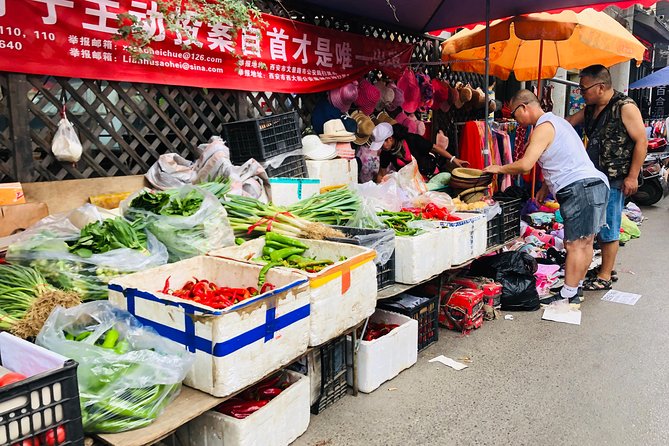
The market visit is one of the strongest parts of the experience. You are introduced to Chinese spices, seasonings, and other ingredients before using them in the kitchen. That order gives the food more meaning. You can connect the powders, dried ingredients, and fresh items on the market shelves with the flavors that appear in your finished noodles.
The tour includes fun challenges in the market, which adds a little purpose to the walk. Instead of simply following a guide past stalls, you have tasks to complete and ingredients to identify. The exact challenges are not specified, so you should expect a light learning activity rather than a formal shopping assignment.
This portion is also a good chance to ask questions. Fiona, who has been praised for clear English, has led classes alongside instructors such as Lily, Michael, Bruce, and Dongcheng. Lily has been singled out for her knowledge of Chinese spices and cuisine, while Michael received praise for teaching the noodle-making process.
That range of instructors means the tone may vary by session. The consistent theme is friendly guidance and a focus on practical food knowledge. If you enjoy asking about ingredients, market customs, and regional flavors, this part may be as valuable as the actual cooking.
There is one practical limitation. The market visit is described as an exploration of a local spice market, not a broad tour of the entire Muslim Quarter. You should not book this expecting a long historical walk or a full food crawl. The market is preparation for the class, and the noodles remain the main event.
Moving from the market to the chef’s home
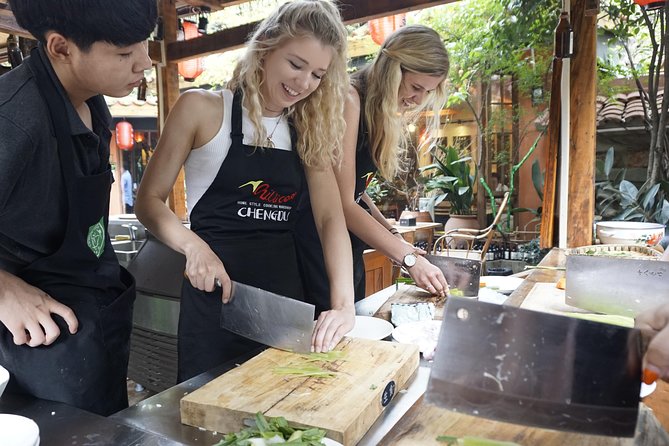
After the market, the group continues to a traditional Chinese chef’s home for the cooking session. This setting gives the experience a personal feel. You are not in a large culinary school with rows of identical workstations. You are entering a home-based space connected to the instructor and the food being prepared.
Tea is served before the cooking begins. The host presents it as a local custom for welcoming friends and visitors, and it gives everyone a few minutes to settle in. Tea, beer, water, and other beverages are included, so you do not need to budget separately for drinks during the session.
The home setting is also where expectations matter most. One participant felt the activity was closer to a cooking demonstration in an apartment than a standard cooking class, especially because each person did not necessarily have a private station. If you want a highly structured lesson with your own ingredients, counter, and cooking tools, ask about the format before booking.
On the other hand, the home setting is a plus if you want a relaxed introduction to everyday food culture. You get a sense of how the class is hosted, not just how a recipe is printed. The friendly instructors are a major part of the experience, and several participants praised Fiona’s English and the welcoming manner of the hosts.
Learning to stretch biang biang noodles
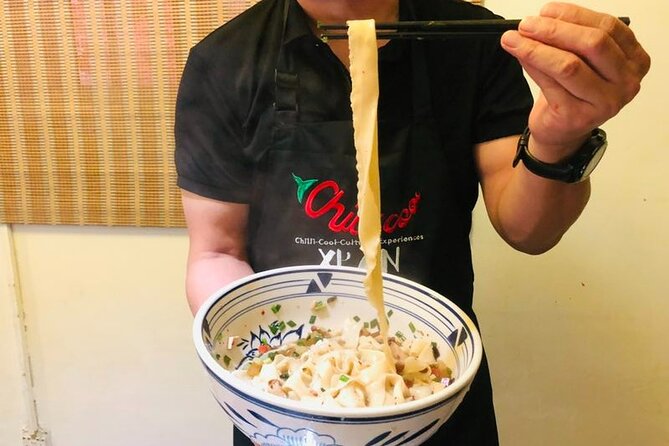
Biang biang noodles are associated with Xi’an and are known for their broad, hand-pulled shape. The cooking class focuses on making them yourself, including the pulling technique that can be difficult to recreate without instruction.
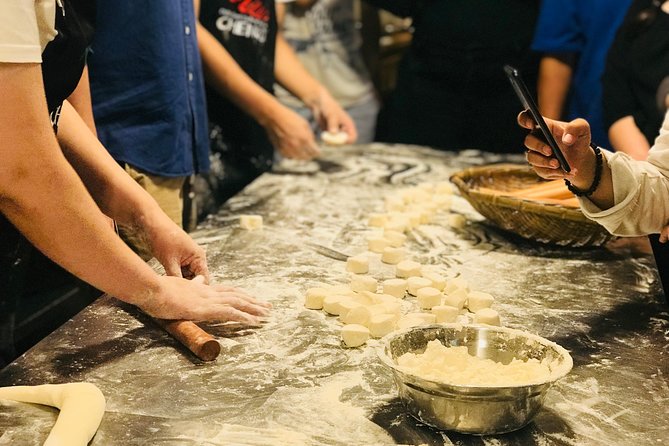
The process begins with the ingredients provided by the class. You are guided by a professional chef rather than left to guess at the dough. That matters because noodle dough can be unforgiving. Small differences in texture, timing, and handling can determine whether the noodles stretch properly or tear.
The class is particularly useful for people who already enjoy cooking Asian food. One participant joined specifically to improve their hand-pulled noodles, after repeated attempts at home had failed. That is a good sign for the practical value of the instruction, but it is also a reminder that you should pay close attention and take notes.
The class includes recipes, so you leave with something more useful than a few photographs. The recipe gives you a chance to try again at home, where the first attempt may not be perfect. Expect to learn the traditional method, but do not assume you will become a noodle master in one afternoon.
The size limit of 15 people helps. A group of that size should allow questions and some contact with the instructor, though personal attention can depend on how many people attend and how the class is organized that day. If you want the most hands-on time, a smaller booking or a quieter session may be preferable, but the experience does not promise a private class.
More Market Tours in Xian:
- Xi’an Muslim Quarter Night Market Foodie Walking Tour
★ 4.2 · 22 reviews - Half-Day Chengdu Cooking Class with a Local Market Visit
★ 5.0 · 465 reviews - Shanghai Day Tour to Zhujiajiao Water Town, Yu Garden, Bazaar, Bund
★ 5.0 · 162 reviews - Hong Kong: Kowloon Street Market & Food Culture Walking Tour
★ 5.0 · 105 reviews
Eating the noodles you have made
The final reward is lunch or dinner, depending on your selected session. You eat the food prepared during the class, with beer or other beverages available. Food tasting is included, and the meal is not an extra charge at the end.
This meal gives the class a clear purpose. You are not making dough just to watch someone else finish the dish. You get to taste the result and compare the finished texture with what you expected from the technique.
Expect a generous noodle experience. One participant joked about making way too many noodles, which suggests the class is not stingy with the main ingredient. The exact dishes and portion size are not specified, so you should not assume a multi-course restaurant meal. The central dish is biang biang noodles, with the market ingredients and class process providing the larger experience.
Beer, tea, and water make the meal more social. If you do not drink alcohol, other beverages are included. Vegetarian food is available, but you must request it when booking. You should also provide any other dietary requirements in advance rather than waiting until the class begins.
What the $75 price really covers
At $75 per person, this class sits above the cost of simply ordering noodles in Xi’an. That comparison is not quite fair, since you are also paying for a guided market visit, professional instruction, ingredients, a recipe, drinks, and a meal.
I consider the price reasonable if you value learning a skill and meeting local instructors. The market walk adds context, and the home setting gives the class a more personal character than a basic restaurant meal. You also avoid the common problem of paying for a cooking activity and then discovering that ingredients or drinks cost extra.
The value is weaker if your main goal is simply to eat biang biang noodles. Xi’an has many places to try the dish for much less. You should choose this activity because you want to make the noodles, understand the ingredients, and take the method home with you.
Group discounts may improve the price for families or larger parties. Since the activity is capped at 15 people, it is not designed as a huge coach-group event. Still, the experience may feel less intimate at full capacity than it would with only a few participants.
Who will enjoy this Xi’an food experience
I would recommend the class to:
- Home cooks: The recipe and hand-pulling instruction give you a practical skill to practice later.
- Food-focused visitors: You see ingredients in a market, then use them in the kitchen.
- Couples and small groups: The meal and drinks make this an easy shared activity.
- First-time visitors to Xi’an: It offers a local food introduction without requiring advanced Chinese cooking knowledge.
- Vegetarians who plan ahead: A vegetarian option is available if requested at booking.
I would be more cautious if you want a formal culinary school setup. The class takes place in a chef’s home, and at least one person found the format more demonstrative than expected. It is also not the best choice if you dislike walking through markets, working in a group, or eating the dish you help prepare.
The language support appears to be a strength. Fiona has been praised for speaking clear English, and participants have also described the instructors as easy to understand, kind, and fun. That makes the class more approachable for people who want instruction rather than a recipe card handed over with little explanation.
Timing, clothing, and booking advice
Plan on about three hours and 30 minutes, though the activity is described broadly as lasting three to four hours. Do not schedule a major attraction at the exact end time. The market, transfer to the chef’s home, instruction, and meal all need room to breathe.
Wear comfortable walking shoes and clothing suitable for cooking. You do not need to bring ingredients or drinks, since those are included. A phone may be useful for photographing ingredients and recording the noodle technique, but ask before filming the class.
Confirmation is sent at booking. Free cancellation is available if you cancel at least 24 hours before the start time. Changes or cancellations made later are not accepted for a refund. The experience may also be canceled if poor weather affects the outing or if the minimum number of participants is not met, in which case you are offered another date, another experience, or a full refund.
The activity has a mobile ticket, and the meeting point is near public transportation. Since the end point is the same as the start, you can plan the rest of your day from Sa Jin Qiao.
Should you book it?
Book this Xi’an biang biang noodles class if you want more than a meal. The market visit, tea service, home setting, recipe, and noodle-pulling lesson create a useful half-day experience, and the instructors appear to be a major strength. Fiona, Lily, Michael, and the other named teachers have helped make the class friendly and easy to follow.
Skip it if you want a private kitchen, a separate workstation, or a long food tour through Xi’an. For everyone else, especially home cooks and curious eaters, $75 is a sensible price for learning a local specialty and eating the results. Just request vegetarian or other dietary needs when you book, and arrive ready to get your hands sticky.
FAQ
How long does the Xi’an biang biang noodles class last?
The experience lasts approximately three hours and 30 minutes, with the wider description giving a range of three to four hours.
Where does the activity begin?
It begins at Sa Jin Qiao, also written as Sajin Bridge, in Xi’an’s Lianhu District near the Muslim Quarter.
Where does the activity end?
The activity ends back at the meeting point.
Is food included?
Yes. The class includes lunch or dinner based on the session schedule, food ingredients, food tasting, and recipes.
Are drinks included?
Yes. Tea, beer, water, and other beverages are included.
Can I choose a vegetarian meal?
Yes. A vegetarian option is available, but you must advise the provider when booking.
How many people can join the group?
The maximum group size is 15 people.
Can I cancel for a full refund?
Yes, if you cancel at least 24 hours before the experience start time. Cancellations made less than 24 hours in advance are not refunded.
Just added in Xian
- Top 3 Xian Sites to Terracotta Army & Dinner Show w/ Options★ 4.7 · 11 reviews
- Terracotta Army, Huaqing Palace & Song of Everlasting Sorrow★ 5.0 · 3 reviews
- Terracotta Warriors And Xi’An DowntownTour★ 5.0 · 6 reviews
- Terracotta Army E Ticket with Optional Transfer or Guide★ 5.0 · 32 reviews
- Terracotta Army Day Tour from Xi’an-Tickets&Flexible Pickup★ 5.0 · 8 reviews
- The Legend Of Camel Bell In Xi’An★ 5.0 · 4 reviews
- Terracotta Army, Big Wild Goose Pagoda, City Wall Day Tour★ 5.0 · 2 reviews
- From Xi’an: Mt. Huashan Private Tour and Cable Car Ride★ 4.8 · 3 reviews
Markets, compared.

Mini Group Xian Day Tour to Terracotta Army, City Wall, Pagoda and Muslim Bazaar
Read our review →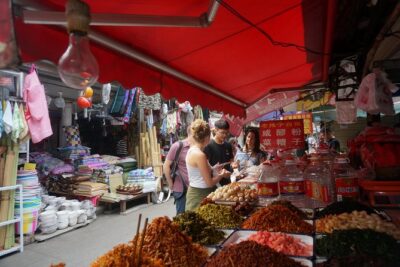
Half-Day Chengdu Cooking Class with a Local Market Visit
Read our review →
Shanghai Day Tour to Zhujiajiao Water Town, Yu Garden, Bazaar, Bund
Read our review →
Kowloon Street Market & Food Culture Walking Tour
Read our review →
Organic Chinese Dumpling Class with Market Walk
Read our review →
Terracotta Army, Lunch, City Wall, Pagoda, Bazaar
Read our review →
Organic Xiao Long Bao Soup Dumpling Class & Market Walk
Read our review →
Lijiang Naxi Cuisine Cooking Class & Market Visit
Read our review →Where else this tour turns up