Reviewed · BEIJING TOURS
Explore Ancient Chinese Architecture & Meet its People
Old Beijing still has doors worth opening. This private three-hour walk through Dongsi Hutong looks past grand palaces to the courtyard homes and everyday neighborhoods that give the city its character. Yuhua, who grew up in a former Prince Mansion, brings a personal connection to these old houses and introduces you to people working to protect them.
I like the direct access to a traditional courtyard house, and I like that the tour explains what you are seeing instead of asking you to admire it blindly. Meeting Yuhua’s friends, including Grandpa Li and Uncle Zhu, gives the architecture a human face. The $95.20 price is not cheap for three hours, and the experience may feel too specialized if you mainly want Beijing’s famous sights.
The tour begins at 9:00 a.m. in Dongsi Subdistrict and ends near Zhangzizhonglu Station on Subway Line 5. It is a private experience for your group, which allows more conversation, but you should be ready for walking and a moderate level of physical activity.
In This Review
- Key points to know before you book
- Why Dongsi Hutong is a better classroom than a palace
- Entering a traditional courtyard house
- Learning to read ancient Chinese architecture
- Building and taking apart a dougong structure
- Meeting the people who protect old homes
- What the three-hour route feels like
- The price and what you receive for $95.20
- Who will enjoy this hutong experience most
- A thoughtful way to see Beijing before the old houses change
- Should you book Explore Ancient Chinese Architecture and Meet its People?
- FAQ
- Where does the experience start?
- Where does the experience end?
- What time does the tour begin?
- How long does the experience last?
- Is this a private tour?
- Is admission included?
- What happens if the weather is poor?
Key points to know before you book
- A traditional courtyard house is the main setting: You receive access to an authentic hutong home rather than only viewing old buildings from the street.
- Yuhua teaches the basics of Chinese architecture: You learn to notice courtyards, structural details, and design features that are easy to miss on your own.
- You meet local preservation-minded Beijingers: The human stories matter as much as the rooflines and timber.
- You can handle a dougong model: The hands-on assembly activity shows how one of China’s best-known wooden bracket systems works.
- The tour supports preservation: One percent of the payment goes to the Beijing Cultural Heritage Protection Center.
- It is a compact private morning: The experience lasts about three hours, with a 9:00 a.m. start and an end near Zhangzizhonglu Subway Station.
Why Dongsi Hutong is a better classroom than a palace
Beijing’s major imperial sites are essential, but they can make Chinese architecture seem like something reserved for emperors and officials. Dongsi Hutong offers a different lesson. Here, architecture is tied to homes, neighbors, narrow lanes, and the daily effort to keep old places in use.
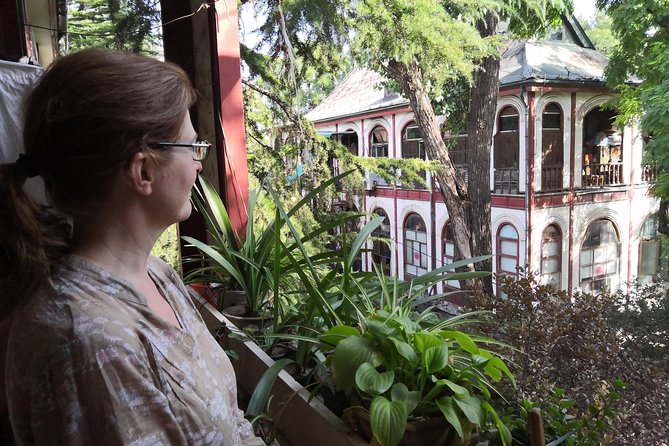
That change in scale is important. You are not simply looking at a famous gate or painted hall. You are learning how older residential buildings were arranged and why certain features mattered. Yuhua’s connection to a former Prince Mansion gives the tour a personal starting point. She describes these old houses as places that feel like home, not as museum pieces separated from ordinary life.
The hutongs are also changing. Older houses and lanes are disappearing, so a walk like this places current preservation concerns beside the architecture itself. You get a clearer sense of what can be lost when a courtyard disappears, even if the city around it continues to grow.
I would choose this experience early in a Beijing visit if architecture or local life interests you. The explanations can change the way you look at other courtyards, gates, and historic buildings for the rest of your stay.
A few more to weigh up in Beijing
- From Beijing: Mutianyu Great Wall Tours with Options
★ 4.9 · 9,216 reviews - Beijing: Forbidden City Tour(Group/Private)-Tickets Included
★ 4.8 · 7,974 reviews - Beijing: T-Square & Forbidden City Group or Private Tour
★ 4.8 · 4,446 reviews
Entering a traditional courtyard house
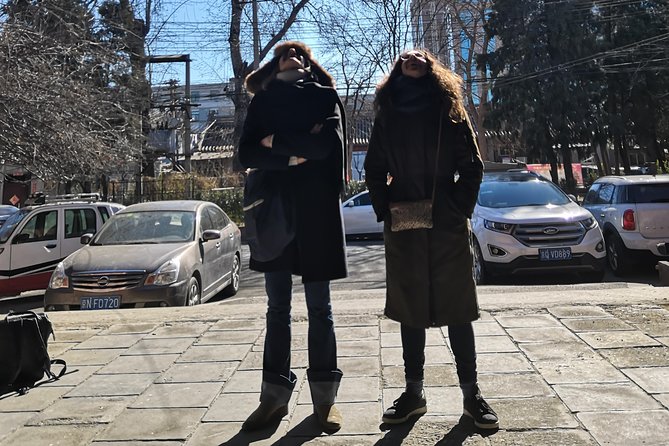
The strongest part of the experience is the privileged access to a traditional courtyard house in one of Beijing’s authentic hutong areas. The exact house details are not specified, so you should not expect a fixed museum display or a guaranteed set of rooms. The value is the chance to see this type of residence as a real place connected to people and preservation.
A courtyard house is best understood from the inside. Its layout, open space, walls, doors, and relationship to neighboring homes tell you more than a quick photograph from a lane. With Yuhua guiding you, you can ask why a feature was built in a certain way and how the structure relates to Chinese ideas about home and family life.
This access also gives the walk a sense of trust. You are not being taken from one major attraction to another. You are being welcomed into a setting tied to local residents and the work of keeping traditional architecture alive.
There is a practical point here. Because this is a private activity, your group can ask questions without trying to keep up with a large crowd. If you are shy about speaking up on group tours, that is a real benefit. If you prefer a fast-moving sightseeing route, the slower pace may test your patience.
Learning to read ancient Chinese architecture
The introductory architecture lesson is designed for non-specialists. You do not need to arrive knowing structural terms or historical periods. The goal is to give you a working set of clues so buildings across Beijing become easier to understand.
That makes the tour more useful than a walk that simply points at attractive roofs. You learn to look for key features and to connect those details with the purpose of a building. The information is meant to help you understand what you see in Beijing and elsewhere in China, not just during this one morning.
I especially like this approach for first-time visitors who feel overwhelmed by Chinese architecture. Imperial buildings, temples, homes, and gateways can appear full of symbols and rules. A clear primer gives you a way to sort those details instead of treating every roof as a blur of color and decoration.
The tour’s focus is narrow, and that is both a strength and a limit. You are not getting a full survey of Chinese history, nor a broad tour of every period and region. You are getting a focused look at traditional architecture in a Beijing neighborhood. Book it for that purpose.
Building and taking apart a dougong structure
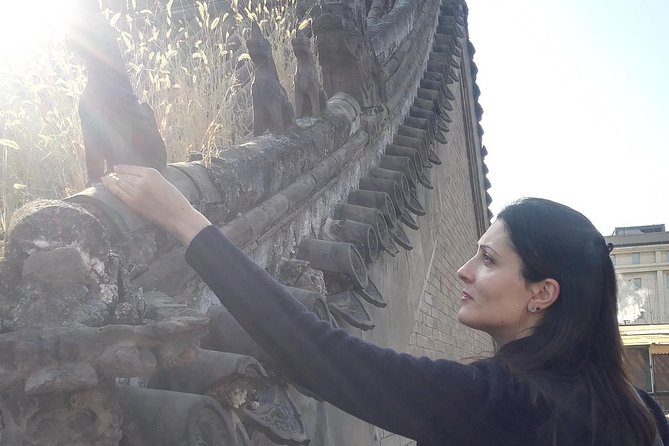
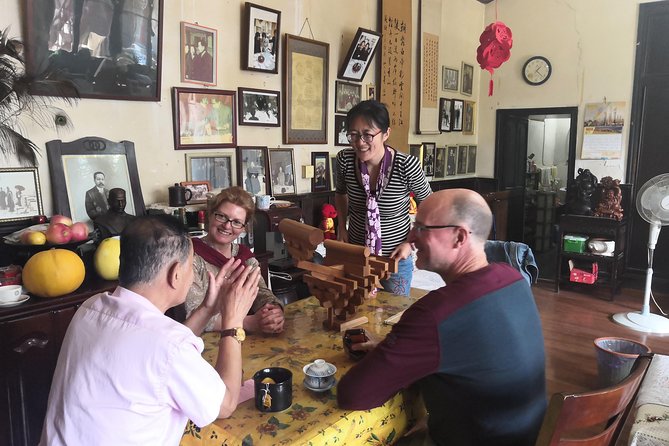
The hands-on dougong activity adds a useful physical lesson. Dougong is a traditional Chinese system of interlocking wooden brackets used in construction. Rather than only hearing the term, you can try taking the pieces apart and putting them together again.
That small task helps explain why the system is memorable. A technical description can make structural design seem remote, but handling a model turns it into a problem you can see and feel. You get a better sense of how separate wooden parts relate to one another.
This is also a good feature for families and anyone who learns best by doing. It gives the tour a change of pace after the architecture explanation and keeps the experience from becoming a long lecture.
Do not expect a construction workshop or advanced engineering lesson. The available information describes a practical demonstration with a dougong model, not full-scale carpentry. Still, for a short cultural tour, it is a smart addition because it makes an important architectural idea easier to remember.
A completely different sort of day out:
- All-Inclusive Tour: Tiananmen Square, Forbidden City, Great Wall
★ 5.0 · 2,873 reviews - MuBus: Mutianyu Great Wall ENG/ESP/RUS Guided Bus Tour
★ 5.0 · 2,361 reviews - 4-Hour Small Group Tour to Forbidden City with Entry Tickets
★ 5.0 · 1,863 reviews - Beijing: Tiananmen Square Registration Service(Ticket)
★ 4.5 · 1,704 reviews
Meeting the people who protect old homes
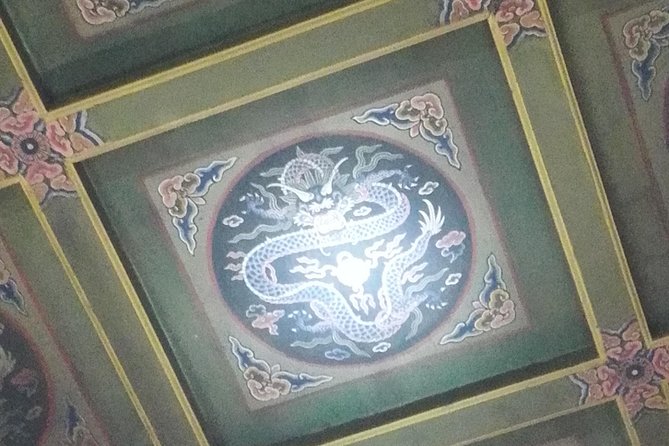
The tour is not only about buildings. Yuhua introduces you to ordinary Beijingers who make unusual efforts to preserve architectural heritage in the hutongs. That personal connection is one of the experience’s most praised qualities.
Names such as Grandpa Li and Uncle Zhu appear in the host’s warm response to a detailed account of the experience, and their importance to the visit is clear. You may meet them as part of the local conversations arranged through Yuhua, though the supplied details do not promise exactly how long you will spend with each person or what each meeting will cover.
This human element keeps preservation from sounding like an abstract city-planning issue. An old courtyard is not only timber, brick, and roof tiles. It is also somebody’s home, memory, or responsibility. Talking with people who work to protect these places can help you understand why the loss of hutongs affects more than the appearance of a neighborhood.
It also makes the experience feel less staged than a standard heritage display. You are not being shown a frozen version of Old Beijing. You are being introduced to people trying to maintain a living connection to it.
At the same time, you should keep expectations realistic. This is a short private tour, not a long community research visit. The depth of each conversation may depend on the morning’s schedule and the people available.
What the three-hour route feels like
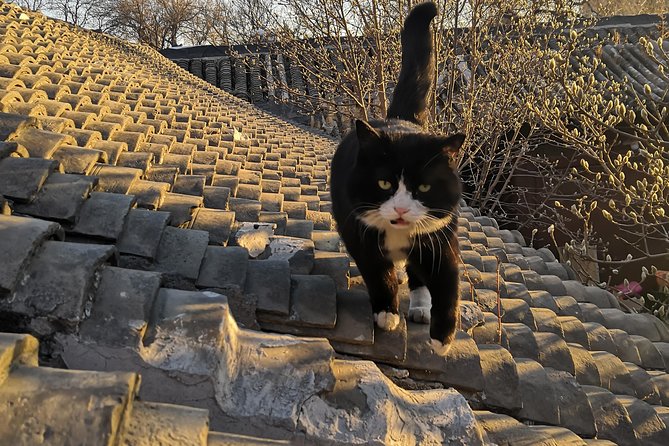
The morning starts at 9:00 a.m. in Dongsi Subdistrict, in Beijing’s Dongcheng District. Starting early is sensible. It leaves the rest of your day open and gives you a focused way to begin before you move on to larger sights.
The route is organized around one main area rather than a string of distant attractions. You explore Dongsi Hutong, visit the courtyard house, receive the architecture primer, meet local people, and try the dougong activity. The experience then ends near Zhangzizhonglu, also called Zhang Zi Zhong Lu, on Subway Line 5.
That point-to-point arrangement is convenient. You do not need to return to the starting place, and the ending near Zhangzizhonglu Station makes it easier to continue exploring Dongcheng. Subway Line 5 serves the area, and the specified exit is Exit A.
The duration is listed as roughly three to four hours, while the main visit is described as three hours. I would plan for at least three hours and avoid booking another fixed appointment immediately afterward. Hutong walks can involve pauses, conversations, and changes in pace.
You should also wear comfortable shoes and be ready for moderate physical activity. The exact distance and surface conditions are not provided, so anyone with mobility concerns should ask the provider for more detail before booking.
The price and what you receive for $95.20
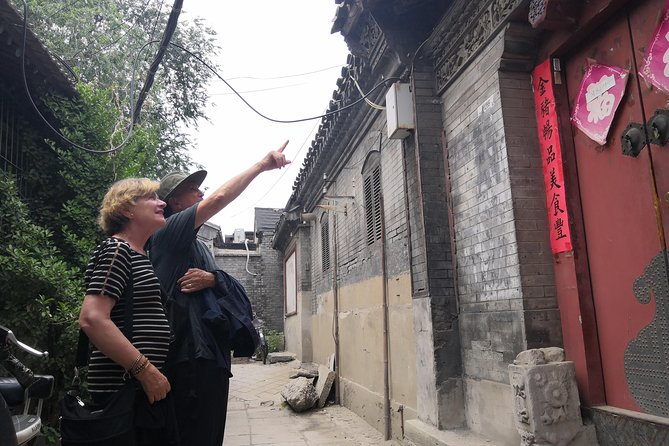
At $95.20 per person, this is priced above a basic neighborhood walk. The question is not simply how many hours you receive. It is what kind of access those hours provide.
You are paying for a private experience, direct guidance from Yuhua, access to a traditional courtyard house, meetings with people involved in preservation, and a hands-on architectural activity. Admission is included, and one percent of the payment supports the Beijing Cultural Heritage Protection Center, an organization that helps residents preserve cultural heritage.
That combination gives the price a reasonable case, especially for people who value small-group access and cultural context. A private tour can also be worth more than a cheaper large-group walk if you want to ask questions and keep the pace suited to your interests.
Still, the price may not work for everyone. If you mainly want photos, a quick introduction to hutongs, or a list of famous sights, you may find the cost high for a three-hour activity. The tour makes more sense if you care about architecture, local preservation, and conversations with residents.
Since the experience is usually booked about 58 days ahead, it appears to attract advance planning. If it fits your schedule, booking early is sensible, particularly if your Beijing dates are fixed.
Who will enjoy this hutong experience most
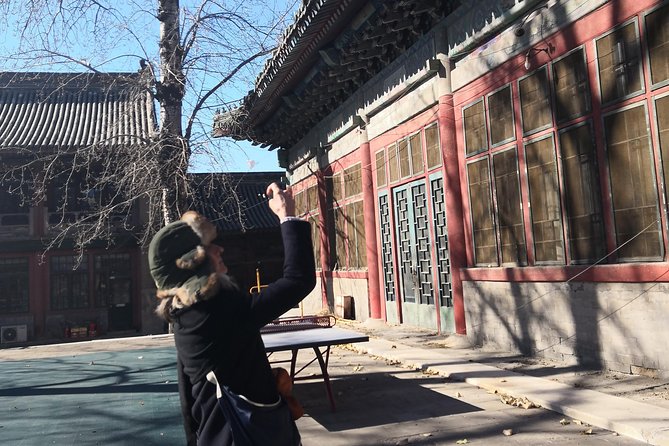
I would recommend this tour to several types of visitors:
- Architecture fans who want a clear introduction to Chinese building traditions.
- Repeat visitors to Beijing who have already seen the main imperial attractions.
- Families and curious teenagers who may enjoy assembling the dougong model.
- Photographers and design-minded visitors who want to understand the structures behind their pictures.
- People interested in local preservation who want to hear about the effort to protect old homes.
- Private-tour seekers who value conversation over a rigid group schedule.
It may be less suitable if you want a broad historical tour, a physically effortless outing, or a visit centered on major monuments. It also requires good weather. If poor weather forces cancellation, you will be offered another date or a full refund.
The tour is private, so only your group participates. Service animals are allowed, and the meeting area is near public transportation. Confirmation normally arrives at booking, though bookings made within one day of travel are confirmed as soon as possible and remain subject to availability.
A thoughtful way to see Beijing before the old houses change
What I like most here is the connection between architecture and people. Yuhua is not presenting old buildings as decoration. Her own background, her affection for former residences, and her relationships with local people give the subject an emotional center.
The strongest praise associated with this experience focuses on the depth of the architecture discussion and the warmth of the personal encounters. That is a good sign for anyone who wants more than a quick walk through a hutong. The experience has enough substance to stay with you when you later pass other courtyard houses or notice a traditional bracket detail.
The main caution is that this is a specialized tour at a fairly high per-person price. Its success depends on your interest in the subject. You should not book it simply because you have a free morning in Beijing.
Should you book Explore Ancient Chinese Architecture and Meet its People?
Book it if you want a personal, compact look at Beijing’s old residential architecture and care about the people working to protect it. The courtyard-house access, dougong activity, private format, and introductions to local preservationists give you something that a standard sightseeing route usually cannot.
Skip it if you want a fast checklist of famous places or a general introduction to Beijing. For the right person, $95.20 buys more than a walk. It buys context, access, and a better understanding of what hutongs mean to the people who call them home.
FAQ
Where does the experience start?
It starts in Dongsi Subdistrict, in Beijing’s Dongcheng District.
Where does the experience end?
It ends near Zhangzizhong Road, also called Zhang Zi Zhong Lu, in Dongcheng District.
What time does the tour begin?
The stated start time is 9:00 a.m.
How long does the experience last?
The experience lasts approximately three to four hours, with the main activity described as three hours.
Is this a private tour?
Yes. Only your group participates.
Is admission included?
Yes, admission is included in the experience price.
What happens if the weather is poor?
The experience requires good weather. If it is canceled because of poor weather, you will be offered a different date or a full refund.
Just added in Beijing
- Private Transfer to Mutianyu Great Wall with professional driver★ 5.0 · 19 reviews
- One day tour to downtown Tianjin from Beijing by high speed train★ 5.0 · 3 reviews
- ZANBUS: Trip to the Jinshanling Great Wall Departing at 7:30 AM★ 5.0 · 5 reviews
- camp on the Great Wall overnight with sunrise and sunset on the wall★ 5.0 · 11 reviews
- Yuxiandu Chinese Royal Cuisine Museum with Show and Royal Banquet★ 5.0 · 4 reviews
- Wild Great Wall Hikes★ 5.0 · 10 reviews
- BusDa:Ancient Great Wall &Badaling Great Wall Full-day Bus Tour★ 4.5 · 6 reviews
- Wild Great Wall Huanghuacheng Half Day Tour★ 5.0 · 15 reviews
Beijing Tours, compared.

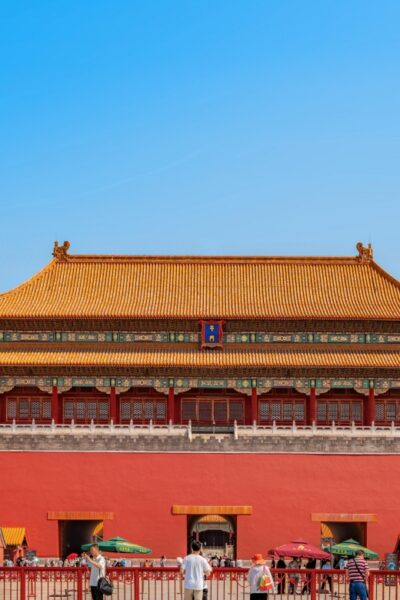
Forbidden City Tour(Group/Private)-Tickets Included
Read our review →
T-Square & Forbidden City Group or Private Tour
Read our review →
All-Inclusive Tour: Tiananmen Square, Forbidden City, Great Wall
Read our review →
MuBus: Mutianyu Great Wall ENG/ESP/RUS Guided Bus Tour
Read our review →
4-Hour Small Group Tour to Forbidden City with Entry Tickets
Read our review →