
Reviewed · CHENGDU TOURS
Chengdu: Dujiangyan World’s Oldest Water Conservancy Project
Ancient water still does the work. Dujiangyan combines 2,000-year-old engineering with river views, temples, and wooded paths, giving you more than a standard sightseeing stop. I like the chance to see an active water system and the access to Fulong Temple, Two Kings Temple, and Anlan Suspension Bridge. The main drawback is simple: you should expect plenty of walking, while transportation inside the site, elevator access, and guide services cost extra or are not included.
This one-day visit costs $24 per person, which is a fair price for entry to a major UNESCO World Heritage site and its historic viewing areas. I also like that the booking allows cancellation up to 24 hours before arrival and payment later, but you must send your passport name and number in time or the booking can be canceled with a fee.
In This Review
- Key points to know before you go
- Why Dujiangyan matters more than a pretty view
- Starting at the scenic area
- Fulong Temple and the story below the surface
- Two Kings Temple and local memory
- Anlan Suspension Bridge and the best sense of height
- Exhibits that explain the engineering
- How much walking should you expect?
- Is $24 good value for a full day?
- Booking, timing, and the passport rule
- What the strongest praise tells you
- Who should book Dujiangyan?
- Should you book this one-day visit?
- FAQ
- Where is Dujiangyan Scenic Area located?
- How much does this experience cost?
- How long is the experience valid?
- What does the ticket include?
- Are transportation and elevator access included?
- Is a guided tour included?
- What are the opening hours?
- What should I bring?
- Can I cancel the booking?
Key points to know before you go
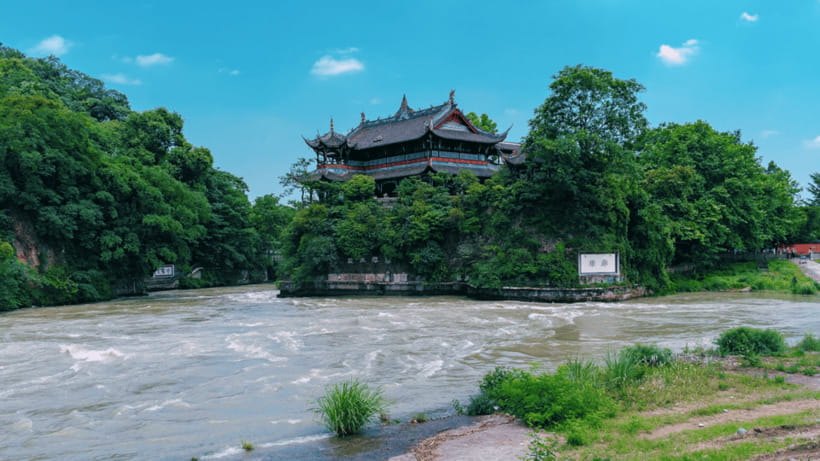
- A working ancient water system: Dujiangyan was built during the Qin Dynasty and still manages water today.
- Three memorable stops: Fulong Temple, Two Kings Temple, and Anlan Suspension Bridge each show a different side of the site.
- A full outdoor day: Plan for extended walking, steps, bridges, and open-air viewing areas.
- Good value at $24: The fee covers the scenic area entrance and access to historic sites and viewpoints.
- Strict booking details: Advance reservations are required one to two days ahead, with your passport name and number.
- Two seasonal closing times: Summer admission runs from 8:00 a.m. to 5:30 p.m., while winter admission ends at 5:00 p.m.
Why Dujiangyan matters more than a pretty view
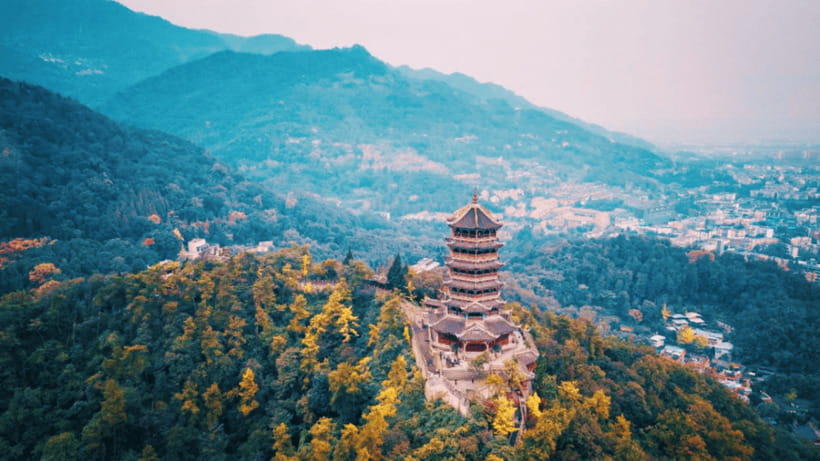
Dujiangyan is not simply an old structure beside a river. It is a water management project that changed the Chengdu plains and helped create the area’s long-standing reputation as the Land of Abundance.
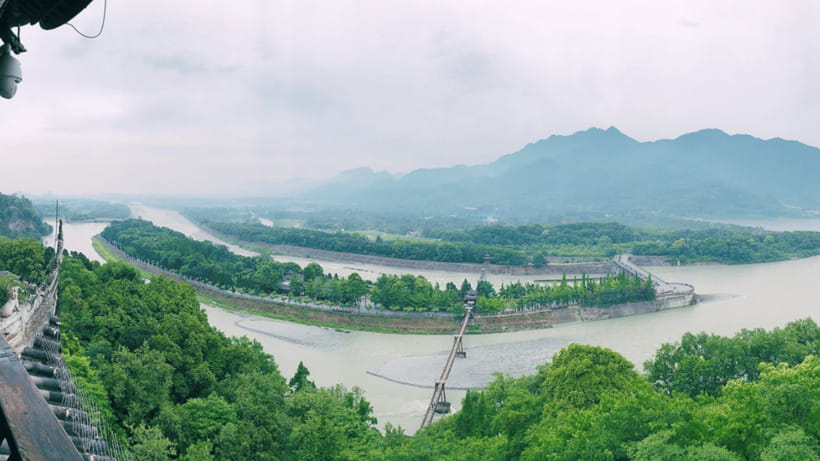
The project was built more than 2,000 years ago under Li Bing, the governor of Shu, and his son. Instead of treating the river as something to block completely, the system was designed to guide and control its flow. That basic idea is what makes the site so interesting: you are looking at engineering that was meant to work with water rather than fight it.
You will see the project from several points around the scenic area. Some views help you understand the shape of the channels and the way water is directed. Other stops focus on temples, statues, exhibits, and local tradition.
I think this mix gives the visit its value. If you only want mountain scenery, there are simpler places to visit. If you only want ancient buildings, there are more concentrated temple sites. Dujiangyan gives you both, along with a practical lesson in how an old society solved a very modern problem: how to manage water for farms, towns, and daily life.
A few more to weigh up in Chengdu
- Chengdu: Giant Panda Breeding Research Base Ticket
★ 4.5 · 580 reviews - Half-Day Chengdu Cooking Class with a Local Market Visit
★ 5.0 · 465 reviews - Tuktuk Food Tour Through Chengdu’s Local Eats
★ 5.0 · 435 reviews
Starting at the scenic area
The entry ticket gives you access to Dujiangyan Scenic Area, including its historical sites and viewing platforms. There is no guided tour service included, so you should be ready to read signs, study exhibits, and make sense of the site at your own pace.
That independence can work well. You can pause at a viewpoint, spend longer at a temple, or move on when the path becomes crowded. The tradeoff is that the story may feel less clear if you arrive without reading about Li Bing and the basic purpose of the water project first.
I suggest learning three terms before you arrive: the water channels, the temples connected with the project, and the key people behind its construction. Even a little preparation will help you see that this is not just a scenic walk.
The site operates from 8:00 a.m. daily, with the final admission at 5:30 p.m. in summer and 5:00 p.m. in winter. Closing times are 6:00 p.m. in summer and 5:30 p.m. in winter. A morning start gives you more time for the long walking route and leaves room for delays at viewpoints or exhibits.
Fulong Temple and the story below the surface
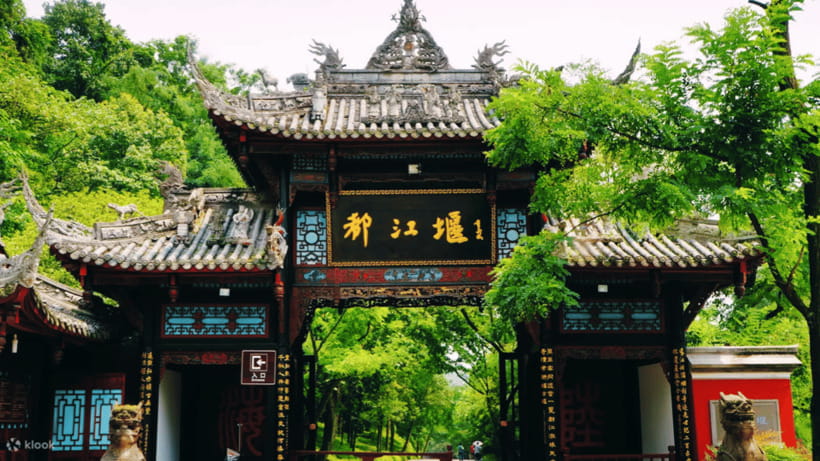
Fulong Temple is one of the named highlights, and it gives the visit a strong cultural side. The temple is linked with the water project and helps connect the practical work of flood control with the beliefs and traditions that grew around it.
Here, you can expect a historic religious setting rather than a modern museum presentation. Look for the way the building, surrounding paths, and nearby river views work together. The value of this stop comes from context. The water system was not an isolated construction project. It shaped local life, and Fulong Temple helps show the respect attached to that achievement.
You may find this stop especially useful if you prefer places where engineering and culture meet. It also offers a change of pace from the open viewing platforms. After looking at water channels and river movement, a temple visit gives you a quieter way to think about the people who planned and maintained the project.
The available information does not specify a separate guided explanation at the temple, so do not assume that a guide is waiting at each stop. A camera is worth bringing, but remember that this is an active heritage site, not a photo set. Follow posted rules and avoid treating religious or historic areas carelessly.
Two Kings Temple and local memory
Two Kings Temple adds another layer to the story. Its name refers to the figures honored for their role in the water project, particularly the work associated with Li Bing and his son.
This is one of the better places to connect the names with the wider achievement. Without that connection, Dujiangyan can feel like a collection of bridges, paths, temples, and river channels. With it, the site becomes easier to read as one long story about public works and local memory.
I would give yourself time here instead of rushing through for a quick photograph. The temple is one of the places where the human side of Dujiangyan comes forward. You are not only seeing what was built. You are seeing how later generations chose to honor the people who made it possible.
The visit is still primarily outdoors, and extended walking is part of the day. Comfortable shoes are essential. If you prefer a short, low-effort attraction, this may feel demanding, especially because some internal transportation and elevator access are not included.
A completely different sort of day out:
- Private Half-Day Chengdu Panda Breeding Center Tour with Optional Volunteer
★ 5.0 · 353 reviews - Chengdu: Sichuan Opera Shu Feng Yan Yun Evening Show Ticket
★ 4.7 · 185 reviews - Private Chengdu Day Tour: Giant Pandas and Jinsha Site Museum
★ 5.0 · 142 reviews - Visiting Dujiangyan Yaan Wolong Panda Base Optional Volunteering
★ 5.0 · 105 reviews
Anlan Suspension Bridge and the best sense of height
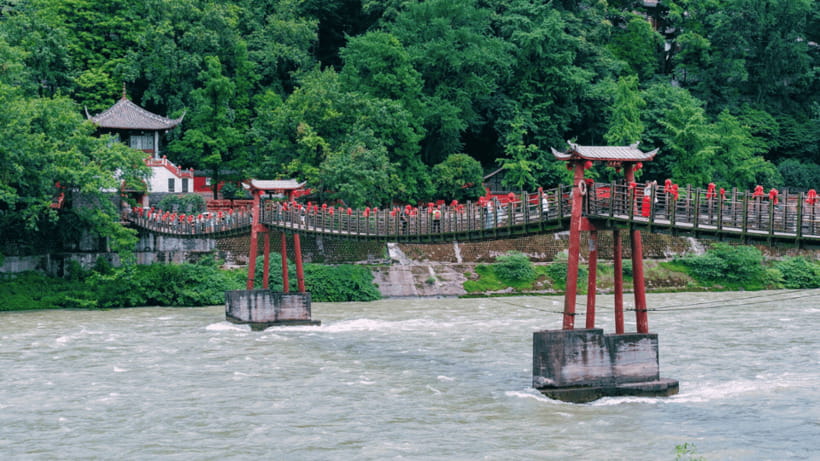
Anlan Suspension Bridge is likely to be one of the most memorable parts of the visit. A bridge changes your view in an instant. Instead of observing the water project from the bank or a platform, you get a more direct sense of the river corridor and the distance between the surrounding points.
It also brings a little excitement to what could otherwise be a temple and exhibit visit. The bridge is a practical reminder that this attraction involves movement through the site, not just standing in front of monuments.
Take your time with the views, but keep the walking conditions in mind. The information provided does not specify bridge access rules, crowd levels, or a separate fee for crossing, so check current instructions on arrival. The scenic area can be enjoyed without rushing, but you should not build a tight schedule around one particular viewpoint.
If heights make you uneasy, Anlan Suspension Bridge may be the stop that requires the most thought. The experience is still optional in spirit, since the attraction includes several temples and viewing areas, but no detailed accessibility information is provided. Ask staff on site if you need current guidance.
Exhibits that explain the engineering
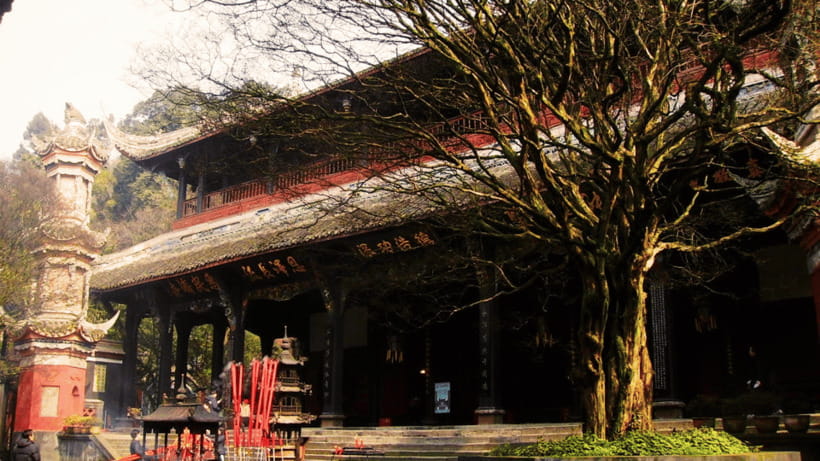
Dujiangyan is easier to appreciate when you understand what the water system is doing. Cultural and historical exhibits provide that background, helping you connect the visible channels and river views with the project’s long-term purpose.
This is where the $24 entry fee earns much of its value. You are not paying only for a walk through attractive scenery. You are gaining access to a place that explains an important piece of Chinese history through its actual setting.
The exhibits may be most useful early in your visit. If you see them before spending time at the river, you can look at the water with a better sense of purpose. If you reach them later, they can help organize what you have already seen.
Because there is no guided service included, give yourself time to read. Do not expect a fast amusement-park style attraction. Dujiangyan rewards attention. The more you notice the relationship between the river, the channels, the bridges, and the temples, the more satisfying the day becomes.
How much walking should you expect?
The site information specifically warns you to plan for extended walking. That point deserves more attention than it usually gets in a short attraction description.
You will move between historic buildings, viewing areas, bridges, and exhibits. The route may include uneven outdoor surfaces, steps, and long stretches on foot, although the provided details do not give a total distance or a full accessibility breakdown.
Comfortable shoes are one of the few required preparations. Bring your passport for entry and identification checks, along with a camera if you want to record the views. Pets are not allowed.
Transportation within the park is not included. Elevator access at Bu Yun Lang is also not included. These exclusions matter most if you are trying to limit walking or if you hope to move quickly between distant sections.
I would treat internal transport as a possible extra rather than part of the $24 price. Since the exact cost and operating details are not provided, check locally before you depend on it.
Is $24 good value for a full day?
At $24 per person, this is a strong value if you want a full cultural and outdoor day. Your ticket covers the scenic area entrance, historic sites, and viewing platforms. That gives you access to the central experience without paying separately for every temple or viewpoint listed.
The price is less attractive if you only have an hour or two. Dujiangyan is spread across a walking route, and the site’s value comes from seeing several parts together. A rushed visit would make the ticket feel more like an admission charge than a complete day out.
The exclusions are reasonable but important. You do not get transportation within the park, elevator access at Bu Yun Lang, or a guide. You should also budget for any food, drinks, or other personal expenses, since these are not listed as included.
For history fans, families with older children, photographers, and anyone interested in traditional engineering, the fee makes sense. It is also a good choice if you want a break from city streets and prefer your sightseeing with trees, water, and open views.
Booking, timing, and the passport rule
Advance reservations are required one to two days before your visit. This is not a place where you should assume a same-day ticket will work.
You must provide your full name exactly as it appears on your passport, along with your passport number. Send those details on time. If they are missing, the booking can be canceled and a cancellation fee may apply.
The ticket is valid for one day, with available starting times depending on the date. The booking offers free cancellation up to 24 hours in advance and allows you to reserve now and pay later. That flexibility is useful if your Chengdu plans are still shifting.
The operator is PANDA144 experience. The available service details do not identify a guide or list a specific tour language, so confirm those points before booking if personal commentary is important to you.
What the strongest praise tells you
The two verified ratings available for this experience are both five out of five. One German visitor praised the smooth communication with the provider and described the visit as a relaxed day in a unique historic open-air museum surrounded by beautiful nature.
That praise points to a practical strength: clear communication can make the passport and advance reservation process much easier. Since those details are important, this is not a small benefit.
A Japanese visitor highlighted the wisdom of earlier generations and the grand scale of the views. That captures the heart of Dujiangyan. You are likely to remember both the human skill behind the project and the broad scenery around it.
The ratings are based on only two reviews, so I would not treat them as a complete picture of every possible experience. Still, they emphasize the two areas that matter most here: reliable booking communication and the combination of history with impressive views.
Who should book Dujiangyan?
I would choose this experience if you enjoy places where history can be seen working in the real world. Dujiangyan is a good match for you if temples, exhibits, water management, bridges, and outdoor walking all sound appealing.
It also suits anyone who wants a day away from Chengdu’s urban setting. The mix of nature and ancient construction gives the visit a different rhythm from a museum or palace. You get fresh views and physical movement, but also a clear subject to follow.
You may want to skip it if you dislike long walks, need a fully guided experience, or want every internal transfer included. The lack of guide service means you must bring some curiosity and patience. The lack of included park transportation may also affect your decision.
Should you book this one-day visit?
Book it if you want history you can see and understand on site, rather than a collection of disconnected artifacts. The water project, temples, bridge, exhibits, and viewpoints form a complete day, and $24 is reasonable for that access.
Before paying, make sure your passport details are ready, your shoes are suitable for extended walking, and your schedule allows enough time for the scenic area. If you need a guide, internal transportation, or elevator access, ask about those extras first.
For an easy, short attraction, choose something else. For a thoughtful day combining ancient engineering, Chinese culture, and river scenery, Dujiangyan is a very good choice.
FAQ
Where is Dujiangyan Scenic Area located?
Dujiangyan Scenic Area is in Chengdu, in Sichuan Province in southwestern China.
How much does this experience cost?
The listed price is $24 per person.
How long is the experience valid?
The admission is valid for one day.
What does the ticket include?
The ticket includes entry to Dujiangyan Scenic Area, along with access to historical sites and viewing platforms within the site.
Are transportation and elevator access included?
No. Transportation within the park and elevator access at Bu Yun Lang are not included.
Is a guided tour included?
No. Guided tour services are not included.
What are the opening hours?
The site operates from 8:00 a.m. In summer, final admission is at 5:30 p.m. and closing time is 6:00 p.m. In winter, final admission is at 5:00 p.m. and closing time is 5:30 p.m.
What should I bring?
Bring your passport, comfortable shoes, and a camera.
Can I cancel the booking?
Yes. You can cancel up to 24 hours in advance for a full refund. Advance reservations are required one to two days before your visit, and your passport name and number must be supplied to complete the booking.
Just added in Chengdu
- Visiting Chengdu Panda Base in a Half Day★ 5.0 · 4 reviews
- Classsic sichuan Opera at sichuan Provincial Theater★ 5.0 · 4 reviews
- Tea Village in lost Town and Buddha 1 day tour★ 5.0 · 32 reviews
- Panda, Leshan, and Emei Mountain 2-day tour★ 5.0 · 4 reviews
- Sichuan Opera with face-changing at Sichuan opera theater★ 4.5 · 6 reviews
- Sichuan Opera Show with Hotel Pickup★ 5.0 · 3 reviews
- Mini Group: Half-Day Chengdu Pandas Guided Tour★ 5.0 · 3 reviews
- Sanxingdui Ruins and Giant Pandas Private Day Tour from Chengdu★ 5.0 · 5 reviews
Chengdu Tours, compared.

Half-Day Chengdu Cooking Class with a Local Market Visit
Read our review →

Private Half-Day Chengdu Panda Breeding Center Tour with Optional Volunteer
Read our review →
Sichuan Opera Shu Feng Yan Yun Evening Show Ticket
Read our review →
Private Chengdu Day Tour: Giant Pandas and Jinsha Site Museum
Read our review →
Visiting Dujiangyan Yaan Wolong Panda Base Optional Volunteering
Read our review →
Chengdu Sichuan Opera Show Ticket – Shu Feng Ya Yun
Read our review →Where else this tour turns up