
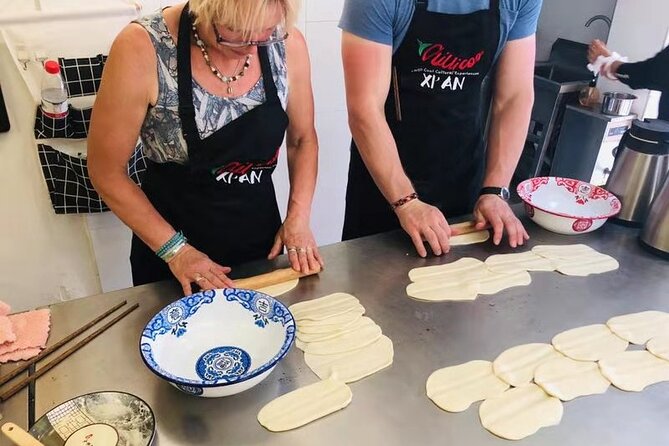
Reviewed · XI'AN TOURS
Biang Biang Noodles Cooking Experience
Make noodles, meet the market. This Xi’an outing combines a local food market, green tea in a quiet courtyard, and a hands-on lesson in making Biang Biang noodles. I like the market visit because it gives you a look at everyday ingredients before you cook, and I like the small group size, capped at eight people. The main drawback is that you need to reach the meeting point at Sa Jin Qiao Subway Station on your own, and the lesson may require more arm strength than a simple cooking demonstration.
For $75 per person, you get about three and a half hours of guiding, lunch or dinner depending on your selected option, snacks, and the noodle lesson. You also take home the recipe and a certificate. The price makes the most sense if you value participation and local food knowledge, not just a meal.
In This Review
- Key points at a glance
- Why Biang Biang noodles make a good Xi’an lesson
- Meeting at Sa Jin Qiao and entering the market
- Green tea in a private courtyard near the City Wall
- Mixing flour and water into workable dough
- Pulling long Biang Biang noodle strips
- Sauce, hot oil, and the meal you made
- What the small group size changes
- Value, timing, and who should book
- Practical advice before you go
- Final call: Is this Xi’an cooking experience worth it?
- FAQ
- Where does the Biang Biang noodles experience begin?
- How long does the experience last?
- How much does the experience cost?
- Is transportation included?
- What food is included?
- How many people can join the activity?
- Do I receive confirmation and a mobile ticket?
- Can I cancel for a refund?
Key points at a glance
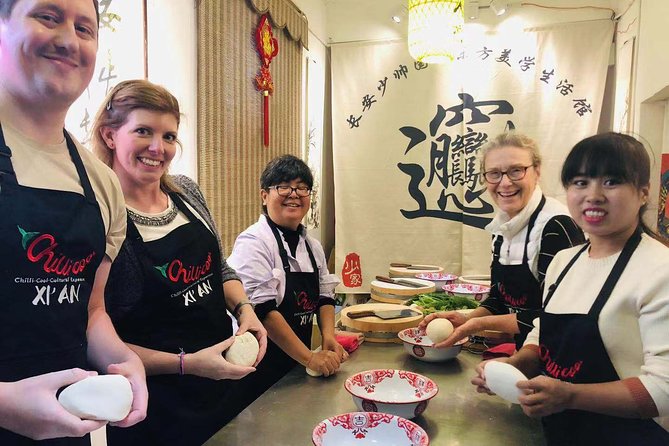
- Start at Sa Jin Qiao Subway Station: Meet at Exit B of Line 1, then walk with your guide to a nearby local market.
- See ingredients before cooking: Expect vegetables, seasoning fruits, spices in old bags, fresh meats, and cooking utensils for sale.
- Pause for green tea: A quiet private courtyard near the City Wall provides a calm break after the market.
- Pull the noodles yourself: You will mix flour and water, shape the dough, cut strips, stretch them, boil them, and add sauce and hot oil.
- Small group setting: The maximum is eight people, which should allow more personal help during the dough and noodle-pulling stages.
- Take home useful reminders: The recipe and certificate give you something practical to keep after the meal.
Why Biang Biang noodles make a good Xi’an lesson
Biang Biang noodles are more than a bowl of food. They are a practical introduction to the texture, technique, and bold seasoning associated with Xi’an cooking.
The dish begins with a simple flour dough. The challenge comes later, when you press, cut, and pull the dough into long noodles. That process gives the lesson a clear sense of progress. You are not just watching someone prepare lunch. You are turning basic ingredients into a finished regional dish with your own hands.
The food is also well suited to a short class. You do not need a long list of complicated recipes to get started. The guide shows you the flour-to-water ratio, the shape of the dough, the cutting method, and the force needed to stretch the strips.
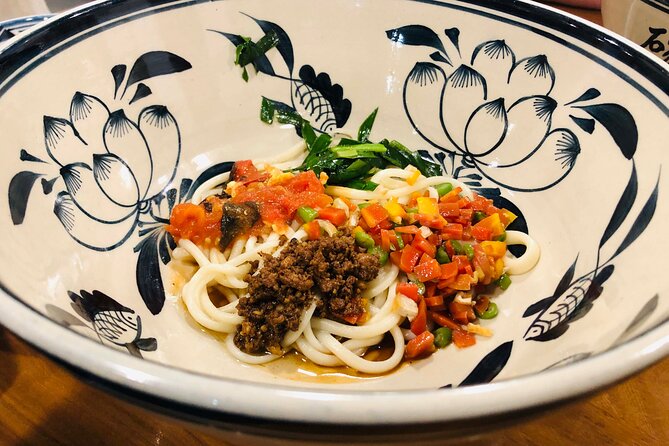
I especially like that the sauces are prepared as part of the lesson. Once the noodles are boiled, you cover them with the sauce and pour hot oil over the top. That final step helps explain why the dish tastes so full and aromatic, rather than leaving you with a plain bowl of noodles.
A few more to weigh up in Xian
- Mini Group Xian Day Tour to Terracotta Army, City Wall, Pagoda and Muslim Bazaar
★ 5.0 · 1,320 reviews - Xi’an: Terracotta Army Mini Group or Private Tour
★ 5.0 · 926 reviews - Xi’an Evening Food Tour by TukTuk
★ 5.0 · 715 reviews
Meeting at Sa Jin Qiao and entering the market
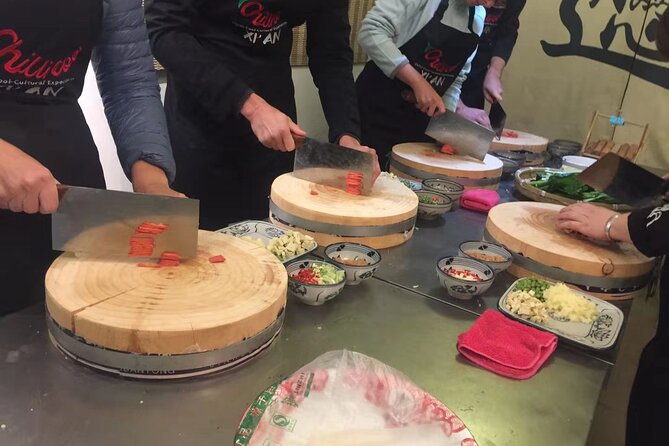
The experience begins at Sa Jin Qiao Subway Station, Exit B of Line 1. This is an important detail because private transport is not included. You need to arrange your own way to the station and arrive at the assigned time.
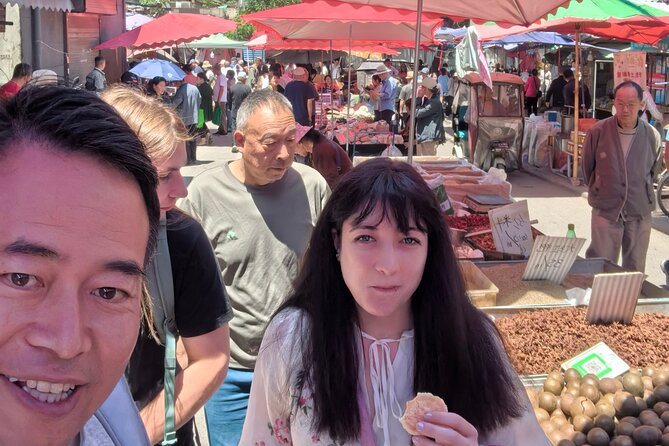
From there, your English-speaking guide leads you to a local market. The market visit is not just a quick stop for ingredients. It sets up the cooking lesson by showing you the raw materials first.
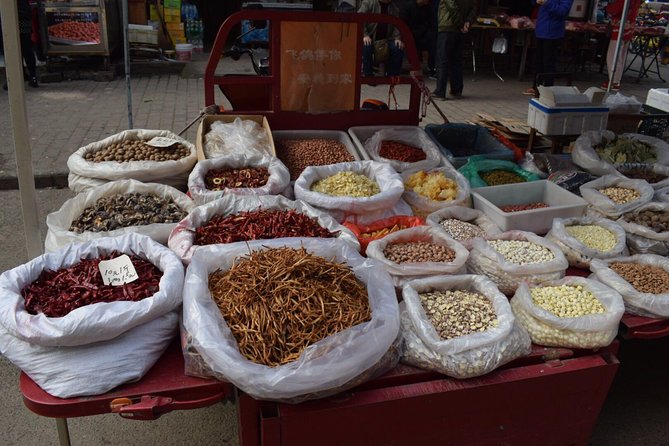
You can expect produce arranged for sale, seasoning fruits, spices kept in old bags, fresh meats hanging on walls, and other food items used in local kitchens. You will also see cooking utensils and get an introduction to ingredients that may be unfamiliar.
This is where the tour feels most connected to ordinary life in Xi’an. A restaurant meal tells you what a dish tastes like. A market gives you clues about how people shop, season, and cook at home.
The guide’s role matters here. A guide named Michael is associated with this experience, and his morning route includes stopping at the market to collect produce while explaining some of the less familiar things for sale. If he leads your outing, you can expect the market portion to be more than a silent walk past stalls.
The market can also be the busiest and least polished part of the morning. You may see raw meats and crowded displays rather than a tidy food hall. That is part of its value, but it may not suit you if you prefer a highly controlled or tourist-oriented setting.
Green tea in a private courtyard near the City Wall
After the market, you head to a quiet private courtyard near the City Wall. The change in mood is one of the strongest features of the outing.
The market gives you noise, movement, and a close look at food commerce. The courtyard offers a pause. You are welcomed by the staff, served fresh green tea, and given time to settle before beginning the cooking class.
I like this transition because it keeps the experience from feeling rushed. Three and a half hours is long enough to include the market, a short rest, cooking, and a meal, but the schedule still needs breathing room. The tea stop provides it.
The courtyard also makes the cooking feel more personal than a large classroom. With a maximum of eight people, you should have a better chance to see the dough clearly, ask questions, and get help with the pulling technique.
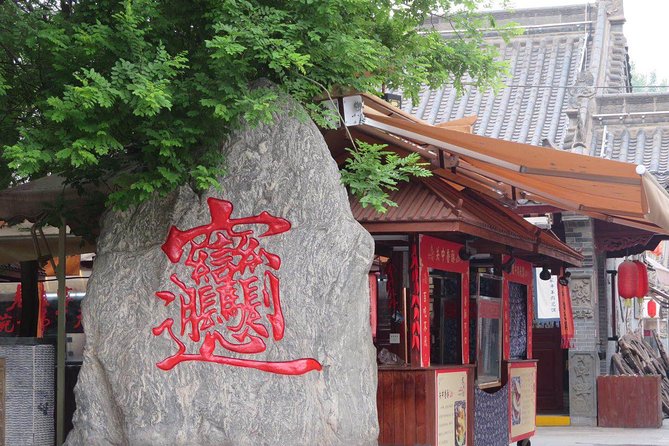
The setting is near the City Wall, but the main point is the courtyard itself. This is not described as a City Wall sightseeing stop, so you should not book the experience expecting a separate wall visit or major monument tour.
Mixing flour and water into workable dough
The cooking lesson starts with flour dough. You mix flour and water in a particular ratio, then press the dough into a round, flat shape.
This first stage may look simple, but it establishes the feel of the class. You need to handle the dough rather than simply follow a printed recipe. The guide can show you how the mixture should look and feel before you cut it.
That hands-on element is useful for anyone who has tried to recreate noodles at home and ended up with dough that was too dry, too wet, or difficult to stretch. The recipe helps later, but the physical lesson is just as valuable.
You then cut the flattened dough into strips. At this point, the dough begins to resemble the noodles you will eventually eat, but the key work is still ahead.
Because the group is limited to eight people, the guide should be able to correct basic technique as you go. Still, the class is not presented as a professional culinary course. You are learning one dish in a relaxed setting, not earning formal cooking credentials.
A completely different sort of day out:
- Xian: Terracotta Army Ticket & Guided Bus Tour with Options
★ 4.6 · 579 reviews - Customized Private Day Tour of Terracotta Warriors and Xi’an
★ 5.0 · 513 reviews - Xi’an: Exclusive Terracotta Army Tour & Local Family Lunch
★ 4.9 · 484 reviews - Half-Day Mini Group Xian Tour to Terracotta Warriors Museum
★ 5.0 · 467 reviews
Pulling long Biang Biang noodle strips
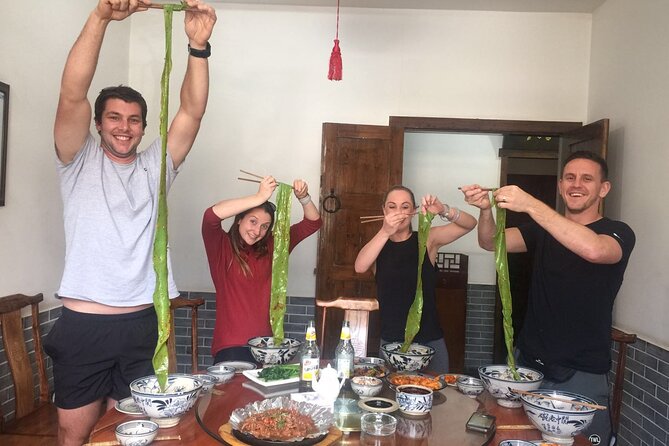
The most important part of the class is pulling the strips into long, thin noodles. It takes strength and technique, so you should expect a few imperfect noodles along the way.
That is not a problem. The point is to understand the method and enjoy the process. Your first attempts may be uneven, thicker than planned, or shorter than the ideal noodle. You still get the satisfaction of seeing the dough change in your hands.
This is the one part that deserves a practical warning. If you have limited arm strength or find repetitive stretching difficult, ask the guide for help. The experience description makes clear that this step requires effort, so it is not a passive demonstration.
The noodle-pulling stage also gives the class its character. Many cooking activities involve chopping or stirring, but stretching dough into noodles feels more distinctive. It is the kind of task you remember because the final dish directly reflects what you did.
Once the strips are ready, they are boiled. The lesson then moves from preparation to seasoning.
Sauce, hot oil, and the meal you made
After boiling, you cover the noodles with the prepared sauces. Hot oil is poured over the top, finishing the bowl of Biang Biang noodles.
This final step ties the market visit to the table. Earlier, you saw spices and seasonings for sale. Now you see how those ingredients become part of a finished dish.
Lunch or dinner is included, depending on the option you choose. Snacks are also included, and fruit or local snacks are served as dessert after the noodles.
I appreciate that you eat what you make. A cooking class can feel incomplete if the food disappears into a separate kitchen. Here, the meal is the reward for the work, and it lets you judge the texture of your noodles immediately.
The meal is also where the $75 price needs to be considered carefully. You could certainly find a cheaper bowl of noodles in Xi’an. You are paying for the market walk, English-speaking guide service, private courtyard setting, instruction, food, snacks, recipe, and certificate. If you only want to eat Biang Biang noodles, this is not the economical choice. If you want to understand how the dish is made and spend several hours with a local guide, the price is easier to justify.
What the small group size changes
The experience accepts no more than eight people. That limit matters during the noodle lesson.
With a smaller group, you should have a clearer view of the demonstrations and a better chance to receive direct assistance. Dough work can be awkward when several people crowd around one table, so a group of eight or fewer keeps the activity more manageable.
A small group also suits the market stop. You can move through the stalls without the outing becoming a large procession. You still need to stay with the guide, especially in a busy market, but the group should feel reasonably compact.
The tradeoff is that small-group experiences usually depend more on the guide’s style. A friendly, active guide can make the outing lively and personal. A less engaging guide could make the market explanations feel brief. The strongest account of this experience praises Michael for combining the market visit with clear cooking guidance, so the guide can have a real effect on your day.
Value, timing, and who should book
At $75, this is best for you if food is one of your main ways of understanding a place. You get a short market orientation, a quiet tea break, a cooking lesson, a full meal, snacks, and take-home material.
I would recommend it to:
- First-time visitors who want a local food activity beyond restaurant dining
- Families and couples who enjoy making something together
- Small groups interested in Xi’an ingredients and kitchen customs
- People who want an English-speaking guide
- Anyone who likes practical souvenirs, such as a recipe they can use at home
I would be more cautious if you are looking for a major sightseeing tour. The City Wall is nearby, but the outing is built around food. You will not spend three and a half hours touring several monuments.
I would also think twice if you dislike markets with raw food displays, or if stretching dough sounds physically uncomfortable. The class is friendly in tone, but the noodle-pulling step is real work.
The activity is booked an average of 55 days ahead, which suggests you should reserve early if your Xi’an dates are fixed. Confirmation is provided at booking, and mobile tickets make the reservation simple to carry. Free cancellation is available until 24 hours before the start time. Changes or cancellations inside that window are not accepted for a refund.
Practical advice before you go
Arrive at Sa Jin Qiao Subway Station, Exit B, with enough time to find the exact meeting point. The experience starts at an assigned time, and private transport is not included.
Wear clothes that allow easy arm movement. You will be mixing, pressing, cutting, and pulling dough, so this is not the moment for restrictive sleeves or clothing you want to keep perfectly clean.
Keep your phone ready for the mobile ticket and for photos, but give the cooking your attention. The most useful part of this experience is learning how the dough behaves, not simply recording the finished bowl.
If you have food concerns, check the details with the provider before booking. The supplied information explains the ingredients and cooking steps, but it does not provide a full list of dietary substitutions.
Remember that the tour ends back at the meeting point. Plan any later sightseeing from the Sa Jin Qiao area rather than assuming you will finish at the City Wall or another attraction.
Final call: Is this Xi’an cooking experience worth it?
I would book this experience if you want an active food lesson with a strong sense of place. The market visit gives context, the courtyard provides a peaceful setting, and pulling the noodles yourself makes the meal memorable.
I would skip it if your main goal is a cheap lunch or a full day of Xi’an sightseeing. At $75, the value comes from the complete three-and-a-half-hour experience, not from the noodles alone.
For most food-focused visitors, the mix is appealing: local market, green tea, hands-on dough work, a meal, snacks, recipe, and certificate. Just arrive at the subway meeting point prepared to work with your hands.
FAQ
Where does the Biang Biang noodles experience begin?
It begins at Sa Jin Qiao Subway Station, Exit B of Line 1, in Xi’an.
How long does the experience last?
The activity lasts approximately three hours and 30 minutes.
How much does the experience cost?
The listed price is $75 per person.
Is transportation included?
No. Private transportation is not included, so you must reach the meeting point on your own.
What food is included?
Lunch or dinner is included, depending on the option selected. Snacks are included as well, and fruit or local snacks are served after the noodles.
How many people can join the activity?
The group has a maximum of eight participants.
Do I receive confirmation and a mobile ticket?
Yes. Confirmation is provided at the time of booking, and the experience offers a mobile ticket.
Can I cancel for a refund?
Yes. You can cancel at least 24 hours before the start time for a full refund. Cancellations or changes made less than 24 hours before the start time are not accepted for a refund.
Just added in Xian
- Xi’an: Terracotta Warriors Tickets & Guided Tours★ 4.7 · 11 reviews
- Xi’an: Royal Banquet with Chinese Cultural Performance★ 3.4 · 3 reviews
- Xian: Terracotta Army Admission Ticket★ 4.6 · 5 reviews
- Xi’an Terracotta Warriors and City Wall Private Day Tour★ 5.0 · 4 reviews
- Xi’an Private Terracotta Warriors and Hanyangling Mausoleum★ 4.7 · 3 reviews
- Xian: Morning Food Tour of the Muslim Quarter★ 5.0 · 3 reviews
- Xian: Bus Tour of Terracotta Warriors With Guide & Lunch★ 4.2 · 5 reviews
- Xi’an: Top 3 Highlights All Inclusive Private Day Tour★ 5.0 · 41 reviews
Xi'an Tours, compared.

Mini Group Xian Day Tour to Terracotta Army, City Wall, Pagoda and Muslim Bazaar
Read our review →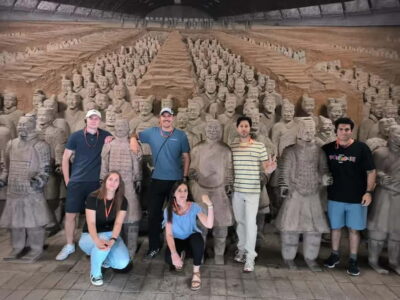
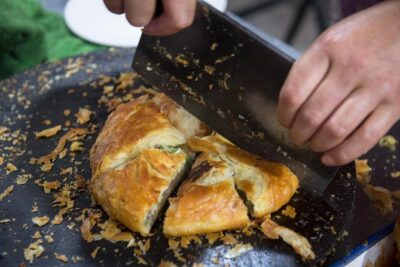
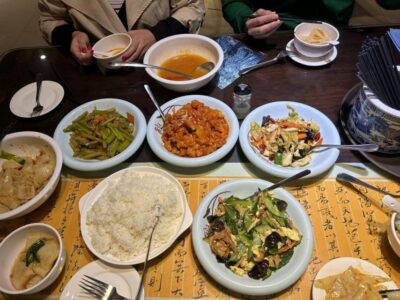
Terracotta Army Ticket & Guided Bus Tour with Options
Read our review →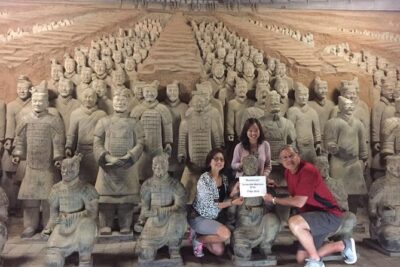
Customized Private Day Tour of Terracotta Warriors and Xi’an
Read our review →
Exclusive Terracotta Army Tour & Local Family Lunch
Read our review →
Half-Day Mini Group Xian Tour to Terracotta Warriors Museum
Read our review →
Where else this tour turns up