
Reviewed · TICKETS
Beijing:Drum and Bell Towers Entry Ticket- Cultural Treasure
Ancient clocks still rule this corner of Beijing. I like the Yuan Dynasty origins and the chance to see a 63-ton Ming bell, while the English guide adds useful context without forcing you into a group tour. The main catch is value: at $13, this ticket may cost more than buying locally, and the long, steep stairs can be hard for anyone with limited mobility.
I also like the simple two-hour format. You get entry to both towers, skip the ticket queue, and receive your e-tickets by email or WhatsApp after the booking is confirmed. Hua Hua Explore China earned especially warm praise for sending the QR codes and English PDF early, with useful hutong and restaurant suggestions nearby.
In This Review
- Key points to know before you go
- Why Beijing’s Bell and Drum Towers matter
- The Drum Tower and its 25-drum story
- The Bell Tower and China’s famous 63-ton bell
- A two-hour visit with no forced group schedule
- What the English guide adds
- The practical value of a $13 ticket
- How the electronic entry works
- Connecting the towers with the nearby hutongs
- Who will enjoy this visit most
- Final verdict: should you book it?
- FAQ
- What does the Beijing Bell and Drum Towers ticket include?
- Is a live tour guide included?
- Is an audio guide included?
- How long does the visit take?
- What identification should I bring?
- How are the tickets delivered?
- Can I cancel the booking?
Key points to know before you go
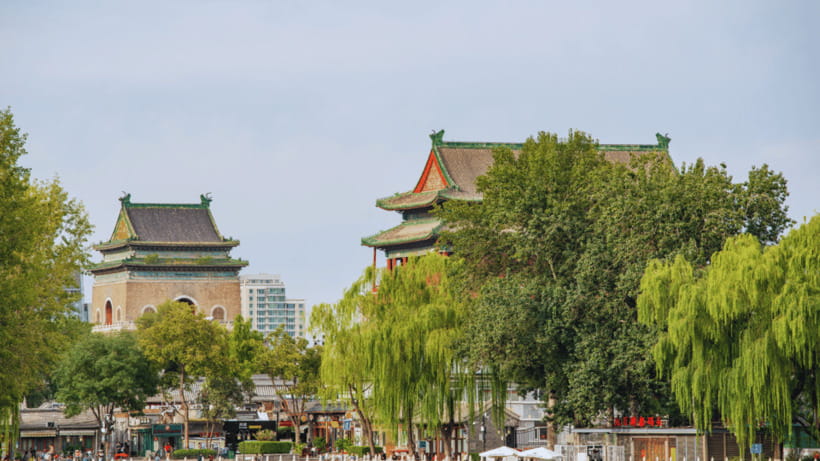
- The 63-ton Yongle bell: The Bell Tower contains one of China’s largest and most famous ancient bells, cast during the Ming Dynasty.
- Two towers, one timekeeping system: The Drum Tower announced evening time, while the Bell Tower marked morning.
- A central-axis location: Both buildings sit at the northern end of Beijing’s historic central axis, close to the hutongs.
- Steep stairs matter: Reaching the upper levels involves long, sharply inclined stairways, so this is not a good choice for visitors with limited mobility.
- English help without a live guide: Your ticket includes a textual and visual guide, but no in-person guide or audio guide.
- Prebooking is the real convenience: The service reserves your admission in advance and sends entry codes electronically, which is especially useful during busy holiday periods.
Why Beijing’s Bell and Drum Towers matter

The Bell and Drum Towers are not simply two old buildings to tick off a sightseeing list. They explain how Beijing once organized its daily rhythm before clocks, phones, and public announcements.
The complex first took shape during the Yuan Dynasty, from 1206 to 1368. It continued serving as the city’s timekeeping center through the Ming and Qing dynasties. For centuries, people in Beijing heard a drum at dusk and a bell in the morning. That simple pattern helped mark the beginning and end of the working day.
The towers sit at the northern end of Beijing’s central axis. Their placement gives them importance beyond their individual architecture. They formed part of the city’s official order, close to the area where imperial Beijing was laid out in a carefully planned north-south line.
I find the slightly unusual arrangement especially interesting. The Bell Tower sits a little farther north than the Drum Tower, rather than the two buildings forming a perfectly even pair. Together, they cover a protected historic area of 12,597 square meters.
That context makes the visit more rewarding. You are not just climbing two towers for a city view. You are seeing the buildings that once helped regulate public life across the capital.
A few more to weigh up in Beijing
- From Beijing: Mutianyu Great Wall Tours with Options
★ 4.9 · 9,216 reviews - Beijing: Forbidden City Tour(Group/Private)-Tickets Included
★ 4.8 · 7,974 reviews - Beijing: T-Square & Forbidden City Group or Private Tour
★ 4.8 · 4,446 reviews
The Drum Tower and its 25-drum story
Start with the Drum Tower, where the scale of the building gives you an immediate sense of its former role. The structure once held 25 drums. These instruments were not decorative objects. They were part of Beijing’s official timekeeping system.
The drums marked dusk, while the bell announced morning. I like this detail because it makes the building feel practical rather than distant. The tower was an enormous public clock, operated with sound and ritual instead of gears and hands.
The Drum Tower is also one of the architectural models for this type of building in China. Its form reflects the importance given to timekeeping in the capital. The tower was meant to be seen and heard, and its position helped connect it to the wider city.
Your visit here is mainly visual and historical. The included English textual and visual guide can help you understand what you are looking at, especially if you do not read Chinese. Since there is no live guide or audio guide, take a little time with the written material rather than rushing through the rooms.
The stairs are the first practical hurdle. They are long and steep, and one review specifically warned that they are not suitable for people with reduced mobility. Even if you are generally comfortable walking, use the handrails and take your time.
Do not treat the climb as a minor detail. The stairs are part of the experience, but they can affect how much energy you have left for the Bell Tower and the nearby hutongs.
The Bell Tower and China’s famous 63-ton bell

The Bell Tower provides the visit’s biggest single object: a bell weighing 63 tons. It was cast during the Yongle era of the Ming Dynasty, from 1403 to 1424, and is known as the King of Ancient Bells of China.
That nickname gives the bell a dramatic reputation, but the weight alone is enough to make it memorable. It is difficult to picture a metal object of that size being made and installed centuries ago. The Bell Tower helps turn an abstract history lesson into something you can actually see.
The bell also completes the old timekeeping system. The Drum Tower handled the evening announcement, while the Bell Tower sounded in the morning. The two buildings worked together, so visiting only one would leave the story incomplete.
The Bell Tower is slightly north of the Drum Tower. This small difference in layout is worth noticing because the complex was not designed as a simple symmetrical pair. The placement reflects the historical arrangement of Beijing’s central axis.
You should allow enough time to look carefully at both the building and the bell. The attraction is not large in the way a palace complex is large, and some people may feel the visit is brief. Its value comes from the age, purpose, and scale of the structures, not from a long list of rooms or displays.
A two-hour visit with no forced group schedule

The stated duration is two hours, which is a sensible amount of time for the two towers. It gives you room to enter both buildings, read the English material, handle the stairs at your own pace, and look around the area without turning the visit into an all-day commitment.
There is no live tour guide included. That is a drawback if you want a person to explain the architecture, answer questions, or connect the towers to Beijing’s wider history. It is an advantage if you prefer to move independently and avoid joining a scheduled group.
There is also no audio guide. The English textual and visual guide fills part of that gap, but it is not the same as having spoken commentary as you walk. If you want a more personal interpretation, you will need to do additional research before arrival.
I would plan this as a self-guided historical stop, not as a full guided tour. The towers provide the setting and the major objects. The guide helps you understand them, but you remain responsible for setting the pace and noticing the details.
A completely different sort of day out:
- All-Inclusive Tour: Tiananmen Square, Forbidden City, Great Wall
★ 5.0 · 2,873 reviews - MuBus: Mutianyu Great Wall ENG/ESP/RUS Guided Bus Tour
★ 5.0 · 2,361 reviews - 4-Hour Small Group Tour to Forbidden City with Entry Tickets
★ 5.0 · 1,863 reviews - Beijing: Tiananmen Square Registration Service(Ticket)
★ 4.5 · 1,704 reviews
What the English guide adds
The English PDF brochure is one of the strongest parts of this ticket service. It is meant to support your visit with text and images, so you can make more sense of the Drum Tower, Bell Tower, and surrounding area.
The most useful praise for the brochure was not limited to the towers themselves. It also included information about nearby hutongs and suggestions for local restaurants. That can change the shape of your afternoon.
Without that extra context, you might visit the towers, leave, and move on to another major attraction. With the neighborhood information, you have a reason to continue on foot around the old lanes nearby. The hutongs give you a closer look at ordinary urban Beijing than the grand imperial sites do.
Keep in mind that the guide is informational rather than personal. It will not adjust its explanation to your interests or point out something you nearly missed. Still, for a ticket that does not include a live guide, an English visual aid is a useful addition.
The service was also praised for sending the brochure and QR codes well ahead of time, even during China’s Golden Week. That advance preparation matters when you are visiting at one of the country’s busiest holiday periods.
The practical value of a $13 ticket
At $13 per person, this is not an expensive Beijing attraction in absolute terms, but it may not be the cheapest way to enter. One Italian visitor felt the prepaid ticket cost substantially more than the price available at the site. I would compare the local admission price if saving every dollar is important to you.
What are you paying for? Mainly, you are paying for advance reservation, electronic entry, queue avoidance, and English support. That can be worthwhile if you are visiting during a crowded period, have a tightly planned day, or do not want to handle local ticket procedures.
The value is less convincing if you are already nearby, have flexible time, and can easily buy admission in person. In that case, the convenience fee may feel unnecessary.
The reserve-now, pay-later option adds flexibility. You can hold a place without paying immediately, and cancellation is allowed up to 24 hours before the visit for a full refund. Those terms are useful when your Beijing schedule may change.
I would not buy this ticket solely because it claims to save time unless queues are a concern on your date. I would buy it for the combined package: direct entry, electronic tickets, English material, and neighborhood suggestions.
How the electronic entry works
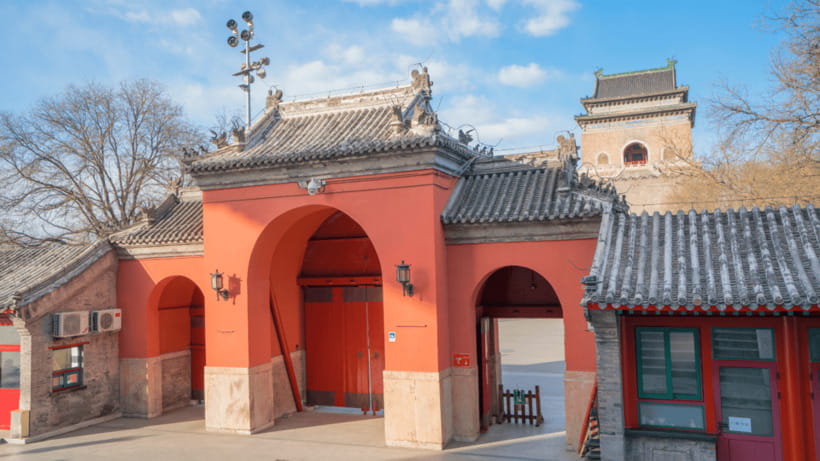
After booking, you need to provide your passport name, passport number, and date of birth. The reservation is made three days before your visit, and the e-tickets are sent by email or WhatsApp once confirmed.
Bring your passport or ID card. The name and identity details matter, so enter them carefully when you book. At the site, you use the supplied electronic tickets to enter both the Bell Tower and Drum Tower directly.
This is a useful arrangement for international visitors who may not be familiar with local ticket systems. It also removes one small source of stress from a busy sightseeing day.
The service is not instant in the sense of receiving a confirmed ticket the moment you pay. The reservation is handled three days before the visit. Make sure your booking details are accurate and check your email or WhatsApp for the entry information.
Connecting the towers with the nearby hutongs

The towers become more meaningful when you pair them with the surrounding hutongs. The English brochure includes information about these old lanes and recommends nearby restaurants, making it easier to turn the ticket into a broader neighborhood visit.
The towers tell you how officials measured time for the city. The hutongs show how people lived within that city. That contrast gives the area more character than the towers alone.
I would leave room before or after the two-hour visit to explore nearby on foot. The exact route is not specified, so keep your plans flexible, but use the guide’s neighborhood suggestions as a starting point.
Food recommendations are another practical benefit. A nearby meal gives you a natural break after climbing the towers, especially if the stairs take more effort than expected. It also helps you avoid treating the attraction as an isolated photo stop.
The area is not presented as a full guided hutong tour, so do not expect a hosted walk or arranged restaurant booking. The value is in the information, which helps you make better choices once you are there.
Who will enjoy this visit most
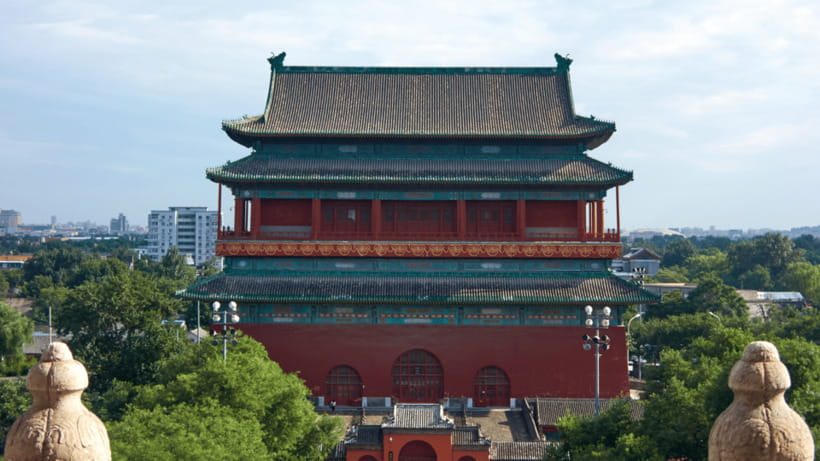
I would recommend the Bell and Drum Towers to visitors who enjoy architecture, old city planning, and small historic sites with a clear purpose. The towers are especially good for anyone who wants to understand Beijing beyond its most famous imperial buildings.
They also suit independent visitors. You can move at your own speed, use the English guide, and decide how much time to spend around the towers and hutongs.
The visit is less suitable if you want a large museum, a long guided lecture, or an attraction packed with interactive displays. It is also a poor fit for anyone who cannot manage long, steep stairs.
Families with older children may find the timekeeping story easy to grasp. The idea of a giant evening drum and morning bell gives the visit a simple human scale. Adults interested in Chinese history will likely appreciate the details about the Yuan, Ming, and Qing periods.
If your Beijing schedule is already full of major palaces, temples, and museums, you may decide that the towers are a lower priority. One review described them as interesting but less essential than other Beijing sights. That is fair. They are valuable for their historical role and location, not because they offer the biggest attraction in the city.
Final verdict: should you book it?
Book this experience if you want an independent visit to two important Beijing landmarks, especially during a busy holiday or if you value having entry arranged in advance. The English visual guide and hutong suggestions add real usefulness, and the electronic tickets make arrival simpler.
Think twice if price is your main concern. The $13 cost may be higher than buying at the site, and there is no live or audio guide included. You should also be comfortable with steep stairs.
My call is positive for first-time international visitors who want a straightforward, self-guided cultural stop. Just treat the prepaid fee as payment for convenience, not as the cheapest admission. Pair the towers with a hutong walk and a nearby meal, and the two-hour visit becomes a more satisfying slice of old Beijing.
FAQ
What does the Beijing Bell and Drum Towers ticket include?
It includes admission to both the Bell Tower and the Drum Tower, along with an English textual and visual guide.
Is a live tour guide included?
No. The ticket does not include a live guide.
Is an audio guide included?
No. An audio guide is not included. The support provided is an English written and visual guide.
How long does the visit take?
The stated duration is two hours. You can use that time to visit both towers and read the supplied guide.
What identification should I bring?
Bring your passport or ID card. When booking, you must provide your passport name, passport number, and date of birth.
How are the tickets delivered?
After the reservation is successful, the e-tickets are sent by email or WhatsApp. You can use the supplied e-tickets to enter both towers directly.
Can I cancel the booking?
Yes. You can cancel up to 24 hours before the visit for a full refund. The reserve-now, pay-later option lets you book without paying immediately.
Just added in Beijing
- Private Transfer to Mutianyu Great Wall with professional driver★ 5.0 · 19 reviews
- One day tour to downtown Tianjin from Beijing by high speed train★ 5.0 · 3 reviews
- ZANBUS: Trip to the Jinshanling Great Wall Departing at 7:30 AM★ 5.0 · 5 reviews
- camp on the Great Wall overnight with sunrise and sunset on the wall★ 5.0 · 11 reviews
- Yuxiandu Chinese Royal Cuisine Museum with Show and Royal Banquet★ 5.0 · 4 reviews
- Wild Great Wall Hikes★ 5.0 · 10 reviews
- BusDa:Ancient Great Wall &Badaling Great Wall Full-day Bus Tour★ 4.5 · 6 reviews
- Wild Great Wall Huanghuacheng Half Day Tour★ 5.0 · 15 reviews
Tickets, compared.

Forbidden City Tour(Group/Private)-Tickets Included
Read our review →
Mutianyu Great Wall Daily Tour with Ticket & Lunch
Read our review →
4-Hour Small Group Tour to Forbidden City with Entry Tickets
Read our review →
Ngong Ping 360: Cable Car Return Tickets & Combos
Read our review →
The Temple of Heaven or Summer Palace Entry Ticket
Read our review →
Beijing Forbidden City Ticket Booking (Optional: guide service)
Read our review →